Northeast
Boston anticipates big economic bump from 2026 World Cup

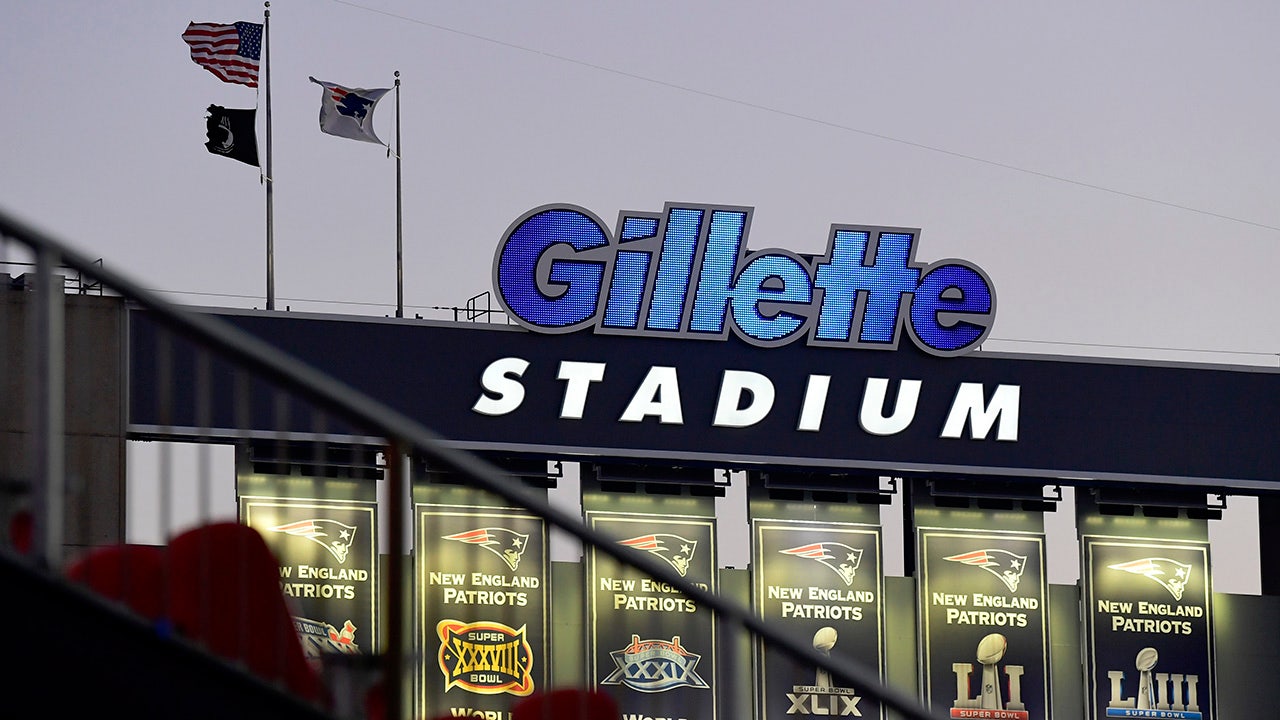
Getting the chance to host seven matches for the 2026 World Cup was more than expected and offers a much-needed shot in the arm to the city’s economy, Boston officials said Monday.
FIFA made the announcement Sunday, allocating the opener of the 39-day tournament to Mexico City’s Estadio Azteca and the finale to the home of the NFL’s New York Jets and Giants. Among the seven matches that will be played at Gillette Stadium in the Boston suburb of Foxborough will be five group stage matches, one match in the round of 32 and a quarterfinal match on July 9, 2026.
Mike Loynd, president of Boston Soccer 26, acknowledged organizers were projecting about five or six matches and no quarterfinal, meaning the final schedule “is a great economic benefit.”
METLIFE STADIUM CHOSEN TO HOST 2026 WORLD CUP FINAL
“The later in the tournament, the more eyeballs,” he said. “For us, it’s just a matter of excitement … For us, it’s a perfect schedule. I don’t think FIFA could have done a better job.”
Martha Sheridan, president & CEO of Meet Boston, said “nothing compares” to hosting World Cup matches. Foxborough hosted games at the 1994 World Cup, but Gillette Stadium is a different venue, built near the old Foxboro Stadium. Foxborough also hosted matches during the 1999 and 2003 Women’s World Cup.
Sheridan said a FIFA study projected for a city hosting the World Cup would generate $400 million in spending, adding that the number would have to be adjusted now that the city is set to host seven games.
A general view of Gillette Stadium before the game between the Buffalo Bills and the New England Patriots on December 28, 2020 in Foxborough, Massachusetts. (Maddie Malhotra/Getty Images)
“Our goal has been for the past four or five years since we were sort of decimated by COVID to really reestablish Boston as a major global destination,” Sheridan told reporters.
“We are well on our way to doing that and this event is going to cement our reputation because I know we are going to do such a great job,” she said. “People will be able to share in this incredible city’s reemergence and renaissance. We cannot wait.”
Sheridan also said the city will benefit from the fact that games will also be played in Philadelphia and New Jersey — allowing fans to travel by train to various venues.
“If you think about the fact that people can come to Boston, stay in a hotel for maybe the whole month and travel back and forth on Amtrak to New York City, Philadelphia and New Jersey and catch games, that’s going to be huge for us,” she said.
Brian Bilello, president of the New England Revolution and chair of the board of Boston Soccer 26, said the tournament will also be a boon to soccer in the region.
“It solidifies our place in the world’s game in the United States,” Bilello said. “It really cements Boston and Massachusetts as one of the cornerstone soccer hotbeds in this country.”
FIFA expanded the World Cup from 32 to 48 nations, increased the number of matches from 64 to 104 and announced the 16 sites in 2022. With the additional teams, the length of the tournament will grow from 29 days in the shortened 2022 schedule in Qatar and 32 days for the 2018 tournament in Russia.
Seventy-eight of 104 matches will be played in the U.S., with 13 games each in Mexico and Canada, and there as many as six matches a day.
The U.S. team will train in suburban Atlanta ahead of the tournament and open at SoFi Stadium in Inglewood, California, on June 12, 2026. The Americans play seven days later at Seattle’s Lumen Field and finish the group stage at SoFi on June 25.
Read the full article from Here


Beach day tips and tricks to have fun in the sun
Make a day in the sun more easy with these beach hacks.
Problem Solved
Vermont has some of the most relaxing beaches in New England.
While other states may be known for their island beaches or their saltwater getaways on the shores of the mainland, Vermont has plenty of freshwater beaches that make it a real treat to visit those parts of the Green Mountain state.
Yankee Magazine, one of the most notable lifestyle publications covering New England, said that four of Vermont’s beaches are among the best in New England.
“From wide sandy stretches and dramatic ocean bluffs to hidden coves and family-friendly shores, New England beaches offer something for every kind of beachgoer,” Yankee Magazine said.
Out of 34 New England beaches, here are the four beaches in Vermont that made it, ranked in their proximity to Burlington.
Sand Bar State Park, Milton — ‘finest stretch of Lake Champlain beachfront’
Yankee Magazine chose Sand Bar State Park in Milton, Vermont, as one of the best beaches in New England because how perfect it is for families with children, because of its shallow waters and play areas.
“Vermont’s most popular day-use state park is home to its finest stretch of Lake Champlain beachfront, a 2,000-foot strand with a dropoff so gradual that it seems you could wade from the mainland to the Champlain Islands,” Yankee said.
There are also a number of cooking grills and picnic areas at the Milton beach for those who like to have burgers by the beach after a nice swim, according to Vermont State Parks.
Only around 16 miles away from Burlington, it takes less than 30 minutes to drive to Sand Bar in Milton, making it great for families and friends who don’t want a long drive to the beach.
Alburgh Dunes State Park, Alburgh — ‘One of Vermont’s newest state parks’
Forty-one miles from Burlington, Alburgh Dunes State Park might seem like long haul for a beach, but worth it.
“One of Vermont’s newest state parks was established to preserve an incongruous feature of northern Lake Champlain, a duneland left behind by retreating glaciers,” Yankee said.
The Vermont State Parks website said the foundation of this beach began thousands of years ago, when glaciers deposited soil on bluffs close by, and slowly the forces of nature carried that soil to Lake Champlain, creating Alburgh Dunes.
“Before the park was established, people altered the dunes. Some sand was removed to replenish the beach, trees were cut for firewood, and visitors walking on the dunes wore paths through the grasses,” the state parks website said. “These actions increased erosion.”
Now, fencing has been erected to prevent further ecological damage of the beach.
Boulder Beach State Park, Groton — ‘sandy shoreline along Lake Groton’
Yankee rated Boulder Beach State Park, which is almost 70 miles away from Burlington, highly not only because of the magnificent glacier-formed boulders after which the park is named, but because of the conveniences that come with it.
“There’s a definite wilderness feel to the terrain in this southern threshold of the Northeast Kingdom, but the park is well equipped with changing facilities, boat rentals, a concession stand, and a broad lawn dotted with picnic sites behind the beach,” the magazine said.
Safe to swim in as well, Boulder Beach State Park is in walking distance of the other six state parks in Groton State Forest.
Crystal Lake State Park, Barton — ‘glacially carved jewels of northern Vermont’s lake country’
Crystal Lake State Park in Barton, Vermont, might be the farthest away from Burlington, but that doesn’t mean it’s not worth traveling to.
“One of the glacially carved jewels of northern Vermont’s lake country lies just outside the town of Barton and features a sandy swimming beach with a spectacular view,” Yankee Magazine said.
Crystal Lake spans three miles long and is around one mile wide, Vermont State Parks’ website said. Be careful swimming there as parts of it are over 100 feet deep.
“A large historic granite bathhouse provides restrooms, changing areas, and a concession stand,” the parks website said. “The park offers about 40 free-standing charcoal grills, nearly 80 picnic tables, rental boats and canoes, and ample parking.”
Rin Velasco is a trending reporter. She can be reached at rvelasco@usatoday.com.

Editor’s note: Follow live World Cup standings updates and analysis for the round of 32
Paraguay fans can breathe a sigh of relief, their team is headed to the round of 32 at the 2026 World Cup.
Paraguay rebounded nicely after a tough first match against the United States, defeating Turkey and drawing Australia, finishing the group stage in third place and officially qualifying for the knockout rounds when Uruguay lost to Spain on Friday night.
However, it does not get easier from here, as Paraguay will take on Germany in the round of 32.
SHOP: Paraguay vs. Germany World Cup tickets
The match will take place outside of Boston at Gillette Stadium in Foxborough, Mass. and is scheduled to start at 4:30 p.m. ET.
Here’s everything you need to know about how to buy tickets for Paraguay vs. Germany’s in the round of 32 at the 2026 World Cup.
Shop Germany vs. Paraguay tickets
Germany vs. Paraguay round of 32 World Cup ticket price
With its Group E win, Germany will play its Round of 32 match at Gillette Stadium on Monday, June 29. As of publication, the cheapest available tickets for Germany’s game in Boston start at $1,044.
Germany World Cup Round of 32 game information
- Where: Gillette Stadium in Foxborough, Mass.
- What time: 4:30 p.m. ET
- Tickets: Starting at $826
- When: Monday, June 29
Shop Germany vs. Paraguay World Cup tickets
More: Here’s how to buy 2026 World Cup Final tickets in New York
When is Paraguay vs. Germany World Cup game?
Germany clinched the top spot in Group E on Saturday, its Round of 32 match will take place on Monday, June 29.
Where is Paraguay vs. Germany World Cup game?
Germany and Paraguay will play their round of 32 game outside of Boston. This will be the team’s first game in Foxborough, Mass. for the tournament.
Shop Germany vs. Paraguay World Cup tickets
Germany World Cup schedule
- Sunday, June 14: Germany def. Curaçao WIN 7-1
- Saturday, June 20: Germany vs. Ivory Coast WIN 2-1
- Thursday, June 25: Germany vs. Ecuador LOSS 2-1
- Monday, June 29: Germany vs Paraguay in Boston (round of 32) – Shop tickets
Shop Germany vs. Paraguay World Cup tickets
World Cup Group E standings
Paraguay World Cup schedule
- Paraguay vs. United States – LOSS 4-1
- Paraguay vs. Turkey – WIN 1-0
- Paraguay vs. Australia – DRAW 0-0
- Monday, June 29 – Paraguay vs. Germany in Boston (round of 32) – Shop tickets
World Cup Group D Standings
Shop Paraguay vs. Germany tickets

The South Side Street Fest added additional metal detectors and ID scanners, plus a dedicated line for locals, to help people get in faster after long lines were reported for the event’s first outing last weekend.
There were no lines at 11 p.m. on Friday, the event’s second night, but an organizer said Saturday, when they usually see larger crowds, will be a better test of the new measures. While attendees praised the event’s first night from a safety standpoint, with no arrests and an average number of citations issued, some criticized how long it took to get in on June 20.
“It’s a little overkill. I kind of had to wait 30 minutes,” Justin McCord said. “The line was just startling to me.”
John DeMauro, a business owner and member of the South Side Hospitality Partnership, which is working with the city to put on the event, said leaders have heard the feedback.
“We got more people than we thought there [would be],” DeMauro said. “There was a little bit of a wait to get into the entrances.”
They’ve since added four ID scanners and two more metal detectors, he said.
“We should be able to move those lines along fairly quickly this week,” DeMauro said.
The event is restricted to people 21 and up, but anyone under 21 who lives within the footprint can still get through. They’ll be escorted to their homes, a police commander told KDKA-TV, adding that few kids live inside the event’s footprint.
They also have a new solution for South Side residents to enter the footprint faster: a local lane pass. Acting just like a fast pass at an amusement park, those who have it can go through a dedicated entry line.
“Wanted that to be quicker, wanted that to be not as cumbersome,” he said.
Anyone who lives in the 15203 zip code, which covers the entire South Side, can register for the pass online, he said. At the 18th Street security checkpoint on Friday, residents had to show their ID with the 15203 zip code to go through the local lane.
Because the zip code is used, it means it’s not just for people who live inside the footprint. Anyone who lives on the South Side can enter using the pass, for instance, if they want to grab something from a corner store. Fifty people had registered as of 7 p.m. on Friday.
The line also helps to get delivery drivers through, Zone 3’s police commander said.
A bar owner within the footprint told KDKA-TV last week that during the fest’s debut, they saw a lot of people on the street but fewer in bars. But because it’s so early, they said they weren’t concerned.
“I think that’s the general consensus,” DeMauro said. “It was a really good start to it, but our intention is to make it grow. I think that’s the biggest thing we want people to understand.”
He added that the intention moving forward is to keep listening to feedback and making changes to improve the festival. He also encouraged people to come down to test the improved security measures themselves.
-

 Texas4 minutes ago
A truck crash released 20 million bees. Local beekeepers rushed to save them.
-

 Utah7 minutes ago
‘2.5 minutes of terror’: Passengers sue Delta, alleging crew flew into dangerous weather despite warnings, injuring dozens
-

 Vermont19 minutes ago
Four Vermont beaches named among New England’s best. How to go
-

 Virginia22 minutes ago
Virginia Thomas – Scranton Times-Tribune
-

 Washington27 minutes ago
Where to watch Washington Nationals vs Baltimore Orioles: TV channel, start time, streaming for June 27
-

 Wisconsin34 minutes ago
Baboucarr Ann’s commitment pushes Wisconsin into nation’s top three
-

 West Virginia37 minutes ago
Justice firm’s delinquent DEP fines rise past $1.6M amid DOJ criminal liability relief
-

 Wyoming42 minutes ago
Wyoming, women, and winning the right to vote: Historian presents suffragette research

