Northeast
$380M from DHS to be given to states, NGOs in support of migrants


The Biden administration announced last week that it’s providing $380 million to nonprofits and local governments to cover some of the costs associated with taking care of migrants once they’ve been released by the Department of Homeland Security (DHS) at the southern border.
The huge sum is being awarded by DHS via its Shelter and Services Program (SSP), which aims to provide “critical support” for migrants by way of offering them food, shelter, clothing, acute medical care, and transportation while they await their immigration court proceedings.
DHS says the money helps prevent overcrowding at short-term Customs and Border Protection (CBP) holding facilities and enables non-federal entities to “off-set allowable costs incurred for services associated with noncitizen migrant arrivals in their communities.”
MAYORKAS FORCED TO ADMIT MORE MIGRANTS HAVE CROSSED US BORDER UNDER BIDEN THAN TRUMP: ‘SEVERAL MILLION PEOPLE’
Migrants walk along the highway through Suchiate, Chiapas state, in southern Mexico, on Sunday, July 21, 2024, during their journey north toward the U.S. border. ( AP Photo/Edgar H. Clemente)
The $380 million grant comes just four months after the agency disseminated a tranche of $259.13 million in SSP grants, bringing the total this year to nearly $640 million.
In fiscal year 2023, more than $780 million was awarded to organizations and cities across the country which are inundated with migrants who have nowhere to live and are unable to work.
The influx has overwhelmed social and health services across many big cities, and local governments have used taxpayer money to put migrants up in hotels or shelters. Under the Biden administration there were more than 2.4 million migrant encounters in fiscal year 2023, and that mark could be broken by the end of fiscal year 2024, although DHS says monthly numbers have decreased.
The $380 million grant is being divided between a total of 50 nonprofits, municipalities and government entities.
The biggest beneficiary of the allotment is New York City, a sanctuary city, which is being given nearly $22.17 million via its Office of Management, while Los Angeles is taking $21.84 million and Arizona is in line for $19.25 million.
Maricopa County and Pima County, both in Arizona, are splitting nearly $38 million in funds.
FOX NEWS POLL: VOTERS SAY THE US-MEXICO BORDER IS A BIG PROBLEM
Migrants are seen at the southern border on May 23, 2024. (Bill Melugin/Fox News)
In terms of nonprofit organizations, Jewish Family Service San Diego is being awarded $22.1 million, the Catholic Charities Diocese of San Diego is set to get $21.6 million, while Catholic Charities Archdiocese of San Antonio in Texas is getting $19.26 million.
Massachusetts Gov. Maura Healey lauded the fact that her state is securing $15.4 million in competitive funding and $4.9 million in reserve funding.
“Massachusetts ‘wins’ $20 million in federal funding to support family shelter costs,” an Aug. 28 press release from Healey reads.
“This is the largest award Massachusetts has won from this program to date, as the state and city previously won a total of $9 million.”
Healey says the money will help Boston manage costs for sheltering migrants and praised the Biden-Harris administration for reducing illegal border crossings.
“The Biden-Harris administration has taken important steps to address this federal problem in light of Congress’s failure to act, and they are seeing results with illegal border crossings down significantly,” Healey said in the statement. “But more needs to be done. Congress needs to step up and pass the bipartisan border security agreement.”
Massachusetts Gov. Maura Healey pauses to look at the Army cots set up on the gym floor as state and local officials toured the Melnea A. Cass Recreational Complex, which was used as a temporary migrant shelter in May 2024. (Getty Images)
DHS says that Border Patrol encounters in July dropped 32% compared to June, the lowest monthly total along the southwest border since September 2020. July’s total numbers between ports of entry are also lower than July 2019, and lower than the monthly average for all of 2019, the last comparable year prior to the pandemic, DHS says.
The agency says the dip follows a June 4 Presidential Proclamation by President Biden, which temporarily suspended the entry of certain noncitizens at the southern border once the number of average border encounters exceeds 2,500 a day over seven days.
But the DHS funding will not plug the massive hole in city coffers decimated by illegal migration.
In Massachusetts, Republicans say the state has spent $1 billion “in secret migrant crisis spending” and have called Healey to provide a detailed cost breakdown of the toll that the migrant crisis has caused for the state’s residents.
In New York, the comptroller estimated that the migrant crisis will cost state taxpayers $4.3 billion through 2025, and New York City taxpayers $3 billion in fiscal year 2024 alone, according to the New York Post.
It also doesn’t account for the $4 billion the Biden administration announced it was sending to Central America in March to “address the root causes” of illegal immigration.
Meanwhile, a study by the Federation for American Immigration Reform (FAIR) estimated the net cost of illegal immigration for the United States – at the federal, state, and local levels – was at least $150.7 billion at the start of 2023.
FAIR arrived at the figure by subtracting the tax revenue paid by illegal immigrants – just under $32 billion – from the gross negative economic impact of illegal immigration, $182 billion.
Read the full article from Here


NEWYou can now listen to Fox News articles!
A pilot and passenger swam through the frigid waters of the Hudson River and reached shore safely after their Cessna 172 made an emergency landing Monday night, officials said.
The aircraft had taken off from Long Island when the pilot was forced to land in the river just after 8 p.m., the Middle Hope Fire Department said in a Facebook post.
The Federal Aviation Administration is investigating the incident.
Middle Hope Fire Department responders, along with personnel from other agencies, were dispatched to the scene. After a brief search, first responders located the plane within the City of Newburgh, authorities said.
A plane wades in the Hudson River. (Facebook/Middle Hope Fire Department)
Fire officials said the two occupants were able to free themselves from the aircraft and swim to shore. Newburgh Emergency Medical Services evaluated the pair before they were transported to a nearby hospital for further treatment.
Multiple agencies were on the scene after a plane crashed into the Hudson River. (Facebook/Middle Hope Fire Department)
New York Gov. Kathy Hochul hailed the incident as “Another miracle on Hudson.”
“Thank God both the pilot and passenger of a single engine plane that performed an ice landing near Newburgh have been located with only minor injuries,” the governor wrote in a post on X. “Grateful to our first responders for their quick actions.”
A plane made an emergency landing on the Hudson River Monday evening. (Facebook/Middle Hope Fire Department)
New York Rep. Pat Ryan said he was “closely monitoring reports of a small plane making an emergency landing near the Newburgh-Beacon Bridge.”
“I’m in touch with officials on the ground, who have shared that both passengers are safely out of the water & have been evacuated by EMS,” he said. “Incredibly grateful for our Hudson Valley first responders who are responding swiftly and put their lives on the line to keep others safe.”
First responders found the plane within the city limits of Newburgh. (Facebook/Middle Hope Fire Department)
The cause of the emergency landing remains under investigation.
Related Article

Read the full article from Here

“In moments of challenge and in moments of conflict, it does feel easier to put your head down,” Wu said at an event at the Old State House commemorating Attucks.
“Remembering the full history pushes us to be the beacon of freedom that the rest of the country and the rest of the world so very much needs.”
Inside the Old State House’s council chambers, city leaders, historians, and students gathered to celebrate Attucks’ legacy. They talked about the importance of memorializing him during a time when many present said the contributions of people of color to American history were being erased by the Trump administration, and the country’s founding principles were under attack.
Senator Lydia Edwards said the death of Attucks and the four others killed during the Boston Massacre helped establish important legal principles that still guide the country today.
Following the killings, British soldiers involved in the incident were put on trial. John Adams, who later became president, agreed to defend them in court, arguing that the rule of law must be upheld even during times of intense conflict.
“Even in these moments of strife, oppression of rogue federal government, that we remember that we stood up and still held to our court system, to the rule of law and to due process,” Edwards said. “We also remember who had to die in order to remind ourselves to do that.”
City Councilor Brian Worrell said Attucks was a symbol of the long struggle for equality in the country.
“It’s a story that is a reminder that Black and Indigenous Americans have always been at the forefront [of] the fight for justice,” Worrell said.
He said when he recounts Boston’s Black history, he almost always starts with Attucks’ story.
“He fought not simply against the tea tax or the Stamp Act, he fought for the most basic of rights. He fought for equal human lives. It’s a fight we as a city are still having,” he said.
Wu spoke about how on March 5, 2025, she was called to testify before Congress about Boston’s immigration policies during a six-hour hearing. She touted Boston’s safety record amid aggressive questioning, arguing that the city’s immigration policies improved public safety.
“On the 255th anniversary of the Boston Massacre, on Crispus Attucks Day, there was no way that this city wasn’t going to be represented in standing up for what’s right,” Wu said.
A chandelier lit the council chamber and red curtains covered its historic windows. On both sides of the room, students sat with their teachers. Winners of the Crispus Attucks Essay Contest, which invites local students to explore Attucks’ legacy, sat next to the podium.
“Sometimes history repeats itself,” said Toni Martin, an attendee at the event, who came to support her niece, who was being awarded. “Sometimes it gets better, but it takes revolutionary people to make change perfect.”
Outside of the State House after the commemoration, Sharahn Pullum, 18, who came in second for the essay contest, said, “My inspiration was just getting the opportunity to speak on something that matters.”
Michael Kelly, 65, joined the wreath-laying ceremony that took place at the Boston Massacre Commemorative Plaza. Kelly held a sign that said, “Ice Out Be Goode,” referring to Renee Good, a US citizen who was shot and killed by immigration agents in Minneapolis earlier this year.
Kelly said he had been standing at the plaza for three hours and is planning to stand there the entire day.
“People can stretch their imaginations to understand that this place, what happened here, is not at all different than what happened in Minneapolis,” Kelly said with tears in his eyes. “People standing up for something they believe in is vastly important, and we can’t be daunted.”

Aayushi Datta can be reached at aayushi.datta@globe.com.

PITTSBURGH — The Pittsburgh Pirates have had a strong showing so far in the Grapefruit League, but suffered a surprising defeat.
The Pirates lost 3-2 to the St. Louis Cardinals at LECOM Park in Bradenton, Fla., taking just their third defeat in Spring Training so far, dropping to 9-3 in the Grapefruit League.
Pittsburgh saw their five-game winning streak come to an end, but they are still level with the New York Yankees at the top of the Grapefruit League standings.
This game also came after the first off day for the Pirates on March 4 and a 7-1 win over Team Colombia in an exhibition at LECOM Park on March 3.
How the Pirates Fell to the Cardinals
Pirates right-handed pitcher Mitch Keller made his third start in the Grapefruit League and threw three scoreless innings, before giving up a solo home run to Cardinals third baseman Nolan Gorman on a slider down in the zone, putting the road team up 1-0 in the top of the fourth inning.
That represented the first run that Keller gave up all Spring Training and Pirates left-handed relief pitcher Derek Diamond came in for him after he gave up a single to Cardinals right fielder Jordan Walker.
Keller has just a 1.23 ERA over 7.1 innings for the Pirates in the Grapefruit League, a good start for the veteran on the starting rotation.
St. Louis loaded the bases against Pirates left-handed relief pitcher Evan Sisk in the top of the fifth inning with three walks, but Sisk struckout top prospect in shortstop JJ Wetherholt and forced Gorman into a double play to keep it a one-run game.
Pirates right-handed relief pitcher Chris Devenski gave up a run in the top of the sixth inning, as he walked second baseman Ramón Urías, who stole second base, then gave up a single to catcher Pedro Pagés, doubling the Cardinals’ lead at 2-0.
The Pirates tied the game up at 2-2 in the bottom of the sixth inning, as shortstop Alika Williams hit a two-run home run off of Cardinals left-handed pitcher Quinn Mathews.
Pirates right-handed relief pitcher Cam Sanders gave up the go-ahead run in the top of the eighth inning, hitting leadoff batter Joshua Baez with a pitch and then giving up a single to pinch-hitter Jimmy Crooks to make it 3-2.
Right fielder Ryan O’Hearn had a strong showing for the Pirates in the loss to the Cardinals with two hits in two at-bats. He is now slashing .462/.563/.769 for an OPS of 1.332 in six Grapefruit League games.
Outfielder Jhostynxon Garcia had a hit off the bench for the Pirates, as he is now slashing .533/.611/.733 for an OPS of 1.344 in seven games.
Make sure to visit Pirates OnSI for the latest news, updates, interviews and insight on the Pittsburgh Pirates!

Video: President Fires Noem as Homeland Security Secretary

GLP-1 Drugs Linked to Osteoporosis and Gout: Here’s How To Stay Safe
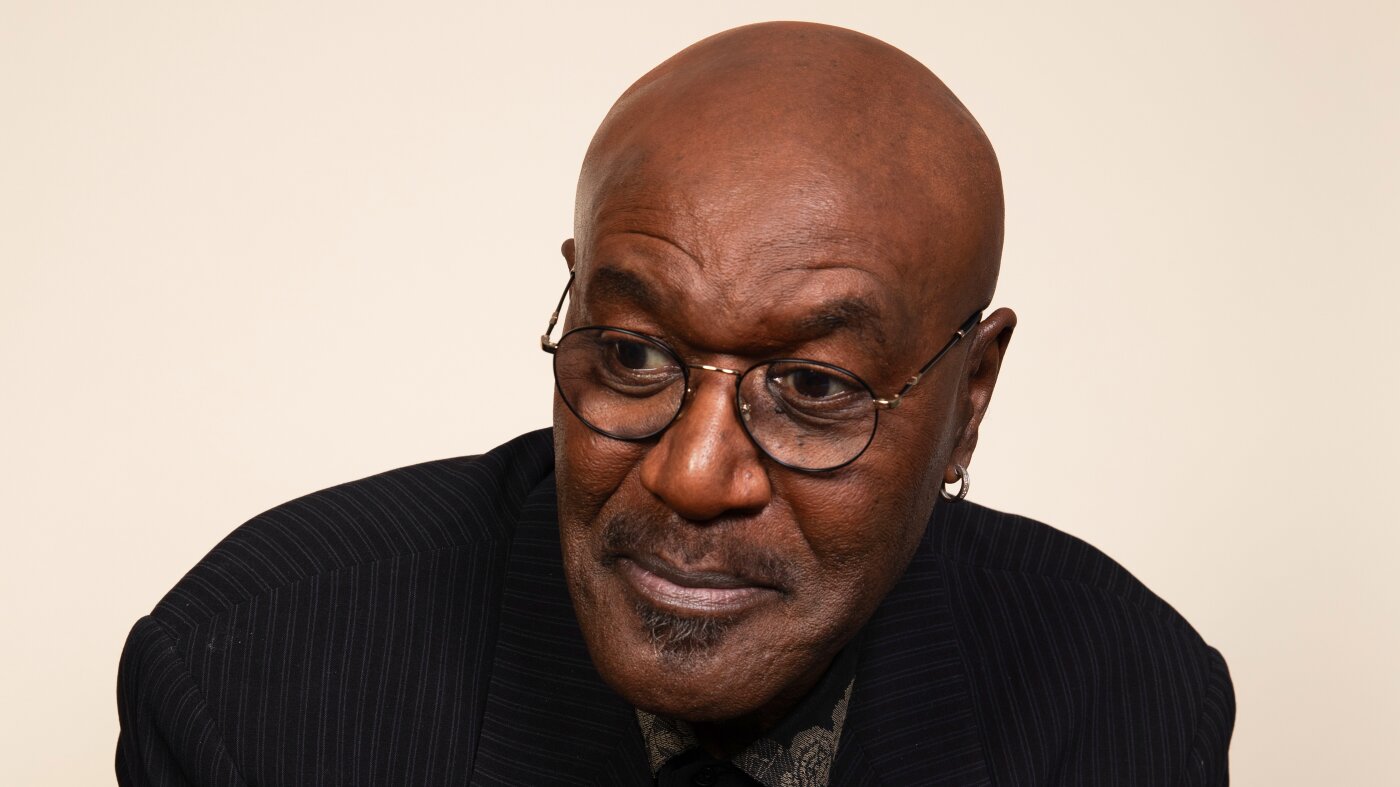
No matter what happens at the Oscars, Delroy Lindo embraces ‘the joy of this moment’

Amazon.com says things are fixed after some issues with logging in and checking out

Private flights account for 30% of departures from Oman airport as wealthy evacuate Middle East

Florida High School Football Rankings: Top 25 teams – Oct. 21

Cleary's 21 help Le Moyne down Central Connecticut State 69-64 in OT

How old is Bo Nix? What to know about Oregon quarterback ahead of 2024 NFL Draft

99th annual Pony Swim held in Virginia

Indiana Members Credit Union announced as new anchor tenant at Bottleworks District

DOJ continues Biden autopen probe despite former president unlikely to face charges
Fact check: Did French border guards mock influencers returning from Dubai amid Iran war?

Iran’s fight for survival / The widening war / Trump’s nebulous goals : Sources & Methods

Map: 4.9-Magnitude Earthquake Shakes Louisiana

Paxton vows he’s ‘staying in this race’ even if Trump backs Cornyn in Texas GOP clash
-

 World1 week ago
Exclusive: DeepSeek withholds latest AI model from US chipmakers including Nvidia, sources say
-

 Wisconsin4 days ago
Setting sail on iceboats across a frozen lake in Wisconsin
-

 Massachusetts1 week ago
Mother and daughter injured in Taunton house explosion
-

 Maryland5 days ago
AM showers Sunday in Maryland
-

 Massachusetts3 days ago
Massachusetts man awaits word from family in Iran after attacks
-

 Florida5 days ago
Florida man rescued after being stuck in shoulder-deep mud for days
-

 Denver, CO1 week ago
10 acres charred, 5 injured in Thornton grass fire, evacuation orders lifted
-

 Oregon6 days ago
2026 OSAA Oregon Wrestling State Championship Results And Brackets – FloWrestling