Connect with us

News

Why Hong Kong should put debt restructuring back on the legislative agenda

Published

on

Why Hong Kong should put debt restructuring back on the legislative agenda

Unlock the Editor’s Digest for free

In January, journalists, corporate consultants and restructuring specialists filled up a Hong Kong courtroom in a rare scene to attend Evergrande’s winding-up hearing where judge Linda Chan declared “enough is enough” and handed down a liquidation order.

The landmark case involving China’s once-biggest property developer by sales with more than $300bn in liabilities has put the territory’s legal framework for resolving debt problems back in the spotlight. More than 20 Chinese developers have been slapped with winding-up petitions in Hong Kong since China’s real estate crisis began in 2021, with at least five being ordered to be wound up by a Hong Kong judge.

This is not a great result for any of the parties involved. Often described as a “nuclear option” and a lose-lose scenario by lawyers, these winding-up court proceedings leave creditors with little to no return. And proceedings can drag out for many months.

Advertisement

Lawyers and restructuring specialists say Hong Kong’s legal framework for other debt restructuring options is lacking compared with financial jurisdictions such as London, New York and Singapore.

A restructuring bill to remedy this has been in discussion for more than 20 years in the Asian financial hub but other legislative priorities have taken precedence amid a lack of consensus on what it should contain. The last push to introduce one came in 2020 when a draft legislative proposal was made as the Covid-19 pandemic struck.

The Hong Kong government carried out a consultation but later put the plan again on hold. Although it said it would continue to consult stakeholders to refine the legislative proposals, there does not appear to be a timeframe for that.

Lawyers said there was a pressing need to raise the proposal back up the agenda, particularly as offshore creditors increasingly use Hong Kong courts to force distressed Chinese developers into speeding up their restructuring plans.

Chinese developers have defaulted on a massive $115bn of $175bn in outstanding offshore dollar bonds since 2021, according to Bloomberg data. And property developer Shimao last month became one of the latest to face a winding-up petition, unusually from a Chinese state-backed bank. Country Garden, which defaulted in October, received a winding-up petition in February involving more than $200mn worth of debt.

Advertisement

A key element of a restructuring bill is that after the appointment of a supervisor for a debt restructuring, a statutory moratorium would be imposed to halt parties from rushing off to court and asking for a winding up.

Under the current legal system in Hong Kong, creditors are free to go after distressed companies by filing wind-up petitions before a scheme of arrangement for a restructuring is agreed and then approved by a court, according to Jamie Stranger, a Hong Kong-based partner at Stephenson Harwood.

Law firm Herbert Smith Freehills says this gives “dissenting creditors significant leverage to hold the company and other consenting creditors to ransom and otherwise encourages ‘rogue’ behaviour by them, which in turn jeopardises the restructuring efforts”. It adds: “This often leads to a worse outcome for all interested parties where there is a genuine prospect that the restructured business would be able to trade out of its difficulties.”

One problem is to what extent would a restructuring bill cover mainland Chinese assets. Under the existing winding-up process in Hong Kong, it is very unlikely for offshore creditors to get back any onshore mainland assets. This is despite a “mutual recognition agreement” on insolvency and restructuring rolled out in 2021 that applies in some parts of mainland China. Offshore creditors remain typically subordinated to onshore stakeholders, lawyers say.

A bill “would need to interface with the mainland laws and provide some ability for a provisional supervisor to be recognised and assisted in the mainland”, Jonathan Leitch, a Hong Kong-based partner at Hogan Lovells, told me. Otherwise, the roles of a Hong Kong-based provisional supervisor in most cases “would be severely hampered”.

Advertisement

Lance Jiang, a partner in restructuring and insolvency at law firm Ashurst, says: “Most practitioners would like to have the new restructuring bill, because it definitely mitigates the gap between Hong Kong and other international centres and would give the companies and also the creditors side with more options to do consensual restructuring.”

“It’s Hong Kong, you know, the legislative council can do it quickly, efficiently,” says Jiang, adding that this would benefit everyone in the market.

thomas.chan@ft.com

News

Federal Agents and Los Angeles Police Arrest 18 in Drug Raid

Published

on

Federal Agents and Los Angeles Police Arrest 18 in Drug Raid

Federal agents and local police officers conducted several raids at homes and businesses around Los Angeles on Wednesday in a drug enforcement operation that the authorities said was targeting a network of fentanyl and methamphetamine dealers concentrated in the MacArthur Park area near downtown.

The operation resulted in 18 arrests, including two people believed to be the main source of fentanyl and methamphetamine in the park, officials said. Seven other people are being sought. A federal complaint filed Wednesday charges 25 people with possession of a controlled substance with the intent to distribute and distribution of a controlled substance.

The historic 35-acre park, which includes a lake, was once an idyllic haven amid an urban landscape in the Westlake neighborhood of Los Angeles, just west of downtown. But it has been troubled in recent years by homelessness and drug and gang activity even as city officials have taken steps to address the issues.

News and police helicopters whirred overhead during an outdoor news conference next to the park as Bill Essayli, the first assistant U.S. attorney for the Central District of California, was joined by Jim McDonnell, the Los Angeles police chief, and Anthony Chrysanthis, the special agent in charge of the Drug Enforcement Administration’s Los Angeles field office, in announcing the monthslong investigation that led to the arrests on Wednesday.

“Today’s operation is only one step taken by a handful of agencies working hard to alleviate anguish and the sense of hopelessness plaguing MacArthur Park,” Mr. Chrysanthis said.

Advertisement

Images captured by news helicopters showed D.E.A. agents in tactical gear raiding stores along a busy commercial corridor across the street from the park. Agents served search warrants at six businesses there, Mr. Chrysanthis said. More than 100 Los Angeles police officers participated in the operation, he added.

In court filings, prosecutors accused Mallaly Moreno-Lopez, 31, and her boyfriend, Jackson Tarfur, 28, of Los Angeles, of hand-delivering drugs to the businesses near the park for stashing and later distribution to street dealers. The authorities began their investigation in March, according to court filings.

If convicted, Ms. Moreno-Lopez and Mr. Tarfur face minimum 10-year prison sentences, officials said.

The authorities also raided the couple’s home in South Los Angeles, and the home of Yolanda Iriarte-Avila, 40, who court filings said had supplied Ms. Moreno-Lopez with methamphetamine. Officials said they had seized 40 pounds of fentanyl at Ms. Iriarte-Avila’s home in Calabasas on Wednesday.

The operation at MacArthur Park highlighted larger tensions between the federal government and California’s political leaders, whom the Trump administration has long accused of fostering lawlessness.

Advertisement

Last summer, the city was the scene of a federal show of force led by Gregory Bovino, the Border Patrol commander-at-large who was subsequently ousted from the agency. In July, Mr. Bovino led heavily armed immigration agents and National Guard troops in a march across the park in an operation that led to a confrontation between Mr. Bovino and Karen Bass, the mayor of Los Angeles.

At the news conference, Mr. Essayli, an ally of President Trump, was joined by Dr. Mehmet Oz, the former talk show host who now runs the Centers for Medicare and Medicaid Services and has recently embarked on a campaign targeting hospice care fraud in the state.

Both men blamed state and local policies for the conditions at the park. Mr. Essayli opened the news conference by saying, “We’re here today because California policies have failed.”

Mayor Bass and city officials have tried in recent years to clean up the park, exploring the installation of a fence and ramping up the police presence in the area.

“As we work to change MacArthur Park so that it’s safe and clean for families, we have zero tolerance for people who deal deadly drugs and prey on the community,” Mayor Bass said in a statement. “We will continue to aggressively pursue our comprehensive strategy to restore MacArthur Park.”

Advertisement

The mayor, who is running for re-election, also acknowledged the operation when asked about it at a Wednesday evening mayoral debate, and pointed to her plan to hire more police officers.

Continue Reading

News

Have you lost or are worried about losing SNAP benefits? NPR wants to hear your story

Published

on

Have you lost or are worried about losing SNAP benefits? NPR wants to hear your story

SNAP is the country’s largest anti-hunger program, serving the 1 in 8 U.S. residents who live at or just above the poverty line.

Joe Raedle/Getty Images North America


hide caption

toggle caption

Advertisement

Joe Raedle/Getty Images North America

States are starting to enforce expanded work requirements and other changes for people receiving aid from the Supplemental Nutrition Assistance Program, also known as SNAP or food stamps.

Those newly at risk of losing the benefit include able bodied recipients aged 55-64, parents of children 14-17, veterans, people experiencing homelessness, and young people who are aging out of foster care.

The changes are part of a 20% funding cut to the program under President Trump’s One Big Beautiful Bill Act last year.

Advertisement

The NPR Network wants to hear from you about the threat of losing these benefits. If you’ve already lost SNAP, what does that mean for your current situation and future plans?

If you’re a state employee or work in food assistance, we’d also like to hear how you see these changes unfolding.

Fill out the form below and tell us your story. If you would be open to an NPR or member station producer contacting you for a story, please indicate that in the appropriate field. We will not use your submission in our story until we have obtained your consent to use the details that will be published.

Advertisement
Continue Reading

News

Tennessee Republicans Unveil New Congressional Map Carving Up Majority-Black House District

Published

on

Tennessee Republicans Unveil New Congressional Map Carving Up Majority-Black House District

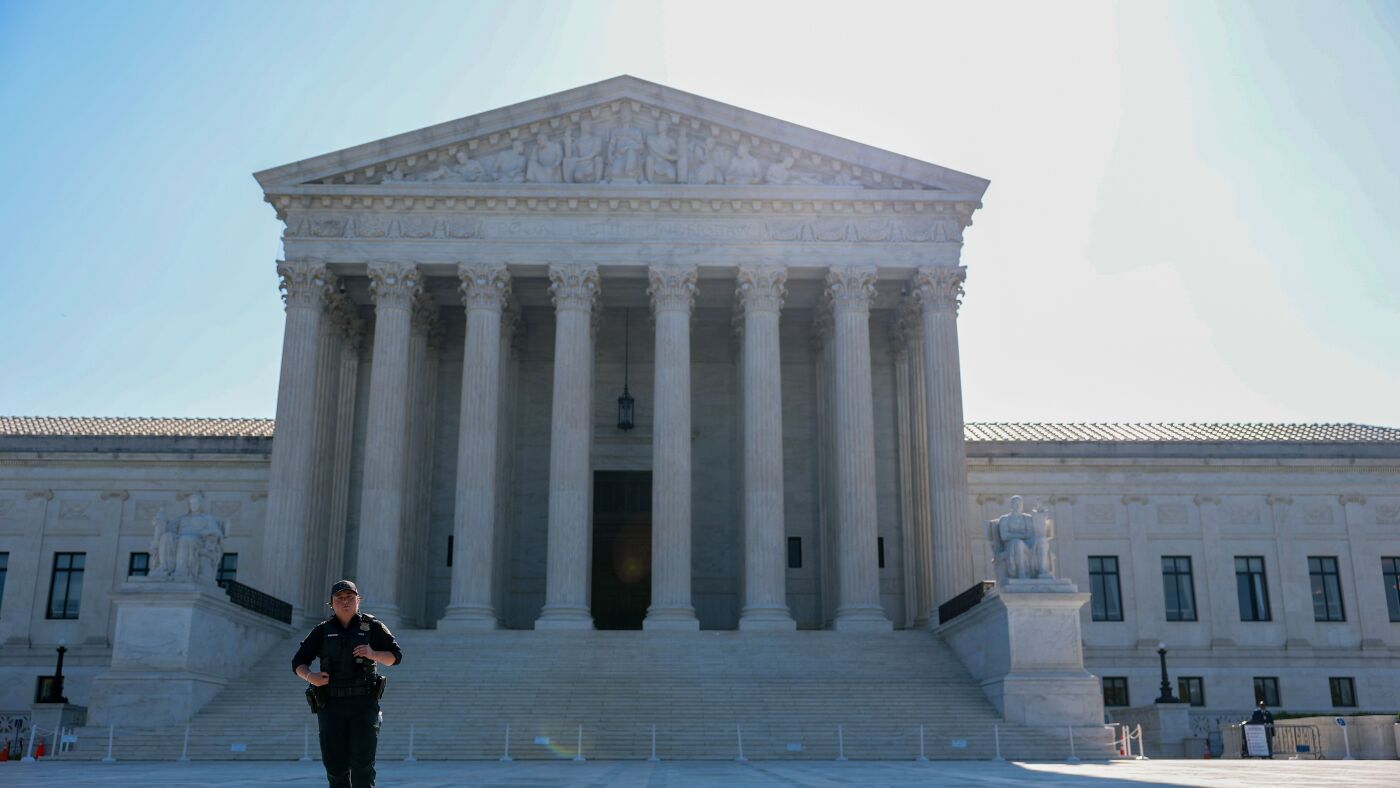
Tennessee Republicans on Wednesday proposed a congressional map aimed at diluting the state’s lone majority-Black district, a swift response to last week’s Supreme Court ruling that weakened a landmark voting rights law.

The new map slices Memphis, a majority-Black city, and Shelby County into three districts and likely will give Republicans the ability to flip Tennessee’s lone remaining Democratic seat, which includes the city.

Democratic lawmakers, whose opposition means little under a Republican supermajority in the state’s General Assembly, and Black leaders across Tennessee have compared the effort to carve up the Ninth Congressional District to Jim Crow-era voter suppression tactics. They have accused conservatives of a power grab that undermines Black voters in Memphis, who have long favored Democrats.

Republicans, cheered on by President Trump, have rejected those claims. Instead, they have said, they are responding to the Supreme Court ruling, which raised the bar for what constitutes a racial gerrymander under the Voting Rights Act of 1965.

Tennessee joins a series of states that have engaged in tit-for-tat redistricting battles since last summer, when Mr. Trump called for Republican-led states to redraw their maps and Texas became the first. Since then, new maps have materialized in half a dozen states controlled by both Republicans and Democrats, with more on the horizon, in the fight for Congress in November’s elections. Tennessee’s new map, if passed, would be the first directly responding to the high court ruling.

Advertisement

Under the map, Shelby County — which includes Memphis — is split into three districts. One district now runs along the state’s western border before extending down to include part of Williamson County, a suburban county just outside Nashville. Two other districts now share part of Shelby County and more rural, conservative communities in Tennessee.

“The Supreme Court has opined that redistricting, like the judicial system, should be colorblind — the decision indicated states like Tennessee can redistrict based on partisan politics,” Speaker Cameron Sexton said in a statement. “Tennessee’s redistricting will reduce the risk of future legal challenges while promoting sound and strategic conservatism.”

The General Assembly is expected to vote as soon as Thursday.

The Supreme Court struck down a Louisiana congressional map that included two majority-Black districts, arguing that it violated the Constitution by using race as the primary factor in redistricting. The ruling has set off a scramble across Southern states with Republican leadership, all of which have at least one majority-Black district, before the 2026 midterms.

Louisiana last week delayed its House primaries — though thousands of absentee votes had already been cast — to allow its Legislature to draft a new map. The South Carolina legislature is also facing conservative pressure to quickly adopt a new congressional map.

Advertisement

Alabama is barred by court order from adopting a new map until after the 2030 census but is trying to get the order lifted. In anticipation of a favorable ruling, lawmakers convened a special session this week with the goal of allowing the state to delay certain House primaries.

In Florida, debate over a new map that could give Republicans up to four new seats was underway as the Supreme Court ruling became public.

Mr. Trump spoke directly to Gov. Bill Lee of Tennessee, a Republican, to press for a new map the day after the ruling, and top Tennessee Republicans have raced to ease the way for rapid passage.

To do so, the legislature must first repeal a state law banning redistricting between census years each decade.

Hundreds of protesters gathered outside the State Capitol on Tuesday to voice opposition to a new map. Once inside, their chants and boos reverberated around the halls of the building. (On Tuesday, the House approved a strict rules package, which bans anyone removed from the gallery or committees for disorderly conduct from returning for the remainder of the session.)

Advertisement

“History will not look back kindly on you when you had an opportunity to do what was right and you chose to do something else,” said State Senator Raumesh Akbari, a Memphis Democrat, who delivered an emotional plea to Republican colleagues on Tuesday.

The Ninth Congressional District seat is currently held by Representative Steve Cohen, a white Democrat who has repeatedly maintained the support of many Black voters since he first won the seat in 2007. He is facing a Black primary challenger, State Representative Justin J. Pearson; both men joined a rally against the new map on Tuesday.

The new map is likely to scramble existing congressional races, including the one between Mr. Cohen and Mr. Pearson. Under the proposed map, the proposed Ninth Congressional District would stretch much farther east along the Tennessee border with Mississippi.

It was not immediately clear whether every Republican would support the map, but given the party’s supermajority, some amount of defection will not matter.

The map also affects Middle Tennessee, where the legislature had already split the Democratic stronghold of Nashville among three Republican-leaning districts. The Fifth Congressional District, which is currently held by Representative Andy Ogles, a Republican, no longer contains parts of Davidson County, which encompasses Nashville.

Advertisement

Should a new map be passed and signed into law, a legal challenge is expected. The primary in Tennessee is currently scheduled for Aug. 6.

Leanne Abraham and Katherine Chui contributed reporting.

Continue Reading
Advertisement

Trending