News
What happens during a presidential funeral and a look back at past funerals


(Original Caption) Billy Graham delivers the sermon at the graveside services for former President Lyndon B. Johnson at the family cemetery on the LBJ Ranch.
ATLANTA – A presidential funeral in the United States is a carefully orchestrated event, blending solemn traditions and heartfelt tributes. It spans several days and includes multiple stages, giving the nation time to mourn and honor its former leader. Here’s an easy-to-follow breakdown of what happens during these historic occasions:
1. The Initial Announcement
When a former president passes away, the sitting president issues an official proclamation to announce their death. Flags are lowered to half-staff across the country for 30 days as a sign of national mourning. The Department of Defense is tasked with organizing a state funeral to honor the late president’s service.
2. Local Ceremonies
Before heading to Washington, D.C., there are usually private ceremonies in the president’s home state or city.
- Private Service: Close family and friends gather for a quiet memorial.
- Lying in Repose: The president’s body is placed at a significant location, such as a presidential library, where local residents can pay their respects.
3. Washington, D.C. Ceremonies
The capital plays a major role in the state funeral. Here’s what happens:
- Arrival in Washington: The president’s remains are flown to D.C., often on a special aircraft designated for this purpose.
- Procession Through the City: The casket is transported with military honors, often by a horse-drawn caisson. This symbolic journey reflects the nation’s respect.
- Lying in State: The casket is placed in the Capitol Rotunda, where the public can pay their respects. A special platform called the Lincoln Catafalque, first used for Abraham Lincoln, supports the casket.
- State Funeral Service: A formal ceremony is held, usually at the Washington National Cathedral, featuring eulogies from notable figures like current and former presidents, hymns, and prayers.
4. The Final Goodbye and Burial
After the ceremonies in Washington, the president’s remains are returned to their chosen burial site, often their hometown or a location of personal significance.
- Private Funeral: A smaller, more intimate service is held for family and close friends.
- Interment: The president is laid to rest, often with military honors such as a 21-gun salute or a flyover.
Ceremonial Highlights
Throughout the process, several traditions make these funerals uniquely presidential:
- Military Honors: Elite honor guards and military bands participate, reflecting the president’s role as commander-in-chief.
- 21-Gun Salute: This traditional military tribute honors the late president’s service.
- Eulogies: Delivered by prominent leaders, these heartfelt tributes celebrate the president’s life and legacy.
A Time for National Mourning
The entire process, from the initial announcement to the burial, typically lasts 7 to 10 days. It allows Americans to grieve collectively, remember the president’s contributions, and reflect on their impact on the nation.
RELATED: PHOTOS: Ceremonies begin for former President Jimmy Carter | 1924-2024
A Look at the Last 8 Presidents

Joint services military honor guards carry the casket of former U.S. President George H.W. Bush to a Union Pacific train in Spring, Texas, U.S., on Thursday, Dec. 6, 2018. Bush, the longest-living president in U.S. history at age 94, died at his home
George H.W. Bush (41st President)
- Died: Nov. 30, 2018
- Funeral: A state funeral spanned several days in Texas and Washington, D.C. Bush lay in state at the U.S. Capitol before a service at the National Cathedral. Attendees included President Trump, First Lady Melania Trump, former presidents, first ladies, and foreign dignitaries.
- Highlights: His remains were transported via a train painted in an Air Force One color scheme, reflecting his love of trains.
- Burial Site: George H.W. Bush Presidential Library, College Station, Texas, alongside his wife, Barbara, and daughter Robin.
- Estimated Cost: $500,000–$2 million
washington, UNITED STATES: Betty Ford pauses at the flag draped casket of her husband and former US president Gerald R. Ford, as he lies in state in the Rotunda of the US Capitol Building in Washington DC, 01 January 2007. Ford died in California on
Gerald Ford (38th President)
- Died: Dec. 26, 2006
- Funeral: Ceremonies took place in California, Washington, D.C., and Michigan. Services included a memorial at St. Margaret’s Episcopal Church, lying in state at the Capitol, and a funeral at the National Cathedral.
- Highlights: Ford’s body lay in repose at his presidential museum in Michigan, where 67,000 people paid their respects.
- Burial Site: Gerald R. Ford Presidential Museum, Grand Rapids, Michigan, alongside his wife, Betty Ford.
- Estimated Cost: $7 million
TOPSHOT – Former US First Lady Nancy Reagan (C), escorted by Maj. Gen. Galen B. Jackman, watches 09 June, 2004, as the guard honor carries the casket bearing the remains of her husband former US president Ronald Reagan to the presidential airplane fo
Ronald Reagan (40th President)
- Died: June 5, 2004
- Funeral: A week-long state funeral included services in California, Washington, D.C., and a private burial at the Reagan Library. Reagan lay in repose for two days at the library and later in state at the Capitol, where 100,000 mourners visited.
- Highlights: A sunset burial service marked the return of large-scale presidential state funerals.
- Burial Site: Ronald Reagan Presidential Library, Simi Valley, California.
- Estimated Cost: $400 million (including extensive security costs).
Flowers for Richard Nixon’s Funeral (Photo by �� Steve Starr/CORBIS/Corbis via Getty Images)
Richard Nixon (37th President)
- Died: April 22, 1994
- Funeral: A private service held at the Nixon Presidential Library in California, attended by world leaders and five living presidents.
- Highlights: Nixon lay in repose at the library, where 50,000 people waited up to 18 hours to pay their respects.
- Burial Site: Nixon Library, Yorba Linda, California, alongside his wife, Pat.
- Estimated Cost: Approximately $200,000
Honor guard bearing former Pres. Richard Nixon’s flag-draped coffin during funeral service (Rev. Billy Graham at far L). (Photo by Diana Walker/Getty Images)
Lyndon B. Johnson (36th President)
- Died: Jan. 22, 1973
- Funeral: Services included ceremonies in Washington, D.C., and Texas. Johnson lay in state at the Capitol and was later buried with military honors on his ranch.
- Highlights: A Texas National Guard Unit fired a 21-gun salute during his burial.
- Burial Site: Johnson Family Cemetery, Stonewall, Texas, alongside Lady Bird Johnson.
- Estimated Cost: Likely under $500,000
John F. Kennedy (35th President)
- Died: Nov. 22, 1963
- Funeral: A three-day event following his assassination. Kennedy lay in repose at the White House, then in state at the Capitol, before a funeral Mass at St. Matthew’s Cathedral.
- Highlights: Jacqueline Kennedy lit the eternal flame at his Arlington gravesite. The funeral was the first to be televised.
- Burial Site: Arlington National Cemetery, Arlington, Virginia.
- Estimated Cost: Roughly $4 million (adjusted for inflation).
Funeral of Harry Truman, miscellaneous views of casket as it lies in state of Truman Library. (Photo by UPI Color/Bettmann Archive/Getty Images)
Harry S. Truman (33rd President)
- Died: Dec. 26, 1972
- Funeral: Truman requested a modest funeral. Services included a private memorial at the Truman Library and a public memorial at the National Cathedral.
- Highlights: His body passed by the Truman home, where Bess Truman watched from a window.
- Burial Site: Truman Library, Independence, Missouri, alongside his wife, Bess.
- Estimated Cost: Likely under $100,000
The late President Franklin Delano Roosevelt is laid to rest in the rose garden of his Hyde Park estate. Mourners and military officers gather to pay their last respects. | Location: Hyde Park, New York, USA.
Franklin D. Roosevelt (32nd President)
- Died: April 12, 1945
- Funeral: Services were held at the White House and St. John’s Episcopal Church before his burial at Hyde Park.
- Highlights: Thousands lined the train route from Warm Springs, Georgia, to New York. The ceremonies were scaled down due to WWII.
- Burial Site: Springwood Estate, Hyde Park, New York, alongside Eleanor Roosevelt.
- Estimated Cost: Unknown
Costs for Future Presidential Funerals
Modern presidential funerals have become increasingly expensive due to heightened security and larger public ceremonies. Estimated costs for future funerals could reach $8–10 million or more.
Presidents Still Living
- Joe Biden (46th President)
- Donald Trump (45th President)
- Barack Obama (44th President)
- George W. Bush (43rd President)
- Bill Clinton (42nd President)



By Zolan Kanno-Youngs, Gilad Thaler, Jon Miller, Nikolay Nikolov, June Kim, Paul Abowd and Pierre Kattar
April 14, 2026
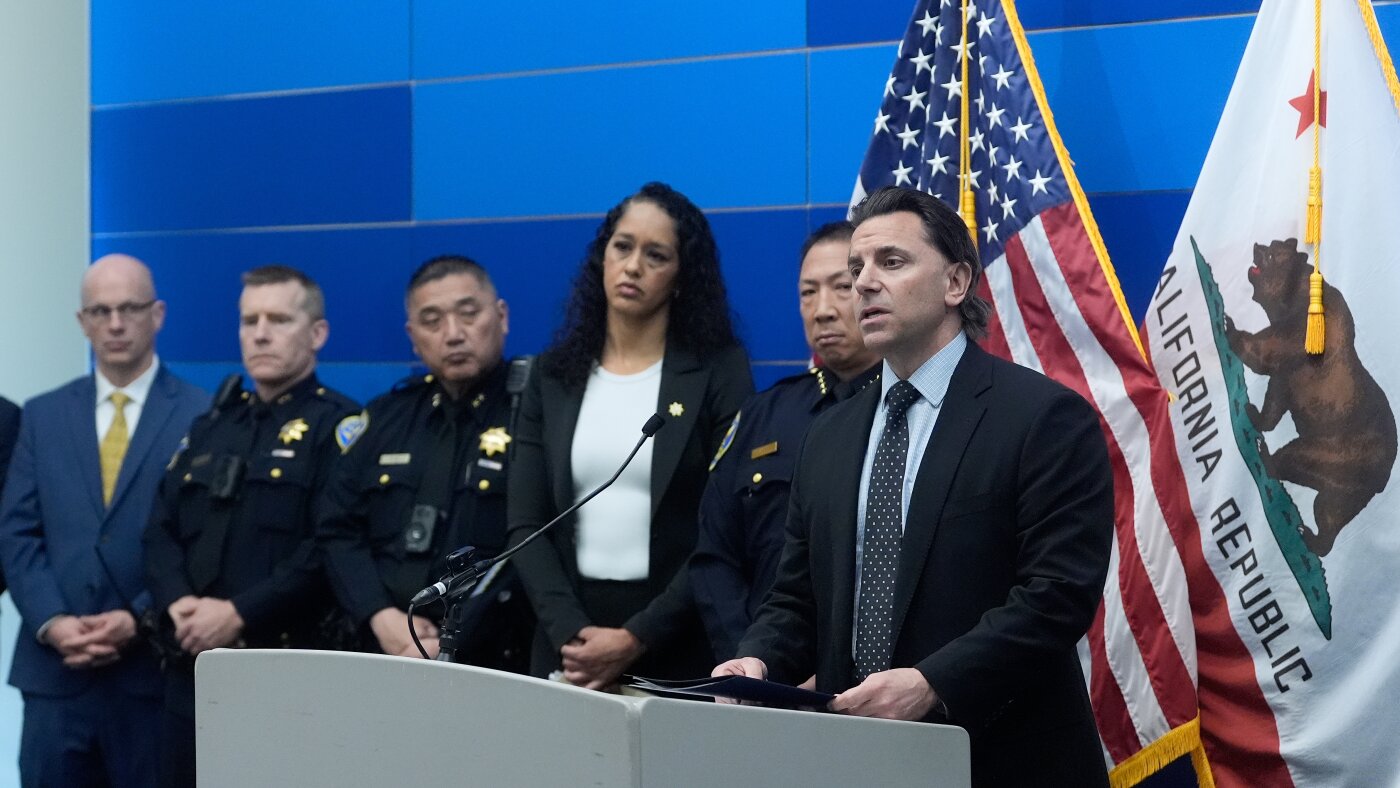
Matt Cobo, F.B.I. San Francisco Acting Special Agent in Charge ( right) speaks next to San Francisco Police Chief Derrick Lew (second from right) and San Francisco District Attorney Brooke Jenkins (third from right) during a news conference Monday, April 13, 2026, in San Francisco.
Jeff Chiu/AP
hide caption
toggle caption
Jeff Chiu/AP
SAN FRANCISCO — The man accused of throwing a Molotov cocktail at OpenAI CEO Sam Altman’s home had written about AI’s purported risk to humanity and traveled from Texas to San Francisco intending to kill Altman, authorities said Monday.
Authorities allege 20-year-old Daniel Moreno-Gama threw the incendiary device about 4 a.m. Friday, setting an exterior gate at Altman’s home alight before fleeing on foot, police said. Less than an hour later, Moreno-Gama allegedly went to OpenAI’s headquarters about 3 miles (4.83 kilometers) away and threatened to burn down the building.
Moreno-Gama is opposed to artificial intelligence, writing about AI’s purported risk to humanity and “our impending extinction,” according to a federal criminal complaint.

“This was not spontaneous. This was planned, targeted and extremely serious,” said FBI San Francisco Acting Special Agent in Charge Matt Cobo during a press conference.
No one was injured at Altman’s home or the company offices, authorities said.
Moreno-Gama faces state and federal charges
Moreno-Gama faces charges including two counts of attempted murder and attempted arson in California state court, San Francisco District Attorney Brooke Jenkins. He tried to kill both Altman and a security guard at Altman’s residence, she alleged. He is set to appear in court Tuesday, and online state court records do not yet show if he has an attorney.
Jenkins said the state charges carry penalties ranging from 19 years to life in prison.
On Monday morning, FBI agents went to Moreno-Gama’s home in Spring, Texas, a suburb of Houston, where they spent several hours before leaving. He has been charged by federal prosecutors with possession of an unregistered firearm and damage and destruction of property by means of explosives. Those charges carry respective penalties of up to 10 years and 20 years in prison.
The federal court documents do not list an attorney for Moreno-Gama, and he has not yet had his first appearance in federal court.
Authorities allege Moreno-Gama traveled from his home in Texas to San Francisco and visited Altman’s home early Friday morning.
Authorities say Moreno-Gama was opposed to artificial intelligence
When Moreno-Gama was arrested Friday, officials found a document on him in which he “identified views opposed to Artificial Intelligence (AI) and the executives of various AI companies,” court documents say. The document discussed AI’s purported risk to humanity and “our impending extinction,” according to the criminal complaint.
Surveillance video images included in the criminal complaint show a person dressed in a dark hoodie and pants that the FBI alleges is Moreno-Gama approaching the driveway of Altman’s home. In various images, the person can be seen tossing the Molotov cocktail, which landed at the top of a metal gate and started a small fire.
Surveillance video images from outside OpenAI’s headquarters allegedly show Moreno-Gama grabbing a chair and using it to hit a set of glass doors. Authorities said Moreno-Gama was approached by the building’s security personnel, who told investigators he “stated in sum and substance” that he came to the headquarters “to burn it down and kill anyone inside,” according to the complaint.
San Francisco police arrested Moreno-Gama and recovered “incendiary devices, a jug of kerosene, a blue lighter, and a document.” Moreno-Gama was being held Monday in the San Francisco County Jail on the state charges, and was expected to appear in court on Tuesday.
U.S. Attorney Craig Missakian said authorities “will treat this as an act of domestic terrorism, and together with our partners, prosecute him to the fullest extent of the law.”
Authorities say Moreno-Gama’s anti-AI document contained threats against Altman
The document in which Moreno-Gama discussed his opposition to AI also made threats against Altman, officials said.
“Also if I am going to advocate for others to kill and commit crimes, then I must lead by example and show that I am fully sincere in my message,” Moreno-Gama is alleged by authorities to have written in the document.
Advocacy groups that have issued grave warnings about AI’s risks to society condemned the violence.
Anthony Aguirre, president and CEO of the Future of Life Institute, said in a written statement Friday that “violence and intimidation of any kind have no place in the conversation about the future of AI.”

Another group, PauseAI, said in a statement that the suspect had no role in the group but joined its forum on the social media platform Discord about two years ago and posted about 34 messages there, none containing explicit calls to violence but one that was flagged as “ambiguous.”
Discord said Monday that it has banned Moreno-Gama for “off-platform behavior.”
Altman addressed the threats in a blog post
Hours after the attack on his house, Altman posted a photo of his husband and their toddler in a blog post addressing the threats against him.
“Normally we try to be pretty private, but in this case I am sharing a photo in the hopes that it might dissuade the next person from throwing a Molotov cocktail at our house, no matter what they think about me,” Altman wrote.
He added that “fear and anxiety about AI is justified” but it was important to “de-escalate the rhetoric and tactics and try to have fewer explosions in fewer homes, figuratively and literally.”
Altman has become a preeminent voice in Silicon Valley on the promise and potential dangers of artificial intelligence. The attack comes days after The New Yorker published an in-depth investigation that touched on concerns some people have about him and the company.
Debate about the impact of AI is growing
The attack came at a time of growing debate about the societal effects of AI assistants like OpenAI’s ChatGPT that millions of people are turning to for information, advice, writing help and to do work on their behalf.
An annual report published Monday by Stanford University called the AI index found that most people believe AI’s benefits outweigh its drawbacks, “but nervousness is growing and trust in institutions to manage the technology remains uneven.”

The Justice Department has fired at least four prosecutors who were involved in prosecutions under the FACE Act during the Biden administration, a government official familiar with the firings told CBS News.
Among those fired Monday is Sanjay Patel, a longtime federal prosecutor in the Civil Rights Division’s criminal section who was placed on administrative leave last month, sources told CBS News at the time. The terminations occurred at about the same time a report on the FACE Act and the Biden Justice Department was being finalized.
Congress passed the FACE Act in 1994 to address rising concerns about threats and intimidation that women were facing at reproductive health clinics. Nonviolent and first-time offenses of the law are misdemeanors, while repeat offenses or violations that result in bodily injury or death can be treated as felonies.
The FACE Act report is being drafted by the Justice Department’s “weaponization working group,” established in the first days of former Attorney General Pam Bondi’s tenure.
A Justice Department spokesperson said in a statement that the department “has terminated the employment of personnel responsible for weaponizing the FACE Act who still remained at the department.”
The Trump administration has repeatedly alleged without citing evidence that the Civil Rights Division under former Attorney General Merrick Garland used the Act to intentionally target conservative Christians who are morally opposed to abortion.
Although the Justice Department also pursued criminal charges against abortion rights activists who were accused of trying to scare volunteers and workers at a crisis pregnancy clinic that counseled on alternatives to abortion, excerpts of a draft the report reviewed by CBS News said the total number of such cases were minimal compared to those targeting conservative anti-abortion Christians.
Early in his second term, President Trump pardoned many of the FACE Act defendants convicted during the Biden administration. The Justice Department also dismissed several other FACE Act cases and ordered prosecutors to put the brakes on future FACE Act investigations.
At the same time, however, the current Justice Department has allowed the remaining FACE Act cases involving abortion rights activists to proceed without interference, with one Florida-based defendant receiving a 120-day prison term in March 2025.
Many of the other former federal prosecutors who handled FACE Act cases have since left the Justice Department.
MS NOW was first to report that Patel had been placed on administrative leave.

Gov. Abbott to tour South Plains College, discuss Texas Jobs Council

Kentucky Wildcats set to host Utah transfer Terrence Brown on visit

Hour-by-hour: When to expect showers & thunderstorms Tuesday in Vermont, New York

Virginia’s Spanberger Approves Workplace Heat Safety Standards

Aviation safety bill based on DC midair collision faces House vote Tuesday

Florida High School Football Rankings: Top 25 teams – Oct. 21

How old is Bo Nix? What to know about Oregon quarterback ahead of 2024 NFL Draft

Cleary's 21 help Le Moyne down Central Connecticut State 69-64 in OT

99th annual Pony Swim held in Virginia

Indiana Members Credit Union announced as new anchor tenant at Bottleworks District

Video: How Stephen Miller Is Adjusting Trump’s Immigration Agenda

Biden DOJ weaponized FACE Act against pro-life Americans, 882-report alleges

Mass drone warfare is Europe’s rising security threat
Man accused in Molotov cocktail attack of OpenAI CEO’s home charged with attempted murder

Embattled Rep Tony Gonzales announces plans to resign amid sexual misconduct allegations
-

 Atlanta, GA1 week ago
1 teenage girl killed, another injured in shooting at Piedmont Park, police say
-

 Georgia7 days ago
Georgia House Special Runoff Election 2026 Live Results
-

 Arkansas4 days ago
Arkansas TV meteorologist Melinda Mayo retires after nearly four decades on air
-

 Pennsylvania1 week ago
Parents charged after toddler injured by wolf at Pennsylvania zoo
-
 Milwaukee, WI1 week ago
Potawatomi Casino Hotel evacuated after fire breaks out in rooftop HVAC system
-

 Austin, TX6 days ago
ABC Kite Fest Returns to Austin for Annual Celebration – Austin Today
-

 World1 week ago
Zelenskyy warns US-Iran war could divert critical aid from Ukraine
-

 World1 week ago
Indonesia receives bodies of peacekeepers killed in southern Lebanon