Connect with us

News

SCOTUS immunity ruling helps Trump, angers Democrats. Plus, July 4th travel tips

Published

on

SCOTUS immunity ruling helps Trump, angers Democrats. Plus, July 4th travel tips

Today’s top stories

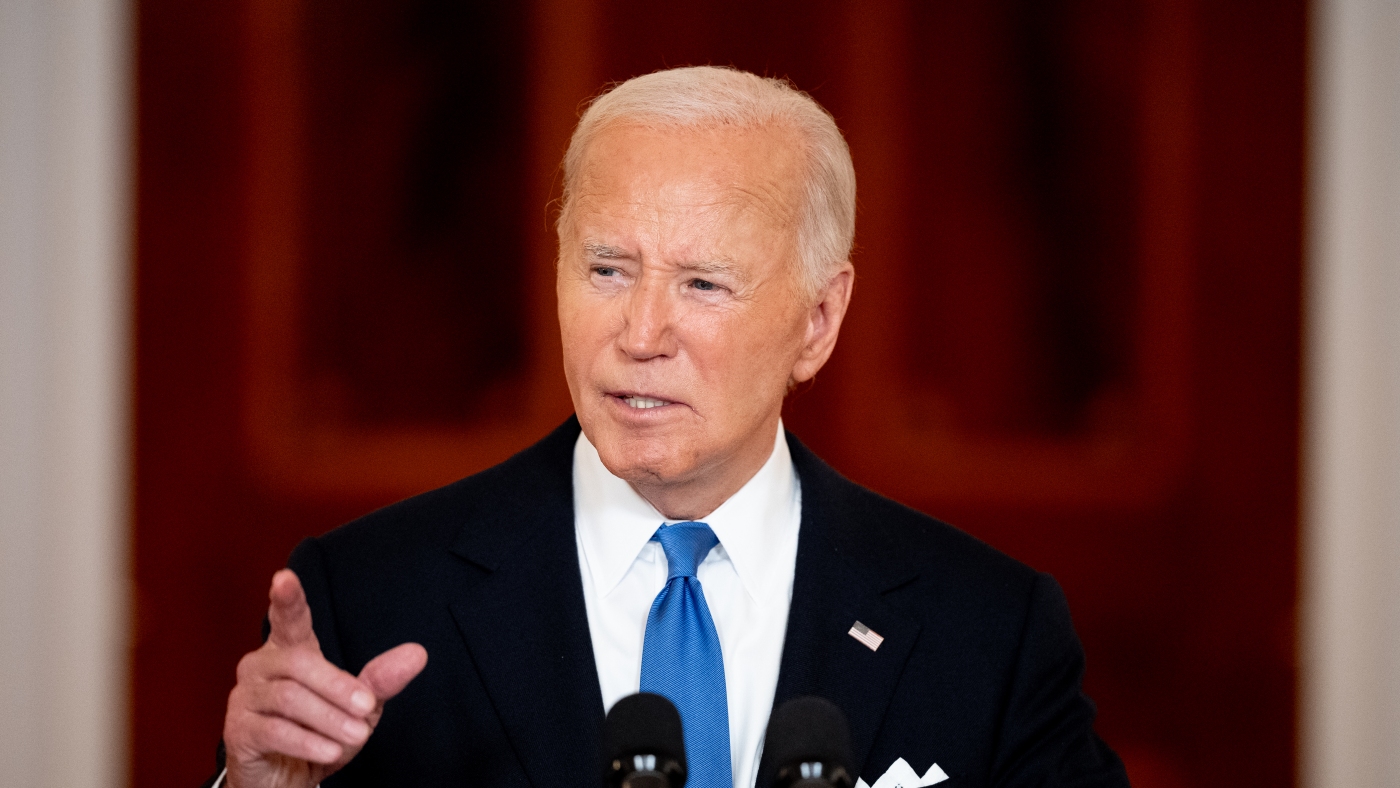
The Supreme Court ruled yesterday that former President Donald Trump has broad immunity from federal prosecution. In a 6-3 opinion along ideological lines, the justices said a former president is entitled to a presumption of immunity for his official acts but lacks immunity for unofficial acts. The court sent the case back to the judge in Trump’s election case to determine whether any of Trump’s actions were part of his official duties. President Biden said the ruling sets a “dangerous precedent” and “undermines the rule of law” in remarks from the White House.

President Biden gives remarks on the Supreme Court decision on presidential immunity at the White House on July 1.

Andrew Harnik/Getty Images/Getty Images North America


hide caption

Advertisement

toggle caption

Andrew Harnik/Getty Images/Getty Images North America

  • 🎧 The timing of the court’s decision means there’s “no chance” voters will have a verdict in Trump’s Jan. 6 case before the November election, NPR’s Domenico Montanaro tells Up First. Trust in the court has nosedived due to controversial decisions and ethics issues, according to an NPR poll. The next president could potentially nominate three new justices, as Clarence Thomas, Samuel Alito and Sonya Sotomayor are all above 70. If Trump wins the presidency and is able to appoint younger, conservative justices, it could “set Democrats back another 20 years,” Domenico says.

Hurricane Beryl strengthened to a Category 5 storm yesterday after it made landfall on Grenada’s Carriacou Island in the Caribbean. It’s the earliest Atlantic hurricane to reach this strength on record due partly to record-high ocean temperatures.

  • 🎧 The speed at which Beryl grew is something climate scientists have been expecting, NPR’s Michael Copley says. Though climate change is still an active area of research, Copley says it’s clear hotter temperatures are strengthening hurricanes. Coastal communities will see the biggest risk from storm surges, which are walls of water that get pushed on shore. Hurricanes can also hold a large amount of water vapor, causing torrential rains and floods that threaten inland communities, even if they’re not in the storm’s path.
  • ➡️ Experts are expecting an extremely active Atlantic hurricane season. The best time to prepare is before a storm forms. Learn how to pack a go bag, an essential tool during natural disasters.

Longevity researchers have their eyes on a generic drug that they think could help extend people’s lives. The FDA first approved rapamycin in the 1990s for transplant patients to suppress the immune system and prevent transplant rejection. At lower doses, it helps decrease inflammation. Now, the FDA has approved rapamycin testing in patients with gum disease — a common condition that tends to accelerate with age. Jonathan An, the doctor leading this research, gum disease is the “canary in the coalmine” of age-related diseases, as it’s linked to a higher risk of heart disease and dementia.

Life advice

Nearly 71 million people are expected to make trips for the Independence Day travel period, AAA predicts.

Nearly 71 million people are expected to make trips for the Independence Day travel period, AAA predicts.

David Schaper/NPR

hide caption

Advertisement

toggle caption

David Schaper/NPR

Nearly 71 million Americans are expected to travel for the Fourth of July this week, the AAA predicts. It could be the busiest Independence Day travel season on record — both in the air and on the roads. Here’s what to know and how to avoid slowdowns if you’re planning a trip this week:

  • ✈️ It’s vital to get to the airport well before your departure time, says Gerardo Spero, the TSA’s federal security director at Philadelphia International Airport. Travel volumes are up at many airports, so allow extra time for parking,, checking your bags and security.
  • 🚗 Drivers in metro areas can expect the worst traffic tomorrow. If you haven’t hit the road already, the best time to start is before 10:00 a.m.
  • ☀️ High temperatures and thunderstorms may slow trains and planes. Traveling in the morning or evening can offset these risks.
  • 🚫 If a flight is canceled, airlines must offer travelers a refund or book another flight. But the rules for flight delays are more complicated. Check your airline’s policy on the Transportation Department website.

Picture show

Abdul Jabbar's Boli Khela, a century-old traditional wrestling competition in Chittagong, draws thousands of eager spectators annually. In this picture captured in Chittagong, Bangladesh on April 24, 2023, two individuals are seen wrestling on a sandy stage in front of a street audience.

Abdul Jabbar’s Boli Khela, a century-old traditional wrestling competition in Chittagong, draws thousands of eager spectators annually. In this picture captured in Chittagong, Bangladesh on April 24, 2023, two individuals are seen wrestling on a sandy stage in front of a street audience.

Sanchayan Chowdhury


hide caption

Advertisement

toggle caption

Sanchayan Chowdhury

A pack of pelicans, a snowed-in village and a wrestling match: these are some finalists for the 2024 Siena Drone Photo Awards. Thanks to technological advancements, drone photography has evolved over the years. Drones can fly faster, secure better-quality images, and move more precisely, allowing photographers to capture stunning aerial shots. Emanuela Ascoli, one of the judges, says she’ll consider each photograph’s “emotional and aesthetic impact” and how well it captures “the perfect moment.”

Advertisement

3 things to know before you go

A large framed portrait is unveiled, of a curly-haired teenage boy in a red polo shirt against a blue background.

An image of 15-year-old Carlo Acutis is unveiled during his beatification ceremony at the St. Francis Basilica in Assisi, Italy in October 2020.

Gregorio Borgia/AP


hide caption

toggle caption

Gregorio Borgia/AP

Advertisement

  1. Carlos Acutis, a teen tech whiz who died of leukemia at age 15, will be canonized as the Catholic Church’s first millennial saint. Acutis is fondly remembered as “God’s influencer” and the “patron saint of the internet” for his work cataloging Eucharistic miracles worldwide.
  2. Naomi Osaka won her first Wimbledon match in six years yesterday. In 2021, she took a short hiatus from tennis for mental health reasons. She’s been vocal about her struggles on the court
  3. Celebrity stingray Charlotte, who was declared pregnant without a male mate earlier this year, has died. The North Carolina aquarium where she lived previously announced she had a “rare reproductive disease.”

This newsletter was edited by Majd Al-Waheidi.

News

Three more people charged with damaging Reflecting Pool after Trump’s multimillion-dollar restoration | CNN Politics

Published

on

Three more people charged with damaging Reflecting Pool after Trump’s multimillion-dollar restoration | CNN Politics

Three more people have been criminally charged with destruction of property at the Lincoln Memorial Reflecting Pool.

Officers say they detained Cameron Thiers, Sophie Dennison-Gibby and Justin Carreno one Saturday afternoon in June and described in court documents witnessing them peeling and removing pieces of blue paint from the Reflecting Pool.

One officer “witnessed Carreno reach down into the reflecting pool and pull up a piece of the blue paint,” according to the court documents.

The officer who detained Dennison-Gibby “found 1 additional piece of the reflecting pool liner” in her purse, the documents said.

All three incidents were recorded on the officers’ body worn cameras, they said in the court documents.

Advertisement

Several “partnering law enforcement agencies assigned to the Reflecting Pool” working with US Park Police were involved in detaining the two men and one woman — including officers from Texas, Oklahoma, Montana and California.

One of the officers said in court documents that Thiers “admitted to removing a piece of blue sealant from the Reflecting Pool and still had it in his hand when I made contact with him.”

The three defendants were arraigned in court Wednesday and pleaded not guilty to the misdemeanor charges of destruction of property with a value less than $1,000. The judge ordered them to stay away from the Reflecting Pool.

Lawyers for Thiers and Dennison-Gibby declined to comment. CNN has reached out to Carreno’s attorney.

If found guilty of destruction of property, the defendants could be fined up to $1,000 and face a maximum of 180 days behind bars.

Advertisement

The New York Times first reported that three additional people had been charged with damaging the Reflecting Pool.

President Donald Trump has repeatedly claimed that vandals caused major damage to the pool by gashing the lining after his administration spent more than $14 million on renovations, though he has not provided evidence to support that claim. The officers who charged Carreno, Thiers and Dennison-Gibby did not accuse them of gashing the lining.

Former Olympic canoeist David Hearn was indicted by a grand jury in Washington, DC, last week for allegedly damaging the Reflecting Pool. Hearn — unlike Carreno, Thiers and Dennison-Gibby – was charged with destruction of property with a value of more than $1,000 which carries a maximum penalty of 10 years in prison, if convicted. He is set to be arraigned in court Thursday.

Crews began draining the Reflecting Pool over the weekend to make repairs, according to Interior Secretary Doug Burgum, for the second time in three months.

The move comes after weeks of problems – algae blooms, green-hued water, a chipping bottom and the administration’s allegations of vandalism – that have plagued the iconic landmark, making its woes the subject of national interest.

Advertisement
Continue Reading

News

Supreme Court financial disclosures reveal how their books add to their income

Published

on

Supreme Court financial disclosures reveal how their books add to their income

Supreme Court Justice Amy Coney Barrett speaks at the Reagan Library on Sept. 9, 2025, in Simi Valley, Calif. Barrett discussed and signed copies of her new book, Listening to the Law: Reflections on the Court and Constitution.

Mario Tama/Getty Images


hide caption


toggle caption

Advertisement

Mario Tama/Getty Images

Even as the Supreme Court was handing down one legal thunderbolt after another last week, the justices were quietly releasing their annual financial reports. Justice Samuel Alito was the only sitting justice to request an extension, which he has done for 15 years. The disclosures do not give a complete account of the justices’ total income and wealth, but they give insights into their concertgoing, guest professorships and even their involvement in youth sports.

In addition to their salaries, much of the justices’ reported income came from their book deals. Justice Ketanji Brown Jackson led the pack earning more than $1.1 million last year for a total of roughly $4 million since her memoir, Lovely One, was published in 2024.

Justices Sonia Sotomayor, Neil Gorsuch, Amy Coney Barrett and retired Justice Anthony Kennedy also reported income from published books. Earnings from their books ranged from $849,000 for Barrett, to $300,000 for Gorsuch and $88,000 for Sotomayor, whose books include her 2013 autobiography and five children’s books. Justice Clarence Thomas, who previously earned $1.5 million for his 2007 memoir, listed no publisher payments last year, and Justice Brett Kavanaugh, one of 13 co-authors of a 2016 legal treatise, also received no payments last year. Kavanaugh is said to be working on a memoir but he listed no payments for the anticipated book. Alito does have a book coming out in the fall, but with his financial report still outstanding, there is no data on how much he was paid for the work in 2025.

Advertisement

The only two sitting justices who have not written books are Chief Justice John Roberts and Justice Elena Kagan.

Many justices also earned income from teaching at law schools. Roberts reported income from New England Law, located in Boston, and Gorsuch reported teaching income from George Mason University in Virginia. Thomas taught classes at Catholic University in Washington, D.C., and Barrett and Kavanaugh taught at Notre Dame Law School. Barrett graduated from the school and began teaching there 23 years ago; Kavanaugh has family connections to Notre Dame.

Continue Reading

News

Manhattan Building’s Columns Buckled Beneath New Addition, Images Show

Published

on

Manhattan Building’s Columns Buckled Beneath New Addition, Images Show

At least two structural columns buckled and failed in a 37-story office tower in Midtown Manhattan on Tuesday, prompting evacuations of nearby streets and buildings. While city officials asserted that the tower was in no danger of collapsing completely, outside engineers said further failures in the structure could not be ruled out.

A pair of columns that failed completely were part of the tower’s existing structure. A New York Times review of images and videos from inside the building has found that several floors were added atop these columns.

Advertisement

City officials said in a news conference on Tuesday that the building was continuing to move, while they simultaneously assured the city that the building would not suffer “total collapse.” “The way this building is constructed, it’s a steel-frame building,” John Esposito, a chief in the Fire Department in New York, said at the afternoon news conference. “So, it would not be a total collapse. It would be more of a localized collapse.” Still, he said, “that remains our concern, that it’s moved.”

Advertisement

Engineers said that the movement itself was cause for concern. In a properly designed steel building, they said, loads should redistribute quickly to surviving structural supports if columns failed.

Joe DiPompeo, a former president of the Structural Engineering Institute at the American Society of Civil Engineers, said that if the structure had been overloaded, he would expect any movement “to happen very quickly,” rather than gradually.

“Generally when a column buckles, it’s a sudden failure,” Mr. DiPompeo said. He said that a full collapse remained unlikely given the redundancies built into the building codes.

Advertisement

Engineers often refer to the most dangerous possibility as a progressive collapse, a process in which structures near the initial failure become overstressed and also fail, potentially bringing down the building if the sequence continues. While unlikely, it cannot be ruled out, Mr. DiPompeo said.

Footage recorded from inside the building shows at least two structural columns appear to have failed completely, Mr. DiPompeo said. Other nonstructural, interior walls — or at least the metal “studs” that were in place to hold them up — also appear to have deformed.

Advertisement

“The only way that really happens is if the floor above them dropped. It looks like the floor above could have dropped a foot or two, which is obviously not a good situation,” Mr. DiPompeo said.

@fernando40tiktok.commarc via Storyful

Advertisement

Advertisement

Image from @fernando40tiktok.commarc via Storyful

Advertisement

Image from @Bogs4NY via X

Advertisement

The 37-story building is in the process of being converted from office space into residential units. Four new floors and a large vertical portion were added onto the existing building in recent months. The vertical portion consists of a stack of over a dozen new floors cantilevered out over the existing building below.

Engineers said that there was nothing inherently wrong with adding residential floors or the cantilevered section above the columns that failed, as long as the original structure and the modifications had properly accounted for the added weight and wind loads.

“The cantilever alone doesn’t change anything,” Mr. DiPompeo said, but it does put additional load on the columns underneath — a factor that should have been reflected in the design.

Advertisement

Nathan Berman, managing principal and founder of MetroLoft, the developer overseeing the conversion, said on Tuesday that “this incident is nothing more than a typical construction mishap.”

He said two columns near the northwest corner of the tower had bent under the weight of additions to the building above, most likely because those columns had not been properly reinforced, though he said an investigation would determine the cause. The rest of the columns, he said, “picked up the weight.” He estimated the affected floors above the failed columns had sagged by a maximum of four inches.

Advertisement

Mr. Berman said that he expected the problems to be fixed and the project to be completed with, at most, a slight delay.

On Tuesday evening, installation of temporary shoring was set to begin shortly, in order to help stabilize the 20th and 21st floors of the building.

Advertisement
Continue Reading
Advertisement

Trending