Colorado
These Colorado school districts want their students back. So they’re adding online classes

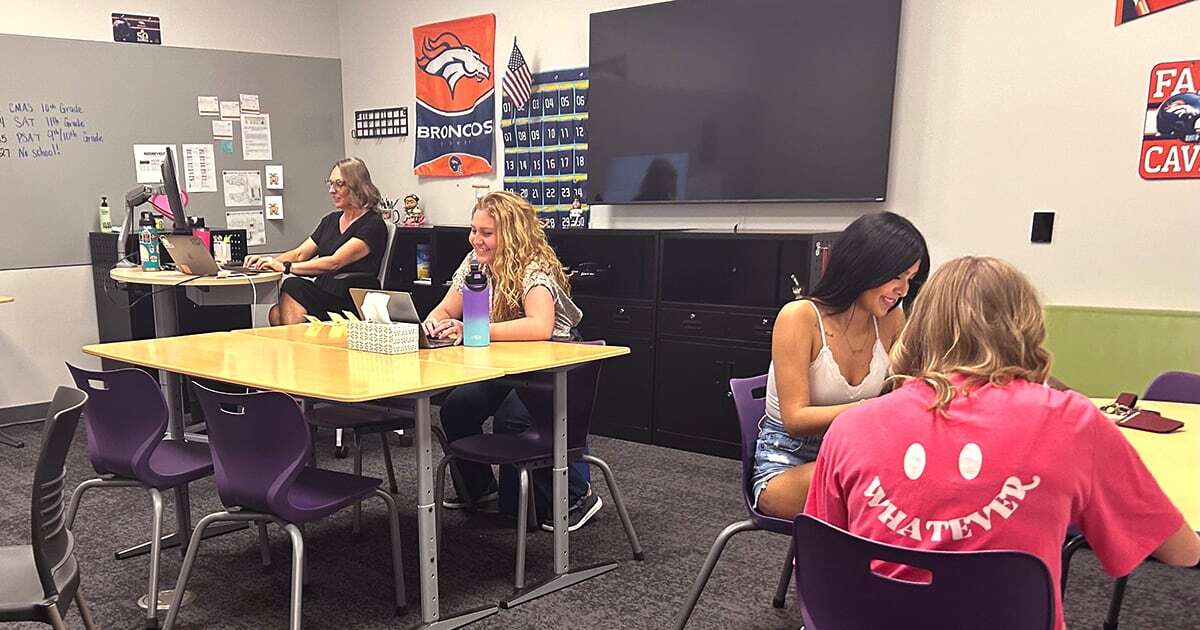
Kurt Clay, assistant superintendent in the Delta County school district, was alarmed last year to learn that 138 students had left his western Colorado district for public online schools. With them went $1.6 million in state education dollars.
“That’s just funding that goes somewhere else,” Clay said. “It’s not staying here local.”
It wasn’t just about the money though. Clay and other district leaders believed they could offer something better: The flexible online classes students wanted with the added benefit of keeping them connected to district staff, school clubs, and special events like prom. That’s how the district’s online program — Empower Online — came to be last fall.
Delta County is among the dozens of Colorado districts that have recently started their own online programs or plan to soon, competing for students at a time when enrollment is declining statewide. Such school districts, which are contending with budget cuts and even school closures, are particularly wary of multi-district online schools, which they say draw students and state funding to districts hundreds of miles away.
Colorado has 44 multi-district online schools serving more than 30,000 students statewide. About half the schools get 90% or more of their students from outside their authorizing district, according to data from the Colorado Department of Education. Just a few entities authorize many of the schools.
More multi-district online schools could be on the way. While the State Board of Education unanimously rejected one in March, it will consider three more proposals on Thursday.
This group helps districts with online programs
Over the past year, a state-supported nonprofit called Colorado Digital Learning Solutions has helped many districts launch or plan new online programs. The group is not an online school. Rather, it provides asynchronous online classes taught by Colorado-licensed teachers to school districts and charter schools. Some of its teachers still teach in-person classes, and others are retired from Colorado classrooms.
The Weld RE-5J district in northern Colorado has used Colorado Digital Learning Solutions courses for years in its online program. Emma, a junior in the district, is taking algebra, English, and world history online through the group, plus four in-person classes at her high school in Johnstown.
Emma, who hopes to graduate a semester early, said she found all in-person classes a struggle because she has ADHD.
“I just have a really hard time focusing in class and being my whole present self,” she said.
“I chose hybrid because it still gives me a social aspect, but it also gives me that flexible aspect.”
Colorado Digital Learning Solutions was selected to provide online classes to Colorado schools after the passage of a 2016 state law that required increased investment in supplemental online courses. The law sought to ensure digital equity by providing assistance to school districts and charter schools that didn’t have the capacity to build their own online offerings.
Colorado Digital Learning Solutions receives about 20% of its budget from the state. Generally, school districts pay the group $250 per student per semester-long class.
About half of Colorado’s 180 school districts use the nonprofit to offer online classes — sometimes a full menu and sometimes a single course. For example, the small Lamar district on the Eastern Plains contracts with the group to provide a Latin class, taught by a Boulder teacher, to one student.
As more school districts seek to win students back from multi-district online schools — or prevent students from leaving in the first place — things have become contentious at times. Some multi-district online schools are pushing back against Colorado Digital Learning Solutions.
In a February letter on behalf of some multi-district online schools, attorney Brad Miller accused the group of causing “reputational harm” to the schools. He said the group’s promotional materials highlight the online schools’ low graduation rates without noting that their students tend to be highly mobile and behind academically.
Dan Morris, co-executive director of Colorado Digital Learning Solutions, said his group was reporting publicly available data.
Miller, who’s been involved in several high-profile lawsuits on behalf of conservative-leaning school districts, did not respond to requests for comment or to clarify which online schools he represents.
The online program pitch
Seventeen Colorado districts, most of them small and rural, started online programs in 2025. Colorado Digital Learning Solutions is working with 25-30 additional districts that want to start online programs next school year, Morris said.
Unlike multi-district online schools, online programs must have fewer than 100 full-time online students and no more than 10 from outside the district.
A key part of Morris’ pitch to districts is data. It’s in the presentation he’s given at state conferences: “Stop the Enrollment Drain: Build a Local Online Program that keeps students in-district.” He also shares detailed spreadsheets his team has compiled showing how many students school districts are losing to multi-district online schools.
That’s what convinced officials in the Durango district in southwestern Colorado to start an online program next year. They learned they’d lost more than 400 students — and about $5 million in state funding — to multi-district online schools.
Robert Aspen, Durango High School’s intervention coordinator, said they’ll start with up to 50 students, with plans to grow long term. The goal is to attract students who enrolled in multi-district online schools back to their home school.
While there are 44 multi-district onlines in Colorado, state data shows that most students are leaving their local districts for a few big names, authorized by just a few entities and often run by for-profit companies located out of state.
Byers Superintendent Tom Turrell, whose district authorizes eight multi-district online charter schools, said it’s no surprise that more districts are starting online options.
“We don’t view district on-line programs as competition,” he said by email. “Like Byers, other districts are innovating to better serve students and that’s great, that’s their job.”
Online learning is popular, not all options created equal
Educators say families seek online options for many reasons, including because students suffer from anxiety, have medical challenges, have experienced bullying, or have jobs or household responsibilities that conflict with a traditional school schedule. Competitive athletes also like the flexibility of online courses.
“I have a rodeo girl,” said Delaine Hudson, a former principal who runs the new online program in Delta County. “She spends her morning doing school work and then she’s either practicing or … she’s somewhere in the state doing rodeo.”
Forty students, mostly high schoolers, are enrolled in Delta County’s online program this semester, taking courses through Colorado Digital Learning Solutions with other students around the state. They take core classes, like English and science, and less common offerings like “History of the Holocaust.”
Hudson likes that there’s a real teacher available to message when students hit roadblocks. She checks in with students weekly, too, by phone, email, or text.
Most students are thrilled with the online program so far, she said. “And it’s rigorous. I don’t feel like we’re just pushing them through.”
Critics of some multi-district online schools question their quality. At 20 of the schools, so few students take state tests that state officials can’t calculate ratings, leaving the public in the dark about how they’re doing.
In addition, some of the biggest multi-district online schools routinely post low graduation rates. For example, the 2,600-student Astravo Academy Online High School, which is authorized by the Byers district, has a four-year graduation rate of 44%. At District 49’s GOAL High School, it’s 49%. The state average is about 86%, according to state data.
Supporters say the some multi-district online schools are helping at-risk students who’ve faced educational and personal challenges.
“We’ve taken on all of the kids who needed second and third and fourth and fifth chances in GOAL from the entire state,” said District 49 school board member Marie LaVere-Wright at a board meeting last June.
While GOAL is classified by the state as an “alternative education campus” — schools designed to serve high-risk students — more than 90 other Colorado schools, including many bricks and mortar schools, have the same designation.
District 49 officials declined to comment for this story.
This story was made available via the Colorado News Collaborative. Learn more at:

Colorado
What’s really killing a lot of cattle in Colorado? Hint: wolves aren’t the culprit (Opinion)

The livestock industry has been running a smear campaign against wolves for years.
It intensified when the Colorado Cattlemen’s Association joined forces with the Rocky Mountain Elk Foundation, the Colorado Farm Bureau, the National Rifle Association’s electioneering arm, and the Colorado Woolgrowers’ Association to oppose Proposition 114 — a 2020 citizens’ ballot initiative requiring Colorado to reintroduce wolves to the western part of the state.
Fearmongering was a big part of the campaign to prevent the restoration of wolves to their native Colorado habitats: The hunting groups peddled the narrative that wolves would kill all the elk. The ranching interests claimed that wolves would drive cattle and sheep operations out of business.
Notably, neither outcome has materialized since the 1995 wolf reintroductions in Yellowstone and Idaho, and indeed elk populations and cattle and sheep ranches there remain abundant three decades after wolves returned. In 2020, the Stop the Wolf Coalition lost the election, 51% to 49%. But the hysteria over livestock losses from wolves was only beginning.
So it makes sense to put these fears, and the livestock industry messaging that amplifies them, into perspective.
Weather events can kill a lot of cattle. In 2007, a single blizzard caused an estimated 15,000 cattle deaths in Colorado, according to the Colorado Cattlemen’s Association. In 2024, a single lightning strike knocked 100 cattle off their feet, killing 32 of them as well as a rancher, who was engaged in branding the calves. That’s more than Colorado wolves have killed in an entire year. The weather slaughters far more livestock than predators in the state.
Then there is cattle rustling. In late 2025, 23 cattle disappeared in a single incident on the High Plains of northeastern Colorado, and law enforcement characterized the incident as unlikely to be random chance and likely meant they had been stolen. In 2024, 187 cattle went missing on the Uncompahgre Plateau in Western Colorado. Fifteen of them eventually turned up, demonstrating that missing cattle are sometimes simply lost by inattentive ranchers. The Colorado brand inspector estimated in mid-December of that year that about 500 cattle were expected to be reported missing for the year in the state.
Mystery deaths and sickness also plague Colorado’s cattle herd. In May of 2025, 15 cattle in south-central Colorado keeled over from brain swelling and seizures in a single day. Was it eating poisonous plants? An abandoned oil well on the property? Water contamination? While some sort of toxin was suspected, there have been no definitive answers. A 2010 USDA report calculated that 38.9% of all cattle lost in 2007 died from sickness, injury, or poisoning. Only 0.1% of the losses were attributable to predators of any kind.
In Colorado, the number of cattle killed in slaughterhouses in 2025 was 2,269,600, according to the USDA’s Livestock Slaughter Report. The number of calves slaughtered in the state was “[w]ithheld to avoid disclosing data for individual operations,” but would presumably add to that total.
The most important predator of cattle in Colorado, by a vast margin, was humans. Specifically, the livestock industry has raised such a hue and cry over a comparatively tiny number of wolf-caused mortalities. We have met the enemy (of cattle, at least), and he is us.
It’s hard to tell how many cattle and sheep have been killed by wolves, because Colorado Parks and Wildlife’s Confirmed Depredation Reports lump together livestock that are killed with livestock that are injured, but recover.
There were 13 cattle killed or injured by wolves in the two years prior to the wolf reintroduction, or an average of 6.5 cattle per year. In the slightly more than three years since reintroduction, there have been 44 cattle killed or injured by wolves, 37 sheep and one llama. That’s an average of 15 cattle and 12 sheep confirmed killed or injured per year.
The fraction of Colorado’s livestock losses attributable to wolves is minuscule, and some of the state’s news outlets are starting to get it. The general public, and lawmakers in particular, need to be aware of the tiny proportion of Colorado’s 2.6 million cattle that are falling prey to wolves, and we can all rest easy in the knowledge that when a livestock loss is reported, and wolves are suspected, there is a full investigation.
And when a wolf kill is confirmed, the rancher in question gets a payment from the state that not only covers his losses, but might also cover up to seven times the value of the animal(s). That’s an excessive level of generosity, which creates a perverse incentive to blame wolves.
But when ranchers are getting paid – in fact, paid far more than the fair-market value they deserve – when beef is what’s for dinner for one of Colorado’s new population of wolves, who really cares whether the diner is wildlife or human?
Erik Molvar is a wildlife biologist and the executive director of Western Watersheds Project, a nonprofit conservation group working to reduce the harmful effects of livestock grazing on public lands to protect and restore wildlife and watersheds throughout the American West.
Sign up for Sound Off to get a weekly roundup of our columns, editorials and more.
To send a letter to the editor about this article, submit online or check out our guidelines for how to submit by email or mail.

There are lots of cities and towns in the Denver area that are hosting professional fireworks shows on the Fourth of July this year.
Here are the shows taking place on July 4 in the Denver metro area:
Arvada
The City of Arvada’s annual fireworks display is scheduled to take place at Stenger Soccer Complex.
Date: Saturday, July 4
Time: 9:15 p.m.
Location: Stenger Soccer Complex
Admission: Free
Link: More Info
Aurora
The “4th of July Spectacular” takes place at the Aurora Municipal Center, located at 15151 E. Alameda Parkway.
Date: Saturday, July 4
Time: 9:30 p.m.
Location: Aurora Municipal Center
Admission: Free
Link: More Info
Brighton
Brighton’s Fourth of July festival takes place in Carmichael Park at 650 East Southern Street. Fireworks will be set off after the band Thumpin’ performs.
Date: Saturday, July 4
Time: After concert
Location: Carmichael Park
Admission: Free
Link: More Info
Broomfield
Broomfield’s Great American Picnic takes place at Broomfield County Commons Park, which is located at 13200 Sheridan Boulevard.
Date: Saturday, July 4
Time: 9:15
Location: Broomfield County Commons Park
Admission: Free
Link: More Info
Castle Rock
The Town of Castle Rock is planning to launch their Independence Day fireworks display from Miller’s Landing. The town is hosting a Independence Day Celebration at Festival Park, and the fireworks can be viewed from there, or several other locations in town.
Date: Saturday, July 4
Time: 9:30 p.m.
Location: Former Acme Brick facility
Admission: Free
Link: More Info
Commerce City
Fireworks will be set off outside Dick’s Sporting Goods Park as part of Commerce City’s 4thFEST celebration. They will be launched after the third of three rugby matches in the stadium.
Date: Saturday, July 4
Time: At the conclusion of the World Rugby Nations Cup
Location: Outside DICK’s Sporting Goods Park
Admission: 4thFEST is free, paid tickets required to see the rugby games
Link: More Info
Denver – Colorado Rockies games
Fans attending the July 4 Colorado Rockies home game at Coors Field will be treated to fireworks at the conclusion of the baseball game. There will also be fireworks for the game the night before — July 3.
Date: July 3 & 4 (against the San Francisco Giants)
Time: The fireworks are usually launched 20 to 30 minutes after the final out.
Location: Coors Field
Admission: Tickets required
Link: More Info
Englewood
In addition to all of its residents, the city of Englewood invites residents of Littleton, Sheridan, Arapahoe County and the South Suburban Parks & Recreation to their Independence Day Celebration.
Date: Saturday, July 4
Time: 9:15 p.m.
Location: Cornerstone Park and Belleview Park
Admission: Free
Link: More Info
Lone Tree
Lone Tree’s city fireworks display will be launched from Prairie Sky Park, and they’ll be viewable from many different locations in the city.
Date: Saturday, July 4
Time: 9:30 p.m.
Location: Prairie Sky Park
Admission: Free
Link: More Info
Longmont
You can watch a fireworks show in Longmont at 9:30 p.m. There will also be a drone show right before then.
Date: Saturday, July 4
Time: 9:30 p.m.
Location: Fireworks can be viewed “from many vantage points across the city.”
Admission: Free
Link: More Info
Louisville
The city of Louisville launches their annual fireworks show from Coal Creek Golf Course.
Date: Saturday, July 4
Time: 9:30 p.m.
Location: Coal Creek Golf Course
Admission: Free
Link: More Info
Northglenn
Fireworks are part of the July 4th Festival in Northglenn at E.B. Rains Jr. Memorial Park.
Date: Saturday, July 4
Time: 9:15 p.m.
Location: E.B. Rains Jr. Memorial Park
Admission: Free
Link: More Info
Parker
Fireworks on July Fourth will be visible from many parts of the town of Parker.
Date: Saturday, July 4
Time: 9:30 p.m.
Location: Fireworks launch northeast of Salisbury Park, although town officials encourage watching the fireworks from other areas, too
Admission: Free
Link: More Info
Thornton
Thornton’s fireworks display is called “Red, White & BOOM!” Fantabulous Fireworks.
Date: Saturday, July 4
Time: 9:30 p.m.
Location: Carpenter Park Fields
Admission: Free
Link:
More Info
Westminster
Date: Saturday, July 4
Location: Westminster City Park
Admission: Free
Link: More Info
There are other fireworks displays taking place in the Denver area on days other than July 4, including Lafayette (June 27), Glendale (June 2), Erie (July 3) and Littleton (July 3).

DENVER – The Colorado Avalanche Hockey Club announced today the team has signed defenseman Brett Kulak to a five-year contract extension through the 2030-31 season.
Kulak, 32, was originally acquired by the Avalanche in a trade with Pittsburgh on Feb. 24, 2026 and tallied three points (0g/3a) in 27 regular-season showings for Colorado over 19:08 of average time on ice per game. His 2025-26 regular season consisted of playing for the Edmonton Oilers and Penguins in addition to the Avalanche where he totaled 12 points (1g/11a) in 83 contests. Kulak was the only NHLer to skate in 83 games last season. Additionally, he dressed in his 600th career NHL contest on Nov. 15 at Carolina and notched his 100th career assist on Dec. 30 vs. Carolina.
The 6-foot-1, 192-pound defenseman was in the lineup for all 13 Stanley Cup Playoff games for the Avalanche in 2026 and chipped in five points (1g/4a) and logged 20:38 of time on ice per game. The goal was his first with the Burgundy and Blue, regular season or postseason, and it came as the overtime-winner in Game 5 of the Second Round (May 13) to send the Avalanche to the Western Conference Final. It was the third time a defenseman scored a series clinching overtime goal in Avalanche/Nordiques history and the first since Sandis Ozolinsh (Game 6 of the 1996 Conference Semifinal) did it 30 years to the date prior to Kulak’s. Additionally, Kulak’s marker was the 10th time an Avalanche/Nordiques skater sent the team to the next round with an overtime tally and the first instance since Artturi Lehkonen in Game 4 of the 2022 Western Conference Final (June 6, 2022).
A native of Edmonton, Alberta, Kulak has registered 137 points (29g/108a) in 663 career regular-season games with Colorado, Pittsburgh, Edmonton, the Montreal Canadiens and Calgary Flames from 2014-26. The last 370 of those games have come consecutively and he enters 2026-27 with the ninth-longest active “Iron Man” streak in the NHL. The left-shot defenseman has also added 29 points (4g/25a) over 111 career Stanley Cup Playoff contests and has been a member of three teams that have made it to the Stanley Cup Final (2023-24 and 2024-25 Oilers, 2020-21 Canadiens). Kulak’s 111 playoff games lead all NHL defensemen since making his postseason debut in 2020 and are second among all skaters in that span behind only Corey Perry (126).
Originally drafted by the Flames in the fourth round (105th overall) in the 2012 NHL Draft, Kulak appeared in 136 AHL games over parts of the 2012-19 campaigns (13g/41a). He was also a member of the then-ECHL Colorado Eagles for part of 2014-15. Prior to turning pro, Kulak played for the Western Hockey League’s Vancouver Giants from 2010-14 and amassed 128 points (35g/93a) in 216 regular-season contests.
-

 Los Angeles, Ca21 minutes ago
About 20 detained after armed suspect call sparks LAPD response in Koreatown
-

 Detroit, MI39 minutes ago
With Jack Flaherty returning, AJ Hinch ponders Tigers’ starting rotation
-
 San Francisco, CA50 minutes ago
Serving up a slice of Palestine at Old Jerusalem in the Mission District
-

 Dallas, TX53 minutes ago
All-day restaurant and patio coming to Dallas’ Knox and more top stories
-

 Miami, FL59 minutes ago
Bugtopia takes center stage at Zoo Miami
-

 Boston, MA1 hour ago
What JJ Peterka Will Add to the Bruins’ Roster, ‘He’s Got an Elite Shot’ | Boston Bruins
-

 Denver, CO1 hour ago
This Boulder farm dinner serves up midsummer Slavic vibes with James Beard-worthy fare
-

 Videos1 hour ago
Destruction in Venezuela after deadly earthquakes | BBC News

