Connect with us

News

A TikTok ban could hit the U.S. in days. What to know — and how to prepare

Published

on

A TikTok ban could hit the U.S. in days. What to know — and how to prepare

The Supreme Court is considering whether to block a law that effectively bans TikTok in the U.S. starting Jan. 19.

Joe Raedle/Getty Images


hide caption

toggle caption

Advertisement

Joe Raedle/Getty Images

The fate of TikTok — and its 170 million American users — hangs in the balance, as the Supreme Court considers the constitutionality of a law that would ban the platform in the country if its China-based owner, ByteDance, doesn’t sell off its U.S. operation by Jan. 19.

If the court upholds the law — as a lower court did last month — TikTok’s days in the country would be numbered.

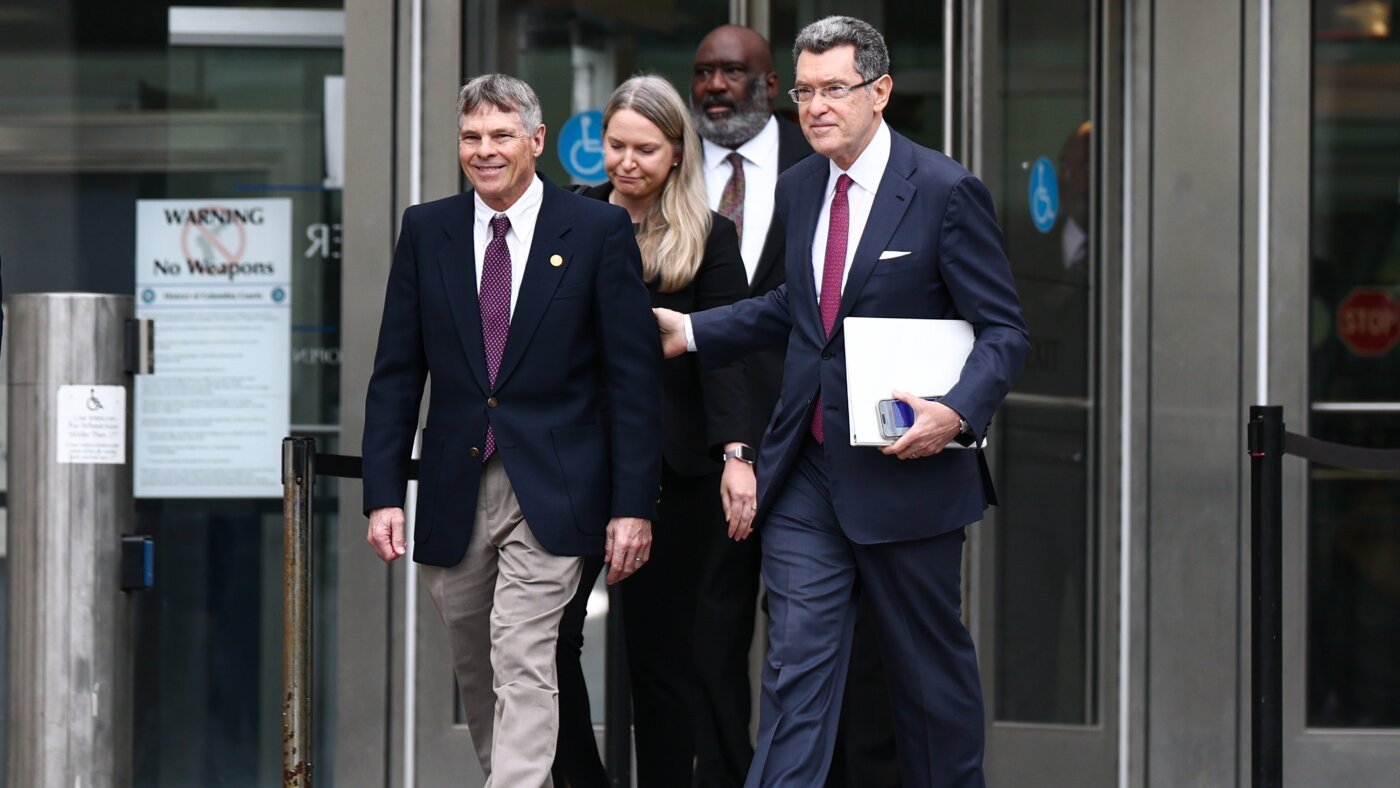
“On January 19th, as I understand it, we shut down,” TikTok lawyer Noel Francisco told justices during oral arguments on Friday.

Advertisement

That doesn’t mean the viral video app will automatically disappear from peoples’ phones, or that individuals will risk punishment just for logging in.

But it will get harder for the platform’s users in the U.S. to access the app, says Kate Ruane, director of the Free Expression Project at the Center for Democracy and Technology (which joined an amicus brief supporting TikTok and its users’ protected speech).

“I think the biggest obvious result of this law going into effect is that … it’s going to require more technical savvy to access TikTok,” Ruane told NPR. “And that in and of itself is going to be too big of a barrier for lots and lots of people to continue to access TikTok, or to continue to try to use TikTok as a service.”

TikTok officials say it is possible that on Jan. 19, when U.S. users try to open the app, a prompt will show up indicating the service is no longer available in the country. This is what happens when someone tries to launch TikTok in India, which banned the app in 2020. 

It’s also possible users will be able to access the app but it may be buggy, operate slowly or crash often, the TikTok official said.

Advertisement

Here’s what could happen and how to prepare.

Fine print: How the law would actually work 

The Protecting Americans From Foreign Adversary Controlled Applications Act (PAFACA), which President Biden signed into law in April 2024,, grants the government the authority to ban foreign-owned apps that it deems a threat to national security.

The bill passed with considerable bipartisan support, as many lawmakers worry that the Chinese government could access Americans’ data — through TikTok’s parent company — and use it to surveil them, spread misinformation and sway public opinion.

While the law concerns TikTok, it actually targets the companies that make the platform accessible in the U.S., including app stores like Apple’s App Store and Google Play, and cloud service providers like Oracle.

The fine print makes it illegal for any such entities to “distribute, maintain, or update (or enable the distribution, maintenance, or updating of) a foreign adversary controlled application” either through a marketplace or internet hosting services.

Advertisement

In mid-December, Democrats on a House committee dealing with competition between the U.S. and China sent letters to the CEOs of Apple and Google warning the companies to take steps to ensure they can “fully comply with this requirement” by the deadline — which would have an immediate impact on users.

“If you already have [TikTok] on your phone, it’s not going to disappear from your phone on January 19th or January 20th,” Ruane says. “It will, however, very likely disappear from application stores.”

That means users will no longer be able to download the app or any updated versions of it.

And without the ability to update, the platform won’t be able to fix bugs, add features or address security concerns. Eventually, Ruane says, it may also become incompatible with the operating system of certain phones.

“Over time … the service that you get with the application will be worse and worse and worse,” she adds, though it’s too soon to tell whether that will be a matter of days, weeks or months.

Advertisement

Action items: Preparations and potential workarounds for TikTok users 

As Jan. 19 and the potential TikTok ban approach, experts like Ruane recommend that users download their data and save any videos that they want to be able to access in the future.

“The other thing is to remember that even after this law takes effect, if it does, it will not be illegal for them to continue to use TikTok if they have it on their phones already — or even if they manage to acquire it from some other source than an app store,” she says. “This law will not apply to individual people accessing TikTok.”

One of the most-discussed workarounds is something called a virtual private network, or VPN, which encrypts users’ location data and makes it look like they are accessing content from another country.

They are commonly used in countries with strict internet restrictions to access blocked social media platforms, streaming services and other geographically limited content.

“Even as the application degrades on your phone, you may still be able to access it through a virtual private network on a web browser,” Ruane says.

Advertisement

There are also ways to download TikTok outside the Google and Apple app stores, through processes respectively known as “sideloading” and “jailbreaking.”

But they’re not without potential complications or consequences: Apple, for example, won’t honor warranties for jailbroken iPhones. Ruane thinks the extra steps will deter many TikTok users.

“It is a barrier to accessing the application and it is also something that you would have to weigh, like ‘Is it really worth it to me to access TikTok, to do all of this or learn how to do all of these required technical things?’” she says. “And I think for a fair number of users who are just casually using the application, the answer will probably be no.”

Uncertainties: How the Trump administration could fight a ban  

It’s no coincidence that the potential ban would take effect on Jan. 19, the last full day of Biden’s term. That puts the ball in the court of President-elect Donald Trump, who has his own strong views on TikTok.

While Trump previously disparaged the app as a national security threat and even tried to ban it during his first term, he has since become a staunch defender of the platform and even asked the Supreme Court last month to pause the start date of the law in question.

Advertisement

As Ruane sees it, Trump has three choices for how to proceed once in office, and all of them are complicated.

For one, he could try to convince Congress to repeal the original 2024 law that requires ByteDance to divest TikTok, which both the House and Senate passed with overwhelming support.

“That’s pretty straightforward, but it’s also politically incredibly difficult to do because it would require the changing of votes for many, many, many members of Congress,” Ruane says.

Trump’s second option is to direct the Justice Department and attorney general to not enforce the law, essentially giving Google, Apple and others the option to continue providing services to TikTok.

But Ruane says that’s also easier said than done, as lawyers within those companies would still see — and likely seek to avoid — “gigantic legal risk” in flouting the law, which includes hefty penalties.

Advertisement

“So if anybody uses your service to access TikTok and you are in violation of the law, it’s $5,000 per person that does that,” Ruane says. “If you were to take the president up on his offer and continue to provide services to TikTok, even though you’re technically in violation of the law, that’s $5,000 times hundreds of millions of people.”

The third potential option has been posited by Alan Rozenshtein, an associate law professor at the University of Minnesota Law School and research director at Lawfare. As he told NPR’s Fresh Air in December, Trump could “just declare that the law no longer applies.”

Trump could choose to use his broad authority under the statute to determine that ByteDance has engaged in a “qualified divestiture” of TikTok after all, as long as it has taken certain steps to that effect.

“There’s a scenario in which ByteDance could move some papers around, shift some assets from one corporation to another corporation, do some fancy legal work, and that would give Trump enough, basically, cover to declare that TikTok is no longer controlled by ByteDance,” Rozenshtein said.

That’s not an airtight approach either, Ruane says, since it could be challenged in court either by competitors or the entities involved.

Advertisement

One option under discussion among TikTok stakeholders is bringing back a national security agreement known as Project Texas, which involves tapping Austin-based Oracle to host all U.S. user data. Oracle would also oversee all data flows between TikTok’s U.S. operation and Beijing. The plan would also allow the federal government to invoke a “kill switch” that would shut down TikTok if terms of the agreement were violated.

The deal initially had support in the Biden administration, but talks stalled. People close to talks about TikTok’s future say it is possible Trump brings Project Texas back, with Trump potentially determining that the agreement makes TikTok in compliance with the divest-or-ban law.

At the end of the day, Ruane says it’s unclear what, if anything, Trump may do to try to bring back TikTok — an app she says is “not immediately replaceable,” even as new and existing platforms are sure to vie for its many displaced users.

NPR’s Bobby Allyn contributed reporting.

Advertisement

News

U.S. soldier charged with suspected Polymarket insider trading over Maduro raid

Published

on

U.S. soldier charged with suspected Polymarket insider trading over Maduro raid

Smoke rises from Port of La Guaira in Venezuela on Jan. 3, 2026 after U.S. forces seized the country’s president, Nicolas Maduro and his wife.

Jesus Vargas/Getty Images


hide caption

toggle caption

Advertisement

Jesus Vargas/Getty Images

Federal prosecutors on Thursday unsealed an indictment against a U.S. Army soldier, accusing him of using his insider knowledge of the clandestine military operation to capture Venezuelan leader Nicolás Maduro in January to reap more than $400,000 in profits on the popular prediction market site Polymarket.

The Justice Department says Gannon Ken Van Dyke, 38, who was stationed at Fort Bragg, in North Carolina, was part of the team that planned and carried out the predawn raid in Caracas earlier this year that resulted in the apprehension of Maduro.

The Department of Justice and the Commodity Futures Trading Commission filed the actions against Van Dyke, the first time U.S. officials have leveled criminal charges against someone over prediction market wagers.

Advertisement

According to the indictment, Van Dyke now faces counts of wire fraud, commodities fraud, misusing non-public government information and other charges.

Trading under numerous usernames including “Burdensome-Mix,” Van Dyke allegedly traded about $32,000 on the arrest of Maduro, resulting in profits exceeding $400,000.

“Prediction markets are not a haven for using misappropriated confidential or classified information for personal gain,” said U.S. Attorney Jay Clayton for the Southern District of New York. “Those entrusted to safeguard our nation’s secrets have a duty to protect them and our armed service members, and not to use that information for personal financial gain.”

Van Dyke’s defense lawyer is not yet publicly known. Polymarket did not return a request for comment.

The charges against Van Dyke come at a sensitive time for the prediction market industry, which has been growing exponentially, despite calls in Washington and among state leaders for the sites to be reined in.

Advertisement

Van Dyke is the first to be charged in the U.S. for suspected Polymarket insider trading, but Israeli authorities in February arrested several people and charged two on suspicion of using classified information to place bets about military operations in Iran on Polymarket.

Continue Reading

News

Senate Adopts GOP Budget, Laying the Groundwork to Fund ICE and Reopen DHS

Published

on

Senate Adopts GOP Budget, Laying the Groundwork to Fund ICE and Reopen DHS

The Senate early Thursday morning adopted a Republican budget blueprint that would pave the way for a $70 billion increase for immigration enforcement and the eventual reopening of the Department of Homeland Security.

Republicans pushed through the plan on a nearly party-line vote of 50 to 48. It came after an overnight marathon of rapid-fire votes, known as a vote-a-rama, in which the G.O.P. beat back a series of Democratic proposals aimed at addressing the high cost of health care, housing, food and energy. The debate put the two parties’ dueling messages on vivid display six months before the midterm elections.

Republicans, who are using the budget plan to lay the groundwork to eventually push through a filibuster-proof bill providing a multiyear funding stream for President Trump’s immigration crackdown, used the all-night session to highlight their hard-line stance on border security, seeking to portray Democrats as unwilling to safeguard the country.

Democrats tried and failed to add a series of changes aimed at addressing cost-of-living issues, seizing the opportunity to hammer Republicans as out of touch with and unwilling to act on the concerns of everyday Americans.

Here’s what to know about the budget plan and the nocturnal ritual senators engaged in before adopting it.

Advertisement

The budget blueprint is a crucial piece of Republicans’ plan to fund the Department of Homeland Security and end a shutdown that has lasted for more than two months. After Democrats refused to fund immigration enforcement without new restrictions on agents’ tactics and conduct, the G.O.P. struck a deal with them to pass a spending bill that would fund everything but ICE and the Border Patrol. Republicans said they would fund those agencies through a special budget bill that Democrats could not block.

“We can fix this with Republican votes, and we will,” said Senator Lindsey Graham, Republican of South Carolina and the Budget Committee chairman. “Every Democrat has opposed money for the Border Patrol and ICE at a time of great peril.”

In resorting to a new budget blueprint, Republicans laid the groundwork to deny Democrats a chance to stop the immigration enforcement funding. But they also submitted themselves to a vote-a-rama, in which any senator can propose unlimited changes to such a measure before it is adopted.

The budget measure now goes to the House, which must adopt it before lawmakers in both chambers can draft the legislation funding immigration enforcement. That bill will provide yet another opportunity for a vote-a-rama even closer to the November election.

Democrats took to the floor to criticize Republicans for supercharging funding for federal immigration enforcement rather than moving legislation that would address Americans’ concerns over affordability.

Advertisement

“This is what Republicans are fighting for,” said Senator Chuck Schumer, Democrat of New York and the Democratic leader. “To maintain two unchecked rogue agencies that are dreaded in all corners of this country instead of reducing your health care costs, your housing costs, your grocery costs, your gas costs.”

Democrats offered a host of amendments along those lines, all of which were defeated by Republicans — and that was the point. The proposals were meant to put the G.O.P. in a tough political spot, showcasing their opposition to helping Americans afford high living costs. Fewer than a handful of G.O.P. senators crossed party lines to support them.

The G.O.P. thwarted an effort by Mr. Schumer to require that the budget measure lower out-of-pocket health care costs for Americans. Two Republicans who are up for re-election this year, Senators Susan Collins of Maine and Dan Sullivan of Alaska, voted with Democrats, but the proposal was still defeated.

Republicans also squelched a move by Senator Ben Ray Lujan, Democrat of New Mexico, to create a fund that would lower grocery costs and reverse cuts to food aid programs that Republicans enacted last year. Ms. Collins and Mr. Sullivan again joined Democrats.

Also defeated by the G.O.P.: a proposal by Senator John Hickenlooper, Democrat of Colorado, to address rising consumer prices brought on by Mr. Trump’s tariffs and the war in Iran; one by Senator Edward J. Markey, Democrat of Massachusetts, to require the budget measure to address rising electricity prices, and another by Mr. Markey to create a fund to bring down housing costs.

Advertisement

Senator Jon Ossoff, a Democrat who is up for re-election in Georgia, also sought to add language requiring the budget plan to address health insurance companies denying or delaying access to care, but that, too was blocked by Republicans.

While Republicans had fewer proposals for changes to their own budget plan, they also sought to offer measures that would underscore their aggressive stance on immigration enforcement and dare Democrats to vote against them.

Mr. Graham offered an amendment to allocate funds toward a deficit-neutral reserve fund relating to the apprehension and deportation of adult immigrants convicted of rape, murder, or sexual abuse of a minor after illegally entering the United States. It passed unanimously.

Senator Josh Hawley, Republican of Missouri, sought to bar Medicaid payments to Planned Parenthood, which provides abortion and other services, and criticized the organization for providing transgender care to minors. Senator John Kennedy, Republican of Louisiana, also attempted to tack on the G.O.P. voter identification bill, known as the SAVE America Act. Both proposals were blocked when Democrats, joined by a few Republicans, voted to strike them as unrelated to the budget plan.

The Republicans who crossed party lines to oppose their own party’s proposals for new voting requirements were Ms. Collins along with Senators Mitch McConnell of Kentucky, Lisa Murkowski of Alaska and Thom Tillis of North Carolina.

Advertisement

Ms. Collins and Ms. Murkowski also opposed the effort to block payments to Planned Parenthood.

Continue Reading

News

Who is John Phelan, the US Navy Secretary fired by Pete Hegseth?

Published

on

Who is John Phelan, the US Navy Secretary fired by Pete Hegseth?

The firing of US Navy Secretary John Phelan is the latest in a shakeup of the American military during the war on Iran, now in its eighth week.

The Pentagon said Phelan would leave office immediately.

Recommended Stories

list of 3 itemsend of list

“On behalf of the Secretary of War and Deputy Secretary of War, we are grateful to Secretary Phelan for his service to the Department and the United States Navy,” said chief Pentagon spokesperson Sean Parnell. “We wish him well in his future endeavours”.

His firing comes at a critical moment, with US naval forces enforcing a blockade on Iranian ports and ships, and maintaining a heavy presence around the Strait of Hormuz, through which 20 percent of the world’s oil and gas passes during peacetime.

Although the Pentagon gave no official reason for the dismissal, reports indicate the decision was linked to internal disputes, including tensions with Defense Secretary Pete Hegseth.

Advertisement

Phelan’s removal is part of a broader pattern of dismissals and restructuring within the US military under President Donald Trump’s administration – including during the current war.

So, who is John Phelan, and what impact could his firing have on US military strategy?

Who is John Phelan?

As the US Navy’s top civilian official, Phelan had various responsibilities, including overseeing recruiting, mobilising and organising, as well as construction and repair of ships and military equipment.

He was appointed in 2024 as a political ally of Trump, despite having no prior military or defence leadership experience.

Before entering government, Phelan was a businessman and investment executive, as well as a major Republican donor and fundraiser — a background that is fairly common among Trump appointees and advisers. The US president’s two top diplomatic negotiators, for instance, are Steve Witkoff — a real estate businessman with no prior diplomatic experience – and Trump’s son-in-law, Jared Kushner.

Advertisement

According to the Reuters news agency, Phelan’s tenure quickly became controversial. He faced criticism for moving too slowly on shipbuilding reforms and for strained relationships with key Pentagon figures, including Hegseth and his deputy, Steve Feinberg.

rump with U.S. Marine Corps Lieutenant General Michael Borgschulte and Secretary of the Navy John Phelan (R) before the game between the Navy Midshipmen and the Army West Point Black Knights at M&T Bank Stadium [File: Tommy Gilligan/Imagn Images/Reuters]

In addition, Phelan was reportedly under an ethics investigation, which may have weakened his standing in the administration.

Navy Undersecretary Hung Cao, who was also reported to have a difficult relationship with Phelan, has become acting secretary. Fifty-four-year-old Cao is a 25-year Navy veteran who previously ran as a Republican candidate for the US Senate and House of Representatives in 2022 and 2024 respectively, but was unsuccessful on both occasions.

Democrats have criticised Phelan’s removal, calling it “troubling”.

“I am concerned it is yet another example of the instability and dysfunction that have come to define the Department of Defense under President Trump and Secretary Hegseth,” said Senator Jack Reed, the top Democrat on the Senate Armed Services Committee.

Advertisement

Who else has the Trump administration fired since the war with Iran began?

Phelan’s removal is the latest in a series of senior military leaders being fired or are leaving during the US-Israeli war on Iran, in addition to others since Trump was re-elected.

Among the most notable dismissals was Army Chief of Staff General Randy A. George, in the first week of April. George was appointed in 2023 under former US President Joe Biden.

According to reports, Hegseth also fired the head of the Army’s Transformation and Training Command, a unit concerned with modernising the army, and the Army’s chief of chaplains. The Pentagon has not confirmed their dismissal.

Why is Phelan’s dismissal significant?

The 62-year-old’s removal comes during a fragile ceasefire with Iran, as the ⁠⁠US continues to move more naval assets into the region.

The Navy is central to enforcing Trump’s blockade of Iranian ports to restrict Iran’s oil exports and apply economic pressure on Tehran, as the US president looks eager to wrap up the war, which is deeply unpopular to many Americans.

Advertisement

However, there are no indications that Trump is willing to end the blockade or other naval operations in the Strait of Hormuz, as negotiations between Washington and Tehran have come to a standstill.

Tensions have escalated in recent days after the US military seized an Iranian container ship. The US claimed it was attempting to sail from the Arabian Sea through the Strait of Hormuz to the Iranian port of Bandar Abbas.

Tehran responded by describing the attack and hijack as an act of “piracy”.

Iran has since captured two cargo ships and fired at another.

Advertisement
Continue Reading
Advertisement

Trending