


Coming off a uniquely discouraging loss to High Point in the NCAA Tournament’s Round of 64, Greg Gard and the Wisconsin Badgers don’t have time to lick their wounds, as the transfer portal madness will be upon us before you can say “Still No Sweet 16 Since 2017.”
Wisconsin
High pressure system will bring cooler than normal temperatures to Wisconsin this week


The beginning of the week will bring almost unseasonably cool weather to Wisconsin, with high temperatures hovering in the mid-70s.
That’s because of a high pressure system that’s moving into the area, explained National Weather Service meteorologist Mark Gehring.
“It’s coolest on Tuesday, and then it starts to move away just a little bit. The temperatures, the air mass starts to modify and warm up more,” Gehring said.
This type of high pressure system can happen any time in summer. Temperatures this week will be about seven or eight degrees below typical highs for mid-August, which are usually in the 80s.
But even that isn’t very unusual, and those temperatures are “within the range of typical variability for summer,” Gehring said.
The current forecast for Milwaukee shows a 76 degree high on Monday and 73 on Tuesday. It’s “gradually going to get warmer” the rest of the week, Gehring said, with a high around 76 on Wednesday, 78 on Thursday and 82 on Friday.
Those cool temperatures will affect all of Wisconsin and the Great Lakes region, not just Milwaukee. The front could make it all the way down to the Gulf of Mexico, Gehring said.
Another highlight of the forecast this week? No rain, unlike the heavy storms that Milwaukee saw last week.
“We’re going to have a dry week, which I think is welcome,” Gehring said. “It’s going to be a drier week and just nice, pleasant weather.”
Still, a beach hazards statement is in effect from Sunday morning until 10 p.m. Monday night, due to strong north winds.
High waves up to three to five feet and rip currents are possible. People should stay out of the water and avoid piers, jetties and breakwalls, the NWS says, and avoid fishing close to shore.



Mr Basketball Zavier Zens leads Wisconsin Lutheran back to state title
Wisconsin Lutheran coach Ryan Walz speaks on a late steal and dunk by Mr. Basketball Zavier Zens to help the Vikings advance to the state title game.
Wisconsin Lutheran senior Zavier Zens rounded out a week that already saw him named to the Naismith High School All-American list, receive the Mr. Basketball Award from the Wisconsin Basketball Coaches Association and win a third consecutive WIAA state title with his Vikings teammates by being named the 2025-26 Gatorade Wisconsin boys basketball player of the year.
In a release from March 20, Gatorade announced Zens as Wisconsin Lutheran’s second Gatorade player of the year in the past three seasons, joining his first cousin, Kon Knueppel. The 6-foot-7 Northern Iowa commit averaged 23.4 points, 5.4 rebounds, 4.4 assists and shot 61.8% from the field, leading Wisconsin Lutheran’s second 30-0 season in the past three years.
In addition to his on-court impact, the Gatorade press release highlighted Zens’ community impact as a youth basketball coach, participation in community service through his church and a 3.38 weighted GPA in the classroom among the factors leading to his selection.
“Zavier is incredible,” Greendale coach Ryan Johnson said in the Gatorade release. “He has had an incredible season as the leader of not only the top-ranked team in the state, but one of the best teams in the country. He scores at all three levels, defends at a high level and is a true leader.”
Zens scored 21 points in a 68-61 WIAA Division 1 state semifinal win over Appleton North on March 20, before adding another team-best 20 points on 8-of-9 shooting to lead a 57-37 win in the D1 state title game over Madison Memorial on March 21.
He finishes his career as the No. 3 career scorer in school history (1,611 points), No. 7 in career rebounds (463), No. 2 in career threes (154) and single-season points (703), while holding the school record for converted field goals in a season (282).
Gatorade player of the year recognizes one state winner from each of the 50 states and Washington, D.C., in 12 sports, including: football, girls volleyball, boys and girls cross-country, boys and girls basketball, baseball, softball, boys and girls soccer, as well as boys and girls track and field. In total, 610 high school athletes are recognized each year. From the pool of state winners, one national winner is selected in each of the 12 sports by a committee that leverages coaches, scouts, media and other sources to determine each sport’s winner.

With this in mind, here are my very early best guesses for the chances of the Badgers retaining their guys. Part 2, which will cover rotational players, will drop soon.
Let’s dive right in here with the Badgers’ trickiest retention target. I want to be up front with the fact that I have zero insider information on this, but I’ve talked to enough folks who cover the program to have a distinct vibe that he’s quite possibly gone. Illinois, Michigan, and Michigan State have been the most frequently linked suitors for a player who grew up in Detroit and whose father played for the Illini.
Coming off a season with many highs, but a few obvious regressions, especially on defense—along with admitted “struggles” off the court—it’s natural to wonder if Blackwell might be looking for a fresh start (and bigger paycheck).
The fact that there will be more money on the table elsewhere (I don’t think it will be the NBA) doesn’t help the Badgers’ chances. But my vibe is that Gard, the coach who believed in Blackwell when none from other Big Ten programs did, will give Blackwell a very fair offer with a raise and let the chips fall where they may.
High-scoring wings with middling defense are easier to find in the portal than top-quality point guards or bigs with the diverse skills of the player in my next evaluation. Chances of Retention 50%.
Given his premium skill set and room for growth, there’s a good argument that Winter should be the Badgers No. 1 priority for retention. It’s also a fact that he likely has more to prove before an NBA squad will use a pick on him, although I suspect workouts and testing would only help his cause.
Winter has always struck me as Minnesota Nice and profiles as a quintessential Badger. But I felt similarly about Chucky Hepburn before he surprisingly bolted for Louisville before his senior year, so nothing can be taken for granted.
Winter declining to commit to a fourth season in Madison 20 minutes after losing to High Point has been overblown. He was distraught and coming to grips with a cruel and premature end to what was looking like a special March run.
So, I will cut him some slack here. My vibe is that we’ll see Winter back with the Badgers in ‘26-27. Chances of Retention: 70%.
Rapp’s progression on both offense and defense as the season progressed was incredibly encouraging, and his commitment to another year in Madison immediately after Wisconsin’s loss to High Point was music to fans ears.
For the same reasons why we shouldn’t put too much of our hopes and dreams into what Winter said or didn’t say postgame on Thursday, I’d caution you to take Rapp’s Badgers pledge as written in pencil.
While I think he’ll be back, there will be suitors for Rapp’s skill set, and he will be getting a sizable raise. Gard will need to work a bit to lock him down. Chances of Retention: 80%.
Like Rapp, the sturdy Lithuanian big who appears older than his actual age made impressive strides as the season went along, ending up as a solid 5/5 guy with a few notable high points, including torching an elite Michigan squad from deep on the way to college basketball’s most impressive victory of the season.
But his defense has a lot of room for growth, and his offense can also improve, so my guess is that both aspects of his game will be nurtured in Madison, where he was a valuable starter as a true freshman, a rarity.
While he’ll surely have a market in the portal given his age and inside/outside talents, it won’t be nearly as robust as for other Badgers. Being from Europe makes it a bit murkier, but I feel uniquely confident he’ll be back in Madison. Chances of Retention: 85%.

Wisconsin hockey coach Mark Johnson reflects on 9th national title
The Badgers’ 3-2 victory over Ohio State Sunday March 22 gave coach Mark Johnson his ninth national title. Here is what he said afterward.
It’s hard to match what the University of Wisconsin and Ohio State women’s hockey teams have accomplished – meeting four consecutive years for the NCAA championship. With a 3-2 win Sunday, March 22, the Badgers are back-to-back champs and winners in three of the four battles, all separated by one goal.
Similar to USA-Canada in the Olympic finals – a meeting this year that featured players from both UW and OSU – the programs simply seem destined to meet with the season on the line.
These are the other best postseason rivalries in Wisconsin sports:
UW-Whitewater vs. Mount Union football
This is perhaps the most obvious Wisconsin sports postseason rivalry, the battle for the Amos Alonzo Stagg Bowl and the NCAA Division III football championship.
UW-Whitewater first met Mount Union in 2005 for all the marbles, and then the program met a staggering seven consecutive seasons, with Whitewater winning four times (2007, 2009, 2010 and 2011).
They met again in 2013 and 2014, with Whitewater winning both. But, Mount Union still has 13 titles in program history, while Whitewater has six.
Since 1996, the two powerhouse NFL franchises have met 10 times in the postseason, and though the Packers had the early success, with wins in four of the first five playoff meetings, San Francisco has won the last five games, all since 2013.
For Packers fans, that includes many memorable highs and lows, including an NFC championship win in early 1998 en route to a second straight Super Bowl and a franchise-affirming road win in the divisional round in early 1996, even with Dallas awaiting to eliminate the Packers in the NFC title game one week later.
The more recent games included a heartbreaking divisional loss in Santa Clara after the 2023 season, a snow-aided special-teams debacle after the 2021 season and a double dose of Colin Kaepernick after the 2012 and 2013 seasons.
Marquette men’s basketball vs. Kentucky
If we merge Wisconsin and Marquette together, we get a rich tapestry of battles with Kentucky in the men’s NCAA Tournament, though Marquette has the greater volume.
For Wisconsin, the battles include a stellar high (beating undefeated Kentucky in 2015) and an agonizing loss (in the 2014 Final Four), not to mention a 2003 loss in the Sweet 16.
Marquette, of course, has its own recent thrill against UK, smashing the top-ranked Wildcats in the Elite Eight of the 2003 tournament behind Dwyane Wade’s triple-double. An upset win in the Sweet 16 of the 1994 tournament can’t be forgotten, either, with point guard Tony Miller and his nine assists helping MU stage a 75-63 victory.
MU also met Kentucky in 2008 (a 74-66 win in the first round), with the other entrants in the rivalry dating to the 1970s and earlier.
Kentucky won in 1975 (second round), 1972 (Sweet 16), 1968 (Sweet 16) and 1959 (regional third-place game) but Marquette won in 1971 (regional third-place game), 1969 (Sweet 16) and 1955 (Sweet 16).
Technically, the Bucks have faced Philadelphia (nine times) more than Boston (eight times) in the postseason, but the Celtics provide some recent history and some tense battles over the years that weren’t always restricted to the floor.
Milwaukee got the best of Boston in 2019 during the Eastern Conference semis – the series when Paul Pierce said he thought the series was over after Boston’s Game 1 victory; Milwaukee won the next four – but Boston also defeated the Bucks in 2022 in seven games without an injured Khris Middleton, and the Celtics got Milwaukee in a seven-game opening-round series in 2018, with Giannis Antetokounmpo and his team on the cusp of an ascent.
There’s plenty of history to go with those recent meetings, too, not the least of which was the 1974 NBA Finals, when Kareem Abdul-Jabbar and Oscar Robertson played their last game together at the Arena in a heartbreaking seventh-game loss to the Celts.
Boston twice eliminated the Bucks in the Eastern Conference finals (1986 and 1984), in addition to a seven-game series win over the Bucks in the 1987 Eastern semis, a series that featured a fight between Boston’s Kevin McHale and a Milwaukee fan in Game 3, part of a litany of wild events in that series.
Milwaukee did get a sweep over the 1983 Celtics in the Eastern semis, but it’s just 2-6 all time against Boston.
Arrowhead vs. Homestead football
There are a number of combinations in the high school football (or basketball) sphere that could apply here. For example, Catholic Memorial has met Notre Dame in Green Bay for the state football title three times. So have fellow state powerhouses St. Mary’s Springs and Stratford. Edgar met Black Hawk in 2018, then met the Black Hawk/Warren co-op in 2019 and 2023.
But Arrowhead and Homestead met three years in a row for the Division 1 state title from 2006 through 2008, with legendary coaches Dave Keel and Tom Taraska at the helm. Homestead won the first meeting between the Milwaukee-area behemoths, 35-0, and Arrowhead answered with a 31-7 win the following year. That set up the 2008 rubber match, a 13-11 win for Homestead.
News19 minutes ago
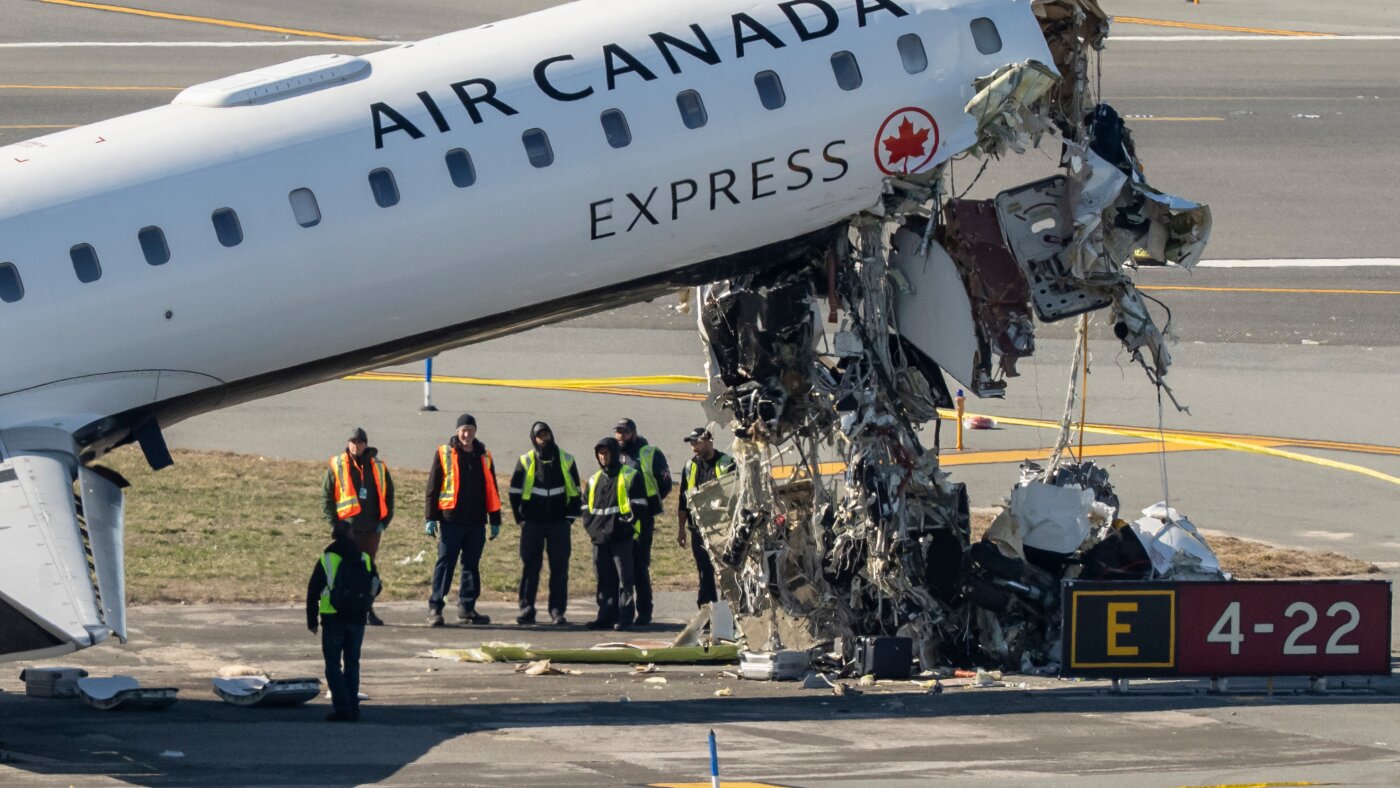
An air traffic controller was juggling extra roles during the LaGuardia plane crash

New York2 hours ago
Video: LaGuardia Crash Survivors Recount Ordeal

Detroit, MI2 hours ago
Michigan ‘adventure seekers’ take flight at new experiential venues

San Francisco, CA3 hours ago
Barricaded suspect in standoff with police in San Francisco’s Tenderloin neighborhood

Dallas, TX3 hours ago
Jack Hughes scores twice as Devils beat Stars 6-4, end Dallas streak with four-goal first period

Florida1 year ago
Florida High School Football Rankings: Top 25 teams – Oct. 21

Oregon2 years ago
How old is Bo Nix? What to know about Oregon quarterback ahead of 2024 NFL Draft

Connecticut2 years ago
Cleary's 21 help Le Moyne down Central Connecticut State 69-64 in OT

Virginia2 years ago
99th annual Pony Swim held in Virginia

Indiana2 years ago
Indiana Members Credit Union announced as new anchor tenant at Bottleworks District
News19 minutes ago
An air traffic controller was juggling extra roles during the LaGuardia plane crash

Videos7 hours ago
Iran War: Pentagon set to send thousands of elite 82nd Airborne troops to region | BBC News

News10 hours ago
Video: Passengers Wait in Long Security Lines at LaGuardia After Deadly Crash

Politics11 hours ago
King Charles to address Congress in historic first state visit to Washington

World12 hours ago
Iran names successor to security chief killed in US-Israeli attack
-

 Detroit, MI6 days ago
Drummer Brian Pastoria, longtime Detroit music advocate, dies at 68
-

 Georgia1 week ago
How ICE plans for a detention warehouse pushed a Georgia town to fight back | CNN Politics
-

 Movie Reviews6 days ago
‘Youth’ Twitter review: Ken Karunaas impresses audiences; Suraj Venjaramoodu adds charm; music wins praise | – The Times of India
-

 Alaska1 week ago
Police looking for man considered ‘armed and dangerous’
-

 Education1 week ago
Video: Turning Point USA Clubs Expand to High Schools Across America
-

 Sports3 days ago
IOC addresses execution of 19-year-old Iranian wrestler Saleh Mohammadi
-
 Science1 week ago
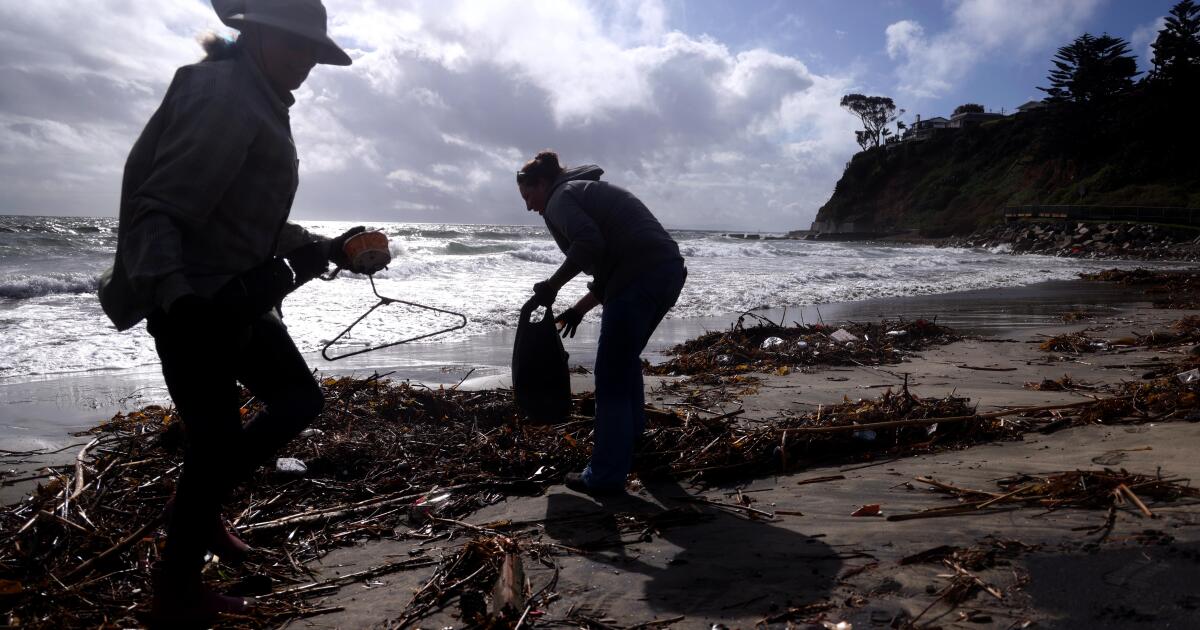
Industrial chemicals have reached the middle of the oceans, new study shows
-

 New Mexico2 days ago
Clovis shooting leaves one dead, four injured