North Dakota
North Dakota lawmakers pass Commerce budget without aid for presidential library


BISMARCK — The North Dakota Legislature sent the Department of Commerce’s budget to Gov. Kelly Armstrong on Friday without the $50 million in funding for the Theodore Roosevelt Presidential Library that was previously added to the bill.
Senate Bill 2018
saw over three hours of debate on the House floor last week
before passing
and ending up in a conference committee.
The version of the bill that
came out of conference committee
had about $70 million less in Strategic Investment and Improvement Funding (SIIF) than the version passed by the House. SIIF is a state reserve fund filled by oil and gas production and extraction tax revenue that is frequently used by lawmakers to backfill the state budget.
The presidential library accounted for $25 million of that amount, but Rep. Mike Nathe, R-Bismarck, said other areas were cut as well. Funding for the
“Find the Good Life” state tourism marketing campaign
was eliminated, while support for tourism development grants, a drone replacement program, the North Dakota Development Fund, the beyond-line-of-sight Vantis drone program, and science centers in Fargo and Grand Forks was reduced.
Lawmakers said they decided to push discussion of further funding for the presidential library to next session, when they would have more time to discuss it in a policy committee and the library will have been open for five months. The fact that the additional funding for the library was added in the House Appropriations Committee rather than a policy committee was one of the largest points of criticism when the bill came up on the House floor last week.
Theodore Roosevelt Presidential Library
officials said they have raised $260 million to date and aim to raise $450 million in private donations.
Library spokesperson Matt Briney said the library is on track to close the funding gap before its grand opening in July 2026. The library
hit the halfway point of construction
in August 2024.
The previously proposed funding for the presidential library totaled $50 million — $25 million from SIIF and $25 million from earnings from the Bank of North Dakota. The funding would not have gone toward construction but instead into an operational endowment to cover staffing and annual expenses in perpetuity.
Sen. Michael Dwyer, R-Bismarck, carried the bill on the Senate floor and said the $9 million in funding for a drone replacement program, which would replace all drones used by state agencies that come from China with drones made by the U.S. or an ally country, was the concession the Senate made to reduce spending elsewhere in the budget. It previously went into conference committee at $16 million.
Some lawmakers in the House condemned the addition of funding for a drone replacement program because they said it was reintroduced from
a bill that was voted down earlier this session.
Nathe said it is common to put sections of failed legislation into other bills.
The total budget for the department was set at roughly $158 million, with approximately $42 million of that from the General Fund and $70 million allocated as one-time funding.



(Photo by Jeff Beach/North Dakota Monitor)
(North Dakota Monitor) – The cost of the power line and substation needed by a data center north of Fargo has risen from $75 million to $110 million, but developers say the data center company will still cover the entire cost of the project.
Applied Digital needs the project to power its data center being built between Fargo and Harwood. The data center requires 280 megawatts of power at peak demand.
Applied Digital will pay for the project but it will be owned by Grand Forks based, Minnkota Power Cooperative.
The North Dakota Public Service Commission held a hearing in Fargo on what is known as the Agassiz Transmission Line and Substation.


Activists steal wax figure of Emmanuel Macron
Greenpeace activists stole a wax figure of French President Emmanuel Macron to protest France’s trade with Russia.
Greenpeace has asked for a second trial after a judge entered a $345 million judgment against the organization in a landmark case brought by the developer of the Dakota Access Pipeline.
The case “threatens to result in one of the largest miscarriages of justice in North Dakota’s history,” attorneys for the environmental group wrote in a brief filed last week.
After a three-week trial roughly a year ago, a Morton County jury directed Greenpeace to pay Energy Transfer about $667 million, finding the environmental group at fault for inciting illegal acts against the company during anti-pipeline protests in North Dakota in 2016 and 2017 and for publishing false statements that harmed Energy Transfer’s reputation.
Greenpeace denies Energy Transfer’s claims and maintains that it brought the lawsuit to hurt the environmental movement.
Southwest Judicial District Judge James Gion in October slashed the jury’s award to $345 million, though he didn’t finalize the award until late February.
Greenpeace is now taking steps to fight the judgment, which includes its motion for a new trial.
The environmental group’s reasons for the request include claims that the jury instructions and verdict form contained errors, and that Energy Transfer was allowed to present unfair and irrelevant evidence to jurors. The group also alleges the jury pool was biased.
Greenpeace says the jury’s award assumes that Greenpeace was entirely responsible for any injury Energy Transfer sustained related to the protests. Jurors were not given the opportunity to consider whether Greenpeace was only at fault for a portion of the damages, the organization wrote in its brief.
Attorneys for Greenpeace also referenced the mailers and other media circulated to Mandan and Bismarck residents before the trial that contained anti-Dakota Access Pipeline protest and pro-energy industry content.
The environmental group seeks a new trial in Cass County, arguing in part that the jury pool in the Fargo area would be more fair because its residents did not directly experience the Dakota Access Pipeline protests and because the local economy is less dependent on the energy industry.
If Greenpeace’s request for a new trial is denied, it plans to appeal the case to the North Dakota Supreme Court, the organization has said.
Greenpeace previously asked for the trial to be moved from Morton County to Cass County in early 2025, which Gion and the North Dakota Supreme Court denied.
The lawsuit is against three separate Greenpeace organizations — Greenpeace USA, Greenpeace International and Greenpeace Fund.
Energy Transfer as of Wednesday morning had not submitted a response to Greenpeace’s motion for a new trial. Previously, the company has defended the jury’s verdict and disputed Greenpeace’s claims that the court proceedings were not fair.
Energy Transfer has indicated it may appeal Gion’s decision to reduce the award to $345 million.
Greenpeace will not have to pay any of the $345 million judgment for at least a couple of months, Gion ruled Tuesday.
Court documents indicate that the organization could have to pay a bond of up to $25 million while appeals proceed, though the environmental group has asked the judge to waive or reduce this amount. Gion has not decided on this motion.
He noted that obtaining such a large bond will be challenging.
“The magnitude of this matter defies simple decisions,” Gion wrote.
Energy Transfer in court filings urged the judge to require Greenpeace to post the full $25 million.
Any bond money Greenpeace provides would be held by a third party while the appeals proceed, according to Greenpeace USA.
Greenpeace International has filed a separate lawsuit in the Netherlands that accuses Energy Transfer of weaponizing the U.S. legal system against the environmental group. Energy Transfer asked Gion to order that the overseas suit be paused while the North Dakota case is still active, which Gion denied. The company appealed his ruling to the North Dakota Supreme Court, which has yet to make a decision on the matter.
North Dakota Monitor is part of States Newsroom, the nation’s largest state-focused nonprofit news organization.

BISMARCK, ND (KXNET) — Drivers in parts North Dakota are being urged to use caution as drifting snow continues to impact road conditions.
According to the National Weather Service, strong northwest winds are creating areas of blowing and drifting snow.
That snow is sticking to previously plowed roadways, leading to slick and potentially hazardous travel conditions.
The advisory includes Burleigh County, Emmons County, Kidder County, Logan County, and McIntosh County.

Suno is a music copyright nightmare

Baby among 3 dead in holiday horror as Easter egg hunt turns deadly

GOP races to pass ICE, Border Patrol funding bill as priorities pile up, divisions emerge

5 key factors may predict stroke risk years after first event, study finds

Dawn Staley gives classy answer after Geno Auriemma question following national title loss: ‘It’s UCLA’s day’

Florida High School Football Rankings: Top 25 teams – Oct. 21

How old is Bo Nix? What to know about Oregon quarterback ahead of 2024 NFL Draft

Cleary's 21 help Le Moyne down Central Connecticut State 69-64 in OT

99th annual Pony Swim held in Virginia

Indiana Members Credit Union announced as new anchor tenant at Bottleworks District
GOP races to pass ICE, Border Patrol funding bill as priorities pile up, divisions emerge
Jet fuel crisis: Rationing triggered at four airports in Italy
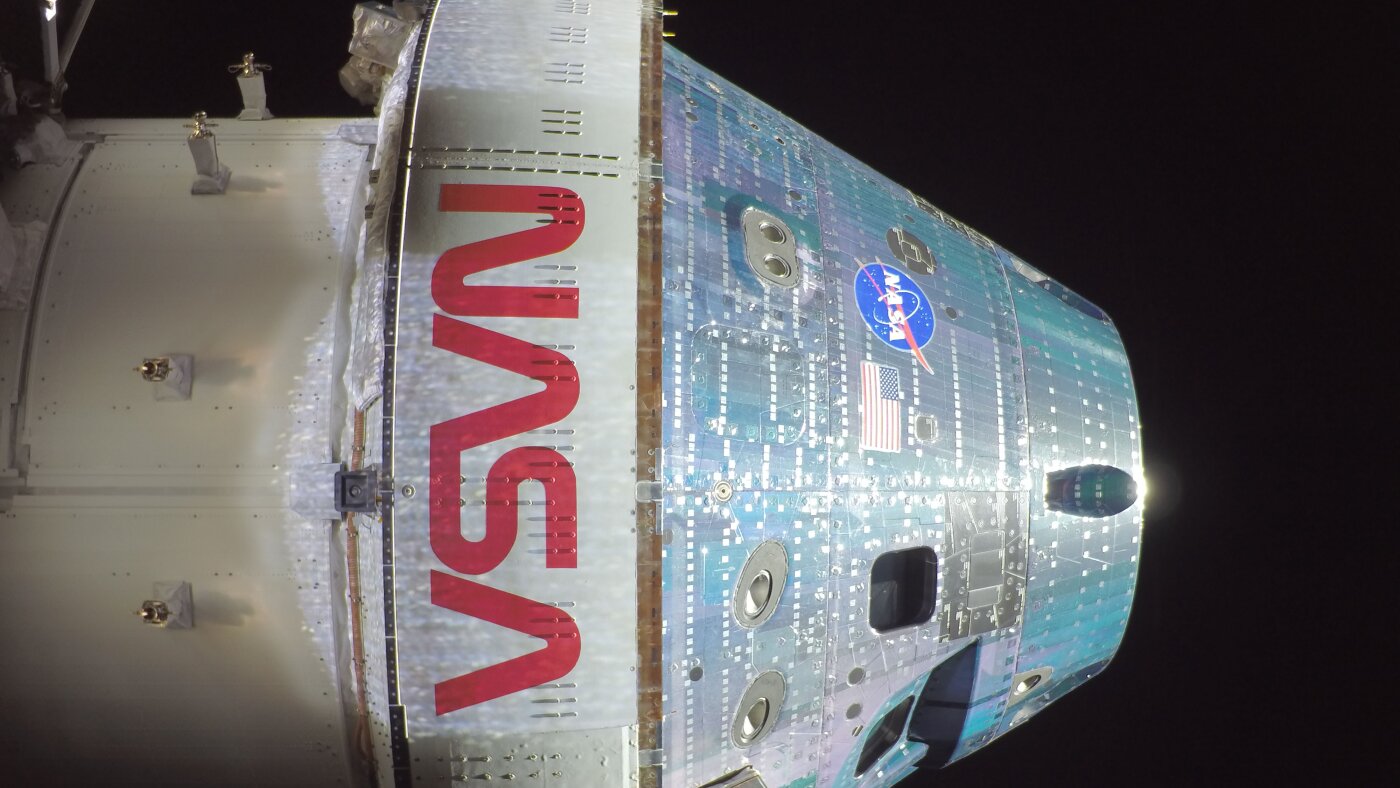
NASA’s Artemis II crew readies for Monday’s lunar flyby. Here’s what you need to know

Tax day is next week: Avoid these 5 common mistakes that can cost you money

Hamas armed wing says disarmament demands not acceptable
-

 South-Carolina1 week ago
South Carolina vs TCU predictions for Elite Eight game in March Madness
-

 Atlanta, GA1 day ago
1 teenage girl killed, another injured in shooting at Piedmont Park, police say
-

 Vermont1 week ago
Skier dies after fall at Sugarbush Resort
-

 Movie Reviews4 days ago
Vaazha 2 first half review: Hashir anchors a lively, chaos-filled teen tale
-

 Politics1 week ago
Trump’s Ballroom Design Has Barely Been Scrutinized
-

 Atlanta, GA1 week ago
Fetishist ‘No Kings’ protester in mask drags ‘Trump’ and ‘JD Vance’ behind her wheelchair
-
 Entertainment4 days ago
Inside Ye’s first comeback show at SoFi Stadium
-

 Politics1 week ago
JD Vance says he was ‘obsessed’ with UFOs, believes aliens are actually ‘demons’