Minnesota
Vikings final 2024 53-man roster projection: Will rebuilt cornerback corps hold up?


The Minnesota Vikings open the 2024 NFL regular season at the New York Giants on Sept. 8 at MetLife Stadium.
At some positions, their core roster looks much different than it did when training camp began. The Vikings have overhauled the cornerback position, most notably by signing veteran Stephon Gilmore. Rookie quarterback J.J. McCarthy, meanwhile, was lost for the season after just one preseason appearance because of a torn meniscus in his right knee.
The roster will be cut to 53 players by 4 p.m. ET Tuesday. Here is a projection for the Vikings:

QUARTERBACKS (3): Sam Darnold, Nick Mullens, Jaren Hall
Teams no longer need to keep a third quarterback on the 53-man roster to use them as the emergency quarterback on game day. And while there might not be a high risk in losing Hall on the waiver wire, should the Vikings try get him onto the practice squad, the Vikings probably won’t take that chance after having already lost McCarthy to injury. Last season’s quarterback carousel remains fresh on their minds. With McCarthy out for the season, Mullens moves from insurance policy to likely No. 2 behind Darnold.
RUNNING BACKS (3): Aaron Jones, Ty Chandler, Kene Nwangwu
Jones and Chandler are expected to shoulder most of the load at the position. The Vikings could probably get both Myles Gaskin and DeWayne McBride on the practice squad to maintain depth. Nwangwu is expected to be the primary kickoff returner.
FULLBACK (1): C.J. Ham
Vikings coaches have once again spoken glowingly this summer about Ham and their hope to find more ways to use him on offense. He played 19.4% of offensive snaps in 2023 after getting on the field for 14.7% of them in 2022.
WIDE RECEIVERS (6): Justin Jefferson, Jordan Addison, Jalen Nailor, Brandon Powell, Trishton Jackson, Trent Sherfield Sr.
The Vikings hope that Addison’s ankle injury, suffered Aug. 14 in joint practices with the Browns, has healed in time to pair him with Jefferson for Week 1. Nailor and Jackson had two of the most impressive camps among Vikings players this summer, locking them into the third and, possibly fourth receiver roles, respectively. Powell has special teams value, and Sherfield has $1 million fully guaranteed coming his way, whether he makes the team or not.
TIGHT ENDS (3): Johnny Mundt, Josh Oliver, Nick Muse
This is the group the Vikings will move forward with until T.J. Hockenson is ready to return from a torn ACL and MCL in his right knee. Mundt got the vast majority of targets with the first team during training camp, as he did at the end of last season after Hockenson’s injury. Veteran Robert Tonyan was slowed by a back injury during camp.
OFFENSIVE LINEMEN (10): Christian Darrisaw, Blake Brandel, Garrett Bradbury, Ed Ingram, Brian O’Neill, Dalton Risner, David Quessenberry, Walter Rouse, Dan Feeney, Michael Jurgens
An expected three-way competition at guard between Brandel, Ingram and Risner never materialized, largely due to an undisclosed injury that limited Risner’s availability. Brandel and Ingram took essentially all of the first team-reps, but it’s hard to imagine the Vikings parting ways with Risner altogether, assuming he is healthy. Jurgens struggled during preseason games and could probably make it to the practice squad if the Vikings need his roster spot elsewhere.
DEFENSIVE LINEMEN (5): Harrison Phillips, Jonathan Bullard, Jerry Tillery, Jonah Williams, Levi Drake Rodriguez
Five might ultimately be too low a number for this group. That would be especially true if defensive coordinator Brian Flores finds himself in more base situations than he did in 2023, when the Vikings used historically high rates of one- and two-man defensive lines. Rodriguez had a strong preseason, demonstrating good quickness at the snap, and has a chance to be part of the rotation.
LINEBACKERS (9): Jonathan Greenard, Blake Cashman, Andrew Van Ginkel, Dallas Turner, Pat Jones II, Ivan Pacie Jr., Kamu Grugier-Hill, Jihad Ward, Gabriel Murphy
This group would seem to be the key to Flores’ ability to mix and match personnel based on matchups; most of these players can hold their own inside or outside or in other combinations. It might be tough for the Vikings to keep Grugier-Hill, Ward and Murphy, as well as 2022 third-round pick Brian Asamoah II. Murphy has missed extended time during camp due to injuries, making him a little more difficult to project.
CORNERBACKS (5): Stephon Gilmore, Shaquill Griffin, Byron Murphy Jr., Akayleb Evans, Fabian Moreau
It’s pretty wild that two of these five players — Gilmore and Moreau — were signed during training camp as the Vikings have worked to overhaul the position in real time. It’s assumed that Gilmore and Murphy will be the top two corners. Griffin missed most of camp because of a hamstring injury but will likely work on the outside, with Murphy in the slot for nickel formations. Moreau beats out rookie Dwight McGlothern, who would be a prime candidate for the practice squad.
SAFETIES (5): Harrison Smith, Camryn Bynum, Josh Metellus, Theo Jackson, Jay Ward
Smith, Bynum and Metellus will likely be part of the Vikings’ top 11 defenders, with Metellus resuming his multi-positional role. Jackson got off to a tremendous start in training camp and could force his way onto the field in some packages, while Ward moved between safety and cornerback and has value in that flexibility.
SPECIALISTS (3): Will Reichard, Ryan Wright, Andrew DePaola
Reichard and Wright each won training camp competitions, although Reichard — a sixth-round draft pick — was always a heavy favorite to be the kicker. Coverage specialist NaJee Thompson has dealt with a knee injury all summer and might not be ready for the regular season.

Minnesota
Wildfire smoke from Canada and Minnesota pushes further into US, engulfing DC in eerie haze

NEW YORK (AP) — Millions of people in the Great Lakes, Northeast and Mid-Atlantic states muddled through another day of unhealthy air from uncontrolled wildfires on Friday, as smoke enveloped the nation’s capital in a gloomy, eerie haze.
Air quality warnings were expected to remain in effect through Saturday across a wide swath of the U.S., but there’s potential for temporary relief with rains and storms forecast over a chunk of the affected region over the weekend.
The smoky conditions won’t be gone anytime soon, though, as fires burn unchecked across a remote region of Canada, cautioned Bob Oravec, a lead forecaster at the National Weather Service based in Maryland. Wildfires in a wilderness area in Minnesota are also contributing to the smoke.
“The source of the smoke is going to continue on for certainly a week, probably,” he said. “So in some form, there’s going to be smoke that gets transported from the fires downstream, and it’s just going to depend upon which way the wind’s blowing as to where the smoke is going to affect the most.”
On Friday, communities in Minnesota, Michigan and Illinois closest to the Canadian border and the Boundary Waters Canoe Area Wilderness in Minnesota again registered some of the worst air quality in the world, according to IQAir, an air quality monitoring website.
Not far behind them was Washington, D.C., where the thick smoke created eerie scenes. The Washington Monument, the Lincoln Memorial and other national landmarks could be seen enveloped in a thick, orange-hued haze in the morning.
“Wow that Canadian smoke haze is no joke,” Stewart Verdery, a former assistant secretary at the U.S. Department of Homeland Security, wrote on X as he shared a panorama of D.C. at sunrise. “Almost nothing visible – no sun, no monuments, no Reagan Airport.”
Air in and around Washington was expected to go from bad to worse as the day progressed, reaching “very unhealthy” and potentially “hazardous” levels on the air quality index, regional officials said.
People, particularly those with heart or lung disease, older adults and children, were urged to limit or avoid going outside as much as possible until air quality improved.
There was also concern in the New York City area about how the foul air might impact the World Cup final match between soccer powerhouses Spain and Argentina at MetLife Stadium in New Jersey on Sunday.
Oravec said winds will continue pushing the wildfire smoke east in the U.S., though conditions should be better on game day Sunday than on Saturday.
Just a day earlier, a thick haze tinged with orange and yellow darkened skies across several states and partly obscured Manhattan’s skyline.
Officials from New York, New Jersey, Pennsylvania and other Northeast states distributed free K95 face masks, canceled outdoor programming and opened libraries and other public buildings as cooling centers where people could get a respite from the sooty air.
As Friday progressed, air quality measures improved from “unhealthy” to “moderate” in some places in and around New York City.
A strong sun broke through a thin veil of smoke, and large chunks of clear blue sky were visible across much of the region by Friday afternoon.
Saturday brings a high chance of thunderstorms across much of the Northeast and mid-Atlantic, which will help dampen the bad air.
How long the reprieve lasts depends on what happens hundreds of miles north, as some 100 wildfires burn without end in sight, largely in the Ontario area in Canada. In the U.S., officials have closed the Boundary Waters while battling multiple fires.
Long-term exposure to smoky conditions can complicate existing health problems and lead to chronic and deadly issues, including respiratory illness, cardiovascular and neurological diseases and premature death.

See how the bald eagle’s story shows its enduring symbolism
As the U.S. celebrates 250 years, the bald eagle endures as North America’s native sea eagle and national bird.
The common loon, Minnesota’s state bird, is more closely related to a penguin than a duck.
Despite loons predominantly living in the northern hemisphere and penguins mostly living in the southern hemisphere, researchers consider them to be genetic cousins. Taxonomic analyses placed them in an evolutionary cluster tracing back 40 million to 50 million years ago, along with herons and pelicans.
While loons and ducks share habitat on Minnesota lakes, they aren’t close relatives. Ducks are closer cousins to geese and swans.
After sharing a common ancestor, penguins and loons developed distinct characteristics. Loons can fly, but struggle to move on land; penguins can’t fly, but waddle on land. Penguins use flipper-like wings to swim; loons use webbed feet for underwater propulsion.
They have some similar features, however, including dense bones to help dive underwater and their tuxedo coloring.
MinnPost partners with Gigafact to produce fact briefs — bite-sized fact checks of trending claims. Read our methodology to learn how we check claims.

Fires in the past burned more frequently in western Canada, but recent years have seen that trend migrate eastward, with large fires now burning in Ontario, Quebec and Atlantic provinces, Prof Chasmer said, leading to more noticeable smoke in densely populated cities like Toronto and New York.
-

 Movie Reviews8 minutes ago
“The Odyssey” is Christopher Nolan’s Most Singular Film Yet (Movie Review)
-
World20 minutes ago
Iran War Updates: Bridges and Water Plants Hit as Strikes Stretch to 7th Straight Day
-
 Lifestyle1 hour ago
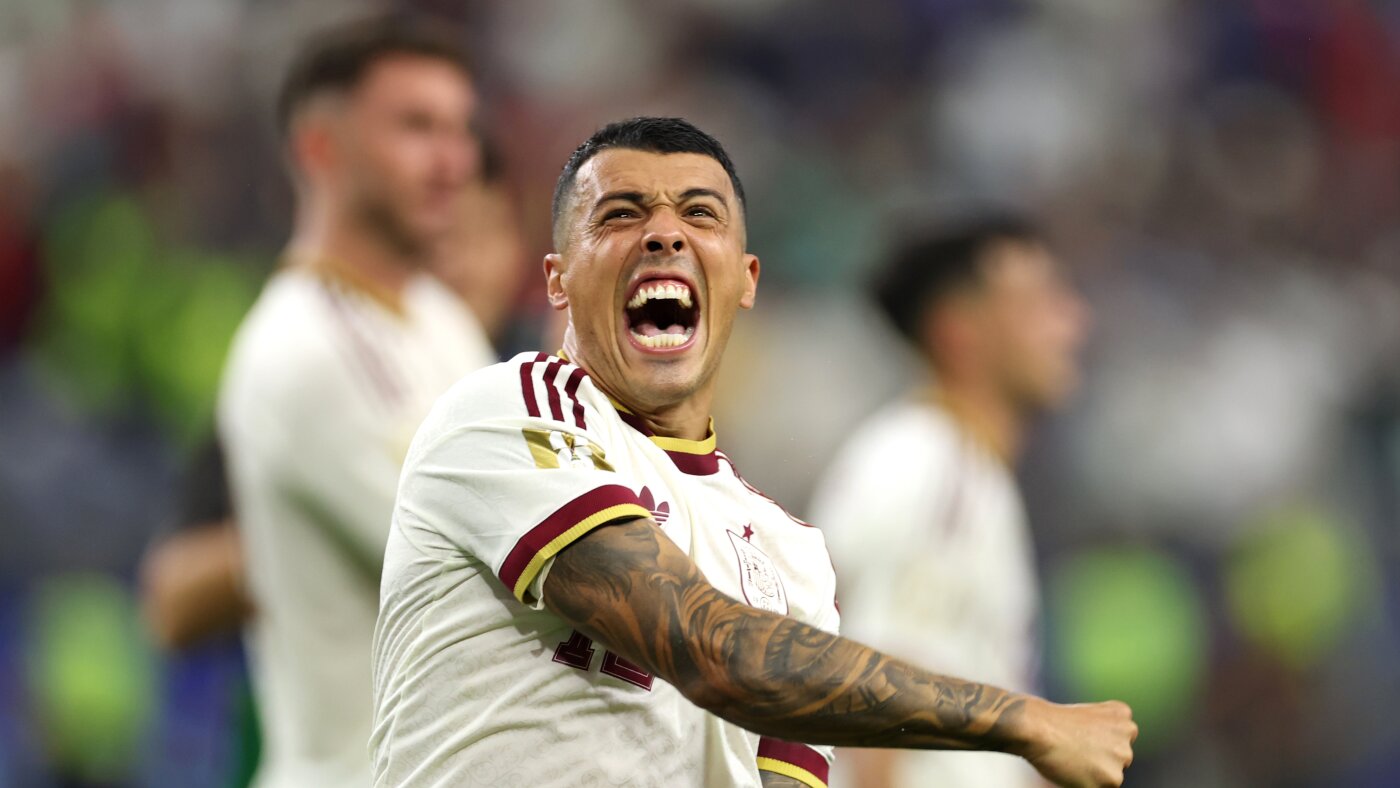
Spain could make World Cup history: The first to win men’s and women’s trophies back-to-back
-

 Technology1 hour ago
Taylor Farms pulls iceberg lettuce from the US market after cyclosporiasis outbreak
-

 World1 hour ago
Who is Andy Burnham? The Trump critic set to become the UK’s next prime minister
-

 Politics2 hours ago
Major appeals court declares New Jersey AR-15 ban unconstitutional in landmark Second Amendment ruling
-

 Health2 hours ago
First death reported in Upper East Side Legionnaires’ disease outbreak as cases rise to 67
-

 Sports2 hours ago
Raising Cane’s owner Todd Graves on how viral Tom Brady-Rob Gronkowski dunk tank came to be at Fanatics Fest

