Minneapolis, MN
More Than 4021 Delays and 106 Cancellations Hit US as Spirit, Horizon, PSA, Alaska, Delta, American Face Travel Setbacks, Leaving Thousands of Passengers Grounded in Charlotte, Billings, Minneapolis, Nashville, Dulles, Atlanta, and Beyond – Travel And Tour World


Published on
November 29, 2025
Over 4021 delays and 106 cancellations hit US travel, with Spirit, Horizon, PSA, Alaska, Delta, American facing setbacks. Key airports like Charlotte, Billings, Minneapolis, Nashville, Dulles, and Atlanta saw major disruptions, grounding thousands of passengers. These setbacks created chaos across the airline industry, leaving travelers stranded as delays stretched into hours and flights were abruptly canceled. Airlines such as Spirit and American Airlines were among the hardest hit, with large numbers of delayed flights, while airports like Charlotte and Dulles became hotspots of confusion. As the ripple effects of these delays and cancellations spread, passengers across the country faced significant travel challenges, exacerbating the already turbulent state of air travel.
Overview of US Airline Cancellations and Delays
The table below summarizes the cancellation and delay data for various U.S.-based airlines. American Airlines had the highest number of delays, with 850 delayed flights (26%), while Delta Air Lines had the lowest number of cancellations (10) and a relatively low delay percentage of 6%. Airlines like Southwest and United saw significant delays (417 and 418, respectively), although their cancellation rates were minimal. Spirit and PSA Airlines experienced delays of 21% and 16%, respectively. Overall, 89 cancellations and 3,718 delays occurred across these U.S. airlines.
Airline
Cancelled (#)
Cancelled (%)
Delayed (#)
Delayed (%)
American Airlines
21
0%
850
26%
Delta Air Lines
10
0%
181
6%
United
12
0%
418
14%
SkyWest
8
0%
325
14%
Envoy Air (AAL)
7
0%
131
13%
PSA Airlines (AAL)
4
0%
115
16%
Spirit
4
0%
105
21%
Southwest
3
0%
417
9%
JetBlue
2
0%
133
15%
Alaska Airlines
2
0%
90
10%
Horizon (ASA)
2
0%
46
14%
CommuteAir (UAL)
2
0%
44
18%
Frontier
1
0%
144
16%
Overview of US Airport Cancellations and Delays (By Origin)
This table highlights the cancellation and delay statistics for major U.S. airports. Charlotte Douglas International (CLT) saw 11 cancellations (1%) and 168 delays (20%). Dallas-Fort Worth International (DFW) had the highest number of delays (332), with a delay percentage of 32%. Billings Logan International (BIL) had a higher cancellation percentage (12%), with 9 cancellations. Overall, 43 cancellations and 1,225 delays were reported across these U.S. airports.
| Airport (Code) | Location | Cancelled (#) | Cancelled (%) | Delayed (#) | Delayed (%) |
|---|---|---|---|---|---|
| Charlotte/Douglas Intl (CLT) | Charlotte, NC | 11 | 1% | 168 | 20% |
| Dallas-Fort Worth Intl (DFW) | Dallas-Fort Worth, TX | 9 | 0% | 332 | 32% |
| Billings Logan Intl (BIL) | Billings, MT | 9 | 12% | 11 | 15% |
| Chicago O’Hare Intl (ORD) | Chicago, IL | 8 | 0% | 214 | 17% |
| Miami Intl (MIA) | Miami, FL | 7 | 0% | 122 | 15% |
| Houston Bush Int’ctl (IAH) | Houston, TX | 3 | 0% | 76 | 11% |
| Newark Liberty Intl (EWR) | Newark, NJ | 2 | 0% | 97 | 17% |
| Sidney-Richland Rgnl (SDY) | Sidney, MT | 3 | 27% | 2 | 18% |
Overview of US Airport Cancellations and Delays (By Destination)
The second set of data continues to provide insights into airport performance across the U.S. Billings Logan International (BIL) had the highest cancellation rate at 8%, along with a 11% delay rate. Chicago O’Hare (ORD) saw a relatively low cancellation rate of 0%, but 214 delays, resulting in a delay percentage of 16%. LaGuardia (LGA) and Minneapolis/St. Paul International (MSP) both had low cancellation rates (1%), but delays were significant (14% and 5%, respectively). Overall, 59 cancellations and 1,346 delays occurred at these airports.
Airport (Code)
Location
Cancelled (#)
Cancelled (%)
Delayed (#)
Delayed (%)
Billings Logan Intl (BIL)
Billings, MT
7
8%
9
11%
Chicago O’Hare Intl (ORD)
Chicago, IL
4
0%
203
16%
LaGuardia (LGA)
New York, NY
4
1%
54
14%
Minneapolis/St Paul Intl (MSP)
Minneapolis, MN
4
1%
23
5%
John F Kennedy Intl (JFK)
New York, NY
3
0%
80
13%
Hartsfield-Jackson Intl (ATL)
Atlanta, GA
3
0%
75
7%
Houston Bush Int’ctl (IAH)
Houston, TX
3
0%
72
11%
Fort Lauderdale Intl (FLL)
Fort Lauderdale, FL
3
0%
65
14%
Washington Dulles Intl (IAD)
Dulles, VA
3
0%
58
12%
Nashville Intl (BNA)
Nashville, TN
3
0%
38
10%
Des Moines Intl (DSM)
Des Moines, IA
3
2%
8
7%
Key West Intl (EYW)
Key West, FL
3
4%
3
4%
Sidney-Richland Rgnl (SDY)
Sidney, MT
3
33%
0
0%
Denver Intl (DEN)
Denver, CO
2
0%
119
11%
Charlotte/Douglas Intl (CLT)
Charlotte, NC
2
0%
118
14%
Los Angeles Intl (LAX)
Los Angeles, CA
2
0%
114
12%
Miami Intl (MIA)
Miami, FL
2
0%
103
12%
Boston Logan Intl (BOS)
Boston, MA
2
0%
77
15%
Over 4021 delays and 106 cancellations hit US travel, with Spirit, Horizon, PSA, Alaska, Delta, American facing setbacks. Key airports like Charlotte, Billings, Minneapolis, Nashville, Dulles, and Atlanta saw major disruptions, grounding thousands.
Conclusion
The widespread disruption of over 4,021 delays and 106 cancellations across U.S. air travel left Spirit, Horizon, PSA, Alaska, Delta, and American Airlines facing significant setbacks. These setbacks, coupled with major disruptions at key airports like Charlotte, Billings, Minneapolis, Nashville, Dulles, and Atlanta, caused widespread frustration for thousands of grounded passengers. As travelers experienced canceled flights and prolonged delays, it became clear that these airlines and airports struggled to manage the high volume of disruptions. The ripple effect from these travel setbacks highlighted the ongoing challenges within the aviation industry, leaving many to question the reliability of their travel plans in the face of such widespread chaos.


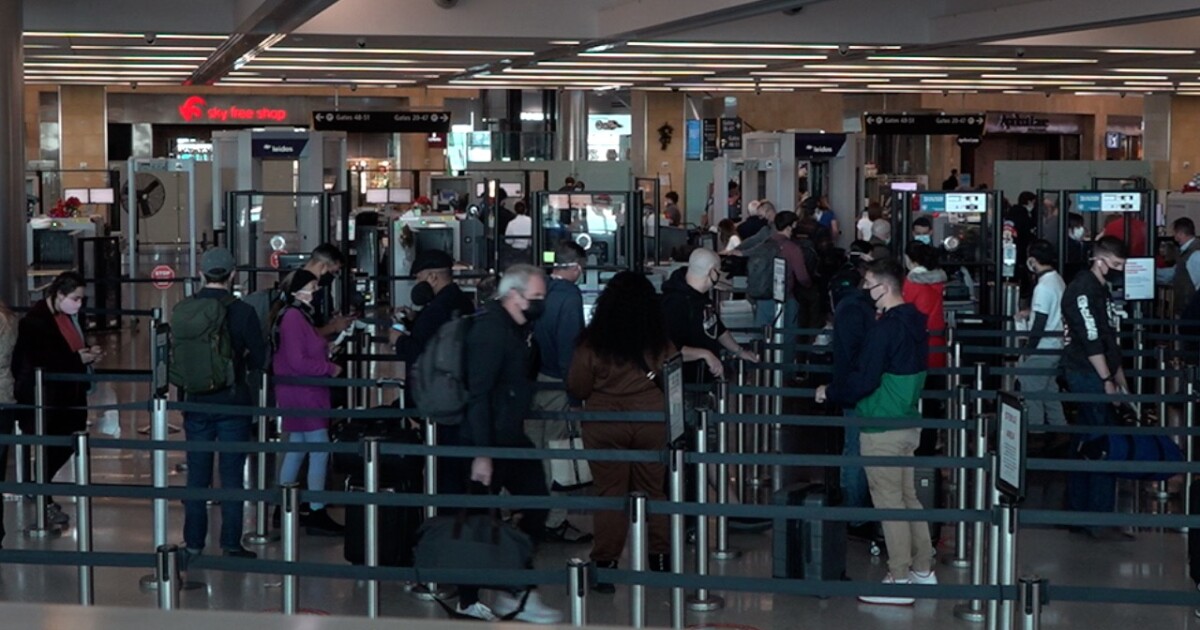


A halt on the construction of data centers in Minneapolis took effect in July after the Minneapolis City Council discussed the need for more time to understand the facilities’ potential environmental impacts.
The Council approved the halt through November by an 8-5 vote in May. Members said the halt allows time to study the environmental impacts of data centers and plan their development more conscientiously.
However, Council members not in favor of the halt said it will result in reduced tax revenue and may drive away businesses willing to invest in downtown Minneapolis.
Data centers are not new to the Minneapolis area, but community concerns have grown in recent months, President of Minnesota Building and Construction Trades Council Dan McConnell said.
“Data centers have been around for decades,” McConnell said. “They’re not new. There just seems to all of a sudden be this hysteria around data centers.”
Celeste Robinson, policy aide to Minneapolis Council member Robin Wonsley, said the city should not rush the process because of the potential environmental trade-offs compared with the promised economic benefits. She said the halt could be extended to allow a full 12 months of analysis.
Robinson said the Council’s halt on data centers allows for a more thorough evaluation of their impacts.
“I think that there’s a misconception that the City Council being deliberative and taking the time to do it right. I think that there’s been a portrayal that that’s somehow a bad thing,” Robinson said.
Robinson said, although data centers are often seen as an investment, there is no evidence the developments generate the economic benefits for communities that supporters claim they do. She said the Council wants to determine what resources they would potentially take from the city.
“It is corporations who see land, fresh clean water, and electric grids that they can use for their profit, and that those profits get moved out of state to shareholders,” Robinson said. “They are not reinvested in our community, and so a lot of the rhetoric around data centers has really been about unverified claims around them being a source of investment.”
The American Federation of Labor and Congress of Industrial Organizations’ website claims that data centers are a staple for the modern job market and help to create more jobs, but labor protections for workers and regulations to protect surrounding communities are needed.
Resolution 7, a plan created by the AFL and CIO, outlines labor protections for data center employees and regulations aimed to protect surrounding communities. The plan calls for legislation that would require data centers to conserve water and energy. It seeks transparency from data center operators, union labor agreements and policies requiring data center operators to pay their share of energy and water costs.
In recent years, a lack of development in Minneapolis has seen a decline in commercial property value, leaving a shortfall of about $50 million in expected commercial property tax to fall onto the shoulders of residents, according to the Minneapolis Times. To help offset that shortfall and alleviate the burden that was placed on residents, Minneapolis must find new sources of revenue, Council member Elizabeth Shaffer said.
Some believe data centers, often being large-scale commercial developments, can relieve these financial pressures. Shaffer said the data center located in the Sleep Number headquarters in downtown Minneapolis has had a positive financial impact on the city.
“The Sleep Number building increased its valuation to eight times what it was a year ago because of a data center,” Shaffer said. “That helps relieve the property tax burden that residents and apartment owners have been feeling.”
When property values increase, property tax revenue also increases, helping Minneapolis generate revenue and address its estimated $50 million deficit, Shaffer said.
Robinson said data centers are not the only way for Minneapolis to generate revenue within the city.
“Council member Wonsley has been looking at how do we tax the rich, how do we put fees on real estate transfers for extremely high-value real estate,” Robinson said. “There are so many things that the city council can be doing to bring in new revenue to shift the property tax burden off of working-class people, that is not related to letting big tech corporations build data centers.”

Extreme Heat Warning
from SUN 8:00 AM CDT until TUE 1:00 AM CDT, Norman County, Kittson County, Wadena County, Roseau County, North Beltrami County, Mahnomen County, Wilkin County, North Clearwater County, Clay County, Red Lake County, West Otter Tail County, West Marshall County, East Marshall County, Pennington County, West Becker County, South Beltrami County, Lake Of The Woods County, West Polk County, Grant County, South Clearwater County, Hubbard County, East Polk County, East Otter Tail County, East Becker County
-
 Detroit, MI7 minutes ago
How to watch ‘The Odyssey’ in IMAX, 70mm and more in metro Detroit
-

 San Francisco, CA19 minutes ago
Sold-Out SF Marathon 2026: The Races, Routes and Road Closures (Plus How to Watch It All) | KQED
-

 Dallas, TX25 minutes ago
Top 10 Dallas Cowboys of 2026: Rashan Gary is Complete EDGE Dallas Needed
-

 Miami, FL31 minutes ago
Girl, 12, shot while sitting in parked car in northwest Miami-Dade, deputies say
-

 Boston, MA37 minutes ago
GBH Daily: Come sail away
-

 Denver, CO43 minutes ago
New ice cream shop with a ‘waffle theater’ bets big on downtown Denver
-

 Seattle, WA49 minutes ago
Seattle weather: Sunny skies and warmer temperatures Tuesday
-

 Milwaukee, WI1 hour ago
Milwaukee cooling centers, heat advisory tips; what to know

