Minneapolis, MN
Minneapolis city leaders consider plan to retain violence interrupters in Cedar Riverside


The Minneapolis City Council on Thursday will discuss a proposal to include the Cedar Riverside and Elliot Park neighborhoods in the latest round of contracts for violence interruption services.
The discussion comes as the council considers contracts to fund interrupters in several other parts of the city, but not the areas that stretch from the edge of downtown to the West Bank of the University of Minnesota campus.
Ward 6 Council member Jamal Osman, who represents the area, is critical of the administration’s decision not to include these neighborhoods in the latest round of contracts.
“This program has consistently demonstrated its value, playing a crucial role in reducing violence, de-escalating conflicts and fostering trust within our community,” wrote Osman in a newsletter to constituents. “By choosing to eliminate these services, the administration is not only disregarding the evidence of their success but also abandoning the very community that has benefitted from their presence.”
MPR News helps you turn down the noise and build shared understanding. Turn up your support for this public resource and keep trusted journalism accessible to all.
At a council committee meeting last week, Neighborhood Safety Deputy Director Lea Lakes told Osman and other members of the council that the city selected eight areas to receive violence interrupter services based on five years of crime data.
“And does that mean this specific region we’re talking about — the West Bank, Cedar Riverside area — is it showing there’s less violence and that we don’t need the program,” asked Osman.
“It indicates that it is not in the top eight areas of violence,” replied Lakes.
Violence interrupters first came to the area in 2021 and according to officials with the Elliot Park Neighborhood, served until the contract ended in October of 2024. Osman added that the reduction in crime in his ward is a testament to the effectiveness of the program and said it doesn’t make sense to eliminate something that’s already working.
Some Ward 6 residents agree with Osman’s assessment.
Zeynab Abukar has lived in the Cedar Riverside area for the past two decades.
“When I heard about the cut, I was so stressed,” she said. “I was like, do I have to go back to, like, 20 years ago. Do we have to go back to violence?”
The proposal drew spirited debate among council members and was forwarded to Thursday’s meeting without recommendation. A few council members pointed to the lack of some violence prevention services in their wards and called for a more equitable way to cover communities in need.
“Some of us represent wards that aren’t as privileged or don’t have as much wealth compared to other places in our city, and should be having more equitable resources into our neighborhoods to address the disparities institutional racism, the impact that violence has in some of our neighborhoods,” said Council member Jason Chavez, who represents neighborhoods in the south central and south east areas of the city.
“And that needs to be considered in this process.”
MPR News reporter Cari Spencer contributed to this story.



Big Honking Truck Parade heads to Minneapolis
A ?cavalcade of wheels? will line Nicollet Mall in Minneapolis on Thursday, July 31, for the first-ever ?Minneapolis Moves: The Big Honking Truck Parade? featuring vehicles from fire engines to snowplows.
MINNEAPOLIS (FOX 9) – Families can get up close to massive trucks and city vehicles as the Big Honking Truck Parade rolls back through Minneapolis on Thursday.
Big trucks take over Nicollet Mall
What we know:
The “Minneapolis Moves: The Big Honking Truck Parade” is set to line downtown with municipal, public safety, construction and big-wheel trucks in an effort to bring families together and highlight the people and equipment that keep the city running.
The event begins at 5 p.m. with a local vendor market featuring crafts and food. A parade then starts at 5:30 p.m., traveling down Nicollet Mall from East Grant Street to South Sixth Street.
Mayor Frey during the 2025 Big Honking Truck Parade. Credit: City of Minneapolis (Supplied)
Dig deeper:
The parade is said to feature City of Minneapolis cars, police and fire trucks, construction vehicles, semitrailers and more from local businesses and operators.
Two Minnesota Special Olympics athletes, Dequan Williams of Minneapolis and Niko Lichtscheidl of St. Francis will serve as grand marshals of the parade, ahead of the 2026 Special Olympics USA Games which officially kick off in Minnesota on Saturday.
After the parade, all vehicles will be parked along the Mall until 8 p.m. for a “touch-a-truck” experience, giving families a chance to explore the trucks up close.
According to officials, the parade route will:
- Begin at East Grant Street
- Travel down Nicollet Mall
- End at South Sixth Street
Hoping to expand upon its first year in 2025, the parade is said to feature City of Minneapolis cars, police and fire trucks, construction vehicles, semitrailers and more from local businesses and operators.
What they’re saying:
“The Big Honkin’ Truck Parade is one of those uniquely Minneapolis events that brings families together while showcasing the people and equipment that serve our city every day,” Minneapolis Mayor Jacob Frey said in a press release. “It’s fun, it’s educational, and it’s a great reminder of all the work happening behind the scenes to keep Minneapolis running.”
The Source: Information provided by a City of Minneapolis press release.
Minneapolis, MN
ICE’s Unseen Toll in Minneapolis: Suicide Helpline Calls More Than Doubled During Surge

More than six months after federal agents descended on Minnesota, the toll of the immigration crackdown on the Twin Cities continues to mount.
The latest revelations about the far-reaching and deeply felt impacts of the campaign known as Operation Metro Surge come in a Human Rights Watch report published Thursday.
Based on more than 130 interviews, video analysis, and government arrest data, the report documents a dizzying array of abuses over the multi-month siege of Minneapolis and St. Paul — from lethal violence to free speech violations, unlawful detentions, and more.
While many of the abuses are well-known — including the killings of Minnesota residents Renee Good and Alex Pretti by federal agents — others occurred in the shadows of the infamous campaign.
Among the most troubling accounts are those provided by healthcare and mental health professionals.
According to the report, the National Alliance on Mental Illness in Minnesota saw a 120 percent increase in calls and a “significant increase” in the number of people struggling with suicidal thoughts or actions during Metro Surge. One medical provider knew of at least three teenagers who attempted to take their own life after their parents were detained in the crackdown, with one of the adolescents doing so on a “frequent” basis.
“One goal of the report is to bring light back to the full scope of the harm, and not only the harm that we saw in terms of violence in the streets, in terms of abusive detentions,” Reagan Williams, the author of the new report, told The Intercept, “but also the effects that that had for aspects of daily life for everybody here — the impact it had on people’s ability to leave their homes, to go to doctor, to go to school, to go to work.”
Human Rights Watch found the combination of violence and racial profiling that defined the crackdown caused many Minnesotans to forgo medical care.
The day after Good was killed, nearly a third of one healthcare provider’s patients — mostly Somali or Spanish-speaking immigrants — did not show up for pre-scheduled appointments. Another provider said the number of in-person visits at their office dropped by as much as 50 percent.
When Williams arrived in the Twin Cities, her focus was the kind of violent interactions documented in viral videos proliferating from Minnesota. She soon learned those weren’t the only issues community members were desperate to discuss.
“People that we talked with expressed emotions of exhaustion, fear, frustration, immense stress,” she said. “They expressed particular concerns for children, medical providers in particular, the impact of missing school, of knowing violence is happening in their communities — for immigrant children and children of color, the fear of having a parent taken, of themselves being taken.”
“Children are particularly vulnerable to long-term impacts of this kind of acute violence and stress,” Williams added. “Those are impacts that will continue on.”
“Near-Total Impunity”
Described by Trump administration officials as the largest immigration enforcement operation in history, the crackdown in the Twin Cities began in December and stretched into February. Thousands of officials from Immigration and Customs Enforcement and the U.S. Border Patrol conducted roving arrest operations throughout the area.
More than 4,000 immigrants were arrested during Metro Surge. At roughly 100 arrests per day, it was the highest per capita arrest rate in the country; 64 percent of immigrants arrested in the campaign had no criminal record.
“In Minnesota, US citizens and immigrants alike were racially profiled in the ordinary course of their day — approached by federal agents while driving, while at work, or while shoveling snow,” the report said. “Minnesota residents of Somali and Latin American descent were notably targeted, despite the fact that the overwhelming majority of these communities are US citizens or have green cards.”
A hotline run by the National Lawyers Guild recorded 524 cases of the U.S. citizens detained during the surge, though the figure is believed to be a significant undercount. A survey by the U.S. Immigration Policy Center at the University of California, San Diego earlier this year found that nearly a third of Minneapolis residents experienced an interaction with federal agents; of those interactions, nearly half occurred “at or near a school, healthcare facility, childcare facility, courthouse, or place of worship.”
The new report follows a fresh tally from Minneapolis officials, announced last week, estimating that Metro Surge cost the city nearly $700 million. A nonprofit serving tenants in Minnesota described the economic fallout as a “crisis,” the Human Rights Watch report said, with an 85 percent increase in people seeking rent payment assistance.
“If I told you every time ICE was near a school, you’d stop reading my messages.”
In one Minnesota school district, attendance dropped by nearly a third during the government operation. At least 14 incidents of immigration enforcement reported at or near campuses, including the arrest of a preschool teacher, a special education staff member, and a parent at a school bus stop.
“If I told you every time ICE was near a school,” the district’s superintendent told Human Rights Watch, “you’d stop reading my messages.”
Considering the sweeping impacts of the crackdown, Human Rights Watch is calling for an overhaul of the Department of Homeland Security, which oversees ICE and Border Patrol; congressional investigations into the actions of officials involved in the operation; legislation to prohibit immigration arrests at sensitive locations such as schools and hospitals; and a host of other reforms.
To date, the report said, “The many abuses committed by federal agencies during Operation Metro Surge have so far been met with near-total impunity.”
-

 Technology7 minutes ago
6 in 10 identity crimes now begin with a new account
-
 Business10 minutes ago
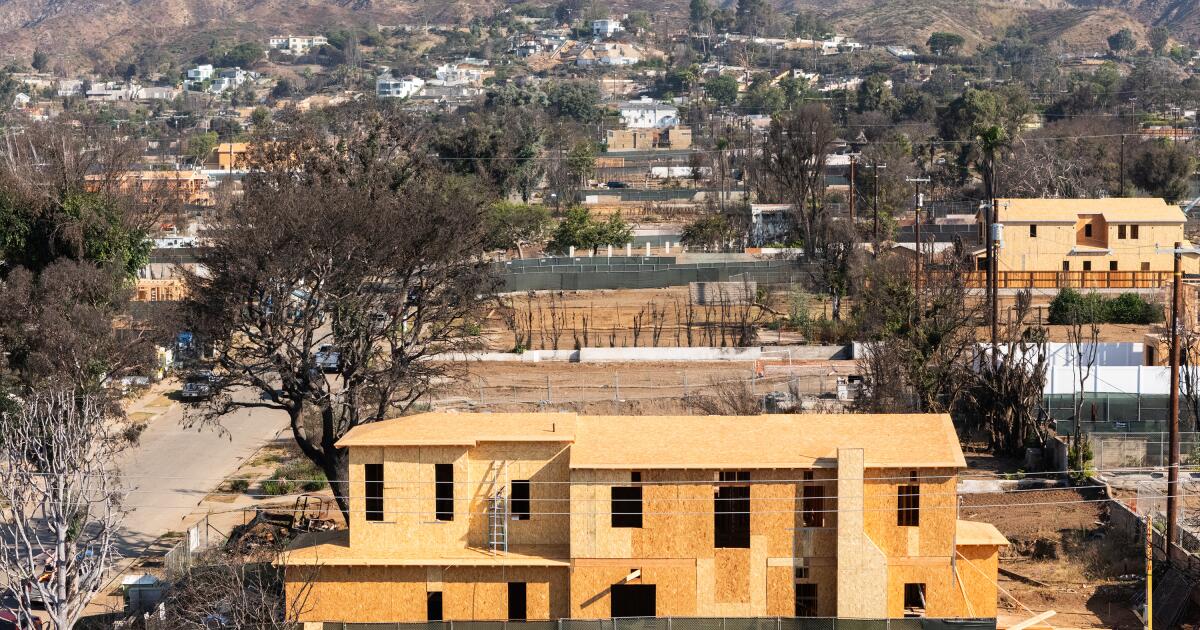
January 2025 wildfire victims seek tougher penalties against State Farm over claims handling
-
 Entertainment15 minutes ago
Review: ‘Sugar,’ with Colin Farrell as an alien private eye, gets a new and improved second season
-
 Politics25 minutes ago
Political watchdog fines Newsom for failing to report $5.5M in solicited donations on time
-
 Sports37 minutes ago
Goalkeeper Raúl Rangel’s elite play and South Korea’s mistake help Mexico advance
-

 World45 minutes ago
US-Iran talks postponed as Israel attacks Lebanon
-
 News1 hour ago
Luigi Mangione’s lawyers withdraw plans for psychiatric defense
-

 New York3 hours ago
Video: Knicks Fans Celebrate With Ticker-Tape Parade

