Minneapolis, MN
Hotel Ivy in downtown Minneapolis made no effort to protect Anton Lazzaro’s sex trafficking victims, lawsuit claims


MINNEAPOLIS — The former owners of a downtown Minneapolis hotel are being sued for allegedly letting former GOP donor Anton “Tony” Lazzaro sex-traffic underage girls at his condominium inside the hotel.
The lawsuit filed in federal district court on Monday claims that the Hotel Ivy and Residences made no effort to protect the teen girls who were sex trafficked by Lazzaro at his condo on the 19th floor of the Ivy Tower in 2020.
Lazzaro was sentenced to 21 years in prison for sex trafficking five minors ages 15 and 16 when he was 30 years old. Lazzaro paid teenagers for sex with money and gifts, according to federal prosecutors. He also would supply them with drugs and alcohol to the point many were visibly intoxicated and had to be helped leaving the hotel, according to the recent lawsuit.
Since then, the hotel has changed ownership. In a statement to WCCO, the counsel for the defendants in the lawsuit — Heartland Ivy Partners LLC, Ivy Equity Partners LLC, and Wischermann Partners, Inc. — called the claims “meritless” and said the defendants will “vigorously defend themselves” in court. The counsel also clarified that the Hotel Ivy and Ivy Residences are “separate and distinct pieces of real estate,” and that Lazzaro’s activities occurred at his condo at the Ivy Residences, which is located in the same building as the Hotel Ivy.
Minnesota law requires all owners, managers and on-site employees of hotels in the state to take sex trafficking training annually. The training — developed by the Minnesota Department of Health in partnership with Hospitality Minnesota — includes a virtual presentation, a companion guide, a manager and owner training toolkit and a poster set. The lawsuit claims that despite this training, the staff at Hotel Ivy made no effort to protect the girls trafficked by Lazzaro.
The front office manager testified during Lazzaro’s trial that the girls who came to see Lazzaro at his condo appeared to be “significantly younger” than 19 and looked closer to 16 or 17, according to the lawsuit. The victims allegedly were instructed to ask the hotel staff to escort them to a private elevator to access Lazzaro’s condo and would often show up late at night.
“There was a pattern of teenage girls arriving late at night to Hotel Ivy, visiting Lazzaro, and leaving a short time later intoxicated. It doesn’t take a rocket scientist to know that something sinister and criminal was occurring,” attorney Molly Burke said.
The lawsuit also claims one girl and her father informed the staff at Hotel Ivy that Lazzrro sex-trafficked teen girls and asked them to help get the girl’s sister out of his condo, but the staff said they could not do anything.
“It’s about the scope and the breadth of this problem, not just in the Twin Cities and not just at the Ivy Hotel, the scene of the crime, but across the state and across this nation,” attorney Jeff Anderson said. “It’s time for all of us to start to see, to start to watch and then do something about it — something the Ivy Hotel staff failed miserably to do.”
FBI agents raided Lazzaro’s Hotel Ivy condo in December 2020. Investigators seized nearly $400,000 in cash, along with foreign currency and bars believed to be gold. They found a GPS tracker, thumb drives, laptops, tablets and more than a dozen cellphones. Agents also confiscated his Ferrari.
The uncovering of Lazzaro’s actions led to fallout within the Minnesota Republican Party. He’d given the party about $190,000 and was connected to the then-chair, Jennifer Carnahan. There were cries for Carnahan to resign from within the Minnesota GOP. She stepped down a week after the charges against Lazzaro were unsealed.
Lazzaro’s co-defendant, Gisela Castro Medina, was sentenced to three years in prison after pleading guilty to one count of conspiracy to commit sex trafficking of minors and one count of obstruction.
Court documents say Castro Medina recruited and brought the victims to Lazzaro’s condo. Lazzaro would then compensate Castro Medina with payments for rent, tuition, utilities and travel expenses after he had sex with them.
Note: The video above originally aired on Aug. 9, 2023.



Minneapolis, MN
Minneapolis chief communications officer Adam Fetcher out amid possible criminal charges

MINNEAPOLIS (FOX 9) – Minneapolis’ chief communications officer, Adam Fetcher, is out of his job and now faces possible legal trouble.
Adam Fetcher’s departure from city hall
What we know:
City officials say Adam Fetcher’s last day as chief communications officer was Monday, July 1.
Fetcher, who previously worked in the Obama administration, started his role with the City of Minneapolis last year. The city has not shared any further details about the circumstances surrounding Fetcher’s departure.
Legal questions for the former official
What they’re saying:
The Hennepin County Attorney’s Office says it has received a case involving Fetcher and added that charges are possible. Fetcher’s attorney had no comment.
The nature of the case has not been made clear by officials.
What we don’t know:
It is not clear what the case involving Fetcher is about or what specific charges, if any, might be filed.
The Source: Information from the City of Minneapolis and the Hennepin County Attorney’s Office.
Minneapolis, MN
Minneapolis, Hamel women accused of stealing millions in federal funds due in court Thursday

5 EYEWITNESS NEWS continues to track the latest fraud developments.
Two of the 15 defendants accused of stealing federal program money back in May are due in court on Thursday morning, and a deal with prosecutors could be taking shape.
Fahima Egeh Mahamud, 50, of Minneapolis, and Jillaine Mertens, 42, of Hamel have plea agreement hearings at the Minneapolis federal courthouse.
Prosecutors say Mertens collected more than $400,000 in fraudulent claims across three childcare centers in Ramsey, Rochester and Kasson.
Mahumud is accused of taking $5.5 million in taxpayer money through her daycare, Future Leaders.
Both cases are set for plea agreement hearings Thursday morning in federal court.
Top federal officials came to Minnesota in May to announce the charges against the 15 defendants.
PREVIOUS: DOJ charges 15 defendants accused of collectively defrauding $90 million
They are alleging that fraudsters exploited programs meant to help vulnerable populations — including the now-defunct Housing Stabilization Services program, which was designed to connect homeless Minnesotans with housing, and the Early Intensive Behavioral Development Intervention (EIDBI) program for children with autism.
This is a developing story. Download the KSTP app below to get the latest updates.


Dozens of community members flooded Minneapolis City Hall Wednesday to express concerns about a proposed drone program for Minneapolis police.
Nearly 50 people signed up to speak at the City Council’s public health, safety and equity committee meeting. Residents filled all of the seats in the council chambers reserved for the public, and an overflow room next door.
“We just spent months enduring a brutal winter of military-equipped federal occupation and terrorization, and on the heels of that, you wish to provide military-grade drone tech to the cops in our already over-surveilled neighborhoods?” said north Minneapolis resident Will Reely, referring to federal immigration enforcement during Operation Metro Surge. “You can’t be serious.”
Speakers said they don’t trust how the police would use drones, and are concerned the technology could be used as surveillance and lead to invasion of privacy.
Several people also sat in the hallway outside of the council chambers and streamed the hearing. The 1:30 p.m. meeting began with Minneapolis police officials outlining a free, 75-day pilot program that would allow the police department to use drones as “first responders.”
The committee moved to put the pilot program for a vote before the full council on July 16, which will not feature an additional public comment period on the issue. Should the council approve the program, the trial period would begin as soon as July 20.
The project would be conducted in the police department’s Fourth Precinct on the city’s north side, and hopes to reduce 911 response times by using drones to livestream video of potential crime scenes before officers arrive. The drones, which would be equipped with parachutes, police markings and lights, would be provided by Skydio, a California company.
Several community members noted that Skydio is known to supply drones to the Israeli government, which has used the technology during their military campaign against Palestinian civilians in Gaza.
“We see them as weapons of war and mass surveillance, and do not want them to be used to kill or control people at home or abroad,” Minneapolis resident Meredith Aby said of Skydio drones. “The people of Minneapolis do not want Skydio’s blood on its hands.”
More speakers questioned whether Minneapolis police would use the drones for the intended purpose, and questioned whether their use would actually improve safety.
“What I don’t understand is why we would implement a drone program under the guise of public safety,” Avery Winters told council members. “We the people don’t trust the people or the system administering this.”
Before the public comment period, Minneapolis police officials presented the pilot program to the City Council committee, saying that it would improve officer and community safety and help with staffing challenges. Andy Skoogman, chief of staff for the city’s Office of Community Safety, said officers can use drones to determine whether they need to report to a scene, improving the department’s efficiency.
“Drones are not a replacement for police officers, for firefighters, for EMS [Emergency Medical Services] personnel or other first responders,” Skoogman, who is not a police officer, told council members. “They’re simply a tool that helps ensure the right resources are sent to the right call at the right time.”
Thomas Campbell, deputy chief of patrol in Minneapolis police’s special operations division, said the drones would be operated remotely, would only be activated at potential crime scenes, and that their cameras would be pointed away from private property. Footage that isn’t considered evidence would be deleted after seven days, he said.
Minneapolis police have been using drones for other purposes since 2022, and have a fleet of 29 drones. Officers currently launch drones from the trunks of their squad cars, and deploy them after they’ve been requested by officers who are already present at a scene. The proposed program would allow drones to scope out a scene before officers arrive.
Minnesota law allows local police departments to use drones without a search warrant in specific cases:
- during or in the aftermath of an emergency situation that involves the risk of death or bodily harm to a person;
- at a public event where there is heightened risk to the safety of attendees;
- to collect information from a public area if there is reasonable suspicion of criminal activity, among other situations;
- to document evidence that is at imminent risk of destruction;
- to search for a missing person;
- to counter the risk of a terrorist attack by a specific individual or organization if the agency determines that credible intelligence indicates a risk;
- to prevent the loss of life and property in natural or man-made disasters and to facilitate operational planning, rescue, and recovery operations in the aftermath of these disasters;
- over a private area with the written consent of the occupant or a public area, for officer training or public relations purposes;
- to collect information for crash reconstruction purposes after a serious or deadly collision occurring on a public road;
- to conduct a threat assessment in anticipation of a specific event;
- for purposes unrelated to law enforcement at the request of a government entity provided that the government entity makes the request in writing to the law enforcement agency and specifies the reason for the request and proposed period of use.
Ward 4 City Council Member LaTrisha Vetaw, who represents the area where the pilot program would occur, wrote a legislative directive this spring that prompted the program. At the end of Wednesday’s meeting, she reassured community members that the goal is to reduce response times and limit police interactions with the public.
“This is not surveillance,” Vetaw said. “Someone has to call in for the drone to be dispatched, and the dashboard will be set up where people can track how the drone was being used and what for during the service.”
Committee members asked a few technical questions during the hearing about how the drone program would work, but several of them said they were saving more discussion and personal views of the program for the full council vote next week.
-
 Business6 minutes ago
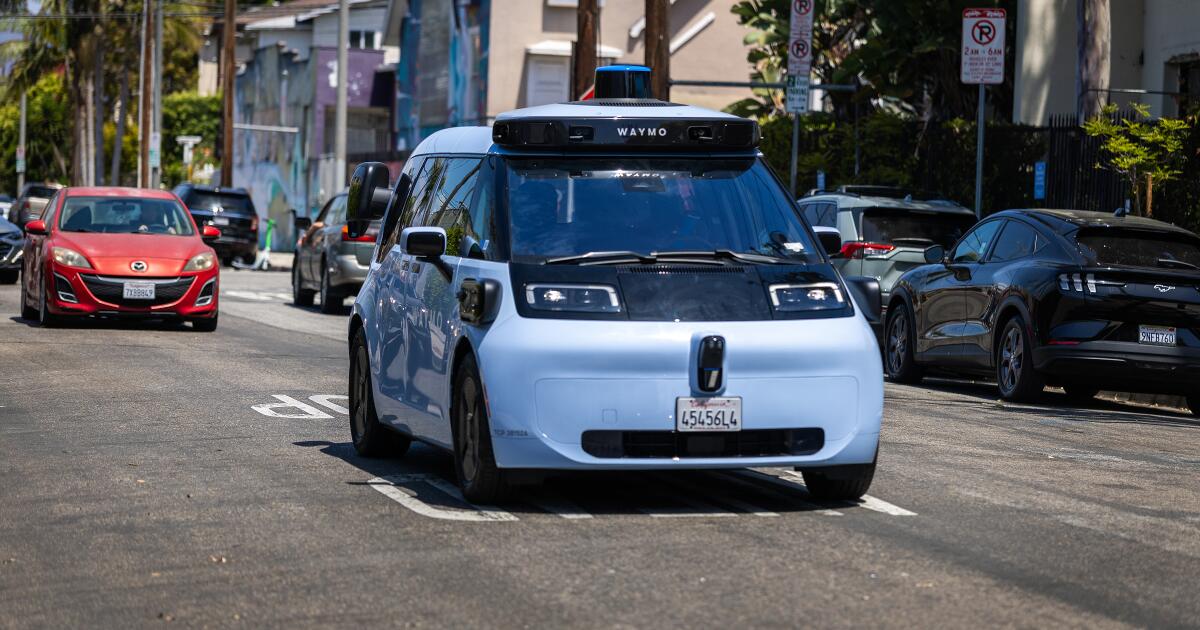
Waymo is starting robotaxi service in San Diego
-
 Entertainment9 minutes ago
‘Children of Blood and Bone’ author won’t see film after feud with star Amandla Stenberg
-
 Lifestyle14 minutes ago
After her son’s death, she found a new purpose. ‘He’s whispering: Mom, this is your path’
-
 Politics21 minutes ago
Iran ceasefire is ‘over,’ Trump says, and orders additional strikes
-
 Science24 minutes ago
Diarrhea-causing cyclosporiasis exceeds 1,000 cases in U.S. What Californians should know
-
 Sports29 minutes ago
Arthur Fery’s fairy-tale Wimbledon run puts British wild card on brink of history
-

 World39 minutes ago
Burnham on course to become next UK PM with backing of 322 Labour MPs
-

 News1 hour ago
Trump fires last members of election commission, inciting fears of midterm ‘chaos’

