Minneapolis, MN
Former Israeli Prime Minister Greeted by Hundreds of Protesters in Minneapolis – UNICORN RIOT


Minneapolis, MN — Former Israeli Prime Minister Naftali Bennett visited Minneapolis on June 6 to speak at a banquet for the Center of the American Experiment, a right-wing think tank based in the suburb of Golden Valley. Around 100 people initially gathered to protest the visit and by the end of the night 300 protesters were outside the Depot. Five people were arrested for reportedly spray painting the street.
Unicorn Riot heard from a Palestinian organizer during the protest outside the private event and documented event attendees flipping off protesters.
Activists opposed the private event because of Bennett’s past actions in the Israeli government and continued statements against Palestine. Bennett, who served as prime minister for a year during 2021-2022, was born in Haifa, Israel in 1972 to American-Jewish parents who had moved to Israel a month after the Six-Day War in 1967, when Israel captured the West Bank, Golan Heights, Gaza Strip and Sinai Peninsula, and the Allon Plan was initiated to displace Palestinians from their homelands and build colonial Israeli settlements.
After becoming a multimillionaire for selling a software company, Bennett transitioned to politics in 2006. For two years Bennett was chair of the Yesha Council, which oversees Zionist settlement projects in the West Bank and Gaza Strip. During this time, he became infamous for leading Zionist Wikipedia editing courses and saying “we want to be the guys who influence what is written there, how it’s written, and ensure that it’s… Zionist in nature.”
Protestors at the Depot criticized Bennett’s response to a 2013 prisoner deal. Acting as Israel’s Minister of Economy, Bennett stated, “If you capture terrorists, you simply have to kill them.” After National Security Adviser Yaakov Amidror told him that this is illegal, Bennett replied, “I already killed lots of Arabs in my life, and there is absolutely no problem with that.”
A decade ago, Bennett was called out by the Boycott, Divestment, Sanctions movement (BDS) who asked the U.S. and European Union “to impose visa restrictions and to freeze [his] foreign assets.” Launched by Palestinians in 2005, BDS seeks to put pressure on companies and governments around the world that support and profit from Israel’s violation of Palestinians’ rights.
Bennett published an Op-Ed in the New York Times, stating the BDS movement is a “new enemy” of Israel and called activists “enemy soldiers.” During his time as Prime Minister from 2021 to 2022, Bennett increased funding to “fight against BDS” which he called “Jew hatred.”
Sana Wazwaz, the president of the Minnesota chapter of American Muslims for Palestine, was among the organizers of the rally. She expressed how Bennett’s reign is analogous for the ongoing war on Gaza, “His reign as a leader in Israel represents the ruthless tyranny and prosecution of the Palestinian people.”
Wazwaz said that the goal of the rally was to send a message to the City of Minneapolis, American Experiment, and Bennett, telling Unicorn Riot that “he is not welcome here, and he is not welcome in our city.”

The protest comes amid Israel’s ongoing war on Gaza that has killed at least 37,337 Palestinians, injured over 85,200 since the surprise attack on Israel by militants that left over 1,100 dead and 8,700 injured.
Israeli Rescue Operation Massacres Hundreds of Palestinians, Top Military and Political Leaders Resign
Sabry Wazwaz, usually seen leading rhythmic chants with a drum, informed people and the on-duty police officers guarding the entrance to the Depot of how the IDF (Israel Defense Forces) trains police the U.S. on restraint techniques “similar to the one against George Floyd’s [neck].”
For decades, Israeli-U.S. police partnerships have grown. A 2018 report entitled Deadly Exchange (pdf) examined the exchange in practices of surveillance, suppression of public protests with force and justifying racial profiling.
Recently retired Anoka County Sheriff James Stuart is among the thousands of law enforcement officers who’ve reportedly been flown into Israel from states like Florida, New Jersey, Pennsylvania, California, Arizona, Connecticut, New York, Massachusetts, North Carolina, Georgia, and Washington. Stuart was the vice-president of the National Sheriffs’ Association (currently the executive director of the Minnesota chapter) and currently on the executive committee for the FBI Joint Terrorism Task Force. The Jewish Institute for National Security Affairs (JINSA) sponsored Stuart’s trip in 2019.

American Experiment called their dinner gala “a huge success,” that was attended by “more than 600 Minnesotans” and that the “smattering of protesters outside did not diminish the excitement and fun of the event.”
Attendees were seen flipping off the pro-Palestine protesters. In particular, a man with the nametag “Mark Ritter” came out several times to antagonize the crowd. The attendee shouted curse words, as well as “God bless Israel” repeatedly before entering the banquet.

Niko Georgiades and Dan Feidt contributed to this report for Unicorn Riot.
For more from Palestine and pro-Palestine protests click on image below.
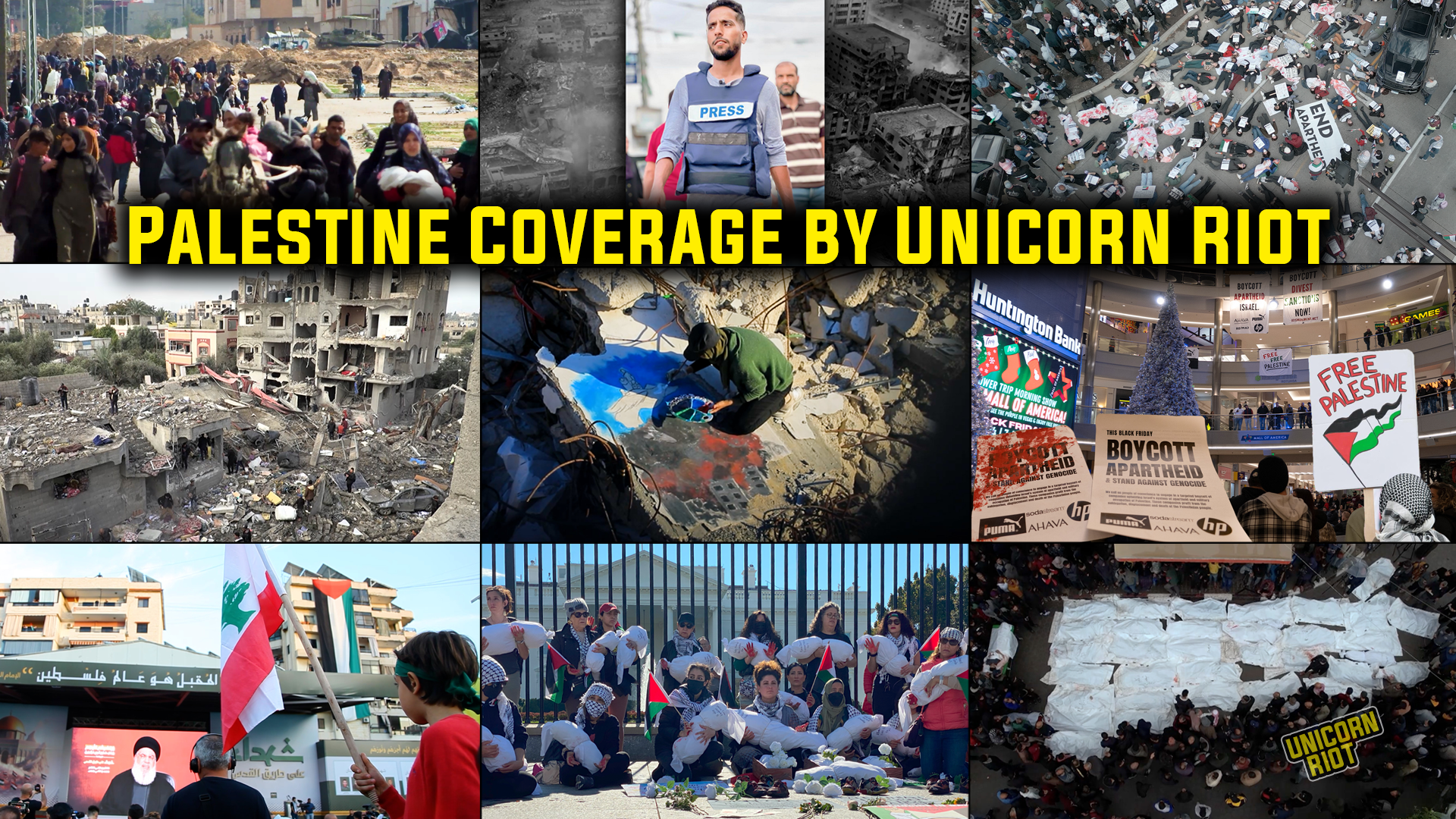
Follow us on X (aka Twitter), Facebook, YouTube, Vimeo, Instagram, Mastodon, Threads, BlueSky and Patreon.
Please consider a tax-deductible donation to help sustain our horizontally-organized, non-profit media organization:




Minneapolis and St. Paul Are Ahead of Schedule on Equity-Centered Parks Investment
Minneapolis is ahead of schedule on its 20-Year Neighborhood Parks Plan, which uses an equity ranking to direct funding toward communities with the greatest need, while St. Paul is pursuing similar goals through its own equity-focused parks strategy.
In 2016, the Minneapolis Park and Recreation Board approved a 20-year plan to address racial inequality in parks and transform the neighborhood parks system. Ten years into the process, officials say they are ahead of schedule.
The 20-Year Neighborhood Parks Plan (NPP20) uses a first-of-its-kind “equity ranking” to target funding toward communities with the greatest need. Advancing racial equity in the parks system is a high priority for the board, which states on its website that “racial equity is when race is no longer a predictor of access to parks and recreation, health, well-being, and quality of life.”
“[Equity is a priority in parks development] because for so long it wasn’t very important and this resulted in disparate service across the system,” MPRB Commissioner Tom Olsen said in an email. “Parks provide many wonderful societal benefits that lift up whole communities. So not only is it just that we invest equitably, but it is the smart thing to do as it improves outcomes for the entire city.”
The equity ranking uses seven quantitative measures focused on racial and economic equity. In the community, it considers concentrated poverty, population density, youth population and crime rates. It also evaluates the condition and lifespan of existing parks, as well as previous capital investments. In 2016, the parks with the highest rankings included Bassett’s Creek Park, 28th Street Tot Lot and Central Gym Park.
All but two of the 34 parks ranked highest in need of support were in North or South Minneapolis.
As of December 2025, 46 parks have completed capital investment projects and 28 recreation centers have received major repairs. Minneapolis has 180 parks total, and NPP20 aims to improve all of them by 2036. A goal the city is on track to meet ahead of schedule.
“Every neighborhood park in the city is on track to receive renovations and improvements,” Olsen said.
One of the largest projects is a $45 million redevelopment of North Commons Park in North Minneapolis. The project is about 35% complete and will rebuild the water park, renovate the community center, construct a 22,000-square-foot indoor fieldhouse and expand public amenities.
When construction began in July 2025, state Rep. Fue Lee, who represents the district, told the Minnesota Star Tribune, “For far too long, north Minneapolis has been forgotten by the state of Minnesota. But not no more.”
The park’s pool was last renovated in 1997.
Across the river, Saint Paul’s Parks and Recreation system plan also emphasizes equity. The plan highlights major demographic shifts, noting that more than 20% of the city’s residents were born outside the United States.
It also describes parks as uniquely democratic spaces and calls for consideration of unhoused residents’ use of park facilities.
“Serving more residents, and more perspectives about the role that parks spaces and programs can play in our lives, presents the City of Saint Paul with a powerful opportunity to serve the community’s evolving social, recreational, and ecological needs into the future,” the plan states.
Although St. Paul did not develop an equity ranking like Minneapolis, its prioritization system favors parks in areas of concentrated poverty, high under-18 populations and historically low investment.
The city’s 40-year comprehensive plan, adopted in 2020 under former Mayor Melvin Carter, states in its Parks, Recreation and Open Space section: “White people are significantly more likely to explore those parts of our park system than are African Americans, African immigrants, Asian Americans, Asian immigrants and Hispanic/Latino/Latina people. As a city, we are obligated to ensure that everyone has access to and feels welcome within our public lands.”
One strategy both cities are using to improve equity is “Greening the Green Line.” Areas along the METRO Green Line have about 10% less green space than the urban core.
Little Mekong Plaza, located on University Avenue in St. Paul, aims to establish an Asian cultural corridor. Owned by the Hmong American Partnership, the city described it in a press release as “reflecting Hmong, Vietnamese, and other ethnic and immigrant communities that live and operate businesses in the area.”
In 2024, a $2.4 million grant from the Outdoor Recreation Legacy Partnership helped fund St. Paul’s North End Community Center and a six-acre park. The surrounding area is about three-quarters people of color, but prior to the development, the green space was run-down and considered unsafe.
Both cities have received positive feedback on their efforts. For Olsen, NPP20 is a clear success.
“I think the biggest indicator that this is working is that constituents really don’t reach out to complain about the quality of their parks,” he said. “I have only ever heard that people are satisfied with how their parks have been developed. And if someone reaches out because the lifespan of their park is starting to get old, we are able to point very clearly to when their park will be invested in.”
Anya Armentrout is a freelance journalist, a student at Macalester College and a contributing writer for the Minnesota Spokesman-Recorder.
Your Might Also Like

WASHINGTON, DC (FOX 9) – The Republic of Somaliland is calling for Minnesota Congresswoman Ilhan Omar to be extradited after Vice President JD Vance accused her of committing immigration fraud.
Vance accuses Ilhan Omar of immigration fraud
The backstory:
Vance appeared on conservative Benny Johnson’s podcast over the weekend, where he accused the Minnesota lawmaker of fraud.
“Ilhan Omar definitely committed immigration fraud against the United States of America. She has been at the center of a lot of the worst fraudsters at the center of the Somali community,” Vance told Johnson.
Omar has been at odds with the Trump Administration and the White House multiple times over accusations that she married her brother to obtain U.S. citizenship. FOX 9 looked into those allegations, and found no evidence that can corroborate that.
Omar calls allegations ‘a ridiculous lie’
The other side:
Omar responded to Vance’s allegations on Sunday, via FOX News.
“This is rich coming from someone who literally said they were willing to ‘create stories’ to redirect the media,” the statement said. “This is a ridiculous lie and desperate attempt to distract from the pedophile protection party’s unpopular war of choice, increasing gas prices, and rapidly dropping polling numbers.”
Omar sprayed at town hall
Local perspective:
In late January, Omar held a town hall where after calling for then DHS Sec. Kristi Noem to resign over Operation Metro Surge in the Twin Cities, an attendee stood up and sprayed Omar with a liquid.
The man, later identified as Anthony Kazmierczak, was charged with threats of violence and assault for the attack. The Hennepin County complaint alleges that Kazmierczak told Omar that “you should f–king die” during the attack.
Trump on Omar: ‘Throw her the hell out’
Why you should care:
President Trump made an appearance in Pennsylvania last December, where he highlighted Minnesota’s ongoing issues with fraud.
President Trump blasts Ilhan Omar, Gov. Walz at Pennsylvania rally
President Donald Trump on Tuesday blasted Minnesota lawmaker llhan Omar and Gov. Tim Walz over the fraud taking place in the state as federal agents are in the Twin Cities area targeting the Somali population. Trump made the remarks while speaking about the economy at Mount Airy Casino Resort in Mt. Pocono, Pennsylvania.
Trump said in the appearance she married her brother, and “she should get the hell out.”
“You know, that’s called the Great Big Minnesota scam with one of the dumbest governors ever in history. I love this Ilhan Omar, whatever the hell her name is, a little turban. I love her, she comes in, does nothing but bitch. She’s always complaining. She comes from a country where, I mean, it’s considered about the worst country in the world, right?” Trump said. “They have nothing. She comes to our country and she’s always complaining about the constitution allows me to do this. We ought to get her the hell out, she married her brother in order to get in. Can you imagine if Donald Trump married his sister, if I married my sister to get my citizenship? Do you think I would last about two hours, or would it be less? She married her brother to get in, therefore she’s here illegally. She should get the hell out, throw her the hell out.”

MINNEAPOLIS (FOX 9) – A sunny and warm Sunday is in store for the Twin Cities, with even higher temperatures expected on Monday before a chance of rain and cooler air returns later in the week.
Sunday forecast
Local perspective:
Sunday is starting with some cloud cover before sunshine moves in with highs near 70 degrees around the metro and southern parts of the state.
Winds will be much lighter than Saturday, coming from the south at 5 to 10 mph with only occasional gusts up to 15 mph.
The Brainerd Lakes area will see temperatures in the 60s, while the North Shore will be cooler, which is typical for this time of year.
Sunday’s weather is expected to be dry and pleasant.
Overnight, temperatures will drop to the upper 30s and lower 40s, with some clouds moving in ahead of Monday.
Extended forecast
What’s next:
Monday could be the warmest day of the week, with highs in the lower 70s for the Twin Cities and some spots in southern Minnesota possibly reaching close to 80 degrees.
Winds will shift from southerly to southeasterly and then easterly as the day goes on, but should remain light.
After the warm start to the week, a cold front will move through on Tuesday, bringing a chance for a few rain showers in the early morning.
Temperatures will likely drop to the upper 40s by Wednesday and Thursday, with another front possibly bringing showers late Friday into early Saturday.
The rest of the extended forecast calls for temperatures close to or just below average, with highs in the upper 40s to lower 50s.
The Source: This story uses information from the FOX 9 weather forecast.

Could Miami Dolphins trade up in first round of 2026 NFL Draft?

Tech entrepreneur Paul English gives $1m to kick-start AI program in Boston Public Schools – The Boston Globe

Three former Denver mayors urge a “yes” vote on license plate cameras (Opinion)

The Man Behind Saint Bread, the Wayland Mill, and Tivoli

Deputy ID’d Who Died In Baker Run | Jeep Launches Off Bridge | Protest Turns Violent: SoCal In Brief

Florida High School Football Rankings: Top 25 teams – Oct. 21

How old is Bo Nix? What to know about Oregon quarterback ahead of 2024 NFL Draft

Cleary's 21 help Le Moyne down Central Connecticut State 69-64 in OT

99th annual Pony Swim held in Virginia

Indiana Members Credit Union announced as new anchor tenant at Bottleworks District

Video: Iran to Allow More Oil Ships Through Strait of Hormuz, Trump Says

Dem senator warns deportation could let Virginia woman’s illegal immigrant killer ‘escape accountability’

Newsletter: G7 ministers to hold talks on war’s economic fallout
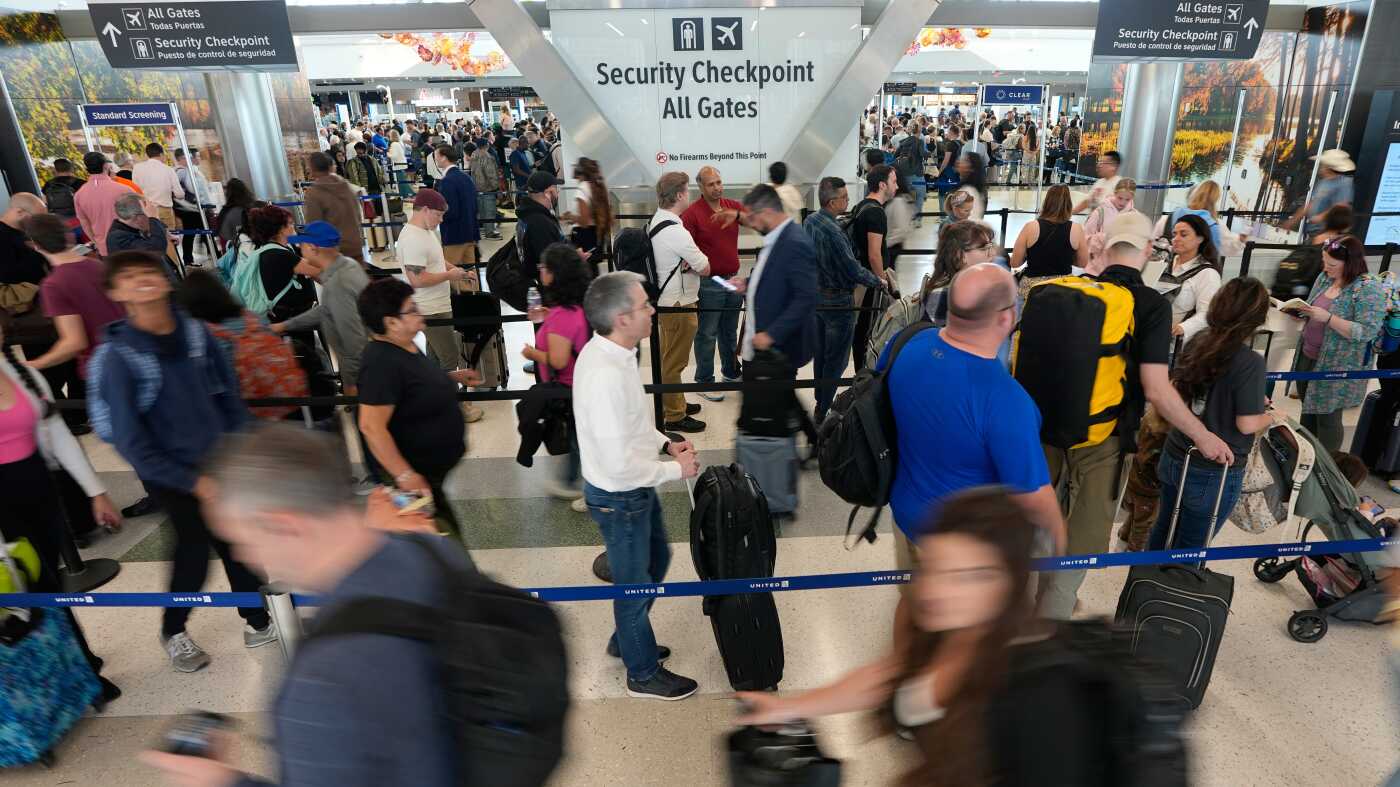
ICE officers could remain at airports after TSA workers are paid

Scathing report claims nation’s oldest labor union ‘betrayed’ MAGA members through ‘shocking’ spending
-

 Sports1 week ago
IOC addresses execution of 19-year-old Iranian wrestler Saleh Mohammadi
-

 Miami, FL4 days ago
Jannik Sinner’s Girlfriend Laila Hasanovic Stuns in Ab-Revealing Post Amid Miami Open
-

 New Mexico1 week ago
Clovis shooting leaves one dead, four injured
-

 Politics1 week ago
Schumer gambit fails as DHS shutdown hits 36 days and airport lines grow
-

 Tennessee7 days ago
Tennessee Police Investigating Alleged Assault Involving ‘Reacher’ Star Alan Ritchson
-

 Minneapolis, MN4 days ago
Boy who shielded classmate during school shooting receives Medal of Honor
-

 Science1 week ago
Record Heat Meets a Major Snow Drought Across the West
-

 Politics1 week ago
Trump gives Iran 48-hour ultimatum to reopen Strait of Hormuz or face strikes on power plants