Indianapolis, IN
When NASCAR Hall of Famer Bobby Allison took on the Indianapolis 500


MOORESVILLE, N.C. — Bobby Allison was a true racing hero, famous for his incredible NASCAR Hall of Fame career that included three Daytona 500 wins, 85 NASCAR Cup Series victories and the 1983 NASCAR Cup Series championship.
Allison died Saturday. He was 86.
Allison’s greatest exploits came behind the wheel of a stock car, but there was more to his racing ability than driving a car with a roof and fenders.
Allison competed in two Indianapolis 500s, both for team owner Roger Penske.
On April 4, 2019, I wrote a feature for NBCSports.com entitled, “When the ‘Alabama Gang’ took on the Indianapolis 500.” It was an IndyCar feature leading into that weekend’s race at Barber Motorsports Park in Leeds, Alabama, that helped connect the famed “Alabama Gang” with the IndyCar racing.
Here is an excerpt from that feature to help honor the strong-willed Allison, who, to many, was the epitome of a race driver:
***
Winner of 84 (since updated to 85 with a victory at Bowman Gray Stadium in 1971 added to his career total) NASCAR Cup races and the 1983 championship, Bobby Allison remains a legend and is a member of the NASCAR Hall of Fame. But the most successful member of the “Alabama Gang” had a miserable experience in the two Indianapolis 500s that he competed in for famed team owner Roger Penske, the first in 1973.
“Penske was getting his team put together and at the time Mark Donohue was alive and was one of Penske’s chief engineers,” Bobby Allison told NBC Sports.com. “They asked me to go to an IndyCar test and treated me like a ‘Red-headed Stepchild’ at the test. Mark was there and Peter Revson was there, and they told me, ‘Don’t you dare go fast. You have to go slow, or this car is going to kill you.’
“I went out slow. I came back in, and they laughed at me.
“This was 8:15 in the morning and they weren’t going to let me go back out until 3:30 in the afternoon. When they let me back on the track, they told me I could go as fast as I wanted, just be careful.”
Allison ran nine laps but didn’t know how fast the speeds were until he came back into the pits. One of the engineers confronted him over the nosepiece of the car and grabbed Allison by his collar and shook his fist in his face.
Allison was stunned.
The engineer was mad because a NASCAR driver had run laps equal to what Donohue and Revson had run. It was the first time he had ever sat in an Indy car.
“I pushed him backwards, took my firesuit off, got in my airplane and came back home,” Allison recalled. “[Younger brother] Donnie had a similar situation, but Donnie put up with it. Donnie’s fuse is sometimes shorter than mine. I was surprised Donnie put up with [A.J.] Foyt and his cronies.
“Roger Penske stepped in and promised to straighten it out. But Roger Penske wanted Gary Bettenhausen to run my car after any and all changes were made. That really irked me.”
Mark Donohue (Photo by ISC Images and Archives via Getty Images)
Mark Donohue — ISC Archives/CQ-Roll Call Group via Getty Images
Allison thought the world of Donohue and admired the driver that was the cornerstone of Penske Racing in those days.
To add to the misery of 1973, Allison and his wife, Judy, were close friends with popular driver Art Pollard. When Allison and his wife entered the Indianapolis Motor Speedway on Pole Day, Pollard was killed in a crash that happened right before their eyes.
“Judy and I came through the tunnel and this crash happened and it’s Art Pollard getting killed,” Bobby Allison recalled. “Judy wanted to leave right then and there, but I had to do it because I had given my word to Roger Penske.
“All the IndyCar drivers and crewman were convinced they were automatically better than any NASCAR driver. I knew better than that. I was flabbergasted at the attitude.”
After two days of rain and a horrifying crash at the start of the race on Memorial Day Monday when Salt Walther’s car went into the tire fence and spewed hot fuel into the crowd, badly burning dozens of spectators, the race was halted for more rain and darkness. Tuesday was completely rained out so on a Wednesday morning, race officials hurriedly tried to start the race.
Allison’s engine blew up on the Parade Lap.

Bobby Allison and his wife Judy
“I had been up there all month and never turned one lap in the Indianapolis 500,” Allison said. “Judy was sitting in the stands for the raise and was only a few hundred feet away from where Swede Savage was killed.
“She was plenty unhappy about the whole experience.”
Penske talked Allison into one more attempt at the Indy 500 in 1975. Allison was driving Penske’s AMC Matador in NASCAR, and the combination was enjoying success. But Bobby could not get along with Penske Racing chief mechanic Jim McGee. Changes were made to Allison’s car without his knowledge.
“I missed the field on the first day,” Allison said. “I qualified what would have been the top 10 but it was on the second day.
“I started 13thand led the 23rd lap of the race. I pitted and the fuel system failed and doused me with alcohol. I was sitting in a tub of alcohol and the crew told me to go and ran the car until it ran out of fuel. I got it stopped, lost a lap, had a caution, got the car fixed where I was comfortable. I unlapped myself under the green six laps after the halfway mark of the race.
“Then, my engine blew up two laps later.
“I said, ‘I don’t need this.’ I had worked hard to do well in NASCAR. I wanted to do good in NASCAR.”
Throughout Bobby Allison’s career, he was often at odds with authority figures, be it team owners, NASCAR officials, crew members or fellow drivers.

DOVER, DELAWARE – APRIL 28: NASCAR Hall of Famer, Donnie Allison waves to fans as he walks onstage during pre-race ceremonies prior to the NASCAR Cup Series Würth 400 at Dover International Speedway on April 28, 2024 in Dover, Delaware. (Photo by James Gilbert/Getty Images)
Donnie Allison — Getty Images
When told of his older brother’s reflections of the resentment he felt in the Indy 500, Donnie took a more diplomatic view.
“Different personalities and different egos,” Donnie Allison said of his older brother and Penske Racing. “When Bobby drove for Penske, he owned his own team and did a lot of the engine work and engineered the car himself.
“Bobby was just like A.J. Foyt – he knew what he wanted, he knew how to get it, and he didn’t want anyone to know what he wanted.
“Bobby and I had identically built race cars. I was winning all the races in that car and Bobby wasn’t. He wanted to know what was different in my car and his car and I told him, ‘the driver.’ He asked again and I told him what it was.
“He didn’t like that. I beat him at a big race in Birmingham and I told him the same thing. He didn’t like that answer. I did an awful lot of work for Bobby. Bobby Allison Racing was built by Bobby and Donnie Allison.”
Neil Bonnett attempted to compete in the 1979 Indy 500 for team owner Warner Hodgdon, but rain ruined his chance to qualify for the race. Bonnett was driving for the Wood Brothers and was prepared to skip the World 600. But when qualifications interfered with the NASCAR race at Dover, Bonnett withdrew from the Indy 500 and never had a chance to return.
Bobby and Donnie Allison are the only two members of the “Alabama Gang” that ever competed in the Indianapolis 500 and are part of the history and legacy of that race.
“I feel very good about that,” Donnie Allison said. “I ran pretty damn good there.”
Donnie and Bobby both watch the NTT IndyCar Series races on NBCSN and NBC. Although Bobby is more of a stock-car fan, Donnie has become a big advocate of the current IndyCar Series, its stars and its races.
Bobby Allison remains one of the more tragic figures in the sport. He lost both sons, including Clifford in a NASCAR Busch Series crash at Michigan International Speedway on August 13, 1992. Bobby’s son Davey was killed in a helicopter crash at Talladega on July 13, 1993.
Bobby’s career came to an end when he suffered a very serious head injury in a crash at Pocono Raceway on June 19, 1988, just a few months after he won his third Daytona 500 in a 1-2 finish with his son, Davey.

Bobby Allison (12) leads son Davey Allison to the checkered flag of the 1988 Daytona 500.
Bobby Allison has no recollection of that glorious moment in his life when father and son finished first and second in the Daytona 500.
“To this day, I see replays of it and it’s like I’m watching a movie,” Bobby admitted. “It’s not me and Davey on the track, it’s a movie.”
Bobby became a widower on December 18, 2015, when he lost the love of his life, long-time wife Judy.
His connection to the Indianapolis 500 was not a happy one, but Bobby does have something from that race that is a proud possession to this day.
“I’m still proud of the fact we both represented ourselves well with the speed that we ran and Donnie getting the finishes that he did, and me running as good as I did,” Bobby Allison said. “To lead that 23rd lap of the 1975 Indianapolis 500 – they gave me a little trophy for leading that lap. They used to give the lap leaders a trophy for the laps they led.
“I have that trophy in my house.
“There are a lot of guys who are really good race drivers that don’t have a trophy for leading laps in the Indianapolis 500.”
Follow Bruce Martin on Twitter at @BruceMartin_500



Indianapolis, IN
Indianapolis councilman says ‘No Data Centers’ note was left at his home after someone opened fire

The home of a councilman in Indianapolis was shot at early Monday in what local police said was an “isolated, targeted incident.”
The incident came less than a week after the Indianapolis Metropolitan Development Commission voted 6 to 2 on April 1 to approve rezoning to allow the construction of a data center.
Ron Gibson, a Democrat who represents District 8 on the council, spoke out in support of the rezoning and the efforts to build the data center in his district.
“Earlier this morning, between approximately 12:45 a.m. and 12:50 a.m., just a few hours after Easter Sunday, an individual fired 13 rounds at the front door of my home and left a note on my doorstep that read, ‘No Data Centers,’” Gibson said in a Monday statement.
Councilman Ron Gibson

The Indianapolis Metropolitan Police Department said it was called to the home on Monday morning, and officers found evidence that gunshots had been fired at the house. Police said no injuries were reported.
“I understand that public service can bring strong opinions and disagreement, but violence is never the answer, especially when it puts families at risk,” Gibson said in his statement.
The Indianapolis-Marion County City-County Council did not respond to requests for comment from Business Insider.
The data center is set to be built by Metrobloks, a data center developer based in Los Angeles. Following the vote last week, Gibson shared a statement on social media promoting the project.
“Metrobloks has the potential to bring significant investment, create jobs, and generate long-term tax revenue that supports infrastructure, housing, and essential services,” the statement said.
A data center boom is happening across the US, with companies pouring billions into building the infrastructure to keep up with demand in the era of AI. The data centers have faced increased opposition, with critics pointing to the high resource costs, from water to energy, and other issues like noise pollution, as detailed in a Business Insider investigation.


INDIANAPOLIS — An Indianapolis City-County Councilor says he was shoved by a police officer during a protest Saturday night.
In a post on Facebook, Jesse Brown — who represents council district 13 — indicated that a member of the Indianapolis Metropolitan Police Department approached a group of protestors and began shoving and grabbing them.
“Tonight, an IMPD officer approached a group of protestors from behind/beside them, did not identify himself or issue verbal orders, but started grabbing and shoving people and cussing at them to move (we were stuck behind other people blocking the sidewalk),” Brown wrote on Facebook.
Brown added that he asked the officer for his badge number and told him he was a City-County Councilor.
“I told the IMPD officer who was shoving people that I wanted his badge number,” Brown wrote. “He refused to give it. I told him I was a City Councilor. He said that he didn’t care WHO I was and grabbed my arm to shove me as well.”
Brown finished his post by confirming that he filed a formal incident report on his encounter with the officer. He also offered some criticism for the officer in the final sentence of his post.
“Officers have a difficult job, but if this is how he treated two white male candidates / elected officials, I do not trust him to serve the public and de-escalate tense situations.”
Jackson Franklin, who is running for Indiana’s fifth district seat in the U.S. House of Representatives, was also involved in the incident. He made a Facebook post with greater detail on the incident.
Franklin said he, Brown and others were protesting near Lucas Oil Stadium ahead of Saturday’s NCAA Men’s Basketball Tournament Final Four games. Franklin said he and other protestors were at the Final Four “to demand the NCAA stop using the same airliners that ICE uses to break apart and deport families in this racist injustice system.”
A report from The Athletic that was syndicated by Yahoo Sports indicates that at least one airliner has contracts with the NCAA to transport student-athletes to tournaments and U.S. Immigration and Customs Enforcement to deport undocumented immigrants.
In his post, Franklin said the officer involved in the incident “shoved/assaulted many of the protestors, including Indianapolis City-council person Jesse Brown.” Franklin added that the officer did not provide any warnings before he began shoving protestors
“I thought initially it was going to be some MAGA person just walking past that was offended by our anti-ICE chants, but I turned around and noticed that he was wearing a uniform,” Franklin wrote in his Facebook post. “It was only then he gave his commands to continue to move and he immediately went to push around many others, using his uniform as an excuse to harass those he disagreed with politically.
“There was absolutely no need for violence and the protest organizers filed a complaint, but I have no hope of any action occurring because of this complaint. While the lone officer assaulted us, there were about 10-15 other officers looking around awkwardly unsure of what to do, not protecting our first amendment right while also probably realizing the officer was way out of line and should have just asked us nicely to keep the movement on the public sidewalk going quicker rather than using violence as the first and only answer.”
FOX59/CBS4 reached out to IMPD for a statement on Brown and Franklin’s comments. As of this article’s publication, the agency had not responded to those inquiries.
Brown has been at the center of multiple city-county council disputes over the last 14 months. In February 2025, Brown — whose district encompasses portions of downtown and the near east side of Indy — said the city-county council’s democratic caucus expelled him from their ranks.
Brown also introduced a motion to remove the council’s president and vice president in July.
As of this article’s publication, no additional information on the incident Brown, Franklin and others were involved in had been made available.
This is a developing story; check back for updates.

NHL roundup: Zach Werenski says slumping Blue Jackets ‘still in it’

How to watch San Francisco Giants vs. Philadelphia Phillies

After deadly crash, loved one questions suspect’s actions at scene

Unlicensed contractor arrested after allegedly scamming Miami Catholic school out of $220,000

Boston University OT Program Ranks Top in Its Class for Fifth Straight Year by U.S. News & World Report

Florida High School Football Rankings: Top 25 teams – Oct. 21

How old is Bo Nix? What to know about Oregon quarterback ahead of 2024 NFL Draft

Cleary's 21 help Le Moyne down Central Connecticut State 69-64 in OT

99th annual Pony Swim held in Virginia

Indiana Members Credit Union announced as new anchor tenant at Bottleworks District

Map: Minor Earthquake Strikes Near San Diego

Trump claims he’d win as the president of Venezuela — just needs to ‘quickly’ learn Spanish

US Supreme Court clears path for Steve Bannon criminal case dismissal
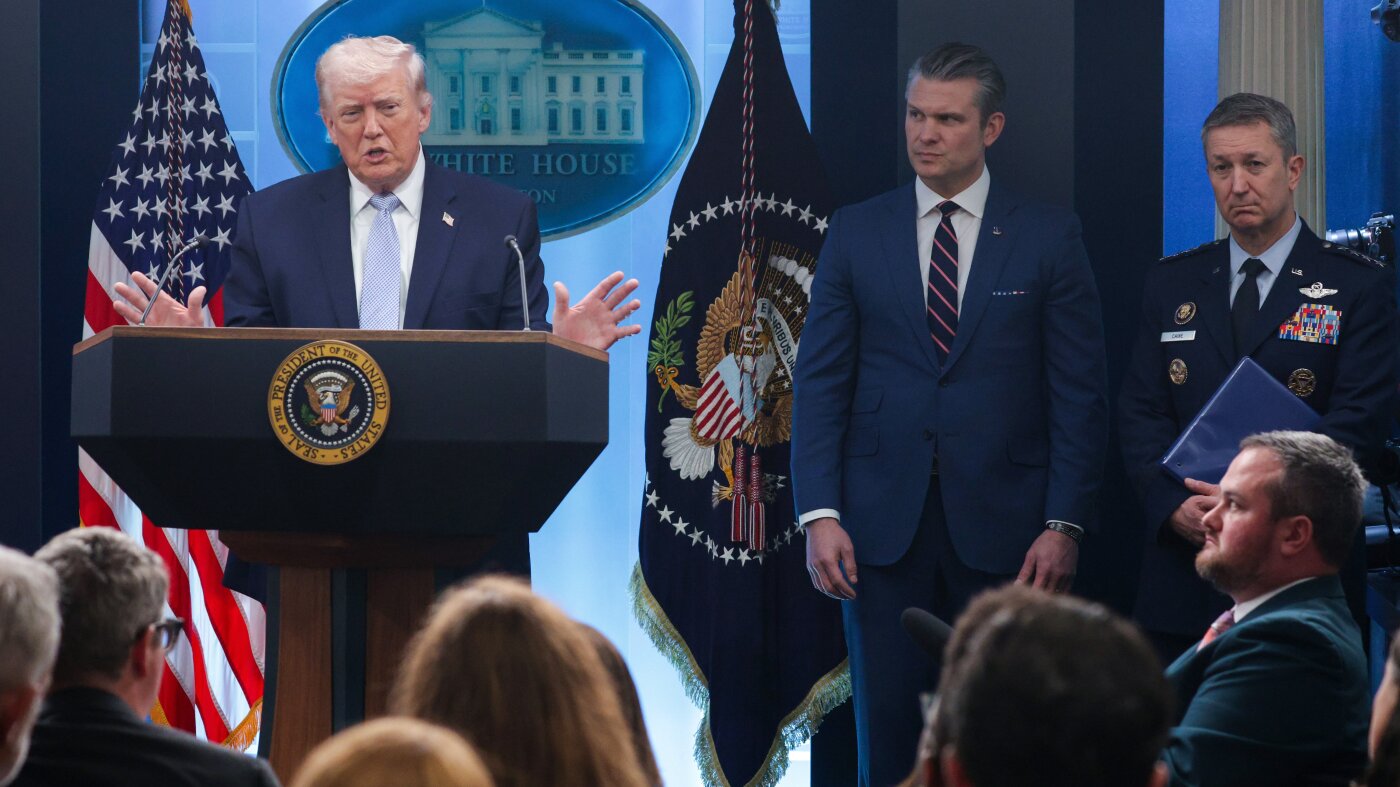
Trump reiterates threats to bomb Iran’s power plants and bridges

Trump threatens Iranian infrastructure over Strait of Hormuz | BBC News
-

 Atlanta, GA2 days ago
1 teenage girl killed, another injured in shooting at Piedmont Park, police say
-

 South-Carolina1 week ago
South Carolina vs TCU predictions for Elite Eight game in March Madness
-

 Movie Reviews5 days ago
Vaazha 2 first half review: Hashir anchors a lively, chaos-filled teen tale
-

 Vermont1 week ago
Skier dies after fall at Sugarbush Resort
-

 Politics1 week ago
Trump’s Ballroom Design Has Barely Been Scrutinized
-

 Politics1 week ago
JD Vance says he was ‘obsessed’ with UFOs, believes aliens are actually ‘demons’
-
 Entertainment5 days ago
Inside Ye’s first comeback show at SoFi Stadium
-

 Atlanta, GA1 week ago
Fetishist ‘No Kings’ protester in mask drags ‘Trump’ and ‘JD Vance’ behind her wheelchair