Illinois
Previewing the Illinois high school football state championship games


Top-ranked Loyola’s offense has three primary plays: running with Drew MacPherson, passing to MacPherson and running with quarterback Ryan Fitzgerald.
The key blocker on most of those Fitzgerald runs? MacPherson.
“[MacPherson] has breakaway speed,” Ramblers coach Beau Desherow said. “He’s also a really good receiver. His ability to block isn’t talked about enough. He’s a devastating blocker. He is a totally selfless player that will do whatever it takes to win.”
MacPherson leads Loyola (11-2) in touchdowns (19), rushing yards (1,038) and receiver yards (678). The Iowa recruit will be a major focus of York’s defense in the Class 8A state championship game at ISU’s Hancock Stadium on Saturday at 7 p.m.
On the other side, the key is Bruno Massel. The Dukes’ quarterback may be the fastest in the state. The senior qualified for the Class 3A state track finals last spring in the 100 meters and 4×100 relay, earning a medal in the latter.
Massel vs. Loyola’s stout run defense is the matchup that could decide the game. Mount Carmel and Lincoln-Way East, programs that pride themselves on consistent running attacks, didn’t even attempt to succeed on the ground against the Ramblers this season.
The Griffins called just four rushing plays in the semifinals against Loyola and the Caravan ran nine rushing plays in a Week 9 loss to Loyola.
“We take away the run pretty early,” Desherow said. “Our defensive line has done an amazing job and our linebackers have stepped up. They are players. Max Mendoza had an amazing game [vs. Lincoln-Way East].”
This is the first title game appearance for York (11-2) The Ramblers, Mount Carmel in 7A and Nazareth in 5A are attempting to three-peat and all are favorites.
Batavia’s Nathan Whitwell (28) carries the ball against St. Charles North.
Allen Cunningham/For the Sun-Times
Class 7A: Batavia (12-1) vs. Mount Carmel (10-3), 4 p.m. Sat.
This is a rivalry, but one-sided. Mount Carmel has ended Batavia’s last four seasons.
“The first time was a war,” Bulldogs coach Dennis Piron said. “The last three we had things happen in the first quarter and it got out of hand.”
The Caravan is young overall but has solid veteran leaders on both sides, including quarterback Jack Elliott and linebacker Matt Mucha.
“I’m the head coach but it is Jack Elliott’s team,” Mount Carmel coach Jordan Lynch said “It is not what I’m comfortable with it is what the kids see and what the kids trust. He comes with his own game plan on what we should run.”
Mucha has led the Caravan in tackles the last two seasons.
“Our defense is peaking at the right time,” Lynch said. “Mucha is the best linebacker in the state and will be one of the best players on the field Saturday.”
Batavia’s top weapon is senior running back Nathan Whitewell, who has rushed for 1,669 yards and 27 touchdowns. The Caravan is allowing 22 points a game this season and the Bulldogs’ best chance at an upset may be to get in a high-scoring shootout.

Geneva’s Taylin Taylor (1) catches a pass and turns up field as the Vikings play Batavia.
Allen Cunningham/For the Sun-Times
Class 6A: Geneva (12-1) vs. East St. Louis (12-1), 1 p.m. Sat.
The Flyers dominated Loyola in Week 1 and their only loss was 14-13 to IMG Academy, a prep school powerhouse from Florida. East St. Louis is the best team in the state.
Flyers’ quarterback Kendrick Lyons has thrown for 2,402 yards and 31 touchdowns. Keandre McClendon leads the team with 12 sacks.
Geneva counters with perhaps the most talented player in the state, Georgia recruit Talyn Taylor. The senior wide receiver has scored 27 touchdowns.

Joliet Catholic’s Larry Stringham (24) carries the ball against Mount Carmel.
Kirsten Stickney/For the Sun-Times
Class 5A: Nazareth (11-2) vs. Joliet Catholic (10-3), 10 a.m. Sat.
This could be the best game of the weekend. Nazareth is loaded with stars including quarterback Logan Malachuk and linebacker Gabe Kaminski. The Roadrunners have a special group of receivers in Garrett Reese, Jake Cestone, Trenton Walker and James Penley.
“Kaminski is a four-year starter and an awfully fun kid to watch,” Nazareth coach Tim Racki said. “He plays football the way it is meant to be played.”
The Hilltoppers don’t have a major star, just a lot of experience. It’s a testament to the strength of the program, which is tied with Mount Carmel for the most state titles, that it has advanced to another title game.
“This is probably the toughest schedule that I’ve been around as a coach or when I played here,” Joliet Catholic coach Jake Jaworski said. “We have definitely learned from those three losses.”
Running backs Larry Stringham (14 TDs) and Nate Magrini (13 TDs) lead the Hilltoppers’ attack.

DePaul’s Juju Rodriguez (2) looks to pass during the Rams’ 21-14 semifinal win against Coal City.
Allen Cunningham/For the Sun-Times
Class 4A: DePaul Prep (10-3) vs. Mt. Zion (10-3), 7 p.m. Fri.
The Rams’ Cinderella run to state is the best story of the playoffs. DePaul Prep has a daring offense, led by daring quarterback Juju Rodriguez, running back Nick Martinez and receiver Braden Peevy.
Mt. Zion is a regular playoff contender but this is its first title game as well.

Montini’s Louis Corpora (38) carries the ball against North Lawndale’s Trevion Anderson (21).
Kirsten Stickney/For the Sun-Times
Class 3A: Montini (11-2) vs. Monticello (11-2), 4 p.m. Fri.
Montini’s losses this season are to larger Catholic League powers Marist and Fenwick. The Broncos, led by quarterback Israel Abrams (1,778 passing yards, 24 TDs) are heavy favorites.
Class 2A: Chicago Christian (12-1) vs. Maroa-Forsyth (12-1), 1 p.m. Fri.
The school from Palos Heights led by first-year coach CJ Cesario could have its hands full with the Maroa-Forsyth, one of the state’s traditional small school powers. The Knights’ offense is well-balanced with Christian Flutman throwing for 23 TDs and Kenny Jager rushing for 27.


A major overhaul to the Illinois justice system could be officially underway.
House Bill 3363 lays the foundation for a brand new agency, the state public defender office.
The goal is to bring more consistent legal representation for Illinois residents who can’t afford an attorney.
Joining us now to discuss the rolled-out timeline is the bill’s sponsor, State representative Dave Vella, who actually started his legal career as a public defender, before heading to Springfield.
Illinois
Illinois Democrats face backlash after blaming Trump in Chicago cross-burning case | Fox News Video

‘Outnumbered’ reacts to Illinois Gov. JB Pritzker and Chicago Mayor Brandon Johnson blaming President Donald Trump for a cross-burning incident in Grant Park.
Illinois Democratic leaders Governor JB Pritzker and Chicago Mayor Brandon Johnson are slammed for weaponizing a Chicago cross burning incident by blaming former President Trump. Despite the suspect, Murlin Lue, admitting his motive was to protest Trump, not racism, Pritzker and Johnson doubled down. Critics, including Illinois GOP State Rep. Chris Miller, accuse them of playing politics and fostering division rather than seeking truth.

ROCKFORD, Ill. (WIFR) – November ballots will feature a repeat of top billing in the race for governor. Illinoisans can once again choose between Governor JB Pritzker or Darren Bailey to lead the Land of Lincoln.
But beside their spots, new names will appear for voters.
The Democratic and Republican candidates for governor picked new running mates for their rematch. With Lieutenant Governor Julianna Stratton running for U.S. Senate, Pritzker picked Christian Mitchell to join his ticket. On the Republican side, Aaron Del Mar joins Bailey, who previously ran with Stephanie Trussell in 2022.
Mitchell and Del Mar spoke Thursday with WIFR on what inspires them to run, their campaign priorities and ideas to improve the Rockford region.
Backgrounds
Starting with the Democratic ticket, Mitchell joins the race as a former state representative from Chicago as well as a deputy governor with the Pritzker administration.
“Before anything else, I’m Debbie’s son, and I’m James’s grandson,” Mitchell introduced. “They’re the ones who really instilled in me the value of hard work and made sure that I was going to have a very bright future.”
Mitchell sees the role of lieutenant governor as a partner to the state’s executive.
“I’m really lucky to be running with somebody who I respect, and who I think is the best governor in the nation… Governor JB Pritzker,” he said.. “My first thing is going to be supporting his agenda, which right now is all about lowering costs and raising wages.”
On the Republican side, Del Mar hails from suburban Chicago and considers his first priority to be raising his family.
“I wanted nothing to do with politics, did not want to be involved — wanted just to raise my kids and work my job,“ said Del Mar. He described his start in public service as something he ”kind of got pulled into.”
The Republican worked his way from a city council member in Palatine, at 29-years-old, to co-chair of the Illinois GOP. Although he says he “wanted nothing to do with being on” Bailey’s campaign, Del Mar sees strength in unity — offering a Chicago area perspective alongside Bailey’s southern Illinois roots.
“How about everybody in the state of Illinois, regardless of where you come from, has a seat at the table. If you’re from a southeast farming community, or you’re from the city of Chicago, where I grew up, everybody has a stake in the game.”
Priorities
Mitchell points to economic development as his focus for the gubernatorial campaign.
“I see vacancies on State Street in Chicago. I see vacancies on Main Street in Belleville and Alton and in Carbondale,” he recounted. “I want to make sure that we’ve got the kind of amenities and economic development, that kind of affordability, that allow us to make sure that folks want to stay in the towns that they’re born in if they want to.”
The Democratic candidate also eyes long-term planning for the state, including an “Illinois 2050 Plan.”
“How do we have the kind of educational undergirding that means that no matter where you’re from, you have a chance to have one of those jobs, whether it’s in new agriculture technology and new farming techniques or biotech, quantum.”
When asked how to achieve these priorities, Mitchell turned to investing in public education, retaining residents with better wages and improving health care.
“Making sure that we are able to protect our health care system, so that folks aren’t going broke when they get sick, that’s another big way that we can make an impact.”
Del Mar outlined a cost-of-living focus as central to his campaign.
“You wanna succeed, you do the basics really well, and the basics are affordability,” he contended.
The Republican repeatedly highlighted the state’s property taxes — reportedly the highest in the nation — as an issue to tackle. He suggested redirecting Illinois’s budget as one measure to ease the burden on homeowners.
“Number one is fully funding the state’s portion of local taxes, because that will offer people property tax relief.” Del Mar clarified this wouldn’t mean redirecting funds for public education.
“We’re looking at how we fund schools, how we make sure to empower teachers to have the best educational outcomes that we can have here in Illinois, regardless of what your zip code is, regardless of what your parents do for a living or how much money they make,” added Del Mar.
Reflecting on Rockford
Each candidate provided their vision for boosting the Rockford region.
For Mitchell, improvements continue with infrastructure funding, building on the state’s roughly $500 million investment in the area.
“The things that we have already worked on, through the capital plan that I helped lead as deputy governor, that the governor signed and is implementing, are already having benefits that the people of Rockford can see.”
The Democrat also pointed to the Chicago Rockford International Airport as an opportunity.
“Investing in that regional airport where we’ve already helped with a matching grant to get additional funds, that helps build out the economy,” said Mitchell. “There’s so much that’s happening there that it is really good for the economy and bringing more people back to Rockford.”
Del Mar shared his local priority as supporting unionization in the area.
“Union families deserve to be able to have a livable wage, and that’s something that’s important to Darren and I,” said Del Mar. He mentioned pensions were another item that a Republican executive wouldn’t touch for the public and private sector unions.
“I know that area up there has strong union backbone,” described Del Mar. “We want to make sure they know that they’re not going to have a bigger supporter in the governor’s mansion than Darren and I.”
Election Day
When asked for thoughts on their opponent, Mitchell criticized the Bailey campaign as a “repacking” of his 2022 run.
“The only record that they have to run on is extremism,” he exclaimed.
The Republican candidate also reflected on records, pointing to Pritzker’s years in office.
“Why are we underfunding education? Why are property taxes at all-time high? Why are businesses leaving?” asked Del Mar.
Voters can decide on who will lead Illinois November 3. Early voting starts September 24, with applications for voting by mail opening August 5.
Extended Interviews
Copyright 2026 WIFR. All rights reserved.
-

 Technology9 minutes ago
It’s the last day of Prime Day — here are over 140 great deals to choose from
-

 World14 minutes ago
Rubio announces framework deal between Israel and Lebanon as experts warn Iran will fight to sabotage it
-

 Politics21 minutes ago
Lawyer who beat Hawaii gun law calls state’s reliance on Black Code ‘disgraceful’
-

 Sports29 minutes ago
2026 World Cup Group Scenarios: What Remaining Teams Need To Advance To Round of 32
-

 Technology36 minutes ago
Ohio robot cop retires after zero arrests
-
 Business39 minutes ago
Commentary: Puncturing the myth of Alan Greenspan, whose policies gave us the Great Recession
-
 Entertainment44 minutes ago
On 10th anniversary, Boleros de Noche’s legacy is celebrated by L.A. City Hall
-
 Lifestyle51 minutes ago
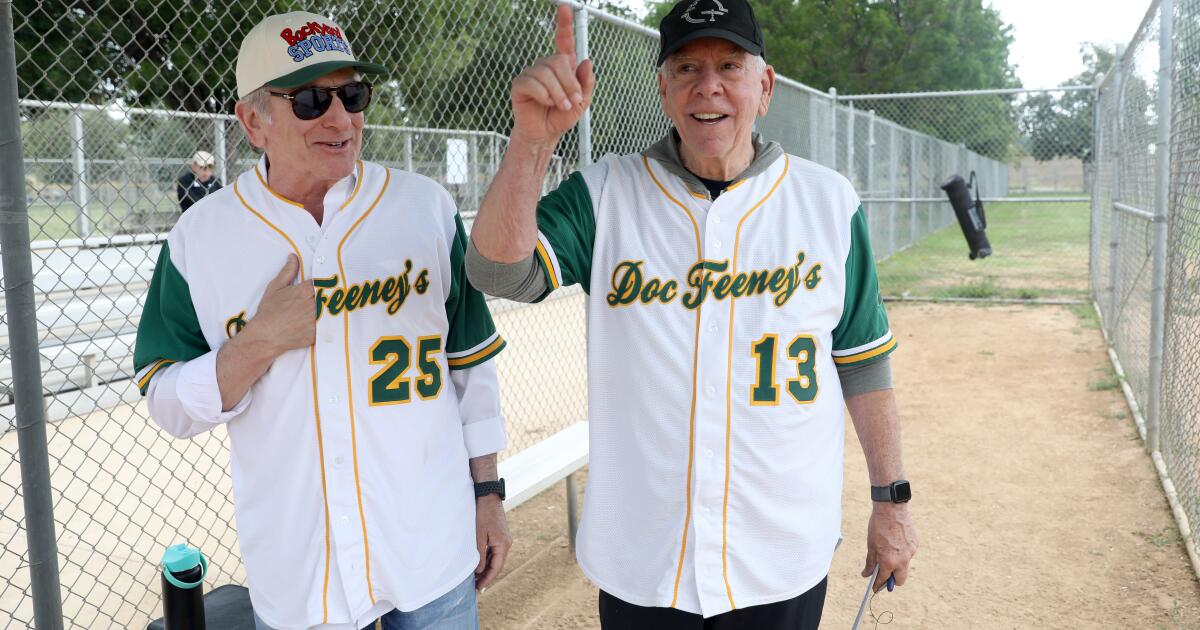
They started playing L.A. Municipal softball 50 years ago. They’re still at it

