Exploring critical issues facing our democracy and searching for solutions.
Illinois
Illinois Republicans grapple with mail voting amid mixed signals from Trump. 'We have to adapt'


While rallying his political troops last summer in Springfield heading into the primary campaign season, Illinois Republican Party chairman Don Tracy highlighted some of his top priorities to help the party regain a foothold in the Democratic-dominated state.
“We’ve got to embrace early voting and voting by mail,” Tracy said at the Illinois Republican Party State Central Committee & County Chairmen’s Association breakfast in August. “Democrats have won too many close elections on the strength of their vote-by-mail programs.”
Tracy said such vote-banking “needs to be the focus of every campaign in every county and township throughout the state” — no small order for a party led by former President Donald Trump, who has routinely sown mistrust for mail-in voting since he lost his 2020 reelection bid.
Eight months later, results from the March primary show a greater share of Chicago-area Republicans cast their ballots by mail compared to the 2022 primary, but they were still vastly outpaced by Democrats in utilizing a voting system that has become increasingly popular since the COVID-19 pandemic hit.
The GOP made up significant mail-in ground in Chicago, where 23% of Republican ballots were cast by mail, up from less than 15% in 2022, election data shows. About 29% of Democratic ballots in the city were mailed, only a slight bump up from 27% in the previous primary cycle.
But counting the nine counties of northeast Illinois as a whole, Democrats were still almost twice as likely to vote by mail compared to Republicans. That’s according to data compiled by the Chicago Sun-Times, which crunched the numbers as part of the Democracy Solutions Project, a series in partnership with WBEZ and the University of Chicago examining the challenges facing our democracy.

Illinois Republican Party Chairman Don Tracy speaks a Republican Day rally at the Illinois State Fair in August 2023.
Mitchell Armentrout/Sun-Times
About 17% of Republican ballots were mailed in across the region, well shy of the 29% of Democratic ballots that were postmarked, the Sun-Times found.
The figures underscore the challenge for Illinois Republicans heading into a pivotal presidential election with a candidate at the top of the ticket who in recent months has changed his tune on mail-in voting, but still sporadically slams the system, without evidence, as ripe for fraud.
No matter Trump’s mixed messaging, “our main priority is early voting,” Tracy said as the general election approaches. “We have to adapt.”
‘Where elections are won and lost’
The state GOP chairman has downplayed the possibility of Trump’s unfounded fraud claims discouraging Illinois voters from signing up for mail ballots, noting that Trump has embraced it as he tries to retake the Oval Office from President Joe Biden.
“ABSENTEE VOTING, EARLY VOTING, AND ELECTION DAY VOTING ARE ALL GOOD OPTIONS,” Trump wrote in a social media post last week. “REPUBLICANS MUST MAKE A PLAN, REGISTER, AND VOTE!”
On the biggest stages, though, Trump has regularly fallen back on the myths of rampant voter fraud that he’s claimed denied him a second term.
“Mail-in voting has to be totally corrupt. Get that through your head,” Trump said at a Michigan rally in February. “I mean, it has to be.”

Republican presidential candidate and former President Donald Trump attends a campaign rally in Waterford Township, Michigan Feb. 17.
The FBI and other authorities have confirmed there was no widespread mail voter fraud or any other interference in the 2020 election.
While Tracy and other establishment Illinois Republicans have kept Trump’s lies about election fraud at arm’s length, they have suggested Democrats who hold all statewide offices and supermajorities in the General Assembly aren’t committed to preventing ballot-box shenanigans.
“We want to make it easy to vote but hard to cheat. Democrats want it to be easy no matter what. They loosen voter integrity rules every chance they get,” Tracy said, pointing to Democratic rejection of voter ID requirements.
Republican leaders have also argued state laws that have expanded mail voting eligibility since 2020 “remove important election safeguards” — but they agree their opponents across the aisle have left them in the dust when it comes to voter registration and mail ballot sign-up efforts.
“Look at the model of what Democrats have done over the years,” said former Illinois House Minority Leader Jim Durkin, a Republican from Western Springs who stepped down last year. “They have been incredibly successful at registering and mobilizing voters.
“I can’t tell you how many times I’ve seen Republicans up 3 to 4 points on Election Day, and everyone is thrilled until — ‘whoa, whoa, there are still mail ballots out.’ Then there’s a flip, and we continue to be on the losing side,” said Durkin, a vocal opponent of Trump.
“It took Republicans a while to see this is where elections are won and lost,” he said. “It’s here to stay. It’s in every state, whether you like it or not, and you have to deal with it.”

Former Illinois House Republican Leader Jim Durkin, pictured at his Loop office in November 2022.
Tyler Pasciak LaRiviere/Sun-Times
Mail-in voting strong in and around Chicago
More than 378,000 Illinois mail ballots were counted in the March 19 primary, according to the Illinois State Board of Elections.
The Sun-Times found about two-thirds of those came from the counties including and around Chicago: Cook, Will, Lake, DuPage, McHenry, Kane, Kendall, Kankakee and Grundy.
Chicago led the way with almost 109,000 mail ballots cast, or about 28% of the city turnout.
Most of those — about 98,000 — were Democratic ballots, accounting for nearly 29% of all Democratic votes. The 9,536 Chicago Republican mail ballots accounted for 23% of all GOP votes in the city.
In suburban Cook County, about 23% of Democratic ballots came by mail, while just 15% of Republicans did.
Lake County saw the highest vote-by-mail participation rate with one out of every three north suburban ballots mailed in. That includes a whopping 42% of Democratic ballots, compared to 22% of Republican ones.
GOP mail voting bottomed out in Kankakee County, where 11% of all ballots were postmarked, including less than 7% of Republican ones.
In all counties except Cook, Republican mail-in rates trailed Democratic ones by 10 percentage points or more.
And in seven counties, Democratic mail-in rates were more than twice as high as their Republican neighbors.
‘Two-faced problem’
The numbers reflect Republicans’ tortured relationship with voting by mail, which, for their opponents, has been “an incredibly important tool for us to engage more voters,” according to Ben Hardin, executive director of the Democratic Party of Illinois.
“Republicans are spouting totally misplaced or manufactured concerns. There’s no cheating in filling out a ballot at home, sticking it in a USPS box and then having it counted,” Hardin said. “It is going to be their downfall this cycle.”
He pointed to the contrasting efforts of the Illinois Republican Party to encourage mail balloting, while a federal lawsuit filed by a top Illinois GOP congressman aims to scale back the state’s vote-by-mail law.
Downstate U.S. Rep. Mike Bost and a pair of Chicago area Republicans have argued Illinois’ law, which allows mail ballots to be counted as they arrive to election authorities for up to two weeks after Election Day, dilutes the value of their votes through “illegal ballots.”
“They have a two-faced problem that they need to figure out,” Hardin said.
But mistrust of the system is rampant and growing among Republicans nationwide, surveys suggest.
A Pew Research poll conducted in January found just 28% of Republicans think any voter should be allowed to cast a ballot by mail, down from 49% who agreed with that sentiment in a poll taken four years earlier.
About 84% of Democrats who were surveyed supported mail balloting for all, a substantial majority that remained consistent with responses in 2020.
Arnaud Armstrong is trying to bring more Republicans around to the concept as executive director of Win Again, a political action committee focused on driving up GOP mail balloting in Pennsylvania, where early voting is limited to mail.
Armstrong said Trump’s mercurial embrace and demonizing of mail-in voting has complicated messaging for the party, but that’s not the only thing keeping Republican numbers down.
“Conservatives are conservative. When we do something a certain way for most of our lifetimes, and then it’s radically different, it creates confusion and distrust. Conservatives don’t like that,” Armstrong said. “I would love if he [Trump] held up a mail ballot and said, ‘Use this.’ But we see the biggest difference from leadership on the ground from Republican donors and groups embracing it.”
And minds can be changed when you knock on doors, Armstrong said.
“The first thing I say is, ‘I’m not asking you to like mail ballots. I’m asking you to do what is best for Trump and our Republican candidates. I’m not asking you to trust what a Democrat does with a mail ballot. But if you do this, you will be helping Republican candidates.”
He’s also asking Republican leaders to follow the Democratic Party model.
“They play the long game. They think 10 steps ahead and invest in unsexy things like voter registration and mobilization efforts,” Armstrong said. “We don’t, and it shows. And we’re running out of time to catch up.”
The Democracy Solutions Project is a collaboration among WBEZ, the Chicago Sun-Times and the University of Chicago’s Center for Effective Government, with funding support from the Pulitzer Center. Our goal is to help our community of listeners and readers engage with the democratic functions in their lives and cast an informed ballot in the November 2024 election.








Illinois
Who is running for Illinois governor in 2026? What to know as primary Early Voting sites open

With Election Day for the 2026 Primary quickly approaching, many voters are considering who to mark their support for when they cast their ballot.
There are several big races on the ballot, including the gubernatorial race that has the potential to make history.
Though rumors are swirling that sitting Governor J.B. Pritzker has his eyes on a potential run for president in 2028, he’s still in the running for re-election. If he retains his seat, he’ll be the first Democratic governor to secure a third term in office in Illinois history.
While Pritzker is the only Democrat aiming for governor on the ballot, there is a slew of Republican candidates vying for a face-off with the incumbent in November.
Voters with their mind made up on which candidate they support can head to their local early voting site to cast their ballot before Election Day.
Though downtown sites and some across the suburbs have been open since early February, early voting sites will open in all 50 of Chicago’s and in several suburb on Monday, March 2.
For those still deciding how to mark their ballot, here’s a look at the gubernatorial candidates.
Democrats:
Governor J.B. Pritzker and Christian Mitchell
Current Governor of Illinois J.B. Pritzker is taking aim at a third term, promising to continue building on the work of his first two terms. According to his campaign website, some of his intentions for a third term include “[tackling] the affordability crisis,” continuing to protect access to reproductive health care in Illinois, and investing in education.
Chrisitan Mitchell is running alongside Pritzker for lieutenant governor. After representing the 26th District in the Illinois House of Representatives from 2013 to 2019, Mitchell served as deputy governor to Pritzker from 2019 to 2023. Mitchell led efforts to ban assault weapons, make Illinois a leader in clean energy and create jobs through infrastructure projects as deputy governor, according to his campaign bio.
Republicans:
Ted Dabrowski and Dr. Carrie Mendoza
Ted Dabrowski is a Wilmette resident and former president of Wirepoints, a media outlet focused on conservative economic policies and financial data. From 2011 to 2017, Dabrowski worked as a spokesperson and Vice President of Policy at the Illinois Policy Institute, a right-leaning think tank.
Dabrowski, who has never previously held political office, aims to cut and cap property tax rates, veto any and all tax increases, and repeal both Illinois’ sanctuary laws and zero-emissions energy policy, according to his campaign website.
“We must return power to the people, remove barriers to prosperity, embrace educational freedom, push political power down to its lowest level and restore the rule of law,” his campaign website says.
Dr. Carrie Mendoza, a Chicago-native with more than 25 years of experience as a physician, is running to be Dabrowski’s lieutenant governor, according to her campaign biography. Like Dabrowski, Mendoza has never held political office. Her campaign biography says she is “driven by innovation and a passion for justice.”
James Mendrick and Dr. Robert Renteria
The first Republican candidate to enter the race, DuPage County Sheriff James Mendrick is campaigning on a push for public safety initiatives.
Sheriff since 2018, Mendrick has partnered with DuPage County Health Department to provide Medicated Assisted Treatment to inmates fighting opioid addiction and advocated for the use of a drug deactivation pouch system to protect people and the state’s waterways from dangerous medications, according to his campaign website.
“He is committed to ending soft-on-crime policies, defending parental rights, and delivering quality education to every child in the state,” his campaign website says.
Dr. Roberta Renteria veteran of the U.S. Army and is a prolific author and activist, according to his campaign biography.
“Dr. Renteria uses his personal story, business acumen and leadership skills to address bullying, gangs, violence, drugs, suicides and school dropout,” his campaign biography says. His books and curriculums are taught in 25 countries around the world, and he has given many Ted Talks.
Darren Bailey and Aaron Del Mar
Former state senator Darren Bailey, who unsuccessfully ran for governor of Illinois in 2022, is giving another go at assuming the political seat. A third-generation downstate farmer, Bailey’s campaign is focused on reducing government spending, cutting taxes, and cracking down on crime, according to his campaign website.
In addition to his farm work, Bailey founded a private Christian school with his wife Cindy.
He fought against spending, raising taxes and sanctuary state policies while in the Illinois House and later in the State Senate.
Aaron Del Mar is an entrepreneur who became the youngest-ever Councilman for the Village of Palatine at 29 years old in 2016. He oversees public safety and infrastructure and guides community organizations in the position, according to his campaign biography.
Rick Heidner and Christina Neitzke-Troike
Though businessman Rick Heidner has never held office, he has led several notable companies, including Gold Rush Gaming, Ricky Rocket’s Fuel Centers, Prairie State Energy, and Heidner Properties, according to his campaign website.
A lifelong Illinoisian, Heidner is “running to make Illinois safe again, affordable again, and full of opportunity again,” his website says.
Christina Neitzke-Troike is looking to step up into the lieutenant governor seat from her current role as Mayor of Homer Glen after nearly two decades in several elected positions.
Neitzke-Troike hopes to bring her “unparalleled understanding of how state mandates affect local budgets, property taxes, and public services” to Springfield, according to her campaign biography.
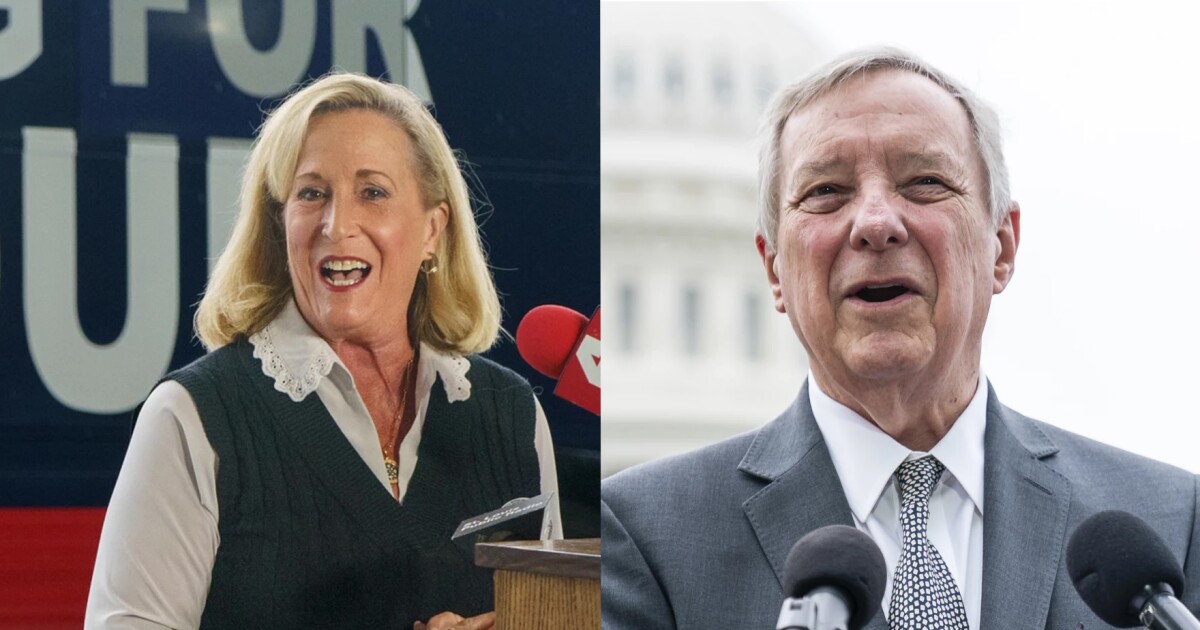
Members of the Missouri and Illinois congressional delegations are split over President Donald Trump’s decision to attack Iran.
And some Democrats are criticizing Trump for launching the attack without conferring with Congress — and before lawmakers could vote on a war powers resolution that would have restricted the president from using force against Iran.
American and Israeli troops launched airstrikes around Iran on Saturday. In a statement posted on Truth Social, Trump cited Iran’s refusal to abandon its nuclear weapon and ballistic missile programs as rationale for the attack. The Republican chief executive added that “the lives of courageous American heroes may be lost and we may have casualties that often happens in war, but we’re doing this not for now.”
“We’re doing this for the future, and it is a noble mission,” Trump added.
Early reaction to Trump’s decision among Missouri and Illinois political figures broke down along party lines.
Jason Rosenbaum
/
St. Louis Public Radio.
Congresswoman Ann Wagner, R-Missouri, said in a statement that “for nearly fifty years, the Islamic Republic of Iran has proven itself to be utterly committed to violence, chaos, and instability.” Wagner, a member of the House Intelligence Committee, added that “the United States, along with the support from many of our allies around the world, will no longer allow this regime to wreak havoc at will.”
“As the President stated, Operation Epic Fury is a clear and necessary action to raze the Iranian ballistic missile industry to the ground, annihilate the Ayatollah’s navy, and ensure Iranian terrorism and nuclear threats can no longer destabilize the globe,” Wagner said. “The multiple statements of support from across the Western world illustrate the importance of this action.”
Wagner is alluding to how the leaders from a number of countries, including Canada, Australia and Ukraine, backed Trump’s decision to attack Iran.
U.S. Rep. Mark Alford, R-Missouri, said in a statement on X that he backed Trump’s “swift and bold action to finally hold the regime accountable.”
“The Iranian regime is the world’s leading state sponsor of terror, a destabilizing force across the region, and a threat to U.S. allies, interests, and bases in the Middle East,” Alford said. “Tehran is directly responsible for the deaths of countless Americans over the years.”
“As I’ve said for weeks, through either the easy way or the hard way, the Ayatollah needs to go,” Alford added.
Missouri Congressman Sam Graves said in a statement that Trump “took decisive action to protect our service members, our homeland, and our national security before that threat could grow.” And Congressman Mike Bost, R-Illinois, applauded President Trump acting decisively to protect America’s national security interests.
“God bless our military men and women in harm’s way; may the uncertain days ahead lead to a lasting peace for years to come,” Bost said.
U.S. Rep. Mary Miller, R-Illinois, said Trump has “taken decisive action to defend America’s interests and confront those who threaten our security.”
“As our elite Armed Forces carry out Operation Epic Fury in Iran, we lift up our brave service members and the allies standing beside them in prayer for their safety and success in the mission,” Miller said in a statement on X.

Eric Lee
/
St. Louis Public Radio
Durbin, Pritzker decry decision
Democrats representing Illinois and Missouri roundly condemned Trump’s decision to attack Iran, including Illinois Sens. Dick Durbin and Tammy Duckworth.
Duckworth said in her statement that “too many Americans believed him when he promised that he would get our nation out of foreign wars and bring prices down for families.” The Democratic lawmaker added Americans “can clearly see with their own eyes that he was lying”
“Instead, Donald Trump chose to put American lives and national security at risk while threatening to draw us into yet another expensive, taxpayer-funded forever war without Constitutionally-required authorization, a defined end-state or a real plan to prevent the instability that could come next,” Duckworth said. “He is making that choice while his chaotic policies here at home continue driving costs for middle-class Americans to record highs.”
While noting “there is bipartisan support for stopping the development of nuclear weapons in Iran, there is no consensus for another interminable war in the Middle East.”
Durbin, who is not seeking reelection this year, pointed out he was one of 23 senators to vote against authorizing military force in Iraq in 2002. Trump attacked Iran without receiving any authorization from Congress — and before lawmakers could vote on a war powers resolution aimed at restricting military force without permission from the country’s legislative branch.
“A war in Iran with the goal of regime change could be another long-term military commitment with deadly consequences for thousands of American troops,” Durbin said. “The rash and unpredictable conduct of President Trump is a well-established worry in many ways but an impulsive commander in chief is a deadly combination.”

Brian Munoz
/
St. Louis Public Radio
Democratic Reps. Wesley Bell and Nikki Budzinski both released statements criticizing Trump’s decision to strike Iran. Budzinski, an Illinois Democrat, said “the Constitution is clear: only Congress has the power to send our nation to war.”
“This is a grave responsibility — one we take with the utmost seriousness. But the same cannot be said for President Trump,” said Budzinski, who added she would support a War Powers resolution. “Once again, he has disregarded the principle of coequal branches of government. And now, the consequences could be profound and dangerous.”
Bell said in his statement that “no one should mistake opposition to this war for sympathy toward that government.” But the Missouri Democrat added “launching a regime change campaign without a clear strategy, a defined end goal, or honest preparation for the costs is dangerous and shortsighted”.
“Military force is the most serious power our country can exercise,” Bell said. “It requires clarity of purpose, clearly defined objectives, and a credible plan for what comes next. War is not something you enter lightly, and it is not something you get to redo if it goes wrong. The American people and their Representatives deserve to know that every diplomatic option was fully exhausted before we put our troops in harm’s way.”
Illinois Gov. JB Pritzker, a potential presidential candidate in 2028, also blasted Trump’s decision for having “no justification, no authorization from Congress, and no clear objective.”
“But none of that matters to Donald Trump — and apparently neither do the safety and lives of American service members,” Pritzker said in a statement on BlueSky. “Donald Trump is once again sidestepping the Constitution and once again failing to explain why he’s taking us into another war. Americans asked for affordable housing and health care, not another potentially endless conflict. God protect our troops.”
Schmitt and Hawley mum for now
As of Saturday morning, Missouri Sens. Eric Schmitt and Josh Hawley had not released statements about Trump’s decision to attack Iran.
Both Missouri Republican senators were critical of Democratic President Joe Biden’s push to provide Ukraine with weapons to repel Russia’s invasion.
But they’ve been largely supportive of Trump’s foreign policy moves, even as some elements of the president’s political coalition have been fiercely critical of his interventionist decisions in Venezuela and Iran.
When asked about potential military action last week in Springfield, Hawley called Iran “a huge threat to the region, to our ally Israel — but also to our interests.”
“Iran absolutely cannot be allowed to have a nuclear weapon and needs to be put in their box and kept in their box,” Hawley said. “And we need our allies in the region, particularly Israel, to be strong, to keep them deterred, and contained long term.”
This story has been updated with additional comment.

Michigan basketball entered Friday having lost nine straight games to Illinois. With the sole regular-season matchup coming in Champaign against the KenPom No. 4 Illini, it was going to be a tall task for the Wolverines to end that streak.
The game matched up the nation’s No. 2 defense against the No. 1 offense, and in front of a raucous Orange Krush, the maize and blue took a little while to get into an offensive rhythm. Because the No. 5 offense is no slouch, especially against the No. 31 defense. What’s more, Morez Johnson Jr. returned to Champaign after spending his first year with Illinois.
However, the Illini certainly showed how much Michigan appears to be their rival, and really played a physical brand of basketball. After Illinois got a five-point lead, the Wolverines bounced back and got a six-point lead. Illinois had a slight advantage in the first half on the boards, but the Wolverines had a field goal advantage. Both teams were relatively even on turnovers.
Ultimately, Michigan ended up taking a seven-point lead into the locker room at halftime, but backup point guard LJ Cason appeared to have hurt his knee on the final score of the half.
The second half started with a Michigan layup and an Illinois 3. The next round of scoring went exactly the same way. But then Yaxel Lendeborg hit a 3 to stop the asymmetry. They traded baskets, but then after a few Illinois turnovers, the Wolverines pushed the lead to 10.
Cason returned to the game after the under-16 media timeout, providing (temporary) good news for the maize and blue (he would leave the game again shortly). But the Wolverines missed a few shots, and Illinois took advantage, getting a shot from the field by Mirkovic before Wagler hit a 3 to cut the lead to five, prompting a Michigan timeout with 13:09 remaining.
Illinois cut Michigan’s lead back down to six, but Yaxel Lendeborg stretched it back to nine with a layup-and-one. Then Aday Mara started taking over.
Mara was unguardable, scoring floaters, dunks, and putbacks. His quick 7 points put the Wolverines up to a game-high of 14 with 9:13 remaining. The Illini answered to end the nearly three-minute field goal drought, ending Michigan’s 7-0 scoring run. But the Wolverine defense held, and Trey McKenney finally hit his first (of three) 3-point attempts to push the lead to 15, and he hit again on the next trip, pushing the lead to 18 with 7:34 left in the game. It was a 13-2 scoring run for the maize and blue.
After an Illinois timeout, they missed again, and Will Tschetter got in on the contagious, 3-pointer action, pushing the lead to 21. Cadeau finally broke the makes from deep, and Wagler hit to cut the lead back to 18 with 5:41 remaining.
Illinois couldn’t mount a comeback, and Michigan won, 84-70. Here are our five takeaways.
Homecoming for Morez Johnson Jr.
An Illinois native who spent his first year with the Illini, the Orange Krush did as much as it could to make it uncomfortable for the outgoing transfer. However, it wasn’t the case, as Johnson was often the best player on the floor.
He was the only Michigan basketball player in double digits at halftime, with 13 points, five rebounds, and a steal, and he was something of an energizer bunny out on the floor for the Wolverines. There were no qualms for Johnson returning to his old stomping ground, as he played one of his best games in a maize and blue uniform.
Johnson was quiet in the second half, but the damage was done, and it makes his former teammate’s pregame comments more prescient:
What could have been.
Johnson finished with a double-double, scoring 19 points and netting 11 rebounds.
Michigan’s offense outplays Illinois’ offense
As noted, the Illini entered the game with the No. 1 overall offense, while the Wolverines were No. 5. Yet, when the rubber hit the road, it was the maize and blue who had the superior offensive attack, managing to shoot 52.5% overall and 60% in the second half. Illinois managed 41.3% and 43.3% respectively.
The Michigan defense forced Illinois to go through a series of uncomfortable stretches in the second half, with multiple three-minute droughts from the floor. And Illinois, which is accustomed to getting to the foul line, couldn’t seem to draw many fouls until relatively late in the game. Even when the Illini forced three Wolverine turnovers late, they couldn’t seem to take advantage.
Ultimately, Michigan was dominant on both ends of the floor.
Bench, fastbreak, and points in the paint
The Wolverines dominated all three categories, finishing the game with 20 bench points, 10 fastbreak points, and 42 points in the paint. We already discussed Johnson and his homecoming, but we cannot leave out Aday Mara, who was just such a mismatch for Michigan vs. the Illini. As noted, Mara really flexed late in the game, taking it over. He was the catalyst for most of these stats.
Meanwhile, Illinois only had 7 bench points, 1 fastbreak point, and was just behind Michigan with 32 points in the paint.
The streak was emphatically broken
As we said in the open, the Illini had beaten the Wolverines nine straight times. Even the Fab Five couldn’t beat Illinois in Champaign, as the maize and blue have historically struggled at State Farm Arena. Though it took some time for the Wolverines to flex, flex they did, and this was as emphatic of a win as Michigan had all season.
The final score may have been just a 14-point gulf, but honestly, the game wasn’t really that close (and it hadn’t been for most of the final 10 minutes). This was a huge win for the Wolverines, one that’s been years in the making. If not decades.
With the win over Illinois, Michigan has won the outright Big Ten regular-season title.
No. 1 overall seed back in the realm of possibility
It may come down to the Big Ten Tournament now that Michigan has lost the head-to-head with Duke. And the Blue Devils’ 54-point win over Notre Dame pushed them into the No. 1 NET ranking, stealing it away from the maize and blue. But with a win over the No. 4 NET-ranked Illini, the Wolverines have the second-best win in college basketball (behind Duke, of course). They also have wins over No. 5 Gonzaga, No. 7 Purdue, No. 11 MSU, No. 12 Nebraska, and will face No. 26 Iowa on the road next week.
There’s a strong case for the maize and blue to have the No. 1 overall seed given the levels of domination over most all of the aforementioned teams.

News30 minutes ago
Mass shooting at Austin, Texas bar leaves at least 3 dead, 14 wounded, authorities say

West36 minutes ago
Newsom’s ‘disgraceful’ call for Dems to be ‘culturally normal’ is ‘dangerous,’ far-left podcaster says

Midwest42 minutes ago
Judge orders Ilhan Omar attack suspect to remain in custody pending trial

Southwest48 minutes ago
RICK PERRY: Where’s the beef? Trump knows and he’s trying to make it affordable

Southeast54 minutes ago
Virginia Democrats talk affordability — and vote to nearly triple their own pay

Florida1 year ago
Florida High School Football Rankings: Top 25 teams – Oct. 21

Connecticut2 years ago
Cleary's 21 help Le Moyne down Central Connecticut State 69-64 in OT

Oregon2 years ago
How old is Bo Nix? What to know about Oregon quarterback ahead of 2024 NFL Draft

Virginia2 years ago
99th annual Pony Swim held in Virginia

Indiana1 year ago
Indiana Members Credit Union announced as new anchor tenant at Bottleworks District
News30 minutes ago
Mass shooting at Austin, Texas bar leaves at least 3 dead, 14 wounded, authorities say

Politics11 hours ago
Mamdani’s response to Trump’s Iran strike sparks conservative backlash: ‘Rooting for the ayatollah’

World12 hours ago
Activists hail ‘historic’ EU’s decision on accessible abortion

News13 hours ago
A long-buried recording and the Supreme Court of old (CT+) : Consider This from NPR

News22 hours ago
2 Survivors Describe the Terror and Tragedy of the Tahoe Avalanche
-

 World3 days ago
Exclusive: DeepSeek withholds latest AI model from US chipmakers including Nvidia, sources say
-

 Massachusetts4 days ago
Mother and daughter injured in Taunton house explosion
-

 Montana1 week ago
2026 MHSA Montana Wrestling State Championship Brackets And Results – FloWrestling
-

 Denver, CO4 days ago
10 acres charred, 5 injured in Thornton grass fire, evacuation orders lifted
-

 Louisiana6 days ago
Wildfire near Gum Swamp Road in Livingston Parish now under control; more than 200 acres burned
-

 Technology1 week ago
YouTube TV billing scam emails are hitting inboxes
-

 Technology1 week ago
Stellantis is in a crisis of its own making
-

 Politics1 week ago
OpenAI didn’t contact police despite employees flagging mass shooter’s concerning chatbot interactions: REPORT