Exploring critical issues facing our democracy and searching for solutions.
Illinois
Illinois Republicans grapple with mail voting amid mixed signals from Trump. 'We have to adapt'


While rallying his political troops last summer in Springfield heading into the primary campaign season, Illinois Republican Party chairman Don Tracy highlighted some of his top priorities to help the party regain a foothold in the Democratic-dominated state.
“We’ve got to embrace early voting and voting by mail,” Tracy said at the Illinois Republican Party State Central Committee & County Chairmen’s Association breakfast in August. “Democrats have won too many close elections on the strength of their vote-by-mail programs.”
Tracy said such vote-banking “needs to be the focus of every campaign in every county and township throughout the state” — no small order for a party led by former President Donald Trump, who has routinely sown mistrust for mail-in voting since he lost his 2020 reelection bid.
Eight months later, results from the March primary show a greater share of Chicago-area Republicans cast their ballots by mail compared to the 2022 primary, but they were still vastly outpaced by Democrats in utilizing a voting system that has become increasingly popular since the COVID-19 pandemic hit.
The GOP made up significant mail-in ground in Chicago, where 23% of Republican ballots were cast by mail, up from less than 15% in 2022, election data shows. About 29% of Democratic ballots in the city were mailed, only a slight bump up from 27% in the previous primary cycle.
But counting the nine counties of northeast Illinois as a whole, Democrats were still almost twice as likely to vote by mail compared to Republicans. That’s according to data compiled by the Chicago Sun-Times, which crunched the numbers as part of the Democracy Solutions Project, a series in partnership with WBEZ and the University of Chicago examining the challenges facing our democracy.

Illinois Republican Party Chairman Don Tracy speaks a Republican Day rally at the Illinois State Fair in August 2023.
Mitchell Armentrout/Sun-Times
About 17% of Republican ballots were mailed in across the region, well shy of the 29% of Democratic ballots that were postmarked, the Sun-Times found.
The figures underscore the challenge for Illinois Republicans heading into a pivotal presidential election with a candidate at the top of the ticket who in recent months has changed his tune on mail-in voting, but still sporadically slams the system, without evidence, as ripe for fraud.
No matter Trump’s mixed messaging, “our main priority is early voting,” Tracy said as the general election approaches. “We have to adapt.”
‘Where elections are won and lost’
The state GOP chairman has downplayed the possibility of Trump’s unfounded fraud claims discouraging Illinois voters from signing up for mail ballots, noting that Trump has embraced it as he tries to retake the Oval Office from President Joe Biden.
“ABSENTEE VOTING, EARLY VOTING, AND ELECTION DAY VOTING ARE ALL GOOD OPTIONS,” Trump wrote in a social media post last week. “REPUBLICANS MUST MAKE A PLAN, REGISTER, AND VOTE!”
On the biggest stages, though, Trump has regularly fallen back on the myths of rampant voter fraud that he’s claimed denied him a second term.
“Mail-in voting has to be totally corrupt. Get that through your head,” Trump said at a Michigan rally in February. “I mean, it has to be.”

Republican presidential candidate and former President Donald Trump attends a campaign rally in Waterford Township, Michigan Feb. 17.
The FBI and other authorities have confirmed there was no widespread mail voter fraud or any other interference in the 2020 election.
While Tracy and other establishment Illinois Republicans have kept Trump’s lies about election fraud at arm’s length, they have suggested Democrats who hold all statewide offices and supermajorities in the General Assembly aren’t committed to preventing ballot-box shenanigans.
“We want to make it easy to vote but hard to cheat. Democrats want it to be easy no matter what. They loosen voter integrity rules every chance they get,” Tracy said, pointing to Democratic rejection of voter ID requirements.
Republican leaders have also argued state laws that have expanded mail voting eligibility since 2020 “remove important election safeguards” — but they agree their opponents across the aisle have left them in the dust when it comes to voter registration and mail ballot sign-up efforts.
“Look at the model of what Democrats have done over the years,” said former Illinois House Minority Leader Jim Durkin, a Republican from Western Springs who stepped down last year. “They have been incredibly successful at registering and mobilizing voters.
“I can’t tell you how many times I’ve seen Republicans up 3 to 4 points on Election Day, and everyone is thrilled until — ‘whoa, whoa, there are still mail ballots out.’ Then there’s a flip, and we continue to be on the losing side,” said Durkin, a vocal opponent of Trump.
“It took Republicans a while to see this is where elections are won and lost,” he said. “It’s here to stay. It’s in every state, whether you like it or not, and you have to deal with it.”

Former Illinois House Republican Leader Jim Durkin, pictured at his Loop office in November 2022.
Tyler Pasciak LaRiviere/Sun-Times
Mail-in voting strong in and around Chicago
More than 378,000 Illinois mail ballots were counted in the March 19 primary, according to the Illinois State Board of Elections.
The Sun-Times found about two-thirds of those came from the counties including and around Chicago: Cook, Will, Lake, DuPage, McHenry, Kane, Kendall, Kankakee and Grundy.
Chicago led the way with almost 109,000 mail ballots cast, or about 28% of the city turnout.
Most of those — about 98,000 — were Democratic ballots, accounting for nearly 29% of all Democratic votes. The 9,536 Chicago Republican mail ballots accounted for 23% of all GOP votes in the city.
In suburban Cook County, about 23% of Democratic ballots came by mail, while just 15% of Republicans did.
Lake County saw the highest vote-by-mail participation rate with one out of every three north suburban ballots mailed in. That includes a whopping 42% of Democratic ballots, compared to 22% of Republican ones.
GOP mail voting bottomed out in Kankakee County, where 11% of all ballots were postmarked, including less than 7% of Republican ones.
In all counties except Cook, Republican mail-in rates trailed Democratic ones by 10 percentage points or more.
And in seven counties, Democratic mail-in rates were more than twice as high as their Republican neighbors.
‘Two-faced problem’
The numbers reflect Republicans’ tortured relationship with voting by mail, which, for their opponents, has been “an incredibly important tool for us to engage more voters,” according to Ben Hardin, executive director of the Democratic Party of Illinois.
“Republicans are spouting totally misplaced or manufactured concerns. There’s no cheating in filling out a ballot at home, sticking it in a USPS box and then having it counted,” Hardin said. “It is going to be their downfall this cycle.”
He pointed to the contrasting efforts of the Illinois Republican Party to encourage mail balloting, while a federal lawsuit filed by a top Illinois GOP congressman aims to scale back the state’s vote-by-mail law.
Downstate U.S. Rep. Mike Bost and a pair of Chicago area Republicans have argued Illinois’ law, which allows mail ballots to be counted as they arrive to election authorities for up to two weeks after Election Day, dilutes the value of their votes through “illegal ballots.”
“They have a two-faced problem that they need to figure out,” Hardin said.
But mistrust of the system is rampant and growing among Republicans nationwide, surveys suggest.
A Pew Research poll conducted in January found just 28% of Republicans think any voter should be allowed to cast a ballot by mail, down from 49% who agreed with that sentiment in a poll taken four years earlier.
About 84% of Democrats who were surveyed supported mail balloting for all, a substantial majority that remained consistent with responses in 2020.
Arnaud Armstrong is trying to bring more Republicans around to the concept as executive director of Win Again, a political action committee focused on driving up GOP mail balloting in Pennsylvania, where early voting is limited to mail.
Armstrong said Trump’s mercurial embrace and demonizing of mail-in voting has complicated messaging for the party, but that’s not the only thing keeping Republican numbers down.
“Conservatives are conservative. When we do something a certain way for most of our lifetimes, and then it’s radically different, it creates confusion and distrust. Conservatives don’t like that,” Armstrong said. “I would love if he [Trump] held up a mail ballot and said, ‘Use this.’ But we see the biggest difference from leadership on the ground from Republican donors and groups embracing it.”
And minds can be changed when you knock on doors, Armstrong said.
“The first thing I say is, ‘I’m not asking you to like mail ballots. I’m asking you to do what is best for Trump and our Republican candidates. I’m not asking you to trust what a Democrat does with a mail ballot. But if you do this, you will be helping Republican candidates.”
He’s also asking Republican leaders to follow the Democratic Party model.
“They play the long game. They think 10 steps ahead and invest in unsexy things like voter registration and mobilization efforts,” Armstrong said. “We don’t, and it shows. And we’re running out of time to catch up.”
The Democracy Solutions Project is a collaboration among WBEZ, the Chicago Sun-Times and the University of Chicago’s Center for Effective Government, with funding support from the Pulitzer Center. Our goal is to help our community of listeners and readers engage with the democratic functions in their lives and cast an informed ballot in the November 2024 election.


BLOOMINGTON — Springfield’s Alex Eickhoff nearly had a magical Thursday as he tied for second place in the 95th annual Illinois State Amateur Championship at Crestwicke Country Club.
Eickhoff, a 2020 Hillsboro High School graduate and former standout on the Southern Illinois University Edwardsville’s men’s golf team, shot a 4-under-par 68 in Thursday’s third round and followed that with an even-par 71 to finish the three-day, four-round event 1-over 285. He tied for second with Bloomington’s Logan Stauffer.
Eickhoff briefly took the lead through nine holes of his fourth round when he sat at 1-under par. Chicago’s Charlie Kulwin finished both of Thursday’s rounds under par and finished 2-under 282. He was the lone golfer to finish under par for the tournament.
Eickhoff was The State Journal-Register’s Small School Boys Golfer of the year twice in his high school career: once as a freshman in 2016-17 and again as a senior in 2019-20. After high school, he golfed for the University of Minnesota for two years before transferring to SIUE.
He began the tournament with a 3-over 74 on Tuesday and shaved off a stroke Wednesday with a 2-over 73. He closed out the event with an even-par 71 in Thursday’s final round.
Other area golfers who made the cut were Springfield’s Charles Hoogland (7-over 291, tied for 20th) and Jacksonville’s Brady Kaufmann (8-over 292, 25th).
The last golfer from The State Journal-Register’s coverage area to win the Illinois State Amateur was Jay Davis. Davis, a Jacksonville Routt graduate, won the 1991 and ‘92 tournaments.
Contact Ryan Mahan: 788-1546, ryan.mahan@sj-r.com, Twitter.com/RyanMahanSJR.
Illinois
Illinois awards AD Josh Whitman a new contract worth more than $31 million over the next 10 years

CHAMPAIGN, Ill. — Illinois has extended athletic director Josh Whitman’s contract through 2036, committing more than $31 million over the next 10 years on the heels of a series of standout seasons for the department and its teams.
The university’s board of trustees approved the new deal for Whitman at its regular meeting on Thursday. The fifth-longest tenured AD among the four power conferences will make $2.15 million during the 2026-27 school year, a salary increase of more than 40%.
Whitman is scheduled to receive $100,000 raises annually before a $200,000 bump to $3.15 million in the final year of the agreement and a $500,000 retention bonus each June 30 that he remains on the job at Illinois.
The contract also includes additional incentives of up to $500,000 annually related to performance goals set by the university chancellor and three automatic one-year extensions through 2039 if certain Illini football and men’s basketball performance measures are met.
Whitman, a former Illinois football player, was hired in 2016. This was the fifth time his contract has been amended. The men’s basketball team reached the NCAA Final Four in April for the first time in 21 years. The football team won 19 games over the last two seasons, a program record for that span. Illini athletics also set a revenue record for a fourth consecutive year and topped $200 million for the first time in 2025-26, according to the board of trustees meeting memo.


ESSEX, Ill. – It’s been two days since we first told you about Constellation Energy buying several hundred acres of land in or near the Village of Essex and it’s still anyone’s guess what they are going to do with all of that land.
Fox Chicago’s Unit 32 brought you this story and our Bret Buganski is still on the hunt for some answers.
“My thought is, well, I think we lost our butts and our house because we bought it at the premium golf course price and now we are essentially could be having a data center in our backyard,” Essex resident Taylor Gunier said.
Gunier and her family moved into this house last summer.
She has spent the last year working with other concerned residents to figure out what Constellation is going to do with the 700 acres of land they have purchased in and around Essex from June 2025 to February 2026.
Data center in Essex?
The backstory:
Following a Freedom of Information request to the Kankakee County Recorder, a Unit 32 investigation found Constellation spent $47.5 million dollars in fourteen different land deals.
Property records reviewed by Fox Chicago show the company purchased at least 505 acres in just nine months. The total is likely higher because some of the public records did not include the number of acres sold each time.
Unit 32 also found that two Essex Village Board members were sellers in five of those transactions.
“Essex does not have any industrial zoning ordinances, which I think is part of why Constellation chose us. We would have been an easy target with few regulations for them to abide by,” said Essex resident Kylee Raney.
Raney is part of the Essex Coalition, a group of concerned residents following every move between the Essex Village Board and Constellation Energy.
It has also been making some of its own moves.
“We’ve worked with a third party consultant and we have built out a draft of industrial zoning ordinances. They are based off of the Kankakee County industrial zoning ordinances along with some ordinances from Yorkville and the data center that is being built there. So we made sure to keep the language broad so it could cover a multitude of industrial uses, but we wanted to make sure the umbrella of that language included data centers. So we have a petition and we have doubled the numbers of our signatures there. The petition is to urge our village board members to pass industrial zoning ordinances. Even if you don’t know what they’re gonna build, even if Constellation doesn’t have their customer yet, you can put protections, legal protections, legally binding protections in place to ensure that we can mitigate noise pollution, sound pollution, we can monitor water usage. There are lots of avenues that we can take to build out the regulations to protect our future. No matter what happens,” Raney said.
While Raney says Constellation has not told them what they’re going to use the land for, the village board seems to be taking precautions for a data center.
On their website, the Essex Village Board wrote it “… has issued a formal notice establishing development standards and mitigation requirements for a proposed data center facility that may be located within the village.”
It also posted a letter. The subject line says it is a notice about “development standards and required mitigation response plan” for a data center.
What they’re saying:
“Now, as far as buying that big land in Illinois, there could be multiple reasons. I don’t know what they’re going do with it,” said Mohammad Shahidapur, a distinguished professor of electrical and computer engineering at the Illinois Institute of Technology.
Shahidapur has been teaching for 43 years.
Given his background, we asked him for his objective opinion as to what Constellation could be doing with all of this land.
“They could be building a big solar farm because having a nuclear unit, we can sort of reduce the issues because sun doesn’t shine all the time. So then once the sun is shining, you know, basically, they can sell that and then when the sun is not shining they can replace it by nuclear. That could be one reason. They could be also going after data centers in a sense maybe they’re lining up with some of these tech companies to build more data centers and providing power through their nuclear units, so it’s sort of a joint venture,” Shahidapur said
The statement Constellation sent us when our story first aired says in part: “Constellation is seeking to annex land into Essex near the Braidwood Clean Energy Center to help the company strategically market the facility’s carbon-free generation to potential future developers.”
“So, obviously, I’m not an insider at the company, but if I’m a betting man, I would bet based on buying a bunch of land, looking to annex it, that they’re looking to build out one of these data centers,” said Andrew Rocco, a stock strategist with Zacks Investment Research based in Chicago.
Rocco’s focus is on the tech industry and where it overlaps with the energy sector.
So we also asked him for his unofficial analysis on what he thinks Constellation may do with the 700 acres of land they purchased in and around Essex:
“Braidwood is the largest nuclear plant in Illinois. And as I mentioned before, getting these nuclear facilities through the regulatory red tape, even though kind of the Trump administration has said they’re pro-nuclear, but still there’s a ton of regulatory red tape and really nothing has been approved in the last 10 or 20 years. So having this already built out, I think it does around 2,400 megawatts of carbon-free baseload electricity. So this is exactly what these large tech companies are looking for. They’re looking for an immense amount of energy, dependable and clean. Now you can look at natural gas as an alternative to something like this, because obviously the startup costs are going to be lower for natural gas. And natural gas is very, very cheap. And it makes up the most amount of energy produced in the U.S. currently. But once you have a nuclear reactor already running, this one’s been running since the late 80s, you don’t have to worry about that. So the upfront costs have already been paid for. Now they’re looking likely to secure this large plot of land nearby to put a data center in and just connect it right up to that massive nuclear plant.”
Again — that is Rocco’s unofficial opinion on what Constellation may be doing with all that land.
Unit 32 reached out to Constellation to see if they would tell us what was going to happen with all of the land they bought in and around Essex. They told us that since they do not have a customer, they do not have any plans.
The Source: The information in this report came from interviews with Essex residents, statements from the Essex Village Board and Constellation Energy along with interviews with stock strategist Andrew Rocco and IIT professor Mohammad Shahidapur.
-
 Politics6 minutes ago
A new piece of Democrats’ midterm strategy: Being ‘practical’
-
 Science12 minutes ago
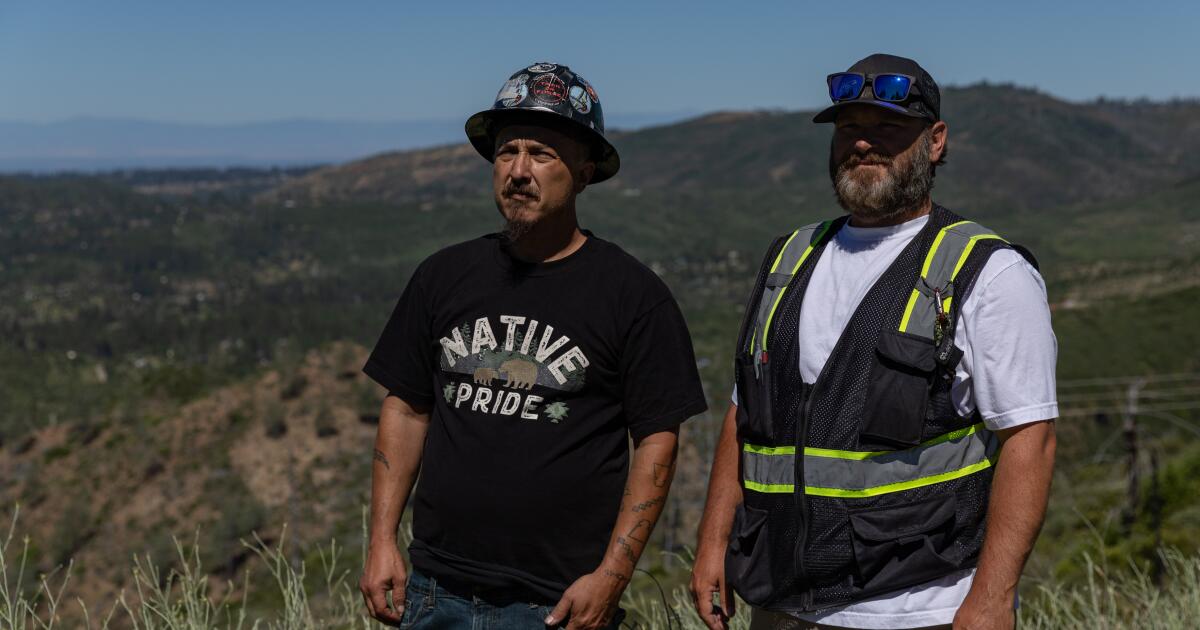
After wildfires destroyed 95% of this California tribe’s forests, members uncovered 1,200 ancestral sites
-
 Sports18 minutes ago
World Cup championship and third-place game: Start times and how to watch
-

 World30 minutes ago
Rule of Law in Hungary shows ‘radical change’ under Magyar, EU says
-

 News60 minutes ago
Where Wildfire Smoke Is The Worst Right Now—And What To Do About It
-

 Los Angeles, Ca3 hours ago
LADWP begins long-term repairs after West Hollywood water main rupture
-

 Detroit, MI3 hours ago
Livestream: Mayor Sheffield, Detroit health chief to address wildfire smoke threat
-
 San Francisco, CA3 hours ago
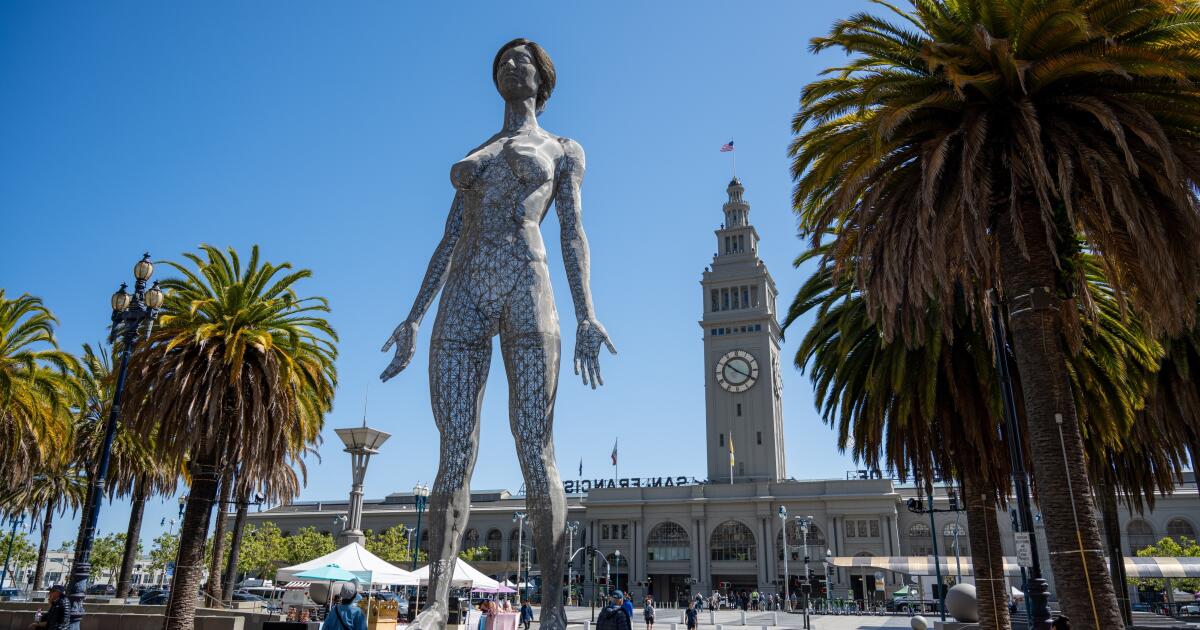
A sculpture of a giant naked woman goes on sale in San Francisco. Bring a crane

