Illinois
Fighting Illini makes history during Illinois's 38-16 win against Michigan State in Week 12 of college football | Sporting News


A 9-3 season is in play for Illinois. A 38-16 win against Michigan State on November 16, which happened to be Senior Day, concluded the Fighting Illini’s best home record in football since 2001 at 6-1.
Running back Josh McCray carried the Illini with three touchdowns, two from the 1-yard. Part of a 61-yard day on the ground, Illinois amassed 138 total rushing yards, part of an offensive onslaught that included a mistake-free day from quarterback Luke Altmyer.
Bret Bielema knows there is more work to be done
The junior finished 19-for-32 with 231 yards and two touchdown passes, adding to a productive season, his second in Champaign.
Coach Bret Bielema said he was pleased with how his team responded after back-to-back losses, eliminating the Illini from Big Ten title contention.
“We’ll have to put this one behind us tomorrow and get ready for a Rutgers team,” Bielema said. “We really like the demeanor of this group. You know the outside world looking in we’re a 7-3 football team that’s got a lot in front of us. Never say never. In the middle of the week, I got the personal inventory to myself that there’s a couple 6-3 football teams ranked in the top 25. We’ve lost to teams that are ranked No. 1, No. 4, and a good Minnesota team in a nail biter. We’re telling our guys to keep working on what’s in front of us and continue to take advantage of every opportunity we get.”
In his final game in Champaign, receiver Pat Bryant had another star-studded day, finishing with 135 yards and a touchdown on four receptions.
Illinois finishes the regular season with back-to-back road games against Rutgers next Saturday and Northwestern at Wrigley Field on Thanksgiving weekend.
Kickoff against the Scarlett Knights is set for noon ET on Peacock.

Illinois
Illinois Wesleyan to Launch First-of-its-Kind Interdisciplinary Undergraduate Quantum Science and Engineering Program

Fisher Center for Interdisciplinary Quantum Science & Engineering positions Illinois
as a leader in next generation quantum education
BLOOMINGTON, Ill. – Illinois Wesleyan University today announced the creation of the Fisher Center for
Interdisciplinary Quantum Science & Engineering, a first-of-its-kind undergraduate
program that brings together multiple areas of study to better prepare students for
careers in this emerging field.
The Fisher Quantum Center will make Illinois Wesleyan the first undergraduate liberal
arts university in the United States to offer an interdisciplinary quantum program,
positioning both the University and the state as leaders in the quantum space.
The Fisher Quantum Center is supported by a founding gift from Ann ‘82 and Alan Fisher,
providing the resources to establish the center and launch programming. Ann is a graduate
of Illinois Wesleyan University and serves on the university’s Board of Trustees.
The Fisher Quantum Center is designed to grow in phases and will expand its curriculum,
facilities, and partnerships over time.
“The Fisher Quantum Center represents a defining step forward as the first undergraduate
interdisciplinary quantum program. Quantum is reshaping industries and the way we
solve complex problems, and this complexity is an ideal fit with Illinois Wesleyan’s
cross-curricular approach to undergraduate education. We are especially grateful to
Ann and Alan Fisher for their generous gift that is making this distinctive program
possible,” said Illinois Wesleyan University President Sheahon J. Zenger.
What is Quantum?
Quantum science studies how matter and energy behave at the smallest scale, where
the differences can be used to create new, more powerful technologies. Because of
this, quantum has a wide variety of real-world applications and is poised to transform
everyday lives and revolutionize industries ranging from computing and cybersecurity
to healthcare, finance, and agriculture.
Most quantum programs are primarily offered at the graduate level and focus on a single
area of study. The Fisher Quantum Center takes a fundamentally different approach
by focusing exclusively on undergraduate education and bringing together physics,
chemistry, computer science, mathematics, biology, business, philosophy, and engineering
into one holistic curriculum. Instead of separating these fields and narrowing the
focus, it connects them to better reflect the broad applications of quantum. This
first-of-its-kind approach prepares students not only with the technical skills for
these emerging careers, but with an understanding of the economic, ethical, environmental,
and societal implications of quantum technologies.

and instrumental performance (euphonium). He has also conducted research on the ethical
implications of quantum computing.
Students will be able to engage with quantum in multiple ways, including through individual
courses, certificates, concentrations, hands-on experiments, projects, faculty-mentored
research, and internships. The Fisher Quantum Center is designed to be flexible, inclusive,
and accessible to undergraduate students from all areas of study to create a gateway
into quantum for students who might not otherwise encounter the field. It will also
serve as hub for visiting scholars, postdoctoral researchers, and faculty to collaborate
on strengthening undergraduate quantum laboratories and infrastructure.
“We are proud to support the creation of the Fisher Quantum Center and the unique
opportunity it creates for students coming to Illinois Wesleyan. The Fisher Quantum
Center will open the door for students from many different backgrounds to engage with
quantum in a way that is accessible and better prepares them for future careers. We
are excited to see how this program grows and the impact it will have on Illinois
Wesleyan students, the university, and the broader community,” said Ann and Alan Fisher.
The first courses through the Fisher Quantum Center will be available in Spring 2027,
alongside enhanced quantum lab space, with programming expanding throughout the year.
Beyond the classroom, the Fisher Quantum Center will support outreach initiatives
to engage high school teachers and students to strengthen pathways into quantum and
STEM fields. Beginning in Summer 2026, Illinois Wesleyan will host a fully funded
Quantum Day Camp for high school STEM teachers and counselors from surrounding counties,
with a residential Quantum Camp for high school students anticipated for Summer 2027.
“The Fisher Quantum Center represents a first-of-its-kind program that will create
new opportunities for students to engage with quantum across disciplines while preparing
them for the high-quality jobs of the future. Quantum technology is already shaping
the future of the global economy, and Illinois is positioning itself as a global leader.
To compete, we need to continue building a strong workforce pipeline, and Illinois
Wesleyan is playing a critical role by giving students the skills and training needed
to fill these emerging jobs and help keep Illinois at the forefront of innovation,”
said Gov. JB Pritzker.
At a time when Illinois is emerging as a national hub for quantum innovation, the
Fisher Quantum Center will play a critical role in developing the next generation
of talent, expanding awareness of quantum careers and opportunities, and ensuring
the state remains competitive in this rapidly evolving field.
“Developing the next generation of talent is essential to maintaining Illinois’ momentum
in quantum,” said Illinois Economic Development Corporation President and CEO Christy George. “Illinois Wesleyan’s new program creates opportunities for students in high demand
fields while helping build the workforce pipeline Illinois industries need. The Fisher
Center reflects the forward-thinking approach that has helped position Illinois as
a growing hub for quantum innovation and emerging technologies.”
For more information about the Fisher Quantum Center, visit www.iwu.edu/fisher-quantum-center.

Illinois Senate Democrats are trying to impose limits on artificial intelligence, or AI, in the final weeks of the legislative session.
The proposed package of eight different bills would target specific areas impacted by the emerging technology, including its effects on mental health and the usage of AI in schools.
State Sen. Bill Cunningham said because Congress has not put much regulation around AI, state lawmakers feel they have to step into the void.
“Artificial intelligence, or AI, can be a powerful tool for good, but currently there are minimal guardrails in place. It’s like the wild, wild west. Illinois needs to create a roadmap for responsible innovation to prevent catastrophic risks. And that is why we are all here today,” said State Sen. Mary Edly-Allen.
Edly-Allen’s proposal, which passed out of committee Wednesday and now heads to the full Senate, aims to increase transparency from big AI companies like ChatGPT and Claude. It would require large companies to make annual reports explaining what they are doing to prevent what lawmakers call “catastrophic risks.”
If a company learns about a critical safety incident, it has to report it within 72 hours, or 24 hours if the incident poses a serious risk of harm or death.
Another bill, led by Sen. Laura Ellman, aims to address the growing number of young people turning to AI during a mental health crisis, specifically people who confide in a chatbot about their suicidal thoughts. AI companies would have to implement methods to detect self harm and refer the user to a resource, such as the suicide hotline.
Other bills try to crack down on AI being used to fix rent prices, curb someone’s data from being used for targeted ads or sold to third parties, ban teachers from using AI to grade a student’s work and cut down on bots scooping up tickets to concerts and sports.
The current legislative session is set to end on May 31, with lawmakers working to pass a host of bills before that date arrives.

IKEA announces new locations opening for 2026
IKEA revealed plans to open 10 new stores in various U.S. cities by 2026 as part of its expansion strategy.
The Chicago metro area is getting its first Dutch Bros cafe this week, with additional Illinois locations set to open later this year.
The West Coast coffee chain announced the openings in a press release Wednesday, May 13, adding details about available freebies.
Dutch Bros coming to Melrose Park
Dutch Bros will be making its Chicago suburbs debut in Melrose Park, with doors set to open Thursday, May 14, at 1931 N. Mannheim Road.
The cafe will operate from 5 a.m.-10 p.m. Sunday through Thursday and 5 a.m.-11 p.m. Friday and Saturday.
Melrose Park customers will be able to snag a free keychain with any drink purchase on opening day, while supplies last, according to the chain.
“Opening in the Chicago area has always been a dream for us at Dutch Bros, and Melrose Park is just the beginning,” Dutch Bros Local Market Lead Allie Lahti said in the release.
Where else is Dutch Bros opening locations in Illinois?
The chain also announced plans to open cafes in Rockford, New Lenox and Buffalo Grove, with locations slated to open this summer. The chain lists the Rockford location as “coming soon” to 7103 E. State St. on its website.
Meanwhile, job listings for “Broistas” at 550 W. Maple St. in New Lenox and 80 McHenry Road in Buffalo Grove are available for applicants on the site.
But that’s not all.
A spokesperson for the Village of Oak Park told NBC News Chicago the chain “is also in the process of opening a location in Oak Park” at 316 Madison St.
The village approved plans for the new location in October 2025, and the chain told NBC the cafe is still “in the very early stages.”
Peoria City Councilman Alex Carmona told the Journal Star in April that a new Dutch Bros location will be built at the busy intersection of University Street and War Memorial Drive.
Construction is set to kick off in May at 3624 N. University St., with the location slated to open in the fall.
The Peoria Journal Star reached out to Dutch Bros about the upcoming Illinois locations and will update this story accordingly if a response is provided.
List of Dutch Bros locations in Illinois
The coffee chain has five existing locations in the following Illinois cities:
CONTRIBUTING: JJ Bullock, Peoria Journal Star
-
 Politics4 minutes ago
Report: Conditions at immigrant detention centers in California have worsened under Trump
-
 Sports16 minutes ago
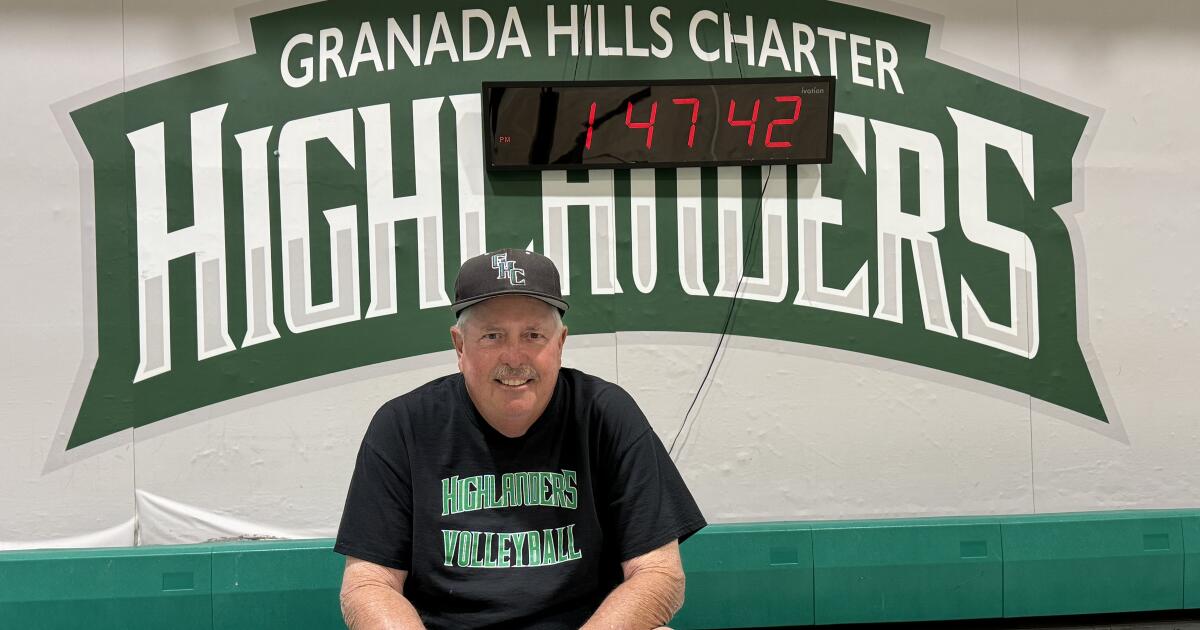
Prep talk: Granada Hills coach Tom Harp goes for another boys’ volleyball title
-

 World28 minutes ago
Spanish row fuels north–south tensions ahead of tough EU budget talks
-

 News58 minutes ago
Woman killed in Atlanta Beltline stabbing identified
-

 New York2 hours ago
Questions Arise About Jack Schlossberg’s Readiness for Congress
-

 Los Angeles, Ca3 hours ago
Los Angeles releases searchable list of worst rental properties
-

 Detroit, MI3 hours ago
MLB News & Moments: Mets Gain Much-Needed Momentum by Sweeping Detroit
-

 San Francisco, CA3 hours ago
Where to Find Free Street Parking for Shows in San Francisco | KQED