Illinois
Could Iowa take over Illinois counties? Lawmaker’s bill makes the case


How a bill becomes a law in Iowa
The 2026 Iowa legislative session began Jan. 12. Republicans hold control of the House, Senate and governor’s office for the tenth consecutive year.
An Iowa Republican lawmaker wants to pursue a study on absorbing counties in Illinois, where a secessionist movement has grown fueled by divisions over the Prairie State’s policy direction.
A proposal from Rep. Taylor Collins, R-Mediapolis, House File 2141, would establish an “Iowa-Illinois boundary adjustment committee” to consider whether to move the dividing line between the two states by transferring one or more Illinois counties along the Iowa border to the Hawkeye State.
Collins said the bill would primarily look at all counties that along the Mississippi River.
“As somebody that represents really a district that’s right along the border and along the Mississippi River, I know many folks on both sides of the river, and I know there’s a lot of folks in the high-tax state of Illinois that’s now basically supporting career criminals,” Collins said. “They would love to be Iowa residents, and many of them have taken the steps to actually move to the state of Iowa.”
If advanced, Iowa would follow in the footsteps of Indiana, where Gov. Mike Braun in 2025 signed a law creating a commission to explore the possibility of annexing parts of Illinois. That passed after more than 30 Illinois counties voted on nonbinding referendums to secede from the Democratic-led state of Illinois over differences in policy and political ideology with Chicago.
Illinois Gov. JB Pritzker, a Democrat eyeing a run for the White House in 2028, had called Indiana’s legislation a “stunt.”
“I’ll just say Indiana is a low-wage state that doesn’t protect workers, a state that does not provide health care for people when they’re in need, and so I don’t think it’s attractive for anybody in Illinois where wages are higher where the standard of living is higher, and we do provide health care for people in need,” he said.
This is not the first Iowa proposal looking to take a neighboring state’s counties.
Sen. Mike Bousselot, R-Ankeny, introduced a bill in 2025 proposing to enter into negotiations with Iowa’s northern neighbor and allow Iowa to buy nine southern Minnesota counties. It never received a subcommittee hearing.
Under Collins’ bill, the boundary adjustment study committee would be made up of:
- Six individuals from the state of Iowa who are not lawmakers or appointees of the governor.
- No more than four members of the same political party.
- Five individuals from Illinois appointed under Illinois state law.
The governor would have to notify the Illinois governor when committee members have been appointed and schedule the committee’s first meeting no later than Sept. 1, 2026.
The panel would have to submit a report to legislatures in both states containing its recommendations, including any potential legislation and a summary of its work.
Each state would need to approve new boundary lines. And Congress would ultimately have to approve any changes to the states’ boundaries.
Collins said he had not yet spoken with the Senate to gauge support for his bill.
Asked if the bill would receive consideration in a subcommittee hearing, Rep. Jane Bloomingdale, R-Northwood, who chairs the House State Government Committee, said she had only learned of the bill Jan. 22 and had not yet reviewed it.
Marissa Payne covers the Iowa Statehouse and politics for the Register. Reach her by email at mjpayne@registermedia.com. Follow her on X at @marissajpayne.



CHICAGO (WLS) — The I-Team reported in February that there were 164 operating data centers in Illinois, with dozens more in the works.
The city of Joliet recently voted to approve plans for a large data center.
That vote came after hours of public meetings, packed with people eager to weigh in. Joliet city leaders said it would bring tax revenue and financial benefits for the community.
Some residents expressed concerns about the potential environmental impacts.
But, what exactly is a data centers and why are some communities eager to attract them?; Why are so many people opposed to them?
“A data center is going to be a building that provides the space, the power and the infrastructure for everything that we do online today,” said Brad Tietz, the director of state policy for the Data Center Coalition. “So, when you look at where demand is going, for data, so everything we’re doing on the internet, the average household has 21 connected devices to it. We’re going to use twice the amount of data in the next five years than we’ve used in the last ten years.”
Part 2 – Our Chicago: Data Centers
When it comes to the types of jobs created by data centers, he says it depends on the size of the facility.
“There’s going to be technicians, service engineers, etcetera. The real value, especially for Illinois residents, is going to be on the construction side,” Tietz said.
In some communities considering data centers, residents are concerned about their water usage.
“The data center industry has been a large water user, historically, but by no means the largest compared to other industries. And if you look at how efficient the industry is getting, and I’ll remind you too, not every data center uses water. Some are actually using, especially in a colder climate like Illinois, the outdoor air temperature to help cool their facilities,” Tietz said.
Jen Walling is the Chief Executive Officer of the Illinois Environmental Council.
She wrote in Crain’s that “Big Tech” is coming to Illinois and that the state isn’t ready.
“We don’t have the guardrails in place that are going to be necessary to protect our environment, to keep our rates low, to protect our communities and most importantly, protect our water,” Walling said.
Part 1 – Our Chicago: Data Centers
She says the Alliance for the Great Lakes has put out a report where they’ve looked at water usage, and some data centers aren’t using much water.
“Some data centers are using up to five million gallons of water a day. These are huge water users, and they can be taking from different sources including Lake Michigan,” she explained.
“We’re also very concerned about air pollution and the energy usage, these are huge energy users,” Walling said.
She also explained the concerns for people living nearby.
“They need to be on with energy all the time. So, all of these facilities have backup diesel generators. And the residents in the [Aurora] community said that they could smell the methane gas that was being burned, the diesel gas that was being burned. And that’s particulate matter, it’s odor, so these communities face real consequences when something happens,” she said.
Copyright © 2026 WLS-TV. All Rights Reserved.

INDIANAPOLIS — You can sum up Braylon Mullins’ first Lucas Oil Stadium shooting performance like this: a near-dagger and a tongue-wagger.
Six days after becoming a national name with his last-second, game-winning 3-pointer vs. Duke, Mullins scored 15 points in a 71-62 UConn victory over Illinois. The Huskies will play for their third national championship in four years Monday against either Michigan or Arizona.
It was exactly the scenario Mullins envision when he committed to the Huskies in a ceremony at Greenfield-Central less than 18 months earlier.
“These are the moments you play for, and knowing how far and how long this season has been, just to be a part of the national championship – I think that’s a blessing in itself,” Mullins said.
“But we came here to win, so we’re ready for Monday.”
Buy 2026 national championship game tickets!
Mullins made 4 of 7 from behind the arc – two of which came at crucial junctures.
Last things first. Mullins had missed all five of his shots in a scoreless second half when Illinois’ Keaton Wagler scored with 1:38 remaining. It cut the UConn lead – as high as 14 points with under 10 minutes to play – to 63-59.
After a timeout, UConn’s Alex Karaban missed a late shot clock 3, but Silas Demary Jr. grabbed the rebound. The Huskies reset their offense, and Demary later found Mullins, who hit a 3 from the elbow to make it a seven-point game with 52.1 seconds remaining.
“The play got broken down, and we run sets with under 5, 10 seconds on the shot clock,” Mullins said. “I just saw a little bit of separation, and we work on that shot in practice every day, so it just felt like repetition.”
Wagler responded with a 3 on the ensuing possession. Illinois, however, could never make a basket after cutting the lead to two possessions in the final two minutes.
The double-digit lead UConn opened up in the first half had the Illini chasing all night. Mullins snuck one in before halftime to help the cause.
That possession, off an Illinois turnover, began to run late in the shot clock as well. Mullins was aware of the clock, thought he saw a sliver of daylight and took a deep shot – similar to the one he swished in the Elite Eight.
It bounced off the center of the backboard and through the hoop for a 37-27 UConn lead with 47 seconds left in the half. Mullins headed back up the floor smiling, shaking his head and letting that tongue wag a bit.
“If you see a little window, you’ve gotta shoot it,” Mullins said. “I did not call glass, though – but it went in.”
Mullins scored only two points in 10 minutes when UConn and Illinois played at Madison Square Garden on Nov. 28. It was his collegiate debut after the 2025 IndyStar Mr. Basketball missed the first six games with an ankle injury.
Some of the Huskies’ other trusty shooters struggled Saturday. Demary, Alex Karaban and Jaylin Stewart combined to make 3 of 17. Mullins was a big reason why 3-point shooting became one of the night’s decisive elements. UConn finished 12 of 33, while Illinois made only 6 of 26.
Jayden Ross said teammate Jaylin Stewart called Mullins’ final 3 as they sat together on the bench.
“Sure enough, he came off the pin-down and he knocked it down,” Ross said. “He put us in a great spot to pull away. He just gives us great confidence. But he’s also an unselfish player, and he plays real hard on the defensive end too, so he does a little bit of everything.”
UConn will need Mullins’ clutch abilities one more time.
Nathan Baird is IndyStar’s Purdue insider. Sign up for IndyStar’s Boilermakers newsletter for the best Purdue coverage.

Billed as the appetizer to this Final Four’s main course, but folks who have been to Indianapolis know the appetizer can oftentimes be the spicier dish.
While many are calling Arizona vs. Michigan the real national championship game, the UConn and Illinois won’t care in Saturday’s first semifinal of the Final Four.
Expect to see a sea of orange at Lucas Oil Stadium (did you see the showing at Friday’s practice?). Champaign’s proximity (two hours) and the program’s first Final Four trip since 2005 have the Illini faithful energized.
They’ll need any advantage they can get facing a team going for its third national title in four years in UConn.
Here’s what you need to know about Saturday’s national semifinal between the Huskies and the Fighting Illini, including predictions and how to watch.
HIT REFRESH FOR UPDATES.
Illinois vs UConn live score
| TEAMS | 1H | 2H | F |
| Illinois | — | — | — |
| UConn | — | — | — |
What time is Illinois vs UConn Final Four game?
- Time: 6:09 p.m. ET, Saturday, April 4.
What channel is UConn vs Illinois? How to watch Final Four, streaming info
- The game is airing on TBS, TNT, truTV, streaming via HBO Max.
- Adam Duvall, Peoria Journal Star: Illinois 67, UConn 64. These two programs met in the 2024 Elite Eight with UConn winning by 25 points including a 30-0 run from the Huskies. This national semifinal meeting is also a rematch of the Fighting Illini’s eighth game of the season. Illinois lost that Nov. 28 game, 74-61 at Madison Square Garden despite 25 points by Kylan Boswell. Freshman phenom Keaton Wagler has been a steady offensive presence, dropping 25 in the Elite 8 win over Iowa. However, Andrej Stojakovic has been the X-factor off the bench. He’s averaging 15 points in the NCAA tournament. UConn is back in the Final Four for a third time in four seasons, winning back-to-back titles in 2023 and 2024. Huskies senior center Tarris Reed Jr. has been a monster during the Big Dance, averaging 21.8 points and 13.5 rebounds.
- Blake Toppmeyer: Illinois. Credit UConn for incredible comeback, but don’t overlook Illinois. The Illini looked dominant coming out of the South, and they have enough offense to turn back a clutch UConn team.
- John Brice: UConn. How could anyone pick against Dan Hurley’s squad at this point? Hurley’s now 18-1 in his past three March Madness appearances. The Huskies will play for a third crown in four seasons.
- Paul Myerberg: UConn. The backcourt play and just enough beef up front to repeat November’s 13-point win against the Illini in MSG. And after the miracle comeback against Duke, the Huskies feel like a team of destiny.
- Jordan Mendoza: UConn. The Huskies ride the high of the Elite Eight comeback and the 3-point shot returns to advanced to the national championship again.
- Eddie Timanus: UConn. I would have to be a complete idiot to pick against UConn at this phase of the Big Dance. We seen ‘team of destiny’ shots in the Elite Eight before, haven’t we?
- Matt Glenesk: Illinois. I originally picked UConn, but have changed my mind. There’s something about Illinois’ offensive firepower and wave of big bodies they can throw at opponents that has me convinced of an All-Big Ten national championship.
- John Leuzzi: UConn. When these two met in late November at Madison Square Garden, UConn won by 13. While the margin of victory may not be like that this time around, the Huskies do get their second win of the season against the Illini. Tarris Reed Jr. and Alex Karaban continue to have big games, while Braylon Mullins delivers a big-time shot in front of the home crowd. UConn’s defense is looking like a top 5 unit again.
- Brent Schrotenboer: UConn. That ending against Duke makes it look like destiny is calling again, at least for one more game.
- Craig Meyer: UConn. The Illini haven’t just won on their way to their first Final Four in 21 years, but they’ve been dominant, winning each of their four tournament games by at least 10 points. They’ve only played one team better than a No. 9 seed, though, and the more battle-tested Huskies will be able to lean on Tarris Reed Jr. and Alex Karaban to pull out a close win. One thing to keep in mind with Illinois: no team has ever lost its first conference tournament game, like the Illini did against Wisconsin in the Big Ten tournament, and gone on to win the national championship.
- Ehsan Kassim: Illinois. UConn has required surviving two scares to reach this point. Illinois on the other hand has been dominant in the South Region. Give me the Illini.
- Moneyline: Illinois (-135); UConn (+110)
- Spread: Illinois (-1.5)
- Over/under total: 139.5
Illinois Final Four bold prediction
- Ehsan Kassim: The Illini are going to win the whole thing this year.
- Austin Curtright: Illinois loses by double digits to UConn.
UConn Final Four bold prediction
- John Leuzzi: Solo Ball has a breakout moment and reminds the country why he was one of the top one of 3-point shooters in the country last season.
- Jordan Mendoza: The Huskies lose their first Final Four game in the Dan Hurley era.
- Austin Curtright: UConn’s 3-pointers start to fall. UConn have only made double-digit 3-pointers in a game once since Feb. 18, but will do it twice in two games at the Final Four.
Illinois road to Final Four
- First round: beat No. 14 Penn, 105-70
- Second round: beat No. 11 VCU, 76-55
- Sweet 16: beat No. 2 Houston, 65-55
- Elite Eight: beat No. 9 Iowa, 71-59
UConn road to Final Four
- First round: beat No. 15 Furman, 82-71
- Second round: beat No. 7 UCLA, 73-57
- Sweet 16: beat No. 3 Michigan State, 67-63
- Elite Eight: beat No. 1 Duke, 73-72
Illinois basketball stat leaders
SCORING
- Keaton Wagler, 17.9 ppg
- Andrej Stojakovic, 13.6 ppg
- David Mirkovic, 13.5 ppg
- Kylan Boswell, 12.5 ppg
- Tomislav Ivisic, 10. 2 ppg
REBOUNDING
- David Mirkovic, 8.1 rpg
- Tomislav Ivisic, 5.6 rpg
- Keaton Wagler, 5.0 rpg
ASSISTS
- Keaton Wagler, 4.3 apg
- Kylan Boswell, 3.1 apg
- David Mirkovic, 2.6 apg
UConn basketball stat leaders
SCORING
- Tarris Reed Jr.: 14.7 ppg
- Alex Karaban, 13.2 ppg
- Solo Ball, 12.9 ppg
- Braylon Mullins, 11.9 ppg
- Silas Demary Jr., 10.4 ppg
REBOUNDING
- Tarris Reed Jr., 8.8 rpg
- Alex Karaban, 5.2 rpg
- Silas Demary Jr., 4.5 rpg
ASSISTS
- Silas Demary Jr., 5.9 apg
- Malachi Smith, 3.0 apg
Illinois basketball Final Four history; Has Illinois ever won a national championship?
This is the Illini’s sixth trip to the Final Four and first since 2005. The school has never won an NCAA national championship in men’s basketball.
- 1949: lost semifinal to Kentucky, 76-47
- 1951: lost semifinal to Kentucky, 76-74
- 1952: lost semifinal to St. John’s, 61-59
- 1989: lost semifinal to Michigan, 83-81
- 2005: won semifinal vs. Louisville, 72-57; lost in final to North Carolina, 75-70
UConn basketball Final Four history: How many national championships have UConn won?
This is UConn’s eighth trip to the Final Four, all since 1999. The Huskies have won six national titles in their seven previous trips.
- 1999: won semifinal vs. Ohio State, 64-58; won final vs. Duke, 77-74
- 2004: won semifinal vs. Duke, 79-78; won final vs. Georgia Tech, 82-73
- 2009: lost semifinal vs. Michigan State, 82-73
- 2011: won semifinal vs. Kentucky, 56-55; won final vs. Butler, 53-41
- 2014: won semifinal vs. Florida, 63-53; won final vs. Kentucky, 60-54
- 2023: won semifinal vs. Miami, 72-59; won final vs. San Diego State, 76-59
- 2024: won semifinal vs. Alabama, 86-72; won final vs. Purdue, 75-60
Is Andrej Stojakovic related to Peja Stojakovic?
Yes, Peja is his dad. Peja Stojakovic played 13 seasons in the NBA, primarily for the Sacramento Kings, and was a three-time All-Star.
Andrej played at Cal and Stanford before transferring to Illinois.
How many Europeans are on Illinois’ team? Why does Illinois have so many Europeans on its roster?
- David Mirkovic is from Montenegro
- Andrej Stojakovic lists Thessaloniki, Greece as his hometown
- Tomislav Ivisic is from Croatia
- Zvonimir Ivisic is from Croatia
- Mihailo Petrovic is from Serbia
- Toni Bilic is from Croatia
“Geoff Alexander, Orlando Antigua deserve most all of the credit in terms of building the relationships in Europe,” Illinois coach Brad Underwood said. “It’s taken years. NIL has obviously helped enhance our abilities to attract some of the best players in Europe. But they’re a great fit for us. It’s not for everybody. I enjoy coaching ’em. They fit our university. We’re a diverse university with a lot of international students, so it’s a perfect fit for them.
“Basketball-wise it’s a great fit for me, and I like coaching them. The way we’re playing with positional size and shooting, it’s just — it’s a great marriage and a great fit. So we’ll continue it. I would think others will continue to migrate over there and keep trying to recruit those guys.”
UConn freshman Braylon Mullins’ game-winner vs Duke gives him a homecoming
No. 1 Duke was leading the Huskies by two when Silas Demary Jr. deflected a pass by Cayden Boozer with six seconds left.
Braylon Mullins scooped up the ball around halfcourt and dished to Alex Karaban, who gave it right back. Mullins then drained the 35-footer with 0.4 seconds left to beat Duke and send UConn to its third Final Four in four years.
“That moment is over. It’s an incredible moment. You’ll have that moment the rest of your life. But we came here for rings, not watches,” Hurley said.
Mullins, the 2025 Indiana Mr. Basketball who played at Greenfield-Central, will be playing in front of plenty of friends and family this weekend. Greenfield is 30 minutes east of Indianapolis.
“It’s unbelievable to be in the position I am,” Mullins said. “I think it just makes everything a little sweeter knowing that I’m playing in front of family and friends. I can’t wait to see everybody in open practice tomorrow and see everybody at the game.”
Illinois’ Jake Davis gets to play at home for Final Four, too
The Illini forward is from McCordsville, Indiana, a suburb northeast of Indianapolis, and played at Indy’s Cathedral High School. He began his college career at Mercer before transferring to Illinois after the 2024 season. At Cathedral, Davis was known as “the guy who takes charges.”
Illinois forward Ben Humrichous is also from Indiana, from nearby Tipton, about an hour north. He began his college career at Indiana’s Huntington University (NAIA) and then transferred to Evansville.
Brad Underwood says Illinois will ‘turn Indy orange’, ‘kick everybody’s ass there’
On Sunday, Brad Underwood addressed a crowd of fans on campus:
“We had a huge group in Houston. I know we’re going to turn it out in Indy. That’s the story. We’re going to turn Indy orange.. and blue. And kick everybody’s ass there.”
Keaton Wagler 2026 NBA Draft mock draft prediction
Atlanta Hawks, pick No. 7.
Kalbrosky’s Analysis:
After trading away Trae Young, the Hawks could find their point guard of the future in Illinois standout Keaton Wagler using a first-round pick they received from the Pelicans. The 19-year-old guard scored 46 points while shooting 9-of-11 on 3-pointers against No. 12 Purdue on Jan. 24. He projects as one of the best 3-point shooters in this class, shooting 41.0 percent from beyond the arc as a freshman this year. The Big Ten Rookie of the Year is a cerebral basketball player who is also averaging 4.9 rebounds and 4.3 assists per game this season.
∎ Read more about Keaton Wagler’s rise from unknown for freshman superstar.

She Lost 117 Pounds With the Help of Daily Prayer—Here’s How
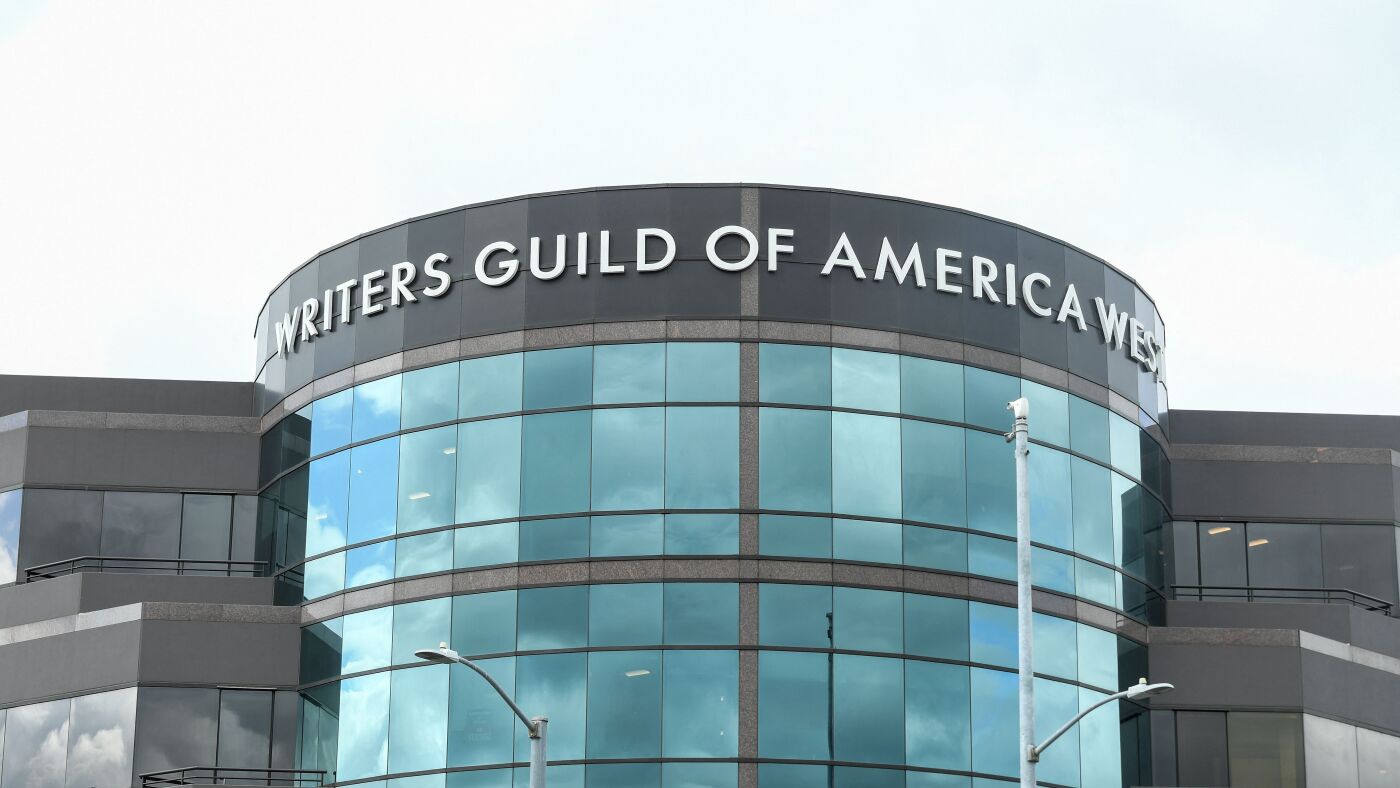
Hollywood studios reach a tentative agreement with writers union

Los Thuthanaka’s Wak’a is a mellower follow-up to last year’s surprise Pitchfork favorite

Surging UK Green Party pushes church-state split, critics warn of break from Britain’s Christian roots

Tax day is next week: Avoid these 5 common mistakes that can cost you money

Florida High School Football Rankings: Top 25 teams – Oct. 21

How old is Bo Nix? What to know about Oregon quarterback ahead of 2024 NFL Draft

Cleary's 21 help Le Moyne down Central Connecticut State 69-64 in OT

99th annual Pony Swim held in Virginia

Indiana Members Credit Union announced as new anchor tenant at Bottleworks District
Tax day is next week: Avoid these 5 common mistakes that can cost you money

Hamas armed wing says disarmament demands not acceptable

Trump issues fiery new threat against Iran as details of US aviator’s rescue emerge

DHS slams Democrat Sen Chris Van Hollen claim, says illegal alien caused crash while fleeing ICE

Zelenskyy warns US-Iran war could divert critical aid from Ukraine
-

 South-Carolina1 week ago
South Carolina vs TCU predictions for Elite Eight game in March Madness
-

 Atlanta, GA18 hours ago
1 teenage girl killed, another injured in shooting at Piedmont Park, police say
-

 Vermont1 week ago
Skier dies after fall at Sugarbush Resort
-

 Movie Reviews4 days ago
Vaazha 2 first half review: Hashir anchors a lively, chaos-filled teen tale
-

 Politics1 week ago
Trump’s Ballroom Design Has Barely Been Scrutinized
-

 Atlanta, GA1 week ago
Fetishist ‘No Kings’ protester in mask drags ‘Trump’ and ‘JD Vance’ behind her wheelchair
-
 Entertainment4 days ago
Inside Ye’s first comeback show at SoFi Stadium
-

 Politics1 week ago
JD Vance says he was ‘obsessed’ with UFOs, believes aliens are actually ‘demons’