Midwest
Illinois man loses job, dedicates life to traveling to all 195 countries

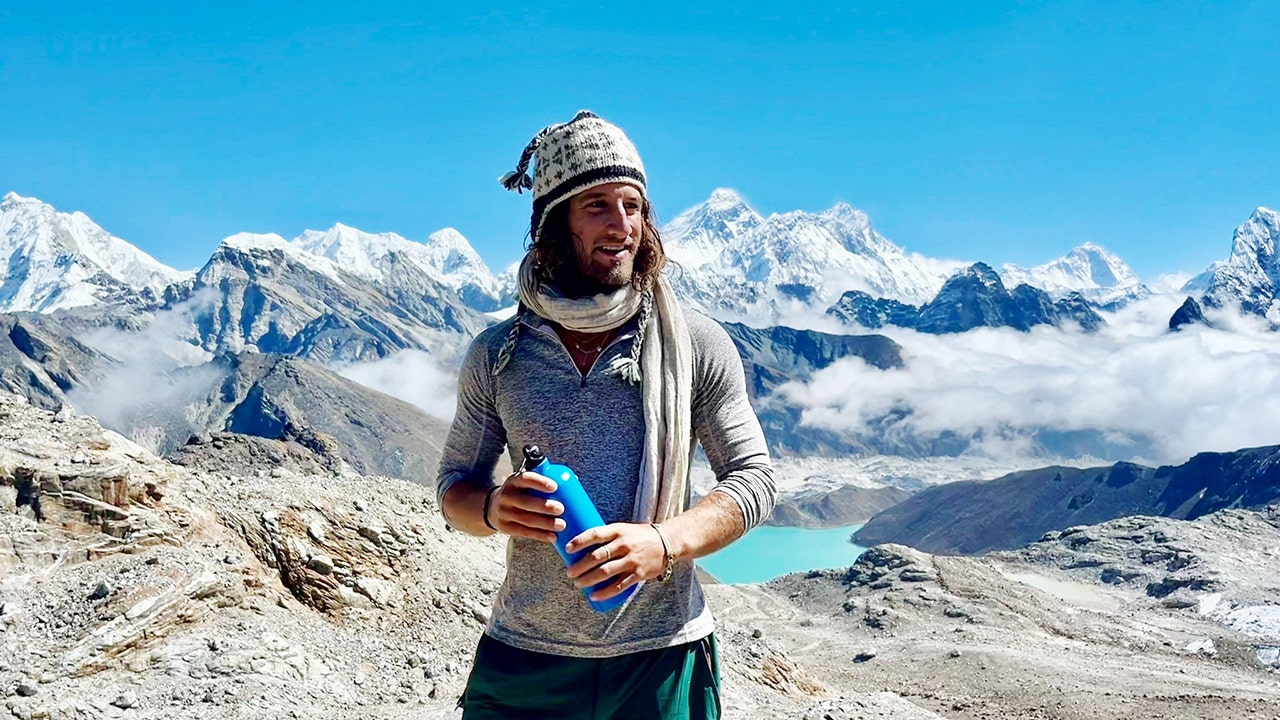
A man with a mission has set out to accomplish his goal of visiting all 195 countries in the world.
Connor Michalek is a 33-year-old blogger originally from Chicago, Illinois, who, at the age of 18, took a break from college to travel.
He told SWNS that he was studying economics at Texas Christian University when he decided to take a hiatus and travel to Bolivia.
COUPLE PULLS THEIR KIDS OUT OF SCHOOL TO TRAVEL THE WORLD: ‘SLOW DOWN AND LIVE IN THE MOMENT’
“I booked a trip to Bolivia and spent three months there staying with families,” he said, adding, “I really caught the travel bug from there — it [was] all about meeting new people and doing something out of [my] comfort zone.”
Connor Michalek (pictured here in Tunisia) lost his job at the end of 2022 and decided to travel full-time. (SWNS)
While there, Michalek organized homestays and took Spanish classes while also doing volunteer work.
Over the years, Michalek has never let his travel bug die.
He decided to take it to the next level after losing his job at the end of 2022.
CHICK-FIL-A EMPLOYEES FULFILL TEXAS COUPLE’S ALL-AMERICAN DREAM: ‘BUCKET LIST’
With a dream of visiting all 195 countries across the globe, Michalek chose full-time traveling as his next path.
“I flew into Morocco as it was a starting point where I could travel east around the world,” he told SWNS.
Michalek (pictured here in Nepal) said he’s always had a travel bug. (SWNS)
CAR IS BETTER FOR HOLIDAY TRAVEL THAN PLANE, MANY AMERICANS SAY
From there, Michalek went to Mauritania and Senegal before going to Tunisia and beyond to Europe.
Michalek, who said he saved money over the years and sold big-ticket items to fund the trip, said that although it’s been an amazing journey, it hasn’t always been smooth sailing.
Now, 55 countries in, Michalek can admit he’s put himself in some “dodgy situations.”
For more Lifestyle articles, visit www.foxnews/lifestyle
“In Senegal, we had problems at border control, but that was the only incident we ever had that was a problem for us,” he told SWNS.
Michalek, a travel blogger from Chicago, Illinois, has been to 55 countries (pictured here in Africa) and hopes to visit all 195. (SWNS)
Michalek loves the continent of Africa — stopping in 22 countries within the last year.
When in Malawi, Michalek helped raise awareness of HIV, saying that although “the people don’t have a lot, they are definitely rich in some aspects.”
Michalek told Fox News Digital that his favorite country to visit is Mexico for its beaches and tourist spots.
“The depth of its culture, with traditions and celebrations that go back centuries, is something you can feel in every place you visit,” he said.
Michalek (pictured here in the Sahara Desert) said that his travel journey hasn’t all been smooth sailing. (SWNS)
Next on his list is French Polynesia for Christmas before going to Austria to spend time with his partner’s family, he said.
Michalek believes there’s no better time to start traveling than when you’re young, saying, “When you’re young, you’re open, curious and still figuring out who you are.”
“If travel is something you’ve been dreaming about, make it happen now. The world has so much to teach us, and every experience, every challenge, every friendship you make along the way will be something you carry for the rest of your life,” he said.
“Embracing the unknown, stepping out of your comfort zone, and taking those risks will show you what life is really about.”
Other notable countries Michalek has explored include Peru, Albania, Croatia, Greece, Italy, Poland, Spain, India, Japan, Nepal, Turkey, Egypt and Mozambique.
Read the full article from Here



Detroit Pistons forced Game 7 with a 115-94 win over the Cleveland Cavaliers in Game 6 in Cleveland on Friday.
Pistons forced Game 7 with a 115-94 win over the Cavaliers in Game 6 in Cleveland on Friday.
Detroit — After staving off elimination Friday night at Rocket Arena, the Detroit Pistons will face the Cleveland Cavaliers at Little Caesars Arena on Sunday night, with the series tied 3-3. If the Pistons win Game 7, they will reach the Eastern Conference Finals for the first time since 2008 and will compete against the New York Knicks.
In preparation, the Pistons released their final injury report for the series, which lists Kevin Huerter, Caris LeVert, and Duncan Robinson as questionable for Game 7. LeVert (right heel contusion) and Robinson (lower back soreness) were listed as questionable ahead of the Pistons’ 115-94 Game 6 victory but played vital roles in the win.
Robinson returned to the lineup after missing Game 5 Wednesday night, finishing with 14 points while shooting 4-of-7 from behind the arc in 20 minutes. However, he returned from the injury by coming off the bench for the first time this season. Coach J.B. Bickerstaff chose to keep Daniss Jenkins in the starting lineup to assess Robinson’s condition.
Huerter has been listed as questionable for the third time since his return for a left adductor strain that forced him to miss seven consecutive games. He sustained the injury during the Pistons’ first-round series against the Orlando Magic. He played for three minutes in his comeback on Wednesday night but left the game shortly thereafter. Despite being available, Huerter did not play in Game 6.
However, the most significant reveal from the Pistons’ injury report was the noticeable absence of Jalen Duren. The All-Star center rolled his left ankle midway through the third quarter of Game 6 after colliding with Cavaliers guard James Harden.
Bickerstaff substituted Duren immediately for Paul Reed. He made a couple of trips to the locker room, but returned at the start of the fourth quarter. As a result, Duren had his most impactful game of the series, finishing with 15 points and 11 rebounds, including seven offensive rebounds and two blocks.
NBA Playoffs, second round: No. 1 Pistons vs. No. 4 Cavaliers
Series tied 3-3
Game 1: Pistons 111, Cavaliers 101
Game 2: Pistons 107, Cavaliers 97
Game 3: Cavaliers 116, Pistons 109
Game 4: Cavaliers 112, Pistons 103
Game 5: Cavaliers 117, Pistons 113 (OT)
Game 6: Pistons 115, Cavaliers 94
Game 7: at Detroit, Sunday, 8 p.m. (Amazon Prime)
coty.davis@detroitnews.com
@cotydavis_24

MILWAUKEE – The University of Wisconsin-Milwaukee’s 134th commencement ceremony is this weekend, and for one family, this year’s class proves to be extra special.
Son graduating with honors
What they’re saying:
“It just feels like it hasn’t set in quite yet, but once it does, I’m sure it’ll feel pretty good,” said Will Peters, who is graduating with honors in computer science and as a Wisconsin Army National Guard commissioned officer.
FREE DOWNLOAD: Get breaking news alerts in the FOX LOCAL Mobile app for iOS or Android
But there’s another milestone that makes this year’s graduation one that Peters will always remember.
Mother getting master’s degree
What they’re saying:
“He’s getting his undergraduate degree, and I’m getting my master’s degree in nursing,” said Mary Peters, Will’s mother.
That’s right: Both mother and son are crossing the graduation stage. Mary, a UWM academic program specialist as well, said she will cherish the moment forever.
“It’s just exciting, because I graduated from UW-Milwaukee with my nursing degree, my undergraduate, in December 2001,” she said. “I went back for my master’s degree, and I didn’t know that Will and I are going to be graduating the same day.”
Peters family Panther pride
Dig deeper:
Chris Peters is cheering them on, not only as father and husband, but also as a UWM faculty member and alumnus.
“We really hope that Will would carry on what became a family tradition of graduating from UWM. We believe in UWM, we believe that we got a very high-quality education,” he said.
Chris, Mary and Will Peters
Just like his wife, Chris graduated from UWM with a bachelor’s in nursing and eventually earned his doctorate while working for the university.
“I’m very proud of my wife and my son,” he said. “It’s got a lot of the resources of a large university, but it’s still small enough to know you by name and take care of people who needed it, and it’s been a great experience for the whole family.”
SIGN UP TODAY: Get daily headlines, breaking news emails from FOX6 News
For the Peters family, Panther pride will always run deep.
“We’re Panthers. We’re proud to work here. We’re proud to be alumni here. We’re proud of what UWM has done for us, and we’re now working for the opportunity to give back to the campus and the students,” said Chris.
The Source: FOX6 News interviewed the Peters family.
Minneapolis, MN
Minnesota’s Unsung State Park Unit Is An Idyllic Minneapolis Day Trip To Boat, Fish, And Hike – Islands

Minnesota is serious about its lakes. Their “Land of 10,000 Lakes” slogan isn’t an exaggeration. In fact, the true count is 11,842, based on their definition of what constitutes a lake, which Wisconsin likes to argue about with them. Regardless of whose definition you use, Minnesota has a lot of lakes to choose from, which means you can still find a little slice of solitary lakeside serenity if you know where to look. One of those places is Greenleaf Lake.
Idyllic Greenleaf is only about 1.5 hours from Minneapolis, and it’s never crowded — in fact, there’s a good chance you’ll have it all to yourself. Most of the bigger, more popular lakes, like Red Lake, Leech Lake, and Lake Superior’s shoreline, are in Minnesota’s northern half, several hours from the Twin Cities. But there’s no need to wander so far from urban amenities and the well-connected airport, when you can enjoy an idyllic day on Greenleaf Lake instead.
The state recreation area that protects this beautiful lake started as a grassroots effort to establish a state park within 30 miles of every Minnesotan. After years of work, the agreements, land acquisition, and funding all finally fell into place, and the park was transferred to the state in 2009. Almost 20 years later, the park is still an unassuming and peaceful place for a day trip from Minneapolis for those who don’t need much to enjoy the outdoors.
Enjoying Greenleaf Lake State Recreation Area
The first thing to know about Greenleaf Lake State Recreation Area is that this park embraces its primitive natural habitat. There are actually two lakes in the park, Greenleaf and Sioux, but there aren’t many facilities here beyond the peaceful, natural surroundings. The park’s entrance and only parking area is at Greenleaf Lake, which has a small boat launch, a fishing pier, and a few picnic tables, all surrounded by trees and vegetation. Enjoy a lazy morning of boating and fishing for panfish, pike, walleye, and largemouth bass on the lake, followed by a delicious picnic lunch while you read away the afternoon with only the birds to keep you company. Minnesota may be known for having some of the friendliest people in America, but you’re unlikely to run into more than a handful here. Quiet solitude awaits at this park.
The park’s one hiking trail begins at the parking area and winds just a mile through an open field and into a small forest south of Greenleaf Lake, before you’ll have to turn around and return the way you came. Bring insect-repellent clothes and spray to protect your skin, as bugs can be overwhelming in the warm seasons, and ticks are always a possibility in the woods. One Google reviewer described the trail as unwalkable due to the bugs. The rest of the park, including Sioux Lake, isn’t easily accessible. Most visitors won’t ever see Sioux Lake because there are no trails to it.
The lack of park facilities has turned off some visitors and contributed to some poor reviews on Tripadvisor. The people that leave Greenleaf Lake five-star reviews on Google are the ones that just enjoy being out in nature. If you prefer a Minnesota state park with more amenities, consider Lake Bemidji State Park instead.
Planning your day at Greenleaf Lake
While Minneapolis is one of America’s best cities for getting around without a car, you’ll need one to explore beyond the metro area. Getting to Greenleaf Lake State Recreation Area is easy with GPS, but don’t rely on following park signs once you get close. Visitors report there aren’t any on the small backroads that lead to the park. The entrance road is nothing fancy, a narrow dirt road that leads to a small parking area. If you’re visiting just to get your park passport stamp, it’s not actually at the park. It’s at the DNR office in Hutchinson.
Before arriving at Greenleaf Lake State Recreation Area, be sure to stop for a restroom break. There are no facilities, sometimes not even a porta-potty, at the park. The closest convenience stores are in Litchfield, Dassel, or Hutchinson, each about 15 to 20 minutes from the parking area at Greenleaf Lake. If you’re a seasoned backpacker and are prepared to do your business in the woods, make sure you follow Leave No Trace principles.
-

 New York9 minutes ago
Video: Long Island Rail Road Service Suspended as Workers Strike
-

 Los Angeles, Ca15 minutes ago
L.A. Jewish institution among targets of foiled terrorist attack, U.S. officials say
-

 Detroit, MI39 minutes ago
Detroit Pistons release injury report ahead of Game 7 vs. Cavaliers
-

 San Francisco, CA51 minutes ago
SF pet store owners prepare to fight as city plots ban on sale of live animals
-

 Dallas, TX57 minutes ago
FC Dallas vs San Jose Earthquakes: Lineup notes 📝
-

 Miami, FL1 hour ago
Miami Dolphins Discussion: Media Perception Edition
-

 Boston, MA1 hour ago
Mass General Brigham Sports Medicine provides free preseason physicals for Boston Public Schools – Boston News, Weather, Sports | WHDH 7News
-

 Denver, CO1 hour ago
Forget Denver, Retire To An Underrated Utah City Near Gorgeous Canyons Instead (And It’s Affordable) – Islands