Midwest
GOP Michigan rep accused of chasing an exotic dancer while brandishing a gun

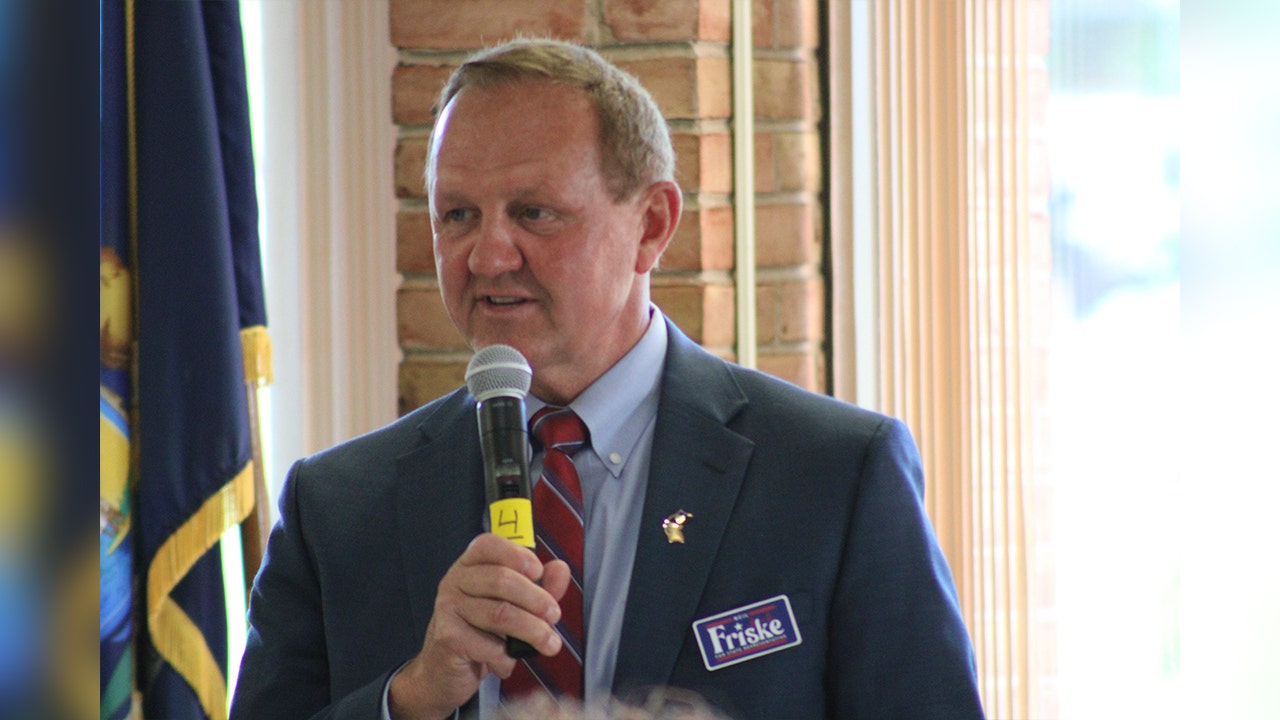
A Michigan state representative may face felony-level sexual assault and weapons charges after allegedly sexually assaulting an exotic dancer and then chasing her while brandishing a gun.
Republican state Rep. Neil Friske, 62, was released from the Lansing police lockup late Friday morning, The Detroit Free Press reported.
Friske allegedly “chased an adult dancer after a disagreement,” MIRS News reported, after police responded to reports of possible shots fired around 2:45 a.m. on Thursday.
MEET THE AMERICAN WHO CREATED HIGHWAY REST AREAS, ALLAN WILLIAMS, SMALL-TOWN ENGINEER
Michigan state Rep. Neil Friske was arrested after allegedly chasing an exotic dancer with a firearm early Thursday morning. Police are investigating a potential sexual assault, but no charges have been filed. (© Annie Doyle/Charlevoix Courier/USA Today Network)
He was arrested on Windbreak Lane near a condo he owns in Lansing. The dancer reportedly works or worked at the nearby Deja Vu Showgirls strip club, according to the outlet, which is the closest such club.
“We’re just saying no comment at this time,” the establishment told The New York Post.
On the scene, law enforcement learned of a “possible sexual assault of an adult female,” the office of Ingham County prosecutor John Dewane told the Free Press.
MICHIGAN SPLASH PAD SHOOTER IDENTIFIED AS 42-YEAR-OLD ‘LONER’ GOING THROUGH ‘MENTAL HEALTH CHALLENGES’
The alleged female victim worked at Deja Vu Showgirls in Lansing, MIRS News reported. (Google Maps)
Friske declined to comment as he left the Lansing police station on Friday, but his attorney Edwar Zeineh told the Free Press that “this is a case that is getting our full attention to show actual innocence.”
Records obtained Friday by the Free Press through the Michigan State Police criminal background service show that the Lansing department requested felony charges of sexual assault, assault and a weapons-related offense against the lawmaker.
But Friske has not yet been charged or arraigned, and it is unclear whether those are the charges he will face.
MULTIPLE INJURED, INCLUDING 2 CHILDREN, IN MICHIGAN SPLASH PAD SHOOTING; SUSPECT DEAD BY SUICIDE: AUTHORITIES
Dewane’s office wrote in a Friday press release that it has requested the department continue its investigation, and that prosecutors are coordinating with law enforcement on the matter.
Zeineh said his office will also be conducting a “very thorough investigation” and will provide its findings to the Ingham prosecutors so that officials can “make a very informed decision.”
Rep. Neil Friske, left, on the House floor, March 8, 2023. (© Matthew Dae Smith/Lansing State Journal/USA Today Network)
In a statement released on Facebook, Friske’s campaign wrote that the arrest was “highly suspect” considering that it took place “right before absentee ballots are released” and “a day after an unknown phone number conducted polling on the 107 race between Rep. Friske and our opponent with deep-state ties.”
“Rep. Friske is always exercising his 2nd Amendment right,” the campaign wrote. “We do not have any details beside what the media sourced, oddly before anyone of us knew anything.”
Friske faces a primary election challenge against Parker Fairbairn of Harbor Springs on Aug. 6, The Detroit News reported. The winner of the primary will be likely to win the general election in the Republican stronghold, which includes Charlevoix and Emmet counties and parts of Mackinac and Chippewa counties.
In a statement, Fairbairn said that despite his “abysmal and immoral voting record,” Friske is presumed innocent until proven guilty.
“He voted against protecting spouses from marital rape, voted against making child marriage illegal, voted against tax cuts for veterans — and just this past week, he voted against making it illegal to create AI ‘deep fake’ pornography using the likeness of our daughters and wives,” Fairbairn wrote in his statement. “Neil deserves his time in court, and the people of the 107th District deserve better than Neil.”
Friske, who is seeking his second term in the Michigan House next fall, is considered one of the more conservative members of the Legislature and is part of the House’s Freedom Caucus, which describes itself as “focused on traditional conservative values and individual liberty.”
After his release from lockup, his campaign wrote in a second Facebook post that they “are confident that he and his legal team will be able to show his innocence against any trumped up charges.”
Read the full article from Here

Illinois
As Illinois enters 10th year under Evidence-Based Funding model, equity remains an elusive goal

Article Summary
- After nine years of funding schools under the Evidence-Based Funding model, wealth-based disparities in per-pupil spending have largely evened out, but residents of low-wealth districts still pay significantly higher property tax rates.
- Since the adoption of EBF, annual state funding of public schools has increased by more than $3 billion. But 63% of districts are still funded at less than 90% of their adequacy target.
- School district officials in both rich and poor districts credit the EBF system focusing resources where they are needed most and providing more certainty in funding.
This summary was written by the reporters and editors who worked on this story.
SPRINGFIELD — Illinois has made progress in recent years boosting funding for schools that serve some of the state’s poorest communities and leveling out some, but not all, of the wealth-based disparities in per-pupil instructional spending.
But as Illinois enters the 10th year of financing schools under the Evidence-Based Funding model — a formula adopted in 2017 that was supposed to improve both the adequacy and equity of the state’s school finance system — wide disparities still exist in the property tax system that funds more than half the cost of K-12 education.
An analysis of school finance data by Capitol News Illinois covering the nine-year period from 2017 to 2025 shows homeowners in the lowest-wealth districts pay tax rates that are double those in the wealthiest districts.
The findings are largely consistent with those of other researchers who follow school finance issues nationally.
“Given the design of EBF and the evidence basis on which it was built, this is about what I would expect. I mean, it’s actually a little better than I would have expected,” Bruce Baker, a school finance researcher at the University of Miami, said in an interview. “To a significant extent, it leveled out the resources, but it, by no stretch of the imagination, brought the state to equal educational opportunity.”
Evidence-Based Funding
The Evidence-Based Funding formula came about after years of negotiations among legislators and stakeholders who were searching for a way to reform what many considered to be the most inequitable school funding system in the country.
“I have always talked about Pennsylvania and Illinois as being kind of the equity trainwreck states,” Baker said. “Connecticut has taken Illinois’ place in that role.”
At that time, according to State Report Card data, Illinois was spending about $7 billion a year funding public schools, less than one-fourth of the total $28.4 billion being spent by the state’s public schools. Federal funding provided another $2.1 billion, or 7.5% of the total.
But more than two-thirds of the total, $19.3 billion, came from local revenues, primarily property taxes.
Meanwhile, there were vast disparities across the state’s school systems, both in terms of the taxes they levied on property within their boundaries and the money they spent educating their students.
The aim of the new formula was to improve both the adequacy and equity of school funding in Illinois. That involved establishing an “adequacy target” for each district, using research-based evidence to estimate the cost of educating each student in a district.
The formula was predicated on the idea that some students are more expensive to educate than others. That meant the adequacy target had to account for such things as the poverty rate within a district, the percentage of its students from non-English speaking backgrounds, the number of students receiving special education services and regional cost of living differences, among other factors.
“A district that’s 60% to 70% kids from low-income households, 20 to 30% non-English speaking kids, that school or district might need 40%, 50% or even 100% more in spending per pupil than a district that has no kids from low-income families and no kids who are English learners,” Baker said. “The per-pupil spending really needs to be differentiated based on the costs to achieve common outcomes.”
The law then called for increasing state funding each year by at least $300 million and earmarking the bulk of that money for the districts furthest below their adequacy target, with the goal of eventually getting all districts up to at least 90% of adequacy.
It also called for funding $50 million each year in property tax relief grants to reduce levies in certain high-tax districts. Districts are awarded grants based on a formula spelled out in statute. Districts are expected to use the grant funds to abate taxes they would otherwise levy.
At Gov. JB Pritzker’s urging, lawmakers did not fund the grants in the fiscal year that just ended June 30 but instead passed a bill calling for the Illinois State Board of Education’s Professional Review Panel to file a report assessing the impact of the program.
That report was released in March. It found that from 2015 through 2023, total property taxes collections grew in almost every district in the state, although the growth was slightly lower in districts that had received the grants than those that did not.
Lawmakers renewed the grant program for the fiscal year that began July 1 but extended the period in which districts must use the funds to abate taxes to three years.
In the years since the EBF formula was adopted, overall annual state funding for schools has increased more than $3 billion, to an estimated $10.8 billion in the fiscal year that just began.
Out of 850 elementary, high school and unit school districts in the state, according to ISBE’s EBF distribution data, the number of districts that are funded at or above 90% of their adequacy target has grown from 194 in fiscal year 2018 to 313 in 2026.
Open chart in a new tab
But after nine years under the EBF model, that still leaves 537 districts, 63% of the total, funded at less than 90% of adequacy. ISBE reported during this year’s budgeting process that it would take an additional $3 billion to get all districts up to at least 90% of adequacy.
“We need more, and I have tried very hard, as you know, in very tight budget circumstances,” Pritzker said during a recent news conference. “We nevertheless increased funding for K-12 schools.”
But an analysis of school finance data covering the first eight years of the EBF formula shows the state has made only modest progress to improve the equity of its school finance system, either in terms of the taxes people pay to fund their local schools and the amount of resources those districts devote to classroom instruction.
Tax inequity
One of the hopes of the new funding system was that as state funding for schools increased, local districts would become less reliant on local property taxes.
At the time EBF went into effect, there were vast disparities among districts in terms of their relative wealth and the tax rates they levied.
According to data from the Illinois Local Education Retrieval Network, or ILEARN, in fiscal year 2017, the year before EBF took effect, district wealth ranged from a low of $20,449.57 in taxable property valuation per pupil to a high of $2.47 million.
Property tax rates among the districts also varied widely, from a low of $1.14 per $100 of equalized assessed valuation, or EAV, to a high of $21.82.
According to the data, people in the poorest 10% of districts in the state paid an average tax rate of $5.39 per $100 of EAV. That was more than double the average tax rate in the wealthiest 10% of districts, which was $2.50 per $100 of EAV.
Using a statistical tool known as regression analysis, the data showed that for every $10,000 increase in a district’s per-pupil property wealth, there was a corresponding $0.028 decrease in its property tax rate. And while other factors also influenced a district’s tax rate, property wealth explained 21% of the variation.
By 2025, the eighth year of the EBF formula, data from school districts’ annual financial reports showed those disparities had eased only slightly.
There was still wide variation in tax rates among school districts, from a low of $19,580 to a high of $3.3 million.
From 2017 through 2025, the average tax rate among the poorest 10% of districts fell considerably, to $4.81 per $100 of EAV. But that was still more than twice as high as the average tax rate among the wealthiest 10%, which was $2.40 per $100.
Open chart in new tab

Differences in per-pupil property wealth still explained about 21% of the variation in tax rates but the relationship was not as severe. In 2025, for every $10,000 increase in property wealth, there was a corresponding $0.018 decrease in tax rates.
Spending inequity
One area where Illinois appears to have made more progress is in directing new resources to districts serving large numbers of high-needs students.
The EBF formula is predicated on the idea that some students are more expensive to educate than others. The additional cost of educating those students — including low-income students, English language learners and students receiving special education services, among others — is used as a factor in calculating each district’s adequacy target and, eventually, how much new money they receive each year.
To measure how effectively Illinois was directing resources to high-need districts, CNI compared each district’s instructional expenses per-pupil with its percentage of low-income students, as reported in the ISBE’s annual Report Card data.
ISBE defines instructional expenditures as “the direct costs of teaching pupils or the interaction between teachers and pupils.” Low-income students are defined as those “who receive or live in households that receive Supplemental Nutrition Assistance Program or Temporary Assistance for Needy Families benefits; are classified as homeless, migrant, runaway, Head Start, or foster children; or live in a household where the household income meets the U.S. Department of Agriculture income guidelines to receive free or reduced-price meals.”
In 2017, the year before EBF took effect, there were wide wealth-based gaps in instructional spending across all school districts in Illinois.
At that time, instructional spending averaged about $7,320 per pupil statewide. The average among elementary districts was below that level, at $6,822, while high school districts the average was $9,224.
Within elementary districts, however, the wealthiest 10% — those with the lowest percentage of low-income students — instructional spending per-pupil was 39% higher than it was among the poorest 10%.
Among high school districts, the wealthiest districts spent 29% more on average than the poorest districts.
Among unit districts, however, there was little difference in spending levels between wealthy and poor districts.
By 2025, the eighth year of the EBF program, the spending picture had changed considerably.
Open chart in new tab
First, the infusion of $3 billion in additional annual state funding boosted instructional spending across the board. That year, the statewide average was $10,601 per pupil, a 45% increase over 2017 levels.
In addition, many of the wealth-based disparities had been erased.
Among unit districts, the poorest 10% of districts actually spent about 29% more per-pupil on instruction than the wealthiest. Among elementary districts, spending levels were about even between rich and poor districts.
Among high school districts, however, wealth-based disparities persisted. There, the richest 10% of districts continued to spend about 29% more per-pupil on instruction than the poorest districts.
Chris Johnson, deputy superintendent at New Trier Township High School District in northern Cook County, one of the wealthiest districts in the state, acknowledged in an interview that his district is fortunate to have more than adequate resources. But he said that is not the fault of the EBF system.
“We were 91% funded by local property taxes, and so we have a long history of our community generously committing to support our schools,” he said.
In 2025, New Trier ranked third in the state among high school districts for per-pupil instructional spending, at just over $21,000. Its property tax base was also among the highest, at nearly $1.9 million per pupil, and it had one of the lowest property tax rates, at $1.92 per $100 of equalized assessed valuation.
As a result, New Trier receives very little state funding through EBF, which is designed to prioritize the neediest districts. But Johnson, who wrote his doctoral dissertation on the implementation of EBF, said he supports the system and believes it is performing as it was intended.
“It’s brought more money to Illinois school districts, and it’s done it in an equitable way that focuses on the districts that need the most support,” he said.
“What I found in my dissertation was that the function codes — the ways the district spent the money in their budgets — were aligned with the rationale for passing law,” Johnson said. “So, the categories in school district budgets related to instruction grew at a faster rate than expenditures related to some of the administrative and other expenses.”
One district official in a smaller rural school district said the EBF model was probably more useful in helping larger districts quantify their needs. “But like for ours,” he said, “it tells us that we need a 0.2 school psychologist and a 0.1 social worker. I can’t do a point one person.”
Overall, that official said the biggest benefit the EBF system has provided his district is greater certainty that state funding will arrive on time.
“I like the guaranteed money, you know. Making sure they’re gonna send us some money,” he said.
Some lawmakers, however, have expressed growing frustration with the slow progress being made in bringing all districts up to adequate funding levels.
Sen. Graciela Guzmán, D-Chicago, introduced legislation this year calling on the state to fund all districts at 100% of their adequacy target. Although the bill never advanced out of committee, it did receive serious discussion during one committee hearing in May.
“If the state says that a service is required, the state should fund it,” Guzmán said during that hearing. “And then if the state has defined what adequate education looks like, the state should also fund that. So, if we’re serious about equity, property tax relief and supporting public schools across Illinois, then we have to stop treating underfunding as if it is normal.”
How we reported this story
This story is based on analysis of publicly available data from several datasets maintained by the Illinois State Board of Education.
Information about school district property valuations and tax levies for fiscal year 2017 was obtained from the Illinois Local Education Agency Retrieval Network, or ILEARN. According to ISBE, there is a two-year lag in reporting that data. Therefore, the FY 2017 data was obtained from the FY 2019 report.
Property valuation and tax levy data for fiscal year 2025 was obtained from individual districts’ annual financial reports filed with ISBE. At the time this analysis was performed, data was available from 746 of the state’s 850 elementary, high school and unit districts.
Information about school districts’ instructional spending and low-income population was taken from annual report card data, available from ISBE’s Report Card Data Library.
Capitol News Illinois is a nonprofit, nonpartisan news service that distributes state government coverage to hundreds of news outlets statewide. It is funded primarily by the Illinois Press Foundation and the Robert R. McCormick Foundation.

Fairfield native, David K. Wells, 69, and his wife Aileen, were found dead inside their home in Newburgh, Indiana, Monday night. Warrick County Sheriff Michael Wilder said that deputies responded to the residence just before 8:00 p.m. after dispatch received a call around 7:40 p.m. from a friend of the family requesting a welfare check. When officers didn’t get an answer at the door, they entered through the back of the home and found the couple deceased. Officers cleared the home and waited for detectives to arrive. Investigators also obtained a search warrant to do a further examination of the residence. Authorities were able to notify family members and conduct interviews to gather additional information. Sheriff Wilder said investigators believe the couple had been dead for less than 24 hours before they were found. He also said there is no indication of any forced entry or an intruder. Sheriff Wilder has not made a formal determination as to what happened. Autopsies for the couple were scheduled for yesterday morning to help determine a cause. David Wells grew up in Fairfield and graduated from Fairfield High School in 1975. He had a long career in television commercial production in Evansville and had more recently operated the Cigar! Cigar! tobacco store in Evansville.

‘MasterChef’ winner and son rate 2025 Iowa State Fair foods
‘MasterChef’ Grant Gillon and his son Grady decide once and for all which is the best 2025 Iowa State Fair dish.
Summer at the Iowa State Fair has always been a celebration of Iowa’s appetite for fun, flavor and a little bit of culinary chaos.
On July 7, the Iowa State Fair revealed 84 new dishes served at the 200-plus food stands on the fairgrounds. And while the fair has always had an appetite for foods on a stick, novelty creations and glorious gut busters, the 2026 lineup pushes that spirit further than ever.
This year’s new foods reflect a fair in full technicolor: patriotic desserts exploding with red‑white‑and‑blue pride, global flavors stretching from Hawaii to Vietnam and over‑the‑top creations engineered for the camera as much as the palate. Strawberries dominate the sweets scene, butter becomes a starring ingredient and bison quietly emerges as the protein of the moment. Even classic comfort foods get a modern remix, whether wrapped in frybread, dipped in chocolate or topped with jalapeño heat.
Together, these dishes tell a story of a fair that’s evolving into louder, brighter and more playful dishes while still rooted in Iowa’s love of indulgence, nostalgia and big summer flavor. Here are the 10 trends defining the 2026 Iowa State Fair.
Hyper‑patriotic foods take over
This year, the Iowa State Fair celebrates America’s 250th birthday with a patriotic Fair Spirit theme that includes a massive 250-flag display, a “Spirit of ’76” historical exhibit, nightly drone shows and special events, as well as an official America 250 Tree and the Iowa Veterans Memorial Walkway on Expo Hill.
The State Fair’s 250th‑anniversary theme shows up everywhere, especially in desserts. Red‑white‑and‑blue sprinkles, flag toppers and “1776” branding dominate the fairgrounds.
Look for 1776 Dubai strawberries, dipped in a rich, creamy pistachio-tahini paste and crunchy toasted kataifi (shredded phyllo pastry) for $19 from The Strawberry Station. The Dairy Zone offers patriotic nachos, a sweet treat with waffle chips and vanilla ice cream, drizzled with cherry and blue raspberry dips, topped with whipped cream and festive red, white and blue star sprinkles for $10.
Bubbly Bar has Parmesan ice cream, a nod to an 18th-century sensation that combines the rich, nutty flavor of aged Parmesan with smooth, creamy ice cream. Bubbly layers in tart cherry and buttery pound cake for a Revolutionary-era treat for $14.
Over the Top goes patriotic with Sweet Americana, featuring strawberry shortcake, lemon bar and blueberry crisp ice creams, each topped with a shortcake cookie, a lemon bar square and chocolate-covered blueberries for $13.
Another sweet dish, the Star Spangled Frybread, comes with a sweet glaze, topped with festive red, white and blue sprinkles and finished with a light dusting of powdered sugar from Its Dough Time for $12.
On the savory side of the menu, Blue Ribbon Bar & Eatery has the 1776 Liberty Bowl with a sourdough bread bowl loaded with cheese curds, French fries and slow-roasted shredded beef, all smothered in gravy and topped with hand-breaded onion rings. Try it for $15.
This is the most overtly patriotic menu the fair has produced in years.
Chocolate‑covered everything
Chocolate is the year’s dominant sweet, whether it’s poured, drizzled, dipped or smothered.
Try Belgian chocolate-covered strawberries from The Strawberry Station for $17 or an affogato, an espresso ice cream drink drizzled with chocolate (or caramel), at the Biscuit Bar for $8.
The Iowa Specialty Crop Growers Association slathers its Strawberry Bliss in chocolate. A buttery shortbread cookie comes topped with a strawberry and a cloud of meringue. The entire creation is covered in milk chocolate, drizzled with white chocolate and finished with a sprinkle of fresh-cut strawberries. Try it for $8.
Chocolate + fruit + spectacle is a clear 2026 signature.
Sweet‑heat mashups
Spicy‑sweet combos are bigger, bolder and more chaotic than ever.
Make your dessert fiery with the Firecracker Churros from Applishus with Lola’s jalapeno and habanero pepper spice sauce, honey molasses and sugar topped with an apple butter and cream cheese dip for $10.
Maybe one of the craziest concoctions at the fair is the Cajun Cluck ’N’ Chaos, a Cajun-style chicken sloppy joe with crunchy sweet pepper coleslaw and fiery spicy pickles topped with a skewer stacked with a tangy pickled egg and extra pickles, finished with a cloud of lime-infused pickle cotton candy. It all comes on a brioche bun at Cluckin’ Coop for $14.
Cowboy Candy from Stockman’s Inn brings sweet and spicy breaded jalapenos for $5.
Whatcha’ Smokin BBQ returns with Star Spangled Swine with pork belly with an apple chipotle rub and Big Red soda glaze rolled in blue and white honey crystals for $15.
While this trend marks a continuation of the fair’s love affair with spicy‑sweet combos, this year they’re more extreme.
Cheese goes maximalist
Cheese isn’t a garnish — it’s the headliner in 2026, with dishes with the dairy product as the main event.
Start with America’s “Berry” Good Grilled Cheese from What’s Your Cheez for $16. It combines several trends with a sweet and savory grilled cheese made with caramelized brioche bread, stuffed with blueberry white cheddar, layered with tart raspberry amaretto jam and blueberry bourbon jam, then stuffed with crispy candied pork belly that has a touch of sweet heat. Patriotic, sweet and savory, maximalist and cheesy all in one dish.
Cheese takes center stage with the Mozza‑Tini from DG – Destination Grille for $10. These hand-breaded gluten-free mozzarella sticks come with warm vodka sauce, jalapeno ranch drizzle and fresh parsley. Spicy and sweet come together with cheese.
The garlic dill pickle cheese curds from Brad & Harry’s Cheese Curds for $9 combine the food stand’s two most popular flavors, garlic and dill pickle.
Strawberries are the star fruit
Strawberries appear in more new food dishes than any other fruit. Often, they are paired with chocolate or patriotic themes.
The 1776 Dubai Strawberries at The Strawberry Station, the Strawberry Bliss at the Iowa Specialty Crop Growers Association and Sweet Americana at Over the Top are just some of the dishes offered at the fair.
This mirrors national trends. Strawberries are having a moment.
Global fusion expands
Hawaiian, Vietnamese, Salvadoran and Mexican influences make this the fair’s most international menu yet.
New dishes include Saigon birria pupusa from Saigonais Cuisine for $10. A pupusa comes filled with pho-braised brisket and melted cheese, served with a hoisin birria consommé for dipping. “Just as Iowa’s heritage has been built by generations of people bringing their own stories and traditions to the table, the Saigon birria pupusa brings Salvadoran, Vietnamese and Mexican flavors together in one dish. It is a tribute to the fair spirit — a celebration of unity, heritage and the American tradition of creating something greater together,” the fair said of the dish.
A taste of Hawaii brings spam musubi to Kama’aina Grill for $5. This fusion food combines American spam with Japanese musubi (rice ball) techniques. The stand also has Kama’aina Bento for $23. The plate lunch from Hawaii features teriyaki beef, fried saimin noodles, spam or garlic chicken served with rice and macaroni salad.
Bao Bao’s Tanghulu brings tanghulu, a Chinese street food of candied fruit on a stick, for $12.
GoldenKDog brought Korean hot dogs to the fair in 2025. This year, they introduced the Cinnamozza Kdog, a mozzarella cheese Korean corn dog dunked in salted butter, sprinkled with cinnamon sugar and topped with Cinnamon Toast Crunch for $18.
Dessert spectacle rules
Desserts are bigger, brighter and built for social media. These over-the-top dishes are shareable, both with another person and on Instagram.
Oreo Overload Nachos from Dairy Zone for $10 start with waffle chips piled around vanilla ice cream, hot fudge topped with crushed Oreo cookies for dipping and whipped cream. Dairy Zone suggested dipping the waffle chips into the sundae.
The deep-fried cookie dough pie from Minneapple Pie comes with vanilla or cinnamon ice cream for $12.
The walking taco goes dessert-style with the walkin’ Oreo sundae for $9 from Wonder Bars.
If combining savory and sweet is your thing, try the Ultimate Bacon-Brisket Mac & Cheese Donut. The $7 snack from The Rib Shack starts with mac and cheese loaded with bacon and brisket that’s breaded in a cake-style coating and finished with a sweet barbecue glaze. Not enough? It’s topped with chopped brisket and garnished with a slice of fresh jalapeno. You can nab six for $30.
Dessert nachos, dessert doughnuts and dessert frybread add up to the fair pushing “dessert as spectacle.”
Bison and pork dominate the protein scene
The Iowa Pork Producers lead the way with pork dishes at the Iowa State Fair. The fair estimates it sells 46-50,000 of its famous Pork Chop on a Stick during the 11-day event. But save room for some new riffs on pork that appear in 2026, including the Porky Pileup at the Stockman’s Inn for $15. The dish features fries layered with pulled barbecue pork, mac n’ cheese and cowboy beans topped with bacon bits.
Kalua pork appears at Kama’aina Grill as a plate lunch with rice and macaroni salad for $18, as well as in a poke bowl for $23.
DG – Destination Grille has the Porky Parm Gnocchi, a gluten-free potato gnocchi and Graziano sausage tossed in a house-made AE cream Parmesan sauce with a pesto drizzle and shaved Parmesan, all topped with an America 250th year flag and a souvenir piggy pal for $14. Note that everything at DG – Destination Grille is gluten-free.
Bison, though, is emerging as the breakout starring protein. Newcomer Sleepy Bison Grill has a bison burger for $13, a bison cheesesteak slider for $11 and bison nachos for $14.
Butter becomes a flavor
The Iowa State Fair is famous for its Butter Cow made with approximately 600 pounds of low-moisture, pure cream Iowa butter. In 2011, the fair turned food media on its collective head with the deep-fried butter on a stick from concessionaire Larry Fyfe. The indulgent dish featured frozen butter dipped in honey-cinnamon batter, deep-fried and topped with a powdered sugar glaze.
In 2026, butter is a micro-trend, with the butter-dipped ice cream cone from Coney Corner for $6 that swaps out chocolate for a buttery hard shell encasing vanilla soft serve.
That Cinnamozza Kdog comes with a salted butter dunk. And buttery desserts feature shortcake, pound cake and even Biscoff cookie butter cheesecake funnel cake from McGrath’s Funnel Cakes for $15.
Chaos foods define the fair
Maximalist, hybrid, over‑the‑top creations are now a fair signature, and the new dishes in 2026 do not disappoint. The Cajun Cluck ’N’ Chaos at Cluckin’ Coop and Ultimate Bacon‑Brisket Mac & Cheese Donut at The Rib Shack certainly fall into that category.
One of the most expensive dishes at the Iowa State Fair brings caviar and chicken nuggets from JR’s SouthPork Ranch for $99 that blends childhood nostalgia with pure luxury. JR’s calls it “a little bit county fair, a little bit Champagne lifestyle and 100% conversation starter.” Coqodaq, a Korean-inspired fried chicken restaurant in New York, served this dish during the 2025 U.S. Open, and McDonald’s followed with a Valentine’s Day special that combined McNuggets with caviar. Now, the trend hits Iowa.
Sign up for our dining newsletter, Table Talk DSM, which comes out on Wednesday mornings with all the latest news on restaurants and bars in the metro. You can sign up for free at DesMoinesRegister.com/tabletalk.
Susan Stapleton is the entertainment editor and dining reporter at The Des Moines Register. Follow her on Facebook, Twitter, or Instagram, or drop her a line at sstapleton@gannett.com.
-

 Colorado3 minutes ago
United Way of Southern Colorado raises over $400,000 for Aspen Acres Fire victims:
-

 Connecticut8 minutes ago
This Underrated Connecticut Town Is Getting National Recognition as One of the Best Places to Live
-

 Delaware15 minutes ago
Plans advance for Delaware city’s first Chick-fil-A restaurant
-

 Florida18 minutes ago
Summer Scheming ‘26: Florida State Seminoles
-

 Georgia23 minutes ago
Travel and Leisure listed unique experiences in each state, including GA
-

 Hawaii30 minutes ago
Three West Hawaii sex offenders arrested – West Hawaii Today
-

 Idaho33 minutes ago
Idaho Power crews respond to outage affecting 2,163 customers in Canyon County
-
Illinois45 minutes ago
As Illinois enters 10th year under Evidence-Based Funding model, equity remains an elusive goal

