Midwest
Delphi murders trial: Jury reaches verdict for suspect Richard Allen after deliberating for 4 days

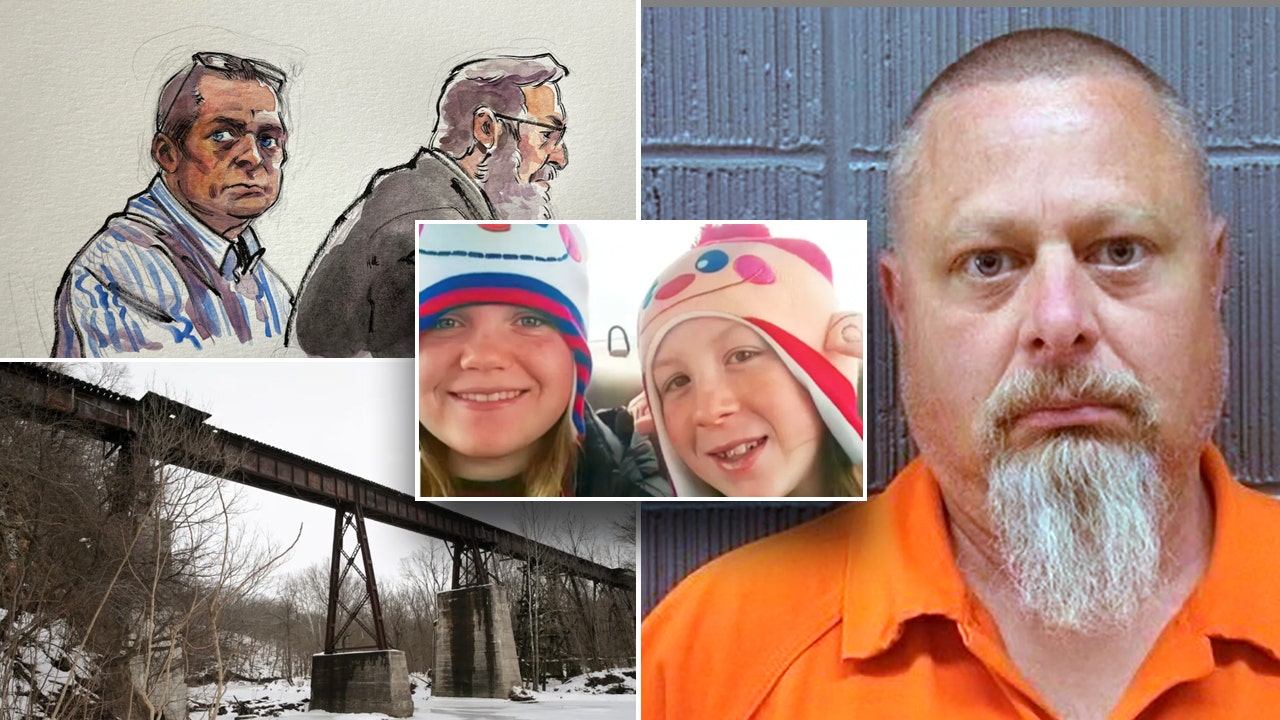
An Indiana jury on Monday afternoon found double-murder suspect Richard Allen guilty on all charges in the February 2017 killings of two teen girls who had been walking on a hiking trial in Delphi, known as the Delphi murders.
The case had been more than seven years in the making since Abigail “Abby” Williams, 13, and Liberty “Libby” German, 14, disappeared during their walk on Feb. 13, 2017, and investigators found them both brutally murdered the next day with sticks covering their bodies in a wooded area near the High Monon Trail.
Allen was convicted of two counts of murder and two counts of felony murder. He will be sentenced on Dec. 20, according to media pool reporting, and faces up to 130 years in prison.
Prosecutors pointed to various evidence that placed Allen at the scene at the time of the crime, including an unspent bullet at the crime scene matching a firearm recovered from Allen’s home in 2022, as well as the dozens of confessions he made in prison, according to FOX 59 Indianapolis.
Allen’s defense leaned largely on expert analysis showing Allen’s unhealthy mental state after his 2022 arrest, which took the Delphi community as a surprise at the time. Allen had been a longtime CVS employee in the small Indiana town when police took him into custody five years after the murders.
DELPHI MURDERS SUSPECT’S CONFESSIONS TO WIFE, MOTHER SOUNDED ‘CALM,’ EXPERT SAYS: ‘NOT WHAT I EXPECTED’
Officers escort Richard Allen out of the Carroll County courthouse after a hearing, Nov. 22, 2022, in Delphi, Ind. (AP Photo/Darron Cummings)
Near the conclusion of Allen’s trial, the defense presented testimony from a former FBI forensic expert who said it appeared as though someone plugged headphones into Libby’s phone, which was discovered near the girls’ bodies on Feb. 14, at 5:45 p.m on Feb. 13., hours after they were last seen.
The headphones were then removed from the phone at 10:32, Stacey Eldridge testified, presenting a possible challenge to the prosecution’s timeline that they were killed around 2:30 p.m. on Feb. 13, according to FOX 59.
DELPHI MURDERS SUSPECT CONFESSED TO KILLING 2 GIRLS ON HIKING TRAIL IN SMALL TOWN, PRISON DOC SAYS
Indiana State Police Superintendent Doug Carter gives an update on the Delphi murders investigation, April 22, 2019, at the Canal Center in Delphi. (Nikos Frazier/Journal & Courier/USA TODAY NETWORK)
Carroll County prosecutor Nick McLeland told jurors in his opening statement that when searchers found the two girls in a wooded area near the Monon High Bridge, Libby was naked and covered in blood. Both girls had their throats cut several times, FOX 59 reported.
Other articles of clothing were mismatched or thrown into the nearby Deer Creek, McLeland said. Abby was wearing her own undershirt but Libby’s sweatshirt. She was also wearing jeans and shoes, but her socks were missing. One of Libby’s shoes and Libby’s cellphone were found under Abby’s body.
SIGN UP TO GET THE TRUE CRIME NEWSLETTER
Snow covers the water of Deer Creek below the Monon High Bridge, Feb. 9, 2022, in Delphi, Ind. (Nikos Frazier/Journal & Courier/USA TODAY NETWORK)
One key piece of evidence presented during the trial was a video Libby recorded on her phone at some point before she and Abby were killed.
DELPHI MURDERS TRIAL: ‘BRIDGE GUY’ EMERGES AS NEW CRIME SCENE EVIDENCE PRESENTED
For the first time since the girls were reported missing, jurors got to watch 43 seconds of the crucial video in court on Oct. 22. The video shows Libby and Abby walking with an unknown man wearing a hat and blue utility jacket who has become known over the last five years as “Bridge Guy.” Libby captured the video at 2:13 p.m., less than 25 minutes after she and Abigail’s family members dropped them off at the trail.
“Guys, down the hill,” the man can be heard saying to the girls in the video.
FOLLOW THE FOX TRUE CRIME TEAM ON X
In this courtroom sketch, Richard Allen, left, is seated next to one of his defense attorneys, Andrew Baldwin, inside the Carroll County Courthouse in Delphi, Ind., on Nov. 2, 2024. (Li Buszka via AP/Pool)
Allen admitted in one jailhouse confession that he did order the girls “down the hill.” He also repeatedly confessed to killing the girls, apparently saying he wanted to rape the girls but was spooked by a van driving nearby, at which point he decided to kill them.
His attorneys said his declining mental stability led him to make false statements behind bars.
DELPHI MURDERS TRIAL: SUSPECT RICHARD ALLEN’S ATTORNEYS MAKE STUNNING REVELATION ABOUT HAIR AT CRIME SCENE
Delphi police recovered Libby’s cellphone under her body on Feb. 14, 2017. (FOX Nation)
Also, witnesses who testified during Allen’s trial said they saw Allen on or around the High Monon Trail on Feb. 13, around the time the girls disappeared.
More than five years after their deaths, investigators executed a search warrant of Allen’s home in Delphi on Oct. 13, 2022, and they recovered a blue Carhartt jacket, a SIG Sauer P226 .40-caliber semiautomatic handgun and a .40-caliber S&W cartridge in a “wooden keepsake box” from a dresser between two closets in Allen’s bedroom, according to authorities.
The handgun recovered at Allen’s home was consistent with a .40-caliber unspent bullet police found at the site of the murders in 2017, police said.
GET REAL TIME UPDATES DIRECTLY ON THE TRUE-CRIME HUB
The defense previously argued in court documents that members of an Odinist cult had killed the girls in a ritualistic sacrifice, but a judge ultimately decided not to allow evidence pertaining to that theory in court during the trial. It is possible that they may get to argue the Odinist theory on appeal, according to attorneys who spoke to Fox News Digital.
Fox News’ Patrick McGovern and Kailey Schuyler contributed to this report.
Read the full article from Here

The South Dakota Lottery offers multiple draw games for those aiming to win big.
Here’s a look at June 27, 2026, results for each game:
Winning Powerball numbers from June 27 drawing
03-16-28-30-59, Powerball: 11, Power Play: 2
Check Powerball payouts and previous drawings here.
Winning Lotto America numbers from June 27 drawing
03-08-18-22-39, Star Ball: 06, ASB: 02
Check Lotto America payouts and previous drawings here.
Winning Dakota Cash numbers from June 27 drawing
02-21-25-30-32
Check Dakota Cash payouts and previous drawings here.
Winning Millionaire for Life numbers from June 27 drawing
26-32-38-51-52, Bonus: 05
Check Millionaire for Life payouts and previous drawings here.
Feeling lucky? Explore the latest lottery news & results
Are you a winner? Here’s how to claim your prize
- Prizes of $100 or less: Can be claimed at any South Dakota Lottery retailer.
- Prizes of $101 or more: Must be claimed from the Lottery. By mail, send a claim form and a signed winning ticket to the Lottery at 711 E. Wells Avenue, Pierre, SD 57501.
- Any jackpot-winning ticket for Dakota Cash or Lotto America, top prize-winning ticket for Lucky for Life, or for the second prizes for Powerball and Mega Millions must be presented in person at a Lottery office. A jackpot-winning Powerball or Mega Millions ticket must be presented in person at the Lottery office in Pierre.
When are the South Dakota Lottery drawings held?
- Powerball: 9:59 p.m. CT on Monday, Wednesday, and Saturday.
- Mega Millions: 10 p.m. CT on Tuesday and Friday.
- Lucky for Life: 9:38 p.m. CT daily.
- Lotto America: 9:15 p.m. CT on Monday, Wednesday and Saturday.
- Dakota Cash: 9 p.m. CT on Wednesday and Saturday.
- Millionaire for Life: 10:15 p.m. CT daily.
This results page was generated automatically using information from TinBu and a template written and reviewed by a South Dakota editor. You can send feedback using this form.
Wisconsin
The retired college professor fighting a $313 trespassing ticket in Wisconsin thinks he’s part of a national struggle | Fortune

“Lake Michigan has sort of got a personality,” Paul Florsheim said wryly, as if describing an old friend rather than the center of a legal battle that has consumed the last year of his life. “It changes its moods all the time. I go all throughout the year, even in the bitterest part of winter, because it’s just beautiful down there. You have these ice flows, and they’re sort of like volcanoes, and the waves come crashing through these structures. It’s like another world.”
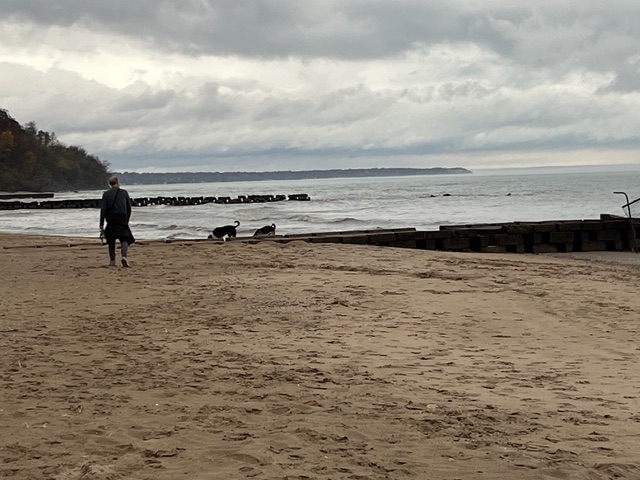
Florsheim has been walking that world, a stretch of the Lake Michigan shoreline in Shorewood, Wis., a small village north of Milwaukee, for more than 50 years, since his childhood. He walked it with his parents. He walked it when he returned to his hometown in 2008 after 30 years away. He walked it with his dog in the early mornings, before anyone else was out, in every season.
Courtesy Florsheim’s stepdaughter Jessica Lakind and her mother Marcy Lichterman
And when the recently retired UW-Milwaukee professor walked the route last year, the Village of Shorewood issued him a $313 trespassing ticket for doing so. Now, he’s one face of a growing trend: America’s public waterfronts are increasingly … less so.
Florsheim’s legal fight is winding its way through the Milwaukee County Circuit Court, on his way, he hopes, to the Wisconsin Supreme Court. Florsheim thinks the stakes are considerably larger than one man’s morning walk. He sees the same dynamic at work in the Texas Supreme Court’s June 19 ruling that handed Elon Musk’s SpaceX effective control over Boca Chica Beach—known locally as “poor man’s beach”—and in the wave of data center projects now competing for access to Great Lakes freshwater.
“If we don’t stand up for what is ours, sort of collectively ours, we’re going to regret it down the road,” he told Fortune.” People don’t want to give up what belongs to them, just as members of the citizenry. And I do think that’s what’s resonating right now.”
Exclusivity in the public realm
Florsheim’s case began when his neighbor—a dentist who built a boathouse on the beach and monitored foot traffic from it—began calling cops on walkers. When Shorewood issued him the ticket, Florsheim’s first instinct was to fight it. When the village lawyer called before the Dec. 2024 trial and encouraged him to settle, warning of mounting court fees, Florsheim declined. When the trial began, it drew a packed courtroom, and the NPR member station story previewing it became the most-read piece in the station’s history, per Florsheim.
He’s well aware about what makes his case unusual. “A water policy professor at UW told me, ‘I’ve been waiting for a case like this my whole life.’ And I said, ‘What do you mean? This must happen all the time.’ She said, ‘No, it doesn’t. People probably get tickets with some regularity for walking on the private part of the beach, but nobody fights them.’” The retired professor, the grandson of the founder of Florsheim Shoes, paused: he had the resources to lead the charge. “The average person would not be doing what I’m doing. I’m retired, so I have the time. Would I be doing this if I was hiring a lawyer? The honest answer is probably no.”
Courtesy Florsheim’s stepdaughter Jessica Lakind and her mother Marcy Lichterman
Wisconsin, like most states, recognizes the “Ordinary High Water Mark”—the line where exposed shoreline ends and open water begins—as the boundary of public ownership. But where many states allow the public to cross private beachfront in transit to reach those publicly held waters (also known as “riparian” access) Wisconsin grants landowners exclusive control over that strip of shoreline. You can boat, fish, or swim freely if you’re in the water, but you just can’t set foot on the sand to get there.
The charge rests on Doemel v. Jantz, a 1923 Wisconsin Supreme Court ruling that Florsheim has spent months researching. He said he contacted the archivist at the University of Wisconsin-Oshkosh, which sits on Lake Winnebago where the original dispute originated, finding that it involved a dairy farmer’s right to walk his cattle through the privately owned property to get to the publicly owned water. If his cattle remained in the public water, he was golden; if they crossed that barrier onto sand, not so.
The municipal judge who ruled against him in January wrote a 16-page opinion—extraordinary for a small municipal court—holding that she was bound by Doemel, but that it “probably should be revisited and perhaps overturned.” On June 22, Florsheim’s attorneys filed their response brief with the circuit court, arguing the land he walked is owned by the state of Wisconsin, not his neighbor. “It is decidedly not his land; it is the public’s land,” the brief states. The access to that land, Florsheim argues, doesn’t require a public vote to be protected. “The access to the beach is part of the public trust doctrine, which is baked into the state’s constitution,” he said. “So even though there hasn’t been a vote, there really doesn’t need to be, because it is established.” A hearing is set for August 13.
He is also clear about where his fight sits in the broader picture. His “bitter feud,” he says, is not with the dentist. “My bitter feud is much more with the village, because they should be protecting the rights of the general citizenry rather than the property owners on the beach.”
The ‘poor man’s beach’ in Texas ceded to SpaceX
A similar phenomenon playing out some 1,400 miles south. On June 19, the Texas Supreme Court unanimously ruled that SaveRGV, the Sierra Club, and the Carrizo/Comecrudo Nation of Texas had no legal standing to challenge SpaceX’s closure of Boca Chica Beach during rocket launches. The state’s attorney general had intervened to defend SpaceX throughout, never reaching the constitutional question of whether a 2009 amendment, backed by 77% of Texas voters protecting public beach access, outweighed a 2013 law written specifically for SpaceX. The court dismissed on standing. “The affected public has no remedy to enforce their constitutional right to access their own beach,” Marisa Perales, the attorney for the groups, told Fortune. That same week, Musk became the world’s first trillionaire following SpaceX’s record-breaking $75 billion IPO.
Boca Chica Beach is a free, undeveloped eight-mile stretch of Gulf shoreline near Brownsville—the southernmost city in Texas—where Highway 4 dead-ends at the water and SpaceX’s Starbase launch towers loom to the north. The stretch of Gulf shoreline, known locally as “poor man’s beach,” is the last wild, free, publicly accessible beach on the southernmost tip of Texas.
The Boca Chica takeover had been proceeding on the ground regardless of the litigation. SpaceX employees voted to incorporate the area as the city of Starbase in 2025; just as the county handed the new municipality authority to close the beach during launches. In Feb., Starbase officials voted to annex 7,133 additional acres near the beach, much of it within the Boca Chica Wildlife Refuge. The court ruling removed the last legal obstacle. “Starbase is clearly Elon Musk’s company town,” South Texas Environmental Justice Network co-founder Bekah Hinojosa told The Texas Tribune. Neither the Village of Shorewood, the Texas General Land Office, a lawyer representing the environmental groups, nor SpaceX responded to Fortune’s requests for comment.
Data centers in the Midwest and afar
Closer to Florsheim in the Midwest, over 220 data centers are planned across the Great Lakes region, drawn by the basin’s freshwater—21% of the world’s surface supply—for server cooling. Microsoft is investing $20 billion in data centers at Mount Pleasant, Wisconsin, a community that straddles the Great Lakes basin line and can divert lake water. Midwest Environmental Advocates—the same nonprofit representing Florsheim—sued after Racine, Wis. withheld public records on a data center’s water consumption for seven months. Fewer than one-third of data centers currently track water usage, and in Great Lakes states the reporting obligation falls on public water systems, not the corporate users drawing from them.
“A lot of these data centers want to be near the Great Lakes,” Florsheim said. “The question of what is in the public domain, and should we allow that to become privatized — that’s what’s ringing. It’s not just the beach. It’s the water. It’s who owns the resources that belong to all of us. And I think people are standing up.”
The problem goes beyond the Great Lakes region as well, and well beyond the country’s shorelines. In July 2025, President Donald Trump signed an executive order directing federal agencies to use “federally owned land and resources for the expeditious and orderly development of data centers,” fast-tracking construction on Department of Energy sites and opening military bases to proposals.
The order’s reach has extended to places once considered untouchable: in Northern Virginia, data center construction has pushed directly against Manassas National Battlefield Park, a Civil War site that saw 541,000 visitors in 2024, bounded on three sides by federal land, as part of a broader buildout that has made Virginia home to 663 operating data centers with another 595 planned, facilities that collectively handle roughly 70% of the world’s internet traffic. The pattern is consistent: public land, identified as available, converted to private use.
Florsheim still walks the beach and plans to keep walking it as he awaits the August 13 hearing.
“It’s become much bigger than my little spat on the beach,” he said. “I do feel confident that we will eventually prevail.”


Rick Mahorn talks about why he settled in Detroit
Rick Mahorn talks about the appeal of Detroit as a place to live and raise a family.
Hartford, Connecticut may be Rick Mahorn’s hometown, but Detroit has his heart.
The original Pistons’ “Bad Boy” has worn many hats in basketball, from player to coach to broadcaster, but now he is back in the coaching realm leading Detroit’s BIG3 team, the Detroit Amps.
“The city has always been good to me, I figured I have to give something back,” Mahorn said about coming back and representing Detroit. “The fact is that I made Detroit home and one thing about Detroit, it’s always going to love me and Imma love Detroit.”
Mahorn spent 18 seasons in the NBA and won the 1989 championship with the Pistons. After retirement in 1999 as a Philadelphia 76er, he started his coaching career with the Atlanta Hawks, and the “coaching phase” never faded.
Serving as the assistant coach for the Detroit Shock for four years, he helped lead them to two championships and moved up to the head coach position before the franchise was relocated.
Years later he joined the BIG3 when it launched in 2017 as the head coach for the Trilogy and won the league’s first ever championship, along with its first ever Coach of the Year Award. He recently stepped back into coaching for the BIG3 as the Amps coach.
Along with his love for coaching, his love for the Pistons was at the heart of it. In between each coaching position, he took a break to focus on being a color analyst for the Pistons radio network and recently completed his 20th season in that role.
“It keeps calling me back, but the thing I love about coaching is that you have to ‘each one, teach one,’” Mahorn said. “Someone taught me as a coach, that kept me on the straight and narrow, making sure I was always positive about what I do for a living, but basketball opens up so many avenues.”
Founded by Ice Cube and Jeff Kwatinetz, the BIG3 played its inaugural season in January 2017 with eight teams. It expanded to 12 teams in 2019 but dropped back to eight with new cities and logos.
Detroit was a part of the rebrand with the Detroit Amps, also known as the Detroit Amplifiers, and they joined the league last season.
Although this isn’t Mahorn’s first rodeo coaching in the BIG3, or coaching Detroit basketball, it is his first season coaching the Amps after taking over the role following the former coach, hall of famer George Gervin.
Mahorn technically never left the Detroit fan base, and has continuously been connected with the Pistons, but it is still a great feeling for him to be back coaching on Detroit’s side for the Amps.
“What they do to me is keep me young. You think you getting old and the next thing you know you’re coaching some young guys,” Mahorn said. “I want them to have the respect of being a professional. The fact is they’re the ones carrying the torch later.”
Ice Cube or Kwatinetz weren’t in attendance Saturday, but Ice Cube’s son, Oshea Jackson Jr., was present and working with CBS Sports on interviews.
Other celebrities came out to support, like Pistons forward Ronald Holland, former Detroit Amps head coach and hall of famer George Gervin, and local artist Payroll Giovanni, who performed at halftime of the Amps game.
Week two of season nine kicked off Saturday, and the Amps continued their losing streak, falling to 0-2 after a 51- 44 loss to Miami 305.
This isn’t the only time Michiganders will see the league this season at Little Caesars Arena. It will be back for week six on July 23.
“Detroit is a beautiful city — it’s a hardworking city,” Mahorn said. “One thing about Detroit: they embrace everybody that comes back, that’s done some things — the championships I have in my repertoire, but it’s just the fact that I just love Detroit.”
BIG3 WEEK TWO RESULTS
Game 1: Dallas Power 50, LA Riot 33
Game 2: Chicago Triplets 51, DMV Trilogy 49
Game 3: Miami 305 51, Detroit Amps 44
Game 4: Boston Ball Hogs 51, Houston Rig Hands 36
-
South Dakota5 minutes ago
SD Lottery Powerball, Lotto America winning numbers for June 27, 2026
-

 Tennessee12 minutes ago
I-24 traffic to be impacted as Middle Tennessee Electric conducts electrical line work
-

 Texas15 minutes ago
World Cup crowds pack watch spots across DFW
-

 Utah20 minutes ago
Two wildfires merge into 28,000-acre Snyder Fire along Utah-Colorado border
-
Vermont27 minutes ago
VT Lottery Powerball, Pick 3 results for June 27, 2026
-

 Virginia30 minutes ago
Sara Curtis: “I Can Tell I’m A Different Person” After First Season At Virginia
-
Washington35 minutes ago
Washington Lottery Powerball, Cash Pop results for June 27, 2026
-

 Wisconsin42 minutes ago
The retired college professor fighting a $313 trespassing ticket in Wisconsin thinks he’s part of a national struggle | Fortune

