Lifestyle
Black Women Defend Mayor Karen Bass Amid Criticism of Wildfire Response


As wildfires began to engulf parts of Los Angeles and its surrounding communities, many people online, including celebrities and politicians, were quick to criticize the city’s mayor, Karen Bass, accusing her of poor leadership and slow response times as she rushed back to the city from Ghana. That criticism came though it was still unclear what ignited the fires that have since left at least 25 people dead, destroyed thousands of homes and charred nearly 40,000 acres.
In response, numerous Black women have come to her defense, saying that Ms. Bass is facing a double standard that they feel many Black female leaders confront in this country.
Among those pushing for patience and fair treatment is Areva Martin, a Los Angeles civil rights lawyer. In a post on X, she called out what she described as “pervasive disinformation” about Ms. Bass. In a phone interview on Tuesday, Ms. Martin said the political climate in the country had played a huge role in the criticism of Ms. Bass.
“We have seen the far right capitalizing on natural disasters and other tragedies and using them as an opportunity to sow division and chaos and to cause doubt about the leadership of Democratic-elected officials, particularly African American elected officials,” Ms. Martin said.
The critics have been fierce. After the fires broke out, President-elect Donald J. Trump said on his Truth Social site that the officials in charge of fighting the wildfires were “incompetent,” claiming that they have “no idea how to put them out.” Rick Caruso, a real estate developer who lost to Ms. Bass in the mayoral race in 2022, has referred to her leadership and absence at the start of the wildfires as “a massive failure of epic proportions.”
Despite warnings of extreme fire risk in the area, Ms. Bass, who had previously said she would not travel abroad as mayor, was on an official trip to Ghana to attend the inauguration of its new president when the blaze broke out on Jan. 7. She returned to Los Angeles on Jan. 8.
But mixed in with questions of her decision to travel were misleading claims about cuts to the city’s fire department budget that Ms. Bass approved last year. Patrick Soon-Shiong, the owner of The Los Angeles Times, posted on X that “competence matters,” referring to her decisions. However, the city and the firefighters’ union were negotiating a new contract when the city’s budget was approved last year and the fire department’s budget did not yet include expected raises, meaning this year’s fire budget is actually $53 million higher than it was last year.
Joining the chorus of critical voices were celebrities based in Los Angeles, including Sarah Michelle Gellar, James Woods, Khloe Kardashian and Sara Foster, all of whom slammed Ms. Bass’s response and leadership.
It is common for elected leaders to be blamed by people in a time of crisis, with Gov. Gavin Newsom also being a frequent target in the current news cycle. But after the initial criticism of Ms. Bass, a wave of voices, many of whom are Black women, began defending the mayor, saying that Black women are criticized more intensely than other groups.
Luvvie Ajayi Jones, an author, speaker and digital strategist in Chicago, had a post of support for Ms. Bass shared widely across social media, with more than 10,000 likes on Instagram alone. She said in a phone interview that this was yet another in a long line of cases where Black women are scapegoated.
“It’s obscene the ways in which people are trying to find reasons to come at her and I think it’s so convenient for them because, again, it’s become such a commonplace thing to do,” Ms. Jones said.
The actress and talk show host Whoopi Goldberg said on “The View” on Monday that she took “great offense” at those who are already pointing fingers at city and state officials. And the actresses Yvette Nicole Brown and Kym Whitley stood up for Ms. Bass, the first woman and second Black person to be elected mayor of Los Angeles, during a TMZ interview this week, citing race and misogyny as a reason she was facing more criticism than her peers.
In a phone interview on Tuesday, Ms. Brown, who has been living in California for about 30 years, said she had never seen the mayor of a single city “thrown under the bus” after a natural diaster.
“So I’ve decided,” she said, “after what happened to Kamala Harris in that election, where misinformation was left unchecked and was able to flourish for too long, I’m going to get in front of this and fight for Mayor Bass before it congeals into another big lie.”
Ms. Jones said she believed that it is common for Black female leaders to inherit issues that existed before they assumed the role, only to be subsequently blamed for them when things went wrong. She referenced the treatment of Vice President Kamala Harris during her 2024 presidential race and the discourse around Claudine Gay, the former president of Harvard University who resigned after criticism of her congressional testimony about antisemitism and accusations of plagiarism.
“It is tiring to watch it happen over and over and over again,” Ms. Jones said.
Ms. Martin, who echoed many of Ms. Jones’s sentiments, said she supported Ms. Bass’s election in part because of her previous roles serving in the House of Representatives and the State Assembly, as well as her experience as a community organizer.
“Any notion that she’s incompetent or that she’s a D.E.I. hire, it’s offensive,” she said.



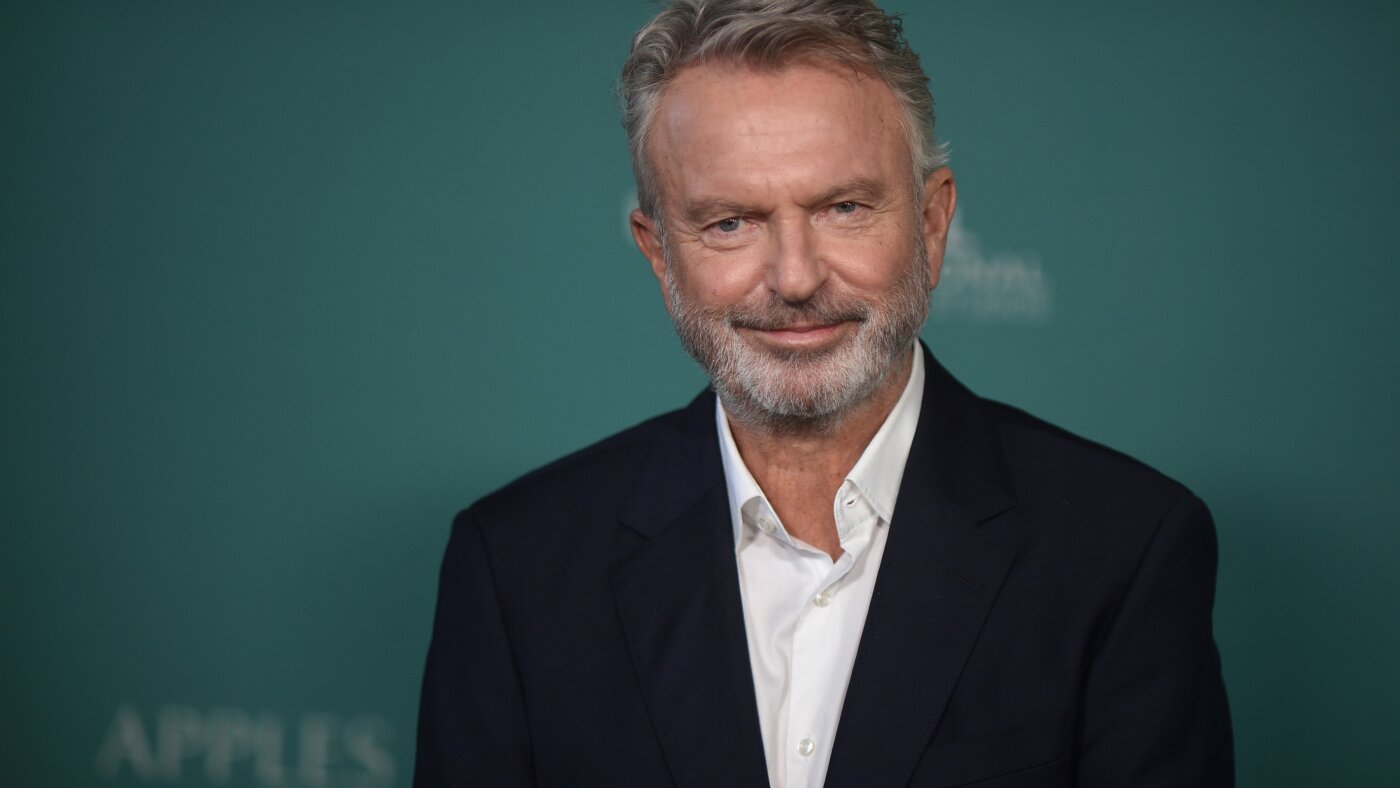
Sam Neill arrives at the premiere of “Apples Never Fall” on March 12, 2024, in Los Angeles.
Richard Shotwell/AP Photo/Invision
hide caption
toggle caption
Richard Shotwell/AP Photo/Invision
WELLINGTON, New Zealand — Sam Neill, a smoothly elegant and versatile actor whose career moved from art film to blockbuster as he dodged velociraptors in “Jurassic Park” to playing Holly Hunter’s husband in “The Piano,” has died. He was 78.
In 2023, Neill disclosed he had been diagnosed with angioimmunoblastic T-cell lymphoma, a rare type of non-Hodgkin lymphoma. Neill died on Monday in Sydney, according to a statement posted to the actor’s social media page.
His death was “sudden and unexpected,” the statement said, adding that he “remained cancer free” when he died. A cause of death wasn’t specified.
“Sam was surrounded by family and passed with the dignity that has characterised his whole life,” his family wrote.
Actor came to world’s notice with ‘Dead Calm’ and ‘My Brilliant Career’
Neill was one of a host of actors and directors who achieved international fame after an explosion of Australian films that began in the late 1970s, a list that includes Paul Hogan, Mel Gibson, Geoffrey Rush, Russell Crowe, Jane Campion, Peter Weir and Gillian Armstrong. His range was remarkable, playing opposite Helena Bonham Carter in the Alan Ayckbourn comedy “Sweet Revenge” to chopping off Hunter’s finger in “The Piano” to poking his own eyes out in the sci-fi horror “Event Horizon.”
In “Omen III: The Final Conflict,” he played Damien the Antichrist and he also played Cardinal Thomas Wolsey in “The Tudors.”
The actor first came to the attention of international audiences in Armstrong’s 1979 film “My Brilliant Career,” which also introduced Judy Davis. He later appeared in Phillip Noyce’s “Dead Calm,” a classy thriller set at sea and co-starring the then-relatively unknown Nicole Kidman.
Neill twice co-starred with Meryl Streep, in Australian director Fred Schepisi’s “Plenty” and — again for Schepisi — in “A Cry in the Dark,” a film about the sensationalized aftermath of a dingo killing a baby in the Australian Outback. He earned an Emmy nomination for his performance in the title role of the 1998 miniseries “Merlin” and another as narrator of 2017’s “Wild New Zealand.”
‘Jurassic Park’ was his best-known film
Perhaps Neill achieved his highest level of fame in “Jurassic Park” playing paleontologist Alan Grant, who is summoned to an island off Costa Rica where a theme park has been built to house herds of cloned dinosaurs. He co-starred alongside Laura Dern, Jeff Goldblum and Richard Attenborough.
His character was thoughtful and reasonable, a scientist who warned the mastermind of the theme park before the chaos: “Dinosaurs and man, two species separated by 65 million years of evolution have just been suddenly thrown back into the mix together. How can we possibly have the slightest idea what to expect?”
Grant survived the harrowing events when the creatures get loose, but didn’t return for “The Lost World: Jurassic Park II” in 1997. He came back for the third episode in 2001 and “Jurassic World: Dominion” in 2022.
“It’s probably a little late to learn these things,” he told the Daily New of New York in 2001, “but I finally feel I’ve worked out how to be an action hero. I’m happier with Grant this time. He’s gnarly and grizzled, but he looks like he knows what he’s doing.”
Neill grew up in Northern Ireland, then New Zealand
Born in 1947 in Northern Ireland, Neill emigrated to New Zealand at the age of 7. He was born Nigel Neill, but told interviewers he started to go by Sam because there were too many Nigels at his school.
His family settled in Dunedin on the South Island and he was sent to boarding school in Christchurch. After college, he took the lead in “Sleeping Dogs” in 1977, the first feature made in New Zealand in more than a decade.
Neill’s other film roles included playing a Soviet submarine officer who memorably dreams of a home in Montana in “The Hunt for Red October” and an investigator in director John Carpenter’s “In the Mouth of Madness.”
On the small screen, Neill played the malign Chester Campbell in TV’s “Peaky Blinders” and Thomas Jefferson in the four-hour CBS miniseries, “Sally Hemings: an American Tragedy.” On Apple TV+, he was on “Invasion,” playing Oklahoma Sheriff John Bell Tyson, a man late in his career searching for his purpose. In 2024 he starred opposite Annette Bening in the Peacock series “Apples Never Fall.”
Actor beloved in New Zealand as an unassuming celebrity
The actor became known in New Zealand as a modest and unassuming person who didn’t embrace celebrity. On social media, he often posted images of his farm animals, many of them affectionately named after celebrities and friends, like Laura Dern the chicken, Kylie Minogue the duck and Helena Bonham Carter the cow.
New Zealand Prime Minister Christopher Luxon mourned Neill as “one of the greats” in a statement posted to social media.
“He started out when there was barely a film industry to speak of,” Luxon wrote. “For more than fifty years he took New Zealand stories to the world and his talents helped make our film industry into what it is today.”
Neill was also a vintner and under his Two Paddocks brand, he produced pinot noir and riesling wines from his winery in the Central Otago region of New Zealand’s South Island.
His memoir “Did I Ever Tell You This?” came out in March 2023 and he was awarded a knighthood in recognition of his “outstanding contribution to film,” a title approved by the late Queen Elizabeth II.
“I can’t pretend that the last year hasn’t had its dark moments,” Neill told The Guardian in 2023, referring to his cancer diagnosis and treatment. “But those dark moments throw the light into sharp relief, you know, and have made me grateful for every day and immensely grateful for all my friends.”
He is survived by his four children and eight grandchildren.

The Huntington’s long-awaited stink has arrived. Two corpse flowers nicknamed Odora and Odorysseus have bloomed at the San Marino conservatory, drawing thousands for the rare occasion and quickly surpassing last year’s numbers.
Corpse flowers have been a staple of the Huntington since 1999, when the garden exhibited its first corpse flower. Native to Sumatra, Indonesia, these plants are endangered in the wild and only bloom for 24 to 48 hours every few years. Once bloomed, they reek of rotting flesh.
As the day goes on, these smelly specimens will close back up and collapse, losing their infamously rotten odor.
The double bloom this summer was “definitely a surprise,” said Brandon Tam, the Huntington’s associate curator of orchids. The last time multiple corpse flowers bloomed on the same day at the Huntington was in 2018.
“We knew that Odorysseus was going to bloom probably Sunday,” Tam said. “But what surprised us was that we saw that Odora was opening just a few hours after.”
As an “inflorescence” — a plant structure containing hundreds of male and female flowers at the base — the plant usually staggers its bloom to avoid self-pollination.
A developmental irregularity caused Odora’s spadix to cave in, but the plant remains healthy, said Brandon Tam, the associate curator of orchids at the Huntington.
(Kayla Bartkowski / Los Angeles Times)

Jaime Holmes from San Gabriel holds her nose in front of the blooming corpse flowers.
(Kayla Bartkowski / Los Angeles Times)
But sometimes, “these plants have a mind of their own,” Tam said.
Climate factors can influence when they bloom. Tam said Southern California’s recent high humidity may have signaled a prime environment for the plants to unfurl.
Visitors may have noticed that Odorysseus’ spadix — the conic protrusion emerging upward from the plant — was much taller than Odora’s, which had caved in. Tam said Odora’s spadix was a developmental irregularity, but emphasized the plant remains healthy.
“It just looks a little different — completely normal,” Tam said. “When it reblooms for us in three to four years, it’ll look just perfectly fine.”
At the time of the bloom, Odorysseus measured 71 inches in height, and Odora measured 41.
As of 8:51 a.m., the Huntington recorded over 5,700 reservations, said Keisha Raines, the Huntington’s assistant director of news and media relations. That number easily surpassed last year’s bloom, which drew about 4,900 visitors. It also excludes walk-ins and any more reservations made throughout the day.
Parking lots quickly filled inside the Huntington, forcing some visitors to park on the streets outside.
Raines thinks the rare double bloom influenced the spike in reservations. She also believes general awareness of the corpse flower increases each summer.
“It’s kind of lore,” Raines said. “It’s just continuing to build, and more people want to see it.”
Inside the conservatory, eager sniffers took selfies and marveled at the plants’ size and smell. Outside, the line ran all throughout the walkways, extending past the exit.
Ventura resident Michelle Shock and her 8-year-old daughter, Fable, initially came to the Huntington for a tea party at the Rose Garden, and dressed for the part in light-colored, semi-formal dresses. They scheduled the party two weeks ago and got lucky when they heard the corpse flowers were in bloom on the same day.
“I’ve always wanted to see one,” Shock said while waiting in line. “I think the last time I knew of one blooming was when I was pregnant with her. We were up in the Bay, and I missed it. So here we are now, together, which is better.”

Gastonia Goodman, 72, peers through the window at the blooming corpse flowers.
(Kayla Bartkowski / Los Angeles Times)
Fable predicted the plants would smell like “rotten flesh from Minecraft.” Shock guessed they’d smell like forgotten meat in a broken freezer or animal remains on a farm.
For spouses Jennifer Kraus and Abigail Cruz, the plants smelled like rotten garbage.
“It was pretty ripe,” Kraus said. “Totally enjoyed it though.”
The couple drove two hours from the Inland Empire to catch the bloom, which had been on Cruz’s bucket list.
“The minute that we saw it on Facebook, [Kraus] started following it and making sure that we’re here when it had bloomed,” Cruz said.
They were among the first to arrive, so the wait was short. “We were here at o-dark-30 this morning, ready to go,” Kraus said.
North Hollywood resident Lilla Saito took two hours off work to witness the corpse flowers for the first time and tracked the livestream every day, “just waiting for it to bloom.” Saito stood in line for about 45 minutes to catch a whiff, which Saito said “smelled like a trash room.”
It was Paige Patino’s first bloom too. Patino lives 10 minutes away from the Huntington and wore a T-shirt with flowers on it for the occasion. It was “really cool” to “see both of them active,” Patino said.
For Tam, this year’s stench ranks in the top three. He thinks each individual plant stinks more than previous blooms, but on top of that, he said: “The fact that we have two in bloom makes it stinkier.”

California Attorney General Rob Bonta is one of several attorneys general seeking to stop the merger of Paramount and Warner Bros. Discovery.
Bloomberg via Getty Images/Bloomberg
hide caption
toggle caption
Bloomberg via Getty Images/Bloomberg
Stay up to date with our Up First newsletter, sent every weekday morning.
A dozen states, led by California, are suing to block Paramount from buying Warner Bros. Discovery in a Hollywood mega-merger that would unite some of the nation’s largest movie studios, television newsrooms, and other entertainment properties.
“The unlawful merger of these two entertainment behemoths would lead to higher prices, lower quality, and less content for film and television, harming movie theaters, basic cable distributors, and ultimately, audiences on every sofa and movie theater seat in the U.S.,” California Attorney General Rob Bonta said in a statement announcing the suit, which was filed in federal court in California’s Northern District.
The deal would give a wealthy family that has taken pains to show its allegiance to President Trump the effective ownership of the companies’ competing movie studios, streamers (Paramount+ and HBO Max), sports programming (CBS Sports and Turner Sports) and news divisions (CBS News and CNN) as well as a suite of cable channels, such as Comedy Central, VH1, MTV, TNT, TBS, HGTV and Discovery, among others.

The president has repeatedly praised Larry and David Ellison, the digital titan and his son who are the controlling owners of Paramount. And he has publicly urged the sale of Warner’s CNN to new owners.
“We’re trying to have CNN go in a normal path,” Trump told CNN anchor Jake Tapper yesterday at the end of an interview about the late Sen. Lindsey Graham.
In his statement Monday, Bonta said, “With this lawsuit, California and our sister states are fighting for free and fair markets, not rigged markets. America has no kings in government or our economy.”

Paramount is inviting in sovereign wealth funds from Saudi Arabia, Qatar and the United Arab Emirates as major investors who will forego voting rights. The financing proposal also envisions that the company will take on $80 billion in new debt. That will assuredly trigger major cuts throughout the combined company. Warner dramatically reduced its own debt after slashing budgets, but is still tens of billions of dollars in the red, which helped set the stage for Paramount’s unsolicited bid.
Bonta sees “red flags”
In late June, Bonta told MS NOW’s Jacob Sobroff that the deal presented “red flags in the air everywhere.” The acquisition is valued at approximately $111 billion, including debt and major (though nonvoting) investment stakes from Saudi and other sovereign wealth funds. Bonta has armed his office for potentially costly legal battles by hiring a new batch of lawyers, including some who left the U.S. Justice Department after Trump took office a second time. He also secured new funds from the state legislature specifically for antitrust enforcement.
The other states involved in the lawsuit are Arizona, Colorado, Connecticut, Massachusetts, Minnesota, Nevada, New Jersey, New Mexico, New York, Oregon, and Washington. An overlapping cadre of Democratic state attorneys general have sued to block the takeover of local TV giant Tegna by Nexstar, the nation’s largest owner of television stations. A federal judge in Sacramento has put the full integration of the two station groups on hold in advance of a trial that is scheduled to be heard a year from now.
Paramount has argued that the entry of streaming giants such as Netflix, Amazon and Apple into entertainment has altered the landscape, rendering such antitrust concerns obsolete. Anticipating the same vast shifts, Disney swallowed up most of Fox’s Hollywood holdings in 2019.
Any delay caused by the attorneys general could prove costly, securities filings show. Starting Oct. 1, Paramount has to pay Warner shareholders a “ticking consideration” of roughly $650 million for every 90 days the deal is set back. If the deal is not consummated by next June 4, Paramount will have to pay Warner $7 billion.
A Silicon Valley titan expands power in Hollywood
Though Paramount’s new chairman and CEO is Hollywood producer David Ellison, a past financial donor to the campaigns of Presidents Barack Obama and Joe Biden, the takeover bid was financed and guaranteed by Ellison’s father: Oracle co-founder Larry Ellison.
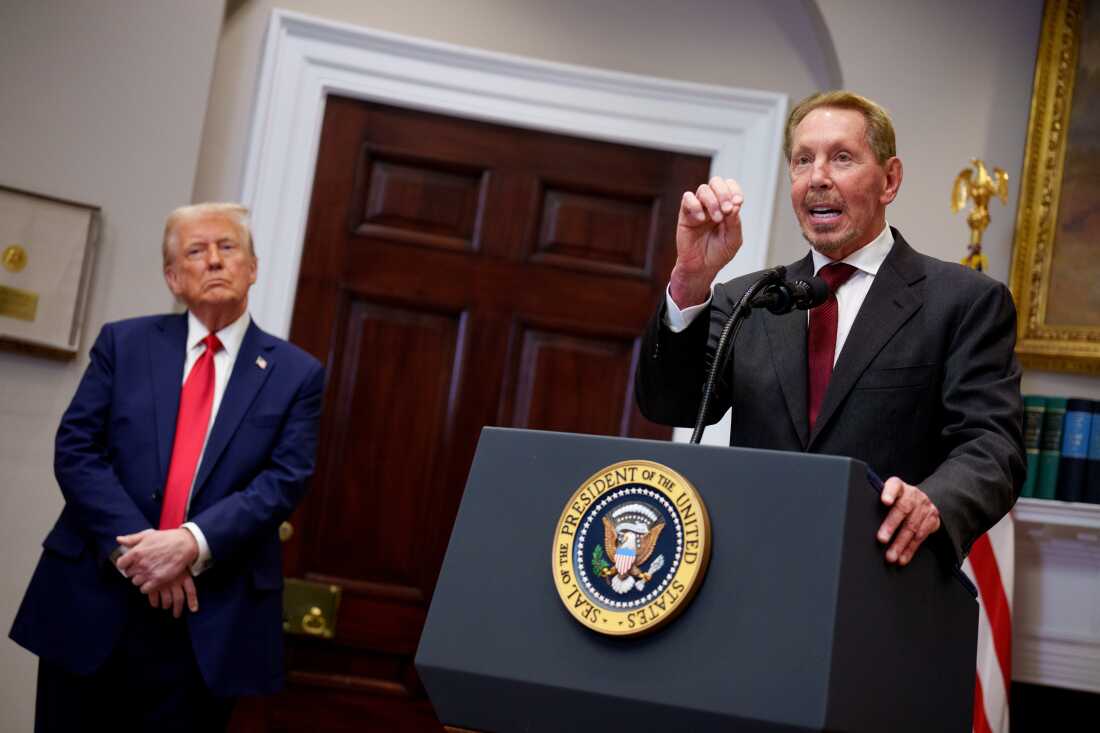
Oracle co-founder Larry Ellison, a friend and adviser of President Trump, is backing Paramount’s $111 billion plan to buy Warner Bros. Discovery.
Andrew Harnik/Getty Images/Getty Images North America
hide caption
toggle caption
Andrew Harnik/Getty Images/Getty Images North America
Larry Ellison is one of the richest people on Earth. He is also a Trump supporter and adviser — both formally and informally — serving, for example, on a board counseling the White House on artificial intelligence. Last fall, Trump made good on his plans to grant Larry Ellison and Oracle a controlling stake in TikTok’s U.S. operations.
The Ellisons took over Paramount just last summer, making concessions to Trump’s chief broadcast regulator and earning the president’s vocal support.
“The Ellison family, two great people, great people,” Trump said in March, ahead of a dinner David Ellison threw in Trump’s honor. “It’s a great family.”
David Ellison hired a new editor in chief for CBS News: Bari Weiss, founder of the center-right The Free Press. She arrived with a record of deeming mainstream media, including CBS News, to be too reflexively “woke” and anti-Trump. Her effort to reshape coverage has been met with a series of controversies, including firings and fiery resignations by CBS journalists accusing her of bias, which the network and Weiss deny. Bonta’s announcement did not focus on the combining of CBS News and CNN.
Given that Oracle provides the software skeleton on which much of the nation’s commerce and government runs, and that the Ellisons now control major media platforms and the digital data they gather, the family has the ability to create a vast reservoir of information about how people act online.
Trump’s remarks on the Paramount-Warner deal — and especially on CNN’s fate —represent a sharp break from past administrations. Predecessors both Republican and Democrat tended to respect the independence of regulators in the antitrust division of the Justice Department and the Federal Communications Commission.
Past Warner deals led to a trail of debt
Makan Delrahim, who is now Paramount’s chief legal officer, ran the Justice Department’s antitrust division during Trump’s first term. He led an ultimately unsuccessful effort to block AT&T’s takeover of TimeWarner, the precursor company to Warner.
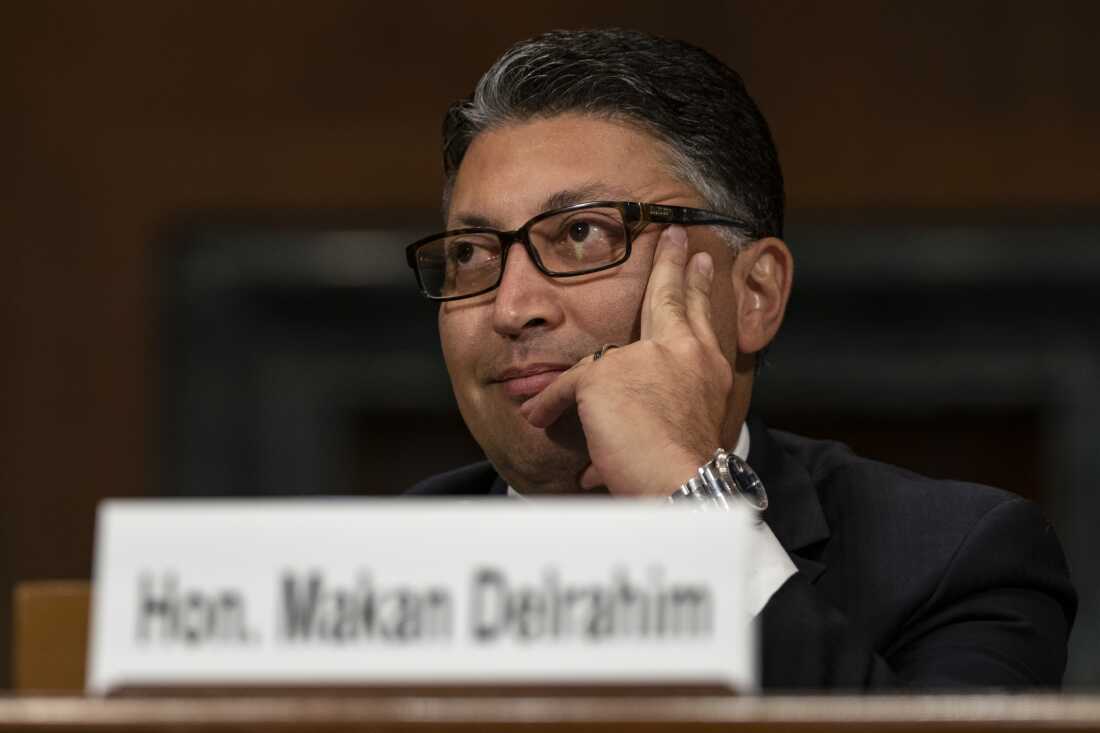
Makan Delrahim was U.S. assistant attorney general for the Justice Department’s antitrust division during President Trump’s first term. He is now the chief legal officer at Paramount.
Bloomberg/Bloomberg via Getty Images/Bloomberg
hide caption
toggle caption
Bloomberg/Bloomberg via Getty Images/Bloomberg
In retrospect, AT&T may have preferred Delrahim to prevail; the deal was brutally panned by analysts and the stock market. The telecom giant unloaded the media properties less than four years later. They were taken over by Discovery in a deal that burdened the new cable TV conglomerate with tens of billions of dollars of debt. Warner CEO David Zaslav was able to reduce it significantly, but not overtake it, and announced plans last summer to split the company in two in seeking to get ahead of an undesired offer from Paramount.
The Warner board initially struck a deal with Netflix valued at nearly $83 billion for much of the company, not including CNN and other basic cable channels. Then Paramount raised its offer for the whole company and Netflix pulled out rather than compete.
While the top British regulator has expressed qualms too, signaling a possible review that could delay the process, Paramount has won approval from the Justice Department and many regulators abroad. The Justice Department approved the acquisition last month after an eight-month review.
The Wall Street Journal reported senior officials at the Justice Department fast-tracked its process for approval before career attorneys, who were weighing filing suit to block the deal, could intercede. The outgoing antitrust chief denied that in an interview with Politico.
The FCC has not yet signed off. It is involved because Paramount holds broadcast licenses for the 28 local television stations it owns. The FCC is led by Brendan Carr, a Trump appointee and vocal ally who has endorsed Paramount’s bid.
“I think this is a good deal, and I think it should get through pretty quickly,” Carr told CNBC back in March.
Paramount has made minor concessions to try to win approval from officials in Europe. The European Union undertook formal reviews of both the consolidation of assets and its reliance on foreign investors, which are set to conclude soon.
The litigation from the states could tie Paramount up for far longer.
-

 Miami, FL2 minutes ago
Girl, 12, shot while sitting in parked car in northwest Miami-Dade, deputies say
-

 Boston, MA8 minutes ago
GBH Daily: Come sail away
-

 Denver, CO14 minutes ago
New ice cream shop with a ‘waffle theater’ bets big on downtown Denver
-

 Seattle, WA20 minutes ago
Seattle weather: Sunny skies and warmer temperatures Tuesday
-

 Milwaukee, WI32 minutes ago
Milwaukee cooling centers, heat advisory tips; what to know
-

 Atlanta, GA38 minutes ago
Warnock, Dickens talk about new housing legislation
-

 Indianapolis, IN50 minutes ago
Indiana heat index to hit 100 as hot, dry pattern holds | July 14, 2026
-

 Pittsburg, PA56 minutes ago
Another stretch of high temperatures in the 90s hitting the Pittsburgh area this week

