Entertainment
Sean ‘Diddy’ Combs arrested after grand jury indictment

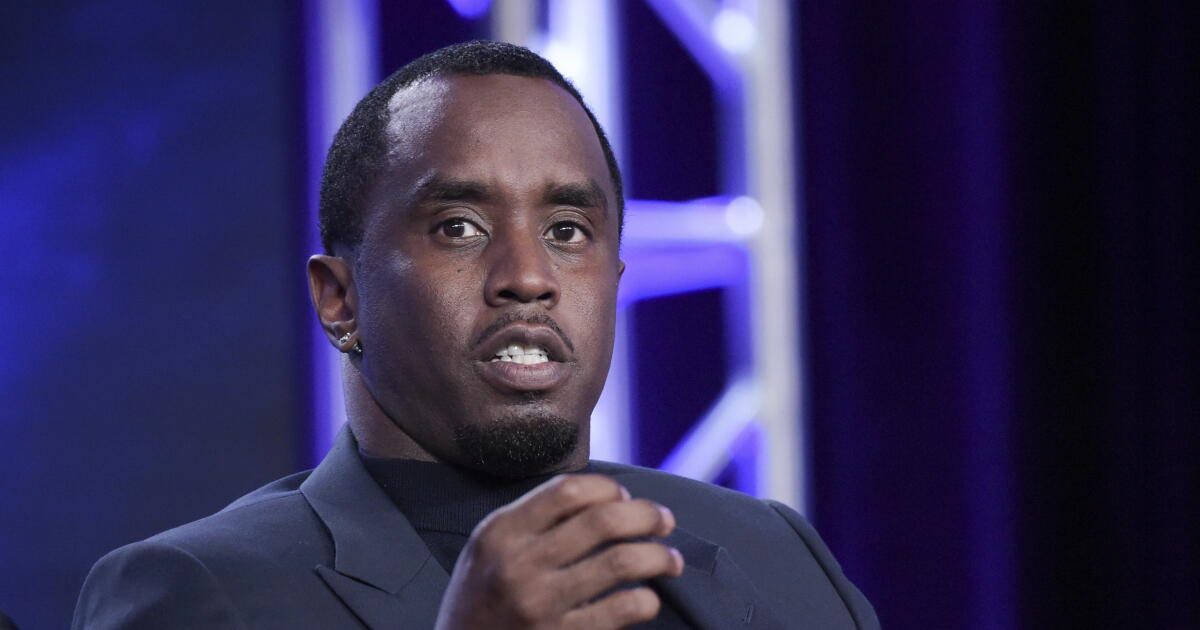
Sean “Diddy” Combs was arrested Monday in New York amid a federal sex-trafficking probe, officials said.
No details were immediately available about the charges against the hip-hop mogul and entrepreneur. A grand jury had been impaneled to investigate allegations.
Late Monday, the U.S. attorney for the Southern District of New York issued a brief statement saying Combs was arrested “based on a sealed indictment filed by the SDNY. We expect to move to unseal the indictment in the morning and will have more to say at that time.”
Sources said Combs was arrested without incident at around 8:30 p.m. at a New York hotel, where he had been staying.
Law enforcement sources told The Times earlier this year that Combs was the subject of a sweeping inquiry into sex-trafficking allegations that resulted in a federal raid in March at his estates in Los Angeles and Miami.
In civil lawsuits, four women have accused Combs of rape, assault and other abuses, dating back three decades. One of the allegations involved a minor. The claims sent shock waves through the music industry and put Combs’ entertainment empire in jeopardy.
Combs has strongly denied any wrongdoing, and on Monday his attorney criticized prosecutors.
“We are disappointed with the decision to pursue what we believe is an unjust prosecution of Mr. Combs by the U.S. Attorney’s Office,” Combs’ attorney Marc Agnifilo said in a statement. “Sean ‘Diddy’ Combs is a music icon, self-made entrepreneur, loving family man, and proven philanthropist who has spent the last 30 years building an empire, adoring his children, and working to uplift the Black community.”
The attorney said Combs was “an imperfect person but he is not a criminal. To his credit Mr. Combs has been nothing but cooperative with this investigation and he voluntarily relocated to New York last week in anticipation of these charges. Please reserve your judgment until you have all the facts. These are the acts of an innocent man with nothing to hide, and he looks forward to clearing his name in court.”
Homeland Security Investigations agents conducted searches on March 25 at mansions owned by the Bad Boy Entertainment co-founder as part of the federal inquiry into sex-trafficking allegations, law enforcement sources said.
The 17,000-square-foot mansion in Holmby Hills where Combs debuted his LP “The Love Album: Off the Grid” was flooded with agents, who served a search warrant and gathered evidence on behalf of an investigation being run by prosecutors in the Southern District of New York, according to law enforcement officials familiar with the inquiry.
Combs’ legal troubles have been building for months.
Last week, Dawn Richard, the former Danity Kane and Diddy-Dirty Money member and solo artist, sued Combs in New York, alleging sexual assault, harassment and inhumane treatment.
She alleged in the complaint that Combs groped her without her consent, falsely imprisoned her and deprived her and her bandmates of basic needs, and that “submission to his depraved demands was necessary for career advancement.”
Richard’s attorney, Lisa Bloom, said in a statement to The Times that “given Sean Combs’ brutal beating of his girlfriend caught on video and the eight people who have now accused him of abuse in court filings, including my brave client Dawn Richard, this arrest seems long overdue. It’s a big, moving day for victims, but an arrest is only the beginning. May justice be delivered to Mr. Combs. We implore other accusers to come forward in solidarity and join us in this fight.”
His former girlfriend, Casandra Ventura, the singer known as Cassie, accused him of rape and repeated physical assaults and said he forced her to have sex with male prostitutes in front of him. Combs quickly settled a lawsuit Ventura brought against him last year. Months later, a 2016 video published by CNN showed Combs chasing, kicking and dragging Ventura at an L.A. hotel.
Another accuser, Joi Dickerson-Neal, said in a lawsuit that Combs drugged and raped her in 1991, recording the attack and then distributing the footage without her consent.
Liza Gardner filed a third suit in which she alleged Combs and R&B singer Aaron Hall sexually assaulted her. Hall could not be reached for comment.
Another lawsuit alleges that Combs and former Bad Boy label President Harve Pierre gang-raped and sex-trafficked a 17-year-old girl. Pierre said in a statement that the allegations were “disgusting,” “false” and a “desperate attempt for financial gain.”
After the filing of the fourth suit, Combs wrote on Instagram: “Enough is enough…. Sickening allegations have been made against me by individuals looking for a quick payday. Let me be absolutely clear: I did not do any of the awful things being alleged. I will fight for my name, my family and for the truth.”
In the spring, producer Rodney “Lil Rod” Jones filed a federal lawsuit against Combs accusing him of sexually harassing and threatening him for more than a year.
Times staff writer Alexandra Del Rosario contributed to this report.



Photo: Craig Hudson/Variety/Getty Images
The primary question in all matters concerning Melania Trump is “What is she thinking?” The First Lady is an endless font of utterly puzzling behavior. So it’s fitting that at the premiere of her film Melania on Thursday night she stood before the audience and declared, basically, “Ceci n’est pas une documentary.”
“Some have called this a documentary. It is not,” she said. “My film is a very deliberate act of authorship, inviting you to witness events and emotions through a window of rich imagery. It is a creative experience that offers perspectives, insights, and moments that only few have seen.”
How could the Amazon-produced, Brett Ratner–directed film project, which was described from day one as a documentary possibly be anything else?
Surprisingly, after viewing the film, I find Melania’s statement makes sense. Not literally, but in that this collection of random words feels like something ChatGPT might produce if it were asked to describe a behind-the-scenes documentary about the First Lady and the attempt to summarize human emotions and artistic endeavor broke its little AI brain.
The first scene of Melania is jaw-dropping. As the stilettoed, impeccably styled once-and-future First Lady makes her way into a motorcade, we hear the Rolling Stones’ “Gimme Shelter.” It’s three weeks before Trump’s return to power, and Mick Jagger is warning of the impending apocalypse. The line “Rape, murder, it’s just a shot away!” blares as we zoom in on Melania. Could it be that Brett Ratner — Brett Ratner, of all people! — duped Melania into making art that actually has something to say about the return of the Trump regime, like Christopher Anderson’s brilliant and grotesque photo shoot for Vanity Fair?
Alas, no. As the film continues, it quickly becomes clear that this needle drop isn’t meant to be subversive. It’s more of a reflection of Donald Trump’s habit of willfully ignoring the meaning of the show tunes and classic rock bangers. Next we’re hit with Michael Jackson’s “Billie Jean” (way later in the film we learn it’s one of Melania’s favorite songs, but it’s a bizarre soundtrack for her entering Trump Tower). Then the music transitions to “Melania’s Waltz,” a dreamy, looping orchestral theme that was composed for the movie.
We never really leave this hazy, hallucinatory state. Footage of the Secret Service whisking Melania from Mar-a-Lago transitions into scenes of her giving inane directions on the tailoring of her inauguration suit, then blandly expressing her approval for the invitation, schedule, and tableware. It seems all of these design decisions were actually made off-camera, weeks before filming began. We move from a conference room overlooking Central Park to a gilded Mar-a-Lago dining room to the marble hallways of Trump Tower and back again. We’re totally sealed off from fresh air and outside reality. “Melania’s Waltz” plays again and again. It feels like we’re inside a gaudy gold jewelry box, watching a perfect MAGA-tized ballerina spin around and around. We’re trapped — but if Melania ever feels that way there’s no sign of it in this film. There’s not a second where it seems that Melania wants out of this life or has even given her strange circumstances a second of deep thought.
The dialogue has a slightly off quality, too, like Eyes Wide Shut if Kubrick directed hours of Melania B-roll. All of the First Lady’s interactions with other people feel rehearsed or reenacted. She also provides weirdly detached, substance-free narration throughout the film. In one scene, her father is being interviewed, but we don’t hear what he has to say about his late wife; Melania’s bland voice-over drowns him out. Knowing that the First Lady is a huge AI-enthusiast (the audiobook of her memoir is entirely AI-generated), I started wondering if she’d also had some nonhuman help in drafting her narration. She describes Mar-a-Lago as “more than a home. It is warm. Sunshine. Family. Friends.” At one point, we overhear Donald Trump praising their son, Barron. Melania responds robotically, “Yeah, I love him. Incredible mind.”
For one hour and 44 minutes, it feels like we might be on the verge of seeing some actual interesting content. In the back of a limo, someone off-camera (maybe Ratner) coaxes the First Lady into sort-of singing along to “Billie Jean.” Kamala Harris rolls her eyes while waiting to enter Trump’s swearing-in. Melania and Donald start to discuss whether it’s smart to walk down the street during the inauguration, considering he just survived a near assassination. Melania remarks, “Barron will not get out of the car. I respect that,” but then they agree to have the rest of the conversation off-camera. It’s like Melania, who executive-produced the project and had final cut, purposely stripped the film of any real emotions, so it’s all perfectly styled shots, no humanity allowed.
The only reprieve is when Donald Tump appears. Trust me, I never thought I’d be yearning to see more DJT. But the fact that he’s the only Trump onscreen with natural star quality is glaringly obvious, even though he’s unusually low-key throughout the film. All Donald really does is praise Melania as an amazing First Lady, make some quips to staffers, and rant about his stunning electoral victory on the other end of the phone. Yet whenever Trump’s not onscreen, all you’re thinking is Where’s Trump?
Admittedly, I am not really the intended audience here. While many journalists booked tickets in blue-leaning cities and had the theater practically to themselves, I experienced Melania in the belly of the beast (okay, slightly Trump-leaning Suffolk County, Long Island). Literally every seat in the 100-person theater was filled at 1 p.m. on a Friday. Unsurprisingly, the audience was very old, almost exclusively white, and heavily female. They clapped when Trump Force One appeared onscreen, chuckled anytime Donald said anything even mildly amusing, and whooped during the inauguration scene. Though they were silent when the president wasn’t onscreen, I only heard positive reviews as I exited the theater (one person even remarked, “Wow, that was great!”).
But, of course, people paying $17 to see Melania on premiere day are just a small sliver of the eventual audience. As I fought to keep my thoughts from drifting off as Melania fussed over the trim on her Carmen Sandiego hat, I couldn’t help but think of the millions of people who will sit down to watch this film in their own homes whenever it streams on Amazon Prime. Perhaps they’ll be hoping for some insight into the Trump administration, a peek into what it’s like to be Melania, or even just a chuckle. But this movie contains none of those things. It won’t be long before they drift off, lulled to sleep by Melania’s soulless narration.
See All
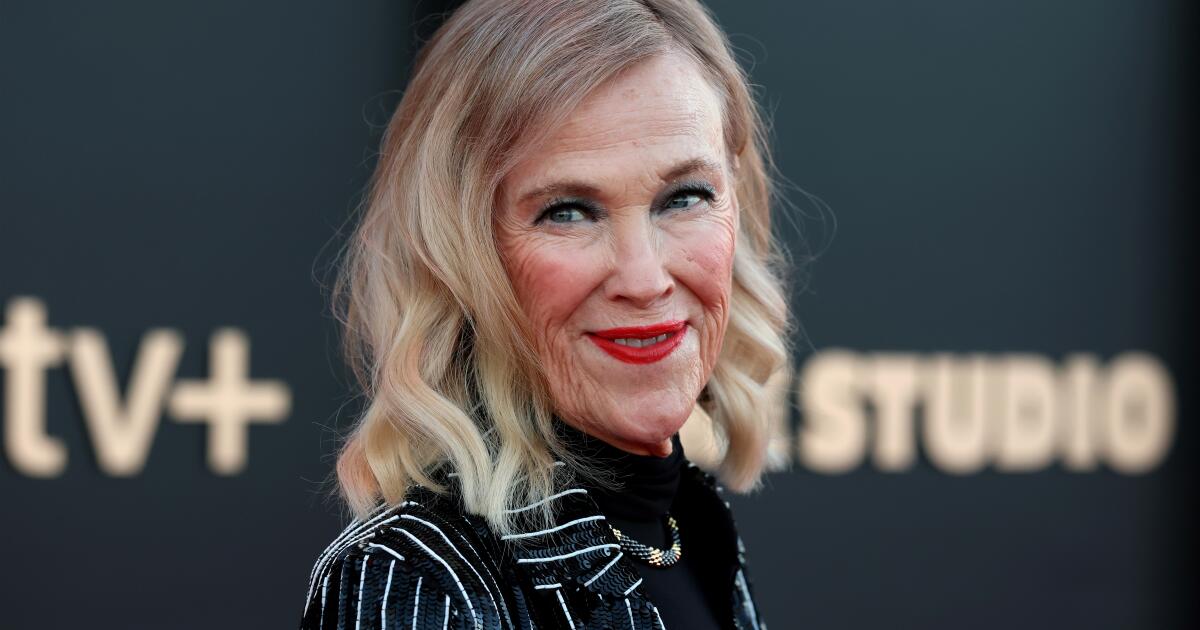
It is painful to have to write about Catherine O’Hara, so alive and lively a presence, in the past tense. O’Hara has lived inside my head — is it too corny to say my heart? — from “SCTV” to “Schitt’s Creek” to “The Studio,” on whose second season she was scheduled to start work, when she died, Friday at 71.
Any appearance constituted a recommendation for — a benediction upon — whatever she was appearing in; you felt she would only say yes to things that used her well, that sounded fun or interesting, and that her casting reflected well on the project and people who cast her. I think of her not as a careerist, but a Canadian. Of joining “Schitt’s Creek,” she said when I interviewed her in 2015, “it took me a few moments to commit, [but] I already trusted [co-creator, co-star] Eugene [Levy] as a writer and an actor, and as a good man who I could stand to spend time with.”
This is how it began for her, in Toronto, where her brother Marcus was dating Gilda Radner, who was in “Godspell” with Levy and Martin Short. “And it was really watching Gilda when I realized, ‘cause I’d always liked acting in school, that it was actually a local possibility. And then she got into Second City theater, and I was a waitress there — it’s like I stalked her — and then she did the show for a while and then took on a job for the National Lampoon. So I got to understudy or take her place — I got to join the cast, and Eugene was in it. It was really just the luck of having a professional actor suddenly in my life.”
As an “SCTV” early adopter, O’Hara was first attractive to me because she was funny, but she was also beautiful — a beauty she could subvert by a subtle or broad rearrangement of her features. Though fundamentally a comic actress, her characters could feel pained or tragic beneath the surface — even Lola Heatherton, one of her signature “SCTV” characters, an over-exuberant spangled entertainer (“I love you! I want to bear your children!” was a catch phrase) is built on desperation. Among many, many other parts, she played a teenaged Brooke Shields singing Devo’s “Whip It!,” Katharine Hepburn, a depressed Ingmar Bergman character, and, most memorably, chirpy teenage quiz show contestant Margaret Meehan, buzzing in with answers before the questions are asked, and growing tearfully undone as the host (Levy) becomes increasingly angry.
Elsewhere, she played a forgetful suburban mom in “Home Alone,” the work for which she’s arguably best known, given its ongoing mainstream popularity; an ice cream truck driver messing with Griffin Dunne in Martin Scorsese’s “After Hours”; and a tasteless art snob and indifferent mother in “Beetlejuice,” where she met her future husband, production designer Bo Welch. She shone in three Christopher Guest movies, paired with Fred Willard in “Waiting for Guffman” as community stars; opposite Levy in “Best in Show,” as a dog handler with a lot of ex-boyfriends; with Levy again in “A Mighty Wind,” as a reuniting ‘60s folk duo; and in “For Your Consideration” as an aging actress dreaming of an Oscar. In the great Netflix miniseries “A Series of Unfortunate Events” (also designed by Welch), she played an evil optometrist, the sometime girlfriend of Neil Patrick Harris’ Count Olaf, dark, cold, sexy. Last year, she picked up a supporting actress Emmy nomination as a dethroned but not knocked down executive in “The Studio”; she’s fierce and funny. And, though she was fundamentally a comic actress, she could play straight, as in the second season of “The Last of Us,” penetrating opposite Pedro Pascal as his therapist, and the widow of a man he killed.
Lived in across six, ever-richer seasons of “Schitt’s Creek,” Moira Rose is certainly her crowning achievement, a completely original, Emmy-winning creation whose quirks and complexities were embraced by a wide audience; going forth, she’ll be a reference to describe other characters — a “Moira Rose type” — with no explanation needed. With her original, breathy way of speaking, stressing odd syllables and stretching random vowels to the breaking point, her mad fashions and family of wigs, Moira is a sketch character with depth. Of all the Roses, she’s the one most resistant to adapting to their motel world, to coming down off the mountain, but she is as needy as she is condescending, and underlying her fantastic, tightly structured carapace is a fear that’s terribly moving when it shows through the cracks.

Eugene Levy and Catherine O’Hara in scene from “Schitt’s Creek.” The actors worked together frequently over the years.
(PopTV)
“I like to think she’s really threatened by this small-town life — because she’s been there, you know?” O’Hara said back when the series began. “That just makes it more threatening in my mind. And I like to think of her as more vulnerable than just snobby or superior. I think it’s way more insecure.”
Her tentative acceptance of her circumstance, as well as the show’s overarching arc, finds expression in the series finale, where, all white and gold, in flowing robes with long blonde locks cascading from beneath a bishop’s hat, she tearfully conducts the marriage of her son, David (co-creator Dan Levy). Speaking of a sort of wind of fate, she says, “All we can wish for our families, for those we love, is that that wind will eventually place us on solid ground. And I believe it’s done just that for my family in this little town, in the middle of nowhere.” You might cry, too.
I had the luck to speak with O’Hara several times over the run of the series. The last was in Canada, a day or two before the last day of filming. We sat on the apron of the Rosebud Motel, looking across the muddy parking lot to where fans were gathered on the road above.
“They’re there as much for each other as for us. It’s almost that we don’t have to be there, but we brought them together somehow.” That’s what actors and the stories they tell, give us — the joy, and sometimes the pain: A world of strangers, united in this awful moment, out of love for Catherine O’Hara.

New documentary offers a flattering view of Melania Trump without shedding any light on who the first lady is.

First Lady Melania Trump on the American experience
First Lady Melania Trump shares her immigrant story and American pride while revealing her Dolce and Gabbana look at the “Melania” premiere.
When is a documentary not a documentary? When the subject is Melania Trump.
That’s not quite a riddle, but the first lady is quite the enigma in “Melania” (★½ out of four; rated PG; in theaters now and streaming later this year on Prime Video), director Brett Ratner’s less-than-revelatory look at the life of the former fashion model and wife of President Donald Trump. The film, which follows the 20 days leading up to the 2025 presidential inauguration, is part reality show and part White House historical video, as Melania Trump narrates a behind-the-scenes glance at her personal and private lives.
“Melania” doesn’t quite work as a documentary, though that doesn’t matter: People who don’t like the Trumps won’t go near the theater, and those who love the Trumps probably will. Just don’t expect much insight either way: While it does offer an extremely flattering view of all things Melania, outside of a few candid glimpses, you’re not really going to learn a lot about who she really is.
The film begins with the first lady in her element: in heels and on the move. With the Rolling Stones playing in the background, Trump jets from Mar-a-Lago in Florida to Trump Tower in Manhattan, ready to navigate the “complexities of my life” leading up to her return to Washington.
She meets with her longtime stylist about her inauguration coat and an interior designer about redecorating the White House. Over the next three weeks, she also attends the funeral of President Jimmy Carter; meets with French first lady Brigitte Macron and Queen Rania of Jordan about her “Be Best” campaign; and finally partakes in inaugural parties and balls on what her husband calls the “big day.”
“Melania” marks Ratner’s first feature film since 2014, following a period of Hollywood exile after sexual harassment allegations. No criminal charges were filed and Ratner denied the allegations.
Throughout the movie, Ratner peppers in bits and pieces of Melania Trump’s personality: In one scene, she sings along to her favorite Michael Jackson song, “Billie Jean,” and is also caught doing the “Y.M.C.A.” dance after an inaugural ball. The camera even captures a few interesting moments that aren’t really the focus along the way, like a worried tailor skeptical of a change Trump wants in her inauguration outfit and then-Vice President Kamala Harris looking at her watch backstage with seeming annoyance during the swearing-in ceremony.
But overall those moments showing real personality – especially in regard to the title subject – are few and far between. There’s a long sequence where Trump memorializes her mother Amalija Knavs, as the first anniversary of her death coincides with Carter’s funeral. However, instead of old pictures being shown of Melania and her mom, or a close-up interview with the first lady, the first lady speaks over footage of herself visiting St. Patrick’s Cathedral. In that moment, and others, she talks about being emotional but doesn’t immerse the audience in what she’s feeling. In one case, Melania is seen watching cable news footage of California’s deadly 2025 wildfires and the camera zooms in for tears that never come.
Because she doesn’t address the camera, “Melania” suffers from a brutal disconnect. Trump speaks about son Barron, but he doesn’t speak about his mom. (Barron, by the way, is low-key the most compelling person in the entire movie because you’re dying to know what this teenager thinks about these events he’s going through.) She talks about a reverence for the military, but Ratner doesn’t show her conversations with soldiers. It’s a strange filmmaking choice for a documentary, though maybe one that’s by design: Melania Trump produced the movie through her new Muse Films company and this is definitely her show.
Everything surrounding “Melania” is political but the movie itself isn’t, for the most part. The president pops up sporadically: His first appearance is as a bobblehead in Melania Trump’s pilot’s cockpit, with “Terminator”-style sunglasses and machine gun. He grumbles about why the national college football championship is the same day as the inauguration (“I think they did that on purpose”), but he’s mainly there to say how great and influential his wife is.
The film ends with the first lady having her official black-and-white photograph taken, and this cinematic portrait, which could have shown insight into a rather unknown public figure, isn’t much more colorful.

Ohio woman charged with murder in shooting death of Weakley County deputy

Denver and Oklahoma City match up in battle of top offenses

Oregon Kids Credit issued to some taxpayers in error: What to know

Pennsylvania woman charged with torching Surf City home

What’s the most expensive property sold in RI? Jan. 31 real estate transactions.

Florida High School Football Rankings: Top 25 teams – Oct. 21

Cleary's 21 help Le Moyne down Central Connecticut State 69-64 in OT

How old is Bo Nix? What to know about Oregon quarterback ahead of 2024 NFL Draft

99th annual Pony Swim held in Virginia

Indiana Members Credit Union announced as new anchor tenant at Bottleworks District

New Jersey governor to launch portal for uploading videos of ICE tactics: ‘They have not been forthcoming’

Israeli forces kill 12 Palestinians across Gaza, attacks reported in Rafah

Anti-ICE protests take place across US for ‘National Shutdown’

Map: 2.4-Magnitude Earthquake Reported in New Jersey

Don Lemon could face up to a year in prison if convicted on criminal charges
-

 Illinois1 week ago
Illinois school closings tomorrow: How to check if your school is closed due to extreme cold
-

 Pennsylvania5 days ago
Rare ‘avalanche’ blocks Pennsylvania road during major snowstorm
-
 Science1 week ago
Contributor: New food pyramid is a recipe for health disasters
-

 Technology1 week ago
Ring claims it’s not giving ICE access to its cameras
-
Movie Reviews1 week ago
Movie Review: In ‘Mercy,’ Chris Pratt is on trial with an artificial intelligence judge
-

 News1 week ago
Video: Jack Smith Defends His Trump Indictments During House Hearing
-

 Politics1 week ago
Supreme Court appears ready to keep Lisa Cook on Federal Reserve board despite Trump efforts to fire her
-

 Movie Reviews4 days ago
Vikram Prabhu’s Sirai Telugu Dubbed OTT Movie Review and Rating

