Crypto
FBI probe reveals Turkey as key conduit for ISIS cryptocurrency funding – Nordic Monitor


Abdullah Bozkurt/Stockholm
The indictment of an American citizen, prosecuted for funding the Islamic State in Iraq and Syria (ISIS), has exposed how Turkey became a key conduit for illicit cryptocurrency transactions used to finance the jihadist group’s operations in Syria.
Mohammed Azharuddin Chhipa, a 35-year-old Virginia resident and naturalized US citizen originally from India, transferred over $188,000 to ISIS. The funds were used to help secure the release of ISIS fighters and their families in Syria, utilizing Turkish intermediaries and cryptocurrency.
In an affidavit submitted to U.S. Magistrate Judge Lindsey R. Vaala on May 4, 2023, FBI Special Agent Gary T. Marosy explained that funds sent to ISIS in Syria often followed this method through Turkish brokers. The money was transferred via cryptocurrency, a difficult-to-trace form of currency, to couriers in Turkey. These couriers would then convert the cryptocurrency into cash, which was secretly smuggled into Syria without leaving a trace.
Intercepted communications revealed that Chhipa’s contact in Syria advised him not to send money directly to Syria or elsewhere, but rather to route it through Turkey, where ISIS could safely collect the cash and redirect it to fund their operations in Syria.
Chhipa, an IT professional who has lived in the US since the age of four after his family emigrated from India, was flagged by the FBI in 2019. The law enforcement agency was alerted when a dozen social media accounts he managed began posting violent jihadist messages.
Affidavit submitted to U.S. Magistrate Judge Lindsey R. Vaala on May 4, 2023 by FBI Special Agent Gary T. Marosy:
Chhipa_affidavit_FBI
In a post dated March 18, 2019 he wrote: “The sword is a must. Jihad is a must. Nothing terrifies the enemies – the enemies of the Muslimin– nothing terrifies them like power, force and, weapons…Jihad is a brick and solid pillar of the Shari’ah…This din [religion] can not be established and firmly planted without jihad, ever.”
On the same day, in another post, Chhipa quoted Shaykh al-Allamah Humud Ibn Ulqa ash-Shu’aybi, a renowned radical Saudi cleric who was supportive of the Afghan Taliban and the September 11, 2001 attacks.
In a chat conversation on March 16, 2019 Chhipa said he would either end up in prison, engage in jihad by moving abroad or become a martyr by killing himself. In June 2019, during communications with a covert FBI-run social media account, Chhipa admitted his support for ISIS and expressed his desire to carry out an attack against what he referred to as infidels and hypocrites, hoping to die in the name of Allah.
Chhipa fled the country on August 2, 2019, believing he would be arrested following an FBI search warrant executed at his home. The US secured a blue notice through INTERPOL, requesting assistance in locating, identifying or obtaining information about him in connection with a criminal investigation. Chhipa was forced to return to the US before reaching Egypt, part of his planned multi-route escape through Mexico, Guatemala, Panama and Germany. He was detained near the Mexican-Guatemalan border and deported to the US by Mexican authorities on August 16, 2019.
The FBI uncovered a cache of evidence during the search, which included instructions for building a bomb, PDF copies of the ISIS publication Dabiq and photos depicting beheadings and armed ISIS fighters.
After returning to the US without facing charges, Chhipa believed he was in the clear and resumed his activities on behalf of ISIS. He frequently communicated with British ISIS women living in Syria who were funding ISIS fighters and assisting in the escape of their family members from the Al Hawl camp (also known as Al Hol).
The camp was established in 2016 to house Iraqis and Syrians fleeing ISIS-controlled areas. By March 2019 over 50,000 women and children had settled in a special section of the camp known as the annex, following the final defeat of ISIS by the US-led coalition. The annex is guarded by Syrian Democratic Forces (SDF) fighters, who are reportedly open to bribes to allow ISIS family members to escape the camp.
The annex continues to serve as a stronghold for ISIS ideology, operating under strict Islamic sharia law similar to that of ISIS. The SDF is considered a terrorist organization by Turkey due to their alleged ties to the Kurdistan Workers’ Party (PKK), which is designated as a terrorist group by the US, the EU and Turkey.
Beginning in November 2019, Chhipa started depositing cash into his Apple Federal Credit Union bank account, converting the funds into cryptocurrency through service providers Coinbase and Binance, and sending them to Turkey.
The FBI’s analysis revealed that over $18,000 was sent to cryptocurrency wallets associated with ISIS women in Syria, $61,000 went to wallets located in Turkey, and more than $60,000 remains unaccounted for.
US Government’s Memorandum in Support of Pre-Trial Detention for Mohammed Azharuddin Chhipa, an ISIS Suspect:
US_attorney_motion_for _detention_ISIS-suspect
In a communication obtained by the FBI, an ISIS member advised Chhipa never to send money directly to her, but rather through Turkey. “Never sent directly to me it[’]s always sent to [T]urkey and then secretly sent to me with no tracks,” she wrote, prompting Chhipa to reply by saying that “I know how it works.”
The FBI used several covert accounts to communicate with Chhipa and his ISIS contact in Syria through what is known as FBI Controlled Persona (FBICP), which refers to accounts operated by undercover agents or confidential human sources. This communication was instrumental in deciphering the scheme Chhipa was running for ISIS.
In late April 2023 the FBI placed Chhipa under close surveillance, which he noticed, prompting him to attempt to flee the country for a second time. He received tips from an unidentified person with a German phone number on how to avoid detection. When he withdrew $8,000 in cash from his bank account, the FBI concluded that he was planning to escape.
Chhipa was arrested by the FBI on May 4, 2023 on an arrest warrant charging him with providing material support to ISIS, a crime that carries a potential penalty of up to 20 years in prison and possibly a lifetime of supervised release. He was detained pending trial on May 10, 2023.
During a May 2023 hearing, Assistant US Attorney Anthony Aminoff revealed that Chhipa had a relationship with Allison Fluke-Ekren, an American ISIS member from Kansas who is currently serving a 20-year sentence. Fluke-Ekren pleaded guilty in 2022 to organizing and leading Khatiba Nusaybah, a battalion where approximately 100 women and girls were trained in the use of automatic weapons, grenades and suicide belts. The two married through an online encounter, and Chhipa had been attempting to adopt Fluke-Ekren’s children.
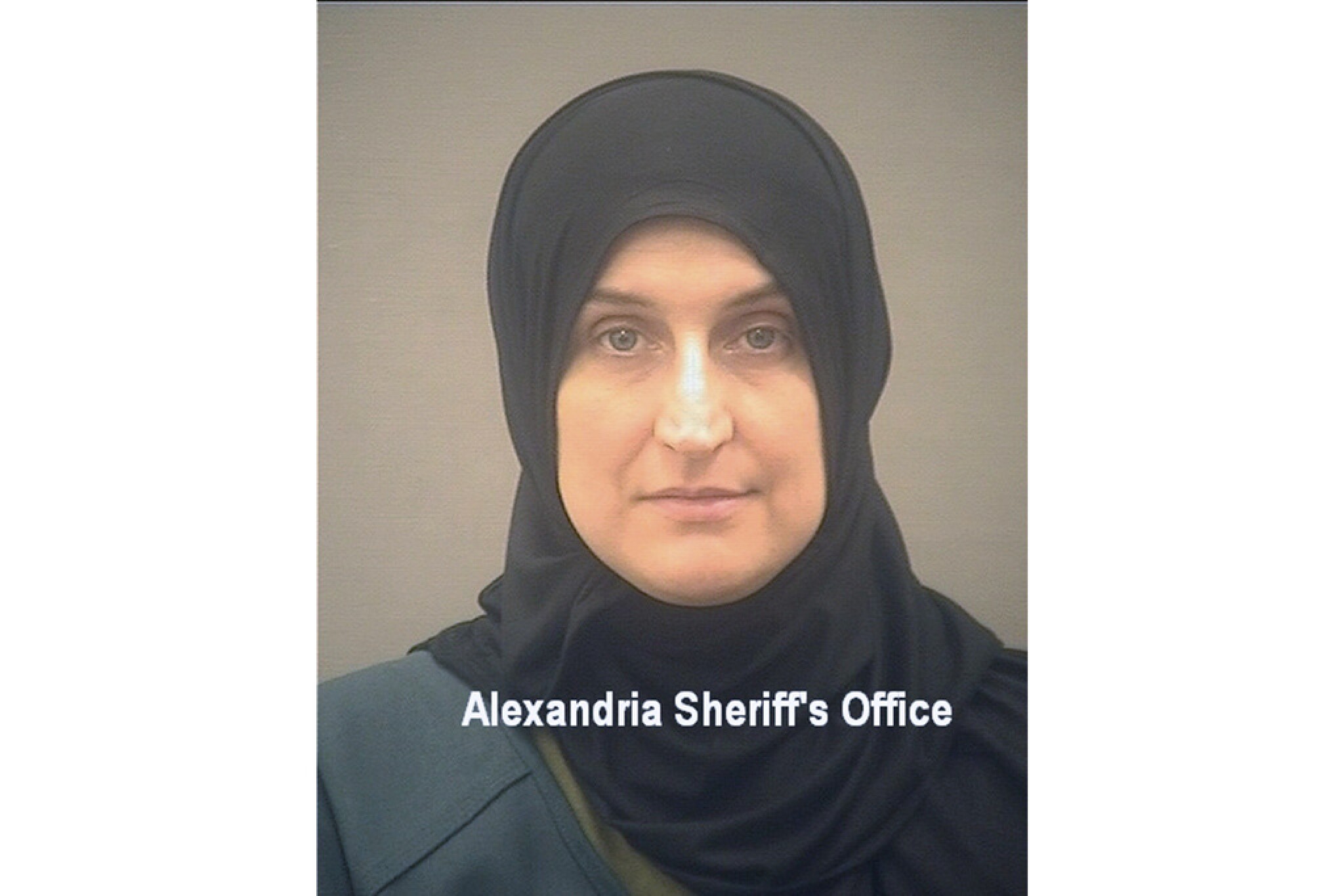
Chhipa’s case underscores how the government of President Recep Tayyip Erdogan appears to tolerate ISIS activities in and through Turkey, rather than genuinely cracking down on the terrorist network. Official figures indicate that only about one in four ISIS detainees is arrested during arraignment in Turkish courts, effectively creating a revolving door policy for ISIS suspects.
Many ISIS suspects who were arrested are later released during trial hearings, and very few actually receive convictions and serve prison time. The Turkish government avoids disclosing how many ISIS members have been convicted, despite parliamentary inquiries from opposition parties.
For years, the Erdogan government turned a blind eye as ISIS moved fighters, funding and logistical supplies through Turkey. During 2015-2016, Turkish intelligence agency MIT reportedly contracted the ISIS network in Turkey to carry out a series of violent bombings to further a political agenda and help the Erdogan government maintain power amid increased terrorist threats during election cycles.


Key Takeaways
- LAB token cratered 90% over 48 hours, wiping out billions in market cap.
- ZachXBT slammed top centralized exchanges for failing to halt the July manipulation.
- Investors surged to avoid trading LAB as team token unlocks are set for later in July 2026.
LAB Trade Blames ‘Large Market Participants’
LAB, the native token of the multi-chain trading platform LAB Trade, suffered a catastrophic collapse this week, plunging from just over $7 to $1.25 on Wednesday—a staggering 80% decline in under 24 hours. This crash followed an equally brutal sell-off on Tuesday, which saw the token slide from nearly $17. In total, LAB wiped out nearly 90% of its value in just 48 hours.
The financial fallout was swift: a market capitalization that exceeded $5 billion on Tuesday morning evaporated to just $390 million by 3:30 p.m. EST on Wednesday. The freefall prompted the LAB Trade team to address the panic on X, where they expressed disappointment and deflected blame toward external heavy-sellers:
“While today’s market activity is disappointing, our product roadmap and long-term focus remain unchanged. We’re seeing significant selling pressure from large market participants. Several independent trading firms also hold substantial LAB positions that are not affiliated with our team. We’re working closely with our liquidity partners and continue to monitor market conditions,” the team said on X.
With this crash, LAB joins a notorious lineup of volatile tokens, such as RAVE, RIVER and SIREN. Each of these projects experienced meteoric rises followed by near-instantaneous erasures, sparking widespread “pump-and-dump” allegations against their respective teams and murky distribution networks.
Crypto Sleuth Slams Centralized Exchanges
Prominent on-chain detective ZachXBT, who previously flagged suspicious insider loans and market-maker coordination back in May, blasted major centralized exchanges ( CEXs) for failing to protect retail investors. Taking to X, ZachXBT criticized the lack of proactive intervention:
“Disappointing to see how no action was taken by Binance, Bitget, and Gate earlier to prevent it. If CEXs cared, profits from the accounts manipulating the price would be distributed to users at a minimum. Unlocks for investors were scheduled to begin later this month, however, multiple late vesting changes occurred in the past.”
ZachXBT reiterated his previous warnings that insiders have effectively controlled the entire circulating supply, allowing market makers to orchestrate extreme price manipulation on major exchanges. His final advice to the community was blunt: avoid trading LAB under any circumstances.

ZachXBT Names RAVE, RIVER, SIREN, and LAB as Victims of Bitget-Enabled Market Maker Fraud
Blockchain investigator ZachXBT has renewed his assault on Bitget, accusing the exchange of knowingly enabling market makers to run supply…


ZachXBT Names RAVE, RIVER, SIREN, and LAB as Victims of Bitget-Enabled Market Maker Fraud
Blockchain investigator ZachXBT has renewed his assault on Bitget, accusing the exchange of knowingly enabling market makers to run supply…
ZachXBT Names RAVE, RIVER, SIREN, and LAB as Victims of Bitget-Enabled Market Maker Fraud
Blockchain investigator ZachXBT has renewed his assault on Bitget, accusing the exchange of knowingly enabling market makers to run supply…

STARKVILLE – Potentially higher utility bills and sound pollution topped the list of concerns raised by six residents who addressed the board of aldermen Tuesday about a cryptocurrency mining facility proposed for Industrial Park Road.
Vice Mayor Roy Perkins, who represents Ward 6, said he has fielded similar concerns from constituents following the board’s June 12 work session, during which members heard a presentation about the potential project.
“I know these things need to have full accountability, full transparency and different things,” Perkins said. “… Well you can rest assured the vice mayor is going to be on assignment. I’m going to do my part. I’m not going to do anything that’s going to negatively impact this community.”
The proposed facility would be a specialized type of data center designed to mine cryptocurrency, a digital currency that operates independently of government-backed financial systems. It is stored in digital wallets and fluctuates in value.
Mining facilities use specialized computers that draw large energy loads to secure the digital transactions that take place. The center proposed in Starkville would be much smaller than “hyperscale data centers” that store and process data for large tech companies.
Utility usage topped the concerns of most residents with Pam Jones, the first to speak, set the tone.
“I understand that this is on a smaller scale than the hyper-scale facilities, and I just wanted to be sure that we had ordinances in place that will count the noise, especially at night and that there will be water and power management,” Jones said.
Other residents took issue with what they see as a lack of transparency around the proposed project.
“I was quite disappointed to learn (the mining facility) was not an agenda item today,” said Eadie Keenan, a Ward 7 resident. “… Quite frankly, I have more questions than can fit in three minutes.”
Tiffany Womack, another Starkville resident, echoed Kennan’s concerns, adding utility usage and market volatility to her own list of issues.
“If (the center was) to go bankrupt or something like that, would that possibly fall back on the responsibility of Starkville citizens?” Womack asked.
Mayor Lynn Spruill did not answer each question individually, instead encouraging those with questions to watch the June 12 presentation. Due to the project’s early stage, she noted the board does not yet know answers to all the questions raised during Tuesday’s meeting.

“I brought (the center) to the board as an opportunity for us to begin that process of learning so we are nowhere near making a decision,” Spruill said. “Which is why it isn’t on the agenda and won’t be on the agenda for some time.”
Spruill said the proposed center is currently going through the staff vetting process. Once the process is complete, staff will make a recommendation to the board on whether to pursue the center. At that time, Spruill expects to be able to answer residents’ remaining questions.
Spruill said transparency is important to her and the board while going through the process of vetting the mining center.
“Nothing is being hidden. It’s all out there for everybody to see, and we’ll make decisions based on facts not on Facebook craziness,” Spruill said. “… We want facts, and we want all decisions to be made with facts. And so hopefully that will put some of your concerns (to rest), at least to the extent that this is nowhere near something that will be on the agenda.”
Quality, in-depth journalism is essential to a healthy community. The Dispatch brings you the most complete reporting and insightful commentary in the Golden Triangle, but we need your help to continue our efforts. In the past week, our reporters have posted 24 articles to cdispatch.com. Please consider subscribing to our website for only $2.30 per week to help support local journalism and our community.
Quality, in-depth journalism is essential to a healthy community. The Dispatch brings you the most complete reporting and insightful commentary in the Golden Triangle, but we need your help to continue our efforts. In the past week, our reporters have posted 24 articles to cdispatch.com. Please consider subscribing to our website for only $2.30 per week to help support local journalism and our community.
Crypto
Jim Rickards Asked Robert Kiyosaki to Read One Manuscript, Then His View of Global Finance Changed

Key Takeaways
- Robert Kiyosaki said a manuscript shared by Jim Rickards changed how he views global finance.
- Kiyosaki warned commonly held financial assets could face pressure as financial rules shift across markets.
- His claims remain warnings, with evidence and future market developments still central.
Why Did One Manuscript Change Robert Kiyosaki’s View?
Robert Kiyosaki, the author of the best-selling personal finance book Rich Dad Poor Dad, said an advance manuscript of “The Entropy Trap” shared by Jim Rickards prompted him to rethink how he views global finance. Rickards is an economist, lawyer, and financial commentator known for writing about currencies, debt, and systemic market risk. Kiyosaki said the early reading changed his perspective on where the financial system may be headed.
The reaction was framed around a warning about financial change. The book, written by Mickey M. Maini, “blew my mind and opened my eyes to what & why global financial change is coming,” Kiyosaki described. His comments focused on what he described as a shift in the rules behind wealth, assets, and trust.
The central claim is that wealth could move away from people relying on traditional financial assumptions. Kiyosaki asserted:
“The informed will be tomorrow’s ULTRA RICH. Todays uniformed operating by the old rules of money… will become the new poor.”
The Warning Behind the Claim
The warning centers on assets that depend on trust, including U.S. bonds, exchange-traded funds (ETFs), and mutual funds. Kiyosaki framed those instruments as vulnerable under the financial shift he says is coming, placing commonly held investment products at the center of the risk.
That claim is severe, but he presented it as a warning rather than a proven outcome. He also pointed to large bondholders, including Japan, saying they have already started dumping U.S. bonds. He did not provide supporting data in the statement.
The acclaimed author shared:
“Message from book… ‘All assets that require trust, assets that most people have… such as U.S. bonds, ETFs, mutual funds will be flushed down toilets, all over the world.’”
The broader conflict is whether traditional financial assets remain reliable under the conditions Kiyosaki described. His framing divides investors between those preparing for a changed financial system and those still operating under assumptions he says may no longer hold.
What Still Needs to Be Proven
A planned August study session could clarify the warning Kiyosaki described. He said his study team would examine the message and that Rickards may join, though the evidence behind the claims has not yet been laid out.
For now, the warning rests on Kiyosaki’s account of a manuscript that changed his view. He urged readers to prepare, writing:
“I want you to be one of the world’s new rich.”
What remains unknown is whether market data, policy moves, or investor behavior will confirm the risk he described.
His recent commentary has focused on what he describes as fragility in the global monetary system, particularly around the U.S. dollar. He has pointed to rising debt, central bank policies, and inflation as risks that could trigger a sharp market downturn.
Alongside those concerns, he has repeatedly highlighted bitcoin, gold, and silver as alternative stores of value. In his view, those assets may help reduce exposure to traditional financial instruments during periods of currency weakness and market turbulence.
-

 Boston, MA41 seconds ago
‘They’re my buddies’: 96-year-old Back Bay woman befriends French soccer team
-

 Denver, CO6 minutes ago
Denver officers cited for separate incidents, 1 fired
-

 Seattle, WA13 minutes ago
Study finds dangerous chemicals in the breast milk of Seattle moms
-

 San Diego, CA16 minutes ago
Tom Krasovic: Justin Verlander’s announcement recalls Padres’ 2004 draft blunder
-
 Milwaukee, WI21 minutes ago
‘Peace on Every Block’ brings Milwaukee community together to fight gun violence
-

 Atlanta, GA28 minutes ago
Atlanta smash-and-grab: Masked men ram U-Haul into clothing store
-

 Minneapolis, MN31 minutes ago
Minneapolis police drone debate sparks privacy concerns
-
Indianapolis, IN36 minutes ago
Adam Vinatieri will celebrate on the field in Indianapolis again as Colts’ Ring of Honor member


