Crypto
Cryptocurrency wallet drainers stole $494 million in 2024


Scammers stole $494 million worth of cryptocurrency in wallet drainer attacks last year that targeted more than 300,000 wallet addresses.
This marks a 67% increase over 2023 figures although the number of victims only rose by 3.7%, indicating that victims held more significant amounts on average.
The data comes from web3 anti-scam platform ‘Scam Sniffer,’ which has been tracking wallet drainer activity for a while now, previously reporting attack waves that impacted up to 100,000 people at once.
Wallet drainers are phishing tools specifically designed to steal cryptocurrency or other digital assets from users’ wallets, often deployed on fake or compromised websites.
In 2024, Scam Sniffer observed 30 large-scale (above $1 million) thefts conducted via wallet drainers, with the largest single heist cashing in $55.4 million worth of cryptocurrency.
This occurred early in the year when Bitcoin’s price hikes fueled phishing activity. In the first quarter of the year, a total of $187 million was stolen via wallet drainer attacks.

Source: Scam Sniffer
In the second quarter of the year, a notable drainer service named ‘Pink Drainer,’ previously seen impersonating journalists in phishing attacks to compromise Discord and Twitter accounts for cryptocurrency-stealing attacks, announced its exit.
Although this caused a drop in phishing activity, the scammers started to gradually pick up the pace in the third quarter with the Inferno service taking the the lead by causing $110 million in losses in August and September combined.
Finally, the activity subsided in the final quarter of the year, which only accounted for about 10.3% of the total losses recorded in 2024. At that time, Acedrainer also emerged as a major player, taking 20% of the drainer market, ScamSniffer says.
Source: Scam Sniffer
Most of the losses (85.3%) occurred on Ethereum, amounting to $152 million while staking (40.9%) and stablecoins (33.5%) were among the most targeted.
Regarding trends seen in 2024, Scam Sniffer highlights the use of fake CAPTCHA and Cloudflare pages, and IPFS to evade detection, as well as a shift in signature types facilitating money theft.
Specifically, most thefts relied on the ‘Permit’ signature (56.7%) or ‘setOwner’ (31.9%) to drain funds. The first gives approval for token spending as per the EIP-2612 standard, while the second updates smart contract ownership or administrative rights.
Another noteworthy trend is the increased use of Google Ads and Twitter ads as a source of traffic to the phishing websites, with the attackers using compromised accounts, bots, and fake token airdrops to achieve their goal.
Source: Scam Sniffer
To protect from Web3 attacks, the recommendation is to interact only with trusted and verified websites, cross-check URLs with official project websites, read transaction approval prompts and permission requests before signing, and simulate transactions before performing them.
Many wallets also offer built-in warnings for phishing or malicious transactions, so make sure to enable those. Finally, use token revoking tools to ensure no suspicious permissions are active.


The Delaware House of Representatives has passed a bill that would prohibit the operation of cryptocurrency ATMs across the state, citing growing concerns over fraud and consumer protection. The legislation, now headed to the state Senate for consideration, would require all existing crypto ATMs to be shut down and removed within 90 days of enactment.
What the Bill Proposes
House Bill 123, as reported by Decrypt, targets the proliferation of cryptocurrency kiosks that have become common in convenience stores, gas stations, and other retail locations. Lawmakers argue that these machines are increasingly used to facilitate scams, particularly targeting elderly and vulnerable residents who may not fully understand the technology. The bill would make it illegal to operate, maintain, or permit the installation of a cryptocurrency ATM anywhere in Delaware.
Why This Matters for Consumers
Cryptocurrency ATMs allow users to buy or sell digital currencies like Bitcoin using cash or debit cards. While legitimate users appreciate the convenience, regulators have flagged them as high-risk for money laundering and fraud. The Federal Trade Commission has reported a surge in scams where victims are directed to deposit cash into these machines under false pretenses. Delaware’s proposed ban reflects a broader state-level push to rein in unregulated crypto financial services.
Similar Actions in Other States
Delaware is not alone in taking a hard line. Indiana, Tennessee, and Minnesota have previously enacted comparable restrictions or outright bans on crypto ATMs. These measures often include licensing requirements, transaction limits, and mandatory disclosures. The trend signals a growing skepticism among state legislators about the consumer safety risks posed by unmonitored crypto kiosks.
What Happens Next
The bill now moves to the Delaware State Senate, where it will undergo committee review and potential amendments. If passed, Delaware would join a small but growing list of states with explicit bans. Industry advocates argue that such laws could stifle innovation and push transactions underground, while consumer protection groups praise the move as necessary to prevent financial harm.
Conclusion
Delaware’s legislative action highlights the ongoing tension between cryptocurrency adoption and consumer safety. As the bill advances, stakeholders on both sides will be watching closely. For now, the message from Dover is clear: protecting residents from crypto-related fraud is a priority that may outweigh the benefits of unregulated ATM access.
FAQs
Q1: What is a cryptocurrency ATM?
A cryptocurrency ATM is a kiosk that allows users to buy or sell digital currencies like Bitcoin using cash, debit cards, or other payment methods. Unlike traditional ATMs, they are not connected to a bank account.
Q2: Why does Delaware want to ban crypto ATMs?
Lawmakers cite a rise in fraud cases, especially among seniors, where scammers trick victims into depositing cash into these machines. The bill aims to eliminate this vector for financial exploitation.
Q3: What happens to existing crypto ATMs in Delaware if the bill becomes law?
Operators would have 90 days to shut down and remove all machines. Failure to comply could result in penalties. The timeline is designed to give businesses a reasonable window to adjust.

Key Takeaways
Word Play With a Warning
Robert Kiyosaki, the author of the best-selling personal finance book “Rich Dad Poor Dad,” is recasting a familiar piece of investing advice. In a post on X, he argued that many investors only believe they are protected, adding:
“De-Worse-ified means they think they are diversified, but they have all their diversified assets, such as gold, silver, Bitcoin, stocks, bonds, real estate, and oil, in one asset class.”
His point is that spreading money across many holdings does not help if those holdings all move the same way in a crisis. When a liquidity shock hits, correlations rise and supposedly diverse portfolios can fall in unison, leaving investors “de-worsified” rather than diversified.
The commentary is consistent with the stance Kiyosaki has pushed throughout 2026 as he recently named bitcoin among the safest investments for the year, grouping it with what he calls real assets. He has repeatedly listed gold, silver, oil, food, bitcoin, and ether as his preferred holdings, framing them as scarce stores of value that printed money cannot dilute.
He has paired that view with stark price calls, setting a target of $250,000 for BTC by year’s end alongside a longer-term goal of $1 million. At current levels, the move would require a gain of more than 230%. On the precious metals side of things, he recently suggested a possible $200-per-ounce silver level this year, calling the metal’s climb a signal of mounting financial stress.
Kiyosaki’s broader thesis is darker still, warning investors of a historic market crash that he ties to surging global debt and fragile private credit markets, urging followers to build income streams, learn trade skills, and accumulate hard assets before the storm.
Timing Is Everything
The “de-worsified” warning arrives at a tense moment for markets, especially as bitcoin posted its worst week since the 2022 collapse of Sam Bankman-Fried’s FTX exchange, sliding below $60,000 as record exchange-traded fund (ETF) outflows and risk-off sentiment gripped the sector.
That is exactly the kind of broad drawdown scenario (where bitcoin, equities, and other assets fall together) that Kiyosaki has used time and again to illustrate his point.
That said, he has become an increasingly polarizing voice within the broader economic landscape, with skeptics pointing out that his crash predictions are frequent and his price targets aggressive (and that he has issued similar warnings for years). Supporters argue his core message of owning scarce assets, avoiding hidden correlation, and preparing for volatility is a reasonable hedge against an era of heavy money printing and rising debt.
Whether or not his $250,000 bitcoin call lands, the distinction he is drawing is a real one, as true diversification really does depend on owning assets that behave differently (not simply owning many of them). In a market where everything from gold to crypto to stocks can move on the same macro headlines, that lesson may matter more than any single forecast.

North Carolina lawmakers on Tuesday advanced a bill to protect consumers from cryptocurrency kiosk fraud.
House Bill 920, which passed the House with a 115-to-0 vote, aims to regulate an industry that its author claims is unregulated in the state.
“It’s the wild, wild West,” Rep. Neal Jackson, R-Moore, said during a committee discussion on Tuesday. “There is no regulation whatsoever in North Carolina. That’s what we’re trying to do here.”
Lawmakers cited a growing amount of fraud as the reason for the bill. About $389 million in losses were reported last year through cryptocurrency ATMs, a 58% increase from 2024, according to the FBI. The majority of those impacted are 60-plus.
The bill now goes to the Senate for consideration. It seeks to:
- Require licenses for all kiosk operators under the Money Transmissions Act.
- Place operators under the supervision of the Commissioner of Banks.
- Require fraud warnings and transaction receipts for every transaction.
- Require compliance and consumer protection officers that are always available.
It also seeks to place limitations on transactions in an effort to reduce fraud, requiring a $2,000 daily limit for the first 30 days for new customers and a $5,000 daily limit for existing customers, who would qualify after 30 days.
While other states have service fees between 20% and 30%, Jackson suggests putting a cap at 14%.
State Rep. Tim Longest, D-Wake, expressed concern about having the kiosks at all in the state. He said the bill’s protections could be stronger.
“These machines can be the subject of fraud, basically facilitating fraud on seniors and other vulnerable individuals and in those cases,” Longest said. “… In crafting regulations, I think it’s important that we ensure consumers are adequately protected by those regulations and I do not believe that, under the language of the bill currently before you, those regulations are sufficient to protect consumers.”
Jackson pointed to this bill as an effort to regulate, not shut down, cryptocurrency kiosks in the state and said there are even more consumer protections in place.
David N. Tente, the executive director of the ATM Industry Association, said the bill — and others like it — is problematic because it requires operators to provide refunds to fraud victims in certain instances.
“In most cases, the cash in the ATM/kiosk does not belong to the operator, which means that returning any of it would be, technically, theft,” Tente said. “If you give someone cash for something, and you change your mind after they leave, you probably won’t get it back.”
He added: “We certainly feel sorry for those being scammed, but there are very simple things you can do to avoid it.”
Tente said these kinds of scams have existed for centuries, adding: “They are still here — just using different means of payment.”
-

 Technology2 minutes ago
Do not click fake ‘account recovery’ Amazon email
-
 Business7 minutes ago
The FBI serves a search warrant at the Garden Grove chemical plant
-
 Entertainment14 minutes ago
Bill Cody, the voice of WSM Radio and the Grand Ole Opry, dies at 67
-

 Lifestyle17 minutes ago
Inside Farfetch’s Strategy for a New Era of Luxury Experience
-
 Politics22 minutes ago
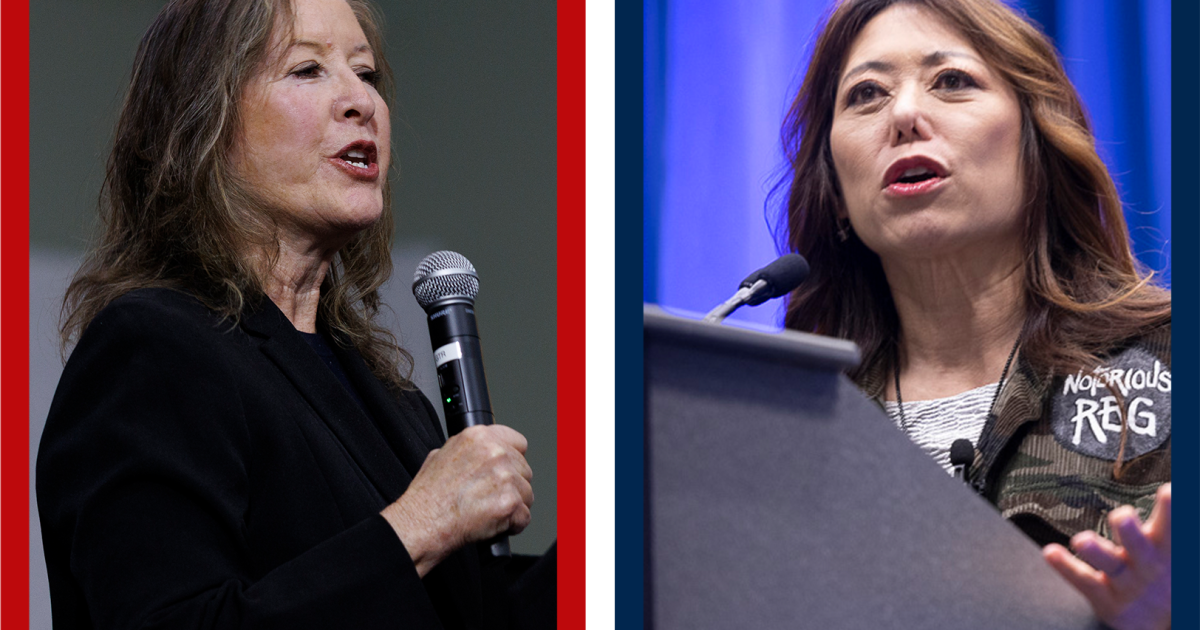
Democrat Fiona Ma, Republican Gloria Romero to face off in race for lieutenant governor
-
 Science29 minutes ago
UC Davis favored less qualified Black, Latino med school applicants, Justice Department claims
-
 Sports32 minutes ago
With eyes of world on Mexico City, El Tri kicks off 2026 World Cup against South Africa
-

 World44 minutes ago
Trade and defence top of agenda at EU-South Korea summit

