Politics
Distracted and Bogged Down, Trump and Xi Enter a Summit of Reduced Ambitions


This is not how President Trump wanted to arrive in China.
When he delayed his long-awaited trip to Beijing by six weeks, Mr. Trump was betting he would arrive in Beijing this week having forced the Iranians to capitulate to his demands. He anticipated that by now the shattered Iranian leadership would have agreed to turn over its nuclear stockpile, forgo its atomic ambitions and reopen the Strait of Hormuz. The message to President Xi Jinping would have been clear: Chinese declarations of a superpower in decline were premature.
Instead, Mr. Trump will arrive on Wednesday with many in China wondering how he got bogged down by a far lesser power in a war he started. Iran’s nuclear stockpile is exactly where it was, still under the rubble of an American bombing raid last June. The Strait of Hormuz, through which China gets more than 30 percent of its oil and a bit less of its natural gas, remains closed, with no obvious plan to pry it open again.
And Mr. Trump looks, as Chancellor Friedrich Merz of Germany said two weeks ago, “humiliated” by a smaller power, having entered the conflict “with no truly convincing strategy.”
But the war is also tricky for Mr. Xi. For all of China’s global ambitions, he has been unable and unwilling to come to the aid of Iran, a political partner and key supplier, and has offered no plan of his own to resume the vital flow of China-bound oil and gas.
The result is that this is a summit like few others. The world’s two major superpowers, eager to demonstrate their dominance, are both bogged down and uncertain about how the Iran conflict will play out in the context of their struggle for military, economic and technological dominance.
The result is that the ambitions for this summit have been greatly scaled back. The honor guards and celebrations will remain intact, and Mr. Trump is bringing a dozen or so of America’s most powerful business executives with him, from Elon Musk of Tesla and SpaceX to Tim Cook, the soon-to-retire chief executive of Apple, to the top executives of Citi, BlackRock, Blackstone, Boeing and Goldman Sachs.
But the early hopes that Mr. Trump will finally begin to address the larger issues that threaten to drive the two nations into a new Cold War competition are quickly fading. The Iran war has been so all-consuming at the White House that, beyond trade and other economic issues, very little has been prepared in advance.
The chief negotiator with China leading up to the trip here has been Treasury Secretary Scott Bessent, evidence of how central Mr. Trump regards the bilateral trade and economic relationship. But turning to the Treasury secretary to take the lead would have been unthinkable in most previous administrations, where the secretary of state and the national security adviser — both jobs currently held by Marco Rubio — would insist on purview over the entirety of the complex relationship.
“For the first time since Kissinger,” R. Nicholas Burns, a longtime American diplomat who was ambassador to China under President Joseph R. Biden Jr., “the secretary of state and national security adviser are not driving the relationship with China.” (Kissinger also held both jobs.)
That may reflect Mr. Trump’s own shifts on China after he came to office for a second term. He ran as a China hawk, denouncing its trade practices and accusing it of stealing American jobs and intellectual property. His first national security strategy, published in 2017, described China and Russia together as challenging “American power, influence and interests, attempting to erode American security and prosperity.” His second, in 2025, described them as potential partners.
That shift will likely be on display this week. Administration officials concede that their Chinese counterparts have refused to talk about their remarkably rapid nuclear weapons expansion, much less the new arms control debates swirling around artificial intelligence. Early hopes for a broad trade framework that gets at the critical issues tearing at their relationship — who controls supply chains, and what kind of investments each nation is willing to tolerate in the other — may get short shrift.
Mr. Rubio will be along. And so will Defense Secretary Pete Hegseth, an unusual, apparently last-minute participant.
Of course, there will be announcements on sales of billions of dollars in American soybeans, which the Chinese need to buy anyway, and doubtless billions in Boeing airplanes and parts. Mr. Xi learned early that the key to dealing productively with Mr. Trump is to start with a full order book for American goods, all the more important because the American trade deficit with China has continued to surge, propelled by China’s overproduction of manufactured goods, which has prompted deflation in Beijing.
As in Mr. Trump’s first term, the rest of the conversation is still something of a mystery, with much left to the private meetings between Mr. Trump and Mr. Xi. Robert Hormats, who helped prepare for some of Kissinger’s first meetings with the Chinese, noted this week that “most of a summit’s outcome should be embedded in the draft communiqué, meticulously crafted by senior advisers and pre-agreed by the two leaders.” The purpose was to “leave no room for misunderstandings or differing characterizations between the two sides in the aftermath.”
At the end of this week, White House officials say, there may be no communiqué at all. Aside from trade and tariffs, which are likely to dominate the summit, here is a look at some of the most contentious issues:
A Growing Nuclear Arsenal
When the last remaining major nuclear arms control agreement, New START, expired between the United States and Russia in February, Mr. Trump said it made sense to negotiate a new treaty only if China — which now has the world’s third-largest nuclear arsenal, and the fastest-growing — was a party to a new accord. In January, in an interview with The New York Times, he said that he planned to bring that up with Mr. Xi, and that the Chinese were open to the idea.
They are not. White House officials say that in the lead-up to the summit, China’s private position was the same as its public one: There is no reason to enter negotiations with Washington and Moscow until Beijing has an arsenal comparable to those of the two other powers. The United States and Russia each have about 1,550 weapons deployed, the limit under New START, but with the treaty’s expiration, they are both free to expand those numbers. According to the Pentagon’s public estimates, China has around 600 weapons, a number expected to rise to 1,000 by 2030 and ultimately to 1,500.
Mr. Trump is likely to raise the topic, one of his senior aides told reporters on Sunday. But don’t expect Mr. Xi to say much.
Cybersecurity and Artificial Intelligence
Eleven years ago, President Barack Obama and Mr. Xi stood in the Rose Garden of the White House and described what amounted to a first accord between the two countries on limiting state-sponsored cyberattacks. Mr. Xi said. “Confrontation will lead to losses on both sides,” Mr. Xi said.
The impetus had been the theft of more than 20 million sensitive personnel records from the Office of Personnel Management. Yet the accord was already unraveling within two years, as China turned to outside contractors to conduct the attacks, and reserved the most sensitive operations for its Ministry of State Security.
In recent times, China has embedded itself into American networks with two very different kinds of cyberintrusions. One is apparently aimed at shutting down American power grids and water supplies in case of a conflict over Taiwan, another at sophisticated espionage that bored deep into the Justice Department’s secret systems, among others.
Now the artificial intelligence competition between China and the United States is making the cybersecurity problem even harder. If there is any technological development that should prompt both leaders to tackle this issue, it is the sudden shock of Mythos, the Anthropic model that has not been released to the public because it is expert at finding vulnerabilities in the computer code in a matter of milliseconds, speeding up hacking. That is a deeper threat to the systems that control everything from electric grids to missile targeting systems.
Mr. Trump is considering an executive order that would require all such new models to undergo a government review before they are released, a reversal of the administration’s approach so far. But American experts believe a Chinese equivalent may only be months away, and the only arms control that might work in this arena is one in which the two countries work together.
So far the only agreement in recent times on artificial intelligence came between Mr. Biden and Mr. Xi, who agreed in 2024 not to allow A.I. products to control nuclear weapons. And that basic, common-sense accord took months.
Taiwan
The White House says to expect no significant changes on Washington’s policy toward Taiwan, dismissing talk that Mr. Trump might be persuaded by Mr. Xi to be more explicit in opposing Taiwanese independence.
Chinese officials have been urging Mr. Trump to change the wording American officials use, from saying that the United States “does not support” Taiwan independence to actively “opposing” it.
It is unlikely that change will happen, at least in any formal way. But Mr. Xi may be counting on Mr. Trump using informal language to speak about a subject in which every word is parsed and measured. Looming over the discussions: what would happen to Taiwan Semiconductor Manufacturing Company, which makes most of the chips that go into building A.I. models and that power the iPhone and countless American weapons systems.
Supply Chains
Past generations of diplomats who dealt with China struggled with questions like how a non-market economy could integrate with a market one. Now the question is how to deal with two countries that believe they are overdependent on each other.
Mr. Trump’s administration is intensifying a drive to hunt down and replace every source of Chinese supply for critical American systems, particularly weapons. That means building new sources of everything from rare earth processing to the manufacturing of many kinds of semiconductors.
China is doing the same, seeking to wean itself from relying on U.S. technology. And while the two sides insist they are seeking to “de-risk” rather than “decouple” their economies, these projects are clearly intended to prepare for a day when the two nations are in a deep Cold War, or a hot one. Washington’s limits on sending the fastest semiconductors to China, and Beijing’s on rare earths mined chiefly in China, could be just a start.
But presidents do not usually talk supply chains. And that is unlikely to change.
“Gone is any pretense of solving the major structural issues at the heart of the world’s most important bilateral relationship: China’s mercantilist economic model, its designs on absorbing Taiwan and its active support of U.S. adversaries such as Iran and Russia,” Michael Froman, the U.S. trade representative during Mr. Obama’s second term, wrote last week. “As such, the summit is unlikely to alter the character and course of the U.S.-China relationship long-term. It is about managing for stability, not solving outstanding concerns.”



Politics
Biden special counsel’s ‘runaway train’ scooped up sensitive lawmaker info: ‘Abuse of power’

NEWYou can now listen to Fox News articles!
Former special counsel Jack Smith’s investigation into President Donald Trump swept up text messages from nearly 50 members of Congress, bypassing a required review process in what one victim alleged is a direct constitutional violation.
Senate Judiciary Committee Chairman Charles Grassley, R-Iowa, said the situation is more proof Smith’s probe was a “runaway train” of abuses of power, and the elder statesman and Senate Investigations Subcommittee Chairman Ron Johnson, R-Wis., jointly released their filings Tuesday evening.
Grassley and Johnson’s findings were from a full-scale probe of Operation Arctic Frost, the code name for Smith’s endeavor to investigate Trump for alleged corruption and election malfeasance, an operation top Senate Republicans call “worse than Watergate.”
LEGAL WAR ON TRUMP’S AGENDA GAINS FIREPOWER AS FEDERAL LAWYERS DEFECT TO DEMOCRATS
Jack Smith, former U.S. special counsel, arrives for a closed-door deposition before the House Judiciary Committee in Washington, D.C., Dec. 17, 2025. (Getty Images)
Forty-four members of Congress had the contents of their text messages obtained and reviewed by Smith’s team in a way that bypassed protocol. A “filter team” was tasked with reviewing millions of documents in the case and should have had first crack at determining whether such messages were relevant or potentially violated statute or ethics.
Rep. Elise Stefanik, R-N.Y., one of the lawmakers whose texts were swept up in this way, said Tuesday such reviews amounted to clear violations of the Constitution’s speech and debate clause that protects lawmakers from being questioned in “any other place” than the Capitol for legislative acts.
Internal communications have been historically included in that clause in the courts as technology has advanced.
SUPREME COURT JUSTICES HEAD TO CAPITOL HILL FOR FIRST CONGRESSIONAL APPEARANCE SINCE 2019
Stefanik said in a statement that the new records prove Smith’s team “unlawfully and unconstitutionally accessed my private text messages, along with 43 other Members of Congress, in clear violation of the Constitution.”
She said she long suspected there had been “unconstitutional spy[ing] on members of Congress.”
The records were provided by the Trump Justice Department to Grassley and Johnson, which the chairmen said indicated Smith’s team had “circumvented its own filter review process.” The process is additionally meant to protect attorney-client privilege, they said in a statement.
OBAMA-APPOINTED JUDGE TORCHES TRUMP ADMIN IN LATEST COURTROOM SHOWDOWN, REFERS ATTORNEY FOR BAR REVIEW
Former special counsel Jack Smith says the Pledge of Allegiance before he prepares to testify during a hearing before the House Judiciary Committee in the Rayburn House Office Building on Capitol Hill Jan. 22, 2026, in Washington, D.C. (Al Drago/Getty Images)
The news also complicated some of Smith’s prior depositions under oath, including an excerpt in which he answered “no” to a question from a congressional counsel whether records he requested from congresspeople included text messages.
Johnson called the situation a “grotesque example” of Biden-era “weaponization” of the executive branch.
“Jack Smith’s criminal investigation of President Trump was a runaway train that had no brakes,” Grassley added Tuesday.
“Based on the information that’s been produced to me and Senator Johnson, Biden DOJ and FBI investigators apparently ignored their own routine investigative protocols to obtain and review work-related messages from me and dozens of my Republican and Democrat colleagues who were outside the scope of the government’s investigation.”
Grassley added that he hopes Democrats caught up in the otherwise bipartisan text tranche will finally discard their partisanship and recognize the severity of the alleged violations by Smith.
He also indicated he planned to recall Smith before Congress to “hold him accountable.”
Of the 44 members swept up in the text reviews, several were Democrats, including Los Angeles Mayor Karen Bass, Rep. Josh Gottheimer, D-N.J., Sen. Cory Booker, D-N.J., and the top Democrat on the House Armed Services Committee, Rep. Adam Smith of Washington.
Grassley, Johnson and Stefanik were also swept up in the situation, along with top figures like senators Mike Lee, R-Utah; Josh Hawley, R-Mo.; Dan Sullivan, R-Alaska; Rand Paul, R-Ky., former Senate Republican Conference Chairman Lamar Alexander, R-Tenn.; and the late Lindsey Graham, R-S.C.
SIGN UP TO GET THE POLITICS NEWSLETTER
Former House Intelligence Chairman Devin Nunes, R-Calif., was one of the victims, along with current House Judiciary Committee Chairman Jim Jordan, R-Ohio, as well as House Freedom Caucus member Scott Perry of Pennsylvania, EPA Administrator Lee Zeldin of New York, Veterans Affairs Secretary Doug Collins of Georgi, and prominent Trump critic Rep. Thomas Massie of Kentucky.
CLICK HERE TO DOWNLOAD THE FOX NEWS APP
Several lawmakers sounded off on the news soon after Grassley announced his findings, including Hawley, who called for “everyone involved [to] be prosecuted.”
“Joe Biden’s DOJ not only tapped my phone; I just learned they illegally obtained my texts with members of President Trump’s administration,” the Missourian fumed.
Paul called the allegations a “blatant abuse of power and exactly what our Founders warned about,” while citing Smith’s past denial under oath.
Fox News Digital reached out to a representative for Smith for comment.
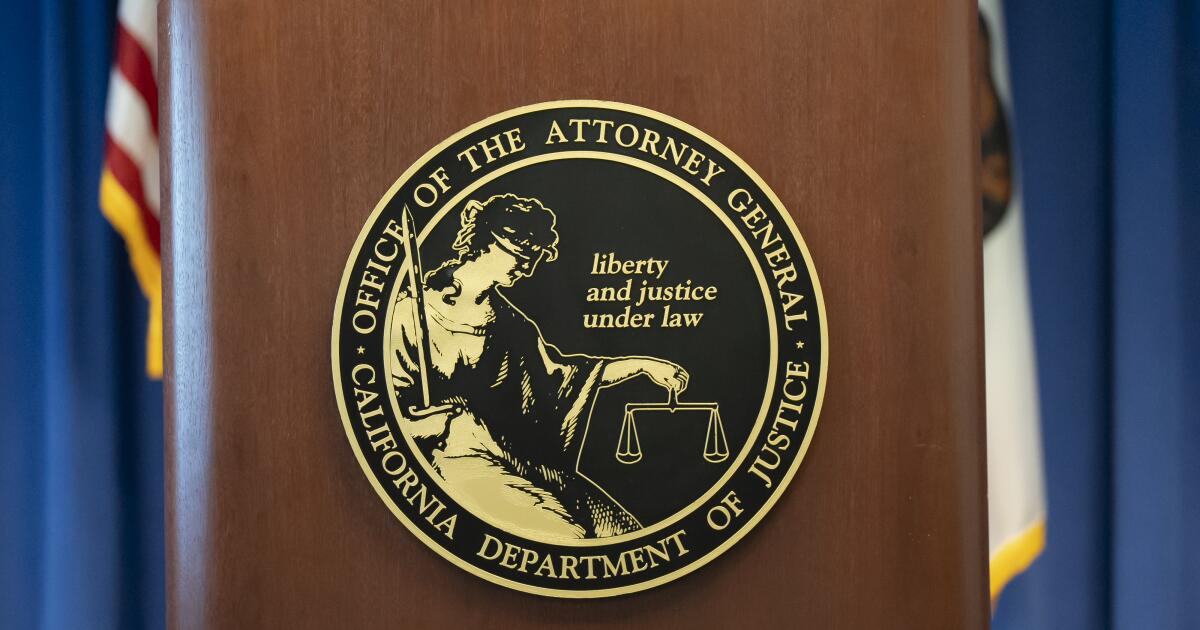
The federal government agreed to temporarily hold off on construction of a planned Immigration and Customs Enforcement facility in Northern California.
The voluntary pause until Sept. 9 comes after the California Atty. Gen. Rob Bonta and Santa Clara County officials sued the Trump administration last month to block the facility from being developed near Gilroy. The lawsuit remains ongoing.
“This pause in the construction, demolition, and development at the site of the challenged ICE facility is a significant step towards protecting our people, our communities, and our environment while the case remains ongoing,” Bonta said in a statement Monday night.
The Department of Homeland Security, which oversees ICE, didn’t immediately reply to a request for comment.
State and local officials believe the facility will be used for short-term detention of up to 150 people at a time, though ICE denied that it would be a detention center.
Community members and advocates for immigrants swiftly opposed the project. ICE has consistently looked to increase its detention capacity in California, where eight detention centers can now hold a combined 9,000 people, though the state has long been a thorn in the agency’s side.
The halt is part of a compromise between both sides involved in the legal action. After the state and county submitted a request for the court to temporarily halt the project, a hearing was set for Oct. 7.
Now, state and federal officials jointly requested that the court move up the hearing by at least a month. The agreement also extends how much time the federal government has to respond.
A federal judge signed off on the agreement Monday night.
The lawsuit, filed in U.S. District Court in San José, alleges that the leased land is zoned exclusively for agricultural use and that the federal government violated laws requiring state and county notification, as well as procedural steps before beginning construction.
Supreme Court justices are asking lawmakers on Capitol Hill to increase their 2027 budget, with most of the additional funding earmarked for security. Ann E. Marimow, a New York Times reporter, explains why the justices say these measures are necessary to protect them from rising threats.
-

 Los Angeles, Ca48 minutes ago
Southern California hits hottest day of its extreme heat warning
-

 Detroit, MI1 hour ago
Steve Yzerman out as Detroit Red Wings GM, moves to senior advisor role
-
 San Francisco, CA1 hour ago
Supervisors urge California to expand S.F. speed-camera program
-

 Dallas, TX2 hours ago
Five teens injured after crashing carjacked vehicle during Dallas police chase
-

 Miami, FL2 hours ago
Tokyo-style Neapolitan pizza is coming to Miami, led by legendary pizzaiolo chef Bun
-

 Boston, MA2 hours ago
SEE THE GOOD: Roxbury center reminds young adults ‘You got this’ – Boston News, Weather, Sports | WHDH 7News
-
Denver, CO2 hours ago
Five Points affordable housing building honors Dr. Justina Ford | Rocky Mountain PBS
-

 Seattle, WA2 hours ago
Seattle weather: Hot and sunny day Wednesday, highs in the 80s


