Lifestyle
At Santee Alley, come ready to shed rigid assumptions and play


This story is part of Image’s March Outside issue, a celebration of the Los Angeles outdoors and the many lives to be lived under its unencumbered sky.
There are old family photos of house parties from the ’70s that I like to stare at, of my uncles looking suave posing in a living room like they’re at the club about to take over the dance floor. Today, I’m thinking of them and of the exaggerated lapels on their leisure suits, of unbuttoned shiny shirts showing hints of a sun-kissed chest, and of a baby blue suit worn with a relaxed brown polo tucked in. As I walk through the Cosmo Plaza Food Court at 935 Santee St., where I parked my car on the roof, I pass a group of young girls eyeing the cotton candy quinceañera dresses and a pair of tourists pointing to their next destination. It’s a warm Friday afternoon in Santee Alley and I’m searching for some menswear.
“Se encuentra algo like this?” I ask store owner Pedro Ramirez of RJ Suits located on 1138 S. Santee Alley. We huddle around my phone as I show him images of Bad Bunny in the music video “NUEVAYoL” and Don Johnson in a pastel linen suit from an episode of “Miami Vice.” Ramirez looks up at his crowded inventory of electric, sequined imported ensembles and starts pulling suits down for me. Across the way, a salesperson calls out to pedestrians to come in to visit her shop. A man in a lowrider bike weaves through the crowd while another merchant blows bubbles to the delight of little kids.


Just a few weeks before, in January, federal immigration officers stood menacingly on the corner of Maple Avenue and 11th Street. No one was taken but the damage was done that day with vendors locking their doors to protect themselves. Compared to even last summer, it’s much quieter now, with fewer customers looking for bargains and crowding shoulder to shoulder. Yet the Alley persists in spite of all this. The 150 shops are a vital source of livelihood for many and an illustration of resilience. Santee Alley was born out of unconventionality with its makeshift stores designed to break retail rules. It is a place unlike any other in L.A., where customers can imagine sartorial possibilities that reflect back the uniqueness of our city’s inhabitants. Come ready to shed any rigid assumptions and play.
“This is very fancy,” Ramirez says as he shows me a soft, teal blazer covered with floral appliqués. Ramirez started selling in Santee Alley 25 years ago, when, he recalls, stores sold designer labels at cost and most merchants were Iranian not Latino. Now the alley has more of a swap meet feel, he says. I give the blazer a try.
Santee Alley, a.k.a. Los Callejones, may be nestled in the Fashion District but the place has its own DNA, unpretentious with its kaleidoscope of items to buy, from scented oils to lingerie to work uniforms. Santee came into existence in the mid-to-late 1970s for apparel businesses to sell their overstock items on the weekends. Now open 365 days, as the sign on Olympic Boulevard states, Santee Alley is our very own bazaar. Come with cash. Haggle if you want. Listen to the cumbia by young singer Estevie dedicated to the alley to get you prepped. “Barato pero me siento caro.” Yes. Cheap but leave feeling rich.


The first time I visited Santee Alley was 20 years ago when I moved to Los Angeles from the Bronx, New York. I didn’t have a sense of direction, always felt lost. Downtown was a labyrinth to me, but when I hit Santee Street and Olympic Boulevard, everything clicked into place. With its overly sensory stimulation and DIY retail spaces, Santee Alley reminded me of home. Reggaeton and banda music blared from the stores while I stocked up on the essentials: gold hoops, baseball hats and workwear to set me up in my new life. Throughout the years, Santee Alley has become a place for me to bring closer the family I left, a space where I can unabashedly experiment with my style through their selection of menswear.
When I was in high school, hip-hop was my soundtrack. We didn’t have much money, so I “shopped” in my father’s closet. I wore his Fila blue sweater with the F logo prominent and all the guys at school wanted to cop it. Meanwhile, my father was wondering why his blazers were going missing. Back then, dressing in menswear made me feel safe. The oversize blazers conjured up armor for the streets, as in, we’re outside taking care of business. I want to go back to that feeling. At Sinai Blankets on 1219-B Santee Alley, I try on a couple of Dickies shorts in a khaki color, extra stiff, while making a mental note of the Ben Davis workwear jackets displayed on the walls.

When I see Paulina López-Velázquez co-owner of Mexican restaurant Guelaguetza, she tells me she shops at the Alley for her monthly party, I Love Micheladas. She gravitates toward “super banda” outfits, shiny shirts with floral prints worn over jorts. “The stuff that I wear is for men, and I just reinvent it and reimagine it,” she says. López-Velázquez moved to L.A. from Oaxaca 30 years ago, when she was 13. “Any space that makes me feel connected or at home or makes me feel like I belong, because this is my people, I love to be there. And Santee Alley is one of those places.”
The Alley may feel like a chaotic space, but it’s about tapping in to this emotional dance to evoke the familiar. A memory is unlocked in a pair of slouchy carpenter pants and delicate stacks of golden jewelry, and the longing for home is temporarily satiated.
I’m shopping alongside a young college student who says she drove in from the Bay Area not knowing what to expect on her first visit. She admires the range of ranchero wear and tells me she’s looking for something fun to wear to go dancing later in the week. We both eye the big belt buckles. There’s also a nice selection of long-sleeved, men’s guayabera shirts, imported from Mexico, that would look great over a flowy skirt, I suggest. Nearby, two girls try on cowboy hats available in vibrant hues. In this moment, I can’t imagine a narrative where Santee Alley ceases to exist. Recent raids may try to instill fear, but this special communal space feels impervious to such weak displays. To lose it would mean to vanish a snapshot of what makes this city glorious.


Heading back toward Olympic, I enter David Apparel on 1019 Santee St. The menswear collection here is sporty with Gucci-esque matching outfits and dressy shirts emblazoned with lions. The last purchase I bought there was a tracksuit with green, red and blue stripes on the sides. Whenever I wear it I feel like Colin Farrell in the movie “The Gentlemen.” In the far corner of the store, a father with his son negotiates a price for a button-up while the song “Te Boté” by Ozuna plays loudly from a hidden speaker.
“Baby, la vida e’ un ciclo.” Bad Bunny raps his verse on the song reminding me of how life is a circle. I’m told linen suits will be coming in soon in the pastel colors I’m looking for. I pull a brown polo shirt from an overstuffed rack and press it against me. I check myself out in the mirror and wonder, would the uncles approve?

Lilliam Rivera is an award-winning author of fiction.

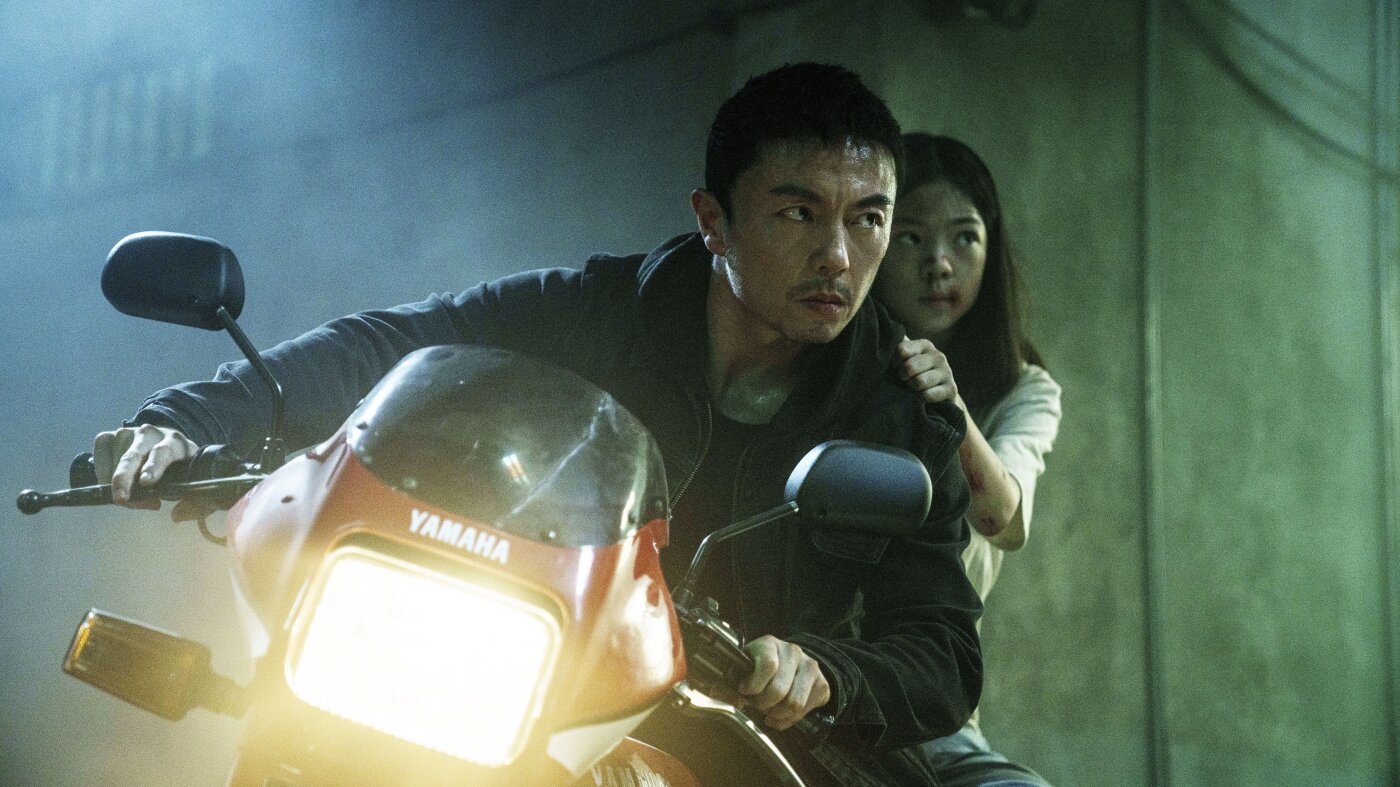
Xie Miao and Yang Enyou in The Furious.
Norachai Kajchapanont/Lionsgate
hide caption
toggle caption
Norachai Kajchapanont/Lionsgate
There have been some fantastic movies released this year, and we know you can’t see them all. So we’re recommending four recent movies we missed that you should add to your watchlist: The Furious, Tuner, She’s The He, and Heresy.
If you need a few more fun film recommendations, check out these episodes:
Fun movies you may have missed
Our favorite movies on Tubi
We debate the best movies to watch on an airplane
Connect with Pop Culture Happy Hour:
Letterboxd / Facebook
Our weekly newsletter
Support Pop Culture Happy Hour+

A tarp covers the facade of the John F. Kennedy Memorial Center for the Performing Arts in Washington, D.C., on June 13. A federal judge has asked the arts complex’s leadership to explain the purpose of the tarp and the surrounding scaffolding.
Alex Wroblewski/AFP via Getty Images
hide caption
toggle caption
Alex Wroblewski/AFP via Getty Images
On Wednesday, the federal judge overseeing the Kennedy Center lawsuit ordered the center to give him a status report on the center’s operation and programming within the next few weeks. Judge Christopher R. Cooper also said that the Kennedy Center must explain the purpose and status of the tarp and scaffolding that have been placed over the front of the arts complex, where until recently both President Trump and President John F. Kennedy’s names were both displayed.
In a directive issued last Tuesday, Judge Cooper had given Kennedy Center administrators three days to update him on the arts complex’s immediate plans regarding construction, programming and public access. Trump, who now serves as the center’s chairman, had announced July 5 as the date the venue would close for major renovations.

Last Friday, on Cooper’s due date, lawyers for the Kennedy Center filed a request asking for an extension. In that filing, Matt Floca, who was promoted as the center’s president and CEO in March, said that the Kennedy Center’s current management intends to present its board with “an array of options” for trustees to vote on at their next meeting on an unspecified date in mid-July.
According to Floca, the options are a complete closure for extensive renovations; a partial closure “enabling some continued public access and limited programming” while some renovations are undertaken; and “a highly limited series of phased closures to address only the center’s most serious infrastructure needs while scheduling and maintaining a full slate of programming.”
In his newest order, Cooper denied Floca’s request for an extension. And he mandated that the center file a status report within seven days of the center’s July board meeting or by July 31, whichever date is earliest. He also ruled that the report must “indicate the purpose for and status of the tarp and scaffolding,” which were erected by workers over the center’s front signage in the early morning hours of June 13.
When asked for comment Wednesday, the Kennedy Center pointed back to the documents its legal team submitted to the court.
The tarp and scaffolding on the center’s front portico went up after the Kennedy Center’s administration slow-walked the court-mandated removal of President Trump’s name from the front of the center and from all digital materials, which was supposed to happen no later than June 12. Workers removed the lettering overnight into the following morning, hours after the federal court’s original deadline, and covered the center’s sign with a tarpaulin.
As of Monday, the sign remains hidden from the public.

Trump’s name was scrubbed from all of the Kennedy Center’s digital content on June 4, the same day an email order to do so was issued by the complex’s legal team; NPR obtained this memo the day it was sent out to Kennedy Center staff.
These court orders are part of the ongoing lawsuit filed by Rep. Joyce Beatty, D-Ohio, against President Trump and the board of the Kennedy Center. Earlier this year, Cooper ruled that Beatty, an ex-officio member of the Kennedy Center board, must be allowed to participate in board meetings. NPR has asked Beatty if she plans to vote at the July board meeting, but did not receive an immediate response.
It would be very difficult for the Kennedy Center to revive a thriving programming lineup for the months ahead. Over the past year, many prominent artists canceled their planned appearances, citing the politicization of the venue. Most of the center’s programming staff have departed, either via layoffs or resignations. Unlike top administrators at other major performing arts venues around the country, Matt Floca has no experience in artistic direction, fundraising or arts administration; formerly, he was the center’s head of facilities, and he holds a bachelor’s degree in construction management.
Established artists who typically perform at the Kennedy Center generally have their touring schedules set at least a year in advance, if not multiple years ahead. In years past, the center has publicly announced its upcoming season in mid-spring for performances beginning in September and running through the following summer.

Currently, only a handful of outdoor free movie screenings of nostalgic favorites like The Princess Diaries and Clue appear on the center’s calendar of events, along with some participatory workshops for kids. In the past, the Kennedy Center presented over 2,000 arts and education events each year.
The center also recently became ensnarled in litigation with one of its longtime tenants and artistic partners. On June 12, the Washington National Opera, a company formerly in residence at the Kennedy Center, sued the complex for $17 million. It claims that the Kennedy Center had withheld “years’ worth of donor gifts, bequests and endowment funds” that had been intended specifically for the WNO.

Denis Novikov/Getty Images
I tend to romanticize summer. The movies and TV shows I grew up with made me think that the season was about adventure and big-time transformation.
I imagined myself building a tight-knit friend group and getting out of a pickle together, like in The Sandlot or Camp Nowhere. Or traveling across the world, say, to Greece, like Lena Kaligaris, a character in The Sisterhood of the Traveling Pants, having a whirlwind summer romance and returning an entirely different person.
I’ve never actually had a summer like that.
Even when your expectations are more modest than mine, “so often, the summer just flies by, and we haven’t taken the picnics or gone for the day trip or whatever it was that we thought we were gonna do,” says happiness expert Gretchen Rubin.
Rubin, author of The Happiness Project and host of the podcast Happier With Gretchen Rubin, has been sharing ideas on social media about how to make the season more memorable and satisfying.
She walks through four exercises to help you get what you want — and more — out of the season. Print out our worksheet here, fill it out and stick it on your fridge to keep you accountable. Or take a screenshot and post it to Instagram (don’t forget to tag @NPRLifeKit!).
🍑 Give your summer a theme
Pick a single word or phrase that you want to embrace this season — something that captures the feeling you want to have over the next few months.
“My theme for the summer is ‘ketchup,’” Rubin says. “It has a kind of a summer feeling, because you think of putting ketchup on your burger.”
“It’s a metaphor,” she says. It means to look for “whatever I could add [this season] to make something elevated and more fun.”
Meanwhile, my theme word this summer is “juice.” I no longer think that I need to travel far or completely transform to have a delicious summer. I just need to take advantage of the abundance that the season offers: ripe peaches and tomatoes, juicy softball pitches and the opportunity to feel juicy in my body when I wear a bathing suit.

Print out our worksheet here, fill it out and stick it on your fridge to keep you accountable. Or take a screenshot and post it to Instagram (don’t forget to tag @NPRLifeKit!).
Malaka Gharib/NPR
hide caption
toggle caption
Malaka Gharib/NPR
🪣 Create a summer bucket list
What do you want to do this summer? On my bucket list: ride the Ferris wheel at a summer fair, have more barbecues at my parents’ house and see the sunrise at least once.
There might even be something you don’t necessarily want to do but have been trying to accomplish for a long time — like cleaning out the garage or learning how to swim.
“Some people love a long list with a lot of easy things to cross off,” Rubin says. “I’m a fan of that approach myself.”
But some people like a list with fewer goals that are more ambitious. If you take this path, just make those items realistic, she says. “It’s easy to get discouraged if you set the bar too high.”
🏁 Set a fun challenge
It could be fun to gamify a few of the items on your bucket list — or to come up with an entirely different kind of dare for yourself.
You might try 10 new taco joints this summer or read five romance novels. Or you might come up with a theme, like “Freaky Flavor Friday,” Rubin says. Every Friday, you go to a different ice cream shop and try a new and ambitious flavor.
A good challenge can make your summer feel more memorable, she says. “If you did ‘Freaky Flavor Friday’ all summer long, that would stand out in your mind. Years later, you’d be like, ‘That’s the summer I discovered creamed corn ice cream.’”
Two challenges I’m considering: taking a swim class and rewatching all the best Pixar movies.
🖼️ Take a “five-senses portrait”
Experience the summer through your five senses — then reflect on each one. What does summer look like, smell like, taste like, sound like and feel like?
“It’s one thing to look at photographs, but that’s very flat,” Rubin says. “A ‘five-senses portrait’ puts you back into that experience. It’s a creative, fun way to look back on summer and capture the memories that you’ve created.”
Do this exercise either for your whole summer or for a specific summer adventure, she says. Do it with yourself or with a group. You can journal about it, make a collage, draw a picture or simply have a conversation.
When I think of summer, here’s what comes to mind: the smell of smoke from a crackling outdoor fire and the taste of toasted marshmallows on a stick.
More summer-worthy goals from Life Kit
Learn how to swim. Knowing how to swim can help you have fun at the pool or beach this summer. But it could also save your life. Here are some tips to start swimming at any age.
Focus on rest and relaxation. In Dr. Saundra Dalton-Smith’s book Sacred Rest, she outlines different kinds of rest you may be craving. From the mental to the physical, Dalton-Smith shares how to identify what kind of respite you need and how to embrace rest.
Get into running. Ready to kick-start a new running habit? Coach Martinus Evans breaks down a common misconception to get you into the mindset and offers quick tips on pace, form and more.
Declutter your home. Got piles of stuff you just can’t seem to get rid of? Professional organizer Star Hansen explains how to let go of unnecessary items and keep your home neat and tidy.
This episode was produced by Clare Marie Schneider. The story was edited by Meghan Keane. The visual editor is CJ Riculan. We’d love to hear from you. Leave us a voicemail at 202-216-9823, or email us at LifeKit@npr.org.
Listen to Life Kit on Apple Podcasts and Spotify, and sign up for our newsletter. Follow us on Instagram: @nprlifekit.
-
Connecticut2 seconds ago
Connecticut man charged with murdering Duxbury woman is an
-

 Delaware7 minutes ago
Officer shoots, kills 19-year-old in Wilmington, Delaware, during foot chase, police say
-

 Florida10 minutes ago
Gators among top-20 rated teams in EA Sports College Football 27
-

 Idaho20 minutes ago
Dorothy Moon reelected to third term as Idaho GOP chair
-

 Georgia22 minutes ago
The Farmer’s Dog Partners with the University of Georgia College of Veterinary Medicine to Advance Veterinary Nutrition Training
-

 Hawaii25 minutes ago
Sewer rate hikes proposed – West Hawaii Today
-

 Illinois37 minutes ago
Man buys winning $1.3 million jackpot ticket at suburban gas station
-

 Indiana40 minutes ago
‘Foul play’ suspected in death investigation on Indiana-Ohio state line, Wayne County officials say

