Louisiana
‘New Orleans wrecked me’: How a young pastor’s time in Louisiana reshaped his faith


Jared Stacy doesn’t talk about his years in New Orleans as a charming chapter of early adulthood. He talks about them as devastation — the good kind.
“New Orleans wrecked me in the best way possible,” he said.
Near the end of his time in Louisiana, Stacy attended what he thought was a prayer gathering for pastors at LSU’s Pete Maravich Assembly Center. Instead, he found himself crossing a protest line between a Christian rally and pro-choice demonstrators — a moment that unsettled him in ways he didn’t yet understand.
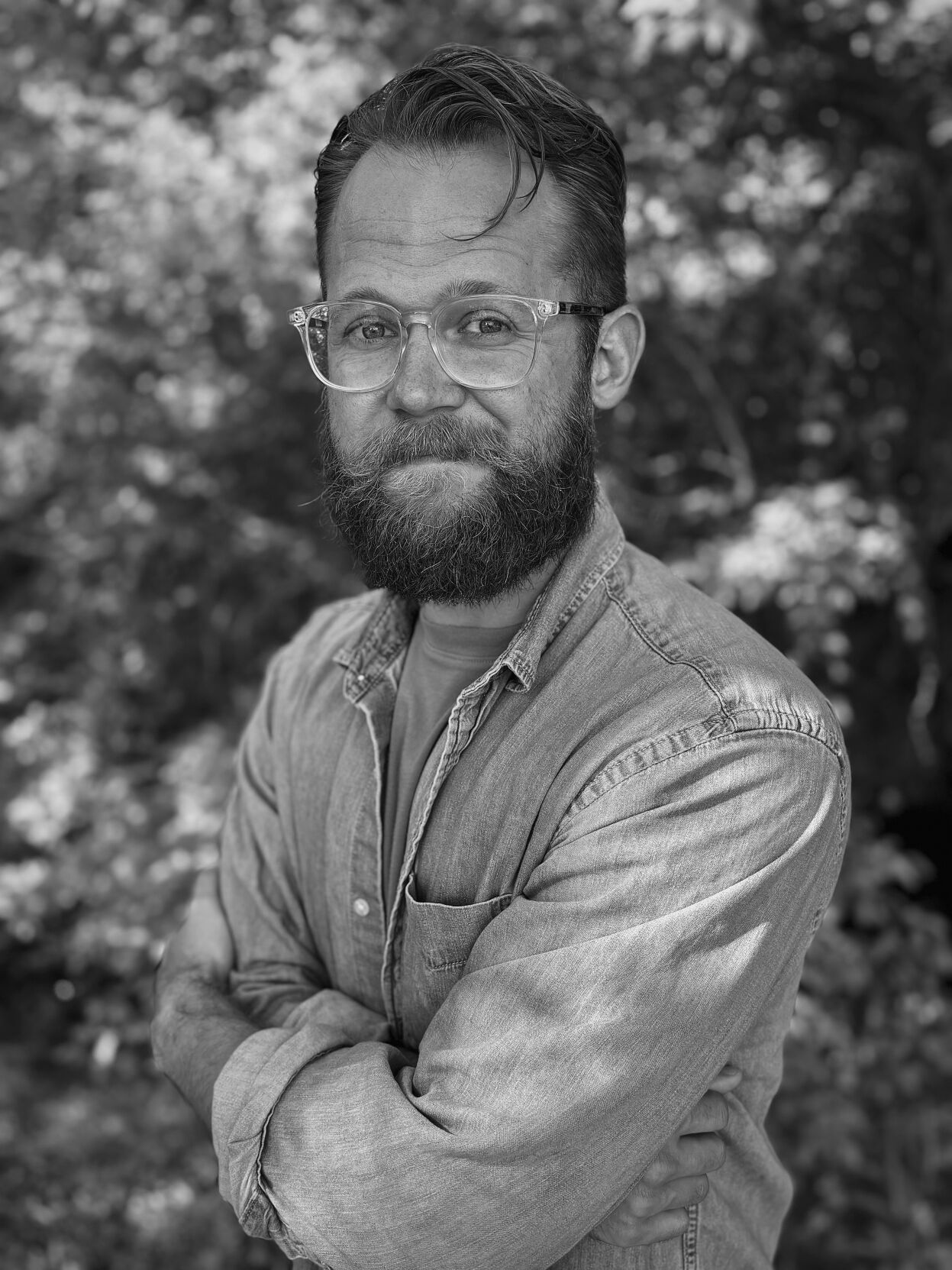
Author Jared Stacy’s new book, “Reality in Ruins: How Conspiracy Theory Became an American Evangelical Crisis,” will be released March 17. The book is published by HarperCollins.
Stacy, now 35 and living in St. Petersburg, Florida, grew up in a conservative Baptist environment that he describes as “hard right and far right.” As a child, the word “fundamentalist” simply meant serious Christianity.
In the church culture he knew, faith was defined by certainty — about theology, politics and the boundaries between believers and everyone else.
Living and working in New Orleans began to chip away at that certainty.
The experience eventually became the starting point for his work examining conspiracy thinking inside American evangelicalism — and for his new book, “Reality in Ruins: How Conspiracy Theory Became an American Evangelical Crisis,” which will be released March 17 by HarperCollins.
“I definitely grew up and knew the language,” he said. “Fundamentalist was a good thing. To me as a kid, it just meant we were Christians. We were serious Christians.”
A storefront church in Metairie
After marrying his wife, Stevie Noble, the couple chose New Orleans in 2012 so they could both pursue graduate degrees. Stacy enrolled at New Orleans Baptist Theological Seminary in Gentilly. Within six months he was pastoring a small church in Metairie.
The congregation met in a storefront church near Fat City, where apartment buildings, parade routes and late-night restaurants filled the surrounding blocks and the church door stayed open throughout the week. Neighbors drifted in and out. The surrounding neighborhood — dense, pedestrian and diverse — exposed him to people he had rarely encountered in his upbringing.
“People just walked in,” he said.
That environment brought him into conversations he had rarely experienced before.
The congregation included people with different political views and life experiences than the communities he had grown up around.
“I remember thinking, ‘Man, I’m going to church with people who are Democrats,’” he said. “That was a first for me.”
Living and working in the New Orleans area slowly dismantled assumptions he had carried since childhood. He says that the experience was not dramatic in the moment, but it gradually reshaped how he understood faith and the people around him.
“I really felt like I was the one being pastored just by the experience itself,” he said. “I didn’t have the language to be able to articulate the sort of changes that were occurring. The ways that my lived theology was undergoing a crisis that I didn’t realize.”
At the time, he did not fully understand the internal shift that was happening. Years later, those experiences would shape his academic work.
His book examines the long relationship between evangelical Christianity and conspiracy thinking in the United States. One of his central arguments is that conspiracy theories are not a recent intrusion into evangelical culture but something woven into its history.
“Conspiracy theory is very much like a load-bearing wall in the evangelical house in America,” he said. “It is a feature, not a bug.”
The idea deepened during his doctoral studies at the University of Aberdeen, which he completed in 2024.
The more he studied American history and evangelical culture, the more he saw how persistent conspiracy thinking had been.
“You can’t tell the story of America without conspiracy theories,” he said. “These stories are always the things that get told when we’re afraid of society getting turned upside out.”
What surprised him even more was how resistant those beliefs are to correction.
Fact-checking alone, he said, rarely changes deeply held beliefs shaped by religious or cultural narratives. Instead, he argues, conspiracy thinking often operates inside broader stories people already believe about the world — stories that make some claims feel plausible and others impossible.
Modern technology has only accelerated that dynamic.
“We are living with more facts, more information than we’ve ever lived with before,” he said. “And, ironically, we are less able to parse fact from fiction, reality from disreality than perhaps at any other time.”
For Stacy, those questions are not purely academic.
After their time in New Orleans, Stacy and his wife moved to her childhood church in Fredericksburg, Virginia.
“We didn’t realize how much we had changed. We thought we were going back to somewhere familiar,” Stacy said, “but that was the place where we began to work through how our beliefs changed and the contradictions between our beliefs and the Southern Baptist Convention were unveiled in a local, concrete place.”
From Fredericksburg, Stacy decided to go back to graduate school to earn a doctorate.
His research intersects with his own spiritual journey and with debates inside American Christianity about power, politics and belief.
He describes his approach as “doing theology against theology” — using Christian ideas to challenge political or religious movements that claim Christian authority.
“I do that as an insider,” he said. “I was in there — and I called White Christian nationalism just Christianity.”
The urgency of the problem, he argues, is not simply theoretical.
The stories communities tell about one another can shape how people treat each other in the real world.
“I call it a crisis because there are real human communities, human lives, human bodies that are placed in physical risk because of the stories we tell,” he said.
But the word “crisis,” he said, also carries another meaning.
Moments of crisis demand decisions.
“A crisis in the truest sense of the word calls for a decision,” he said. “To not choose is to choose.”
Noticing the signs at LSU
Walking across LSU’s campus with a Bible in hand, Stacy joined a group heading toward the event at the PMAC. Along the way, he struck up a conversation with an English professor walking beside him.
As they neared the PMAC, Stacy noticed the signs. He realized that the people he was walking with were part of a pro-choice demonstration that he would have to walk through to attend the Christian rally inside.
The moment forced him to confront two worlds colliding in the same space.
“I suddenly look around and realize that they are holding pro-choice signs,” he said. “And I have this moment where the guy that I was walking with, and I suddenly recognized that we’re not part of the same people here.”
Crossing the protest line to enter the rally unsettled him in ways he could not fully explain at the time.
He now sees that moment as an early glimpse of the religious and political fusion he later studied.
“I had this very unsettling sense that maybe the Jesus that I worshipped would not have crossed that picket line,” he said. “I felt like this lit professor and I might have had a lot to talk about. I’m like crossing this protest line to go to a prayer rally.”
Looking back, he says those kinds of experiences helped him recognize how closely political rallies and religious revivalism could mirror each other, seeing the two as almost indiscernible.
A crisis inside evangelicalism
Today, Stacy works as a hospice chaplain and attends what he describes as a “post-evangelical” church in St. Petersburg. The congregation still recites ancient Christian creeds and the Lord’s Prayer each week, but it has moved away from the evangelical label.
The shift reflects a broader attempt to acknowledge the tradition the church came from while moving beyond it.
“If we just give it up,” he said of the label evangelical, “no one has to say they’re sorry.”
Stacy still considers himself a Christian, though his faith looks different from the one he inherited and knew as a child. He says that his faith has been totally altered — and yet it hasn’t changed at all.
Part of faith, he believes, involves letting go of illusions.
“I think part of the Christian faith involves being dispossessed of our illusions,” he said.
For pastors and believers wrestling with the tensions he describes, Stacy says speaking honestly may come at a cost and that “courage can look like ruin.” The choice to challenge conspiracy thinking or Christian nationalism can threaten careers and congregations.
Pastors who speak out, he acknowledged, may lose jobs, relationships or stability. But, he says, silence carries its own consequences.
“Our world needs not just analysts and experts,” he said. “It also needs witnesses.”
For Stacy, that journey began years earlier in a storefront church in Metairie — where the certainty he once carried first began to come undone.


MONROE, La. (KNOE) – Shelby Bordelon of Iberville Parish was crowned Miss Louisiana 2026 Saturday night in Monroe, earning the title and a $15,000 scholarship. Bordelon, a graduate student at Southeastern Louisiana University, said the role is about more than pageantry, emphasizing the yearlong service mission tied to the crown.
“Part of the mission of this organization is the service behind it,” Bordelon said. “And the service is so important, you are serving your state for a year… having the opportunities to connect with others… to continue making an impact and leaving my mark on others as well.”
Bordelon, who finished first runner-up in last year’s competition, said the moment her name was called as the winner still hasn’t fully sunk in.
“It was every emotion you could think of that was running through my mind at that moment,” she said, adding she focused on preparation and perspective this year. “I really wanted to go into this year with no regrets… just really trusting in that mindset and that plan.”
Bordelon said she hopes to use her platform to raise awareness for her nonprofit, Claire’s Promise, which focuses on combating drunk driving.
You can learn more about the nonprofit here. She will now represent Louisiana at the Miss America Pageant, which begins in late August in West Palm Beach, Florida.
Copyright 2026 KNOE. All rights reserved.

The Louisiana Lottery offers several draw games for those aiming to win big.
Here’s a look at June 20, 2026, results for each game:
Winning Powerball numbers from June 20 drawing
16-20-44-48-50, Powerball: 15, Power Play: 2
Check Powerball payouts and previous drawings here.
Winning Pick 3 numbers from June 20 drawing
1-8-2
Check Pick 3 payouts and previous drawings here.
Winning Pick 4 numbers from June 20 drawing
1-4-7-5
Check Pick 4 payouts and previous drawings here.
Winning Pick 5 numbers from June 20 drawing
6-6-2-7-9
Check Pick 5 payouts and previous drawings here.
Winning Easy 5 numbers from June 20 drawing
01-06-18-25-33
Check Easy 5 payouts and previous drawings here.
Winning Lotto numbers from June 20 drawing
09-13-16-17-33-41
Check Lotto payouts and previous drawings here.
Feeling lucky? Explore the latest lottery news & results
Are you a winner? Here’s how to claim your lottery prize
All Louisiana Lottery retailers will redeem prizes up to $600. For prizes over $600, winners can submit winning tickets through the mail or in person at Louisiana Lottery offices. Prizes of over $5,000 must be claimed at Lottery office.
By mail, follow these instructions:
- Sign and complete the information on the back of your winning ticket, ensuring all barcodes are clearly visible (remove all scratch-off material from scratch-off tickets).
- Photocopy the front and back of the ticket (except for Powerball and Mega Millions tickets, as photocopies are not accepted for these games).
- Complete the Louisiana Lottery Prize Claim Form, including your telephone number and mailing address for prize check processing.
- Photocopy your valid driver’s license or current picture identification.
Mail all of the above in a single envelope to:
Louisiana Lottery Headquarters
555 Laurel Street
Baton Rouge, LA 70801
To submit in person, visit Louisiana Lottery headquarters:
555 Laurel Street, Baton Rouge, LA 70801, (225) 297-2000.
Hours: 8 a.m. to 4:30 p.m., Monday through Friday. This office can cash prizes of any amount.
Check previous winning numbers and payouts at Louisiana Lottery.
When are the Louisiana Lottery drawings held?
- Powerball: 9:59 p.m. CT Monday, Wednesday and Saturday.
- Mega Millions: 10 p.m. CT Tuesday and Friday.
- Pick 3, Pick 4 and Pick 5: Daily at 9:59 p.m. CT.
- Easy 5: 9:59 p.m. CT Wednesday and Saturday.
- Lotto: 9:59 p.m. CT Wednesday and Saturday.
This results page was generated automatically using information from TinBu and a template written and reviewed by a Louisiana editor. You can send feedback using this form.
-

 New Mexico2 minutes ago
Stables at Tamaya kick-off annual rodeo season featuring rescue horses
-

 North Dakota10 minutes ago
‘North Dakota 250 Road Trip’ exhibit opens July 1
-

 Ohio15 minutes ago
Central Ohio lakes offer strong fishing for summer anglers
-

 Oklahoma22 minutes ago
What channel is Oklahoma vs North Carolina on today? Time, TV schedule for CWS finals
-
Oregon25 minutes ago
Oregon Lottery Pick 4 results for June 21
-

 Pennsylvania30 minutes ago
Restaurant inspections from Monroe County, June 8-14
-

 Rhode Island37 minutes ago
‘Wallace the Brave’ creator draws on R.I. roots for beloved comic strip – The Boston Globe
-

 South-Carolina40 minutes ago
Shane Beamer gets the hot seat talk at South Carolina but won’t let it change him

