Vermont
In Danville, a petition seeks to close the local high school

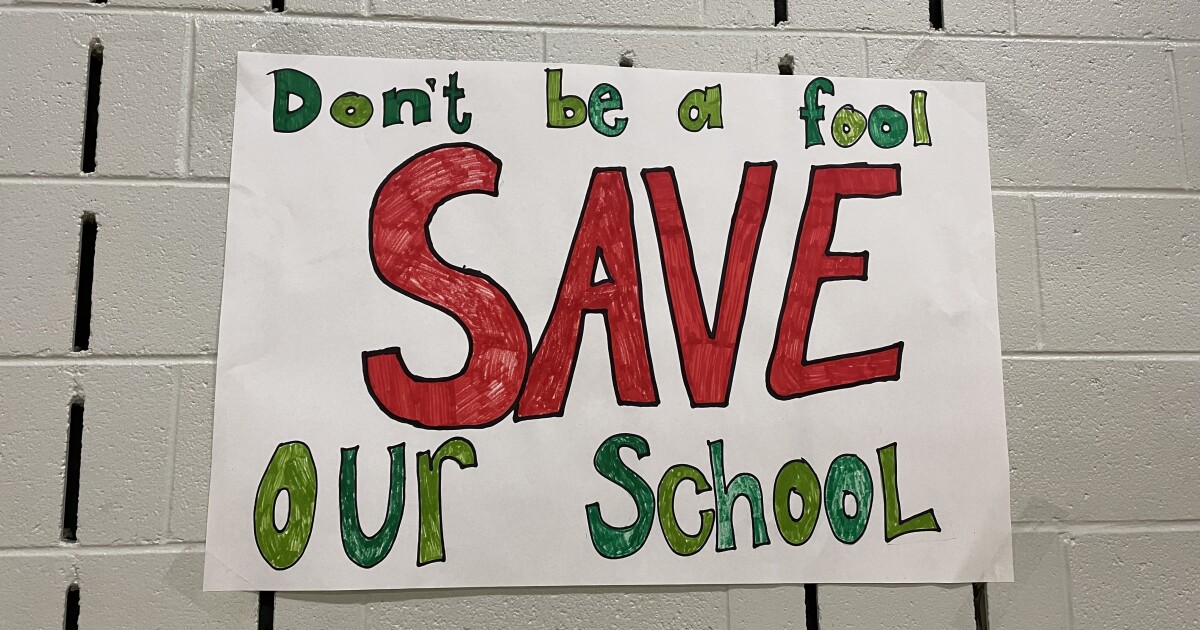
A bitter debate in Danville about whether to close the town’s high school underscores the uncertainty many Vermont schools face as the state prepares to overhaul its education system.
The Danville school board reluctantly announced this week that they would hold a special town-wide referendum on Dec. 6 on whether to close the school and instead offer families vouchers to the school of their choice. It comes after a local parent submitted a petition requesting the vote.
But within days after that petition was submitted, the town clerk reported that more than a dozen people asked for their signatures to be withdrawn. Michelle Leclerc, the Danville treasurer, told Vermont Public on Thursday that people had written to her office saying they had been “misinformed” and given “false information.”
For now, the petition still has enough signatures to require the vote. But more still could ask to remove their names before Nov. 4, she said, when the school board is scheduled to sign a warrant for the referendum.
The contention in Danville has been prompted by a sweeping education reform effort Gov. Phil Scott signed into law this July that could usher in widespread consolidation. A special task force is now at work on proposals for new school district maps, which lawmakers will consider when they return to the Statehouse this winter.
What’s afoot in Montpelier has left local school officials bracing for impact, but also unsure of what reform could mean for them. And Danville, which operates one of the last remaining public high schools in the Northeast Kingdom, also faces a unique set of circumstances.
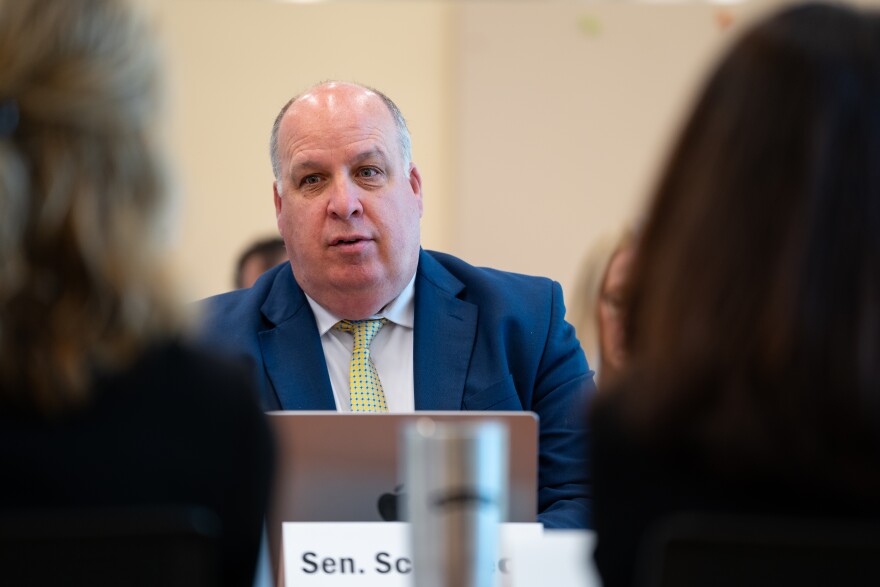
The closest alternative, St. Johnsbury Academy, is private, and the role that one of its teachers — Vermont Senate Minority Leader Scott Beck — has had in encouraging the vote to close has prompted outcry among the Danville School’s supporters.
“It’s reprehensible, and I think the voters are going to see that right away,” one resident, Eric Hutchins, told the school board during a raucous meeting Tuesday evening.
Lola Duffort
/
Vermont Public
Small schools like Danville, where the high school enrollment hovers around 80 pupils, are deeply fearful the law, known as Act 73 could force them to close. And in recent weeks, Beck has warned school officials in Danville, as well as nearby Cabot — whose high school is even smaller — that it may be now or never if they want to decide their own fate.
Beck, a Caledonia County Republican, has told local school board members that it’s likely lawmakers will pass a measure in the upcoming legislative session that could remove a district’s ability to turn to school choice in the event that it closes a school. Instead, he’s said, a community might be required to select three public schools to send their children. For Danville, where the nearest large high schools are all private, that could be a problem.
But other lawmakers have pushed back, saying it would be unwise for communities to act in haste based on conjecture.
“Trying to predict the future of Act 73 is a fool’s errand,” Peter Conlon, the chair of the House Education Committee, told Seven Days.
In Cabot, school officials have since decided to take a wait-and-see approach. The board shelved a survey last week it had planned to send to residents, which included Beck’s warning that school choice could go away for good unless communities make the switch now. But in Danville, the petition — which was organized by a local parent who also happens to be a St. Johnsbury Academy teacher — has tied the board’s hands.
On Tuesday evening, Danville school board members told a crowded gymnasium of residents they had no desire to close the high school.
Clayton Cargill, the school board chair, nodded in agreement as residents filed up to the microphone to accuse Beck of fearmongering in an attempt to funnel more students to St. Johnsbury Academy, his employer.
“I feel lied to,” Cargill said at one point.
Brian Stevenson
/
Vermont Public
Beck, in an interview after the meeting, said that he had offered the advice in good faith. He noted that a measure that would have disallowed districts from turning to choice was included in earlier drafts of Act 73, and only removed during end-stage negotiations.
Besides, he said, the school he teaches at has more than 900 pupils, so it doesn’t need Danville’s students to stay afloat.
“They’re not critical to St. Johnsbury Academy. I mean, if they wanted to come, we’d certainly welcome them, but the school has been around for a long time,” he said.
Peter Mantius, the Danville parent who organized the petition, also works as a teacher at St. Johnsbury Academy. And while he said he didn’t ask for the vote to benefit his employer, he said his experience there had allowed him to see first-hand what the school offers.
“This is something that I think I have a front row seat to, and I sometimes wish that the friends and community that my children are with had the same opportunities,” he said.
Overwhelmingly, speakers at Tuesday’s board meeting were there to argue for Danville high school’s continued existence.
David Warren, a veteran teacher at Danville, said it should be noted that nearby Lyndon Institute and St. Johnsbury Academy are both private.
“They don’t have to take your kids,” he said. “And how do I know that? Because we’ve been giving kids from those two schools here at Danville a second chance — a first chance — because they couldn’t make it at a bigger school for the 27 years I’ve been here.”
Several students said they liked Danville’s small size.
“I am not a student who struggles academically, but the thought of a newer and bigger classroom setting makes me question my academic future,” Jordan Sullivan-Stevens, an eighth grader, told the board.

Lisa Rathke
/
Associated Press File
But there were dissenters. Sophomores Bella Stebbins and Ash Bedard filed up to the microphone together. Stebbins complained about behavioral problems at Danville, and Bedard followed after to say the school was limited in what it could provide.
Bedard said she knew they were both “disagreeing with everybody here.” But “other schools have more to offer in educational and extracurricular activities,” she said.
Most people left the Danville gymnasium Tuesday evening after they had said their piece. But Danville’s school board members remained, workshopping a letter to the state’s redistricting task force.
“We are at risk of making a very reactionary decision that will change this town considerably in unforeseen ways,” they wrote in their letter.
“Beholden to the whims of your Task Force, and more broadly, the State Legislature,” the letter continued, “…we are forced to assume and plan for the worst case scenario, and do everything in our power to prevent it.”
“And so our ask to you,” they added, “is to give us clarity.”



Powerball, Mega Millions jackpots: What to know in case you win
Here’s what to know in case you win the Powerball or Mega Millions jackpot.
Just the FAQs, USA TODAY
The Vermont Lottery offers several draw games for those willing to make a bet to win big.
Those who want to play can enter the MegaBucks and Lucky for Life games as well as the national Powerball and Mega Millions games. Vermont also partners with New Hampshire and Maine for the Tri-State Lottery, which includes the Mega Bucks, Gimme 5 as well as the Pick 3 and Pick 4.
Drawings are held at regular days and times, check the end of this story to see the schedule.
Here’s a look at June 25, 2026, results for each game:
Winning Gimme 5 numbers from June 25 drawing
13-14-18-21-22
Check Gimme 5 payouts and previous drawings here.
Winning Pick 3 numbers from June 25 drawing
Day: 2-1-4
Evening: 0-7-1
Check Pick 3 payouts and previous drawings here.
Winning Pick 4 numbers from June 25 drawing
Day: 5-4-4-9
Evening: 5-5-1-1
Check Pick 4 payouts and previous drawings here.
Winning Millionaire for Life numbers from June 25 drawing
03-13-14-34-45, Bonus: 01
Check Millionaire for Life payouts and previous drawings here.
Feeling lucky? Explore the latest lottery news & results
Are you a winner? Here’s how to claim your lottery prize
For Vermont Lottery prizes up to $499, winners can claim their prize at any authorized Vermont Lottery retailer or at the Vermont Lottery Headquarters by presenting the signed winning ticket for validation. Prizes between $500 and $5,000 can be claimed at any M&T Bank location in Vermont during the Vermont Lottery Office’s business hours, which are 8a.m.-4p.m. Monday through Friday, except state holidays.
For prizes over $5,000, claims must be made in person at the Vermont Lottery headquarters. In addition to signing your ticket, you will need to bring a government-issued photo ID, and a completed claim form.
All prize claims must be submitted within one year of the drawing date. For more information on prize claims or to download a Vermont Lottery Claim Form, visit the Vermont Lottery’s FAQ page or contact their customer service line at (802) 479-5686.
Vermont Lottery Headquarters
1311 US Route 302, Suite 100
Barre, VT
05641
When are the Vermont Lottery drawings held?
- Powerball: 10:59 p.m. Monday, Wednesday, and Saturday.
- Mega Millions: 11 p.m. Tuesday and Friday.
- Gimme 5: 6:55 p.m. Monday through Friday.
- Lucky for Life: 10:38 p.m. daily.
- Pick 3 Day: 1:10 p.m. daily.
- Pick 4 Day: 1:10 p.m. daily.
- Pick 3 Evening: 6:55 p.m. daily.
- Pick 4 Evening: 6:55 p.m. daily.
- Megabucks: 7:59 p.m. Monday, Wednesday and Saturday.
- Millionaire for Life: 11:15 p.m. daily
What is Vermont Lottery Second Chance?
Vermont’s 2nd Chance lottery lets players enter eligible non-winning instant scratch tickets into a drawing to win cash and/or other prizes. Players must register through the state’s official Lottery website or app. The drawings are held quarterly or are part of an additional promotion, and are done at Pollard Banknote Limited in Winnipeg, MB, Canada.
This results page was generated automatically using information from TinBu and a template written and reviewed by a Vermont editor. You can send feedback using this form.

Champlain Valley senior Zoey McNabb has been named the Vermont high school girls track and field athlete for the 2026 season, Gatorade announced Thursday, June 25.
The Gatorade award recognizes athletes for their on-field success, high academic achievement and exemplary character.
In her first year as a competitive runner, the 5-foot-7 McNabb broke long-held state records in the 1500- and 3000-meter races this past spring with times of 4 minutes, 28.59 seconds and 9:24.58, respectively. At the Division I state meet, she swept both events to help the Redhawks claim a team championship three-peat.
Her 3,000 time ranked fourth nationally; her 1,500 performance was good for 12th. At the New England championship meet, McNabb took second in the 3,200 and third in the 1,600. She also ran in five events at New Balance Nationals, where she set the state record in the two mile.
An all-state basketball player for CVU, she has volunteered locally at the Green Mountain Montessori School in Essex in addition to donating her time as a youth basketball coach, according to the news release.
“Zoey was fearless this spring, attacking decades-old records and destroying them,” BFA-St. Albans coach Mike Mashtare said in a statement. “What made her special was how effortless she made it look with her smooth stride and relaxed running style.”
McNabb has maintained an unweighted 4.27 GPA in the classroom. She has signed a written letter of athletic aid to compete on scholarship at the University of Vermont this fall.
As part of Gatorade’s commitment to breaking down barriers in sport, every player of the year also receives a grant to donate to a social impact partner.
To learn more about the Gatorade Player of the Year program, visit playeroftheyear.gatorade.com.
Contact Alex Abrami at aabrami@freepressmedia.com. Follow him on X, formerly known as Twitter: @aabrami5.

Vermont Green men’s team Chris Taylor praises team after home opener
Vermont Green men’s team head coach Chris Taylor talks with the media following the Green’s home opener victory
The Vermont Green women’s team is predominantly a home for college players to play in a professional atmosphere during the summer. Yet there are a trio of seasoned overseas professional soccer players who are playing for the Green this summer to help them find their next stop.
Two members of that trio, defender Chloe Gorman and midfielder Brenna Connell, are both over the age of 30, playing with teammates nearly a decade younger while defender Hannah Kroupa graduated college in 2023. Yet, rather than taking time away from the pitch, they are spending the summer in Vermont.
Here’s why these professional soccer players opted to play for the Green, a short two-month season where the players don’t get paid.
Vermont Green is a launching pad to finding a new team
All three players learned about the team the same way — the Player’s Network, which is a group to share opportunities and resources among female soccer players around the world. Head coach Abby Carchio sent out a message in the group publicizing the Green. The trio all jumped on the opportunity.
Both Connell and Gorman have spent the last few months training and thought the Green was a great opportunity to get some minutes and film to help them sign with a new team later this summer.
“The desire of the club to truly provide a professional-level atmosphere and resources and the community is so behind the club, it seemed like a super unique opportunity,” Connell said.
Connell, Gorman and Kroupa are helping the Green make history in their debut season. The Green are currently one of eight undefeated teams still standing in the USLW with a 5-0-4 record.
Gorman has had a crucial role, playing every minute in the Green’s 10 games (which includes the Maple Cup) with she and Kroupa anchoring the back line. That defense has only conceded six goals entering Vermont’s final regular season game against New England Mutiny on Saturday, June 27.
Kroupa and Connell have appeared in a handful of games as well. The duo teamed up on a goal in Vermont’s 2-0 Maple Cup victory, with Kroupa earning the goal in her club debut. Both players have also contributed an assist in an official USLW match.
“I’m really thankful I have gotten a lot of minutes here especially after not being with a club for a year,” Connell said. “It felt good to prove to myself that I can still do this and contribute a lot.”
The Green can capture the Northeast Division title and earn a spot in the USLW playoffs with a win against Mutiny on Saturday, June 27.
Vermont’s amateur status impresses the professional soccer trio
Gorman, Connell and Kroupa have played all over the world, including stops in Greece, Hungary, Israel, Portugal and Germany among other countries. The aspect that stands out to them is how ingrained Vermont Green is to the broader community.
“It means a bit more here,” Gorman said. “It’s different to finish a game and have a 100 girls and parents come up to you and thank you, acknowledge that this is a big step in women’s sports.”
The organization takes great care of the players doing more than professional teams do. The team has found housing for everyone with Kroupa, Connell and Gorman living together in college-style housing.
“Playing abroad, it’s really hit or miss with what a club can provide for you,” Kroupa said. “Even having someone do the laundry of training gear that you wouldn’t think about in college … simple stuff like that is such a big difference.”
The older players are also surrounded by some of the country’s top college players such as Caitlin Mara, Brooke Birtwistle, Georgina Clarke and Olivia Grenda.
The main difference between college soccer and a professional team has been honing in on the details and adding extra care to each decision.
“Just being conscious of your play and decision making of the reasoning behind something and the cleanliness of the play,” Gorman said.
Besides serving as role models, the trio are helping Vermont Green remain feeling professional which is leading to results on the field of a winning club in Year 1.
Contact Judith Altneu at JAltneu@usatodayco.com. Follow her on X, formerly known as Twitter: @Judith_Altneu.
-

 News12 minutes ago
“It’s blood money”: Family of exonerated man in Texas yogurt shop murders speaks out after settlement
-

 Los Angeles, Ca2 hours ago
Woman ambushed, violently attacked by robber in downtown Long Beach
-

 Detroit, MI2 hours ago
Where to watch Houston Astros vs Detroit Tigers: TV channel, start time, streaming for June 26
-
San Francisco, CA2 hours ago
I own a Turkish Restaurant in San Francisco. Turkey’s World Cup match here has changed my business.
-

 Dallas, TX2 hours ago
Australia advances at World Cup, how to buy Australia soccer tickets
-

 Miami, FL2 hours ago
2 detained after police pursuit ends with bailout, neighborhood search in NW Miami-Dade – WSVN 7News | Miami News, Weather, Sports | Fort Lauderdale
-

 Boston, MA2 hours ago
Delta flight returns to Logan after smoke scare in cockpit – Boston News, Weather, Sports | WHDH 7News
-

 Denver, CO2 hours ago
Pat Surtain II Gets More Bad News Amid Broncos’ Uncertainty

