Connect with us

Northeast

Karen Read defense grills crash expert over $400K price tag and experimentation methods

Published

on

Karen Read defense grills crash expert over 0K price tag and experimentation methods

NEWYou can now listen to Fox News articles!

Karen Read’s defense team looked to chip away at a crash expert’s credibility by pointing to eye-watering expenditures and alleged inconsistencies in experiments as the state enters the 11th hour of testimony in their case. 

Read is accused of killing her then-boyfriend, Boston police officer John O’Keefe, by striking him with her Lexus SUV outside a house party at 34 Fairview Road and leaving him to die in frigid temperatures shortly after midnight on Jan. 29, 2022. 

The state’s expected final witness, Dr. Judson Welcher, a crash reconstructionist with Texas-based Aperture LLC, held firm on his findings that Read’s vehicle allegedly struck O’Keefe.

KAREN READ’S SUV REACHED ‘74% THROTTLE’ MOMENTS BEFORE JOHN O’KEEFE’S FINAL MOVEMENTS, CRASH EXPERT TESTIFIES 

Advertisement

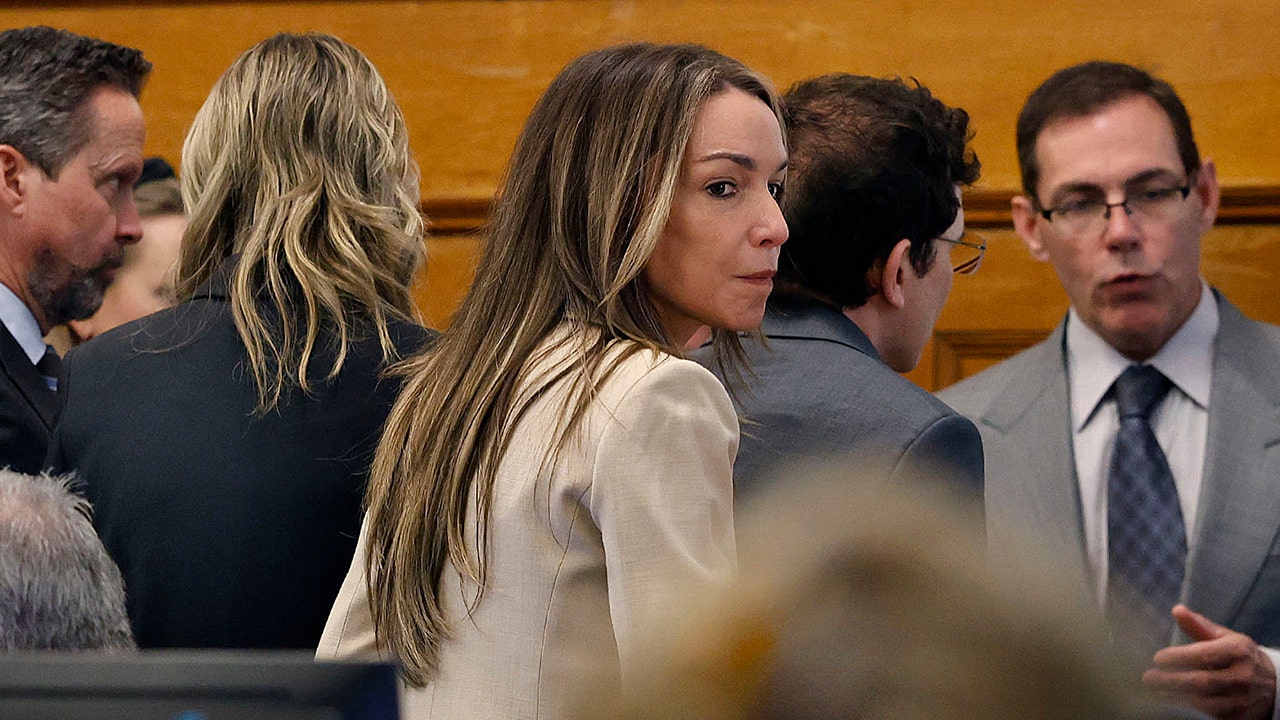
Karen Read listens to the cross-examination by Robert Alessi of expert accident witness Dr. Judson Welcher during her retrial at Norfolk Superior Court, Wednesday, May 28, 2025, in Dedham, Massachusetts. (Greg Derr/The Patriot Ledger via AP, Pool)

“[O’Keefe’s injuries are] consistent with being struck by a Lexus and also contacting a hard surface, such as frozen ground,” Welcher told special prosecutor Hank Brennan. 

In a sometimes-evasive line of cross-examination, Welcher often provided non-answers to defense attorney Robert Alessi’s questions surrounding his modifications to a PowerPoint presentation used in Read’s trial to depict Aperture’s investigation. 

“Assume the trial started approximately April 22, 2025,” Alessi said. “Did you create your updated presentation before or after [it began]?”

“I don’t know,” Welcher replied.  

Advertisement

KAREN READ TRIAL WITNESS FACES BRUTAL CROSS-EXAMINATION OVER VEHICLE DATA

Dr. Judson Welcher, an accident reconstruction expert, speaks on the witness stand during the Karen Read retrial, Wednesday, May 28, 2025, in Dedham, Massachusetts. (Greg Derr/The Patriot Ledger via AP, Pool)

Alessi looked to nail down a timeline of when Welcher may have made changes to the document and whether the prosecution communicated with him regarding the alterations. 

Welcher eventually relented before testifying that he altered the presentation for the first time on May 13, with the most recent change occurring “like, 10 minutes ago.”   

“Half of that was in response to objections from the defense,” Welcher said. “I had to add all the parts to where everything was. Then, when I got out here, Mr. Brennan asked me to take out references to evidence about statements that I was not allowed to present. So that would have been within the last three days. Then I’ve modified it a couple of times today based on rulings from the judge.” 

Advertisement

BRAIN SURGEON TESTIFIES JOHN O’KEEFE DIED FROM FALL ON FROZEN GROUND IN KAREN READ TRIAL

Read lawyer Robert Alessi cross-examines Dr. Judson Welcher during the Karen Read retrial, Wednesday May 28, 2025. (Greg Derr/The Patriot Ledger via AP, Pool)

However, Welcher testified on cross-examination that the amendments he made to the presentation did not alter the overall document. 

“I changed one slide,” Welcher said. “There were 130 slides originally, or something like that. So half of the changes [were] on that day, which was one slide. I added one line to the bottom of the previous slide.” 

“Well then, why did you make it in the middle of trial if it wasn’t significant?” Alessi asked. “Why didn’t you just leave it off and then discuss it in terms of testimony?” 

Advertisement

EXPERT WITNESS IN KAREN READ MURDER TRIAL CAUGHT WITH ‘ERRORS’ INFLATING HIS CREDENTIALS

Karen Read, who works with her defense lawyers, attends a “side bar” conference with the prosecution and Judge Beverly Cannone at Norfolk Superior Court, Wednesday, May 28, 2025. (Greg Derr/The Patriot Ledger via AP, Pool)

“So it ultimately was left off because it was insignificant, and I didn’t need to have it,” Welcher said. “The way it got presented was exactly the way it was before May 13. So it didn’t change anything.” 

On cross-examination, Welcher revealed the district attorney’s office previously agreed to pay Aperture at least $325,000 for the firm’s services, along with covering the cost of the Lexus SUV used in testing. 

“We’re keeping [the vehicle] until the trial’s over,” Welcher said. “[Then] we’re selling it and charging the commonwealth the difference in the price exactly.” 

Advertisement

KAREN READ SCORES MAJOR WIN AS JUDGE ALLOWS CRASH RECONSTRUCTION TESTIMONY

Images presented of an accident reconstruction test by Dr. Judson Welcher show impact via paint transfer from an SUV similar to Karen Read’s to a human subject at Norfolk Superior Court, Wednesday, May 28, 2025. (Greg Derr/The Patriot Ledger via AP, Pool)

Aperture has been paid $44,510 for its services to date, with the state expected to pay upwards of $400,000 for around eight months of work, according to Alessi. 

“Dr. Welcher was perfect on direction, but only a B- on cross-examination,” retired Massachusetts Superior Court Judge and Boston College law professor Jack Lu told Fox News Digital. “He is not answering the questions from Mr. Alessi directly. He may not be intentionally being evasive, but he’s no longer a near-perfect example of how an expert witness should testify.”

O’Keefe’s arm injuries were concurrent with being struck by the make and model of Read’s vehicle, Welcher testified on direct examination. The crash expert pointed to a video showing him painting the taillight of the car before brushing up against it to mimic a collision.

Advertisement

FOLLOW THE FOX TRUE CRIME TEAM ON X

Prosecutor Hank Brennan questions Dr. Judson Welcher during the Karen Read retrial, Wednesday, May 28, 2025. (Greg Derr/The Patriot Ledger via AP, Pool)

Alessi looked to create doubt surrounding Welcher’s findings, grilling the biomechanical engineer on the methodology behind his experiment surrounding the cause of the injury to O’Keefe’s eye. 

“I’m trying to make it clear,” Welcher said. “We don’t know his exact body position at the point of impact, nor do we know the exact position on the ground. Which is part of the reason why I haven’t tried to exactly simulate this, because we don’t have enough parameters to do that. So I don’t have that information. I’m showing the geometry relative to someone of Mr. O’Keefe’s height.” 

“So you don’t have the information to do that properly,” Alessi said. “So therefore, you can’t preclude that he had a laceration to the eye from the spoiler by your own answer that you just gave, correct?” 

Advertisement

Welcher doubled down on his investigation, asserting on the stand that Aperture’s experiment was correct based on the information the firm had at the time, despite Alessi revealing the vehicle in Welcher’s test was moving only two miles per hour — significantly less than the speed of Read’s vehicle.

SIGN UP TO GET TRUE-CRIME NEWSLETTER

“Would you agree that you did a blue paint test with the vehicle going at two miles per hour?” Alessi asked. 

“Of course,” Welcher said. 

“You didn’t do a blue paint test with the vehicle going at 20 miles per hour, correct?” Alessi said. 

Advertisement

“That is correct,” Welcher said. “I was not going to hit myself with the Lexus at 20 miles an hour.” 

Wednesday marked the second day of testimony from Welcher, as the state is expected to rest its case this week. 

Read pleaded not guilty and is facing the possibility of life in prison if convicted of the top charge, second-degree murder. 

“The model being followed here is very good and professional,” Lu said. “What you have here is a very nice judge meets a very nice lawyer,” adding, “This results in a looser, less-focused cross-examination. It’s working out fine here, partially because the witness is not being super evasive.”

Advertisement


Read the full article from Here

Continue Reading
Click to comment

Leave a Reply

Your email address will not be published. Required fields are marked *

This site uses Akismet to reduce spam. Learn how your comment data is processed.

Connecticut

Opinion: When getting care means going into debt

Published

on

Opinion: When getting care means going into debt


The email is sitting in my inbox like a countdown clock: $5,000 due to secure my surgery date. Another $7,000 required on the day of the procedure. Before even getting there, I had already paid $800 just for a consultation and thousands more from emergency room visits, trying to manage the pain.

As a college student in a single-parent household, these costs are not just overwhelming; they are destabilizing. For my family, this isn’t just a medical decision; it’s a financial crisis that affects bills, groceries, and basic stability. 

This isn’t an unusual story; it’s what accessing healthcare looks like for too many people in Connecticut today. When the cost of care becomes this overwhelming, patients are forced to make impossible choices: delay treatment, go into debt, or simply go without. 

This is why Connecticut lawmakers must pass SB3: An Act Concerning Health Care Affordability. The bill directly addresses one of the most urgent public health issues in our state: the rising cost of healthcare and the barriers it creates for everyday citizens. SB3 is not just a general attempt to “lower costs.” It proposes specific, actionable solutions.

Advertisement

The bill would establish a Connecticut Affordable Health Care Trust Fund to stabilize costs and protect residents from rising premiums, particularly as federal subsidies become uncertain. It also includes a “Connecticut Option” program designed to expand access to more affordable insurance coverage and, in the short term, replace federal premium subsidies for many residents earning up to 600% of the federal poverty level. 

Healthcare affordability is not just an economic issue; it is a public health crisis. According to a report from theKaiser Family Foundation, nearly half of U.S. adults report difficulty affording healthcare, and many delay or skip necessary services as a result. These delays can lead to worsening conditions, more emergency visits, and higher long-term costs for both patients and the healthcare system. In my case, postponing treatment for endometriosis only led to repeated ER visits, each one adding to the financial and physical burden.  

Ella Nocera-DeJulio

Connecticut is not immune to these trends. Reports show that residents across the state, especially those with low and moderate incomes, struggle with high premiums, deductibles, and out-of-pocket costs. Even those with insurance often face significant financial barriers when seeking care. This reality contradicts the very purpose of a healthcare system: to provide timely, effective treatment without causing financial harm.

Some critics argue that bills like SB3 could increase government spending or place additional strain on healthcare providers. Others question whether it goes far enough, pointing out gaps in coverage, such as limited inclusion of certain populations. These concerns deserve attention, but they do not outweigh the urgency of the problem. In fact, SB3 is designed as both a short-term solution to stabilize costs and a long-term framework to explore broader reforms.

Passing SB3 would help more than just individual patients. When people can afford regular checkups and early treatment, long-term illnesses are easier to manage, fewer people end up in the emergency room, and healthcare costs go down overall. This leads to healthier communities and a better-functioning healthcare system. In simpler terms, making healthcare more affordable isn’t just the right thing to do; it’s also a smart decision.

Advertisement

My experience is just one example, but it reflects a much larger issue affecting communities across Connecticut. No one should have to delay a necessary surgery or accumulate thousands of dollars in debt just to receive basic medical care. Healthcare shouldn’t be something only available to people who can afford it, but a basic right supported by strong and effective policies.

Connecticut has a real chance to fix a system that is clearly not working for many people. Passing SB3 would help lower costs and make it easier for residents to get the care they need without financial stress. It’s time for lawmakers to take action and make healthcare more affordable and accessible for everyone. 

Ella Nocera-DeJulio is a sophomore at Sacred Heart University, majoring in Health Sciences, concentrating in Occupational Therapy.


Advertisement


Source link

Continue Reading

Maine

Obituary: Anne Theresa Tarling

Published

on

Obituary: Anne Theresa Tarling


Anne Theresa Tarling

SANFORD – Anne Theresa Tarling, 74, of Sanford, Maine passed away peacefully at home on April 23, 2026, surrounded by her loving family. While our hearts are broken, we find comfort in knowing she lived a full and beautiful life rooted in love, creativity, and devotion to the people who meant the most to her.

Anne was born on April 3, 1952, in Portland, Maine, to the late Joseph and Blanche Morin. She grew up in Portland and graduated from Deering High School in 1970.

In 1980, Anne married the love of her life, Ernest Tarling. Together they built a life centered on family, laughter, and partnership. Their 45 years of marriage were filled with shared memories and a deep commitment to one another and to their family.

Advertisement

Anne was a talented self-taught artist who found great joy in painting and sharing her creativity with others. She proudly exhibited her work at local art shows and specialty shops, and her paintings found their way into homes near and far. Her art brought beauty and comfort to many and will continue to remind us of her for years to come.

She also enjoyed gardening, sailing the coast of Maine, and hosting family gatherings. She was known for her famous chocolate chip cookies and for never missing a birthday or special occasion.

Being a devoted Nana brought her great joy, and she cherished time spent with her family above all else.

In addition to her parents, Anne was preceded in death by her brother, Stephen Morin; her sister, Julie Pochebit, her brother-in-law, Daniel Desmond; nieces Elizabeth McKee and Alison Pochebit.

She is survived by her brother, Paul (Sue Ellen) Morin, two sisters, Cheryl Desmond and Celine (Stephen) Pochebit; her husband of 45 years, Ernest Tarling; her son, Greg (Karen) Flagg, her four daughters, Jennifer Copper, Rebecca (Frank) Zavadil, Stefenie (Matthew) Burdick, and Kendra (Justin) Dowling; her 11 grandchildren, Cody, Matthew, Jackson, Gracey, Lucas, Quinn, Beau, Shea, Ellie, Will, and Stevie; a large extended family, including many loving nieces and nephews; and her longtime best friend, Sandy Hobbs.

Advertisement

A funeral service will be held Saturday, May 2, at 11 a.m. at St. Martha Church, 30 Portland Road, Kennebunk, Maine, followed by a celebration of life at 12:30 p.m. at For the Love of Food + Drink at Saltwater Farm, 411 Post Road, Wells, Maine.

To share a memory or leave a message of condolence, please visit Anne’s Book of Memories Page at http://www.bibberfuneral.com.

Arrangements are in the care of Bibber Memorial Chapel, 67 Summer Street, Kennebunk, ME 04043.


Advertisement


Source link

Continue Reading

Massachusetts

Mother charged with two murders heading back to Massachusetts – VTDigger

Published

on

Mother charged with two murders heading back to Massachusetts – VTDigger


Jeanette MacAusland appeared in Bennington County Superior Court via a live feed from Marble Valley Correctional Facility on Monday, April 27, 2026. Screenshot by Erin Petenko

A mother charged with two counts of murder after the deaths of her two young children agreed Monday in Rutland County Superior Court to be transferred to Massachusetts, where she will face the charges.

The Massachusetts State Police have charged Janette MacAusland, 49, with murdering her two children, ages 6 and 7, after they were found dead at their home in Wellesley, Massachusetts, Friday. 

According to a Bennington police press release, MacAusland arrived at a relative’s home in Vermont on Friday night with a neck injury, bleeding and appearing “highly distraught.” 

The relatives called the Bennington police, who then prompted police in Wellesley, Massachusetts, to check on MacAusland’s children. Both were found dead. No details have been released about the cause or manner of death. 

Advertisement

The Bennington Police Department arrested MacAusland and took her to Marble Valley Correctional Facility in Rutland, where she has been held without bail. 

Appearing virtually in court Monday, MacAusland agreed to waive her right to a hearing and be immediately transferred back to Norfolk County in Massachusetts. 

“She’s decided that the best thing is to get back to Massachusetts as soon as possible and address these charges,” Jeff Rubin, her attorney, said at the hearing.

The children’s deaths follow a custody battle between MacAusland and her former husband, according to the Associated Press. MacAusland’s husband filed for divorce in October after nine years of marriage and sought custody of the children and family home.


Source link

Advertisement
Continue Reading
Advertisement

Trending