


Address Newsletter
Our weekly digest on buying, selling, and design, with expert advice and insider neighborhood knowledge.


Right whale spotted off Southwest Florida coast. See the video
An endangered right whale was spotted just off the coast of Fort Myers and caught on video by SeaTrek Charters of SWFL.
Provided by SeaTrek Charters of SWFL
Massachusetts officials are urging people to recognize endangered animals in the state on May 16, Endangered Species Day.
There are 453 plants and animals listed under the Massachusetts Endangered Species Act. Several either live on Cape Cod or use the peninsula as an important migration stop, including the North Atlantic right whale, the Kemp’s ridley sea turtle, and the upland sandpiper. The North Atlantic right whale and another endangered bird, the roseate tern, are featured on specialty Cape & Islands license plates, and a short tree named the split-leaved hawthorn can be found only on Martha’s Vineyard.
Some of these endangered animals, like the peregrine falcon and the bald eagle, have seen their numbers increase after restoration and conservation efforts. But Mass Wildlife says that there is “still much work to be done.”
On Endangered Species Day and every day, Mass Wildlife encourages residents to report rare species when they see them at the Heritage Hub, to donate, and to learn more about the species.
There are 453 plants and animals considered endangered, threatened or “special concern” in Massachusetts. They include animals of all types, from mammals to crustaceans to dragonflies.
There are 224 species listed as endangered in Massachusetts. Eleven of them are mammals.
Here are the eleven endangered mammals in Massachusetts, six of which are whales:
There are nine endangered birds in Massachusetts:
Piping plovers, with nesting habits that result in Cape Cod beach restrictions each year, are threatened, but not endangered, according to Mass Wildlife and the U.S. Fish and Wildlife Service.
There are eight endangered reptiles in Massachusetts, including five sea turtles:
There are four endangered fish in Massachusetts:
There are 159 endangered plants listed in Massachusetts.
They include the purple cress, named for its pale purple flowers, and the split-leaved hawthorn, a tall shrub or a short tree found only on Martha’s Vineyard.


A vehicle crashed into a hair salon in Danvers, Massachusetts, leaving three people injured on Thursday.
Police said the crash happened shortly before 3:30 p.m. at Beijo Beauty on Newbury Street.
Three people inside the business suffered injuries that are believed to be non-life-threatening, police said. All three were taken by ambulance to local hospitals.
A fire official at the scene said the three patients’ injuries are considered minor. The building was evacuated after the crash.
One customer told NBC10 Boston she stood with an injured person while someone called 911, adding that her own car had been damaged.
“I was done, I was just about to get up. If I had been in my car, I would have gotten really hurt,” she said. “My car got totaled.”
Police did not say whether the driver would face any charges.
The cause of the crash is under investigation.

Governor Maura Healey said in a statement that she was “deeply disappointed” by the president’s decision and would keep fighting to secure federal dollars for Massachusetts.
“Our first responders, public works crews, and local communities worked around the clock to keep people safe and begin recovery,” she said. “They did their job, and now President Trump needs to do his.”
Climate advocates say the denial — which came on the same day that Trump rejected three other Democrat-led states’ requests for winter storm relief — reflects the administration’s politicization of disaster aid.
“Communities in Massachusetts and everywhere deserve a federal government that makes decisions for all people, and not just those that they perceive as having voted for them,” said Kate Sinding Daly, senior vice president for law and policy at the Conservation Law Foundation.
The president can declare a major disaster when a natural catastrophe is shown to have exceeded a state’s capabilities and resources. An analysis conducted by POLITICO in March found that it is three times harder for blue states than red states to get disaster funding under Trump.
According to the analysis, the president has approved just 23 percent of disaster funding requests from states with a Democratic governor and two Democratic senators, compared with 89 percent of requests from states represented by Republicans — an unprecedented discrepancy.
The analysis also found that Trump takes an average of 80 days to respond to disaster requests from Democrat-led states, compared to 39 for Republicans.
Abigail Jackson, a White House spokeswoman, strongly disputed that the Trump administration was politicizing decisions on disaster relief. She did not comment on why Trump denied Massachusetts’ request.
“President Trump provides a more thorough review of disaster declaration requests than any Administration has before him,” she said in a statement. She said the president was ensuring tax dollars were used by states “to supplement — not substitute, their obligation to respond to and recover from disasters.”
Former Washington governor Jay Inslee described the president’s approach to disaster aid as “outrageous, immoral, and illegal.” During Trump’s first term, the president reportedly ignored Inslee’s request for wildfire relief because of a personal dispute.
“He will consciously, willfully, and joyfully deny people aid who are at the most difficult moments of their lives,” said Inslee, who co-chairs the advocacy group Climate Power. “It is so infuriating to see an American president use disaster aid as a cudgel.”
The Healey administration announced in early April that it had requested a major disaster declaration for the February blizzard. It sought to reimburse state agencies and local governments in the southeastern part of the state for snow removal and other storm-related costs. The blizzard downed hundreds of power lines and trees, and nearly 300,000 people lost power at the peak of the storm.
Last week, Trump rejected disaster declaration requests from four Democrat-led states who had sought aid for the February storm: Massachusetts, Rhode Island, New York, and New Jersey. The president’s decision came just days after he approved aid for six Republican-led states.
“Trump is either politicizing disaster declarations or he is attacking states where it snows — neither is good,” wrote Senator Ed Markey in a social media post. “The February blizzard was costly for our communities, and Trump must approve the Commonwealth’s need for assistance.”
Senator Elizabeth Warren said a statement that the president’s decision was “cruel and makes clear he doesn’t see himself as a president for all Americans.”
“Communities in Massachusetts were hit by one of the worst storms we’ve seen in decades, and instead of sending a lifeline, the President is leaving everyday Americans out to dry,” she added.
Rhode Island officials also slammed the Trump administration for denying the state’s request. The winter storm hit the state with the intensity of a Category 2 hurricane. Providence had to cap spending for the rest of the fiscal year after record-setting snow.
The state’s congressional delegation — Senator Sheldon Whitehouse, Senator Jack Reed, Representative Seth Magaziner, and Representative Gabe Amo — wrote a letter calling on the president to reverse the denial. A preliminary assessment found more than $19 million in damages across the state, the letter said.
“You chose to leave Rhode Islanders out in the cold,” the lawmakers wrote.
Meanwhile, the president approved a major disaster declaration for the Mashpee Wampanoag Tribe in Massachusetts related to the February blizzard. (Federally recognized tribal governments can directly request a disaster declaration.)
Additionally, FEMA announced on Thursday that it had approved nearly $5.7 million for projects to reduce future disaster costs in New England, including more than $1 million for Massachusetts projects combating flooding.
Kate Selig can be reached at kate.selig@globe.com. Follow her on X @kate_selig.

Home Buying
If you’re in the market for a new build, you may be attracted to the modern floor plans, state-of-the-art technology, and resort-style amenities many of them offer. But you might not realize that there are financial benefits to buying new construction.
A recent report from Realtor.com found that buyers of newly built homes save an average of $25,335 over the first 10 years of ownership compared to buyers of 20-year-old homes. Those savings are even greater in Massachusetts, which topped the state-by-state list at savings of $38,927 over 10 years, due to the state’s strict building codes and harsh winters. Neighboring New Hampshire, Maine, Rhode Island, and Vermont rounded out the top five.
But in Greater Boston, where much of the new-home inventory consists of luxury condominiums, buyers still have to balance those long-term savings with higher upfront purchase prices and steep condominium association assessments.
Ryan J. Glass, vice president of Gibson Sotheby’s International Realty in Boston, said that in the first quarter of 2026, luxury full-service buildings citywide averaged approximately $1,698 per square foot, while many of Boston’s historic brownstone neighborhoods generally landed in the $1,200- to $1,500-per-square-foot range. That means that a buyer with a $3 million budget may be looking at 1,750 to 1,800 square feet in a new luxury tower compared to 2,200 to 2,400 square feet in a comparable renovated brownstone, he said.
Ellyn Hartmayer, 60, and her husband, John Hartmayer, 58, looked at more than 75 properties — both new construction and existing — before purchasing a 2,875-square-foot Back Bay condominium for $3.25 million in May. The unit has three bedrooms, three bathrooms, and a private terrace with views of the Charles River Esplanade. It’s located in a 10-unit building that was constructed in 1950. While the couple initially considered buying a new unit in a luxury high-rise because of the modern amenities, they “became increasingly focused on where the best long-term value was,” Ellyn said Hartmayer. After a lengthy search, they found a unique property in the Back Bay that offered everything they wanted: single-level living, extra space for their children to visit, elevator access, garage parking, and private outdoor space.
“The combination of a prime location, square footage, value, and potential ultimately outweighed the appeal of a newer building,” said Ellyn Hartmayer.
In Massachusetts, the median price of a new-build is 46.7 percent more than the median price of an existing home, according to Joel Berner, Realtor.com’s senior economist.
“If you buy a new home in Massachusetts, you’ll recoup savings over time because of the harsh climate and building codes,” Berner said. “But you will have spent so much more upfront that it may or may not actually break even.”

Builder concessions can even the playing field. According to a recent survey by the National Association of Home Builders, 64 percent of builders offered sales incentives, and 37 percent actually cut new-construction prices. Many are offering buydowns on mortgage rates as well.
“If you can only afford a $500,000 existing home, maybe in the new construction space, with the 10-year savings, builder concessions, and a mortgage rate buydown, you can afford $575,000,” said Berner. “Don’t just look at the sticker price. Look at your long-term monthly cash flow, and potentially you might have more wiggle room in your budget for new construction than you thought.”
Glass tells his buyer clients the same thing. “Consider which property is the better value for your budget, as well as the location,” he said. “Sometimes a market is saturated with new construction, so you can get a better deal on it. Other times, new construction is hard to find, and you can’t get as good a deal as you could on existing construction. Keep your options open.”
Some buyers also feel that the higher price of new buildings is justified by things like a concierge, a fitness center, or valet parking, Glass added.
Indeed, a newly built home offers some advantages:
It’s move-in ready. It’s new and has never been lived in. You’ll have new fixtures, new appliances, and you’ll receive a builder’s warranty to protect you, and won’t need major repairs for several years. “Today’s new homes are built better than ever,” said Ryan O’Rourke, division president for luxury homebuilder Toll Brothers in Massachusetts.
It will be built to the latest building code and will be more energy-efficient than an older home.
The insurance will cost less, assuming you don’t purchase on Cape Cod or another coastal area. “New homes have brand-new roofs, electrical systems, plumbing, HVAC equipment, and other major components that are less likely to fail and generate claims,” said Loretta L. Worters, vice president of the Insurance Information Institute. “By contrast, older homes may have aging roofs, outdated wiring, older plumbing systems, or deferred maintenance issues that increase the likelihood of claims and can result in higher premiums.”
Newer homes come with modern floor plans. Older homes can be dark with small rooms, while new construction will reflect current design trends (like open floor plans and kitchens with large islands) and the way people live now.
You can make it your own. Builders usually give buyers the opportunity to customize their new homes, choosing everything from the model and lot it sits on to cabinets, countertops, flooring, and appliances.
Our weekly digest on buying, selling, and design, with expert advice and insider neighborhood knowledge.

Commentary: ‘I don’t want any handouts.’ Amid the Angels’ drought, a starry homecoming for Mike Trout


Does more World Cup history beckon for Norway? England stand in their way
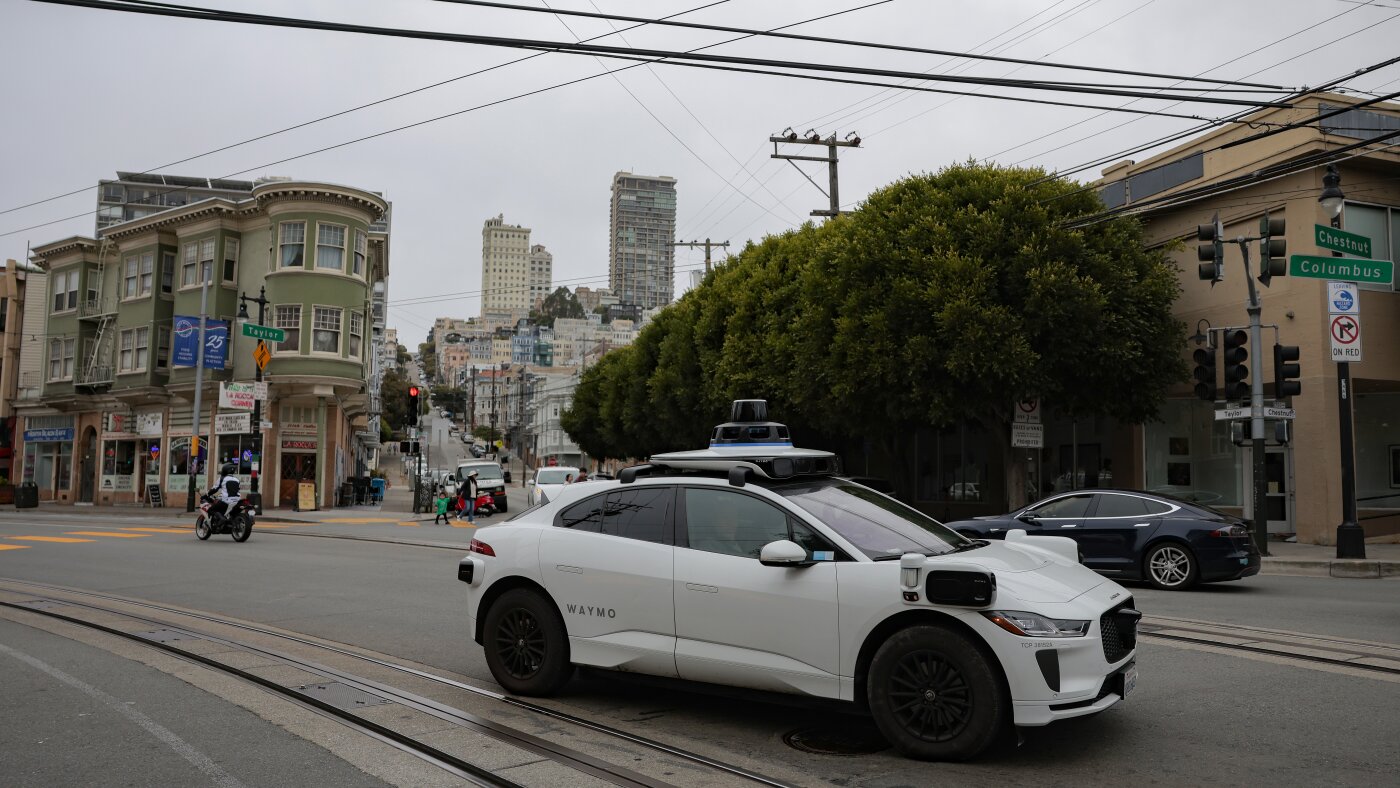
Waymo called the cops on teen riders, raising privacy concerns


O.C. police prep for beach, theme park ‘takeovers’ promoted on social media


Detroit city leaders to DHS: Stop ICE pursuits which endanger the community


SF Supervisor Jackie Fielder hosts listening session after medical leave


The Stewpot artists find healing, purpose and income through art in Dallas


Can Jason Marshall push for a starting spot – The Splash Zone 7/10/26

