West
Nevada schools ban trans athletes from girls sports in major reversal for state

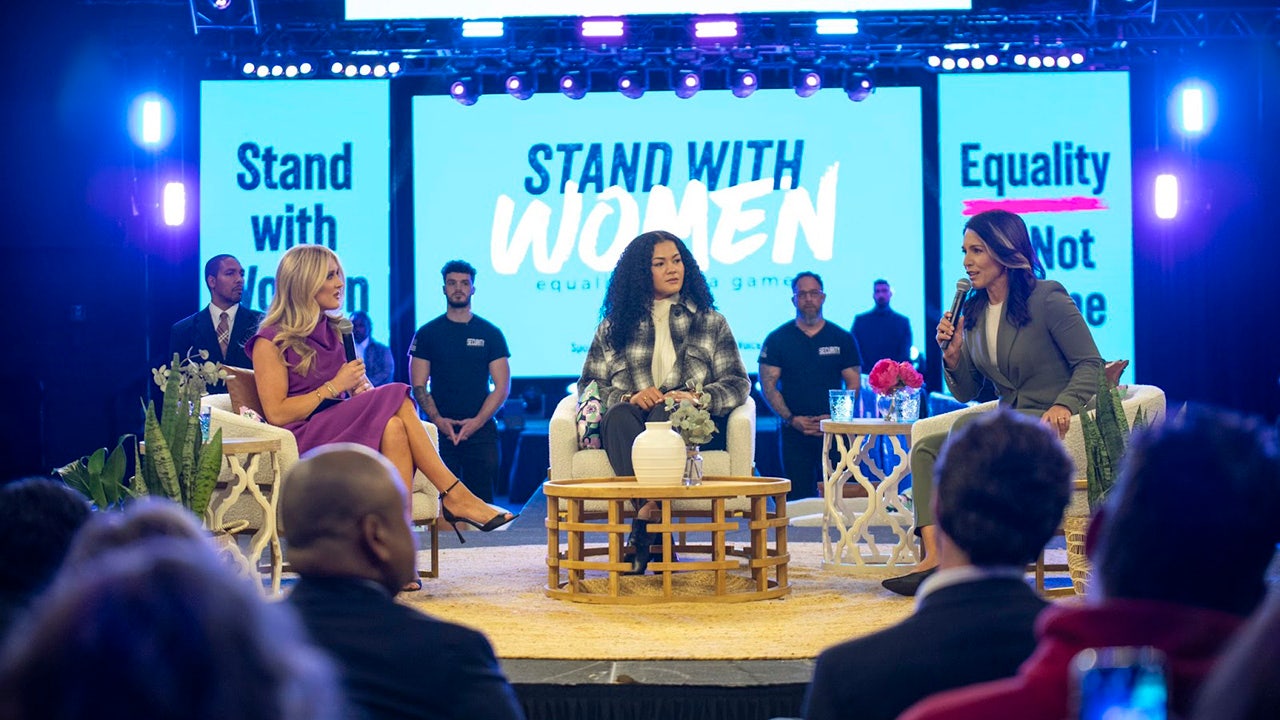
The Nevada Interscholastic Activities Association (NIAA) voted on Tuesday to adopt a new gender eligibility policy that bans trans athletes from girls sports. Now, only biological females can compete in the girls’ category in the state. The change will only apply to high school and youth sports in the state.
Nevada Lieutenant Gov. Stavros Anthony praised the decision in a statement.
“I commend the NIAA for taking this important and courageous step,” said Lieutenant Gov. Stavros Anthony. “Today’s vote sends a clear message: Nevada values and protects opportunities for female athletes. Girls deserve a level playing field, and this action helps ensure they can compete, grow, and succeed without having to compromise safety or fairness.”
The change marks a reversal from the state’s previous policy that enabled trans athletes to compete in girls and women’s sports, which resulted in multiple controversial incidents of it happening in recent years.
Exterior view of the state assembly building. Scenes around the Nevada State Capitol Building. (Ty O’Neil/SOPA Images/LightRocket via Getty Images)
The state’s constitution was revised in 2022, when Democrat lawmakers voted to adopt the Equal Rights Amendment, which added gender identity to its list of diversity classifications that are protected under state law.
The law prompted a nationally publicized feud between the University of Nevada, Reno and its women’s volleyball players in October.
The players approached university administrators privately to express their desire to forfeit a match against San Jose State University, which rostered a trans athlete. But the university did not honor that request and instead released a statement insisting it would play the match. Nevada also insisted its players would be allowed to skip the contest without facing discipline.
WHO IS BLAIRE FLEMING? SJSU VOLLEYBALL PLAYER DOMINATING FEMALE RIVALS AND ENRAGING WOMEN’S RIGHTS GROUPS
GOP Senate candidate Sam Brown speaks to Sia Liilii. (Sam Brown Campaign)
The team ultimately forfeited the day before the match was scheduled to be played, due to not having enough players. However, the university has said it had discussions with the players about potential “legal issues” that would emerge if the match were not played.
“University administrators met with the Nevada volleyball team and discussed scenarios of what could happen if they chose not to play. One of the scenarios that was discussed revolved around possible legal issues for violating the Nevada Constitution,” read a statement that was provided exclusively to Fox News Digital by the University of Nevada, Reno.
The dispute between the players escalated into a national controversy that even garnered mainstream political attention in the weeks leading up to November’s election.
Meanwhile, at the youth level, a Nevada middle school girl, 13-year-old Ava Chavez, recounted an experience of having to face a trans athletes in a letter she handed to state lawmakers last week.
Nevada Wolf Pack women’s volleyball players with Sam Brown and Tulsi Gabbard. (Sam Brown Campaign)
“When the ball is on the other side of the net, they have a chance to swing, and we have a chance to block. This can be dangerous for us because if the blockers can’t block the boy’s hit, I could get dangerously hurt. This scares me because boys are naturally bigger, faster, stronger and have a higher vertical,” a copy of the letter obtained by Fox News Digital read.
Another girl, 17-year-old Kendall Lewis, has also experienced having to face a trans volleyball player due to the state’s policies, she previously told Fox News Digital in an interview.
Now, Nevada joins 26 other states in the U.S. that forbid trans athletes from competing in girls sports and is the latest to comply with President Donald Trump’s executive order to address the issue.
Follow Fox News Digital’s sports coverage on X, and subscribe to the Fox News Sports Huddle newsletter.
Read the full article from Here

Alaska
Lavrov Challenges Rubio: Kremlin Says Trump-Putin Reached Deal as Moscow Questions Washington’s Neutrality

The Kremlin has pushed back against US claims that no agreement was reached between US President Donald Trump and Russian leader Vladimir Putin during the August 2025 Anchorage summit in Alaska.
Russian Foreign Minister Sergey Lavrov said Washington presented proposals to settle the war in Ukraine during the talks and that Moscow accepted them.
JOIN US ON TELEGRAM
Follow our coverage of the war on the @Kyivpost_official.
Lavrov was responding to US Secretary of State Marco Rubio, who has publicly rejected Russian claims that Washington and Moscow reached an agreement on Ukraine during the Alaska summit, saying no deal was ever finalized.
As reported by DRM News, Rubio said the summit produced only a proposal, not a binding agreement.
He added that the US remains ready to play a constructive role in bringing the parties together and helping end the war, but stressed that while proposals were discussed in Alaska, “there was no agreement.”
Lavrov struck back by calling the response “not very elegant.”
“When my colleague says that in Alaska there were only proposals and no agreement, I wonder what we mean by agreement,” Lavrov said.
“If one side, in this case the US, put proposals on the table, and the other side expressed agreement, then saying there was no agreement is somehow not very elegant,” he added.
According to Lavrov, White House Special Envoy Steve Witkoff visited Moscow days before the summit and delivered the same US settlement plan.
Other Topics of Interest
SBU Says Drones Hit Russian Military Ships in New 40-Day Crimea Campaign
The operation aims to degrade Russia’s use of Crimea as a military and logistics hub by targeting ships and air defenses.
“Already in Anchorage, when the two presidents sat down for talks, Putin began listing the American proposals point by point. After each point, in the presence of Trump and Rubio, he asked Witkoff whether he had correctly described the ideas brought to Moscow. Witkoff answered affirmatively to each question,” Lavrov said.
He called for clarification from Washington, adding that recent US statements about playing a constructive role in ending the war sounded like an attempt to position itself as a mediator.
Previous claims
In early June, Lavrov claimed Russia had accepted what he described as US proposals presented at the Alaska summit.
Lavrov alleged that Washington initially acted as a mediator but later stepped back from the process after failing to pressure Ukraine to accept the proposed terms.
This week, he also suggested that the Alaska summit may have been used to “buy time” for Ukraine to rearm itself, further arguing that Russia no longer views the West as a credible broker amid sanctions pressure.
Russian presidential aide Yuri Ushakov also said Moscow remained committed to implementing the understandings reached in Alaska, while accusing Washington of “apparently [failing] to complete its part of the process.”
Kremlin spokesman Dmitry Peskov argued that Washington cannot be considered fully neutral in the war because of its military support for Ukraine.
“If we’re talking about absolute neutrality, then, of course, the term is probably inapplicable, because the United States supplies the majority of weapons to Ukraine and provides other forms of assistance,” Peskov said.
At the same time, he said Moscow highly values Washington’s willingness to help resolve the war, as well as its influence over European allies and Kyiv.
Peskov also dismissed remarks by French President Emmanuel Macron, who recently said at the G7 Summit that Washington had abandoned neutrality and was now openly backing Ukraine’s territorial integrity, continued aid, and sanctions against Russia.
“Regarding President Macron’s statements, it is difficult to judge. I don’t think President Macron can in any way claim to be Washington’s lawyer or press secretary,” Peskov added.

PRESCOTT, AZ (AZFamily) — Beautiful Prescott, Arizona, is home to the “World’s Oldest Rodeo,” and on this Field Trip Friday, we’re getting a look at what to expect when it opens next week!
Scott Pasmore and Gibby Parra went to check out the Prescott Frontier Days event that attracts thousands every year. There’s a wild horse race, barrel racing and bull riding — and that’s just the beginning of what you can see!
Rodeo Royalty
No rodeo is complete without Rodeo Royalty, or experienced horsewomen who help keep the sport alive. Scott and Gibby introduce you to the rodeo queens of the “World’s Oldest Rodeo.”
Anna Butler was named the 2026 Prescott Frontier Days rodeo queen, Ava Brooks was named the 2027 rodeo queen, and Ellie Weeks was named the 2027 junior queen.
Granite Mountain Distillery
Granite Mountain Distillery opened in 2025 and welcomes customers on Friday, Saturday and Sunday.
The distillery has a limited edition whiskey bottle made specially for the “World’s Oldest Rodeo.”
Master Distiller Chris Currie said the quality barrels that the distillery uses allow for the whiskey to be of such high quality.
There were only 1,888 rodeo edition bottles made. Each bottle has its own unique number to authenticity.
Red White and Brew
No one is more excited about the rodeo returning to town than all the local businesses in Prescott.
Summer is one of their busiest times of the year. It’s when many Arizona families head north from the Valley to escape the heat or to attend one of the many summer events in the historic town.
Scott and Gibby stopped by Red White and Brew to see what they’re cooking up this time of year.
“Frontier Days in Prescott is huge,” said Jennifer Collinge, general manager at Red White and Brew in Prescott. “It draws people in from all over the state, all over the country, come and visit us. We have a giant Fourth of July parade that is, I think, one of the biggest in the state. It’s just a week-long of festivities and fun; you don’t have to be involved in rodeo to enjoy it.”
If you want to go the extra mile, 20% of all sales made at Red White and Brew on Tuesday, June 30, will be donated to the Eric Marsh Foundation for Wildland Firefighters.
Whiskey River Tavern
Scott and Gibby spoke with former Prescott Mayor Greg Mengarelli about the exciting times ahead for the city.
“It’s going to be a great celebration,” Mengarelli said. “We’re already very patriotic at the rodeo, but America 250 is just up another level. It’s going to be an awesome celebration, and I hope everybody comes up to see us at the rodeo and the parade.”
He said Frontier Days is sold out, as has been the case over the past several years, and 17 foreign countries will be represented.
Check out our previous Field Trip Friday segments here.
See a spelling or grammatical error in our story? Please click here to report it.
Do you have a photo or video of a breaking news story? Send it to us here with a brief description.
Copyright 2026 KTVK/KPHO. All rights reserved.

California Gov. Gavin Newsom, a Democrat who is considering a run for president as he approaches the end of his term, called for a national “billionaires’ tax” on Friday even as he fights another proposal targeting the wealthy in his home state.
Newsom also said the U.S. government should own a stake in artificial intelligence companies. His proposals, outlined in a Substack post, aligns him with the Democratic Party’s populist left, and he argued that urgent changes are needed to prevent the elite concentration of wealth and power from undermining democracy.
“It’s time for an economic reset for America,” Newsom wrote.
The governor announced his agenda a day after an influential health care union in California pledged to go forward with a ballot measure that would impose a one-time 5% tax on the assets of billionaires living in the state as of Jan. 1, 2026.
Newsom opposes that measure, as do many of the liberal interest groups that typically favor higher taxes. They fear it would drive billionaires out of California, eroding the state’s tax base over the long term for a one-time influx of cash. A technology mecca, California has more billionaires than any other state — a few hundred, by some estimates.
“You may not be able to pick up and move to Texas or Florida to shelter your income from taxation, but I promise you that billionaires can, and do,” Newsom wrote. “Wealth is movable, and it shops for the state with the lowest taxes. The fight belongs at the federal level, where this broken system was created in the first place.”
A minimum tax on large net worths
Newsom said the solution is a new national tax policy, rather than a state-by-state system. He proposed a minimum tax on anyone with a net worth above $100 million. He also wants to make it illegal for the wealthy to borrow against their stock portfolios to fund their luxury lifestyles tax free.
Newsom said there should be new rules for inheritance taxes, warning that “the transfer of wealth among the ultra-wealthy will lock in a permanent American aristocracy of inherited wealth.” And he wants to raise corporate tax rates to where they were before President Donald Trump’s first-term tax cut.
READ MORE: Sanders and Newsom clash over proposed tax on California’s billionaires
The need is especially urgent as artificial intelligence threatens to displace workers and further concentrate wealth, he wrote.
“We need to ensure every American owns a stake in the future being built by AI through a national public equity fund that takes a major stake in the new economy,” he wrote. “Simply, as artificial intelligence reshapes the country, every American should own a piece of the future it builds.”
Revenue generated by his proposals could be used to retrain workers, fund universal child care, make college free and increase funding for health care.
‘Money buys influence’
Newsom, who has drawn attention as one of Trump’s most high-profile political antagonists, is getting an early start on laying out a policy framework for his potential White House bid months before the midterm elections, which have typically marked the informal start of overt presidential campaigning.
WATCH: News Wrap: Newsom says Trump ordering DOJ to investigate him and wife
The embrace of a wealth tax by Newsom, a moderate on tax policy despite his liberal reputation, signals a notable shift in the political landscape since Massachusetts Sen. Elizabeth Warren struggled to get traction in her 2020 campaign, which she largely centered around a 2% levy wealth tax.
Newsom portrayed the nation’s tax code as a corrupt system built to help an elite few.
“Money buys influence, and influence rewrites the rules,” he wrote. “Those rewritten rules funnel even more wealth to the few. Under this weight, democracy itself starts to buckle.”
A free press is a cornerstone of a healthy democracy.
Support trusted journalism and civil dialogue.
-

 Pittsburg, PA7 minutes ago
Pittsburghers lash out at proposed Downtown tax diversion district
-

 Augusta, GA10 minutes ago
Suspect convicted in 2024 Augusta shooting death
-

 Washington, D.C15 minutes ago
DC reaches settlement with man detained while protesting troops with Darth Vader song
-

 Cleveland, OH17 minutes ago
Heinen’s closing downtown Cleveland location
-

 Austin, TX22 minutes ago
Texas board approves Bible stories as required reading in public schools
-

 Alabama25 minutes ago
Best downtowns in Alabama? These 10 towns made the list
-

 Alaska30 minutes ago
Lavrov Challenges Rubio: Kremlin Says Trump-Putin Reached Deal as Moscow Questions Washington’s Neutrality
-

 Arizona37 minutes ago
Central Arizona is home to the ‘World’s Oldest Rodeo.’ Here’s what to see and do there

