Midwest
Charity is key to our Catholic faith. We pray Supreme Court agrees

NEWYou can now listen to Fox News articles!
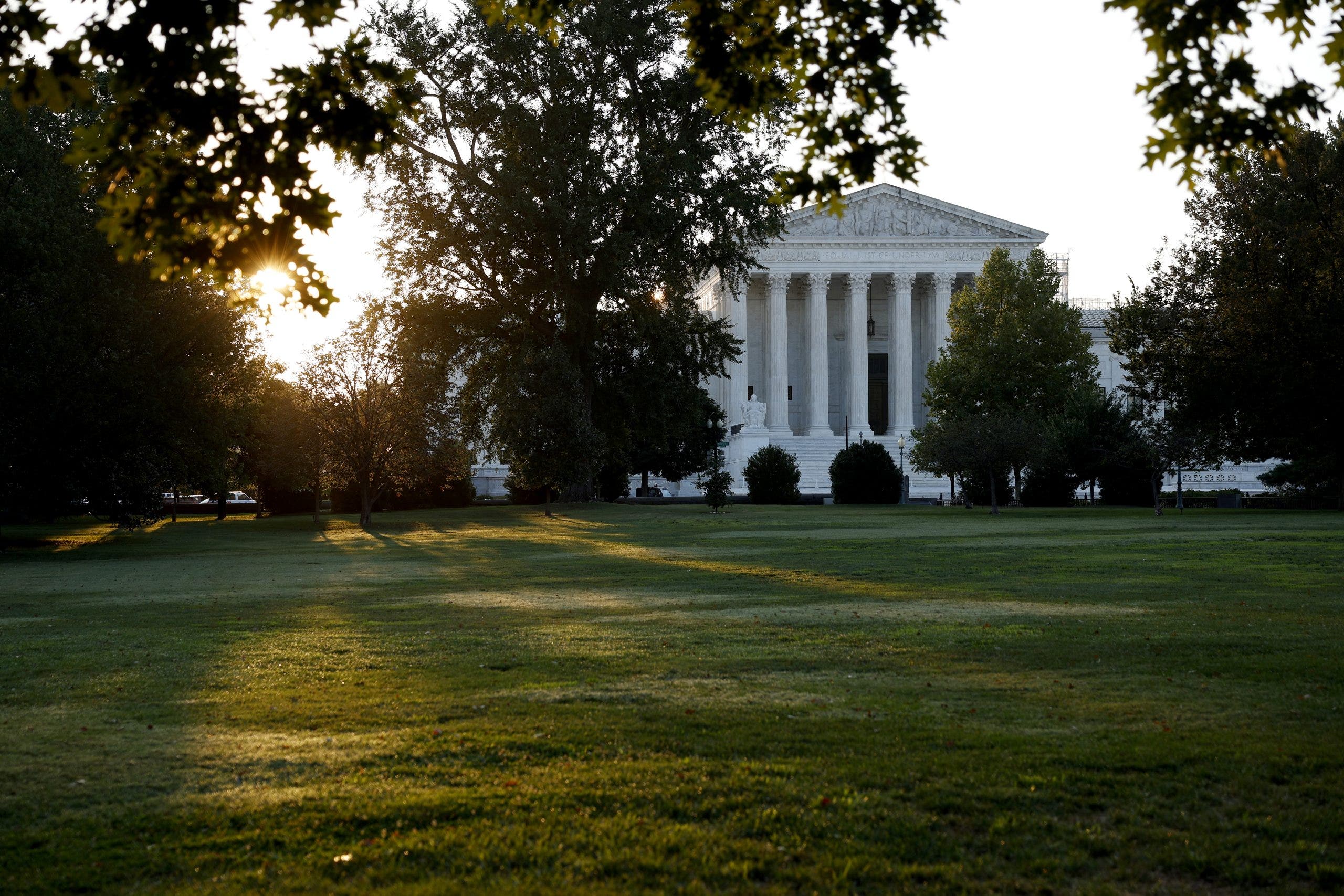
Today, March 31, my diocese will stand before the Supreme Court of the United States to defend our right to continue our decades-long mission of serving the most vulnerable. It’s shocking it had to come to this. Yet, officials in Wisconsin seek to impede our efforts by claiming this charitable ministry is not religious.
Guided by Catholic social teaching and Christ’s commands, Catholic dioceses across the country provide vital, loving care to those in need. Indeed, as Pope Francis reminds us, “For the church, a preference for the poor is not optional.”
This core principle of Catholic social teaching calls us to prioritize the disadvantaged in all aspects of our work. In the Diocese of Superior, Wisconsin, we answer Christ’s call to serve with compassion through the work of our Catholic Charities Bureau. For over a century, this ministry has been a source of hope and care for thousands of our elderly, poor and disabled neighbors.
POPE FRANCIS’ DOCTORS CONSIDERED ENDING TREATMENT, SAID ‘THERE WAS A REAL RISK HE MIGHT NOT MAKE IT’: REPORT
Through Catholic Charities, the church can offer life skills classes, vocational training, job placement services, low-income senior housing, supports for adults with special needs, personal care and assistance for independent living. Catholic Charities improves the human condition by treating each person with dignity of one created in God’s image, as if we were caring for Christ Himself.
The U.S. Supreme Court will be the site of a new battle for religious freedom. (Anna Moneymaker/Getty Images)
Last year, the majority of the Wisconsin Supreme Court — putting blinders on — declared that Catholic Charities is not operated primarily for religious purposes. Fundamentally, the court reached this conclusion because it said our charitable outreach is not a “typical” religious activity.
This deeply disappointing ruling meant that Catholic Charities was forced to continue paying into the state’s unemployment benefits program. This also means that Catholic Charities cannot join the Wisconsin Catholic Church’s better and more efficient unemployment program. We remain steadfast in our mission, but this decision challenges our ability to live out Christ’s call to serve with faith at the center of all we do.
CLICK HERE FOR MORE FOX NEWS OPINION
Most of all, the Wisconsin Supreme Court’s decision harms those who rely on our ministries. If not corrected, Catholic Charities will be forced to continue diverting its precious resources to cover the costs associated with participation in the state’s program.
As stewards of the generous gifts given to us, we always seek to ensure that we can maximize their direct impact instead of being spent on state programs intentionally designed to exclude religious organizations like ours.
But what most concerns me about this decision is the reasoning behind it. The court suggests that Catholic Charities would be more religious if it hired only Catholics and sought to convert those it serves. This misrepresents our faith and the heart of our mission.
True Christian charity does not separate the “deserving” from the “undeserving,” nor is it a means of proselytizing. Instead, it flows from love, as St. Augustine teaches, “a virtue which… unites us to God, for by it we love Him.”
The good Samaritan did not question the wounded man’s faith; he saw the need and responded with mercy. This is the example Catholic Charities has embraced for over a century, and it is the spirit in which we will continue to serve the most vulnerable among us. No matter how others define our work, our devotion to lifting up those in need will remain steadfast and rooted in love.
With the support of the Becket Fund for Religious Liberty, our diocese brought this case before the U.S. Supreme Court last fall. Today, the justices will consider whether Wisconsin’s cramped view of what constitutes “religion” can withstand scrutiny. We hope and pray that the justices will recognize the sincere faith at the core of our ministry.
Read the full article from Here


PARKERSBURG, W.Va. (WTAP) – Ohio Gov. Mike DeWine is encouraging Ohioans to take advantage of this year’s sales tax holiday, which will take place from midnight Friday, Aug. 7, through 11:59 p.m. Sunday, Aug. 9, 2026.
The following items qualify for the sales tax exemption during the three-day holiday: clothing priced at $75 or less per item, school supplies priced at $20 or less per item, and school instructional materials priced at $20 or less per item.
According to the Ohio Department of Taxation, “clothing” includes but is not limited to, aprons, household and shop; athletic supporters; baby receiving blankets; bathing suits and caps; beach capes and coats; belts and suspenders; boots; coats and jackets; costumes; diapers, children and adult, including disposable diapers; earmuffs; footlets; formal wear; garters and garter belts; girdles; gloves and mittens for general use; hats and caps; hosiery; insoles for shoes; lab coats; neckties; overshoes; pantyhose; rainwear; rubber pants; sandals; scarves; shoes and shoe laces; slippers; sneakers; socks and stockings; steel-toed shoes; underwear; uniforms, athletic and nonathletic; and wedding apparel.
“School supplies” only includes binders; book bags; calculators; cellophane tape; blackboard chalk; compasses; composition books; crayons; erasers; folders, expandable, pocket, plastic, and manila; glue, paste, and paste sticks; highlighters; index cards; index card boxes; legal pads; lunch boxes; markers; notebooks; paper, loose-leaf notebook paper, copy paper, graph paper, tracing paper, manila paper, colored paper, poster board, and construction paper; pencil boxes and other school supply boxes; pencil sharpeners; pencils; pens; protractors; rulers; scissors; and writing tablets.
“School instructional materials” only includes reference books, reference maps and globes, textbooks, and workbooks.
In 2026, the sales tax holiday only applies to the above back to school items. It does not apply to items that are $500 or less, food in restaurants, boats/watercrafts, titled outboard motors, motor vehicles, alcohol, tobacco, vape products, or items with marijuana. It also does not apply to taxable services and items purchased for use in business.
For more information about this year’s sales tax holiday in Ohio, you can visit the Ohio Department of Taxation’s website.
Copyright 2026 WTAP. All rights reserved.

SIOUX FALLS, S.D. (AP) — Nine Native American tribes in South Dakota, North Dakota and Nebraska are suing the federal government in a bid to stop exploratory drilling for graphite near a sacred site in the Black Hills.
A small group of demonstrators has been protesting at the drilling location and at the mining company’s headquarters since they learned ground was broken on the drilling project in late April.
The tribes filed their federal lawsuit Thursday in South Dakota against the U.S. Forest Service and U.S. Department of Agriculture, alleging that the agencies violated federal law by greenlighting a project near a site called Pe’Sla, a meadow in the central Black Hills used for tribal ceremonies, prayer and youth camps year-round.
The project is the latest point of tension between tribes and mining interests in the lush pine-covered Black Hills, which encompass over 1.2 million acres (485,000 hectares), rising from the Great Plains in southwest South Dakota and extending into Wyoming.
The region is a yearly destination for millions of tourists boasting such attractions as Mount Rushmore and wildlife-filled state parks. Yet for even longer, it has been sacred to Sioux tribes who call the area He Sapa and consider it “the heart of everything that is,” according to the complaint.
Some of the landscape has already been altered by the gold rush of the 1870s that developed the region and displaced Native Americans. And in recent years, a new crop of miners driven by rising gold prices have sought to return to the landscape.
The complaint said the project by Rapid City-based mining company Pete Lien & Sons would impact the use of Pe’Sla for traditional, cultural and religious purposes by the tribes, and that the Forest Service did not consult with the tribes before approving the project.
Parts of Pe’Sla are owned by Sioux tribes after they bought the land in 2012, 2015 and 2018, and an agreement between the tribes and the Forest Service established a two-mile (three kilometer) buffer zone on public lands around the site, according to the complaint.
Because Pe’Sla was not included as an affected area and no environmental review was conducted, the approval violates the National Historic Preservation Act and National Environmental Policy Act, the lawsuit alleges.
Pete Lien & Sons, which supplies materials like limestone, sand and gravel, did not return email requests or voicemails for comment Thursday and Sunday.
Frank Star Comes Out, president of the Oglala Sioux Tribe, said in a statement that the lawsuit is “a historic demonstration of unity” between the nine tribes. The tribes are separate, distinct federally recognized tribes sharing cultural and linguistic roots, but each with its own government and land base.
“We as Lakota people have been coming and praying and holding ceremony at these places for over 2,000 years,” said Wizipan Garriott, president of Indigenous advocacy group NDN Collective and a member of the Rosebud Sioux Tribe. “And so us being here is a continuation of countless generations before us. And it’s important that these sacred places be protected for future generations to come.”
The project was granted a permit from the Forest Service in February without conducting an environmental review because the agency said it met the requirements for a categorical exclusion, like having a duration of less than a year and not posing impacts to environmental and cultural sites.
But tribal opponents disagree that those requirements were met and said drilling projects are often a first step leading to future mines.
Besides the lawsuit from the tribes, NDN Collective and other environmental groups filed a request for a temporary restraining order and preliminary injunction to halt the project.
Some of the drilling pads are in the buffer zone around the site, according to NDN Collective. The project calls for the company to drill up to 18 holes down some 1,000 feet (300 meters) into the Earth to collect samples.
On Thursday, opponents demonstrated with signs reading “Protect Pe’Sla” and “Sacred ground not mining bound” near two drilling pads to block access. NDN Collective said the Forest Service told them drilling was paused for the rest of the day and the contractors were sent home.
The Forest Service said in a statement that it had no comment on the project when asked for a response.
“The Forest Service does not comment on the specifics of the case or on issues that are part of ongoing legal proceedings,” the statement said.
It is unclear when drilling began, but NDN Collective said it noticed drilling pads in operation last week. The group said protest actions will continue as needed to protect Pe’Sla.
“As Lakota, we pray as long as we need to,” Garriott said.


Manuel Franco claims his $768 million Powerball jackpot
Manuel Franco, 24, of West Allis was revealed Tuesday as the winner of the $768.4 million Powerball jackpot.
Mark Hoffman, Milwaukee Journal Sentinel
The Wisconsin Lottery offers multiple draw games for those aiming to win big.
Here’s a look at May 3, 2026, results for each game:
Winning Pick 3 numbers from May 3 drawing
Midday: 5-8-9
Evening: 9-6-3
Check Pick 3 payouts and previous drawings here.
Winning Pick 4 numbers from May 3 drawing
Midday: 9-6-7-1
Evening: 0-4-5-7
Check Pick 4 payouts and previous drawings here.
Winning All or Nothing numbers from May 3 drawing
Midday: 01-02-07-08-12-13-14-15-18-21-22
Evening: 02-03-05-06-07-08-11-14-15-19-22
Check All or Nothing payouts and previous drawings here.
Winning Badger 5 numbers from May 3 drawing
07-10-12-13-22
Check Badger 5 payouts and previous drawings here.
Winning SuperCash numbers from May 3 drawing
09-11-18-23-26-38, Doubler: N
Check SuperCash payouts and previous drawings here.
Feeling lucky? Explore the latest lottery news & results
Are you a winner? Here’s how to claim your lottery prize
- Prizes up to $599: Can be claimed at any Wisconsin Lottery retailer.
- Prizes from $600 to $199,999: Can be claimed in person at a Lottery Office. By mail, send the signed ticket and a completed claim form available on the Wisconsin Lottery claim page to: Prizes, PO Box 777 Madison, WI 53774.
- Prizes of $200,000 or more: Must be claimed in person at the Madison Lottery office. Call the Lottery office prior to your visit: 608-261-4916.
Can Wisconsin lottery winners remain anonymous?
No, according to the Wisconsin Lottery. Due to the state’s open records laws, the lottery must, upon request, release the name and city of the winner. Other information about the winner is released only with the winner’s consent.
When are the Wisconsin Lottery drawings held?
- Powerball: 9:59 p.m. CT on Monday, Wednesday, and Saturday.
- Mega Millions: 10:00 p.m. CT on Tuesday and Friday.
- Super Cash: 9:00 p.m. CT daily.
- Pick 3 (Day): 1:30 p.m. CT daily.
- Pick 3 (Evening): 9:00 p.m. CT daily.
- Pick 4 (Day): 1:30 p.m. CT daily.
- Pick 4 (Evening): 9:00 p.m. CT daily.
- All or Nothing (Day): 1:30 p.m. CT daily.
- All or Nothing (Evening): 9 p.m. CT daily.
- Megabucks: 9:00 p.m. CT on Wednesday and Saturday.
- Badger 5: 9:00 p.m. CT daily.
That lucky feeling: Peek at the past week’s winning numbers.
Feeling lucky? WI man wins $768 million Powerball jackpot **
WI Lottery history: Top 10 Powerball and Mega Million jackpots
This results page was generated automatically using information from TinBu and a template written and reviewed by a Wisconsin editor. You can send feedback using this form.
-

 Ohio1 minute ago
Gov. Mike DeWine urges Ohio residents to take advantage of sales tax holiday
-
Oklahoma7 minutes ago
At least 10 hospitalized after Oklahoma shooting | The Jerusalem Post
-
Oregon13 minutes ago
Oregon Lottery Pick 4 results for May 3
-

 Pennsylvania19 minutes ago
Pennsylvania amusement park named best in the US by TripAdvisor
-
Rhode Island25 minutes ago
RI Lottery Numbers Midday, Numbers Evening winning numbers for May 3, 2026
-

 South-Carolina31 minutes ago
LSU completes sweep of South Carolina, 7-0
-
South Dakota37 minutes ago
Tribes sue to halt exploratory drilling in Black Hills near sacred ceremonial site
-
Tennessee43 minutes ago
Alabama and Tennessee move to draw new congressional districts in wake of Supreme Court ruling


