Northeast
CT ballot fraud saga leads GOP to alert Bondi after 150 charges lodged, Dem reforms ‘miss the mark,' they say

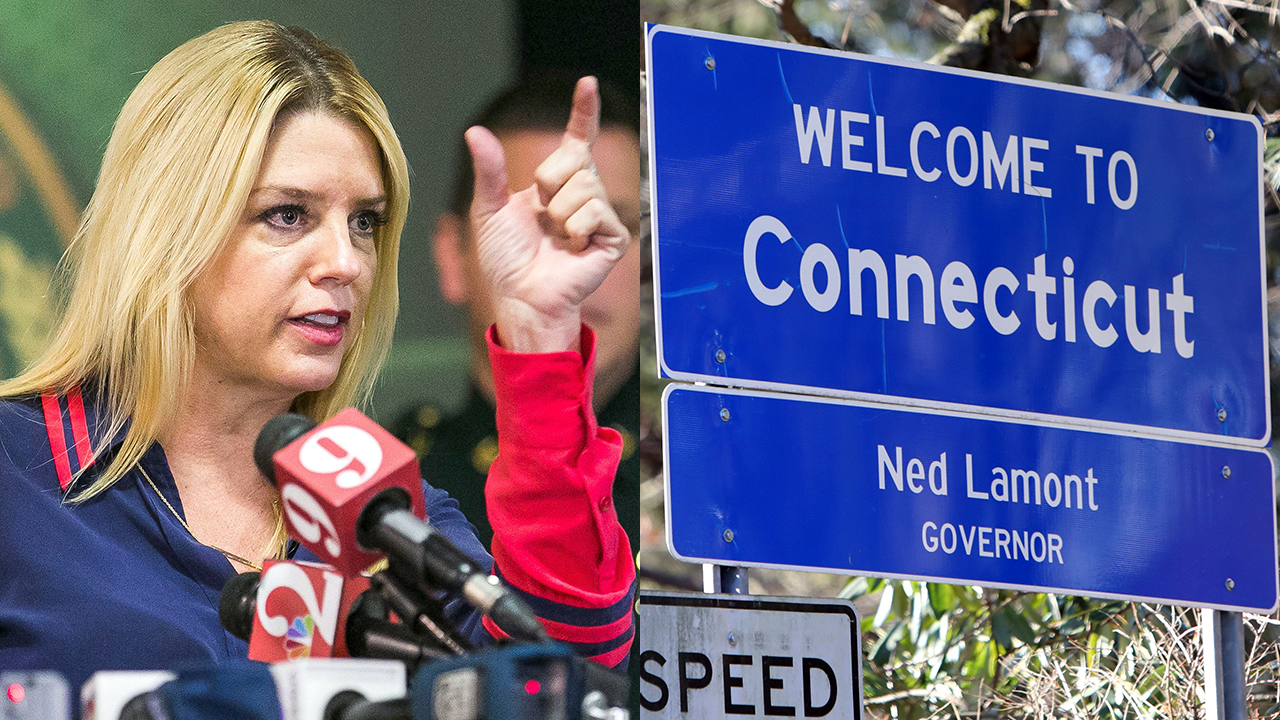
Ballot fraud concerns stretching back to a judicially-overturned 2023 election in Connecticut’s largest city have led state lawmakers to spar over how to reform the system after dozens of criminal charges were lodged in the latest cases there.
On Monday, Republican leaders told Fox News Digital they have asked Attorney General Pam Bondi to probe whether “election crimes in Bridgeport” that led to the indictments are “part of a larger, coordinated effort to defraud voters statewide” – adding that Democrats’ two new election reform bills drafted in response to the latest case “miss the mark.”
“Connecticut has made embarrassing international news for absentee ballot fraud caught on viral video,” state Sen. Rob Sampson of Wolcott and Senate Minority Leader Stephen Harding of Brookfield said in joint comments to Fox News Digital.
Sampson is currently the ranking Republican on the bicameral Government Administration and Elections Committee considering the bills.
4 CT DEM OPERATIVES CHARGED IN ABSENTEE BALLOT MISUSE PROBE
Connecticut State Capitol in Hartford. (Getty)
“Everyone saw it,” the Republicans said of various CCTV tapes from Bridgeport showing city Democratic Party official Wanda Geter-Pataky allegedly engaging in ballot-stuffing, inserting large numbers of ballots into a drop box outside city hall.
Reports at the time characterized the effort as one seeking to benefit Mayor Joe Ganim against challenger John Gomes, and the controversy ultimately spilled into the 2024 court-ordered “redo” between the two men.
Sampson and Harding said legislative Republicans wrote to Bondi to formally request a federal investigation into whether “election crimes in Bridgeport are part of a larger, coordinated effort to defraud voters statewide.”
They added the two bills presented in committee on Friday – SB 1515 and SB 1516 – are woefully inadequate and do not meet the moment.
SB 1515 would establish a Municipal Election Accountability Board, which would provide oversight of towns and cities’ elections and related referenda.
SB 1516 would “expand certain post-election procedures” relating to the correction of ballot returns, and better regulate “curbside voting” – including prohibiting a worker from sitting in a voter’s vehicle while they fill out their ballot – and how soon certain criminal convicts could circulate nominating petitions. It also would install an election monitor for larger cities effective for the 2025 off-year elections and prohibit commercial use of certain voter registration information.
“We have Democrats from Bridgeport traveling to the capitol to push for the state and individual campaigns to be removed from the absentee ballot process. Empowering the state government in this area is not the solution,” the GOP leaders said.
“Connecticut Democrats have shown no appetite for adopting our commonsense reforms.”
WATTERS: VOTER FRAUD NEEDS TO BE INVESTIGATED
A representative for House Speaker Matt Ritter, D-Hartford, directed Fox News Digital to the Senate, where Senate President Pro-Tem Martin Looney of New Haven did not respond.
Much of SB 1516’s recommendations mirror those of Secretary of State Stephanie Thomas, according to a Senate representative. In the lower chamber, House Minority Leader Vincent Candelora called election fraud a “serious problem” in the state, in comments to Fox News Digital.
“Residents know it and so does this nation,” said Candelora, R-East Haven.
Candelora said bad actors must be told they will face jail time if they commit electoral hijinks.
“Until the legislature sends that message, those intent on cheating will always find a way,” he said.
Earlier this month, five Democratic officials – including Geter-Pataky – were charged with about 150 election-related offenses all-told, according to the Connecticut Post.
Connecticut Gov. Ned Lamont, a Democrat, previously dismissed claims the “potential corruption” was tied to early voting and absentee balloting.
“I think it’s people who do the corrupting,” Lamont said.
According to the conservative Heritage Foundation’s “Voter Fraud Report,” Geter-Pataky made “10 drops either directly or indirectly” and another woman made five separate ballot drops during Bridgeport’s 2023 mayoral primary.
Meanwhile, the judge who overturned the election ruled the “volume of ballots so mishandled is such that it calls the result of the primary election into serious doubt and leaves the court unable to determine the legitimate result of the primary,” and called videos of the situation “shocking.”
A Connecticut Post report on the slew of charges from earlier this month said the “vast majority” are lodged against Geter-Pataky, while other defendants include council members Alfredo Castillo and Maria Pereira.
Gomes appeared to disagree with Republicans’ aversion to the bills, telling the Hartford Courant the municipal accountability board outlined in SB 1515 is needed. He pointed to the criminal complaint, which reportedly outlined an allegation Geter-Pataky was permitted by town clerks to insert a ballot into a tote being used to empty a drop box.
Fox News Digital reached out to the Justice Department for comment on the request for Bondi’s help.
Read the full article from Here


When Americans think of the beverage that fueled the American Revolution, they usually picture black tea — but it turns out that green tea was just as popular.
The Founding Fathers and their contemporaries drank both types of tea, Bruce Richardson, the Kentucky-based founder of Elmwood Inn Fine Teas, told Fox News Digital.
British subjects “were as likely to be drinking green tea as black tea, whether you were in Jane Austen [era] England … or you were in colonial Boston,” he added.
“There were five teas, all from China, because that was the only country that was exporting tea,” Richardson said. “And of those five different teas, two of them were green and three of them were black.”
Richardson, a tea historian who works as the tea master at the Boston Tea Party Ships & Museum, said the five types of tea dumped into Boston Harbor in protest of the Tea Act of 1773 included three black varieties — Bohea, Souchong and Congou — as well as the green teas Hyson and Singlo.
Bohea, the most common and least expensive black tea of the era, was often made from older tea leaves harvested after the highest-quality leaves of the season had already been picked.
Most of the tea dumped into Boston Harbor was Bohea, Richardson said — and it was so ubiquitous that he compared it to the way Kleenex has become synonymous with tissues today.
“It was so common that often teapots at the time, or some that I’ve seen, would say Bohea on the side of the teapot,” he said. “If they wanted tea, they’d say, ‘I’ll have a cup of Bohea.’ It was that common.”
Not only did colonial Americans distinguish between green and black tea, they even stored them differently.
“They still wanted their tea time, but they didn’t want to support the British government.”
“The well-to-do people would have a tea caddy – a wooden, beautifully made tea caddy to store their tea in,” he said.
“It was kept under lock and key. And in that tea caddy, [there] would be two compartments, one for green tea and one for black tea.”

Merchants often favored black tea because it held up better during the long voyage from China to Europe and onward to the American colonies, Richardson said.
“The green tea was what China had always drunk,” he said.
“And so they were exporting that as well, but they found that the black tea actually made the voyage better than the green teas.”
Even after many colonists swore off British tea, they kept the ritual of drinking it — or at least a close substitute.
Many patriots brewed so-called “Liberty Teas” made from ingredients such as dried apples, blueberries, chamomile and herbs grown in their gardens.
“They still wanted their tea time, but they didn’t want to support the British government,” Richardson said.


-

 Finance4 minutes ago
What the Supreme Court’s campaign finance ruling means for the 2026 election
-

 Fitness11 minutes ago
I pushed myself too hard at the gym – and ended up in the hospital
-

 Movie Reviews19 minutes ago
Young Washington (Christian Movie Review) – The Collision
-

 World29 minutes ago
Neon Closing in on Luca Guadagnino’s Sam Altman Open AI Movie ‘Artificial’ After Amazon Drops Controversial Film
-
 Lifestyle1 hour ago
‘Dead but Dreaming of Electric Sheep’ is full of beautifully written grotesqueries
-

 Technology1 hour ago
Google’s NotebookLM can sum up your research in a TikTok-style clip
-

 World1 hour ago
Trump admin backs Bolivia state of emergency as leftist ex-leader’s loyalists fracture nation
-

 Politics1 hour ago
Congress eyes rare bipartisan housing win with or without Trump’s help

