Northeast
Wealthy coastal enclave nanny charged with manslaughter in toddler's death

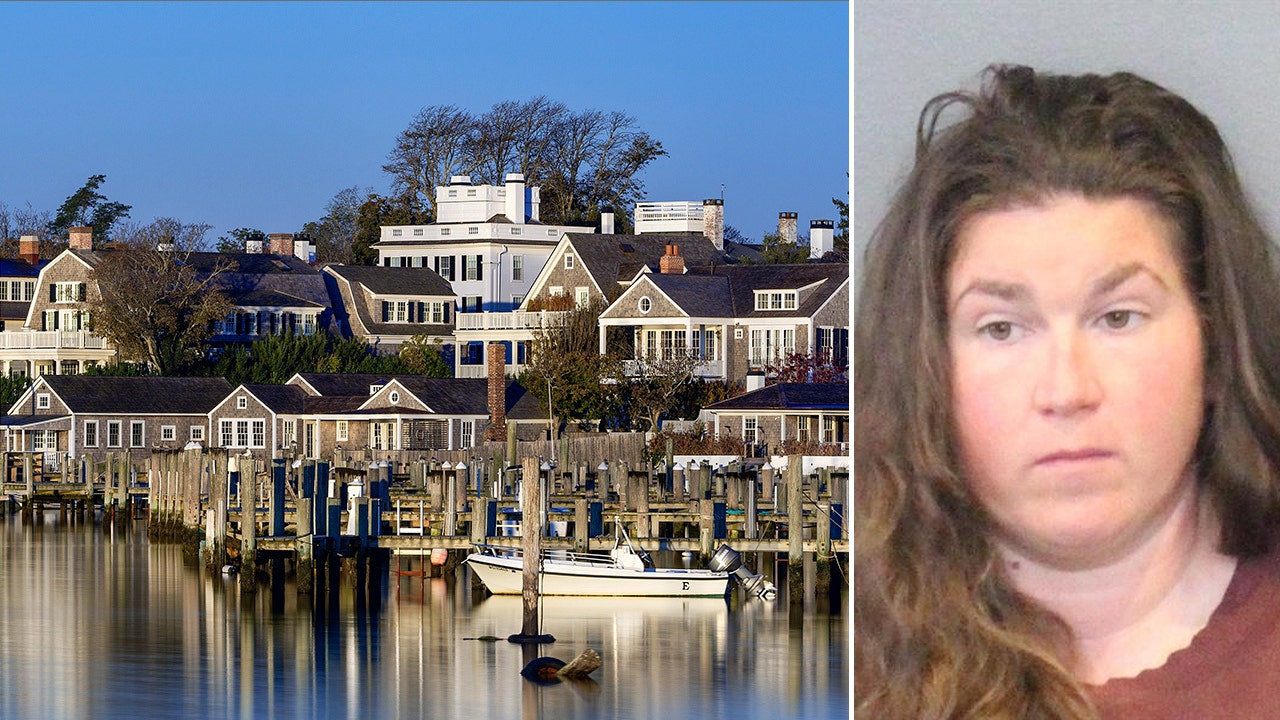
A nanny in Martha’s Vineyard has been charged with manslaughter after allegedly leaving two young children who were under her care inside her SUV for several hours, resulting in the death of one of the children.
Aimee Cotton, 41, was arrested on March 13 by authorities on charges of assault and battery on a child with injury and reckless endangerment, according to an arrest report from the Massachusetts State Police.
She was later charged with manslaughter when one of the children, a 3-year-old, died on March 19. The child has not been named.
“A CHILD CALLED ‘IT’” AUTHOR SAYS CONNECTICUT HOUSE OF HORRORS CASE IS ‘ATTEMPTED MURDER’
Cotton called the police in the early afternoon on March 13, reporting that “a child whom she was babysitting was not breathing and turning blue.” The Oaks Bluff Police Department first responded to the call, and alerted the state police, who arrived shortly thereafter.
The Oak Bluffs Police Department first responded to a 911 call made by Aimee Cotton, who is now charged with manslaughter in the death of a child under her care. (Oaks Bluff Police Department)
The victim was initially taken to the Martha’s Vineyard Hospital Emergency Room, and later transported by Boston Medflight helicopter to Massachusetts General Hospital in critical condition.
The victim died six days later.
The arrest report indicates that Cotton first told responding officers that she and the children had had a relatively normal morning during which she attempted to take them for a walk, but scrapped the idea and took the children home when one of them would not cooperate.
She said that she took the children back to her home, where they played with toys and ate lunch, and explained that shortly after noon, she began loading her vehicle with hockey equipment and changed the children’s diapers in the process, before putting them in the vehicle.
UTAH MOMMY BLOGGER RUBY FRANKE’S POWER, PUBLIC IMAGE ALLOWED CHILD ABUSE TO GO ‘UNCHECKED’: EXPERT
A sprawling Victorian home on ritzy vacation spot Martha’s Vineyard. (John Greim/LightRocket )
Cotton, who was described as “cooperative,” told police the children were in the car alone for no more than 15 minutes, and that she called the police around 1:15 p.m. because one of the children looked “sick and ill.”
Shortly thereafter, police obtained a Nest home camera with Cotton’s permission, which contained surveillance footage from outside the house.
That footage told a completely different story.
Police said that around 9:15 a.m., Cotton could be seen entering the driveway in her 2021 Chevrolet Tahoe. She allegedly spent 10 minutes unloading items from the car and bringing them inside, but neither of the children were removed from the car.
TENNESSEE PAIR CHARGED WITH CHILD ABUSE FOR LOCKING AUTISTIC CHILD IN STORAGE BIN AT UNSANITARY HOME
Victorian gingerbread cottages in Oak Bluffs, Martha’s Vineyard, Massachusetts. (Photo by John Greim/LightRocket via Getty Images)
Police said a period of nearly three hours passed without any activity on the Nest footage, before she began loading the SUV with the hockey equipment around noon. Over the course of the next hour, she loaded the vehicle and briefly brought the younger child, who survived, inside the house for about 10 minutes before returning that child to the car.
That is when she called 911 to report the unresponsive victim.
The next morning, state troopers brought Cotton in for questioning, where she capitulated and told officers that she left the children in the car for about three hours while she cooked herself food, attended to her personal hygiene, packed her son’s hockey equipment and completed other chores.
Massachusetts State Police ultimately arrested Aimee Cotton on manslaughter charges on March 20. (David L. Ryan/The Boston Globe)
The arrest report noted that Cotton showed remorse, but also made excuses for her behavior.
She was initially arrested on March 14 for assault and battery on a child with injury and reckless endangerment. She was booked into the Dukes County Jail and arraigned later that day.
On March 20, the day after the child died, she was arraigned in Edgartown District Court on the charge of manslaughter.
Edgartown Lighthouse, Martha’s Vineyard, Massachusetts. (iStock)
Cotton pleaded not guilty to the manslaughter charge and posted $21,000 bail. She was released with a GPS ankle monitor. She was also given a mandatory 6 p.m. curfew.
Cotton faces up to 20 years in prison if convicted. Her next court date is scheduled for April 3.
Harrison Barrow III, Cotton’s attorney, declined to comment.
Read the full article from Here


When Americans think of the beverage that fueled the American Revolution, they usually picture black tea — but it turns out that green tea was just as popular.
The Founding Fathers and their contemporaries drank both types of tea, Bruce Richardson, the Kentucky-based founder of Elmwood Inn Fine Teas, told Fox News Digital.
British subjects “were as likely to be drinking green tea as black tea, whether you were in Jane Austen [era] England … or you were in colonial Boston,” he added.
“There were five teas, all from China, because that was the only country that was exporting tea,” Richardson said. “And of those five different teas, two of them were green and three of them were black.”
Richardson, a tea historian who works as the tea master at the Boston Tea Party Ships & Museum, said the five types of tea dumped into Boston Harbor in protest of the Tea Act of 1773 included three black varieties — Bohea, Souchong and Congou — as well as the green teas Hyson and Singlo.
Bohea, the most common and least expensive black tea of the era, was often made from older tea leaves harvested after the highest-quality leaves of the season had already been picked.
Most of the tea dumped into Boston Harbor was Bohea, Richardson said — and it was so ubiquitous that he compared it to the way Kleenex has become synonymous with tissues today.
“It was so common that often teapots at the time, or some that I’ve seen, would say Bohea on the side of the teapot,” he said. “If they wanted tea, they’d say, ‘I’ll have a cup of Bohea.’ It was that common.”
Not only did colonial Americans distinguish between green and black tea, they even stored them differently.
“They still wanted their tea time, but they didn’t want to support the British government.”
“The well-to-do people would have a tea caddy – a wooden, beautifully made tea caddy to store their tea in,” he said.
“It was kept under lock and key. And in that tea caddy, [there] would be two compartments, one for green tea and one for black tea.”

Merchants often favored black tea because it held up better during the long voyage from China to Europe and onward to the American colonies, Richardson said.
“The green tea was what China had always drunk,” he said.
“And so they were exporting that as well, but they found that the black tea actually made the voyage better than the green teas.”
Even after many colonists swore off British tea, they kept the ritual of drinking it — or at least a close substitute.
Many patriots brewed so-called “Liberty Teas” made from ingredients such as dried apples, blueberries, chamomile and herbs grown in their gardens.
“They still wanted their tea time, but they didn’t want to support the British government,” Richardson said.


-

 Finance4 minutes ago
What the Supreme Court’s campaign finance ruling means for the 2026 election
-

 Fitness11 minutes ago
I pushed myself too hard at the gym – and ended up in the hospital
-

 Movie Reviews19 minutes ago
Young Washington (Christian Movie Review) – The Collision
-

 World29 minutes ago
Neon Closing in on Luca Guadagnino’s Sam Altman Open AI Movie ‘Artificial’ After Amazon Drops Controversial Film
-
 Lifestyle1 hour ago
‘Dead but Dreaming of Electric Sheep’ is full of beautifully written grotesqueries
-

 Technology1 hour ago
Google’s NotebookLM can sum up your research in a TikTok-style clip
-

 World1 hour ago
Trump admin backs Bolivia state of emergency as leftist ex-leader’s loyalists fracture nation
-

 Politics1 hour ago
Congress eyes rare bipartisan housing win with or without Trump’s help

