Northeast
DOJ investigating Rhode Island schools over loan forgiveness program only for 'educators of color'

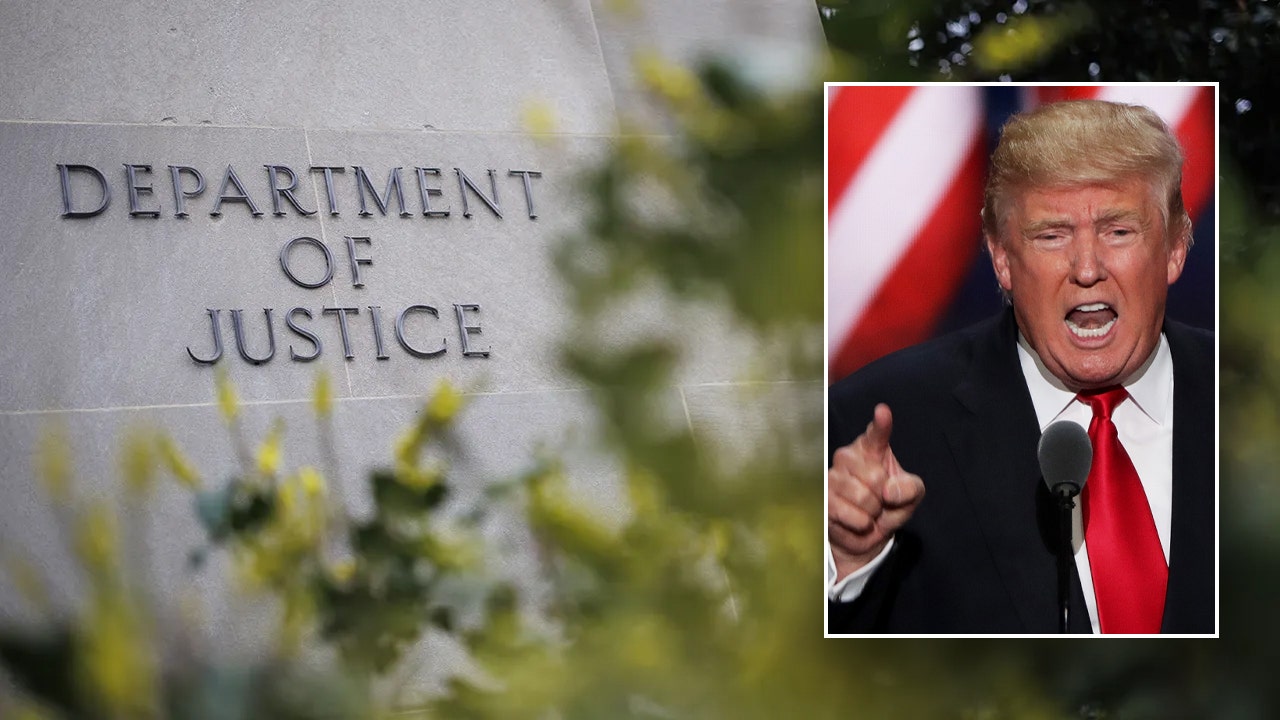
The Department of Justice (DOJ) has launched an investigation into a Rhode Island school district to determine whether its student loan forgiveness program for teachers discriminates against White applicants.
In a March 21 letter sent to Providence Public School District (PPSD) and the Rhode Island Department of Education (RIDE), the Justice Department’s Civil Rights Office announced an investigation into whether the district and education office’s employment practices — specifically a student loan forgiveness program — have engaged in racial discrimination against White teachers.
“It is important to note that we have not reached any conclusions about the subject matter of the investigation. We intend to consider all relevant information, and we welcome your assistance in helping to identify what that might be,” the letter states, as first reported by The Boston Globe.
PPSD’s “Educator of Color Loan Forgiveness Program” offers student loan forgiveness for educators of color through a grant from a nonprofit, the Rhode Island Foundation.
PARENTAL RIGHTS GROUP FILES COMPLAINT AGAINST OREGON SCHOOL SYSTEM FOR ALLEGED RACIAL DISCRIMINATION
Providence Public Schools in Rhode Island was slapped with a civil rights complaint in 2022 over its Educator of Color Loan Forgiveness Program. (iStock)
Recipients can receive up to $25,000 of college loans forgiven once the teacher completes three consecutive years of teaching in the district. The eligibility requirements indicate recipients must “identify as Asian, Black, Indigenous, Latino, biracial, or multi-racial” and must have at least $5,000 in student loans to repay.
Legal Insurrection Foundation (LIF), a Rhode Island-based, nonprofit investigative and research group that fights discrimination in education, filed a complaint with the Department of Education in 2022, claiming that the district was engaged in an ongoing “practice of discrimination” by making this program only available to non-White applicants.
The group was unsuccessful in getting the Biden administration to take up the case, but was “thrilled” upon learning the Trump administration’s Justice Department would be investigating.
“It’s been almost two and almost two and a half years since we filed it,” Cornell Law School professor and LIF President William A. Jacobson told Fox News Digital.
“We followed up. It got transferred to the Equal Employment Opportunity Commission. We followed up with them repeatedly. We couldn’t get the Biden administration to do anything to stop this. And finally, the new Trump administration under the Department of Justice Civil Rights Office has brought an action. So we’re very pleased with that,” he added.
DEPARTMENT OF EDUCATION LAUNCHES ‘ENDEI’ PORTAL FOR PARENTS, STUDENTS TEACHERS TO REPORT DISCRIMINATION
President Joe Biden, left, and President-elect Donald Trump are pictured in front of the United States Department of Justice Headquarters. (Getty Images)
Jacobson said they were “extremely thankful” that the DOJ was taking action because the case had “no other place to go.”
“The Rhode Island attorney general could have brought suit here. There are Rhode Island laws that are being violated. But nothing was done. The political infrastructure in the state of Rhode Island unfortunately insulates powerful political and economic players from the rules that everyone else has to abide by,” he said.
“If this was just a private company doing this, probably the regulators would have gotten involved. Probably somebody would have been willing to sue. But because it’s the largest school district in the state, being run by the state Department of Education, funded by the largest charity in the state, I think they felt immunity from the rules everyone else has to abide by,” he continued.
Jacobson called the program an “outrageous” example of racial discrimination that would have caused a national uproar if it had favored White applicants.
“Can you imagine if a school district had a program only open to White teachers? It would be a national uproar,” he said. “But there seems to be an attitude that as long as the discrimination is against Whites, it’s lawful. But it’s not. The civil rights laws protect everybody equally. And that’s what we’re seeking here. “
Cornell professor William A. Jacobson spoke to Fox News Digital about the DOJ opening an investigation into a Rhode Island school district after Jacobson’s group, Legal Insurrection Foundation, filed a civil rights complaint. (Fox News Digital)
Jacobson said his group launched its Equal Protection Project, which focuses on combating racism and other equal protection violations, because of how “egregious” the PPSD program was.
The LIF is also calling on the Justice Department to investigate the nonprofit charity which funds the PPSD loan forgiveness program, the Rhode Island Foundation, alleging the nonprofit has been a “major funder of discrimination” in Rhode Island schools.
The Rhode Island Foundation did not respond to a request for comment.
PPSD confirmed to Fox News Digital that the DOJ notified the district and the Rhode Island Department of Education on Friday that an investigation into their student loan forgiveness program had been launched.
“It is important to understand that this is an investigation, and no conclusions have been reached at this time,” a spokesperson for PPSD told Fox News Digital. “PPSD is an equal opportunity employer and does not discriminate on the basis of race, sex, national origin or other protected status. We remain committed in our efforts to recruit and retain a teaching population that reflects the diverse community we serve.”
CLICK HERE FOR MORE COVERAGE OF MEDIA AND CULTURE
Legal Insurrection Foundation President William A. Jacobson said Providence Public School District’s Educator of Color Loan Forgiveness Program was racially discriminatory toward White teachers. (iStock)
PPSD also shared with Fox News Digital a letter that Providence Schools’ Superintendent Javier Montañez sent to the school board on Sunday, reiterating that PPSD was “an equal opportunity employer” that does not “discriminate on the basis of race.”
Montañez said the legal counsel for PPSD and the Rhode Island Department of Education would collaborate with the DOJ on the investigation.
The superintendent said the loan forgiveness program had been created in 2021 to help the district attract more diverse educators, at a time when non-White students represented approximately 80% of the student population, but less than 20% of educators in the district identified as teachers of color.
“Increasing the diversity of our teaching force is not only aligned with the core values of the District, but also has a direct, positive impact on student outcomes as demonstrated by years of educational research,” he wrote.
“This loan forgiveness program was created with the best interest of students in mind to ensure that our students are taught by individuals to whom they can both identify and relate as well as those who are talented and skilled in their academic craft,” he added.
The DOJ did not return a request for comment.
Fox News’ Brian Flood contributed to this report.
Read the full article from Here


When Americans think of the beverage that fueled the American Revolution, they usually picture black tea — but it turns out that green tea was just as popular.
The Founding Fathers and their contemporaries drank both types of tea, Bruce Richardson, the Kentucky-based founder of Elmwood Inn Fine Teas, told Fox News Digital.
British subjects “were as likely to be drinking green tea as black tea, whether you were in Jane Austen [era] England … or you were in colonial Boston,” he added.
“There were five teas, all from China, because that was the only country that was exporting tea,” Richardson said. “And of those five different teas, two of them were green and three of them were black.”
Richardson, a tea historian who works as the tea master at the Boston Tea Party Ships & Museum, said the five types of tea dumped into Boston Harbor in protest of the Tea Act of 1773 included three black varieties — Bohea, Souchong and Congou — as well as the green teas Hyson and Singlo.
Bohea, the most common and least expensive black tea of the era, was often made from older tea leaves harvested after the highest-quality leaves of the season had already been picked.
Most of the tea dumped into Boston Harbor was Bohea, Richardson said — and it was so ubiquitous that he compared it to the way Kleenex has become synonymous with tissues today.
“It was so common that often teapots at the time, or some that I’ve seen, would say Bohea on the side of the teapot,” he said. “If they wanted tea, they’d say, ‘I’ll have a cup of Bohea.’ It was that common.”
Not only did colonial Americans distinguish between green and black tea, they even stored them differently.
“They still wanted their tea time, but they didn’t want to support the British government.”
“The well-to-do people would have a tea caddy – a wooden, beautifully made tea caddy to store their tea in,” he said.
“It was kept under lock and key. And in that tea caddy, [there] would be two compartments, one for green tea and one for black tea.”

Merchants often favored black tea because it held up better during the long voyage from China to Europe and onward to the American colonies, Richardson said.
“The green tea was what China had always drunk,” he said.
“And so they were exporting that as well, but they found that the black tea actually made the voyage better than the green teas.”
Even after many colonists swore off British tea, they kept the ritual of drinking it — or at least a close substitute.
Many patriots brewed so-called “Liberty Teas” made from ingredients such as dried apples, blueberries, chamomile and herbs grown in their gardens.
“They still wanted their tea time, but they didn’t want to support the British government,” Richardson said.


-

 Technology4 minutes ago
Google’s NotebookLM can sum up your research in a TikTok-style clip
-

 World11 minutes ago
Trump admin backs Bolivia state of emergency as leftist ex-leader’s loyalists fracture nation
-

 Politics14 minutes ago
Congress eyes rare bipartisan housing win with or without Trump’s help
-

 Health19 minutes ago
America’s national parks could add years to your life — here’s how they boost health
-

 Sports26 minutes ago
LeBron James Next Team Odds: Warriors, Cavaliers, Heat In Mix
-

 Technology29 minutes ago
The trick to smoother streaming at home and on the road
-
 Business34 minutes ago
Downtown L.A. World Trade Center to become affordable apartments
-
 Entertainment41 minutes ago
’47 Ronin’ director Carl Erik Rinsch sentenced to 30 months in prison for Netflix fraud case

