Hawaii
From scratch to real estate: The Indian family that built an empire in Hawaii


In 1915, Jhamandas Watumull, a 29-year-old Indian entrepreneur, arrived in Honolulu, Hawaii, to establish a retail shop for his import business. Along with his partner Dharamdas, he registered the business under the name Watumull & Dharamdas on Hotel Street. The store specialised in selling exotic Eastern goods, including silks, brassware, ivory crafts, and other unique items.
Tragedy struck in 1916 when Dharamdas succumbed to cholera. This prompted Jhamandas to invite his brother Gobindram to manage the Honolulu store while he oversaw business operations in Manila. Over the years, the brothers travelled frequently between India and Hawaii, strengthening their enterprise, reported the BBC.
The growth of the Watumull Business
The Watumull brothers renamed the business East India Store after Gobindram took charge in Hawaii. The company grew into a department store with branches across Hawaii and parts of Asia. In 1937, Gobindram constructed the Watumull Building in Waikiki to serve as the company headquarters. By 1957, the business had expanded into a multimillion-dollar empire with 10 stores, apartments, and various commercial properties.
The East India Store played a significant role in popularising the iconic “Aloha shirt.” In 1936, Gobindram’s sister-in-law Elsie Jensen created designs featuring Hawaiian motifs like hibiscus flowers, tropical fish, and gardenias. These designs were handblocked onto silk in Japan and became commercially successful. The shirts were embraced by tourists and even Hollywood stars like Loretta Young and Lana Turner.
A shift toward real estate
As Hawaii became a global tourist destination, the Watumulls diversified their business. They purchased the Royal Hawaiian Manufacturing Company and introduced matching family Aloha wear. Over time, the company transitioned into real estate, with its last retail store closing in 2020. In 2023, Watumull Properties acquired a major marketplace spanning over 205,000 square feet.
The Watumull brothers faced significant challenges due to restrictive U.S. immigration laws. Gobindram’s wife, Ellen Jensen, lost her citizenship under the Cable Act after marrying him in 1922. She later regained it in 1931 after advocating for legal reforms. Gobindram became a U.S. citizen in 1946 following a change in naturalisation laws for Indians. Jhamandas obtained citizenship in 1961 after permanently relocating to Hawaii.
The Watumull family contributed significantly to education, arts, and Indian independence. Gobindram supported India’s freedom movement and hosted prominent leaders in his Los Angeles home. The family’s foundation sponsored lectures by Dr. S. Radhakrishnan in the U.S. and facilitated the creation of India’s first birth control clinics. They also funded numerous educational and cultural programs in Hawaii and India.
The Watumull family remains deeply rooted in Hawaii, where their name is synonymous with philanthropy and progress. JD Watumull, the current president of the family’s company, emphasised their commitment to the Hawaiian Islands, stating, “The Hawaiian Islands continue to be our family’s focus today and in the future.”
Also read: Chhattisgarh couple marries by taking an oath on Indian constitution instead of saat pheras: report



HONOLULU (HawaiiNewsNow) – The new Honolulu Police Department chief said he’s launching a new initiative to send drones to potential crime scenes before police arrive.
Honolulu Police Chief David Lazar said the Department of Law Enforcement is helping the department get the required equipment and personnel.
Officers would deploy a drone to a location to let them know what to expect.
Officials said this could tell them whether a suspect is still there or if evidence is recoverable.
HPD Chief Lazar said, “Our officers need the tools that they need to do the work and to make their work efficient and to capture those that are involved in crime.”
Lazar says HPD will start using the drones in August throughout Honolulu.
The Honolulu Police Department has used drones in the past to combat against illegl fireworks on the island.
PREVIOUS COVERAGE:
Copyright 2026 Hawaii News Now. All rights reserved.

-

 Los Angeles, Ca28 minutes ago
LADWP begins long-term repairs after West Hollywood water main rupture
-

 Detroit, MI52 minutes ago
Livestream: Mayor Sheffield, Detroit health chief to address wildfire smoke threat
-
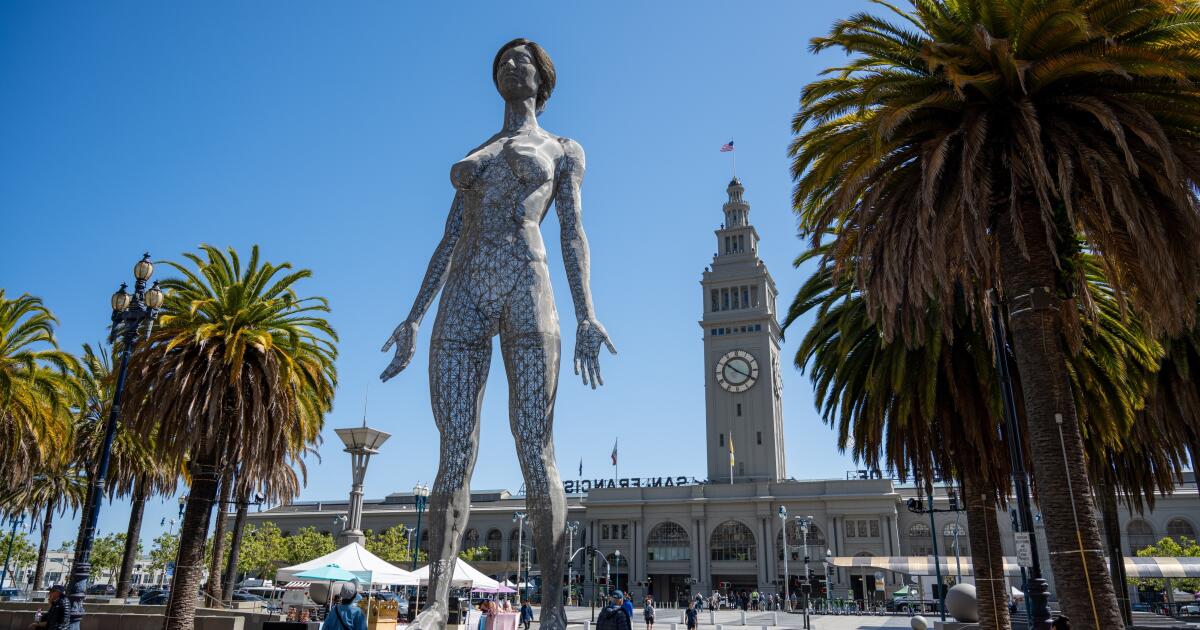 San Francisco, CA1 hour ago
A sculpture of a giant naked woman goes on sale in San Francisco. Bring a crane
-

 Dallas, TX1 hour ago
No ‘straight answer’: Why Pioneer Cemetery is the latest battleground at City Hall
-

 Miami, FL1 hour ago
TSA hosts news conference ahead of World Cup third place match at Miami Stadium
-

 Boston, MA1 hour ago
ICE Boston arrests Barbados national during targeted operations in Attleboro
-

 Denver, CO1 hour ago
Denver Broncos training camp is 2 weeks away
-

 San Diego, CA2 hours ago
Daily Business Report: July 17, 2026, San Diego Metro Magazine

