Iowa
5 reactions/overreactions from Cincinnati Bearcats football game at Iowa State Saturday


UC coach Scott Satterfield,Sorsby, Gerhardt, Minkins on Iowa State
UC coach Scott Satterfield, Brendan Sorsby, Gavin Gerhardt, Josh Minkins on Iowa State loss
AMES, Iowa – The first University of Cincinnati Bearcats Big 12 football game at Jack Trice Stadium was far from a pleasant experience. Iowa State came from behind in the first half, then outplayed UC in the second half to win going away, 34-17.
UC quarterback Brendan Sorsby had pulled the Bearcats within three points, 20-17, with a 41-yard fourth-quarter touchdown run, but Iowa State quarterback Rocco Becht engineered a pair of late scoring drives in the game’s final four minutes. Just like that, a three-point game disintegrated.
Tensions were high afterward based on the vocal displeasure that could be heard from outside of the locker room. It’s understandable, as a three-game losing streak has the Bearcats at .500 on the season after they were 5-2 a month ago. Again, the late loss to Pitt in Week 2 haunts UC’s bowl possibilities with the Bearcats still needing one more victory to qualify.
Both teams had under their normal total offense figures (439 average for both coming into the game). Iowa State outgained UC 387-353, but the Bearcats outrushed the Cyclones by 135 yards. At night’s end, Iowa State led in the most important category: points. That leads to another week for UC coaches to try to get the team bowl-eligible. They have two more opportunities: at 7-3 Kansas State and then at home with 6-4 TCU.
5 reactions/overreaction to another Saturday night Big 12 loss
1. One-dimensional offense for UC in recent weeks
REACTION: The downfield throwing game has all but disappeared. Brendan Sorsby’s 141 rushing yards were fun to watch, but the 66 passing yards featured just two completions to tight end Joe Royer and one to top receiver Xzavier Henderson.
OVERREACTION: Sorsby can’t throw. That wouldn’t quite be fair, as he spent most of the early season as one of the top NCAA passers statistically. The defenses have dropped back in the last two games.
“If you’re dropping eight (players) and everyone’s in the defensive backfield, there’s nowhere to throw it,” UC coach Scott Satterfield said. “They’ve struggled stopping the run. You have to take what they give you. You don’t want to force the ball and have another turnover.”
After three turnovers vs. West Virginia, Sorsby was clean until he fumbled midway through the third quarter at the Iowa State 13-yard line. The fumble was forced by Hamilton High School product Malik Verdon of the Cyclones.
2. A record-setting night for UC for the wrong reason
REACTION: The Bearcats were penalized 13 times, four more than their previous high of nine at Colorado. Several were on false starts which caused great angst post-game.
“We can’t do that if we want to win football games,” center Gavin Gerhardt said. “All five of us know that, Four of us had a false start and that’s unacceptable.”
OVERREACTION: They’ve played in loud venues before. What gives? As it turns out, some defensive gamesmanship coaxed UC into some of those flags. UC’s offense goes on Sorsby’s clap. According to Satterfield, Iowa State was mimicking a clap by slapping the pads of their nose guard.
“A noise that sounds like a clap makes your guy jump offside,” he said. “That’s illegal. Sometimes it’s hard to tell. The last one we got they smacked the defensive tackle to move him over. When they smack him, what does that sound like?”
After a week of preaching poise and patience, the Bearcats were undisciplined and repeatedly flagged.
3. Nothing special on special teams
REACTION: Mason Fletcher had a rough night. No argument there. He had a 56-yard punt but a 37.3 average. That’s because a bad snap forced him to quickly recover and get off a 24-yarder. The most costly was a kick before halftime that bounced backward and went recorded as an 18-yard punt. That gave Iowa State field position at the UC 38-yard line before halftime and they were able to kick a field goal to tie the game at 10.
OVERREACTION: Boot the punter. Satterfield said Mason Fletcher was healthy after making a hard tackle the week before against West Virginia. On the other hand, you would go from one Fletcher to another as Max Fletcher is waiting in the wings. Max Fletcher actually averaged over 46 yards per punt last season at Arkansas, about three yards better than Mason.
“The punt team was horrendous tonight,” Satterfield said. “The field position the last two games is unacceptable.”
He also wasn’t happy that Iowa State’s Stevo Klotz scampered away on a fake punt call. There could be some personnel changes by next weekend on special teams, but it seems like he would stick with Mason Fletcher for now.
4. Another pre-halftime Cincinnati Bearcats blunder
REACTION: Why so many late second-quarter miscues? That would be a solid question and the Fletcher 18-yard punt was the latest after the Bearcats failed to aggressively move the football when they had it in the final minutes of the half. Iowa State took the 10-10 halftime tie and momentum shifted. To date, UC has either missed field goals or other scoring opportunities in seven of their games right before halftime (Pitt, Miami University, Texas Tech, UCF, Arizona State, Colorado, Iowa State).
OVERREACTION: That’s just football. That’s a common reply and probably an under-reaction. Too many instances become a trend.
5. Yogi Berra’s philosophy still lives
REACTION: “It ain’t over, ’til it’s over,” the Yankee Hall of Famer was known to say. If you look at the Big 12, that might be true. Saturday night, BYU suffered its first defeat losing to Kansas which has now knocked off the Cougars and Iowa State in consecutive weeks. Arizona State, a team UC beat 24-14, went to No. 16 Kansas State and beat them. Kenny Dillingham’s Wildcats are 8-2 with one of those losses coming at Nippert Stadium. West Virginia, gifted a win by UC, is still looking to get bowl-eligible as Baylor beat them in Morgantown. Eight Big 12 teams have qualified for bowl games with the Bearcats and Mountaineers both one win away
OVERREACTION: It’s over. (Please read the above paragraph.)
Road ahead for Cincinnati Bearcats
UC has another tough task Saturday, Nov. 23 when they travel to Manhattan, Kansas for the Kansas State Wildcats. UC hasn’t had a win in that series since 1966. The teams last played in 1995 and 1996. UC lost a heartbreaker to Kansas State 23-21 at Nippert in ’95, then Rick Minter’s squad was taken to task by Bill Snyder’s Wildcats 35-0 in Manhattan the following year.
Worse yet, just as Iowa State lost the week before their game against UC, Kansas State was defeated at home by Arizona State 24-14 Saturday, fueling their fire for the Bearcats.



‘MasterChef’ winner and son rate 2025 Iowa State Fair foods
‘MasterChef’ Grant Gillon and his son Grady decide once and for all which is the best 2025 Iowa State Fair dish.
Summer at the Iowa State Fair has always been a celebration of Iowa’s appetite for fun, flavor and a little bit of culinary chaos.
On July 7, the Iowa State Fair revealed 84 new dishes served at the 200-plus food stands on the fairgrounds. And while the fair has always had an appetite for foods on a stick, novelty creations and glorious gut busters, the 2026 lineup pushes that spirit further than ever.
This year’s new foods reflect a fair in full technicolor: patriotic desserts exploding with red‑white‑and‑blue pride, global flavors stretching from Hawaii to Vietnam and over‑the‑top creations engineered for the camera as much as the palate. Strawberries dominate the sweets scene, butter becomes a starring ingredient and bison quietly emerges as the protein of the moment. Even classic comfort foods get a modern remix, whether wrapped in frybread, dipped in chocolate or topped with jalapeño heat.
Together, these dishes tell a story of a fair that’s evolving into louder, brighter and more playful dishes while still rooted in Iowa’s love of indulgence, nostalgia and big summer flavor. Here are the 10 trends defining the 2026 Iowa State Fair.
Hyper‑patriotic foods take over
This year, the Iowa State Fair celebrates America’s 250th birthday with a patriotic Fair Spirit theme that includes a massive 250-flag display, a “Spirit of ’76” historical exhibit, nightly drone shows and special events, as well as an official America 250 Tree and the Iowa Veterans Memorial Walkway on Expo Hill.
The State Fair’s 250th‑anniversary theme shows up everywhere, especially in desserts. Red‑white‑and‑blue sprinkles, flag toppers and “1776” branding dominate the fairgrounds.
Look for 1776 Dubai strawberries, dipped in a rich, creamy pistachio-tahini paste and crunchy toasted kataifi (shredded phyllo pastry) for $19 from The Strawberry Station. The Dairy Zone offers patriotic nachos, a sweet treat with waffle chips and vanilla ice cream, drizzled with cherry and blue raspberry dips, topped with whipped cream and festive red, white and blue star sprinkles for $10.
Bubbly Bar has Parmesan ice cream, a nod to an 18th-century sensation that combines the rich, nutty flavor of aged Parmesan with smooth, creamy ice cream. Bubbly layers in tart cherry and buttery pound cake for a Revolutionary-era treat for $14.
Over the Top goes patriotic with Sweet Americana, featuring strawberry shortcake, lemon bar and blueberry crisp ice creams, each topped with a shortcake cookie, a lemon bar square and chocolate-covered blueberries for $13.
Another sweet dish, the Star Spangled Frybread, comes with a sweet glaze, topped with festive red, white and blue sprinkles and finished with a light dusting of powdered sugar from Its Dough Time for $12.
On the savory side of the menu, Blue Ribbon Bar & Eatery has the 1776 Liberty Bowl with a sourdough bread bowl loaded with cheese curds, French fries and slow-roasted shredded beef, all smothered in gravy and topped with hand-breaded onion rings. Try it for $15.
This is the most overtly patriotic menu the fair has produced in years.
Chocolate‑covered everything
Chocolate is the year’s dominant sweet, whether it’s poured, drizzled, dipped or smothered.
Try Belgian chocolate-covered strawberries from The Strawberry Station for $17 or an affogato, an espresso ice cream drink drizzled with chocolate (or caramel), at the Biscuit Bar for $8.
The Iowa Specialty Crop Growers Association slathers its Strawberry Bliss in chocolate. A buttery shortbread cookie comes topped with a strawberry and a cloud of meringue. The entire creation is covered in milk chocolate, drizzled with white chocolate and finished with a sprinkle of fresh-cut strawberries. Try it for $8.
Chocolate + fruit + spectacle is a clear 2026 signature.
Sweet‑heat mashups
Spicy‑sweet combos are bigger, bolder and more chaotic than ever.
Make your dessert fiery with the Firecracker Churros from Applishus with Lola’s jalapeno and habanero pepper spice sauce, honey molasses and sugar topped with an apple butter and cream cheese dip for $10.
Maybe one of the craziest concoctions at the fair is the Cajun Cluck ’N’ Chaos, a Cajun-style chicken sloppy joe with crunchy sweet pepper coleslaw and fiery spicy pickles topped with a skewer stacked with a tangy pickled egg and extra pickles, finished with a cloud of lime-infused pickle cotton candy. It all comes on a brioche bun at Cluckin’ Coop for $14.
Cowboy Candy from Stockman’s Inn brings sweet and spicy breaded jalapenos for $5.
Whatcha’ Smokin BBQ returns with Star Spangled Swine with pork belly with an apple chipotle rub and Big Red soda glaze rolled in blue and white honey crystals for $15.
While this trend marks a continuation of the fair’s love affair with spicy‑sweet combos, this year they’re more extreme.
Cheese goes maximalist
Cheese isn’t a garnish — it’s the headliner in 2026, with dishes with the dairy product as the main event.
Start with America’s “Berry” Good Grilled Cheese from What’s Your Cheez for $16. It combines several trends with a sweet and savory grilled cheese made with caramelized brioche bread, stuffed with blueberry white cheddar, layered with tart raspberry amaretto jam and blueberry bourbon jam, then stuffed with crispy candied pork belly that has a touch of sweet heat. Patriotic, sweet and savory, maximalist and cheesy all in one dish.
Cheese takes center stage with the Mozza‑Tini from DG – Destination Grille for $10. These hand-breaded gluten-free mozzarella sticks come with warm vodka sauce, jalapeno ranch drizzle and fresh parsley. Spicy and sweet come together with cheese.
The garlic dill pickle cheese curds from Brad & Harry’s Cheese Curds for $9 combine the food stand’s two most popular flavors, garlic and dill pickle.
Strawberries are the star fruit
Strawberries appear in more new food dishes than any other fruit. Often, they are paired with chocolate or patriotic themes.
The 1776 Dubai Strawberries at The Strawberry Station, the Strawberry Bliss at the Iowa Specialty Crop Growers Association and Sweet Americana at Over the Top are just some of the dishes offered at the fair.
This mirrors national trends. Strawberries are having a moment.
Global fusion expands
Hawaiian, Vietnamese, Salvadoran and Mexican influences make this the fair’s most international menu yet.
New dishes include Saigon birria pupusa from Saigonais Cuisine for $10. A pupusa comes filled with pho-braised brisket and melted cheese, served with a hoisin birria consommé for dipping. “Just as Iowa’s heritage has been built by generations of people bringing their own stories and traditions to the table, the Saigon birria pupusa brings Salvadoran, Vietnamese and Mexican flavors together in one dish. It is a tribute to the fair spirit — a celebration of unity, heritage and the American tradition of creating something greater together,” the fair said of the dish.
A taste of Hawaii brings spam musubi to Kama’aina Grill for $5. This fusion food combines American spam with Japanese musubi (rice ball) techniques. The stand also has Kama’aina Bento for $23. The plate lunch from Hawaii features teriyaki beef, fried saimin noodles, spam or garlic chicken served with rice and macaroni salad.
Bao Bao’s Tanghulu brings tanghulu, a Chinese street food of candied fruit on a stick, for $12.
GoldenKDog brought Korean hot dogs to the fair in 2025. This year, they introduced the Cinnamozza Kdog, a mozzarella cheese Korean corn dog dunked in salted butter, sprinkled with cinnamon sugar and topped with Cinnamon Toast Crunch for $18.
Dessert spectacle rules
Desserts are bigger, brighter and built for social media. These over-the-top dishes are shareable, both with another person and on Instagram.
Oreo Overload Nachos from Dairy Zone for $10 start with waffle chips piled around vanilla ice cream, hot fudge topped with crushed Oreo cookies for dipping and whipped cream. Dairy Zone suggested dipping the waffle chips into the sundae.
The deep-fried cookie dough pie from Minneapple Pie comes with vanilla or cinnamon ice cream for $12.
The walking taco goes dessert-style with the walkin’ Oreo sundae for $9 from Wonder Bars.
If combining savory and sweet is your thing, try the Ultimate Bacon-Brisket Mac & Cheese Donut. The $7 snack from The Rib Shack starts with mac and cheese loaded with bacon and brisket that’s breaded in a cake-style coating and finished with a sweet barbecue glaze. Not enough? It’s topped with chopped brisket and garnished with a slice of fresh jalapeno. You can nab six for $30.
Dessert nachos, dessert doughnuts and dessert frybread add up to the fair pushing “dessert as spectacle.”
Bison and pork dominate the protein scene
The Iowa Pork Producers lead the way with pork dishes at the Iowa State Fair. The fair estimates it sells 46-50,000 of its famous Pork Chop on a Stick during the 11-day event. But save room for some new riffs on pork that appear in 2026, including the Porky Pileup at the Stockman’s Inn for $15. The dish features fries layered with pulled barbecue pork, mac n’ cheese and cowboy beans topped with bacon bits.
Kalua pork appears at Kama’aina Grill as a plate lunch with rice and macaroni salad for $18, as well as in a poke bowl for $23.
DG – Destination Grille has the Porky Parm Gnocchi, a gluten-free potato gnocchi and Graziano sausage tossed in a house-made AE cream Parmesan sauce with a pesto drizzle and shaved Parmesan, all topped with an America 250th year flag and a souvenir piggy pal for $14. Note that everything at DG – Destination Grille is gluten-free.
Bison, though, is emerging as the breakout starring protein. Newcomer Sleepy Bison Grill has a bison burger for $13, a bison cheesesteak slider for $11 and bison nachos for $14.
Butter becomes a flavor
The Iowa State Fair is famous for its Butter Cow made with approximately 600 pounds of low-moisture, pure cream Iowa butter. In 2011, the fair turned food media on its collective head with the deep-fried butter on a stick from concessionaire Larry Fyfe. The indulgent dish featured frozen butter dipped in honey-cinnamon batter, deep-fried and topped with a powdered sugar glaze.
In 2026, butter is a micro-trend, with the butter-dipped ice cream cone from Coney Corner for $6 that swaps out chocolate for a buttery hard shell encasing vanilla soft serve.
That Cinnamozza Kdog comes with a salted butter dunk. And buttery desserts feature shortcake, pound cake and even Biscoff cookie butter cheesecake funnel cake from McGrath’s Funnel Cakes for $15.
Chaos foods define the fair
Maximalist, hybrid, over‑the‑top creations are now a fair signature, and the new dishes in 2026 do not disappoint. The Cajun Cluck ’N’ Chaos at Cluckin’ Coop and Ultimate Bacon‑Brisket Mac & Cheese Donut at The Rib Shack certainly fall into that category.
One of the most expensive dishes at the Iowa State Fair brings caviar and chicken nuggets from JR’s SouthPork Ranch for $99 that blends childhood nostalgia with pure luxury. JR’s calls it “a little bit county fair, a little bit Champagne lifestyle and 100% conversation starter.” Coqodaq, a Korean-inspired fried chicken restaurant in New York, served this dish during the 2025 U.S. Open, and McDonald’s followed with a Valentine’s Day special that combined McNuggets with caviar. Now, the trend hits Iowa.
Sign up for our dining newsletter, Table Talk DSM, which comes out on Wednesday mornings with all the latest news on restaurants and bars in the metro. You can sign up for free at DesMoinesRegister.com/tabletalk.
Susan Stapleton is the entertainment editor and dining reporter at The Des Moines Register. Follow her on Facebook, Twitter, or Instagram, or drop her a line at sstapleton@gannett.com.

One Iowa high school athletic department is facing extremely low numbers in multiple sports, prompting school officials to begin searching for programs to share with.
Exira-EHK High School has already cancelled the upcoming 2026 Iowa High School Athletic Association varsity football season, going instead with a junior varsity-only series of games. According to a report by Western Iowa Today, they have also shared softball with Audubon.
The Exira-EHK/Audubon softball team is currently ranked No. 1 in Class 1A of the Iowa Girls High School Athletic Union. A total of 11 of the players on the 23-girl team are from Exira-EHK. They are 15th in the latest High School On SI Iowa Top 25 State Rankings as they prepare for postseason play.
Enrollment For Exira-EHK School District Continues To Drop
Enrollment at the high school level for the Spartans is down by over 20 students, with the expectation for even more of a drop in overall enrollment moving into the 2026-2027 school year.
Tom Petersen, the Exira-EHK athletic director, was part of a community-wide meeting earlier this week alongside Trevor Miller, the school superintendent.
“I’m going to continue to campaign, keep working (to get more kids out),” Petersen said. “It’s just part of being an AD and a coach. I have tried every scenario that I can to try and make it that our kids could go and play varsity (football).
“It’s not the state’s fault, it’s not our fault; it’s the middle of a two-year cycle. I coached here for 20 years in football and it’s crushing (to not have a program).”
Petersen also mentioned during the meeting that he is struggling to fill several coaching vacancies, including the head boys basketball position. He said that they have received zero applications for that coaching vacancy.
Spartans Currently Share Multiple Sports With Audubon
Along with baseball and softball, the Exira-EHK school district also shares girls basketball, boys wrestling, girls wrestling, boys tennis and girls tennis with Audubon. Petersen is proposing to the school board a share agreement for boys basketball, boys track and field, and girls track and field, in addition to the other sports.
Last fall, the Spartans went 4-5 overall, as they won 22 games over a stretch of seasons after going 0-7 in 2020. Exira-EHK was 12-1 in 2013 and had three consecutive years of at least eight wins after that.
The schools are a combination of the towns of Exira, Elk Horn and Kimballton.
Follow

CORALVILLE, Iowa (KCRG) – Coralville Police say a person has drowned at the Coralville Aquatic Center Tuesday afternoon.
The call went out shortly after 4 p.m. to 1513 7th Street for a drowning report.
Officers, lifeguards and paramedics gave lifesaving aid to the person. They were taken to the University of Iowa Health Care, where they were pronounced dead.
The identity of the victim has not been released. The incident is under investigation.
Copyright 2026 KCRG. All rights reserved.
-
 Sports3 minutes ago
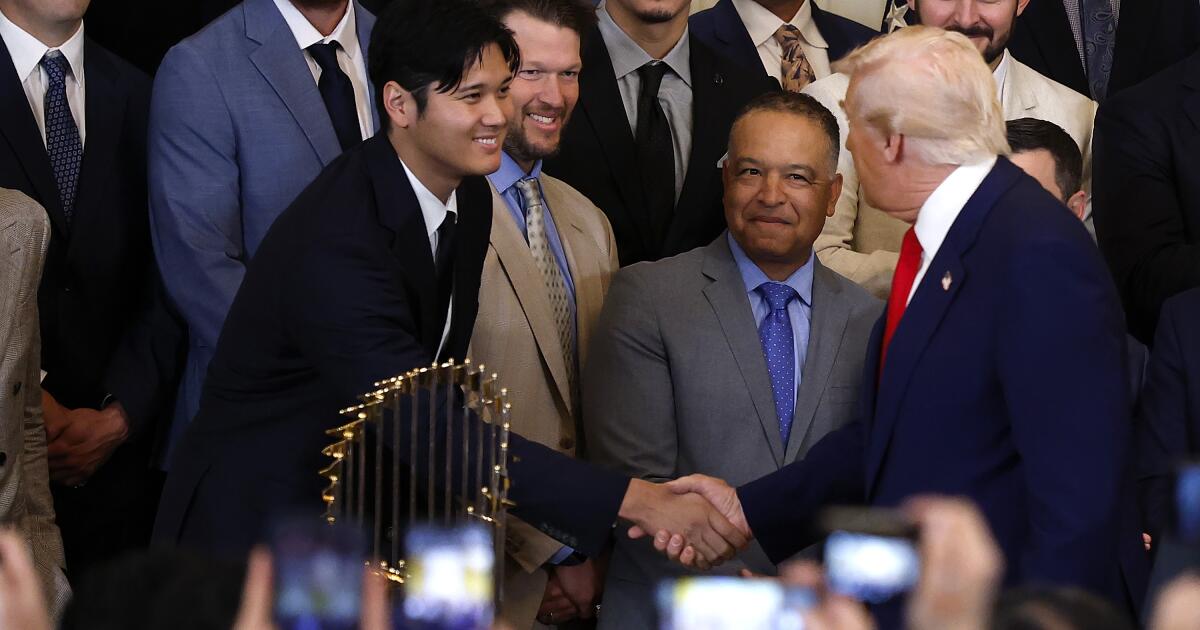
Dodgers scheduled to visit White House in late July to celebrate 2025 World Series win
-

 World13 minutes ago
Former US Olympian pleads not guilty in DC reflecting pool vandalism case
-
 News40 minutes ago
Former Olympian pleads not guilty in reflecting pool vandalism charges
-

 Los Angeles, Ca2 hours ago
Heat advisory, beach hazards in effect as Southern California sizzles
-

 Detroit, MI2 hours ago
Teen on moped hit by car after cruising through stop sign in Detroit
-

 San Francisco, CA2 hours ago
Flight of fancy: San Francisco moves to build private luxury airport terminal
-

 Dallas, TX3 hours ago
Dallas’ digital creator economy is booming. Burnout is too.
-
Miami, FL3 hours ago
I went to 2 famous Miami restaurants, a flashy steakhouse and a Cuban hot spot. Here’s how they compared.


