Lifestyle
Why Everyone Was So Mad About the Met Gala


There are, as I’m writing this, just shy of 500 reader comments on our recap of our 15 favorite looks from the Met Gala on Monday. The top comments are almost all negative.
“I’m sorry. I find this display of ‘fashion’ disgusting and I wish the NYT wouldn’t celebrate it,” reads the most recommended comment. “I’m struck by how out of touch and unrelatable this feels for the average American,” is the one just below that. A few down we get the first of many comparisons to the elitist incongruity captured in “The Hunger Games.”
The uneasy state of the American economy watered the soil for this sentiment to grow. Gas prices have soared since the onset of the war in Iran. The cost of groceries remains stubbornly high. The word “inequality” came up five times in the comments section of our story. It seems that the gala, to some, landed as a financially frivolous, Marie Antoinette-like affair.
For a few years, the Met Gala has ignited these “Hunger Games” comparisons, as the event has mutated into a competition of which attendee can wear the most baroque, procession-halting dress. I lost count of the celebrities who proudly shared how many hours it took to make their ensembles.
This, more than anything, seemed like the point where they were misjudging the simmering animus toward them.
If the intention was to laud the work and elevate the craftsmanship involved in making garments like these, it was ringing hollow in this forum, where tickets cost upward of hundreds of thousands of dollars for a table. The opulence of the clothes became another example of billionaire class entitlement for a cause most people don’t benefit from.
It’s not an entirely new conversation, even if the critiques were louder this year. Five years ago, when Representative Alexandria Ocasio-Cortez wore a dress splayed with “Tax the Rich,” she sprayed lighter fluid onto a hot conversation about the class politics of this particular charity event. (At this year’s gala, Sarah Paulson arrived with a dollar bill stretched over her eyes, an intended critique on the influence of money that many viewers saw as a hollow gesture.)
The discourse roared with a particular fervor in the lead-up to Monday for the marquee presence of Jeff Bezos and his wife, Lauren Sánchez Bezos, one of the world’s wealthiest couples.
Placing the Bezoses at the apex of the gala ratcheted up the sense that something already well outside the reaches of the average person had been taken to a new tier of exclusivity. There were protests centered around Bezos, and at the event Christian Smalls, a former Amazon union leader, attempted to storm the carpet. He was arrested and charged with two misdemeanors.
“It shouldn’t be that way when you have all of this money and wealth,” Smalls said of Bezos in an interview with The Times on Wednesday. “He should pay his workers a fair share.”
In responding to cries of elitism, the Met Gala’s organizers have long pointed to the money that the event raises. They did so again this year. At a news conference on Monday introducing the Met’s new fashion exhibition, Anna Wintour, the event’s longtime chair (and the global editorial director of Vogue magazine), shared that this was the most successful Met Gala ever, having raised $42 million.
“That money could feed and clothe many hundreds of less fortunate people,” read the top comment on our Met Gala story.
We’ve come to expect anti-celebrity comments when we cover cultural events. “Who cares!” is a common, if slightly disingenuous, refrain given how many readers clamor to see and vote on their favorite looks from awards shows.
But there’s a meaningful difference between the Met Gala and many other red carpet events. At the Oscars or the Emmys, the arrivals lead to a star-studded performance the public can watch, shows with a purpose — celebrating talent (subjective though that is) — that is self-evident. For the viewing public, the Met Gala ends at the doorstep of the museum. If you’re watching at home, the gala can be seen as nothing more than a bunch of grandiose clothes that lead nowhere.
In reading up on the life of Ted Turner, who died Wednesday at 87, I perked up at this five-word sentence in Malcolm Gladwell’s 2010 profile of the media mogul: “He dressed like a cowboy.” It led me to scroll through photos of the Cincinnati-born businessman — especially in the 1970s, when he was sailing in a piqué polo and an incongruous striped conductor’s cap or taking in his Atlanta Braves with his button-up shirt undone to mid-chest.
Turner, a college dropout, who was a prolific drinker (and philanderer), looked rugged — swashbuckling even. He was, it should be said, handsome. In some images, Turner, with his modest mustache, looks like Robert Redford’s body double. But it’s remarkable to visit these images now, when all corporate titans — of media, tech and otherwise — dress so alike. They’re Sun Valley clones in their fleece vests, stretch chinos and dad caps that they theatrically pull low in front of cameras.
But Turner was indeed a telecom cowboy, upending how networks ran in his rugby shirts, knit ties and denim. He looked suave. How few media C.E.O.’s can we say that about now?
Everywhere I go I see young men in ribbed tank tops, sometimes with unbuttoned shirts on top, but often not. The tank tops can be black, white or gray, but they’re worn with everything — not just as undershirts, as I was taught was correct. What is going on? — Richard, Philadelphia
The tank top may seem basic — just a sleeveless cotton top with a scooped neck — but as a garment it contains multitudes. It has roots in the working class and the professional class, the military and the farm, men’s wear and women’s wear, sports and Hollywood, gay culture, rap culture, gym culture and indie sleaze. Read more …
Other things worth knowing about:



Can you say no to a friend’s wedding?
Getty Images/Getty images
hide caption
toggle caption
Getty Images/Getty images
Are we spending too much on other people’s weddings?
Going to a friend’s weddings can be so fun and meaningful… but it can also really hurt your wallet. A survey by LendingTree found that 31% of people who had been to a wedding in the past five years had accrued debt to attend. So what’s driving up the cost of weddings for guests? And what makes it so hard to say no to these expenses?
Brittany breaks it down with Allyson Rees, senior analyst at trend forecasting firm WGSN, and Annie Joy Williams, assistant editor at The Atlantic.
This episode was produced by Liam McBain, with additional support from Corey Antonio Rose. It was edited by Neena Pathak. Our Supervising Producer is Cher Vincent. Our Executive Producer is Barton Girdwood. Our VP of Programming is Yolanda Sangweni.
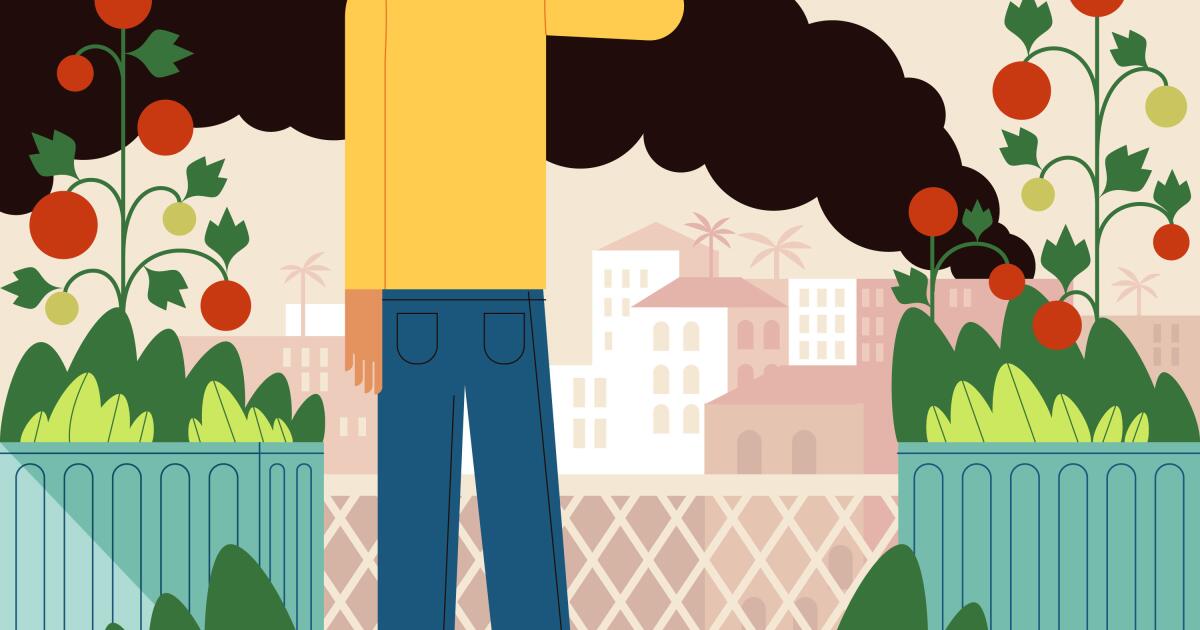
After the eight-day-long fire in a 500,000-square-foot Boyle Heights warehouse, eastern Los Angeles residents are contending with putrid smells, soot and potentially hazardous airborne chemicals after heavy plumes of smoke spread throughout the city. But those who grow food in nearby neighborhoods may also be wondering: How will the fires affect the plants and produce in my garden?
The Boyle Heights warehouse, owned by Lineage — a global temperature-controlled storage facility operator — housed 85 million pounds of frozen food and other products. In the days since the fire, local emergency visits for smoke inhalation and throat pain spiked while agencies still scramble to measure the amount of PM 2.5 — harmful fine particles — and heavy metals, like lead and arsenic, in the air.
According to researchers, any toxic airborne chemicals would likely stem from the charred foam insulation, metal exterior, burned solar panels and any lithium batteries that might have been present inside the warehouse.
After a fire, heavy metal particles can spread through ash and smoke over gardens and inhibit growth, said Olukayode Jegede, an agricultural toxicologist and assistant professor at UC Davis. Since the warehouse fire is so recent and cleanup has just begun, Jegede said the precise impact on gardens can’t be measured until comprehensive soil tests are conducted in the area.
While the L.A. city government hasn’t announced plans for soil testing, the Contaminant Level Evaluation and Analysis for Neighborhoods project at USC is offering free contaminant testing for Boyle Heights and East L.A. residents. Residents can collect soil samples and deliver them to Boyle Heights City Hall and other locations for an evaluation of lead, arsenic, chromium and mercury levels.
The good news is produce, plants and roots can still be preserved. According to Jegede, many of the soil tests conducted last year in the Altadena area after the Eaton fire showed that gardens and poultry were not as contaminated as one might expect.
“Quite a number of the soils we tested [in Altadena] were not really contaminated,” Jegede said. “We weren’t seeing many soils with concerning elevated levels of metal, so gardeners should not be too alarmed when these things happen.”
Nevertheless, there are several measures that gardeners can take to keep themselves, their children, plants and produce safe from potentially harmful contaminants stemming from the fire. Researchers, gardening experts and horticulturists offered some guidance on the handling, recultivation and cleanup that can keep you and your garden in good health.
How do I remove ash and contaminants from my garden?
Altadena horticulturist Leigh Adams said Boyle Heights plants and produce already live in a difficult environment, surrounded by industrial warehouses that spread contaminants daily.
“That area has been used industrially for 100 years, and the soil is impacted by many, many, many things,” Adams said. “Low-income neighborhoods and gardens usually don’t have a lot of resistance against dominant manufacturing.”
This means that the contamination of gardens in eastern L.A. won’t be as catastrophic as compared with those in Altadena, a more suburban environment, Adams said. But fallen ash still poses major health risks if ingested or inhaled.
An advisory from University of California Agricultural and Natural Resources last year recommended suiting up in an N95/KN95 mask, long sleeves, pants, close-toed shoes and gloves before attempting to deal with ash in the garden to limit exposure to potentially toxic contaminants. The advisory added that individuals should make sure all of this gear is cleaned thoroughly before bringing it back inside.
Once in the proper gear, Adams recommends removing the top two inches of topsoil from gardens, where the highest concentration of contaminants will settle after a fire. Using a plastic bag to collect the soil and disposing of it in the garbage — not green yard waste bins — will help to reduce the spread of airborne chemicals.
Gardeners with raised beds are advised to remove approximately six inches of soil, because excess ash can raise the pH level and prevent nutrients from soaking into the soil bed.
After this, watering the garden gently but plentifully will help to promote soil health and get rid of most of the ash present on plant leaves and stems. Adams said replacing the top two inches of soil with store-bought mulch or straw will help to contain any remaining ash and prevent it from spreading any further.
Experts say to avoid using leaf blowers if ash is present in the garden because they can send particles airborne. Doing so will increase the likelihood of heavy metal particles, which can carry lung irritants and carcinogens, being spread and inhaled.
A Boyle Heights resident keep a watchful eye on the fire at the 5,000-square-foot commercial building, which stores 85 million pounds of frozen food.
(Genaro Molina / Los Angeles Times)
Is it safe for me to eat produce from my garden?
Several studies, including one from the UC Cooperative Extension of Sonoma County, have shown that consuming produce in a fire-affected area poses minimal health risks.
Jegede said most root vegetables like potatoes and carrots, along with any fruit that has an outer layer, can be washed to remove potential contaminants, even if they were covered in ash. Peeling the outer layer of your produce can also help to reduce potential risks, he said.
Lettuce and other leafy foods with multiple layers pose a higher risk of contamination, but with a vigorous wash and peeling the outer layers, even the greens can be saved. The County of Los Angeles Department of Public Health recommends soaking leafy produce and fuzzy fruits like peaches in a 10% white vinegar and 90% water mixture.
Jegede said if the leaves or fruit are too delicate to wash or ash is still visible, it would be best to dispose of the produce.
How can I tell if my soil is contaminated?
After ridding your garden of visible ash, you might wonder how to tell if your plants will still thrive in the soil.
At-home soil tests that measure for alkaline, fertility and pH levels are widely available and can be purchased for $15 to $100 (for more detailed results) online. But Jegede said these tests can’t tell the full story of soil health.
Comprehensive soil testing is “something you can’t do properly at home,” Jegede said. “In labs, we are testing for metals like lithium and zinc, stuff that an at-home test will not show … If it comes to the point that you’re worried about your soil, I would just send it out to a lab.”
Wallace Laboratories in El Segundo, Babcock Laboratories in Riverside, Waypoint Analytical in Anaheim and other labs offer more detailed soil tests that measure heavy metal particles in addition to other fertility factors. Prices at Wallace Laboratories can range from $115 to $295 for a complete compost test.
The soil below two inches should be unharmed, Adams said, so long as new compost is set and plants are watered plentifully, which will promote natural biological cycles.
“What you’re doing is capping the soil, so that moisture stays in there, and instead of being dirt, it’s a living system called soil,” Adams said. “The more carbon we can get into our soil, the better.”
What can I do to help my soil recover?
For the last 12 years, Adams has been working with Metabolic Studio, a Los Angeles-based art and research hub focused on environmentalism, on methods for bioremediation, the practice of using additional fungi, plants and compost to decontaminate ash and break down contaminants.
Adams said straw, mushrooms, corn, rye and sunflowers are great bioremediators that can help to repair damage to soils. She said certain samples she’s worked on with Metabolic Studio have gone from testing at high heavy metal levels to nearly contaminant-free.
But for a more immediate fix, wash your produce, water your plants and have a little patience during ash cleanups. Your garden should look better in no time, Adams and Jegede said.

Inde Navarrette and Michael Johnston in Obsession.
Focus Features
hide caption
toggle caption
Focus Features
Two big horror films, Obsession and Backrooms, just smashed all box office expectations. So much of their success has been driven by Gen Z, which is now the biggest moviegoing demographic. But what makes a movie a Gen Z movie? Today we’re bringing you an episode of NPR’s It’s Been a Minute. Host Brittany Luse talks about this trend with Sam Adams and Reanna Cruz.
If you want to hear more about these movies, check out these episodes:
In ‘Obsession,’ love hurts. It really, really, really hurts.
‘Backrooms’ brings YouTube horror to the big screen
Zendaya brings ‘The Drama,’ we bring the spoilers
Connect with Pop Culture Happy Hour:
Letterboxd / Facebook
Our weekly newsletter
Support Pop Culture Happy Hour+
-
 News10 minutes ago
Supreme Court financial disclosures reveal how their books add to their income
-

 Los Angeles, Ca2 hours ago
Waymo video could determine charges after teens’ bizarre California ride
-
Detroit, MI2 hours ago
DPD investigating after human remains found in home on Detroit’s west side
-

 San Francisco, CA2 hours ago
Bay Area Teen Waymo Riders Nabbed For Allegedly Shooting Projectiles From Robotaxi
-
Dallas, TX2 hours ago
Role Call: Tyrus Wheat looking to make most of second stint with Cowboys
-

 Miami, FL2 hours ago
2026 Miami Football Early Opponent Preview, Game 8: North Carolina
-

 Boston, MA2 hours ago
Boston sues social media companies over ‘addictive’ features, joining nationwide litigation
-

 Denver, CO2 hours ago
Peyton Watson landing spots: Could Nuggets star actually leave Denver?


