World
What Sank the Bayesian Superyacht in Italy?


It all happened so fast.
Karsten Borner was planted on the halfdeck of his sailboat in the slanting rain. A grizzled mariner who had survived many storms, he was anchored in the same cove as Mr. Lynch’s yacht, at the same time, as the squall blew in during the early hours of Aug. 19.
Luckily, he was already awake. As the wind picked up, he and his crew scurried around closing hatches, clearing the decks and firing up the engines to keep his boat steady.
He couldn’t see much, but in flashes of lightning, he kept catching glimpses of Mr. Lynch’s long, sleek sloop bobbing behind him. It was only a few hundred feet away and its super-tall aluminum mast — one of the tallest ever made — was lit up with bright white lights, swaying in the wind.
Then he lost sight of it. The rain fell like gravel, drawing a curtain around his boat. When he looked up again, he was stunned. The Bayesian was disappearing, at a very odd angle, into the sea.
In the weeks since, Mr. Borner, who has sailed for more than half a century, still can’t believe the yacht sank in front of him. There weren’t any big waves that night, he said. Both boats were close to shore. His own sailboat — a converted tugboat built in East Germany 66 years ago — weathered the same squall just fine. And that other craft was a superyacht of the superrich, gleaming blue, 184 feet long and drawing stares wherever it went.
“It’s a mystery,” Mr. Borner said.
The seven victims of the Bayesian sinking, clockwise from top left: Hannah Lynch, Mike Lynch, Judy Bloomer, Jonathan Bloomer, Christopher Morvillo, Neda Nassiri and Recaldo Thomas.
via Agence France-Presse — Getty Images; via Reuters; Patrick McMullan, via Getty Images
That mystery has rippled around the globe as several investigations into the tragedy unfold. It has vexed maritime experts and compounded the grief of family and friends of the seven people who perished, including Mr. Lynch and his teenage daughter, Hannah, whose bodies were found trapped below deck.
The investigations turn on three central questions: Why did the Bayesian, which now lies 160 feet at the bottom of the Mediterranean, sink so fast? Did the yacht have any design flaws? Did the captain or crew make any fatal mistakes?
The Bayesian was a one-of-a-kind sailboat, built by Perini Navi, a famous Italian yacht maker. The company says the group of 10 superyachts that the Bayesian belonged to was “the most successful series of large sailing yachts ever conceived.”
But the Bayesian was different. Its original buyer — a Dutch businessman, not the Lynches — insisted on a single, striking mast that would be taller than just about any other mast in the world, according to the Italian yacht maker and three people with detailed knowledge of how this boat was built.
That decision resulted in major engineering consequences that ultimately left the boat significantly more vulnerable than many comparable superyachts, The Times investigation has found.
— More than a dozen naval architects, engineers and other experts consulted by The Times found glaring weaknesses in the Bayesian’s design that they said could have contributed to the disaster.
— Basic design choices, like the two tall doors on the side of the deck, increased the Bayesian’s chances of taking on dangerous amounts of water if high winds pushed the boat over toward its side, several naval architects said.
— Witness and survivor accounts revealed how this deadly sequence unfolded in real time: The yacht fell completely on its side and sank within minutes.
Sources: Perini Navi (technical drawing of the yacht) and New York Times reporting.
Seemingly small details on any boat — like how close air vents are to the waterline, or where a ship’s ballast is placed in the hull — might not sound decisive on their own. But when taken together, experts said, they appear to have compromised this vessel.
Such built-in vulnerabilities may not have been solely responsible for the yacht’s sinking, of course. The storm’s unexpected ferocity definitely played a part in the calamitous stew of events. Italian investigators are also looking hard at the actions of the Bayesian’s captain and crew.
Giovanni Costantino, the chief executive of the Italian Sea Group, the company that owns Perini Navi, said that when operated properly, the Bayesian was “unsinkable.” He maintains that the yacht was carefully engineered to survive bad storms, and he has put the blame for the tragedy squarely on the crew, accusing them of making a chain of fatal errors.
“I know, all the crew knows, that they did not do what they should have done,” he said. (Crew members have not revealed much, saying they are under a “gag order.”)
Mr. Costantino said the design was not at fault and that the towering mast, which stood 237 feet tall, had not created “any kind of problem.”
“The ship was an unsinkable ship,” he said. “I say it, I repeat it.”
The world of superyachts is incredibly opaque, the exclusive realm of some of the richest people on the planet, and exactly how these multimillion dollar boats are designed, approved and owned remain closely guarded secrets.
Making sure a superyacht is fit for the seas is a job left to a network of private companies and public agencies, and the Bayesian’s design was approved by the American Bureau of Shipping and the British Maritime and Coastguard Agency.
All the attention this tragedy has received could result in a closer look at yachting regulations. Several naval engineers in different countries who have gained access to the Bayesian’s documents say that as yachts have become more elaborate and subject to owners’ whims, others may be in danger as well.
The Bayesian’s technical documents show just how vulnerable it was. Even without major errors by the crew, the ship could have sunk in a storm that other boats survived, engineers say.
“We can look at it in hindsight and say they were in the wrong place at the wrong time. No, that’s not true,” said Tad Roberts, a Canadian naval architect who has nearly 40 years of experience designing boats, including superyachts.
“This boat had definite shortcomings that kind of uniquely made it vulnerable to what happened.”
The Victory Voyages
A cruise on the Bayesian was a voyage into luxury. The days were typically warm, sunny and calm, and finished off with plates of fresh langoustine and sumptuous chocolate. Hours would pass lounging on sun chairs, swimming in the sea or maybe taking out a kayak while the Bayesian crew, in branded polo shirts, watched vigilantly from the deck.
“It felt like a beautiful hotel that was floating on water,” remembers Abbie VanSickle, a New York Times reporter who was invited aboard in July because her husband, Jonathan Baum, was part of Mr. Lynch’s legal defense team.
Mr. Lynch had been acquitted in June in a criminal case in which he was accused of fraudulently inflating the value of his software company when he sold it to Hewlett-Packard for $11 billion. He could have been sent to prison for years. To celebrate his win — and his freedom — he asked friends and lawyers to cruise the Mediterranean with him.
Mr. Lynch seemed proud that his boat had one of the world’s tallest masts — a little booklet in her cabin even said as much, Ms. VanSickle remembered. Whenever they chugged into a harbor, she said, “people would take photos of it constantly because it was so crazy-looking in comparison to other boats.”
Most of the time, though, the Bayesian operated like a motorboat, powered by two enormous diesel engines. During her five-day voyage, Ms. VanSickle said they sailed only once, for just a few hours. But when they did, the boat moved through the water so smoothly, she said, it felt like they were “gliding.”
A promotional photo from Perini Navi of the Bayesian, which Mr. Lynch named after an 18th-century theory on probability.
EPA, via Shutterstock
A few weeks after Ms. VanSickle got off and returned to her life as a reporter in Washington, Mr. Lynch welcomed aboard his next batch of guests. This was the second celebratory voyage, beginning in mid-August, and Mr. Lynch had planned to get back to London, where he lived, around Aug. 20.
Among the 12 passengers were Mr. Lynch; his wife, Angela Bacares; their 18-year-old daughter, Hannah, who was soon off to Oxford; one of his lead lawyers, Chris Morvillo, and his wife, Neda Nassiri, who designed handcrafted jewelry; Jonathan Bloomer, an international banker and trusted adviser, and his wife, Judy, a psychotherapist celebrated for her charity work.
Mr. Lynch also invited some younger colleagues, including a couple who brought a baby on board. The crew was led by James Cutfield, an experienced New Zealand sailor, backed up by a first mate, a ship engineer, several deckhands and hostesses, totaling 10 in all.
Mr. Lynch was on the rebound, fired up about the possibility of starting a nonprofit to help exonerate people wrongly accused of crimes, said Sir David Davis, a friend and prominent conservative British politician.
Mr. Lynch sent Sir David a text message offering the choice of lunch or dinner in London on Aug. 22, when he was back.
An Unanticipated Storm
The Mediterranean Sea was flat on Aug. 18. But bad weather was moving south, from Naples toward Sicily. The Italian Air Force’s Meteomar forecast warned of scattered thunderstorms, gusts of wind and a rough sea. Several yacht captains said the weather warning was far from specific or extraordinary.
Mr. Borner, the captain who for decades has been running cruises and diving excursions on his old sailboat, the Sir Robert Baden Powell, was finishing up his own trip, picking his way west along the Sicilian coast.
The wind was blowing from the northwest and Mr. Borner figured that the curvature of Sicily’s rugged coastline at Porticello, a small fishing village built around a cove, would shelter him. He arrived in the cove that afternoon, went ashore with his guests and grabbed some pizza.
“It was a nice evening,” he remembered.
While they were in town, the Bayesian chugged into the same cove. It dropped anchor at 9:35 p.m., about a third of a mile from land. As Mr. Borner went to sleep around 11, the night was clear. The lights of the Bayesian’s mast glowed behind him.
Lights illuminating the mast of the Bayseian on Aug. 18.
Baia Santa Nicolicchia/Fabio La Bianca, via Reuters
At midnight on Aug. 19, the Italian Coast Guard put out a warning for a northwesterly Gale Force 8, a serious storm in which winds could reach 46 miles per hour. But the gale was predicted to hit hundreds of miles from Sicily.
Around 3 a.m., Mr. Borner woke up to help some of his passengers catch an early flight from Palermo, Sicily’s biggest city. But as the winds picked up rapidly, whipping the cove into a frothy chop, he scratched his plan to go ashore.
He and his crew shut the portholes and skylights and started the engine, to keep the bow pointed into the wind and prevent the boat from being hit on its side.
On the Bayesian, a young deckhand, Matthew Griffiths, later told the authorities that when the wind hit 20 knots, he woke up the captain, according to a person close to the crew (who said that neither of them was allowed to speak publicly). The captain then gave the order to wake up others, the person said.
At 3:51 a.m., the Bayesian started to drift — first 80 meters one way, then 80 meters another, its data transmitter shows. Maritime experts said this meant it was being blown around and probably dragging its anchor. It’s unclear whether the engines had been started.
At 4:02 a.m., a camera mounted on a boat in Porticello’s cove shows bright blue flashes of lightning. Three minutes later, another at a Porticello cafe captures the wind tearing down deck umbrellas. So much rain hits one of the cameras, it looks as if it’s being blasted with a hose.
Mr. Borner estimated that the wind gusts reached 60 knots, or nearly 70 miles an hour — just below hurricane strength — and said they had pushed his boat onto its side about 15 degrees, a serious lean but nothing close to capsizing.
Reports immediately after the disaster raised the possibility that the Bayesian had been hit by a tornado-like disturbance called a waterspout, but the authorities don’t think that happened. Still, the wind was doing something dangerous: It was changing direction.
According to a nearby weather station, it was blowing west-southwest then southwest, then north-northwest. This increased the chances of getting ambushed by a random gust that could slam into the side of a boat, which can tilt even a big vessel.
A third video shows the Bayesian rocking back and forth and beginning to lean. Then the lights on its giant mast blink out — all but the top one, which was powered by a battery.
By 4:06 a.m., the rain has turned into a blinding cascade. That same minute, the Bayesian’s location signal cuts out. Mr. Borner’s crew squinted through the nearly impenetrable haze of sea spray and rain and spotted a large object in the water. They first thought it was a reef.
“But I knew there was no reef,” Mr. Borner said.
It was the Bayesian, they now believe, knocked onto its side.
“Two Minutes” to Tragedy
At 4:34 a.m., a red emergency flare, bright as a meteor, shot into the sky. The storm had passed, and Mr. Borner and his first mate jumped into a small boat, zooming across the black water.
First they saw cushions floating. Then a flashing light. Then a life raft built for 12 packed with 15 people, bloodied and soaked to the skin, including a baby.
One person had a cut on the head, another on his chest. Some had already been bandaged. They were cold, wet and dazed. They were too shocked, Mr. Borner said, to say what happened.
As he loaded the survivors into his boat and began to head back to the Sir Robert, one woman pleaded with him not to leave.
“Please,” she told him. “Continue searching.”
Some people were still missing.
Mr. Borner decided to unload the survivors onto the Sir Robert, then send his small boat back. His crew gave them blankets and dry clothes. Some survivors were so shaken they needed to be led below deck by hand.
Nobody said much, Mr. Borner remembered.
One man told him: “I was the captain of this.”
Another said the boat had “sunk in two minutes.”
The woman who had begged him to keep searching sat huddled on the deck.
“Are you OK?” Mr. Borner asked her.
“No,” she replied. “I am not OK at all.’’
Capt. Karsten Borner, who rescued the survivors of the Bayesian.
Guglielmo Mangiapane/Reuters
Mr. Borner said he later realized it was Angela Bacares, wife of Mr. Lynch and mother of Hannah Lynch. Neither had made it onto the life raft. (Salamander Davoudi, a spokeswoman for Lynch family, told The Times that Ms. Bacares was not speaking to the media because she was grieving and wanted privacy.)
A few hours after, a string of ambulances arrived at Palermo’s main hospital. Dr. Domenico Cipolla, the head of pediatric emergency, evaluated the youngest survivor, a 1-year-old girl.
The baby was OK, Dr. Cipolla said, but she had experienced quite an ordeal. She and her mother had been sleeping on a sofa on deck because of the rough sea, Dr. Cipolla said, when the boat suddenly lurched and threw them to the deck.
A moment later the boat turned completely on its side, the baby’s father told the doctor, flipping his hand as he described it. The doctor said the mother told him that she and her baby were hurled into the water and that her baby nearly slipped away. But then she grabbed her and swam to a nearby life raft, which was designed to deploy automatically.
The parents were later identified as Charlotte Golunski, a colleague of Mr. Lynch, and James Emslie. Ms. Golunski did not respond to several messages left for her, and efforts to reach Mr. Emslie were unsuccessful.
Sources: Perini Navi (technical drawing of the yacht) and New York Times reporting.
Mistakes by the Crew?
The biggest question that investigators are focused on is how the Bayesian filled with water so fast. To many in the yachting world, it doesn’t make sense.
The boat had been built with several watertight compartments under the deck, to prevent water from spreading from one area to others. And it had been approved as safe by the Maritime and Coastguard Agency, part of Britain’s Department for Transport, and by the American Bureau of Shipping, a private company that reviews boat designs.
On top of that, one Italian official and underwater video footage broadcast on Italian television indicated that there were no holes or other structural damage visible in the hull.
Even so, the Bayesian, like many superyachts, had all kinds of openings in which water could theoretically get in: big air vents for the engines; smaller ones for the kitchen, crew quarters and guest cabins; large glass doors at the back and the sides so that people could walk onto the deck; and various hatches for crew and passenger access.
In interviews with Mr. Costantino, the chief executive of the Italian Sea Group, and his spokeswoman, the company accused the crew of leaving hatches open during the storm, including a doorway-size opening on the left rear of the hull, close to the water line. The spokeswoman claimed that hatch was the only place where so much water could have come gushing in.
The company speculated that the crew did not close a watertight door between this hatch and the engine room. A flooded engine room might explain the sudden blackout that killed the mast lights and then, a few minutes later, the location transmitter.
But witnesses, an Italian official familiar with the investigation and the underwater video challenged the company’s versions of events. The footage appeared to show the watertight door to the engine room closed, and the Italian official said the divers had not seen any open hatches on the hull.
Mr. Borner also said that after rescuing the captain, he asked him if he had shut the hatches. The captain said he had. Mr. Borner shared pictures taken by his guests a few moments before the Bayesian sank that appear to show that hull hatches were closed.
A Compromised Design?
The Bayesian’s origins go back to 2000. That year, Perini hired Ron Holland Design, a premier naval architectural firm, to design a series of 56-meter sailboats, said a person with knowledge of the timeline. As the superrich have become even richer, yachts have grown steadily bigger, and Perini was emerging as one of the world’s best-known builders of superyachts, often defined as motor yachts or sailboats longer than 24 meters, or 79 feet.
The Ron Holland firm, based in Ireland at the time, drew up plans for the hull, keel, rudder and, crucially, the placement of the masts — two masts. All other features, like the cabins, decks and vent system, were designed by Perini, according to the person, who did not want to be identified because of the possibility of legal action connected to the sinking.
In 2003, the first yacht in the series hit the water, the Burrasca (which means storm in Italian). Over the next four years, Perini built three more 56-meter superyachts from these blueprints, all with two masts. On Perini’s website, they look nearly identical.
Then came the Bayesian.
Construction on its hull began in 2005 at a shipyard in Tuzla, Turkey, according to the boat’s documents. But the original buyer for this yacht didn’t want the standard two-mast design. Instead, the Italian Sea Group said, he wanted the boat to be built with one large mast for better sailing performance.
That led to a radically different design, said three people with knowledge of what followed, and a cascade of modifications — some to accommodate the gigantic mast, and some apparently for stylistic or other reasons.
A promotional photo from Perini Navi showing the Bayesian’s mast and sails.
EPA, via Shutterstock
The most obvious departure from the previous Perini ships was the mast itself. Beyond being exceptionally tall — more than 40 feet higher than the original foremast — it was also very heavy, at least 24 tons of aluminum, possibly more. This alone would have challenged the boat’s stability, because so much weight was high above deck.
Since then, many yacht makers have switched to lighter, carbon-fiber masts.
“Technology moved on,” Mr. Costantino said.
Naval engineers pointed out that the heavier a yacht is up high, the more ballast it often needs down low — weight at the bottom of the boat to lower its center of gravity and resist its tendency to lean over.
Small notes on hull diagrams in the Bayesian’s documents show that the Turkish shipyard revised the ballast in July 2006, nearly 10 months after the keel was laid, which is one of the first steps of production.
“Values updated as from information by Yildiz,” the notes say in all caps, naming the shipyard.
But where this ballast was placed was curious, maritime experts said. Rather than spreading the ballast evenly across the bottom of the boat — which would have guaranteed the best stability — the builders stacked it toward the rear of the ship’s hull.
“When I first saw this, I couldn’t believe it,” said Mr. Roberts, the naval architect. “It made no sense to me.”
The ballast seems to have been pushed toward the rear of the boat to offset the single, heavy mast closer toward the front, Mr. Roberts concluded. He said he had never seen the main ballast used in such a design tactic before.
That was not the only change, experts said. A single mast would have plunged almost directly through the wheelhouse, an interior station where the ship can be controlled, so that was moved, too. A deck lounge was added, along with two tall doors on the sides. None of the other Perini yachts in the 56-meter series have these design elements.
Sources: Perini Navi (technical drawing of the yacht) and New York Times reporting.
The Bayesian sat lower in the water than other yachts in the same Perini series, said Stephen Edwards, the Bayesian’s captain from 2015 to 2020. Naval architects said this by itself would make it easier for water to pour through vents and other openings when the boat leans on its side.
Whenever a boat leans too far and water starts gushing in through open doors or vents, it can set off a dangerous downward spiral that is hard to stop and that can sink a boat in minutes.
Such risks are calculated and laid out in a lengthy, proprietary document — kind of a safety bible — for many vessels certified to ply the seas.
The Times has obtained that safety bible, called a stability book, for the Bayesian. Copies of the 88-page book are also sweeping through a global community of experts who are obsessively trying to solve the puzzle of how and why the boat sank. More than a dozen of those experts, including naval architects and engineers, found weaknesses in the Bayesian’s design that they said could have contributed to the disaster.
The stability book obtained by The Times was written before the Lynches bought the boat in 2014, when the yacht was called the Salute and owned by John Groenewoud, a Dutch businessman. In an email, he confirmed signing a contract for “the boat with 1 mast” in 2005, but declined to discuss any safety implications that may have had.
The Times obtained the stability book for another 56-meter Perini yacht, with two masts instead of one. A comparison of the boats showed that the Bayesian was significantly less stable.
Specifically, the data shows that the two-masted ship could lean at least 10 degrees farther onto its side before taking on dangerous amounts of water.
The documents also show that the Bayesian could begin taking on some water at angles that appeared to violate the safety threshold set by the British Maritime and Coastguard Agency.
The Italian Sea Group responded that the boat was in line with regulations and had been approved. When asked how that happened, an agency spokesman refused to clarify, citing the continuing investigations.
The other boat’s documents also showed that the sister yacht sat a little higher in the water than the Bayesian did, as Mr. Edwards emphasized. And under many circumstances, experts said, the sister ship had a better center of gravity and was more resistant to capsizing, two additional factors that would have made it safer.
“The other boat is, at least on paper, a better boat,” Mr. Roberts said.
To make boats safer, naval architects said they religiously ensured that vent openings are far from the water line. When showed a picture of a 56-meter Perini yacht that, like the Bayesian, had vents built into the hull, Philipp Luke, a Dutch naval architect, started violently shaking his head.
“No, no, no,” he said. “You don’t do that.”
In the end, several naval architects said, all these flaws may have come together at the worst time — in a sudden storm.
Two Spanish naval engineers, Guillermo Gefaell and Juan Manuel López, calculated that the sheer size of the Bayesian’s mast and rigging made the yacht a wind catcher, even with the sails down.
Writing for the Association of Naval and Ocean Engineers of Spain, they used a computer model to calculate what would have happened to the Bayesian if a strong gust of roughly 54 knots, around 62 mph, hit its side. Under those conditions, the Spanish engineers estimated, the Bayesian could lean dynamically and take on nearly a ton of water each second through an engine room vent.
In an interview, Mr. Gefaell noted that he, like almost everyone else, did not know everything that happened that night. But if the gusts were as strong as Mr. Borner estimated — 60 knots — the punch would have pushed the boat to an even more severe angle, his calculations showed, very quickly knocking the boat all the way over onto its side, as the witnesses recounted.
At that point, Mr. Gefaell said, “the boat was certainly lost.”
A Watery Maze
Within hours of the sinking, emergency divers plunged in. Their mission: Find survivors.
The Bayesian sat 160 feet below the surface, leaning on its right side on the seabed. The once-gleaming cabins were clogged with chairs, clothes, curtains and the enormous number of seat cushions that Ms. Bacares had brought onboard to make the boat more comfortable. The search was made even more difficult and dangerous, divers said, by the many mirrors installed below deck that now reflected back their lights in a disorienting, watery maze.
On the first day, divers found the body of the yacht’s chef, Recaldo Thomas, floating near the boat. Over the next three days, they found the bodies of Mr. Lynch and four other passengers in a small cabin near the foot of a narrow staircase leading down from the deck to the passenger’s quarters. Finally, divers discovered the body of the last missing person, Hannah Lynch, trapped behind furniture in a nearby cabin.
One Italian official said the six passengers might have been trying to climb the main guest staircase when a surge of water poured down the stairs and knocked them back into the cabins. With the boat flipped on its side, water gushing in, and total darkness, it would have been nearly impossible for anyone below deck to escape, experts said.
The Italian authorities plan to raise the wreck to inspect it more closely. That could take months. In the meantime, at least two major investigations are unfolding, one by Italian prosecutors and the other by the British Marine Accident Investigation Branch.
Rescue workers bringing the body of the final Bayesian victim to shore, in Porticello, Italy, on Aug. 23.
Igor Petyx/EPA, via Shutterstock
From the first weeks after the accident, Italian prosecutors said that Mr. Cutfield, the captain, and two of his crew were under investigation.
Mr. Cutfield hasn’t said a word publicly and did not respond to messages asking for comment. Several crew members, when approached at a hotel in Sicily in August, said they had all been put under a gag order. When asked who imposed it, they responded: “No comment.”
In the yachting world, Mr. Cutfield has some solid references. Turgay Ciner, a Turkish industrial magnate and sailing enthusiast, employed him to run his yacht for 12 years.
“He never made any mistakes,” Mr. Ciner said.
Mr. Ciner, speaking by phone from Istanbul, recounted a bad storm near Capri about 10 years ago that Mr. Cutfield handled. They were sailing on another 56-meter Perini yacht, the Melek, a two-masted boat in the same series as the Bayesian. He said that Mr. Cutfield performed very well and was “one out of a hundred.”
Why Mr. Cutfield left in a lifeboat with the other survivors when a half dozen passengers were still missing is a matter Italian prosecutors are looking into.
But several yacht captains have defended Mr. Cutfield, saying that whatever happened that night, it happened very quickly.
When a boat sinks fast, said Adam Hauck, an American yacht captain, there’s not much hope for anyone still onboard. The adage of the captain going down with the ship, he said, is antiquated and unrealistic.
“It’s not like a Titanic movie where you’re going through the water and you can just look in the rooms,” Mr. Hauck said. “At some point, you can’t go back for people.”



World
Hamas used sexual violence ‘deliberately and systematically’ on Oct 7, commission report finds

NEWYou can now listen to Fox News articles!
WARNING: This article includes graphic and disturbing accounts from the October 7 massacre in Israel.
Hamas and its Palestinian collaborators used sexual and gender-based violence “deliberately and systematically” as an inherent part of a wider strategy of the 2023 massacres in southern Israel, according to a report released Tuesday by the Civil Commission on Oct. 7 Crimes Against Women and Children.
The Israeli nonprofit said its investigation documented evidence of abuse at multiple sites during the Oct. 7 terror invasion, including the Nova Music Festival, kibbutzim near the Gaza border, Israel Defense Forces bases, among hostages in captivity and in the condition of recovered bodies showing signs consistent with sexual violence.
According to the report, investigators identified at least 13 recurring forms of abuse, including rape, sexual torture, shootings directed at victims’ genital areas and abuse carried out after death.
ISRAEL’S QUEST FOR JUSTICE EXPOSES HAMAS’ SYSTEMATIC SEXUAL VIOLENCE CAMPAIGN DURING OCTOBER 7 MASSACRE
A Hamas terrorist is seen walking around a residential neighborhood in southern Israel in undated bodycam footage released by the Israel Defense Forces. The footage was shown to foreign correspondents on Oct. 16, 2023, as part of a 40-minute reel compiled from the Hamas attack on Oct. 7. (Israel Defense Forces/AP)
Dr. Cochav Elkayam-Levy, founder and chair of the Civil Commission and a principal co-author of the report, told Fox News Digital that the greatest challenge in compiling the findings was the team’s repeated exposure to graphic material and the trauma associated with reviewing it on a regular basis.
“We had to not only collect materials, but also review and analyze it alongside forensic experts while witnessing human suffering at its worst,” Elkayam-Levy said. “What motivated us was the denial, the hesitation and the questioning. We wanted to ensure that the world knows what happened to the victims.
“For us, it is a final act of justice for the victims,” she added.
The report also detailed cases in which sexual violence was inflicted in front of or involving family members, including one incident in which relatives were allegedly forced to carry out acts on each other.
FREED HOSTAGE ROM BRASLAVSKI DETAILS ABUSE, STARVATION DURING 738 DAYS IN GAZA CAPTIVITY
People visit the site of the Nova music festival in Re’im, southern Israel, where revelers were killed in a cross-border attack by Hamas on Oct. 7, 2023. The visit took place on Jan. 14, 2024, marking 100 days since the start of the war between Israel and Hamas. (Leo Correa/AP)
It further accused Hamas and allied perpetrators of using videos, digital platforms and social media as tools to magnify psychological harm, spread fear and publicize the attacks, including by distributing sexualized material.
Elkayam-Levy said she hopes the findings will not remain confined to academics, human rights organizations or activists, but will also be studied by counterterrorism and national security experts to better understand and confront such atrocities.
“We cannot prevent what we do not fully understand,” Elkayam-Levy said. “No single prosecution could ever capture the full magnitude of these crimes in the way this report does. It is therefore critical that policymakers, decision-makers, members of Congress and senators find ways to formally recognize these findings and hold hearings so we can begin addressing this issue. We want the findings of this report to receive formal institutional recognition.”
The report, Elkayam-Levy noted, underscores that victims of the Oct. 7 atrocities came from 52 countries, highlighting the global scope and impact of the attack.
Witness testimony cited in the report included an account of a woman being sexually assaulted before being beheaded. Another witness described seeing a woman dragged from a vehicle, pinned against a wall, repeatedly raped and then stabbed, with the assault allegedly continuing after her death.
In another case, a witness described discovering the body of a man whose genitals had been severed, lying beside the body of a woman holding them, in what the report described as an apparent effort to degrade and humiliate the victims.
A Hamas terrorist is seen walking around a residential neighborhood in southern Israel in undated bodycam footage released by the Israel Defense Forces amid the Hamas attack on Israel on Oct. 7, 2023. (Israel Defense Forces/AP)
JEWISH DEM LAWMAKER PANS NY TIMES, SUGGESTS PAPER ON ‘HAMAS’ PAYROLL’ FOR PALESTINIAN PRISONER DOG RAPE REPORT
Investigators said some female victims were found naked or partially unclothed, with evidence of severe mutilation and objects including grenades, nails and household tools inserted into their bodies. The report also cited gunshot wounds, cuts and burn injuries concentrated on intimate areas.
The report said some female bodies brought to morgues showed broken pelvises or legs, bloodied underwear and additional trauma to the abdomen or groin.
Former hostages, both women and men, have also testified to rape, sexual torture and other forms of abuse during abduction or captivity, according to the report. It said some female captives reported sexual assaults while receiving treatment in Gaza hospitals for injuries sustained during the attacks.
A bloodied handprint stains a wall inside a house in the Nir Oz kibbutz near the Gaza border after a Hamas attack days earlier. (Alexi J. Rosenfeld/Getty Images)
Male hostages likewise described sexual abuse while in captivity, including assaults in showers and incidents carried out under armed threat while victims were naked, the report said. One former hostage recounted being sexually assaulted when a captor forcibly rubbed his genitals against the victim’s anus.
Last month, former hostage Rom Braslavski recounted the abuse he said he endured during captivity in an exclusive interview with Fox News Digital.
SIGN UP FOR ANTISEMITISM EXPOSED NEWSLETTER
“They would hit me with whatever they had on hand. I underwent severe torture, bondage and sexual abuse. Everything they could do to me, they did. My body is still covered in scars. After four months of torture, I was clinically dead, rolling my eyes and passing out. They decided to stop the violence and brought doctors to treat me with injections and gave me food again,” he said.
The report said sexual and gender-based violence was “widespread and systematic” and constituted an “integral component” of both the Oct. 7 attacks and the subsequent treatment of captives, while calling the prosecution of such crimes an “urgent” priority to be pursued through international accountability mechanisms.
A soldier of the Military Rabbinate unit opens a container holding bodies killed during the Hamas attack on Israel’s southern border as identification continues at the Shura army base in Ramle, Israel, on Oct. 24, 2023. (Amir Levy/Getty Images)
Among its recommendations, the commission called for targeted sanctions against individuals and entities accused of carrying out or materially supporting the Oct. 7 attack and its aftermath. It also urged action against what it described as denial, minimization or politicization of the sexual crimes committed during the massacre and in captivity.
CLICK HERE TO DOWNLOAD THE FOX NEWS APP
“The Commission further recommends that Israel adopt a comprehensive gender strategy within its prosecutorial framework and establish a specialized chamber or panel of judges dedicated to the prosecution of sexual and gender-based crimes committed on October 7th and during captivity,” the report said.
Elkayam-Levy said the report has received widespread international attention, including front-page coverage in U.S. and global media outlets. “We feel the discussion has shifted from questioning whether these crimes occurred to examining their consequences,” she said. “There is now a substantial legal evidentiary foundation preserved in a secure archive that cannot be denied.”

The Spanish government is seeking to contain a scandal linked to EU pandemic funds, categorically denying that it used European money to pay pensions, as member states prepare for tough budget talks amid deep divisions over how funding should be allocated.
ADVERTISEMENT

ADVERTISEMENT
An official in Madrid with direct knowledge of how EU funds are structured told Euronews that a technical matter is being instrumentalised in a way that is “simply false”, accusing the opposition of playing politics over what it describes as an accounting issue.
A Spanish budget watchdog reported earlier this month that the government of Pedro Sánchez used budget credits linked to the EU’s Recovery and Resilience Facility (RRF), an economic plan partly funded through common debt designed to revitalise the bloc’s economy after Covid, to partly finance Spanish pensions in November 2024.
Madrid insists it did not breach the rules.
The European Commission asked Madrid for clarification after initial newspaper reports, according to a person familiar with the matter. It did not issue a follow-up request once Madrid provided an explanation, and Spanish authorities consider the issue closed.
However, the political scandal lingers, even as Madrid insists that “not a single euro” of EU money has been misused, amid backlash in so-called frugal countries. Spain and Italy were the biggest beneficiaries of the €750 billion recovery fund approved in summer 2020 after difficult talks.
In Madrid, the opposition People’s Party has demanded that Sánchez appear before Congress to explain the matter. The issue is also making waves in the European Parliament, with strong reactions from conservative lawmakers.
“If these allegations are confirmed, we are facing a serious abuse of European taxpayers’ money,” wrote Tomáš Zdechovský (Czechia/EPP), an influential centre-right member of the European Parliament’s budgetary committee, on X. “Europe cannot tolerate any misuse of recovery funds.”
“Is €10 billion in EU funds, intended for recovery after the pandemic, quietly being used to help pay Spanish pensions? It would confirm our worst fears about these funds,” said Dirk Gotink (The Netherlands/EPP).
Madrid sources insist the issue is being overblown for political purposes.
A government official pointed to the country’s economic performance and pushed back against the frugal-versus-south narrative, which often presents the wealthier north subsidising the weaker south. “Spain is the fastest growing economy in Europe, Germany is not paying our pensions,” said a second Madrid official.
The incident does, however, underscore the additional complications the country is facing due to its inability to approve a budget in a fragmented parliament. After failing to deliver a fresh budget for 2025, Madrid was forced to roll over a plan approved in 2023.
A fight over the EU’s financial future
The timing of the controversy is particularly sensitive.
Brussels is preparing to launch negotiations on the next Multiannual Financial Framework (MFF), the EU’s seven-year budget for 2028–2034, and a central question will be what to do with the roughly €750 billion in joint debt accumulated through the recovery plan.
That programme was the largest and most politically consequential collective borrowing exercise in EU history. Whether it is ultimately seen as a success or a cautionary tale will inevitably shape how member states approach future proposals for shared financing.
Spain, the second-largest recipient of the initiative’s funding with a total of around €60 billion already received, has been among the most vocal advocates for an ambitious European budget and a permanent mechanism to pool financing needs.
Spanish Finance Minister Carlos Cuerpo has argued that pooling national debt at the EU level could generate annual savings of up to €25 billion.
Cuerpo, who is now Sánchez’s number two in government, echoed remarks made by France, Mario Draghi and a number of European intellectuals calling for a more efficient borrowing mechanism that would allow the EU to tap into the European Commission’s triple-A rating and lower financing costs for all 27 member states.
While the European Commission’s current budget proposal does not include new borrowing, contentious debate lies ahead over how to finance the repayment of existing recovery debt. Frugal northern countries like the Netherlands and Germany favour strict repayment schedules, even if that means cuts to other spending programmes.
On Thursday, German Chancellor Friedrich Merz reiterated his country’s opposition, even if the German central bank has been more nuanced about the benefits and risks of pooling debt.
Southern member states, including France and Greece, are pushing to roll over the debt accumulated during the pandemic, with President Emmanuel Macron describing calls for early repayments as “idiotic”. Paris is an advocate of a European safe-asset mechanism.
A European official supportive of the plan said the Spanish controversy is being weaponised not so much against Madrid, but against proposals put forward by southern countries ahead of the budget talks.
“I wouldn’t be surprised if this is used to kill rollover proposal,” the diplomat said.
The issue of the next European budget will feature in an EU summit scheduled in June.

The United States and China will discuss guardrails on artificial intelligence, including establishing a protocol for keeping powerful A.I. models out of the hands of nonstate actors, Treasury Secretary Scott Bessent said on Thursday.
Mr. Bessent, who was speaking from Beijing in an interview with CNBC, did not give more details, including when these discussions would take place. But Xi Jinping, China’s leader, and President Trump had been expected to discuss A.I. during their summit in the Chinese capital.
If these talks happen, it would be the first time the two countries formally take up the issue during Mr. Trump’s second term. The capabilities and usage of A.I. have grown rapidly, and so have concerns that this technology could be weaponized by hackers and terrorists, or spiral out of human control.
“The two A.I. superpowers are going to start talking,” Mr. Bessent said. “We’re going to set up a protocol in terms of, how do we go forward with best practices for A.I. to make sure nonstate actors don’t get ahold of these models.”
Still, Mr. Bessent made clear that the fierce competition between the United States and China for supremacy in A.I. — which has been a major hurdle to cooperation on safety — remained front of mind for U.S. policymakers. Officials and experts in both countries have argued that they cannot slow technological development and risk losing out to their rivals.
Mr. Bessent said that the United States was willing to cooperate with China on A.I. safety because “the Chinese are substantially behind us” in terms of the technology’s development.
“I do not think we would be having the same discussions if they were this far ahead of us. So we’re going to put in U.S. best practices, U.S. values, on this, and then roll those out to the world,” Mr. Bessent said.
Experts have suggested that China’s A.I. models may be a few months behind the leading U.S. models.
Another hurdle to the United States and China working together on A.I. safety is that they have generally focused on different potential threats.
American experts have generally highlighted existential risks, such as the possibility of artificial general intelligence, or super-intelligence that exceeds that of humans. Chinese researchers and officials have more often highlighted risks related to social stability and information control, such as the possibility of chatbots producing content that challenges China’s leadership and policies.
Still, researchers in both countries have highlighted some shared risks, such as the possibility of A.I. being used to develop new biological weapons.
-

 Michigan5 minutes ago
Police release 911 calls and video connected to fatal shooting of Michigan State student
-

 Massachusetts11 minutes ago
Public asked to attend funeral services for Massachusetts World War II veteran with no known family
-

 Minnesota17 minutes ago
Minnesota honors 314 fallen officers in solemn St. Paul ceremony
-
 Missouri29 minutes ago
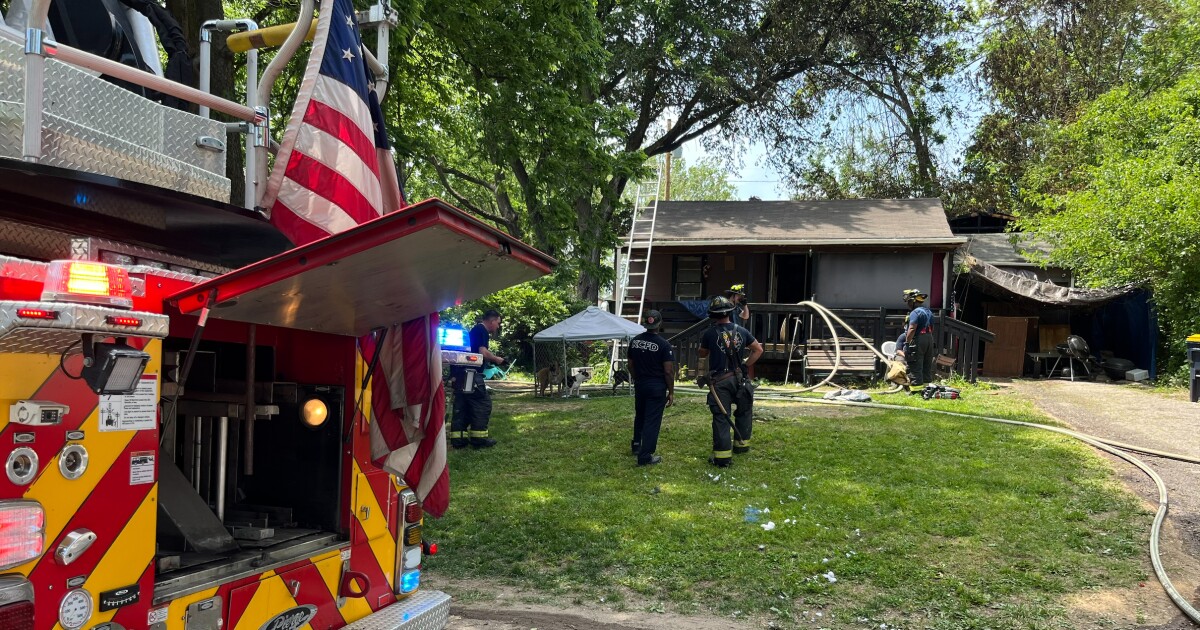
Crews safely remove individual from house fire Friday in Kansas City, Missouri
-

 Montana35 minutes ago
Montana 250th Commission awards $100,000 to fund 40 events for America’s 250th in 2026
-

 Nebraska41 minutes ago
Concordia Nebraska to host Early Childhood Conference June 7-8, 2026, with preconference
-

 Nevada47 minutes ago
Vegas casino pulls plug on prediction market conference amid Nevada crackdown
-
 New Hampshire53 minutes ago
EPA, environmental advocates face off over PFAS in Manchester’s wastewater treatment plant