Connect with us

News

Policymakers should not exacerbate the risks of deglobalisation

Published

on

Policymakers should not exacerbate the risks of deglobalisation

Stay informed with free updates

The writer is chief executive of UBS

As trade has globalised over the past 80 years, the role of banks has evolved with the needs of customers but remained relatively constant: providing the financial lubricant that keeps the world economy humming.

In an era where deglobalisation brings new risks, ensuring that capital flows to local and regional companies and communities is even more crucial to guarantee future prosperity. Yet divergent and often-burdensome regulatory constraints threaten to weaken, if not destabilise, the global financial system.

Advertisement

For most of my nearly 50 years in finance, markets operated on the assumption that global capital would flow with increasing ease. This was the foundation of the world economy following the second world war, fostering growth, innovation and improved standards of living.

That dynamic is now being upended. Trade tensions between the US and China have led to declines in the flows of goods, services, investments, and labour.

It is not just geopolitical rivals who have been harmed by rising economic nationalism. Consider the political reactions in Germany and Italy to a potential takeover of Commerzbank by UniCredit, or bipartisan US opposition to the proposed acquisition of US Steel by Japan’s Nippon Steel.

Such protectionist measures reflect growing sentiments that purport to prioritise national interests over global co-operation, but instead lead to missed opportunities for innovation and growth.

In this environment, everyone tends to suffer. As protectionism grows, the flows of capital needed for regions to prosper peacefully are stymied. The result is an increasingly fragmented financial system, with a higher cost of capital for borrowers and a knock-on impact on competitiveness, jobs, consumer prices and household prosperity.

Advertisement

Those in the most connected emerging markets stand to be particularly hard hit. And the implications of this fragmentation extend beyond economics, influencing social stability and international relations.

To prevent this from worsening, it is critical for policymakers and financial regulators worldwide to adopt a co-ordinated approach and ensure banks can operate effectively. Notwithstanding concerns around elements of the Basel III rules on bank capital, many of which I share, we are seeing a patchwork adoption of these reforms, with jurisdictions de facto charting their own paths.

This lack of cohesion creates inefficiencies and vulnerabilities in the global financial system and distorts competition. It also creates further potential for regulatory arbitrage that could produce new and unforeseen pockets of danger, such as with the uncontrolled expansion of shadow banking activities.

The need for strong, well-regulated banks capable of acting as engines of credit creation in their local communities should not come at the expense of nurturing globally connected and competitive institutions.

Moreover, a fragmented approach to rulemaking has the potential to be especially destructive at a time when many banks are faced with the need to restructure their operations and invest to ensure their future existence.

Advertisement

For example, the industry will need to contend with increased cyber security risks — not to mention the potential disruption posed by AI — and play its role in helping fund the estimated $3.5tn per year in investment needed to transition the global economy to net zero by 2050.

The banking sector must navigate these complex challenges while maintaining its fundamental role in facilitating economic growth and stability. Sadly, however, fragmentation looks set to worsen.

In a recent UBS survey, nearly all global central bankers said they believe the world is moving towards a more multipolar system. Only a third said the international financial architecture was resilient enough to survive current challenges without reform. They also embraced a view that one potential outcome of the US presidential election would be a rise in global protectionism.

We are set for a potentially long period of deglobalisation — one in which the coming few decades will be very different from those that shaped today’s business leaders. 

Although banking’s crucial role remains unchanged, barriers are slowly coming up everywhere. It is important that policymakers do not build them in the wrong places, so that banks can continue to act as catalysts for growth, innovation and prosperity not only in their home markets, but around the world.

Advertisement

News

With the white nationalist group Patriot Front, what you see is not what you get

Published

on

With the white nationalist group Patriot Front, what you see is not what you get

Members of the group Patriot Front ride the subway as a commuter looks on, in Washington, D.C., on July 4.

Cheney Orr/Reuters


hide caption


toggle caption

Advertisement

Cheney Orr/Reuters

The sight of hundreds of masked men roaming the streets of Washington, D.C., on July Fourth weekend, wearing khakis, blue shirts and uniform patches, was chilling to some of the city’s residents.

For many Americans, it was the first they heard about Patriot Front, a white nationalist organization that was born out of the deadly 2017 Unite the Right rally in Charlottesville, Va. A now-viral Reuters photo prompted reflections on the experience of a lone African American woman who was photographed in a Metro subway car, surrounded by white supremacists.

The planned demonstration of force was timed to bring a fringe group of extremists into public view as the nation marked 250 years of its independence. Indeed, the stunt succeeded in earning the group media coverage across mainstream outlets, amplifying its brand and potential to reach new recruits. On this occasion, the members refrained from engaging in violence and property damage, projecting an image of law-abiding, orderly activism.

Advertisement

But those who are closely familiar with Patriot Front’s history and operations warn: Don’t believe what you see.

“That is not who they are in private,” said Len Kamdang, director of the Criminal Justice Project at the Lawyers’ Committee for Civil Rights Under Law. “Although they were on their best behavior [last] weekend, this is a dangerous group that commits acts of violence all over the country.”

Patriot Front’s history of violence and property damage

Kamdang’s organization sued members of Patriot Front for vandalizing a public mural dedicated to the tennis legend and Black activist Arthur Ashe in Richmond, Va., in 2021. Ashe, who was inducted into the International Tennis Hall of Fame in 1985, was born in Richmond and his legacy is a continuing source of pride to members of that community.

“A couple of Patriot Front members showed up under cover of night and vandalized the mural,” Kamdang said. “They painted white stencils all over. … They literally tried to whitewash him and they put their symbols of hate all over — their stencils, their slogans. And all the while they were caught on video. And that video leaked using some of the most horrible language that you can imagine.”

In many jurisdictions, law enforcement can seek additional hate crime charges or sentencing enhancements in cases where illegal acts appear to have been motivated by racial bias. But in this case, Kamdang said, Patriot Front members faced no criminal charges and their identities were only revealed when online activists later infiltrated the group and leaked internal records.

Advertisement
Continue Reading

News

Graham Platner makes it official in Maine, submitting paperwork to leave Senate race

Published

on

Graham Platner makes it official in Maine, submitting paperwork to leave Senate race

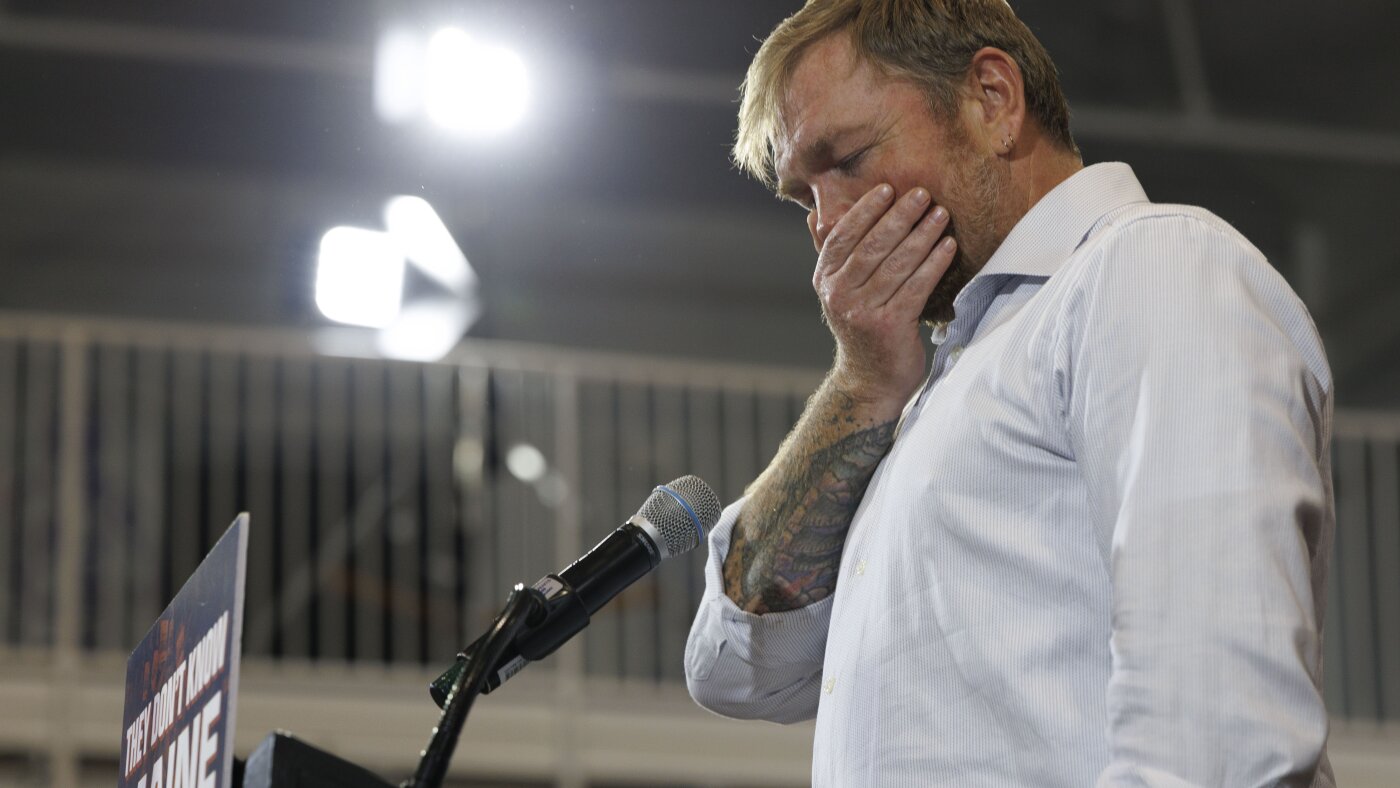
Now-former Democratic Senate candidate Graham Platner speaks at his primary election night event on June 9 in Blue Hill, Maine. Platner officially dropped out of the race July 10 following rape allegations from a former romantic partner that he denies.

CJ Gunther/Getty Images


hide caption


toggle caption

Advertisement

CJ Gunther/Getty Images

Graham Platner, Maine’s Democratic nominee for Senate, is officially out of the race.

The Maine Secretary of State said Platner filed the necessary paperwork to withdraw his candidacy two days after he announced he planned to do so following an accusation of rape by a former romantic partner. Platner denies the allegation.

The Maine Democratic Party has until July 27 to pick Platner’s replacement.

Advertisement

In his withdrawal notice, Platner said “people are desperate for change” and that’s why they voted “for a new kind of politics” by making him the Democratic nominee. He expressed gratitude for those who supported his campaign and said that he will continue to fight for “the movement we have built together and the future we believe in.”

He ended his notice with a strong statement aligned with the progressive platform.

“F*ck ICE. Free Palestine. Up the Hearts.”

Platner announced his plan to withdraw from the race in an 11-minute video he posted to social media on July 8. He said he had no choice but to suspend his campaign, citing it was no longer viable financially.

Advertisement

“We are going to lose our ability to fundraise. We are going to lose our ability to access voter data. We are going to lose all of the things that any campaign needs on the basic level simply to function,” he said.

Platner added that dropping out was not an admission of guilt. Rather, the decision, he said, is to keep the progressive movement in Maine alive to defeat Republican Sen. Susan Collins in November. Platner blamed the “political establishment” for his downfall and argued the goal was to force him out of the race.

“We built a campaign. We engaged in electoral politics. We motivated people. We banded together. We did it the way that we were told we are supposed to make change and we won. And now they are not going to let us have it. Not if it’s me,” he said.

Continue Reading

News

Waymo called the cops on teen riders, raising privacy concerns

Published

on

Waymo called the cops on teen riders, raising privacy concerns

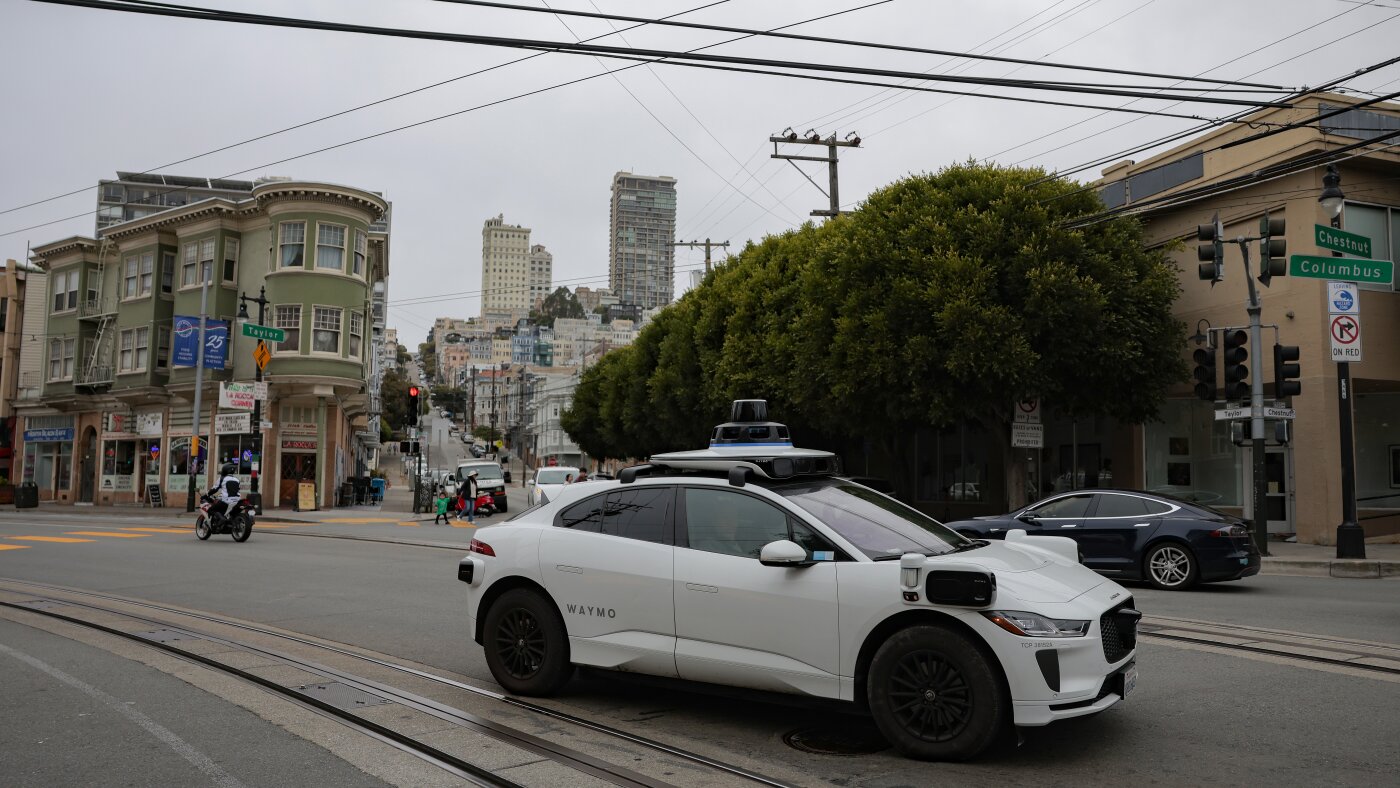
A Waymo robotaxi drives in San Francisco’s North Beach neighborhood this week.

Heather Diehl/Getty Images


hide caption


toggle caption

Advertisement

Heather Diehl/Getty Images

Police in San Mateo, Calif., posted Monday on social media that they had apprehended a pair of teenagers from a Waymo driverless robotaxi after the company alerted authorities to suspected criminal activity. It’s the latest incident involving video surveillance of passengers and others by autonomous vehicles — raising questions about the limits of privacy in such vehicles.

The Facebook post by the San Mateo County Police said: “Parents do you know where your teens are? @waymo does!”

The 15-year-olds were allegedly drinking alcohol and shooting toy guns from the car, according to the police. They said Waymo’s systems detected behavior that then triggered a safety response, after which the company disabled the vehicle and contacted police.

Advertisement

Waymo’s cars, equipped with an array of cameras, microphones and other sensors to monitor passengers and other nearby vehicles, are becoming more common in cities across the United States. Experts say the detention of the two teens in San Mateo highlights a potential — but not inevitable — trade-off between privacy and convenience. It also questions the extent to which companies similar to Waymo are required to hand over private data, including audio and video of passengers, in situations where a crime is suspected.

NPR reached out to Waymo, which is owned by Alphabet, the parent company of Google, for comment on the details of the San Mateo incident and how the company responded, but did not hear back. But on its website, the company says that as many as 29 cameras in its autonomous cars provide an all-around view and “are designed with high dynamic range and thermal stability, to see in both daylight and low-light conditions, and tackle more complex environments.”

“There already exist laws that govern duty to report or even duty to protect” for carriers such as Waymo, according to Alessandro Acquisti, a professor of information technology at the MIT Sloan School of Management. “The privacy problems arise when and if driverless carrier companies used such laws or ethical obligations as a pretext for blanket, indiscriminate accumulation of identifiable data for unspecified future purposes.”

That includes not just monitoring people inside the cars, but outside too. Take, for example, a hit-and-run investigation last year in Los Angeles. Media reported that the police inquiry was aided by video captured by a Waymo taxi that had a clear view of the crime. Critics suggested at the time that authorities were using the company’s vehicles as a mobile surveillance platform. And during 2025 protests in Los Angeles against Immigration and Customs Enforcement crackdowns, demonstrators vandalized Waymos, apparently angry that video recorded by the vehicles could be used by police, although there is no evidence that happened.

Continue Reading
Advertisement

Trending