Northeast
New Jersey high school allegedly banned yellow ribbons honoring Israeli hostages: 'Deeply offensive'

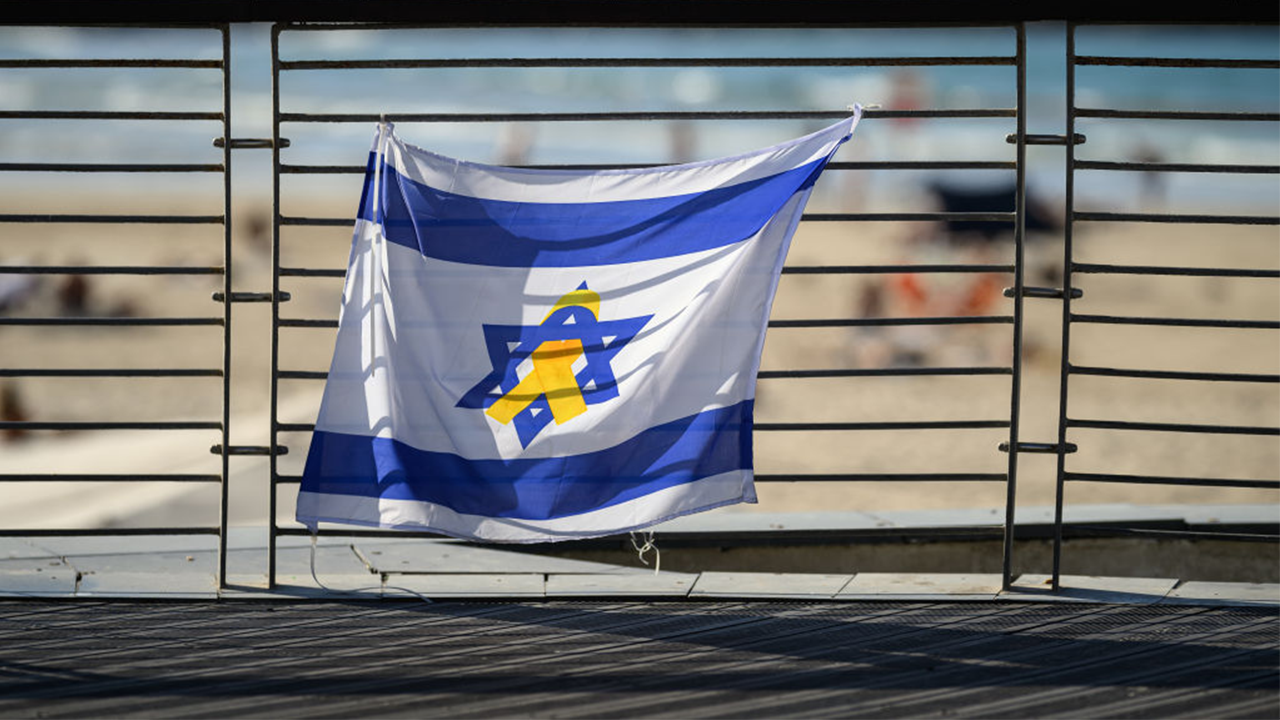
A New Jersey high school is accused of banning yellow ribbons, aimed at honoring Israeli hostages abducted by Hamas, at a club fair, a move critics described as “deeply offensive” and “blatant antisemitism.”
Fair Lawn High School also prohibited Israeli flags at the event, because administrators believed the flags were too political, some parents and the group StopAntisemitism allege, noting that members of the Muslim Student Association were permitted to display a keffiyeh, a traditional headdress worn by men from parts of the Middle East, according to the New York Post.
The event, according to the report, was partly promoting a trip to Israel.
“What happened at Fair Lawn High School is an alarming case of hypocrisy and blatant antisemitism,” StopAntisemitism founder Liora Rez told the outlet. “This incident is nothing short of a direct violation of Jewish students’ rights to express their identity and humanitarian concerns.”
AMERICAN FATHER OF HAMAS HOSTAGE ITAY CHEN PUSHES US, ISRAEL ON ‘PLAN B’ AS NEGOTIATIONS FALTER
A flag of Israel with a yellow ribbon added is seen near Frishman beach on October 03, 2024, in Tel Aviv, Israel. (Getty Images)
Between 33% to 40% of the 35,000 residents in Fair Lawn are Jewish. Fair Lawn in Bergen County is located about 17 miles from New York City.
This comes a year after Hamas terrorists’ Oct. 7, 2023, attacks against Israel, which led to military retaliation from Israel and sparked a still-ongoing war in the Middle East. More than 250 people, including some Americans, were abducted by Hamas during the Oct. 7 attacks. Many hostages have since been released, rescued or killed, while dozens are still held by Hamas.
One parent said the school district’s failure to address complaints about alleged antisemitism is not a new concern.
“The incident at Fair Lawn High School’s Club Fair is not an isolated event but part of a disturbing pattern of antisemitism that I and other parents have been battling for years,” Adi Vaxman, founder and president of Operation Israel, which provides humanitarian relief to Israel, told the New York Post.
“Despite numerous meetings with the board of education and the superintendent, promises of inclusion in anti-antisemitism efforts have gone unfulfilled,” added Vaxman, whose daughter Maya attends the school.
Vaxman continued: “The administrator’s claim that the yellow hostage ribbon — a humanitarian symbol calling for the release of innocent civilians abducted from their homes and held in subhuman conditions by Hamas — is ‘political’ is deeply offensive and unacceptable.”
ONE-YEAR ANNIVERSARY OF OCT. 7 ATTACKS ARRIVES WITH LASTING TRAUMA FOR ISRAELIS, AMERICAN JEWS: EXPERT
A bring them home necklace with a yellow ribbon pin during a tribute to the victims of the Oct. 7, 2023, attack on Israel by Hamas, on October 6, 2024. (Getty Images)
Claiming a double standard, Vaxman said that the black-and-white keffiyeh, which she says is “a symbol of the armed resistance against Israelis,” was allowed to remain on display at the club event for hours.
“This glaring double standard exposes the bias of the school and the administrator in question,” she said. “It’s alarming that the school supports the Muslim Student Association identifying as Palestinian while censoring the Israeli flag for the Jewish Student Union. Israel is the world’s only Jewish state, naturally associated with Judaism and relevant to the [Jewish Student Union’s] advertised trip to Israel.”
Fair Lawn High Principal Paul Gorski released a statement defending the school’s response to ribbons and flags.
“We take pride in our Student Activities program as well as the leadership shown by both students and faculty,” Gorski wrote. “During this year’s event, both the Muslim Student Association and the Jewish Student Union were asked to adjust items that were not part of their original displays. Both groups received the same instruction and were treated equally.”
Gorski said no students were disciplined in connection with their participation at the club fair.
The Israeli flag with the yellow ribbon symbolizing solidarity with abductees in the camp set up by the families of the abductees, near Benjamin Netanyahu’s house, on August 13, 2024, in Jerusalem, Israel. (Getty Images)
The principal also said the high school participates in the Anti-Defamation League’s “No Place for Hate” initiative and that the school was “proudly recognized” with a Gold Star distinction from the group during a ceremony earlier this year.
“We condemn antisemitism and remain steadfast in our commitment to creating an inclusive community where hate is not tolerated,” he said. “When we return to school after being closed for the Jewish holidays, we will engage in dialogue with our students and community. Hate has no home at Fair Lawn High School.”
Vaxman, however, maintains that the school discriminated against Jewish students during the club fair.
“This selective application of rules further demonstrates the discriminatory treatment of Jewish students,” Vaxman said. “The school’s response is extremely disappointing and fails to address these core issues. Their participation in the ‘No Place for Hate’ initiative rings hollow when Jewish students face such blatant discrimination and intimidation in their school on a regular basis. We demand concrete actions, not empty platitudes, to combat antisemitism and ensure true equality for ‘all’ students.”
Read the full article from Here


President Trump is visiting the Lehigh Valley next week.
Mr. Trump will speak at Mack Trucks in Macungie, Pennsylvania, Tuesday at 2 p.m. Macungie is roughly 10 miles from Allentown.
Mack Trucks is a 1.7 million square-foot facility in Macungie that assembles heavy-duty trucks for North American and export markets, according to its website.
“Mack Trucks are a symbol of America’s manufacturing strength,” Rep. Dan Meuser said in a Facebook post about Mr. Trump’s upcoming visit to Pennsylvania. “Their Lehigh Valley operations are a pillar of the local economy, employing Pennsylvania workers and driving the nation’s trucking industry.”
In the lead-up to the 2024 election, Mr. Trump visited Pennsylvania, a crucial swing state, multiple times. He’s also visitied during his second term.
In December 2025, Mr. Trump said in a speech in Mount Pocono, Pennsylvania, that he was “crushing” inflation and called affordability concerns a “Democratic hoax.”
One week later, Vice President JD Vance aimed to calm the affordability concerns at a Uline facility in Alburtis, about 13 miles southwest of Allentown.
Tickets are available for Mr. Trump’s visit to Macungie next week on a first-come, first-serve basis.

“They were truly the unrelenting voices of their time, and made sure that this was something that happened because they knew it was important,” Jess Motyl-Szary, director of Rhode Island Pride, said in an interview on Thursday.
The 1976 pride march came after local Bicentennial Committee organizers “refused meeting space for the group of community members hosting the Congress of People with Gay Concerns,” according to research by Matthew Lawrence and published on the Providence Public Library’s website.
“Calling themselves Toward a Gayer Bicentennial Committee, the group sued the official Bicentennial Committee and won the right to assemble at the Old State House, where about 30 people met in June 1976 to discuss civil rights concerns,” according to Lawrence.
But the contingent also had to fight to join the Bicentennial Parade after they were initially denied the right to do so by officials who pointed to the state’s anti-sodomy law at the time, according to Motyl-Szary.
The 76ers “knew that being a part of an existing parade meant there was a little bit of safety there, because it was an existing infrastructure,” Motyl-Szary said.
“But it also meant that there was a much higher visibility for them to be able to be out there, be proud, and show other people who might not have been out that there is a safe space for them,” Motyl-Szary said.
With the assistance of the American Civil Liberties Union, they won the right to march, she said.
“It wasn’t safe to be out in the ’70s,” Motyl-Szary said. “Incredibly great people marched. Some had to march with paper bags on their heads because there were no legal protections to protect their jobs, their home, their families, but [it was] still incredibly brave to go out there, create visibility, and create this organization.
“Being here 50 years later, and being a part of their legacy has been so incredible,” she said.
A lot has changed for LGBTQIA+ Rhode Islanders in the decades since, Motyl-Szary said.
“But the closeness of it still feels relevant because we’re seeing these continued attacks in our community, and a very real resurgence of attacks on the LGBTQIA+ community, especially our trans brothers, sisters, and siblings,” Motyl-Szary said.

Since returning to office last year, the Trump Administration has taken aim at transgender rights across the country, especially after President Donald Trump signed an executive order recognizing two sexes, male and female. Among other actions, Trump has often sought to tie adherence to the order with federal funding requirements, and the administration has also attempted to gather private medical records from hospitals that provided gender-affirming care to transgender children and teens.
Reflecting on what pride means to her right now, Motyl-Szary said pride festivities are new to at least somebody every year.
“Someone is coming and getting to feel this embrace, this huge hug of their community for the first time every year,” she said. “And in a time like this, when our community is being told that we are hated by the rest of our community, by the rest of our country, when we are told we should hate ourselves, coming out and celebrating ourselves, loving ourselves, loving each other is so incredibly important. Our community creates the space that we need.”
Motyl-Szary said she also believes that “queer joy is resistance.”
“There is a real need for us to have a space and a celebration of who we are and to remind ourselves that we are worthy of love and that we are worthy of being a part of a community that gathers, celebrates, and fights for ourselves and our rights,” she said.
Rhode Island Pride kicks off on Friday night with the “Golden Anniversary Eve” party from 6 to 8 p.m. at the 195 District Park in Providence, Motyl-Szary said.
Festivities continue at the park on Saturday with yoga at 10 a.m. and PrideFest entertainment beginning at 11 a.m., alongside approximately 260 vendors, she said. A rally at 2 p.m. will focus on “what’s happening, get people motivated to be involved in [the] community to speak up and be an activist in whatever way is right for their path of activism,” Motyl-Szary said.
The Illuminated Night Parade steps off at 7:30 p.m. at Washington and Empire streets before moving through downtown Providence, according to organizers.
Christopher Gavin can be reached at christopher.gavin@globe.com.

SHELBURNE — Norman Rockwell lived for a time in suburban New York City and died and was buried in the Berkshires of Massachusetts. But for 14 years in between, the artist spent perhaps the most prolific period of his career in Vermont creating his best-known works.
That’s how Shelburne Museum curator Carolyn Bauer sees it — and how the museum’s latest exhibition treats the artist.
“Norman Rockwell: At Home in Vermont,” which opens June 20 and runs through Oct. 25, displays 40 of the 175 covers Rockwell famously created for The Saturday Evening Post magazine during his time in Vermont between 1939 and 1953.
Also on display are prints of “The Four Freedoms,” maybe his most famed works of all, which represent American ideals spelled out by President Franklin D. Roosevelt in 1941. Paintings in the exhibition include “The Young Lady with the Shiner” and “The Tattoo Artist,” both whimsical, recognizable pieces used as covers for The Saturday Evening Post.
“It’s very accessible work and approachable,” Bauer said.
The display features the three paintings that inspired the exhibition, given to the Shelburne Museum by Rock of Ages, the Barre granite quarry and monument maker. Those Rockwell paintings filled a significant gap in the museum’s art collection, which includes works by Claude Monet, Edgar Degas, Grandma Moses and Andrew Wyeth but, until recently, none by Rockwell, perhaps the best-known artist to have lived here.
“It feels like a homecoming in many regards,” Bauer said.
Moving to southern VT, finding ‘the every American’
The exhibition frames Rockwell’s time in Vermont around the tenor of the times in America. As the Great Depression was ending, World War II was looming and the nation was growing more urban and industrialized, much of the public was yearning for greater simplicity, Bauer said.
Rockwell was among them, leaving New Rochelle north of New York City for the quietude of Arlington in southern Vermont.
He was not alone. Contemporary artists including Mead Schaeffer, John Atherton and Gene Pelham would settle in Arlington too, creating what Bauer termed “the golden illustrator days” in Vermont.
Rockwell’s art, as the 152-page hardcover catalogue accompanying the exhibition notes, shows “how Vermont itself came to embody American ideals in the national imagination.”
Rockwell and his fellow Arlington artists used each other as models in their creations. “They really would work collaboratively,” Bauer said.
Pelham’s daughter, Melinda, is shown in the exhibition in two works: “The Babysitter,” a painting of a girl holding a crying baby that’s on loan from The Fleming Museum at the University of Vermont and an admission submission Rockwell sent to Kellogg’s of a girl clutching a cereal-laden spoon to her mouth.
Doctors, mail deliverers and shopkeepers from Arlington populated his work. Bauer said Rockwell usually gave models $5 and a can of Coca-Cola.
“He was recycling and using just about everybody in town,” Bauer said. That included himself: Rockwell added his own visage to the multiple faces in “The Gossip,” which shows him lashing out at a woman who’s started the rumor-mongering.
Bauer said Rockwell wanted to cultivate a sense of place by using Vermonters known for their austere self-reliance at the forefront of his work. He also found “the every American” ideal in town, Bauer said, though his art reflected a pronounced lack of diversity.
In later work, Rockwell would confront race and segregation as the Civil Rights Movement swept the U.S.
“He was progressive,” Bauer said.
Inspired by paintings donated by Rock of Ages
“Norman Rockwell: At Home in Vermont” was inspired by the 2025 museum acquisition of a trio of Rockwell works that once hung in the Barre offices of Rock of Ages. The granite company contacted the museum asking if it could donate the paintings, Bauer said, prompting staffers to wonder momentarily, “Is this real?”
Rockwell created advertisements for Rock of Ages and gave the paintings upon which the ads were based to the company. “Kneeling Girl” from 1955, making its debut at the Shelburne Museum, takes place in front of a gravestone engraved with the name Newton.
Rock of Ages donated two versions of 1963 work “The Craftsman,” a muted draft and a more luminous final version that were first displayed at the museum last year. They depict Rock of Ages stonecutter George Seivwright working in the shadow of a memorial bearing the name “Norwell,” a portmanteau of Rockwell’s first and last names.
Bauer called the paintings “incredible works of art that were circulated widely” in ads, brochures and pamphlets touting Rock of Ages and its world-famous Vermont granite. Though Rockwell had left Vermont for Massachusetts by the time he created those paintings, they do what Rockwell had done when he lived in Arlington — show the nation and the world what Vermont and Vermonters are capable of.
“We are just eager for our visitors to see these paintings,” Bauer said.
If you go
WHAT: “Norman Rockwell: At Home in Vermont”
WHEN: June 20 through Oct. 25
WHERE: Pizzagalli Center for Art and Education, Shelburne Museum
INFORMATION: $8-$25 museum admission; free under age 5 and for active military and Shelburne Museum members. shelburnemuseum.org
Contact Brent Hallenbeck at bhallenbeck@burlingtonfreepress.com.
-
 Oklahoma4 minutes ago
Most Oklahoma voters didn’t cast a ballot during June’s primary election
-
Oregon7 minutes ago
Oregon Lottery Pick 4 results for June 18
-

 Pennsylvania12 minutes ago
President Trump to visit Lehigh County, Pennsylvania, next week
-

 Rhode Island19 minutes ago
Rhode Island Pride turns 50 this weekend: ‘Queer joy is resistance’ – The Boston Globe
-
South-Carolina22 minutes ago
87-year-old South Carolina businessman says he has no plans to retire
-

 South Dakota27 minutes ago
South Dakota sends poetry to the America250 time capsule
-

 Tennessee34 minutes ago
Inside Tennessee 4×100 relay’s NCAA title, outlasting four botched exchanges
-

 Texas36 minutes ago
Flu sickens some 160 troops at Lackland Air Force Base in Texas


