Lifestyle
Is ever OK to tell your friend to break up with their partner?

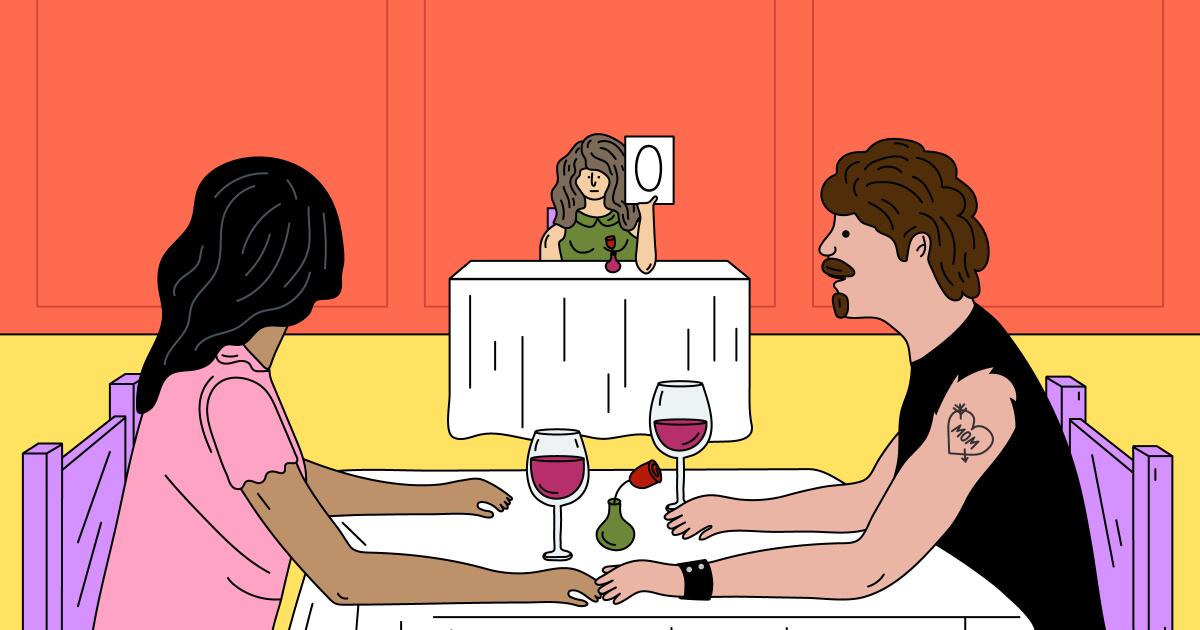
In a perfect world, everyone you love would be with someone who values them and treats them right. And — bonus points — that person would be someone you vibe with so you can all hang out together blissfully into old age. But that doesn’t always happen.
One of the most frustrating friendship conundrums is watching one of your friends date someone who you can’t stand. As a person who wants the best for your mate, this delicate situation can leave you with a crippling decision to make: Do you tell your friend how you truly feel about their partner, insinuating that they should consider breaking up with them? Or do you mind your business and keep your thoughts to yourself?
Dating in Los Angeles can be messy. In “Date Cute” we’ll explore common dating problems and provide tips on how to date better.
If your friend is in an abusive relationship or is being harmed in any way, relationship experts say you should treat the situation urgently and be direct about your concerns. But in most other cases, the answer becomes more complex.
“It’s totally OK to say, ‘I really don’t like your partner,’ ” says Aaron Martin, a queer marriage and family therapist based in San Francisco. “At the same time, be prepared to deal with the fallout that ensues with that level of transparency and honesty.”
Telling a buddy how you feel about their partner can be tricky because there’s a chance they could get upset, defensive or, even more painful, shun you. One thing experts say you definitely shouldn’t do, though, is demand that they break up with their partner.
Whenever you tell someone what they need to do, “you are removing their sense of autonomy and that’s a big thing you need to feel happy and fulfilled,” says Danielle Bayard Jackson, an author, host and coach who specializes in female friendships. “That’s why ultimatums tend to not go over well.” (Have you watched “The Ultimatum” on Netflix?)
It’s a sensitive situation to navigate, but there are respectful ways to express your disapproval and concern without telling your friend what to do. Here’s how therapists and relationship coaches say you can tackle the conversation.
Do you have a valid concern?
Before saying anything to your friend, it’s essential to understand why you have an issue with their partner in the first place. Fabiola Wong, an L.A.-based relationship coach, recommends asking yourself this question: “What about this situation is upsetting to me?” and then dig deeper from there.
Our emotions provide us with data points, but they don’t necessarily paint the full picture. Sometimes we simply don’t gel with someone — everyone’s not for everyone, Martin says. Being aware of your underlying feelings can help you frame the conversation with your friend. “If I find him annoying, that means that maybe I’m going to come in a little bit pettier than usual,” says Martin. “Maybe I’m going to come in already in a mood.” Also, finding someone irritating or not vibing with their sense of humor isn’t a good enough reason to tell your friend to dump them — be sure you have a logical concern.
Experts suggest checking your motives as well and ensuring that you have your friend’s best interest in mind — not your own. Do you miss the amount of time you used to spend with your friend when they were single? Are you jealous of their relationship? It’s possible that your own triggers or relationship trauma could be influencing how you feel about your friend’s partner.
What if my friend is complaining to me about their partner?
If your friend is venting to you about issues they are having with their partner and you aren’t sure if it’s a good time to share your concerns, experts say it’s fine to ask them if they want you to be a listening ear or to provide feedback. You can say, “I don’t know if it’s OK to share some things because I have thoughts or if you just need to get this out, which I’m totally cool with,” says Bayard Jackson, who’s the author of “Fighting for Our Friendships” and host of the podcast Friend Forward.
“It might feel formal if you’re not used to doing that, but it’s a good way to gauge and to help satisfy [their] need for emotional support because if [they are] just needing to vent, I’m clarifying,” she adds. You can also bring up the conversation on your own and lead with vulnerability by saying something like, “I have some really strong thoughts about this, but I’m nervous that you’re going to get upset with me.”
“Tone is important. We can speak our truth, but sometimes we do so so bluntly that it can be harsh and judgmental and truth doesn’t have to be harsh.”
— Tiera Couch, a clinical social worker who specializes in relational trauma and anxiety
Tiera Couch, an L.A.-based clinical social worker who specializes in relational trauma and anxiety, encourages people to preface the conversation with all of the things that could go wrong. You can say, “I’m not trying to judge you or influence your choices. I’m sharing this because I care about you. This is not a personal feeling.”
“Be conscious of your friend and how they receive information,” says Couch, the owner of Unfcked Therapy and Wellness. “Tone is important. We can speak our truth, but sometimes we do so so bluntly that it can be harsh and judgmental and truth doesn’t have to be harsh.” Every friendship is different, and while some people may prefer to be told things without sugar coating, others may like a more gentle approach.
Focus on your friend, not their partner
Once you’ve prefaced your intentions, Bayard Jackson suggests focusing on the dynamic of your friend’s relationship rather than on their partner. Rather than saying, “He’s rude,” for example, you can say something like, “I’ve noticed that you are reserved when he is around, which is so unlike you” or “I think your partner is holding you back from your goals.”
“I’m not trying to make you see how flawed this person is,” she says. “I’m going to point to you and tell you that as my friend this is what I noticed about you.” That’s harder to contest rather than calling their partner a jerk, for example.
Like in any conflict, it’s possible that your friend might get defensive or think that this conversation is coming out of left field, which is why it’s crucial to show them empathy. Does your friend live with their partner? Are their finances entangled? Do they have a child or pet together? “All of these things make life exponentially more complicated than ‘Hey, I’m choosing to leave this person,’ ” says Martin.
What happens if they stay together?
Of course there’s a chance that your friend may ignore your advice and choose to stay in the relationship. Also, they may continue to bring their partner around or vent to you about them, both of which are awkward. Experts suggest setting boundaries for yourself.
If you can’t stand the idea of being around your friend’s partner, you can be honest with your mate about your discomfort, Bayard Jackson says. “But if you’re willing to do short-term hangouts, then you can ask for balance … hopefully your friend can respect that.” You can suggest one-on-one time with your friend or large group hangouts only, for example.
“You still get to be their friend and be around them, but there’s certain things that you don’t have to engage in. And let them know, ‘When you’re ready for some different type of advice and support, I’m still here.’ ”
— Clinical social worker Tiera Couch
If your friend continues to complain to you about their partner and it’s driving you crazy, Couch suggests saying something like, “I can’t keep processing the same thing if you’re not ready to move forward or change anything because it’s hurtful to see you suffer.”
“You still get to be their friend and be around them, but there’s certain things that you don’t have to engage in,” she adds. “And let them know, ‘When you’re ready for some different type of advice and support, I’m still here.’ ”
Once you’ve shared your feelings about your friend’s relationship, there will likely be a shift in your friendship, Martin says. Perhaps your mate will start hanging out with you less, stop bringing their partner around you completely — which might be a small win in your eyes — or in the worst case, your friendship may come to an end. What you have to remember, though, is that this is their life and you can’t decide whom they date.
“They have their own agency and it can be really tough for them to not listen to you,” he says. “In the same way, a principle of therapy is that people know what is best for themselves and so I think that can be a thing to fall back on. ‘I just have to trust that my friend knows what is best for themselves.’ ”

Lifestyle
Terry Tempest Williams on why women with big ideas get labeled ‘crazy’ : Wild Card with Rachel Martin
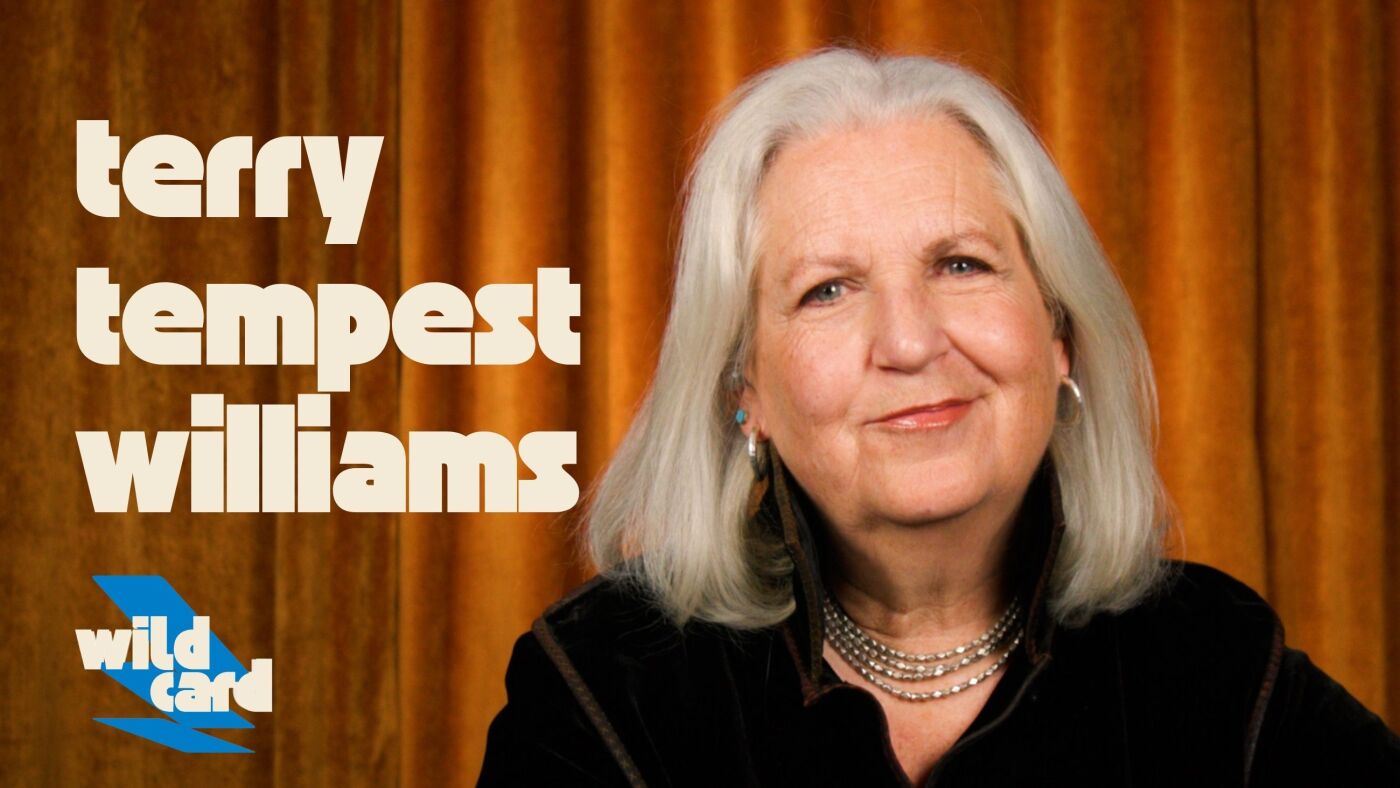
A note from Wild Card host Rachel Martin: I met Terry Tempest Williams about 25 years ago at a writer’s conference in Yosemite Valley. I was a young reporter who was there to do a story about how literature was addressing climate change and she made such a huge impression on me. I had never heard someone talk about the natural world the way Terry did and she had a spiritual depth I hadn’t encountered in my life at that point.
To this day, Terry’s writing always reorients me towards what is good, what is beautiful, and what is true. Her newest book is called “The Glorians.”

For its upcoming Los Angeles venue, experiential art firm Meow Wolf will focus on the art of storytelling, with a specific eye toward skewering our city’s moviemaking magic. To help bring that vision to life, Meow Wolf has entered into a creative partnership with Titmouse, one of L.A.’s most renowned independent animation houses.
The Hollywood-based studio behind popular series such as “Big Mouth” and “Star Trek: Lower Decks” will create animation that will be shown throughout the West L.A. venue, which is on target for a late 2026 opening at the Howard Hughes entertainment complex.
It’s a move that represents a shift for Santa Fe, N.M.-based Meow Wolf. Over the last decade-plus, the art collective has grown beyond its anything-goes, punk-meets-psychedelic roots into an organization with full-scale, maximalist installations in its hometown, Denver, Las Vegas, Houston and the Dallas suburbs. In the past, Meow Wolf kept most of its media in-house.
As part of its larger-than-life participatory art installations, Meow Wolf L.A. will feature a mix of live action and animation, the former filmed by Meow Wolf in its Santa Fe studio. Meow Wolf’s James Stephenson, a senior VP with the company and its creative director of emerging media, said the degree to which the L.A. exhibition will lean into various animation styles necessitated an outside partner. Titmouse’s work, in development by a number of directors with contrasting tones, will be shown on a variety of formats, ranging from cinema screens to full-room projections.
“I really believe in animation as an art form, and I know the Titmouse folks do too,” Stephenson says. “Animation is made by artists. It’s made by artists with their own hands. It’s something that is still very rooted in craft.”
Meow Wolf’s L.A. space is set in a former cinema complex, and will champion its location, taking guests on a journey through a converted movie house and beyond, into a sci-fi-inspired fantasyland with sentient spaceships and a 30-foot-tall mushroom tower. Meow Wolf creatives have spoken of the fantastical movie theater as one that will feature animated, self-aware candy before attendees enter the main exhibition space, making Titmouse’s work some of the first art guests will encounter. Titmouse co-founder Chris Prynoski has said the studio has lined up at least six directors for the exhibit.
An in-progress art installation destined for Meow Wolf L.A. at the art collective’s Santa Fe, N.M., headquarters. The L.A. exhibition will feature animation from Titmouse.
(Gabriela Campos / For The Times)
Titmouse, says Stephenson, is the right partner because “they’re known less for a house style, and more for a house vibe.” Over the years, Titmouse has been behind such diverse shows as “Scavengers Reign,” owning a Jean Giraud influence rooted in French and Spanish surrealism, the lively “Jentry Chau vs. the Underworld,” with an unique color palette that took inspiration from anime and Chinese mythology, the exaggerated comic book feel of Adult Swim’s “Metalocalypse,” and the approachable yet expressive tone of “Star Trek: Lower Decks.”
“Meow Wolf’s vibe is similar to Titmouse’s vibe,” Stephenson says. “It’s artist-first, artist-driven, independent and kinda edgy. They are always trying to find the edge of what’s possible. They try to see how far they can go, and it’s done for fun and in the spirit of taking risks.”
Prynoski says working with Meow Wolf will give Titmouse a sense of artistic freedom it doesn’t always have when delivering content for more traditional Hollywood partners. He says the multi-director approach is a callback to the early days of Warner Bros. Animation, when individual creators put their own stamp on Looney Tunes material.
“I use Bugs Bunny as an example,” Prynoski says. “You’ve got a Friz Freleng Bugs Bunny short. You’ve got a Chuck Jones Bugs Bunny short. You’ve got a Tex Avery Bugs Bunny short. They’re all different versions of Bugs Bunny, and people who are really paying attention can tell which director directed each one. Even though to the layman, these are all Bugs Bunny, but if you lined them up, they are drawing in different styles, sensibilities and techniques.”
Prynoski says that was a centerpiece of his pitch to Meow Wolf, noting that characters will reappear in multiple installations, each handled by a different artist. Meow Wolf L.A., in fact, will be the firm’s most character-driven exhibition, as guests will follow the storylines of three main protagonists throughout the space.
In announcing the partnership, Meow Wolf and Titmouse released an image from an animated work directed by Luca Vitale. It features a key character having a moment with a hummingbird and it’s done in an elegant, slightly anime-influenced style. It’s an image full of movement, reflecting a character in transition with inviting pastels and bold dashes.
“I like that image because I think it captures some of the sense of wonder that we want people to feel,” Stephenson says. “The character is having an encounter with the elusive nature of creativity and reality in a way that makes them have a different perspective of what’s possible.”
Other contributing animation directors to Meow Wolf L.A. include Space Dawg, Felix Colgrave, Alexander Vanderplank and Phimémon Martin, and Jun Ioneda.
Titmouse’s partnership with Meow Wolf will extend beyond the L.A. exhibition. The two will be working on the development of Meow Wolf New York, which is slated to open some time after Los Angeles, and are collaborating on a planned animated series, which Prynoski is spearheading.
Meow Wolf exhibits are the result of sometimes hundreds of disparate artists coming together in a shared space. Distilling that into a signature, singular style for a series could be a challenge. Stephenson pinpoints some guiding principles.
“You really need to feel the hand of the artist,” he says. “You need to feel a DIY aesthetic. You need to feel the materiality. Those are very specific to what we are.”

The Kennedy Center on June 28, with its facade signage still covered by a tarp and scaffolding.
Alex Wroblewski/AFP via Getty Images
hide caption
toggle caption
Alex Wroblewski/AFP via Getty Images
On Wednesday, a federal appeals court denied President Trump’s request to stop the removal of his name from Washington, D.C.’s Kennedy Center. The signage on the building has been covered with tarp and scaffolding since June 13, but in a court filing last month, the center’s current executive director said that Trump’s name has been removed.
In their decision, three judges from the U.S. District Court of Appeals for the District of Columbia Circuit said that the president had failed to prove that the arts center would be “irreparably injured” without Trump’s name attached to it.

NPR requested comment from the Kennedy Center, but did not receive an immediate reply.
This latest round of court decisions is part of the ongoing litigation filed by Rep. Joyce Beatty, D-Ohio, against President Trump and the board of the Kennedy Center. In a statement emailed Wednesday to NPR, Beatty said: “Today’s ruling again affirms that this administration’s efforts to rename the Kennedy Center were unlawful. His name no longer desecrates this sacred memorial, which belongs to the American people. Now it is time for the Trump administration to accept this, comply with the law, and take the tarps down.”
In previous court filings, Trump’s legal team had asserted that removing the president’s name from the arts complex, both on the physical building and in its digital materials, would inflict irreparable harm in both time and money already spent. In the denial, the three judges — Patricia Millett, Robert Wilkins and Gregory Katsas — wrote that since Trump’s name has already been removed, “a stay would not avert those harms.”
Furthermore, Trump had claimed that without his name attached, future fundraising would be threatened “and [will] contribute to the financial decline of the Center.” In response, the appeals judges wrote: “Appellants, however, have failed to support this assertion with any specific facts or evidence. They offer only the conclusory assertions of the Kennedy Center’s Executive Director that were made in a factually unsupported declaration.” The center’s current executive director, Matt Floca, specializes in physical plant management.

The presiding judge in the case, Christopher R. Cooper, has ordered that the center provide him a status report on the center’s operation and programming before the end of this month. As of Wednesday, the center’s calendar lists a small roster of programs, including outdoor free movie screenings, workshops for children, and five free live performances in July on its Millennium Stage. In the past, the Kennedy Center presented over 2,000 arts and education events each year, including free daily Millennium Stage performances.

-

 Louisiana6 minutes ago
Parasitic stomach illness that can cause explosive diarrhea rises in Louisiana
-

 Maine13 minutes ago
Is prison in play for Graham Platner?
-

 Maryland16 minutes ago
Office building in Glen Burnie evacuated after shift in parking garage floor
-

 Michigan21 minutes ago
Menominee, Michigan man arrested on sexual assault charges involving a minor
-

 Massachusetts28 minutes ago
Healey administration vows to appeal as Trump rejects Massachusetts blizzard aid request – The Boston Globe
-

 Minnesota30 minutes ago
Minnesota Looks to Add 1,100 Child Care Slots, With Melrose Among the 11 Funded Communities
-

 Mississippi36 minutes ago
Death of Mississippi teen Nolan Wells under investigation
-

 Missouri43 minutes ago
Missouri realtors hold statewide rally to vote no on Amendments 4 & 5

