Lifestyle
They turned a junk-filled L.A. yard into a weird and wonderful habitat garden

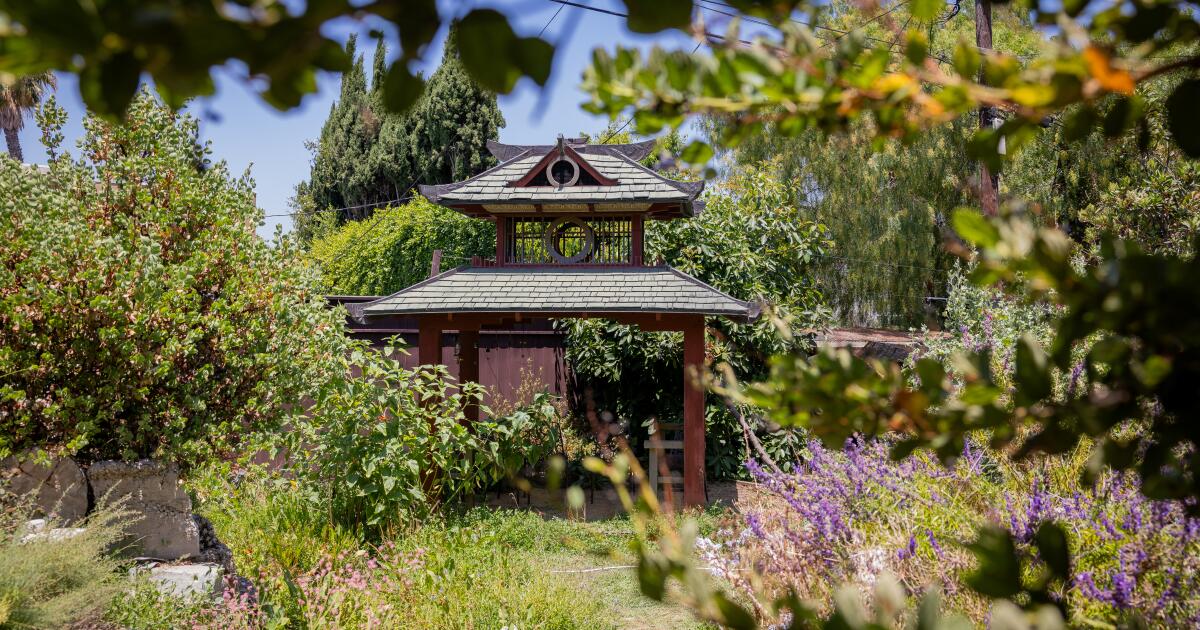
If a wildlife show wanted to film in the middle of Los Angeles, Casa Apocalyptica — a dizzying jungle of native plants, abundant wildlife, soothing water and salvaged debris — would be a great place to land.
Here, slender salamanders slink through the leaf litter under robust stands of Santa Cruz Island buckwheat and California fuchsia. Dozens of bright red flame skimmer dragonflies chase around a hand-dug pond and rubble-strewn stream.
By day, birdsong is as omnipresent as Muzak at a mall; frogs serenade the night. Near the house, a couple of koi as big as human babies lurch out of their long, raised pool for a head pat and their favorite treat — slices of watermelon.
Except for a few fruit trees, almost every plant in the ground is native to California, including the Roger’s Red grapes that grow in a lush tangle over arbored patios, cooling the temperatures beneath a good 10 degrees — and all thriving without regular irrigation.
Koi fish munch on watermelon in the backyard of Chris Elwell and Kory Odell’s Mid-Wilshire home.
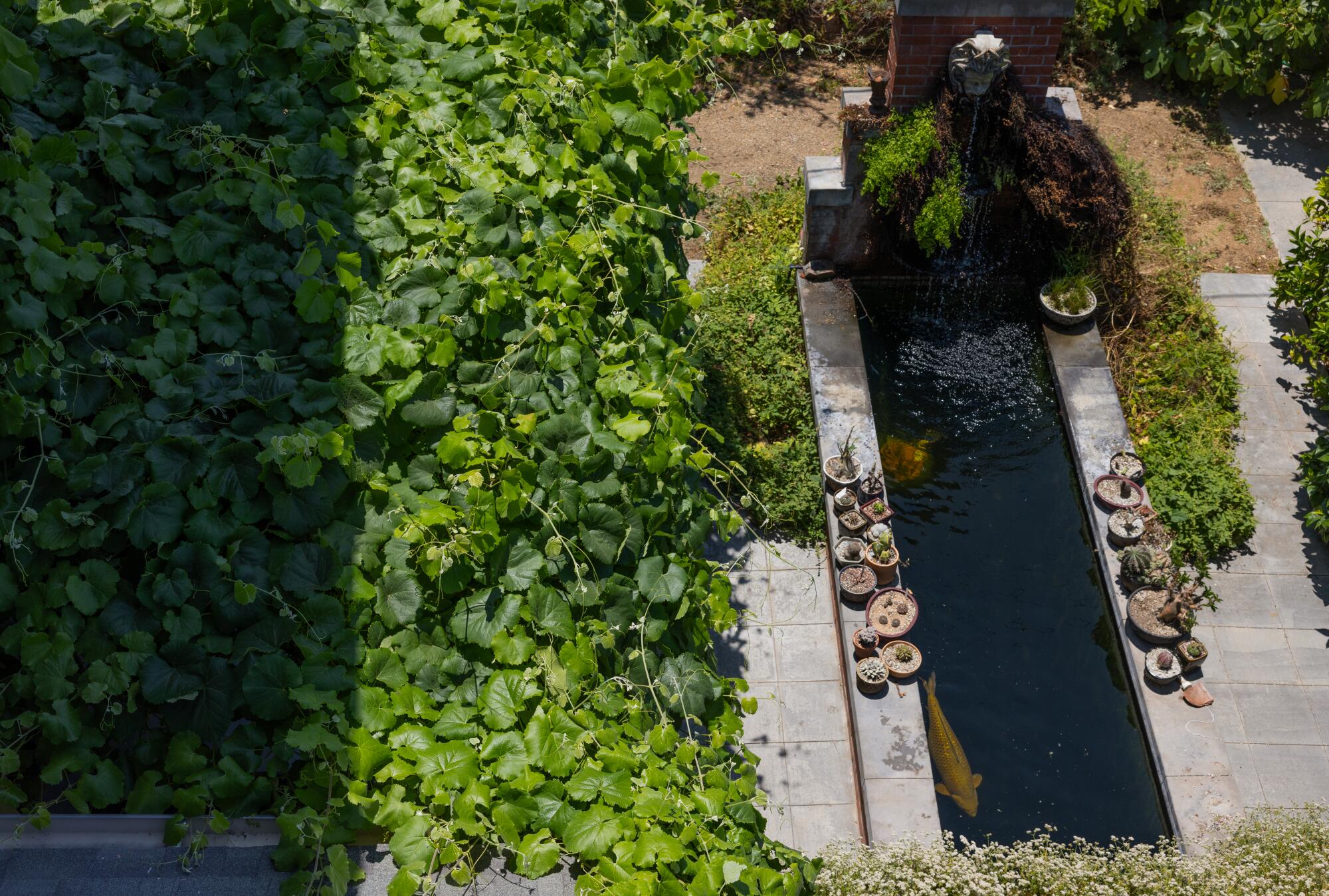
An overhead view of the koi pond.
And most remarkable: This whole part art, part wilderness adventure is contained in the sloping, 12,000-square-foot yard that surrounds a grand 1910 Craftsman home renovated by Chris Elwell and Kory Odell after the spouses bought the dilapidated property in 2003 in the small Mid-Wilshire neighborhood known as Oxford Square.
Their abundant native landscape growing out of 100 years of detritus-turned-garden treasures has earned them mythic status in the native plant world, and made them a must-see fixture on the Theodore Payne Foundation’s spring Native Plant Garden Tours for more than a decade.
“Casa Apocalyptica imagines our native ecology returning through the rubble after people are gone,’” the couple wrote in this year’s garden tour explainer. But nature got a lot of help from the two men, and if they’d known then how much work it would require, Elwell said, shaking his head, who knows if they would have gone ahead.
Except, listening to them talk, it’s clearly work they relished.
They’d wanted to move into a neighborhood of old homes in 2003, but the massive Craftsman mansion they chose was in terrible shape. Bars covered every window, neither the plumbing nor the electricity worked and all the trademark natural wood had been painted white. The backyard was full of rubble.
“Our friends and family thought we were nuts. They were like, ‘Why are you putting all this time and effort into this old wreck of a house?’” Elwell said.
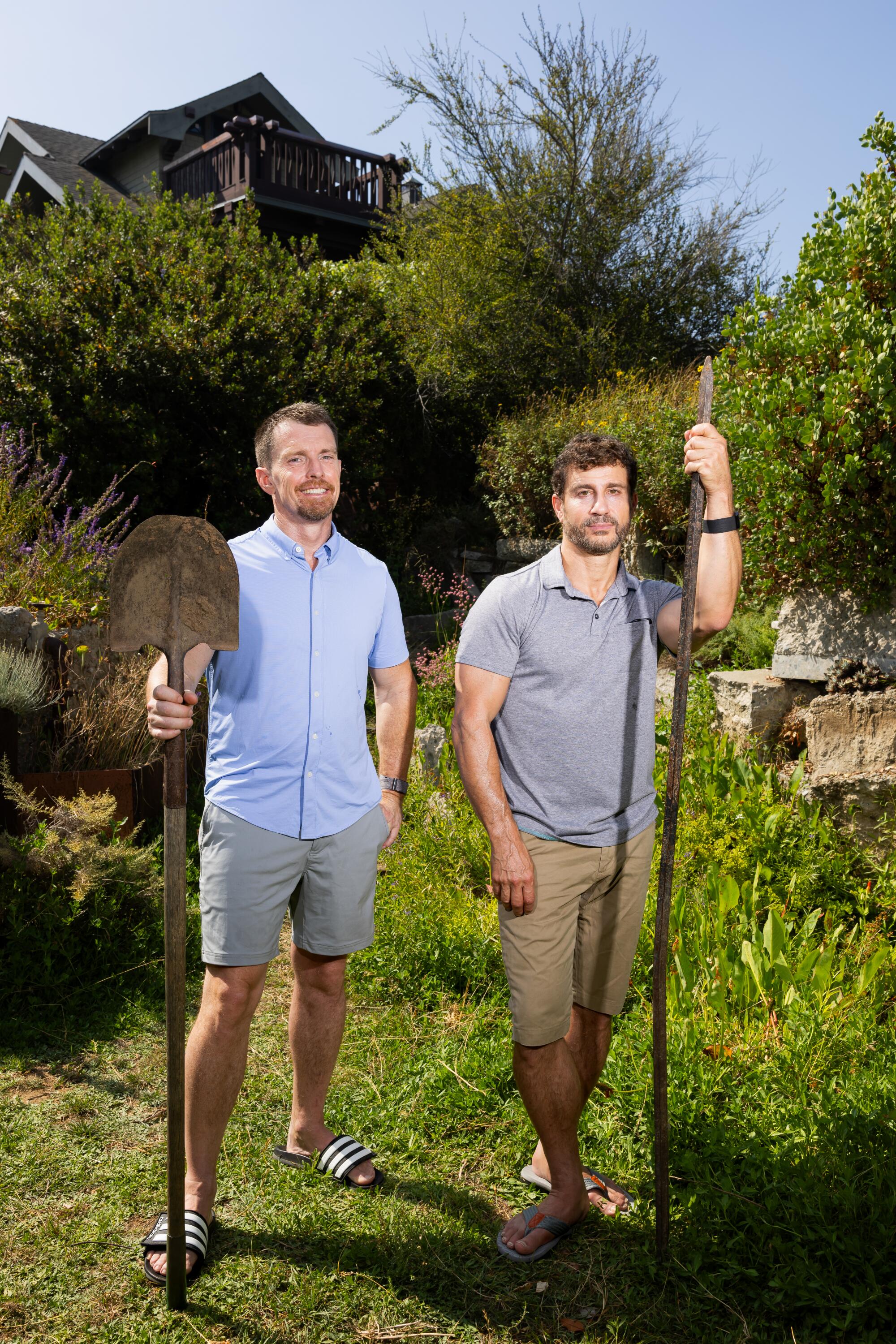
Kory Odell, left, and Chris Elwell in their yard at Casa Apocalyptica.
“But Kory had grown up working on houses, and we wanted a project, and a big yard for a garden,” he added. “The house was more than we’d bargained for, but we were obsessed with building something ourselves and making it authentic to us. And I like the beauty of things that are being overlooked. I felt like there were all these cool neighborhoods right under our noses and everybody’s ignoring them.”
The restoration took most of their free time, but it was also therapeutic, an artistic outlet after a stressful day at work, Elwell said. “But the garden sat for some time because we had so much to do on the house.”
It wasn’t until 2007 that they began on the yard, Elwell said, and both were still working full-time. Odell, now part of the executive team building the Metro Purple Line, was working with a midsize construction firm. And Elwell, now retired, was a television distribution executive with Sony Pictures.
Once again, their free time went to transformation. The front yard was a dense thicket of “freeway ice plant” that required several dumpster loads to haul away, and the bare-dirt sloping backyard was full of interesting trash that people had been dumping for 100 years — “old motorcycle parts, water heaters from the 1920s, horseshoes, lots of whiskey bottles, and lots of old cobblestones and bricks and building materials.”
To their eyes, the “junk” was weirdly wonderful, and it gave them their theme: L.A. after the apocalypse, with native plants growing in and around society’s broken remains.
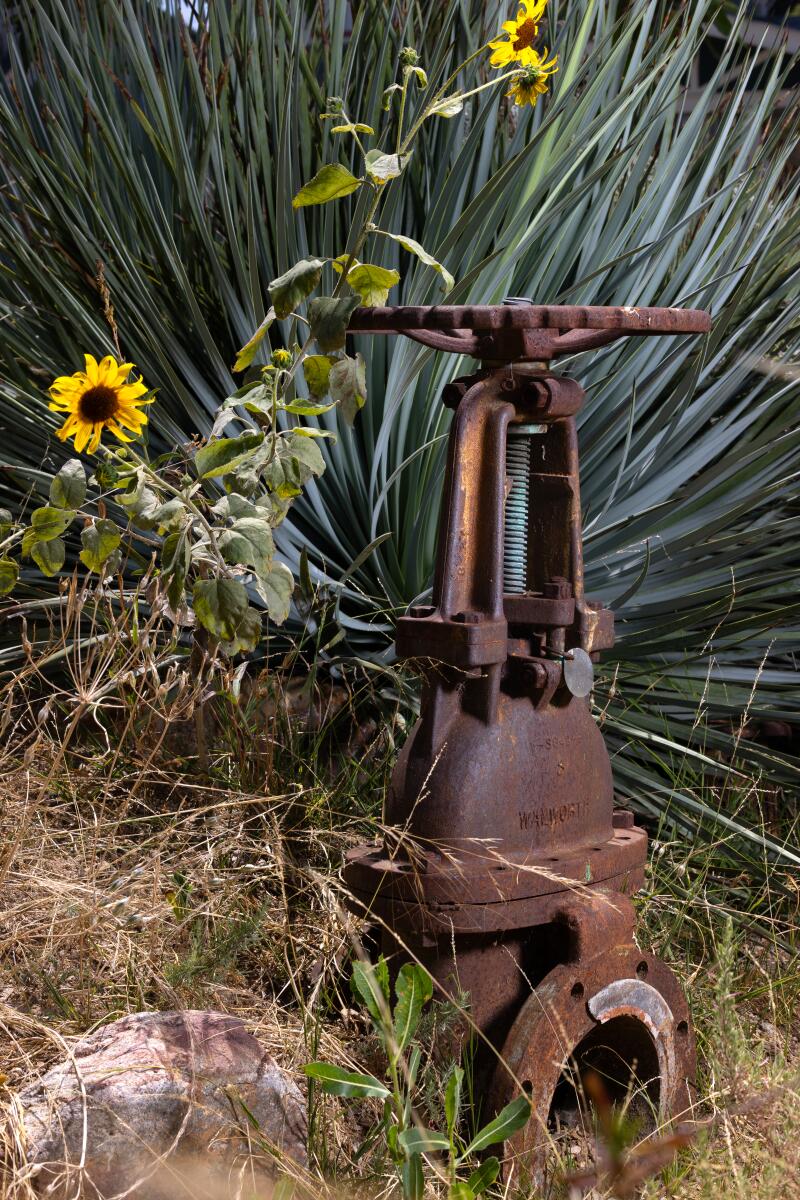
A rusted metal contraption sits surrounded by plants.
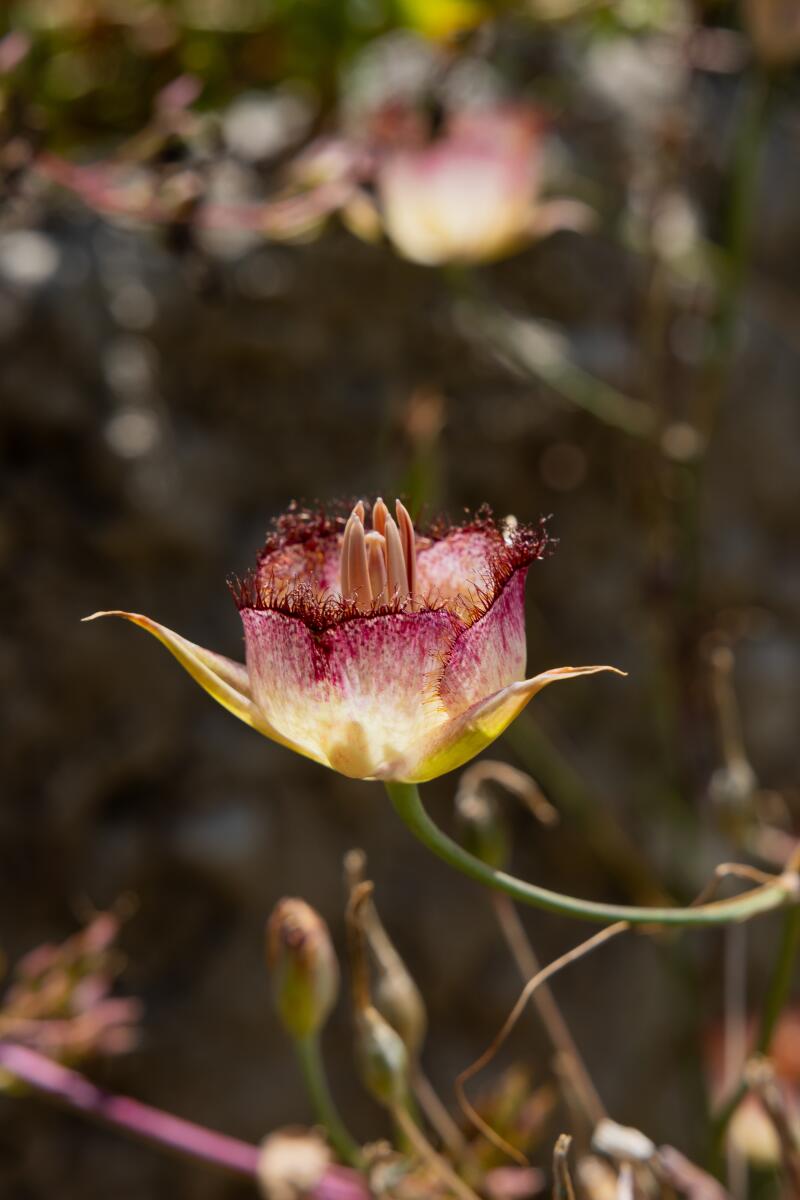
Plummer’s mariposa lily.
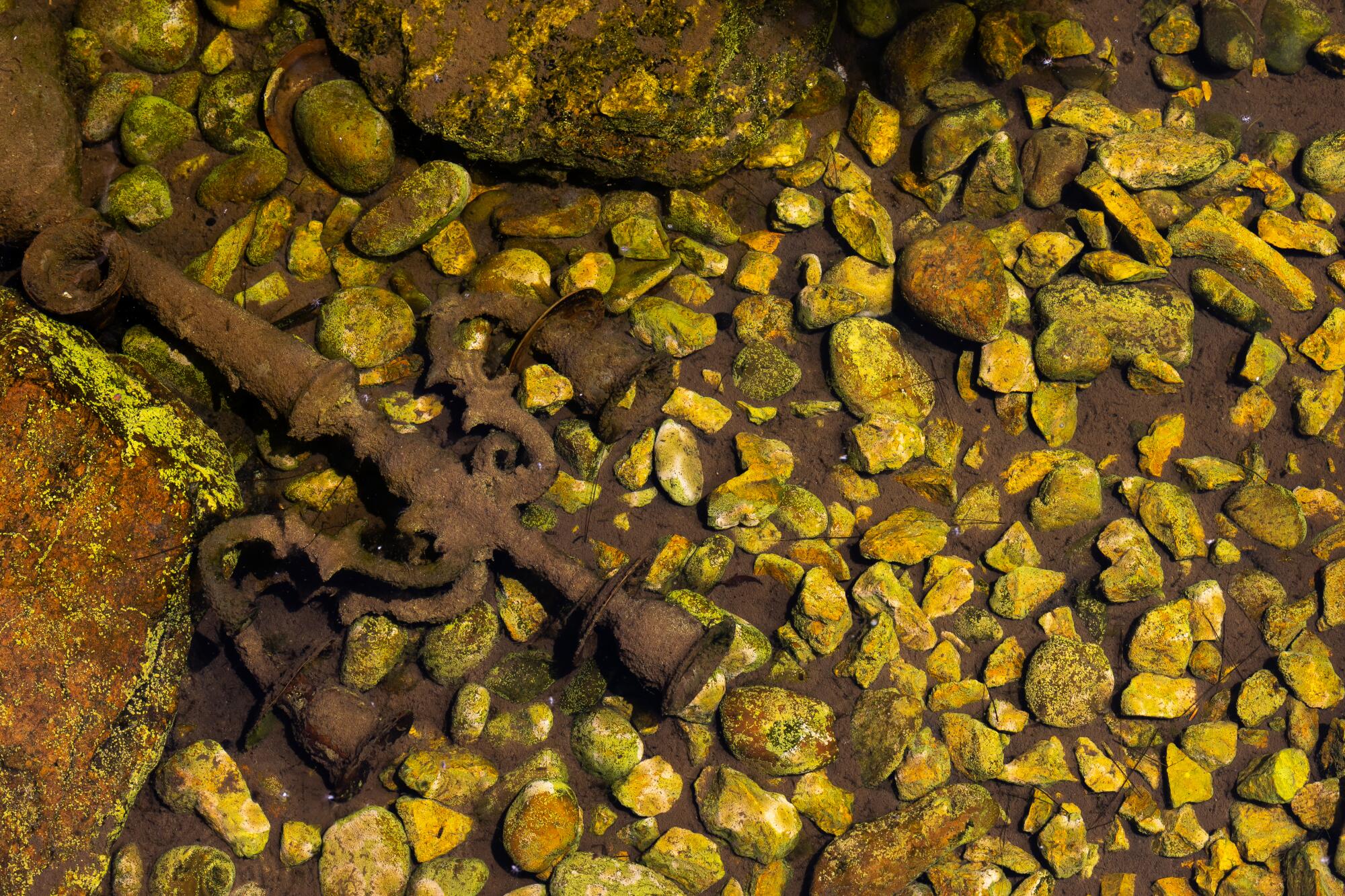
A candelabra rests at the bottom of the front yard pond.
The salvaging got to be kind of joke. Odell’s firm was doing earthquake retrofits, and during site demolitions he’d discover some new artifacts, like industrial-sized valves that might have been used in oil fields or a box of long rusty files. “So I’d be at work,” Elwell said, “and get this text with photos of something like an old radiator followed by this question: ‘TREASURE?’”
Neighbors got into the act as well, inviting the couple over to look at things their elders had squirreled away decades earlier. “They’d say, ‘Dad hasn’t opened that door in 20 years; let’s see what’s in there.’”
The landscaping was part inspiration and part experiment, guided by fun, Elwell said, and plenty of mistakes.
One of the first was going whole hog into native plants without understanding anything about them. For instance, Odell loved the manzanitas that grow prolifically around his family’s 40-acre ranch in Shasta County.
So they got a tractor and dug one up to replant in L.A. “It looked great for about six weeks, and then it died,” Elwell said. “That’s how naive we were. So it became a research project — how do you get these things to grow?”
Their research led them to the website of Las Pilitas Nursery, a Santa Margarita grower specializing in California native plants. Bert Wilson, its founder, died in 2014, but his extensive descriptions about native plants “are super helpful to beginners,” Elwell said. “He approached it with a level of fun, writing things like, ‘I know this plant is really tough because we’ve run over it with a tractor several times and it always comes back.’”
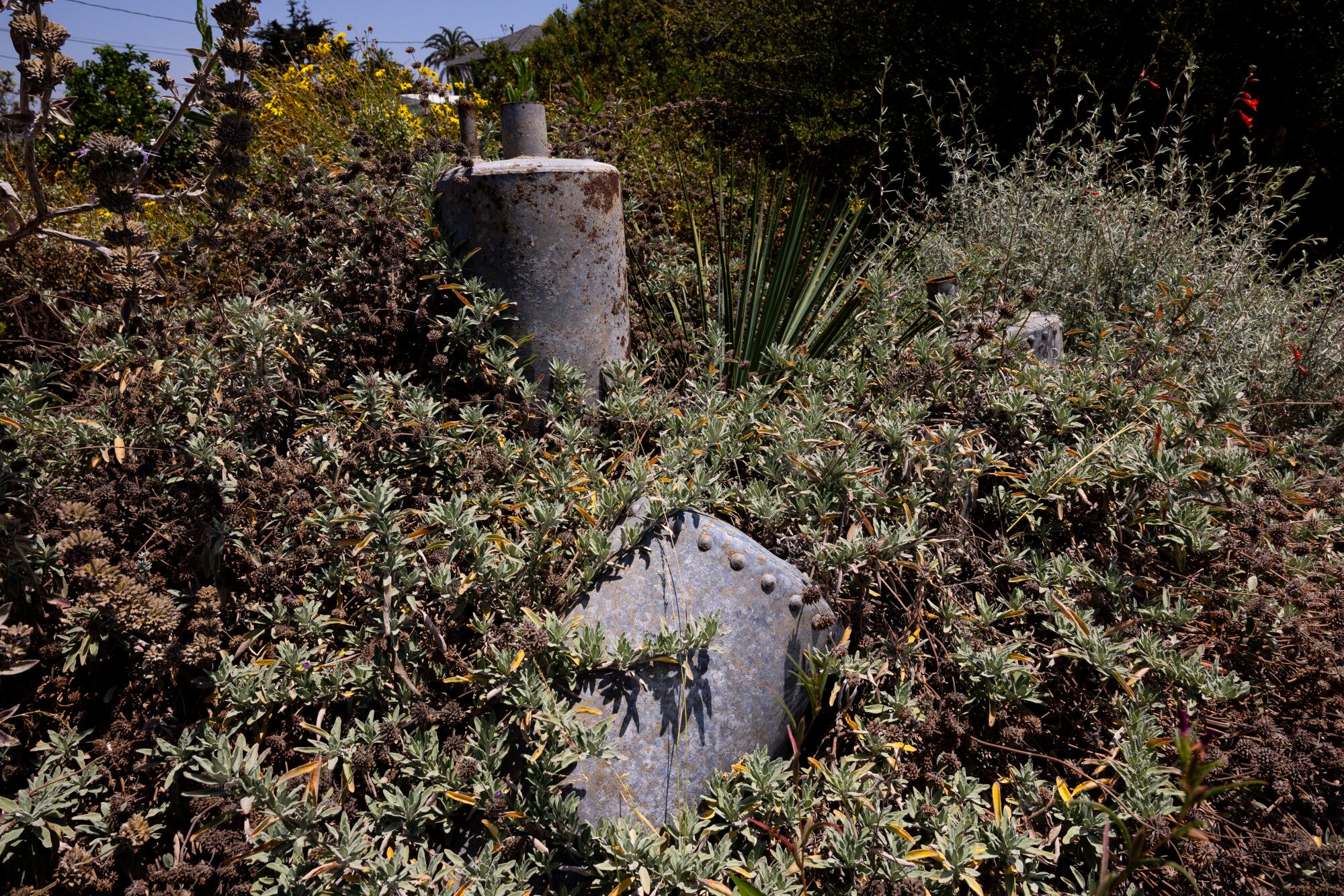
Many of the metal objects in the yard have been overtaken by the plant growth.
From there, they began frequenting the Theodore Payne Foundation in Sun Valley, one of Southern California’s premier native plant nurseries, “and as a new gardener, I just wanted to buy everything,” Elwell said. “I was treating the plants more like furniture than ecology. I’d say, ‘Oh, that looks cool.’ I was not thinking, ‘Does it really make sense to plant something that normally grows on an alpine slope at sea level in clay soil?’”
As their knowledge grew, their focus shifted to creating habitat for regional pollinators, birds and other animals. And habitats need water, a realization that had unexpected benefits.
When Odell broke his elbow in a mountain biking accident, he quickly mastered the simple rehabilitation exercises his doctor provided. So when Elwell said he wanted a pond in the front yard, Odell was immediately on board.
“He’s just the kind of person where you point out what you want to do, and he says, ‘OK, let’s go,’” Elwell said. “So he just went charging in with a pickaxe to dig out the hole and a 30-pound digging bar to move the boulders” for a roughly 8-by-12-foot pond, complete with a small waterfall fed by recirculating water (flowing through an oversized recycled spigot) and a large boulder that he drilled out in the middle to provide a gentle bathing area for tiny drinkers. Oh, and a now-large toyon and mountain mahogany on either side to provide partial shade.
When Odell returned for a checkup a few weeks later, his doctor was amazed at how well his arm had healed. “He said, ‘How did you do that?’” Odell said, “And I said, ‘By doing everything you told me not to do.’”
They did bring in a contractor to build the spacious patios off the kitchen and living room, a long narrow koi pond with a Medusa head fountain and a wide swimming pool that follows the slope of the hill.
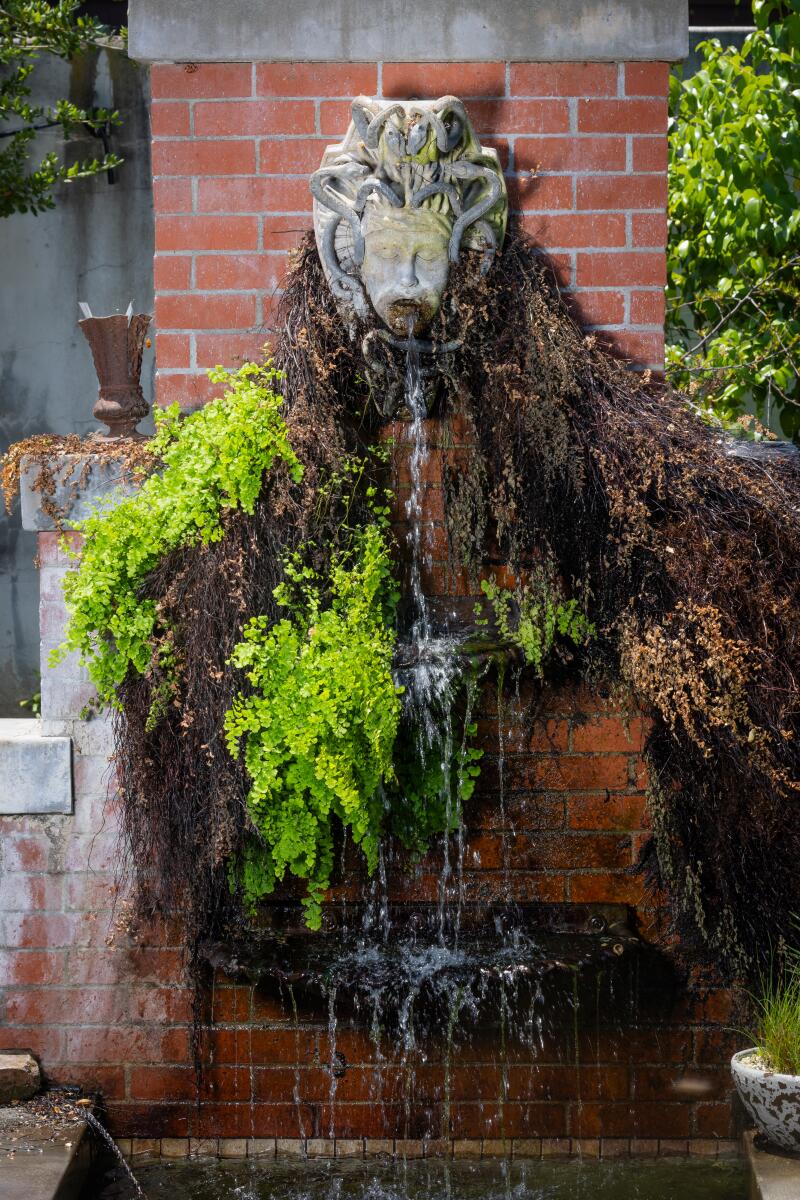
A fountain bearing a relief of Medusa’s head pours into the koi pond in the backyard.
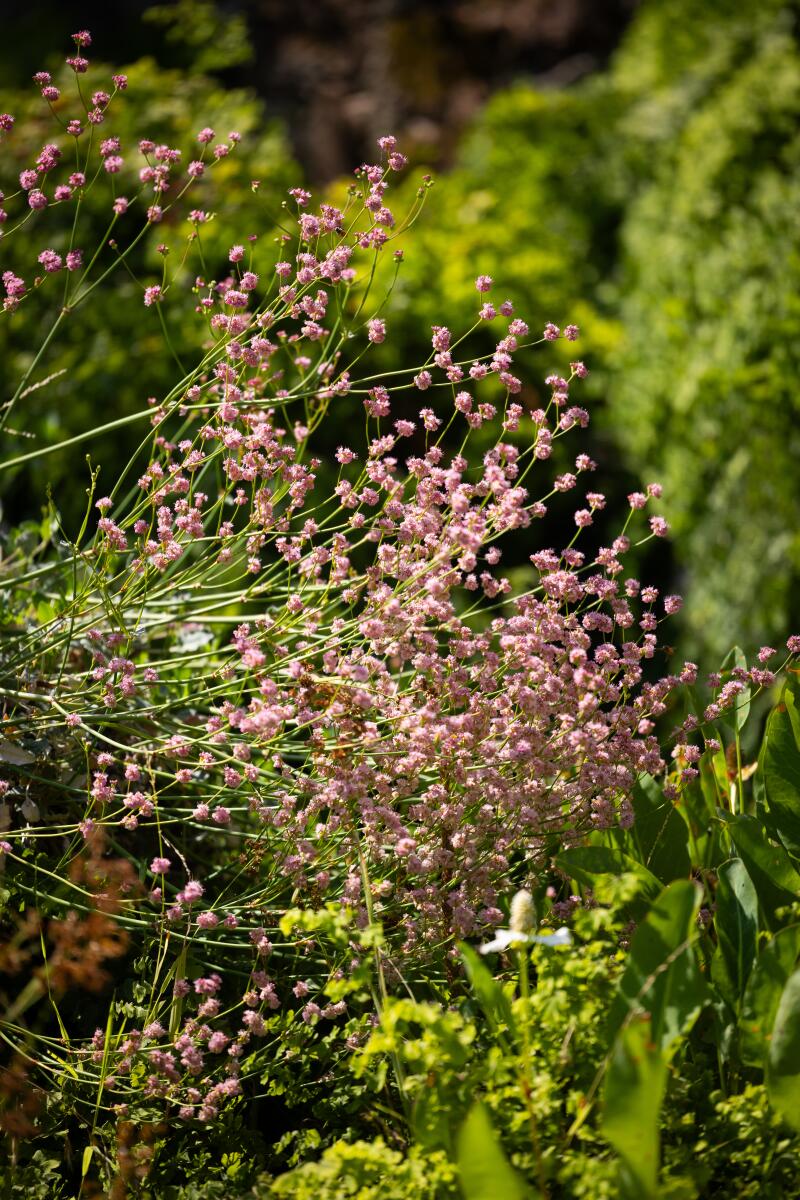
Naked buckwheat.
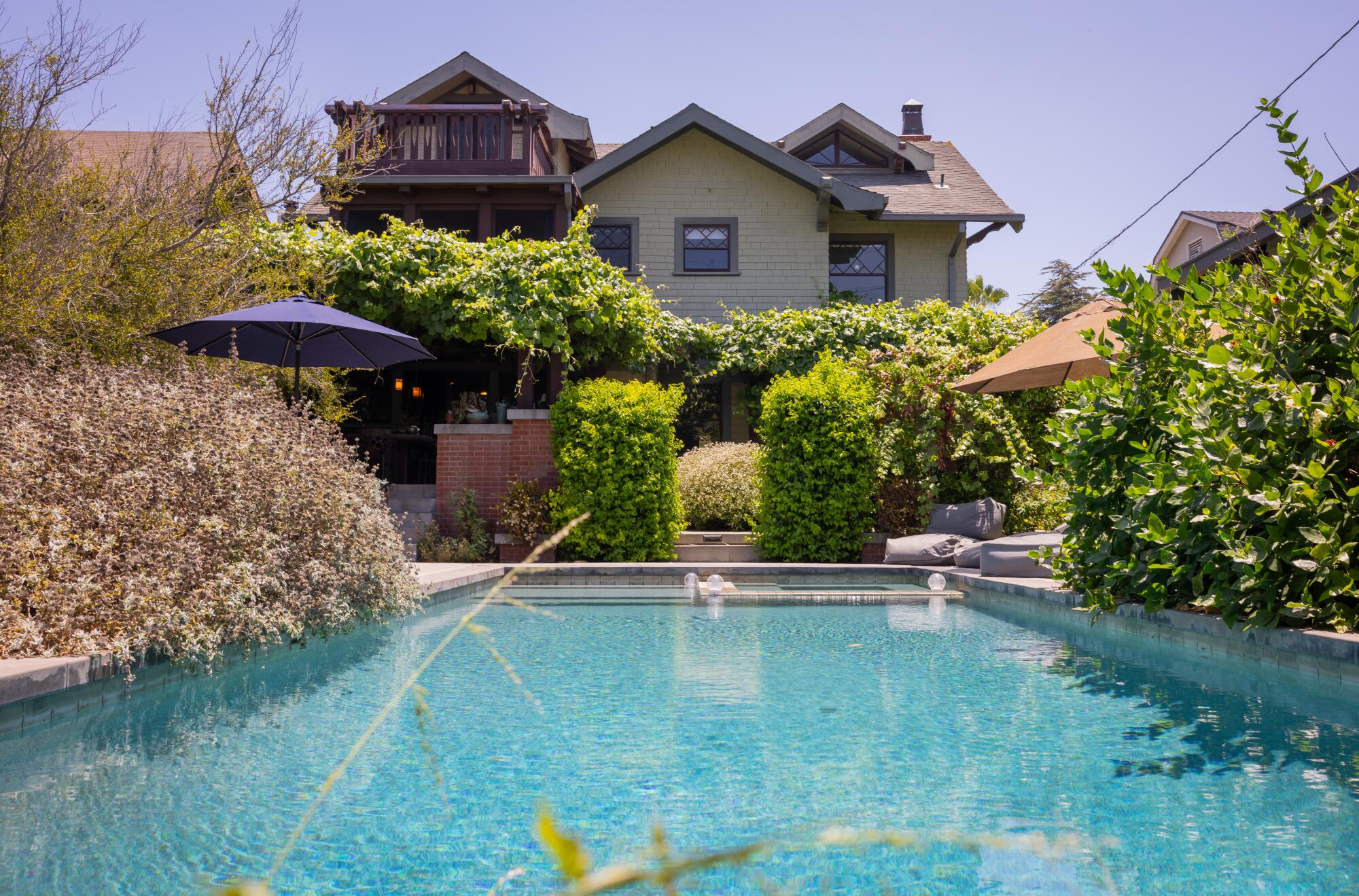
The backyard of the home features a swimming pool nearly enveloped by large stands of native plants.
But that’s where their “modern” landscaping stops. Instead of lawn or little potted palms around the pool, there are oversize stands of desperado sage, a fragrant hybrid between white sage and purple sage, growing so untamed they’re nearly spilling into the pool.
Odell rented an excavator to slice the bottom of the slope into a cliff, shored up by the dirt excavated for the pool, along with recycled broken concrete and other rubble. He used old railroad tracks to create steps down to the bottom of the slope. He carved out a narrow ditch between the cliff and steps, and that became a recirculating stream that flows into a little marsh full of frogs, butterflies and dragonflies.
Like their home, the yard is divided into “rooms,” or separate experiences, so sitting by the pool, you can’t see the koi pond with its restless fish or the little stream burbling just 10 feet away, or the ornate handmade pergola that offers shade at the bottom of the hill.
Walking this yard is an adventure that reveals itself slowly. Years ago a Mama Bear manzanita (Arctostaphylos ‘Mama Bear’) finally took hold in their side yard, almost entirely covering the old driveway; further up, a hedge of citrus trees produce lemons the size of mangoes.
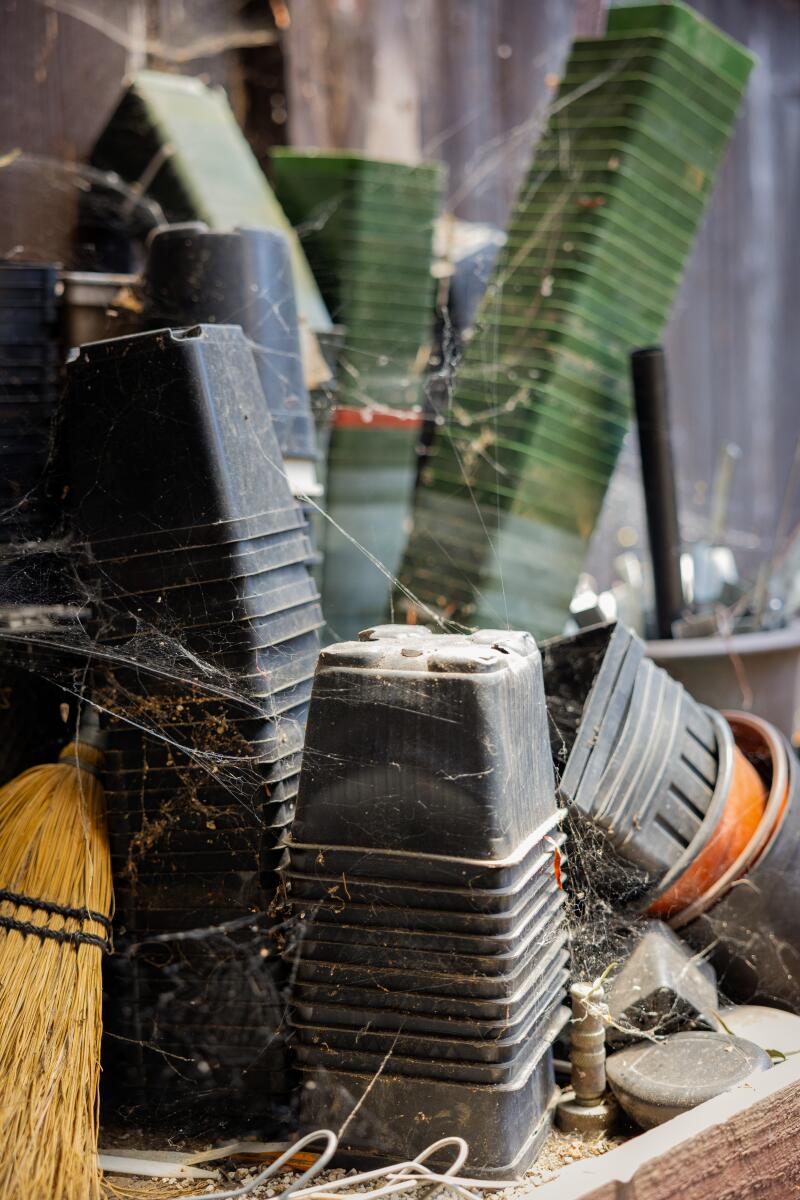
Plastic planters collect cobwebs on a shelf in the yard.
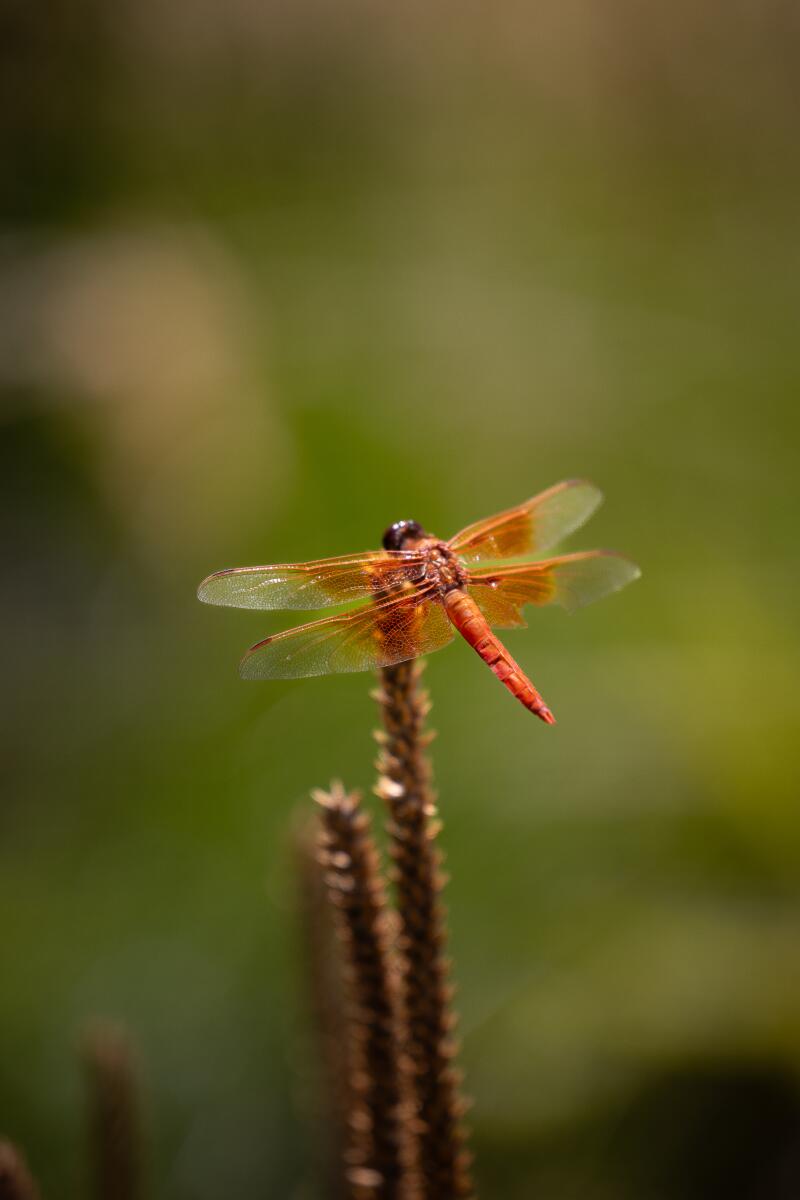
A dragonfly lands on a plant near one of the yard’s water features.
There are a few other fruit trees on the property, but mostly it’s a riot of native plants with enough variety that even in the summer, when many California native plants go dormant, the garden is full of fragrance and color — bright purple wands of woolly blue curls that smell as sweet as bubble gum; sticky yellow and red monkeyflowers, tall mallows with large flowers in orange and lavender, pinkish white bouquets on the narrow milkweed and sunflowers and fuchsias nearly ready to bloom.
Needless to say, friends and family don’t question their decision now. They deliberately designed the outdoors for entertaining, with a huge welcoming table off the kitchen and bobbing solar lanterns in the clear inviting pool. And over the years they bought the houses on either side of them, and now rent them out to a nephew and friends.
The gates between the properties are always open, and when it’s time for loved ones to gather, Elwell said, it’s only a matter of when — the “where” is never a question.

Lifestyle
Terry Tempest Williams on why women with big ideas get labeled ‘crazy’ : Wild Card with Rachel Martin
A note from Wild Card host Rachel Martin: I met Terry Tempest Williams about 25 years ago at a writer’s conference in Yosemite Valley. I was a young reporter who was there to do a story about how literature was addressing climate change and she made such a huge impression on me. I had never heard someone talk about the natural world the way Terry did and she had a spiritual depth I hadn’t encountered in my life at that point.
To this day, Terry’s writing always reorients me towards what is good, what is beautiful, and what is true. Her newest book is called “The Glorians.”

For its upcoming Los Angeles venue, experiential art firm Meow Wolf will focus on the art of storytelling, with a specific eye toward skewering our city’s moviemaking magic. To help bring that vision to life, Meow Wolf has entered into a creative partnership with Titmouse, one of L.A.’s most renowned independent animation houses.
The Hollywood-based studio behind popular series such as “Big Mouth” and “Star Trek: Lower Decks” will create animation that will be shown throughout the West L.A. venue, which is on target for a late 2026 opening at the Howard Hughes entertainment complex.
It’s a move that represents a shift for Santa Fe, N.M.-based Meow Wolf. Over the last decade-plus, the art collective has grown beyond its anything-goes, punk-meets-psychedelic roots into an organization with full-scale, maximalist installations in its hometown, Denver, Las Vegas, Houston and the Dallas suburbs. In the past, Meow Wolf kept most of its media in-house.
As part of its larger-than-life participatory art installations, Meow Wolf L.A. will feature a mix of live action and animation, the former filmed by Meow Wolf in its Santa Fe studio. Meow Wolf’s James Stephenson, a senior VP with the company and its creative director of emerging media, said the degree to which the L.A. exhibition will lean into various animation styles necessitated an outside partner. Titmouse’s work, in development by a number of directors with contrasting tones, will be shown on a variety of formats, ranging from cinema screens to full-room projections.
“I really believe in animation as an art form, and I know the Titmouse folks do too,” Stephenson says. “Animation is made by artists. It’s made by artists with their own hands. It’s something that is still very rooted in craft.”
Meow Wolf’s L.A. space is set in a former cinema complex, and will champion its location, taking guests on a journey through a converted movie house and beyond, into a sci-fi-inspired fantasyland with sentient spaceships and a 30-foot-tall mushroom tower. Meow Wolf creatives have spoken of the fantastical movie theater as one that will feature animated, self-aware candy before attendees enter the main exhibition space, making Titmouse’s work some of the first art guests will encounter. Titmouse co-founder Chris Prynoski has said the studio has lined up at least six directors for the exhibit.
An in-progress art installation destined for Meow Wolf L.A. at the art collective’s Santa Fe, N.M., headquarters. The L.A. exhibition will feature animation from Titmouse.
(Gabriela Campos / For The Times)
Titmouse, says Stephenson, is the right partner because “they’re known less for a house style, and more for a house vibe.” Over the years, Titmouse has been behind such diverse shows as “Scavengers Reign,” owning a Jean Giraud influence rooted in French and Spanish surrealism, the lively “Jentry Chau vs. the Underworld,” with an unique color palette that took inspiration from anime and Chinese mythology, the exaggerated comic book feel of Adult Swim’s “Metalocalypse,” and the approachable yet expressive tone of “Star Trek: Lower Decks.”
“Meow Wolf’s vibe is similar to Titmouse’s vibe,” Stephenson says. “It’s artist-first, artist-driven, independent and kinda edgy. They are always trying to find the edge of what’s possible. They try to see how far they can go, and it’s done for fun and in the spirit of taking risks.”
Prynoski says working with Meow Wolf will give Titmouse a sense of artistic freedom it doesn’t always have when delivering content for more traditional Hollywood partners. He says the multi-director approach is a callback to the early days of Warner Bros. Animation, when individual creators put their own stamp on Looney Tunes material.
“I use Bugs Bunny as an example,” Prynoski says. “You’ve got a Friz Freleng Bugs Bunny short. You’ve got a Chuck Jones Bugs Bunny short. You’ve got a Tex Avery Bugs Bunny short. They’re all different versions of Bugs Bunny, and people who are really paying attention can tell which director directed each one. Even though to the layman, these are all Bugs Bunny, but if you lined them up, they are drawing in different styles, sensibilities and techniques.”
Prynoski says that was a centerpiece of his pitch to Meow Wolf, noting that characters will reappear in multiple installations, each handled by a different artist. Meow Wolf L.A., in fact, will be the firm’s most character-driven exhibition, as guests will follow the storylines of three main protagonists throughout the space.
In announcing the partnership, Meow Wolf and Titmouse released an image from an animated work directed by Luca Vitale. It features a key character having a moment with a hummingbird and it’s done in an elegant, slightly anime-influenced style. It’s an image full of movement, reflecting a character in transition with inviting pastels and bold dashes.
“I like that image because I think it captures some of the sense of wonder that we want people to feel,” Stephenson says. “The character is having an encounter with the elusive nature of creativity and reality in a way that makes them have a different perspective of what’s possible.”
Other contributing animation directors to Meow Wolf L.A. include Space Dawg, Felix Colgrave, Alexander Vanderplank and Phimémon Martin, and Jun Ioneda.
Titmouse’s partnership with Meow Wolf will extend beyond the L.A. exhibition. The two will be working on the development of Meow Wolf New York, which is slated to open some time after Los Angeles, and are collaborating on a planned animated series, which Prynoski is spearheading.
Meow Wolf exhibits are the result of sometimes hundreds of disparate artists coming together in a shared space. Distilling that into a signature, singular style for a series could be a challenge. Stephenson pinpoints some guiding principles.
“You really need to feel the hand of the artist,” he says. “You need to feel a DIY aesthetic. You need to feel the materiality. Those are very specific to what we are.”

The Kennedy Center on June 28, with its facade signage still covered by a tarp and scaffolding.
Alex Wroblewski/AFP via Getty Images
hide caption
toggle caption
Alex Wroblewski/AFP via Getty Images
On Wednesday, a federal appeals court denied President Trump’s request to stop the removal of his name from Washington, D.C.’s Kennedy Center. The signage on the building has been covered with tarp and scaffolding since June 13, but in a court filing last month, the center’s current executive director said that Trump’s name has been removed.
In their decision, three judges from the U.S. District Court of Appeals for the District of Columbia Circuit said that the president had failed to prove that the arts center would be “irreparably injured” without Trump’s name attached to it.

NPR requested comment from the Kennedy Center, but did not receive an immediate reply.
This latest round of court decisions is part of the ongoing litigation filed by Rep. Joyce Beatty, D-Ohio, against President Trump and the board of the Kennedy Center. In a statement emailed Wednesday to NPR, Beatty said: “Today’s ruling again affirms that this administration’s efforts to rename the Kennedy Center were unlawful. His name no longer desecrates this sacred memorial, which belongs to the American people. Now it is time for the Trump administration to accept this, comply with the law, and take the tarps down.”
In previous court filings, Trump’s legal team had asserted that removing the president’s name from the arts complex, both on the physical building and in its digital materials, would inflict irreparable harm in both time and money already spent. In the denial, the three judges — Patricia Millett, Robert Wilkins and Gregory Katsas — wrote that since Trump’s name has already been removed, “a stay would not avert those harms.”
Furthermore, Trump had claimed that without his name attached, future fundraising would be threatened “and [will] contribute to the financial decline of the Center.” In response, the appeals judges wrote: “Appellants, however, have failed to support this assertion with any specific facts or evidence. They offer only the conclusory assertions of the Kennedy Center’s Executive Director that were made in a factually unsupported declaration.” The center’s current executive director, Matt Floca, specializes in physical plant management.

The presiding judge in the case, Christopher R. Cooper, has ordered that the center provide him a status report on the center’s operation and programming before the end of this month. As of Wednesday, the center’s calendar lists a small roster of programs, including outdoor free movie screenings, workshops for children, and five free live performances in July on its Millennium Stage. In the past, the Kennedy Center presented over 2,000 arts and education events each year, including free daily Millennium Stage performances.

-

 Louisiana1 minute ago
Parasitic stomach illness that can cause explosive diarrhea rises in Louisiana
-

 Maine8 minutes ago
Is prison in play for Graham Platner?
-

 Maryland11 minutes ago
Office building in Glen Burnie evacuated after shift in parking garage floor
-

 Michigan16 minutes ago
Menominee, Michigan man arrested on sexual assault charges involving a minor
-

 Massachusetts23 minutes ago
Healey administration vows to appeal as Trump rejects Massachusetts blizzard aid request – The Boston Globe
-

 Minnesota26 minutes ago
Minnesota Looks to Add 1,100 Child Care Slots, With Melrose Among the 11 Funded Communities
-

 Mississippi31 minutes ago
Death of Mississippi teen Nolan Wells under investigation
-

 Missouri38 minutes ago
Missouri realtors hold statewide rally to vote no on Amendments 4 & 5

