West
Romanian organized crime group targeting places of worship: police

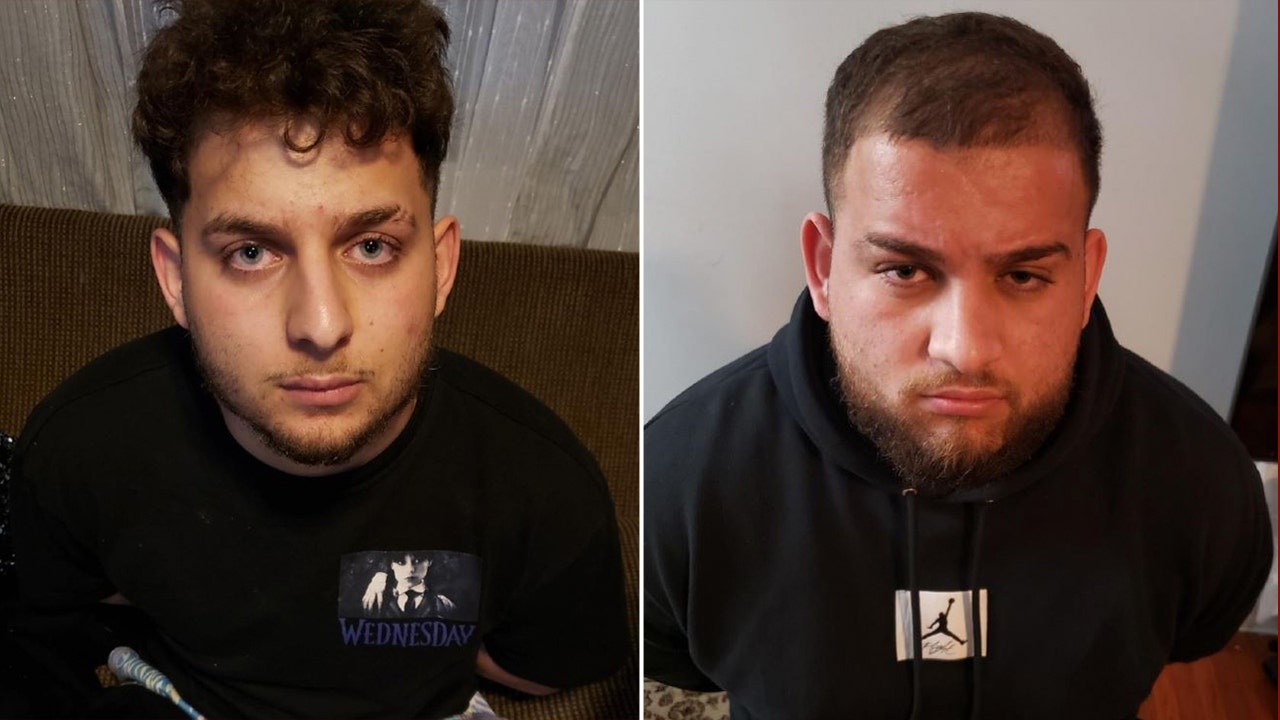
Romanian mobsters are traveling the country and targeting religious institutions in brazen daylight robberies, police suspect. In April and May, they hit two Buddhist temples, two mosques and one Hindu temple in the Washington, D.C., area, according to authorities.
Montgomery (Maryland) County Police suspect that the Romanian Organized Crime Group, who call themselves the ROMAs, targeted seven similar places in 2023, with police saying they made arrests in about half of the incidents, Fox 5 DC reported.
Since arresting group members Alex Dumitru, 23, and Natalian Dumitru, 18, in connection with two of the burglaries last month, Montgomery County Police Lieutenant Andrew Suh told Fox News Digital that no more houses of worship or residences connected to temples or churches had been targeted in the area.
But Suh said that the international group, which has a presence nationwide, has operated in the D.C. area for about a decade and for his entire career with the department — and that quelling its activity is like “cutting the heads of a hydra.”
ROMANIAN MOB IS COMING FROM YOUR DEBIT CARDS, WITH ATM-STYLE SKIMMERS NOW AT SELF-CHECKOUTS: AUTHORITIES WARN
Surveillance footage from the Wat Thai Buddhist Temple in Silver Spring, Maryland, shows a group of thieves brazenly walk into a Buddhist monk’s home while a funeral service takes place nearby and steal $20,000 in donations from a safe. (Fox 5 DC)
Evidence found in the brothers’ homes connected them to two of the crimes, the department wrote in a press release. Both were arrested on first-degree burglary charges and bailed out with $10,000 personal bonds.
Surveillance video from the Wat Thai Buddhist Temple in Silver Spring last month shows members of the crew brazenly walking inside while dozens are inside for a funeral luncheon. The thieves didn’t take off their shoes at the door in the surveillance footage, making it somewhat apparent that they weren’t members.
The suspects then snuck into resident monk Ruangrit Thaithae’s residence and allegedly snatched $20,000 in donations from a safe in the span of 20 minutes, according to local reports. The monk was reportedly planning to deposit the money from temple members the next day.
While one suspect distracted a temple member, the others are accused of making off with the safe and other valuable items.
BOTTLE-POPPING BURGLAR SIPS PROSECCO, STEALS CASH REGISTER AS HE SMASHES HIS WAY THROUGH PUB: VIDEO
“I would like to tell them that even if the law enforcement can’t catch them, the karma will,” Ruangrit Thaithae, known as Monk Jack, told Fox 5 DC. “In Buddhism, we believe in karma. Karma will catch them soon.” (Fox 5 DC)
“I would like to tell them that even if the law enforcement can’t catch them, the karma will,” Thaithae, known as Monk Jack, told the outlet. “In Buddhism, we believe in karma. Karma will catch them soon.”
“I think they’re still young, so if they stop doing these things and do the good things for their life, for their family and for people, they will be good,” Thaithae said. “They still have time. They can be a good person. For the past, that’s OK, but in the future, if they stop and do good things, because they are making people suffer.”
CALIFORNIA BURGLARIES COMMITTED BY SOUTH AMERICAN THEFT RING INVOLVE HIDDEN CAMERAS IN SHRUBBERY: AUTHORITIES
Natalian Dumitru, 18, and his brother Alex Dumitru, 23, were charged with first-degree burglary in two of the five heists on temples and other places of worship. (Montgomery County Police Department)
Although the group targeted religious hubs, Suh said that his department didn’t consider these burglaries hate crimes. Instead, they were crimes of opportunity.
“This organization is generally just focused on obtaining monetary rewards,” Suh said. “They don’t have a political motivation or a stance — they’re just focused on dollars.”
Although the group has gone quiet since the recent arrests of its members, Suh said that it had many branches, and that in all likelihood, some fraud operations were still taking place.
Another temple in Accokeek, Maryland, sent Fox 5 surveillance stills of a group of men breaking in around mid-March. Although the men damaged the door, the monks caught on to what was happening and scared them off.
Three suspects are pictured on security footage provided by one of the victimized Montgomery County, Maryland, religious institutions to Fox 5 DC. (Fox 5 DC)
“Houses of worship are upset because often they’re using their funds to help the community, right? They’re running food drives and food pantries, child support programs, supporting the elderly,” Montgomery County faith leader Kate Chance told Fox 5. “And often folks see them as easy targets because they’re just kind-hearted individuals who often don’t report these sorts of incidents.”
Chance said religious hubs should apply for an area grant that would give them up to $20,000 for security upgrades.
Chris Swecker, who served 24 years as an FBI special agent and was the former assistant director of the FBI, said that he’d never seen organized criminals target houses of worship in his career. However, he was all too familiar with the Romanian Organized Crime Group, calling them “hit-and-run artists.”
Wat Thai Washington, D.C., a Buddhist temple in Silver Spring, Maryland. (Fox 5 DC)
“As you can see, they’re pretty brazen — they know where to go to find value and they’re preying on people who are peaceful and docile,” Swecker told Fox News Digital. “They don’t expect people to do bad things and leave their gold objects in plain view that are easy to access. The congregation would never think about taking those things, but the ROMA know they can do it.”
“They’re not big, violent extortionists getting violent retribution,” Swecker explained. “They’re smart enough to know property crime won’t get them big time and won’t garner as much federal attention.”
The Romanian Mafia has footholds throughout the U.S. Earlier this year, California prosecutors warned that members were panhandling outside big-box stores, then stealing credit card information using skimmers at self-checkouts inside the stores.
Swecker noted that taking down organized crime was once a “staple” of the FBI, and that a transient group “moving from jurisdiction to jurisdiction” would be a “perfect thing for the FBI to pursue.”
But he said it seemed like the bureau had “sort of abdicated. I never hear about RICO arrests, big takedowns.”
“You just see a disjointed local effort,” Swecker added. “They do their best to coordinate between jurisdictions, but without bringing in the feds, it’s nearly impossible.”
Read the full article from Here

San Francisco, CA
Discovery Bay driver arrested for San Francisco fatal vehicle collision | Contra Costa Herald

Killed pedestrian, struck 3 more people
By San Francisco Police Department
On May 25, 2026, at approximately 12:13 am, San Francisco Police officers responded to the area of 16th and Mission Streets regarding a vehicle collision.
Officers were advised that a collision occurred between a vehicle and a pedestrian.
Officers arrived on scene and located a pedestrian victim being treated by paramedics for life threatening injuries. Paramedics transported the victim to a local hospital.
Despite lifesaving efforts of medical staff, the victim was later declared deceased at the hospital.
A preliminary investigation revealed that a vehicle collided with a pedestrian and struck three additional victims.
The three victims were medically assessed on scene for non-life-threatening injuries.
Through the course of the investigation, officers located the suspect vehicle and detained the occupant of the vehicle.
The Traffic Collision Investigations Unit (TCIU) responded to scene and conducted their investigation.
Through the course of the investigation, TCIU investigators developed probable cause to arrest the driver identified as 57-year-old Samuel Powell of Discovery Bay on June 30, 2026.
Powell was arrested and charged for vehicular Manslaughter 192(c)(2) PC and the driver’s responsibility to exercise due care for the safety of any pedestrian within the roadway 21955(b)(3) CVC.
Although an arrest has been made, this remains an open and active investigation. Anyone with information is asked to contact the SFPD at 415-575-4444 or text a tip to TIP411 and begin the message with SFPD.

After an extended wait of no activity from the Denver Nuggets in this year’s free agency period, the team has finally made its first new signing.
That signing just so happens to be the No. 2 pick from the 2018 NBA Draft, Marvin Bagley III.
According to ESPN‘s Shams Charania, the Nuggets and Bagley have agreed to a one-year, veteran minimum deal for the 2026-27 season, effectively providing some solid depth in the frontcourt.
Free agent center Marvin Bagley III has agreed to a one-year deal with the Denver Nuggets, sources tell ESPN. A critical frontcourt addition for the Nuggets. pic.twitter.com/enHBVxgfYl
— Shams Charania (@ShamsCharania) July 2, 2026
With Denver’s first free agency signing now officially in the books, here’s what the move to bring in Bagley might mean for the Nuggets moving forward into free agency and this offseason, as well as entering next season.
Marvin Bagley Brings Frontcourt Depth to Denver’s Lineup
Bagley split his time between the Washington Wizards and Dallas Mavericks this past season to put together one of his better years of production in recent memory.
In the 60 combined games he played, Watson averaged 10.5 points, 6.1 rebounds, and 1.4 assists while shooting a career-high 61.8% from the field and 46.2% from three on a little less than one attempt per game.
Bagley’s a big who’s game centers more around his offensive skillset. He spent most of his time shooting last season at the rim or in the mid-range, shooting a stout 64.1% on two-pointers last season that can bring a bit of an interior presence into Denver’s frontcourt.
Defensively, he leaves a little bit more to be desired. And he’s still not quite the most impressive three-point shooter, even coming off his most efficient season from deep.
But for the cost of a veteran minimum contract, he acts as a nice budget-friendly addition who can shoulder some of the load offensively, and has shown value as an offensive rebounder as well. It’s tough to find much better for the price Denver’s paying.
While entering the league slotted in primarily as a power forward, it’s been in the past few seasons that Bagley’s settled in more as a full-time five; having spent 95% of his minutes during the 2025-26 campaign playing at the five.
That might give you a bit of a hint as to how the Nuggets plan to use him this next season, though they might also have some stretches where he’s placed alongside Nikola Jokic at the four for a bit of a larger frontcourt lineup.
The Writing’s On the Wall for Jonas Valanciunas
Looking at what Bagley’s addition might mean for the Nuggets’ current roster, no one in the picture gets more impacted by Jonas Valanciunas.
Valanciunas was Denver’s primary backup behind Jokic at the five last season following his trade from the Sacramento Kings, and entered this offseason with an uncertain future because of his contract situation.
The veteran big man has an expiring $10 million contract heading into the 2026-27 season, but one that’s not fully guaranteed, giving the Nuggets the opportunity to release him and save $8 million, while incurring a dead cap hit of $2 million that can be stretched over multiple years.
Such a move can give the Nuggets further cap flexibility that they’ll need this offseason to re-sign key pieces like Peyton Watson and Spencer Jones, which to this point haven’t been done, but becomes a bit easier now that Denver can take that next step in pivoting off of Valanciunas.
Perhaps Denver might also look deeper into a trade involving Zeke Nnaji, now that they’ve got a cheaper option in Bagley that might even sit ahead of him on the initial depth chart. However, it remains to be seen if the Nuggets have any takers on the two years remaining on his contract. To this point, they haven’t found anyone to bite.
When factoring in Valanciunas and Nnaji though, Bagley’s addition now brings the Nuggets to a total of 10 players signed onto traditional contracts for the 2026-27 season.
That leaves them with four open spots left to utilize in the days and weeks ahead. How they decide to use that space remains to be seen, but at the very least, the Nuggets’ long-awaited first offseason signing has now officially come to light.
Sign up for our free Denver Nuggets On SI newsletter, and get breaking Nuggets news delivered to your inbox daily!
 Add us as a preferred source on Google
Follow

(2024 reader photo of fireworks damage on Nino Cantu SW Athletic Complex turf)
Here’s the annual announcement from Seattle Parks – we’ve excised the non-local parks:
Seattle Parks and Recreation will turn on field lighting on ballfields throughout the city on the evening of Friday, July 3 and Saturday, July 4 to protect the surfaces. The ballfield lights will be turned on at approximately 9 PM.
The lights will be turned on to discourage the use of fireworks. Fireworks are illegal in the city of Seattle and will destroy the artificial turf on the fields or surrounding facilities. The approximate replacement cost for the synthetic surface based on per average full-size field (110,000 square feet) is $1.2 million. All the fields have been renovated in the past several years and benefit field users including soccer, football, baseball, ultimate frisbee and lacrosse.
The fields will be monitored from 9 PM to 3 AM
Lights at the following synthetic fields will be turned off at 3 AM on July 3 and 4:
Delridge Playfield, 4458 Delridge Way SW
Hiawatha Playfield, 2700 California Ave. SW
South Park Playfield, 8319 8th Ave S
Walt Hundley Playfield, 6920 34th Avenue SWLights will be turned off at the following grass fields at 11 PM on July 3 and 4:
West Seattle Stadium, 4432 35th Ave. SW
Comparing this to last year’s announcement, the lights will be on longer the night before the 4th, and the “monitoring” will be an hour later.
-

 News13 minutes ago
Newsom’s office responds to SCOTUS ruling on women’s sports as California faces ongoing trans athlete wave
-

 Los Angeles, Ca2 hours ago
Family of boy, 8, killed by falling tree branch at Calabasas park to get $14.6M
-

 Detroit, MI2 hours ago
The worst Detroit sports uniform from every pro team
-

 San Francisco, CA2 hours ago
Discovery Bay driver arrested for San Francisco fatal vehicle collision | Contra Costa Herald
-

 Dallas, TX2 hours ago
Erling Haaland’s Dallas Western wear purchase goes viral
-

 Miami, FL2 hours ago
Miami’s FIFA Fan Fest draws thousands to Bayfront Park to watch Team USA win World Cup match against Bosnia
-

 Boston, MA2 hours ago
2026 Yukon Denali Ultimate gets pricey, but tops the charts
-

 Denver, CO2 hours ago
Nuggets Sign Marvin Bagley to 1-Year Deal: What It Means

