West
Blue state customers flock to Idaho gun store to find 'a little bit of freedom,' owner says


This story is the fourth in a series examining the mass-migration of West Coast residents to Idaho. Read parts one, two and three.
POST FALLS, Idaho — The parking lot outside North Idaho Arms was quiet early one Saturday morning, but owner Bryan Zielinski soon expected it to fill with cars, many of them bearing Washington plates.
Most customers only travel 30 minutes or so from Washington’s eastern cities. But on weekends, Zielinski says some make the five-hour drive from the Seattle area to buy magazines and other accessories outlawed in their own state.
“We’re seeing people wanting to make the drive solely just to experience a little bit of freedom, the freedom that they lost in Washington,” Zielinski said.
Bryan Zielinski holds a rifle in his Post Falls gun store on April 27, 2024. He opened North Idaho Arms about three months ago, not long after his family relocated to the Gem State from neighboring Washington. (Hannah Ray Lambert/Fox News Digital)
THIS BLUE STATE’S AGENDA IGNORES THE CONSTITUTION TO ‘GET RID OF GUNS’: STORE MANAGER
Zielinski was a lifelong Washingtonian until last June and previously managed a large gun store in Bellevue. He advocated against the state’s increasingly restrictive gun control laws but to no avail, and he finally moved his family to North Idaho.
“Some of the most restrictive gun control in the United States is now in western Washington,” he said. “And that all happened in the space of less than three years.”
Washington’s crackdown on gun rights
Democrats spent years trying to ban magazines capable of holding more than 10 rounds, Zielinski said. Then Democratic Attorney General Bob Ferguson, now a candidate for governor, spearheaded a ban that relied on the Consumer Protection Act, a state law meant to protect residents from “unfair or deceptive” business practices.
In 2022, Washington lawmakers outlawed the manufacture, import, distribution and sale of high-capacity magazines, but not possession itself. The next year, they passed a similar ban on the sale or import of “assault weapons” — primarily semi-automatic rifles — and many of the parts used to build them, arguing such measures were critical to preventing mass shootings.
“Assault weapons” were used in about 25% of mass shootings, according to The Violence Project, a database supported by the National Institute of Justice that analyzed mass shootings in the U.S. from 1966 to early 2020. The project chronicles mass shootings in which four or more victims were murdered with firearms in a public location.
A 2022 poll suggested a majority of Washington residents supported a ban on “assault weapons,” a label often applied to semi-automatic rifles like AR-15s and AK-47s. Washington lawmakers outlawed the sale and import of such firearms the next year. (Ramiro Vargas/Fox News Digital)
WASHINGTON GOVERNOR’S RACE LOSES TWO BOB FERGUSONS AFTER ATTORNEY GENERAL BOB FERGUSON ISSUES LEGAL THREATS
Washington has had eight such shootings since 1966, according to The Violence Project, the majority of which involved handguns. But semi-automatic rifles have been used in other killings in the state, including the 2016 shooting at a Mukilteo house party. Three people were killed in the mass shooting that drove Ferguson to advocate for the ban.
The Zielinski family packed up and moved to North Idaho last June, less than two months after Washington Gov. Jay Inslee signed the assault weapons ban into law.
“I really got to see how bad things were starting to get,” Zielinski said. “We finally reached a crescendo.”
Zielinski opened his own gun store just a five-minute drive across the border from Washington. He spoke to Fox News Digital while sitting in front of a wall of semi-automatic rifles that are now illegal to make, purchase or sell in his former home state.
WATCH MORE FOX NEWS DIGITAL ORIGINALS HERE
He can’t sell the banned guns themselves to Washington residents because they require extra processes like a background check and would need to be transferred to a licensed dealer in Washington. But when it comes to replacement parts or magazines, Zielinski says he doesn’t “card anybody for anything unless there’s a serial number on it.”
“We follow all federal laws. We follow all Idaho state laws,” he said. “But it is legal in Idaho to buy certain things as an adult that maybe you can’t buy in Washington.”
Similarly, Idaho plates are a common sight outside marijuana dispensaries on the Washington side of the border. No one is stopping Idahoans from buying pre-rolls or gummies that are banned in their home state, Zielinski said.
“At the end of the day, it’s on the consumer to make sure they’re not breaking the laws of their home state,” he said.
Learning from Washington’s ‘mistakes,’ and safeguarding Idaho against ‘liberal mindset’
Gun stores were abuzz this spring in Washington as they awaited a possible injunction against the state’s magazine ban. The attorney general had sued a business for continuing to sell magazines after the ban took effect, and the store challenged the law’s constitutionality.
In Post Falls, Zielinski took dozens of pre-orders, packaged them and got them ready to ship.
“The commitment to the customer was that the minute the injunction happens that we were going to get into Washington legally, import those boxes and get those mailed out,” he said.
Bryan Zielinski and his family moved to Idaho last year seeking more freedom and greater Second Amendment protections. (Hannah Ray Lambert/Fox News Digital)
SEATTLE-AREA OFFICIALS WANT ‘NO LOCKS, NO CELLS’ FOR JUVENILE OFFENDERS AMID RISE IN TEEN CRIME
On April 8, a judge ruled the ban violates both the U.S. and Washington state constitutions. The attorney general secured an emergency order from the state Supreme Court 88 minutes later, keeping the ban in place.
Zielinski shipped 147 boxes of magazines during that window.
“I know that we have some happy customers because we’ve heard from all of them,” he said.
He said he is still invested in Washington’s Second Amendment future because some of his friends and family members remain “behind the Iron Curtain over there.”
“But the main thing is, I’ve learned from the mistakes of Washington on how we’re going to safeguard Idaho,” he said. “So if I can work to help Washington and now help Idaho into the future as well, it’s kind of a win-win.”
Right now, “gun laws are great in Idaho,” he said.
It’s one of nearly 30 states with constitutional concealed carry, has no laws regulating high-capacity magazines or semi-automatic rifles, and even allows residents to own a machine gun as long as it’s registered.
Bryan Zielinski can’t sell semi-automatic rifles or other banned guns to Washington residents, but he said he doesn’t check anyone’s ID when it comes to parts or magazines. “I am selling products that are 100% legal to adults in the state of Idaho,” he said. (Hannah Ray Lambert/Fox News Digital)
But Zielinski wants to see Idaho’s legislators make it illegal for the state to use the Consumer Protection Act to stifle the Second Amendment. And he said he’d like to see more unification in the state’s GOP which, like its national counterpart, has become increasingly fractured.
“If we can safeguard Idaho against this liberal mindset,” he said, “I think we could be the beacon that other conservative states see and go, ‘We want to be more like Idaho.’”
Click here to hear more from Zielinski.
Ramiro Vargas contributed to the accompanying video.
Read the full article from Here


June 27, 1776, was a momentous day for the Bay Area, California, and the world as 240 men, women, and children arrived mostly by foot from Mexico to what is now called San Francisco to set up camp and lay the groundwork for the future.
The “traveling village” is known as the Anza Expedition.
On Saturday, the 250th anniversary of the event was commemorated on Pershing Square at the Presidio of San Francisco in a two-hour ceremony.
The celebration opened with piercing fifes and thundering drums from the Young Patriots Fife & Drum Corps from Pleasanton, as a nod to America’s quincentennial.
But it was then followed up by a Spanish hymn, sung by musicians, dressed in 18th-century Spanish Colonial attire, including the garb of soldado, vaquero, pioneers, military, and indigenous peoples. The song is known as “Alabado” and it was sung by the ancestors as they made their long journey to the Bay.
A proclamation on a scroll was then read with gusto by local actor Dane Andrew, who was portraying the Spanish trailblazer Lt. Colonel Juan Bautista de Anza.
The message was loud and clear: When it comes to history in the Bay Area, Spain swings a big sword.
“People don’t realize in California our early Spanish history. While on the East Coast was becoming a brand-new U.S.A. was a small part. Actually, Spain owned a large part of the West Coast,” remarked Andrew.
The Anza Expedition established the first reliable overland route from Mexico to what was then known as Alta California, claiming San Francisco Bay for the Spanish Crown.
In 1776, the expedition’s leaders established both the Presidio as well as Mission San Francisco de Asis, which is known today as Mission Dolores.
In the crowd, the direct descendants of those who traveled the long, arduous route, including 98-year-old Eddie Grijalva of Vallejo. He was accompanied by his wife Lydia and her son Jeff.
“What an honor to be here and to remember my ancestor,” exclaimed Grijalva.
The event was coordinated by the nonprofit Los Californianos. The nonprofit represents the direct descendants of those who were part of the Anza Expedition. Its documented purpose includes efforts “to preserve the heritage of early Hispanic Californians in Alta California, to conduct research on genealogy, and to provide an accurate and authentic interpretation of Alta California’s history”
Carol Eber represents the group and is the co-chair of the event. She told us the group is thrilled to celebrate its heritage along with the quincentennial of the United States.
“We have a celebration on the East Coast. We wanted to have the 250th celebration on the West Coast as well as recognizing history was made on both coasts,” noted Eber.
During the ceremony, the crowd recited the Pledge of Allegiance and heard from Superintendent David A. Smith, who is with the Golden Gate National Recreation Area.
There were also presentations from the Daughters of the American Revolution and a group called “Our American Patriots”. The keynote speech was delivered by Professor Damian Bacich. He focused on San Francisco’s Spanish-American Legacy.
Also on hand for the festivities, the Consul General of Mexico Marco Mena. Mena told CBS News Bay Area that this was his first visit to Presidio and found it beautiful. He was pleased to be invited.
“The Anza expedition is very related to Mexico, especially to the states of Sonora and Sinaloa,” Mena explained.
As the Presidio ceremony was underway, a mass was said at Mission Dolores. The event concluded with a Roll Call, which was the reading of the names who those who walked on the route in 1776.
Descendants, including Grijalva, placed a flower in a memorial wreath as children were asked to blow bubbles for expedition members named without descendants.
Afterwards, participants went on docent-led tours of the Presidio’s Heritage Gallery and also were invited to tour the site of the Spanish Presidio Chapel.

The Denver Broncos have undergone a uniform overhaul, beginning in 2024. The Broncos rolled out the Mile High Collection ahead of the 2024 season, which included three different uniform combinations, plus the ’77 Throwbacks.
In 2024, Broncos fans were also treated to a Midnight Navy jersey/pants combination with the white ‘D’ helmet on Monday Night Football against the Cleveland Browns. On top of that, the Broncos rocked their White Out look, which included the Summit White jersey/pants combination and their standard Bronco logo on a white helmet, against the Kansas City Chiefs on Christmas Day last season.
The Broncos are keeping things fresh, and it’s going to be fun to see the different jersey combinations the team rolls out each week this coming season. Fans are obviously partial to the designs, but where do the Broncos’ uniform combinations rank among their NFL peers?
Sports Illustrated‘s Mike Kadlick ranked all 32 NFL teams’ uniform combinations, with the Broncos checking in at No. 10.
“Known as the ‘Mile High’ collection, the Broncos’ new uniforms debuted ahead of the 2024 season, and they remain awesome. Jam-packed with nods to Denver and the surrounding area, their jerseys feature a sleeve cap with a mountain peak and subtle triangles along the sides to represent Colorado’s summit markers. Their helmets, meanwhile, don a bumper that reads “5280”—a reference to Denver’s elevation above sea level. Rounded out with an all-blue alternate kit and a classic throwback look that incorporates the team’s D helmet logo, the Broncos nailed their recent redesign,” Kadlick wrote.
Attention to Detail
It’s not No. 1, but at least the Broncos are in the top 10. As Kadlick noted, Denver’s attention to detail in the new uniform designs is second to none.
Kadlick had the Los Angeles Chargers ranked No. 1, which, I’ve got to admit, kind of surprised me. I’ve never been that impressed by the Chargers’ designs, but to each their own, I suppose.
The Chiefs ranked No. 11, with the Las Vegas Raiders at No. 14, for whatever it’s worth. Beauty is always in the eye of the beholder, but Kadlick had a few questionable uniform designs ranked ahead of the Broncos, I must say.
Besides the Chargers at the top, Kadlick had the Cincinnati Bengals (No. 5), Tampa Bay Buccaneers (No. 6), Washington Commanders (No. 8), and Miami Dolphins (No. 9) ranked above the Broncos. I’ll hear you out on the classic look of the Dallas Cowboys and San Francisco 49ers (with slight modern twists), as well as the cool options the Baltimore Ravens and Houston Texans are rolling out nowadays, but the Chargers are meh, the Bengals and Bucs are downright ugly, and the Commanders are just plain.
No big deal, though. Posts like this make for timely offseason fodder as we await the return of football. The Broncos just finished up their offseason training program, and we’re now firmly in the NFL summer.
The cleats will hit the grass again at Broncos Park Powered by CommonSpirit on July 28, when the veterans report for training camp. From there, the whirlwind of the 2026 season will begin in earnest.
Let’s hope the product on the field looks as good as the Broncos’ Mile High Collection uniforms. The Broncos have produced two double-digit-win seasons since the Walton-Penner ownership group rolled out the new uniform designs, so there is a precedent in place.
Sign up for our free Denver Broncos On SI newsletter, and get breaking Broncos news delivered to your inbox daily!
 Add us as a preferred source on Google
Follow

PHOTOS BY OLIVER HAMLIN FOR WEST SEATTLE BLOG
Hundreds of people spent Sunday admiring and photographing the 12 gardens spotlighted on this year’s West Seattle Garden Tour. Among them was WSB contributing photojournalist Oliver Hamlin, who presents a scene from each garden (including some of the gardeners. First, at Garden A, “A Show of Northwest Natives“:
Charles Anthony, who created Garden B, “Salish Sea Sanctuary,” posed with his Japanese Maple:

Garden C, “Heron Cove,” has its namesake standing sentinel:
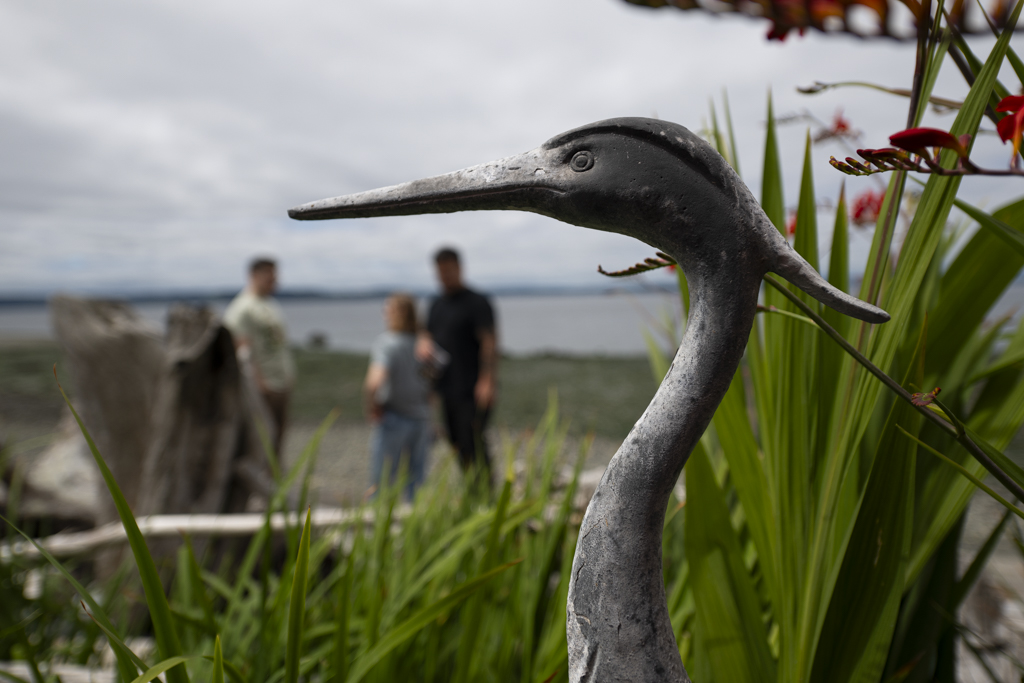
Below are Debra Montgomery and Lee Kelly; she bought the “Heron Cove” house 7 years ago and inherited Lee, who has been the gardener for 40 years. She said the previous homeowners sought out a buyer who wouldn’t tear down the house and would keep caring for the garden, which she and Lee both now do.
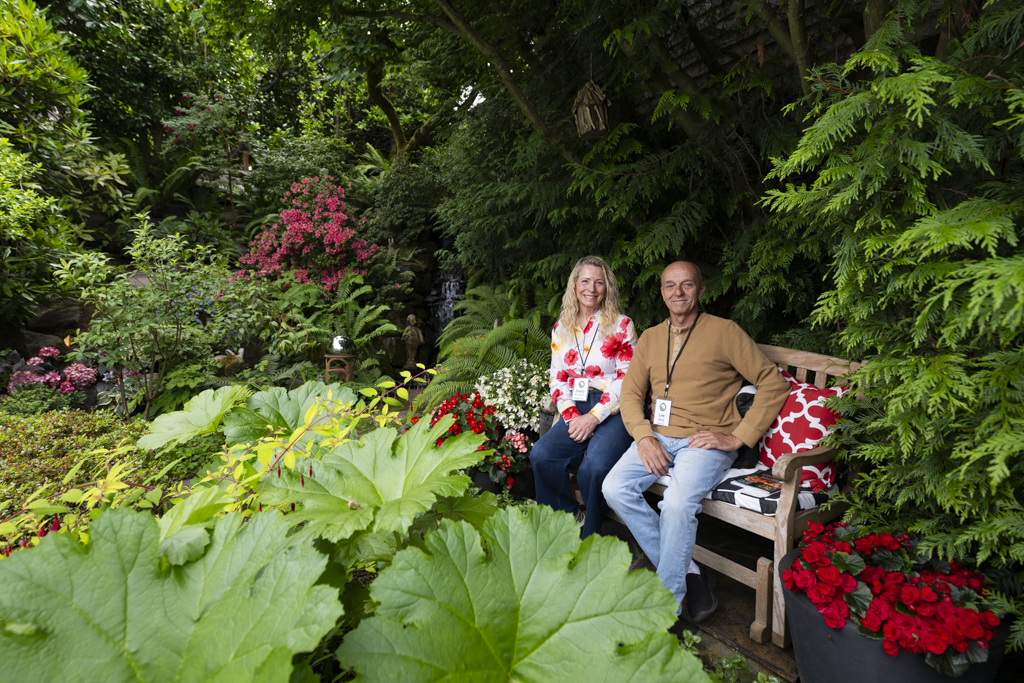
Garden D was described as “Small Spaces, Big Moments”:

Below (L-R) are the gardeners behind Garden D, Laird Applegate and Brian Pelzel:
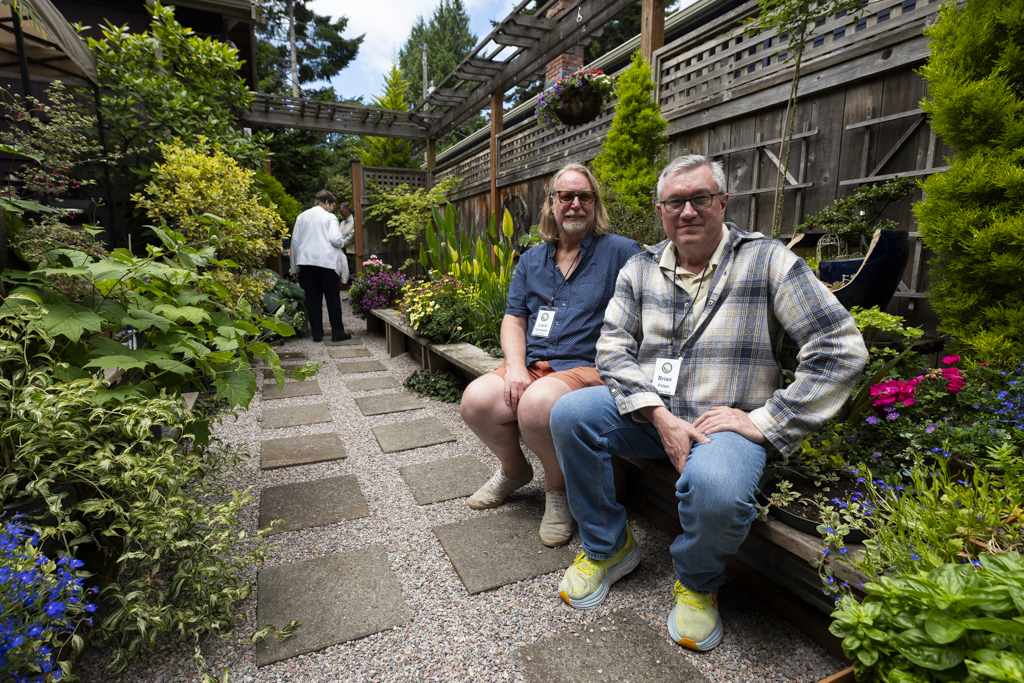
Garden E was “From a Sprawling Lawn and One Tree to …”
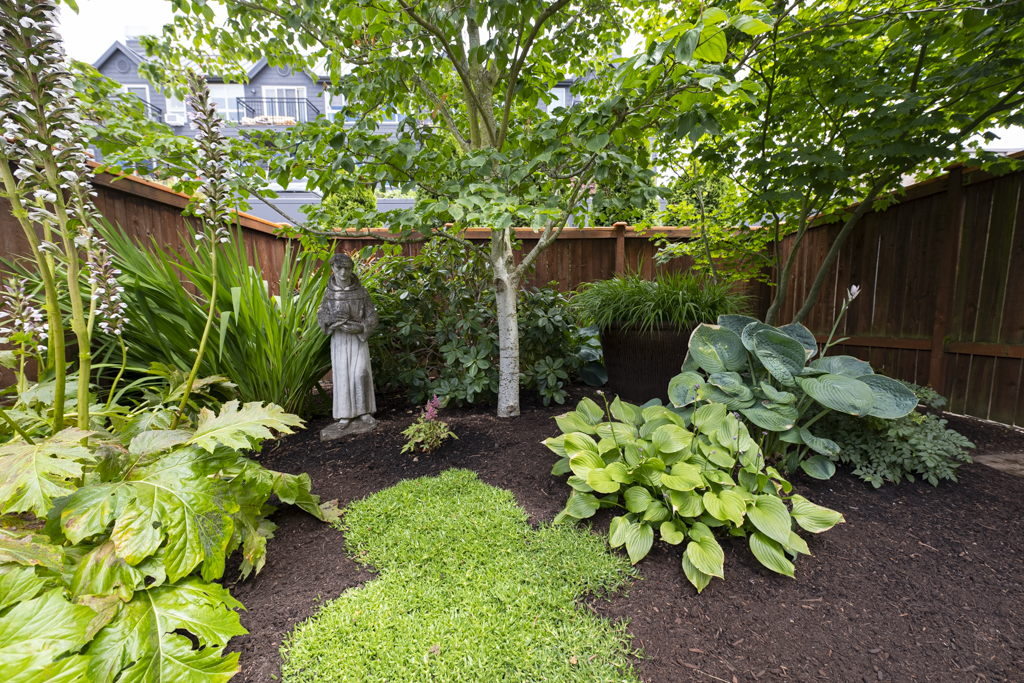
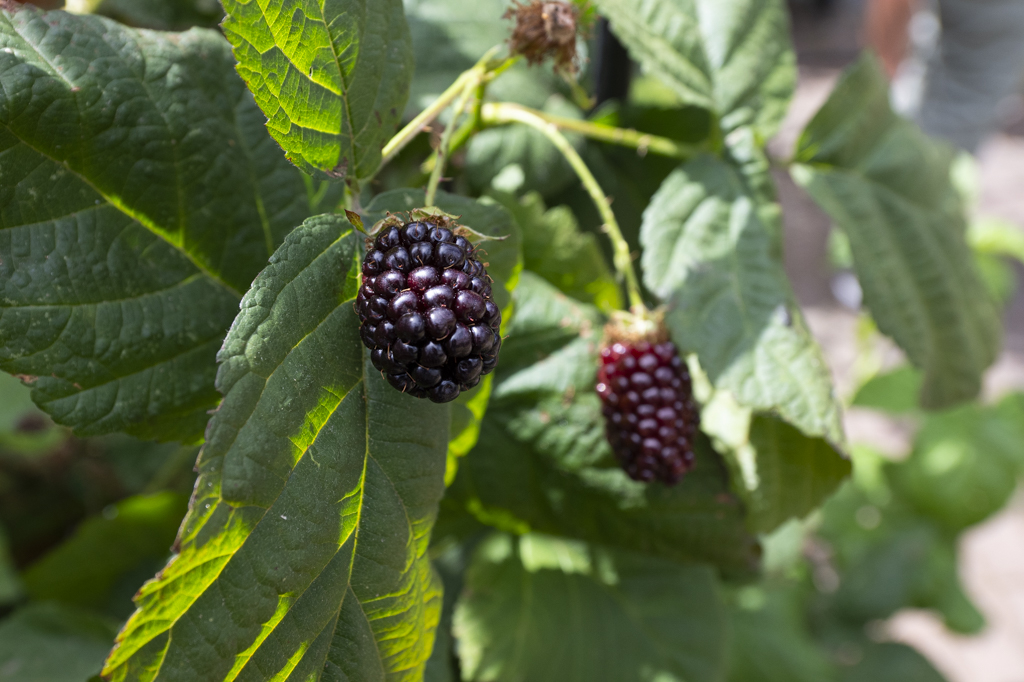
Blackberries are often the bane of a gardener’s existence, but in Garden F, “Transformation,” they were beautiful:
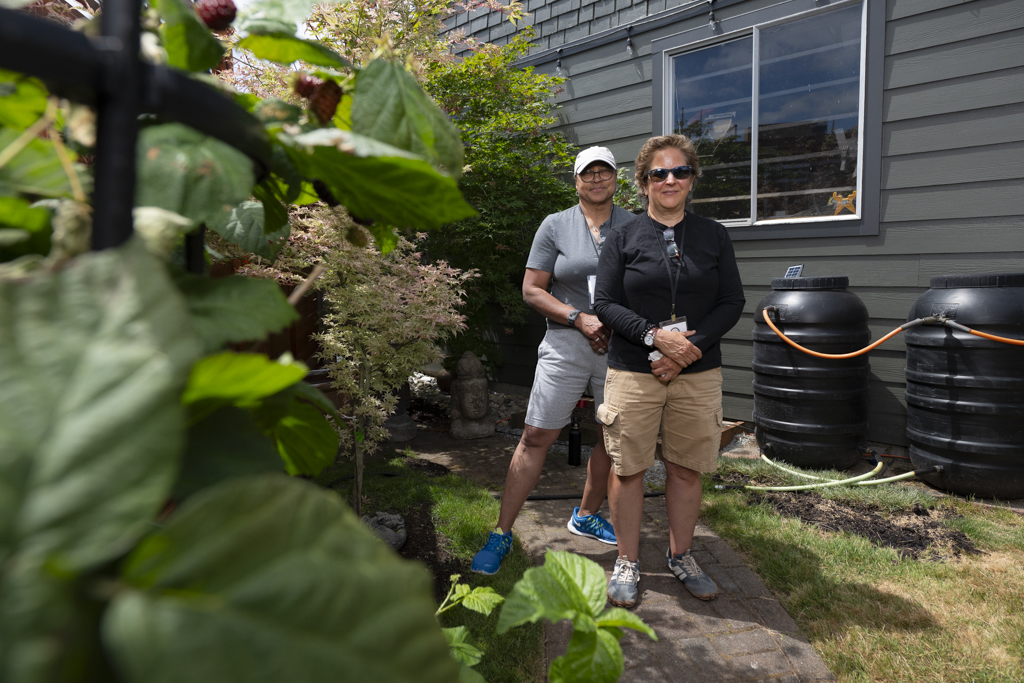
Garden F’s (L-R) Diane Elie and Raquel Gonzalez store water in 60-gallon rainbarrels and told Oliver that it fills most of their irrigation needs:
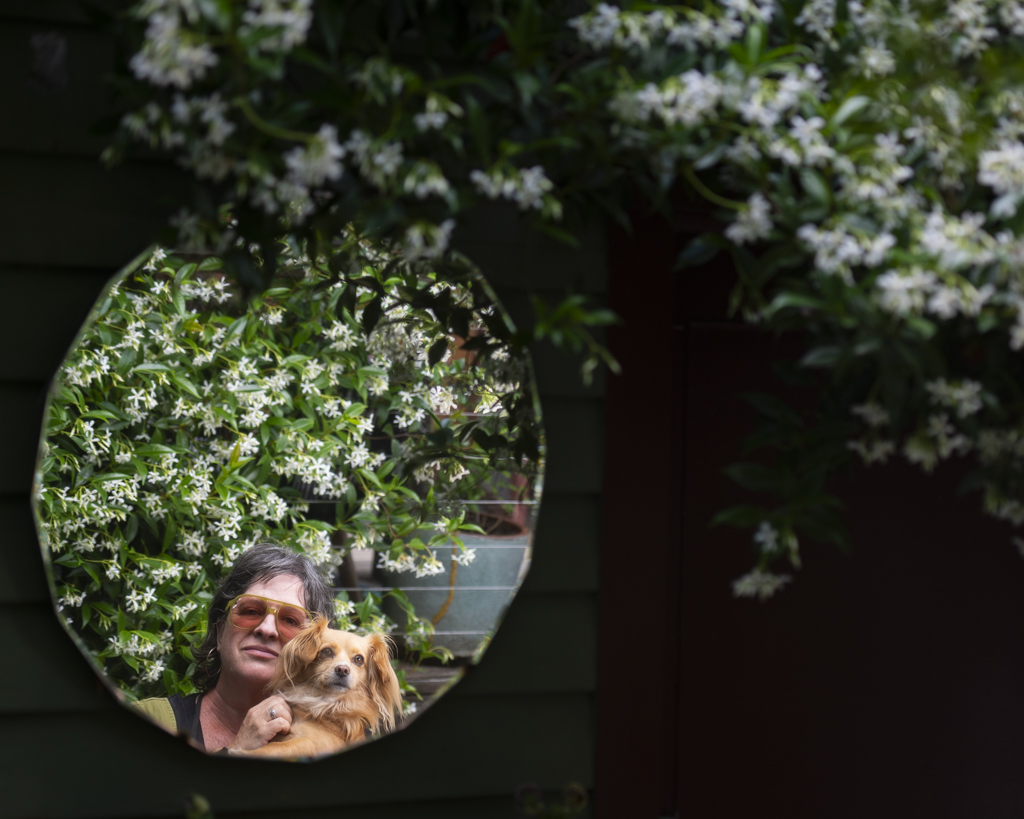
At Garden G, “Hidden Gem,” Julie Robinson-Jasper and Maple the dog are seen through a mirror surrounded by star jasmine at Garden G, “Hidden Gem”:
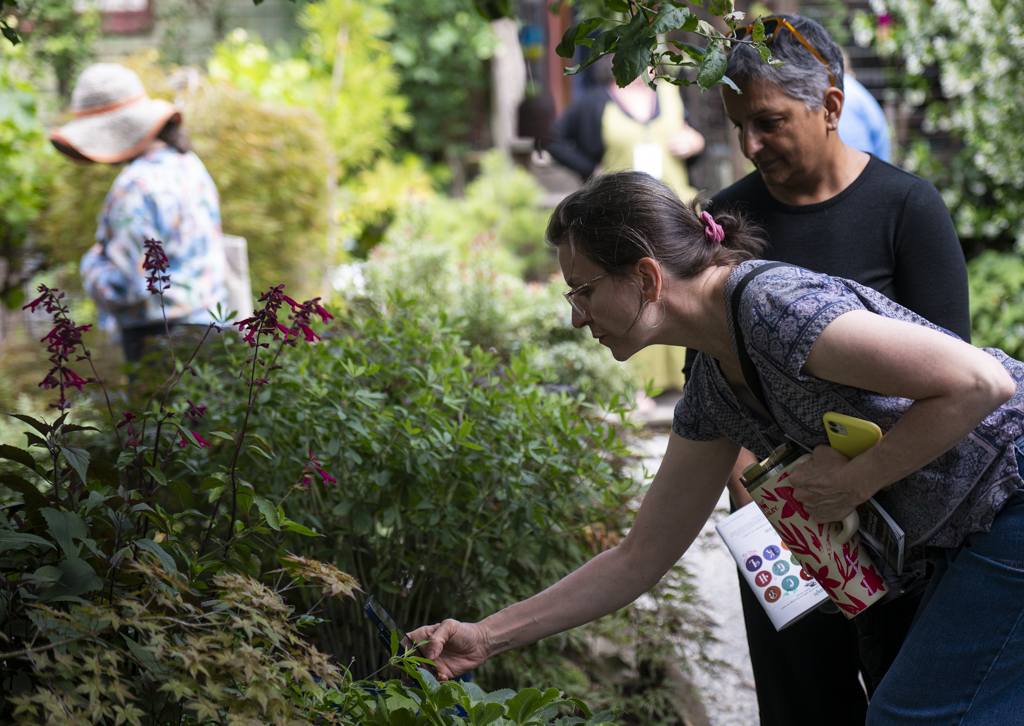
Another scene from Garden G:
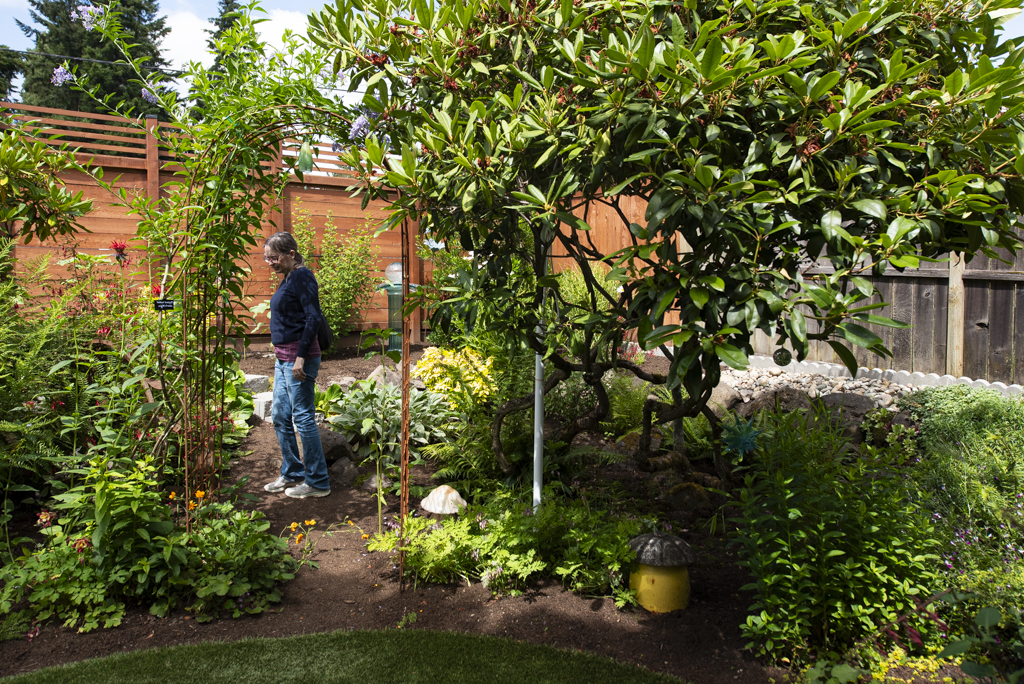
Garden H, “Behind the Fences,” sported an arch of bittersweet nightshade:
A clawfoot bathtub graced Garden I, “A Fresh Look for A Once-Beloved Garden“:

Garden J, “Garden of Many Rooms,” was conducive to wandering:
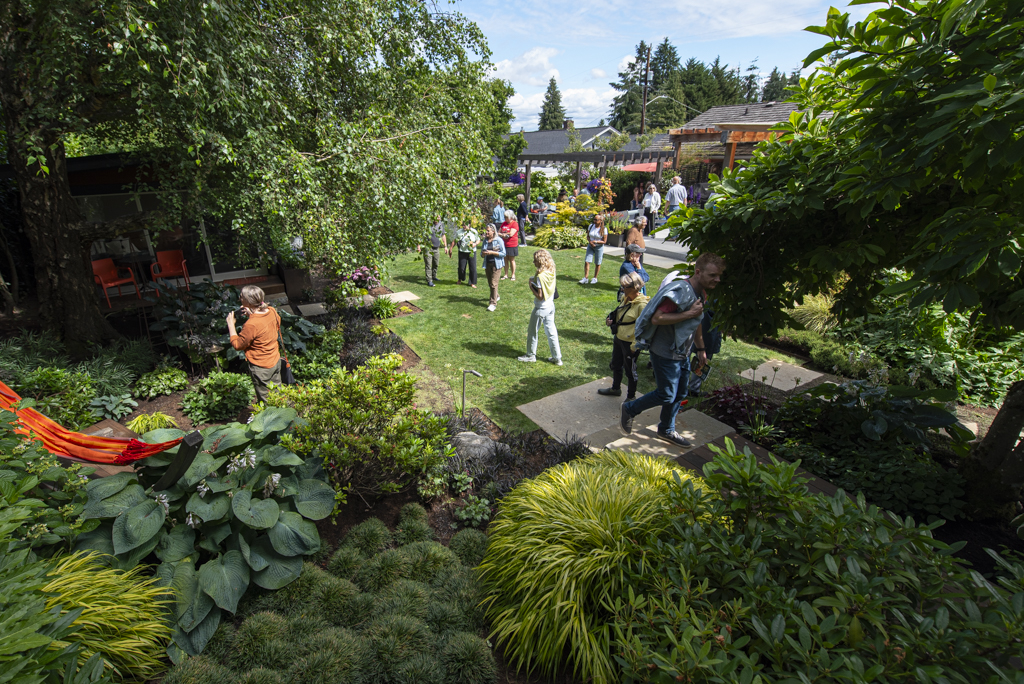
Garden K offered onlookers “Plants from Around the World“:
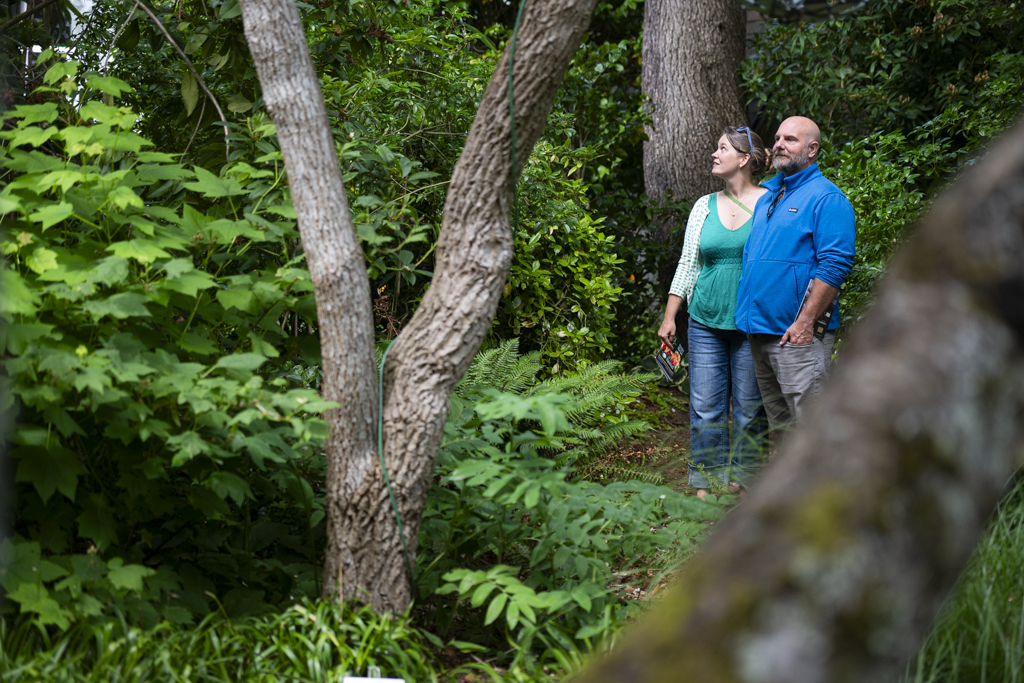
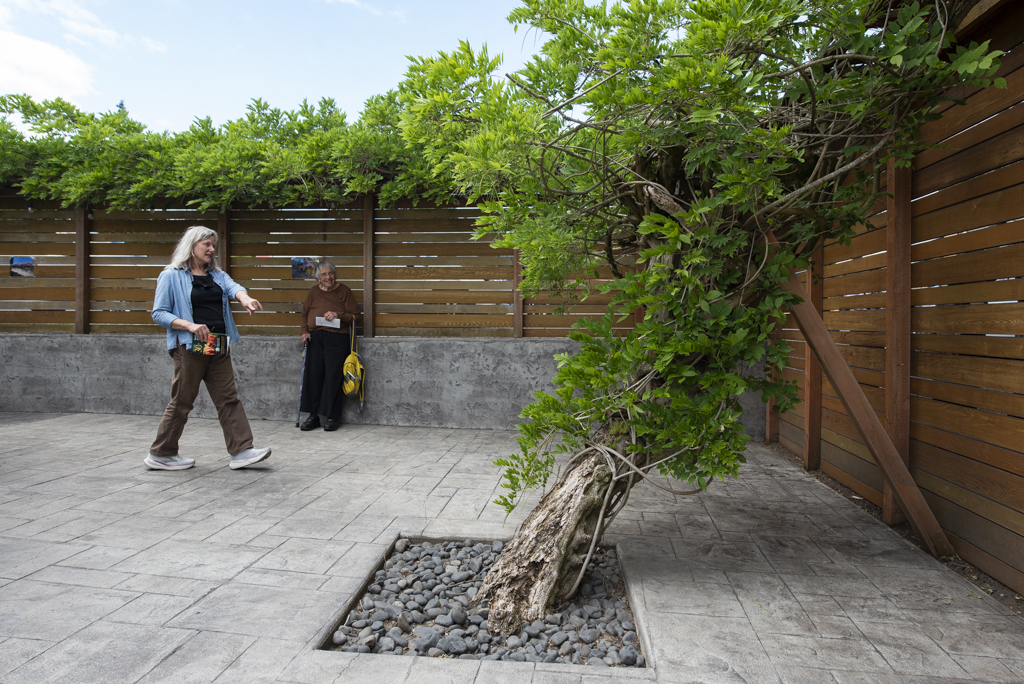
And Garden L, “Conifer Corner,” featured a 75-year-old wisteria:
(Read details of each garden here.) The West Seattle Garden Tour is organized by a nonprofit that uses the proceeds to support other nonprofits – here are this year’s grant recipients; see how to apply for one of next year’s grants by going here (July 15 is the deadline).
-
 Lifestyle38 minutes ago
How should we behave online? : It’s Been a Minute
-

 Technology48 minutes ago
After a great start, DC’s new cinematic universe is already slowing down
-

 World53 minutes ago
UK asylum seekers could have to pay government $13K before applying for settlement
-

 Politics60 minutes ago
Fetterman unleashes on ‘dirtbag’ wing of Dems after far-left victories: ‘Orgy of socialism’
-

 Health1 hour ago
Doctors thought man had brain cancer — they found live tapeworms instead
-

 Sports1 hour ago
Paraguay stuns four-time World Cup champions Germany in penalty shootout after controversial call
-
 Business1 hour ago
Comcast is spinning off NBCUniversal media and entertainment assets
-
 Entertainment1 hour ago
Alannah Keyser is latest fired ‘Love Island USA’ contestant to apologize for using a racist slur

