Midwest
Chicago Mayor touts his achievements leading 'greatest freaking city in the world’


Mayor Brandon Johnson penned an op-ed for the Chicago Sun Times on Wednesday touting his administration’s accomplishments.
“Chicago needed treatment, not trauma,” Johnson wrote, commemorating a full year since his inauguration in 2023. “That treatment would come by investing in people and in systems of care.”
Johnson, who has spoken about race before, proclaimed that under his leadership, “We reopened the Department of the Environment and have a Cabinet that is 43% Black and 60% women — demographics that are radically different from previous administrations.”
While he said that Chicago stands strong, he claimed “That strength, however, has been tested, as one year ago, we inherited a migrant crisis entering a reckless and wicked phase.”
Brandon Johnson, mayor of Chicago, during an inauguration ceremony at the Credit Union 1 Arena in Chicago on May 15, 2023. (Jamie Kelter Davis/Bloomberg via Getty Images)
CHICAGO MAYOR URGES BIDEN TO GRANT WORK PERMITS TO HALF MILLION ILLEGAL IMMIGRANTS
“We have cleared women and children from sleeping on airport and police district floors, returned Chicago Park District facilities to communities and cut our shelter population by 50%,” he said, touting his responses to the crisis. “Prior to taking office, we were told the city of Chicago cannot accept any more new arrivals. We responded by taking in more than 30,000.”
He described how drastically the migrant crisis has changed over the past 2 years.
CLICK HERE FOR MORE COVERAGE OF MEDIA AND CULTURE
“Just prior to my administration, between Jan. 1, 2023, and May 12, 2023, there were 11 buses of new arrivals sent to the Chicagoland area,” he wrote. “Since May 12, 2023 — the Friday before my inauguration — there have been 800 buses sent to the Chicago area. Ninety-nine percent of the buses sent to our area since Jan.1, 2023, came after I took office. This is by design. You become a target when you commit to investing in people.”
Chicago Mayor Brandon Johnson gives an update on migrant issues at City Hall on Jan. 29, 2024, in Chicago. (Terrence Antonio James/Chicago Tribune/Tribune News Service via Getty Images)
BLACK CHICAGO VOTERS RIP MAYOR ON EXTRA $70M FOR MIGRANTS AS RECALL PETITION GATHERS STEAM
Johnson said he manages to respond to this crisis “while still making critical investments in affordable housing, mental health and public safety. We are investing more than $100 million into crime prevention and intervention, launching a comprehensive plan to address the root causes of violence in four of the most disinvested communities in our city.” He added, “We are reopening mental health clinics and increasing resources for victims and survivors of crime.”
“I look forward to another year of working with everyone to create safety, unity and prosperity in the greatest freaking city in the world,” he said as he concluded his piece. “Let us go forward, Chicago. Together.”
Over the past year, Republican governors like Texas’ Greg Abbott have sent buses of incoming asylum seekers to Democrat-controlled states and sanctuary cities in an effort to demonstrate the severity of the crisis border states are facing.
“He is attacking democratically-run cities, and particularly cities that are being led by Black leaders or leaders-of-color,” Johnson argued in a January interview. “This is unconscionable. I mean, it’s a very raggedy approach. And quite frankly, not only is it reckless and raggedy, but it is evil-spirited.”
While some Democratic leaders have responded to the unprecedented migrant crisis by calling on Biden to secure the border, Mayor Brandon Johnson sparked rage among Black Chicagoans for requesting an additional $70 million in taxpayers’ funds to be spent on tackling the city’s migrant crisis.
“We need that money in my neighborhood, we need that money on my block,” one Black woman wearing a red “Make America Great Again” cowboy hat declared at a City Council meeting amid an effort to recall the mayor. “So I’m asking ya’ll to use our tax money for our people, we need it.”
Chicago has made headline for street takeovers, where a mob of young people engaged in criminal activity ranging from vandalism to assault. While the mayor condemned such activity, he has also been criticized for defending the young people from criticism.
“In no way do I condone the destructive activity we saw in the Loop and lakefront this weekend. It is unacceptable and has no place in our city,” Johnson stated in a speech. “However, it is not constructive to demonize youth who have otherwise been starved of opportunities in their own communities.”
Read the full article from Here


Looking for the newest family attractions in Metro Detroit? You’re in luck! Just halfway through 2026, southeast Michigan has welcomed an incredible lineup of new playgrounds, museums, indoor play spaces, splash pads, interactive exhibits, and family attractions. Whether you’re planning a weekend adventure, looking for somewhere new to explore with toddlers, or trying to keep older kids entertained this summer, these brand-new destinations deserve a spot on your family’s bucket list.
Here’s where families are heading in Metro Detroit this year.
Detroit’s newest riverfront attraction features an interactive water garden where kids can run through playful fountains while enjoying spectacular views of the Detroit River. The surrounding park also includes nature-inspired playgrounds, walking paths, picnic areas, and one of the city’s most beautiful waterfront destinations.

Michigan Science Center has unveiled a giant cardboard maze experience that celebrates Detroit neighborhoods, landmarks, and creativity. Families can wander through immersive pathways filled with colorful murals while also enjoying hands-on STEM activities like robot challenges, cardboard building stations, and interactive games. Best of all, the exhibit is included with general admission.
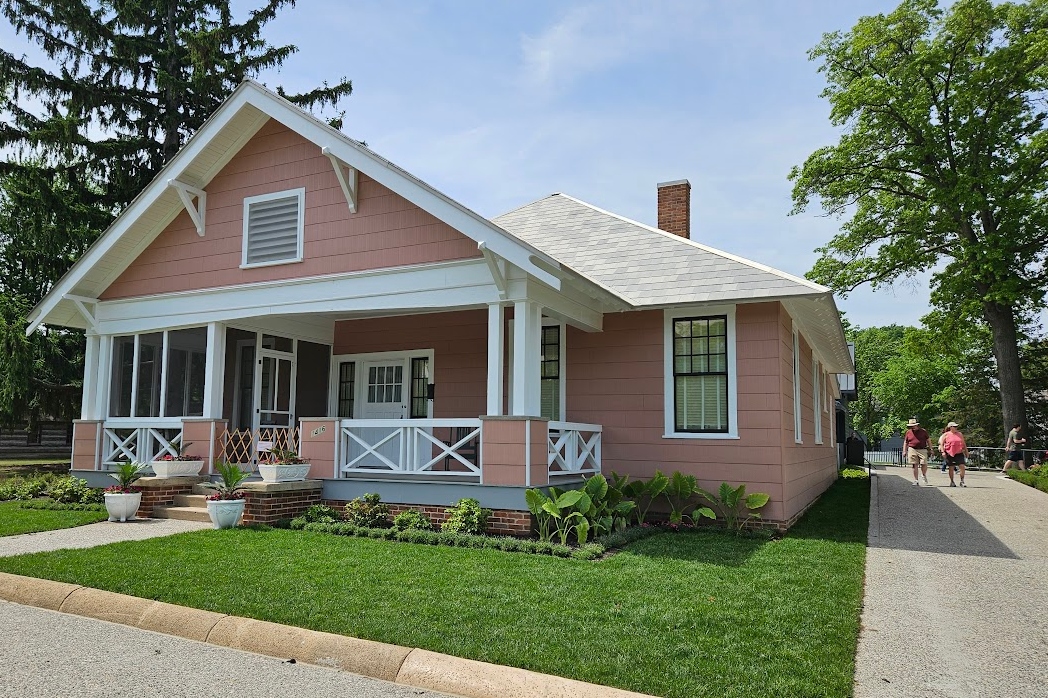
History comes to life in a powerful new way at Greenfield Village with the opening of the Jackson Home, relocated from Selma, Alabama. The home belonged to Dr. Sullivan and Richie Jean Sherrod Jackson, close friends of Dr. Martin Luther King Jr., and served as an important meeting place during the Civil Rights Movement.

West Lincoln Well Park (Birmingham)
West Lincoln Well Park is located on the south side of Lincoln Street at Westchester Way. The park contains open space, two tennis courts and play equipment including swings, slides, shaded sandbox, a play structure and rockers. Address: 1801 W Lincoln St, Birmingham, MI 48009

The new Erb Discovery Trails at the Detroit Zoo is a 7-acre immersive experience set to open on Saturday, May 23rd. The trails will feature a mix of new animal habitats, hands-on encounters, and nature-inspired play spaces where kids can climb, explore, and engage their senses. Guests can expect interactive experiences like feeding animals, exploring multi-sensory pathways, and even encountering species like stingrays and bamboo sharks, all while learning about conservation through storytelling and outdoor adventure. Created to blend education with play, the Discovery Trails aim to inspire curiosity, connection to nature, and memorable family experiences in an entirely new section of the zoo.

Step into a world of magic this summer at The Lost World of Dragons at Sloan Museum of Discovery, running May 16 through September 13. This exciting, family-friendly exhibit brings dragon legends to life with interactive displays that blend science, history, and imagination—perfect for curious kids and adventurous families. Admission is $25 for ages 12+, $17 for kids ages 2–11 (under 2 free) and includes full access to the museum, making it an easy and unforgettable day trip option.

Great Lakes Serpentarium brings reptiles out of the pages of books and into the real world with more than 100 animals from around the globe. From snakes and turtles to iguanas and alligators, this unique reptile house lets visitors see and interact with creatures most people only read about.

At Slick City Troy is the most popular place in town! The action lineup is packed with thrilling attractions you won’t find anywhere else. Feel the rush of wind as you zoom down, enjoying a safe and thrilling descent that’s fun for all ages – thing the adrenaline rush of a roller coast but on massive slides. In addition to giant slides, there are also traditional multi-level climbing structures for school age kids and toddlers. Location: 1820 Crooks Rd, Troy

2D DIY Studio has opened a brand-new location in Sterling Heights, offering a fun, welcoming space where kids, teens, and adults can tap into their artistic side. Whether you’re planning a girls’ night out, a birthday party, or a family outing, this DIY studio delivers colorful, crafty fun for all skill levels — no experience required.

Oak Park Woods Playground (Oak Park)
Uniquely designed, Oak Park Woods features towering green play structures, connected by rope bridges, climbing nets, tunnels, and elevated pathways. . The massive play structure features towering climbing elements, a giant slide, inclusive play equipment, and plenty of room for kids to explore. Lower climbing features, smaller slides, and ground-level play elements create opportunities for toddlers and preschoolers to safely explore. Best of all the park’s signature train and monster truck have been refurbished and remain at the park. Address: 24198 Church St, Oak Park, MI 48237

At Kids Castle Fun Center guests can race around in exciting bumper cars, bounce in colorful and safe bounce houses—including obstacle courses and an adventurous Pirate Ship—play a variety of arcade games from classic favorites to modern hits, and enjoy kiddie ride-ons and prize-filled crane games. Address: 5100 Dixie Highway, Suite 400

A new entertainment destination for families has arrived in metro Detroit. Gotta Gacha brings together classic arcade fun, modern gaming, and collectible culture all under one roof—making it a must-visit spot for kids, teens, and gamers of all ages. Address: 29200 Dequindre Rd Ste 3, Warren

One of the most unique new play spaces in Metro Detroit, Sandverse brings the beach indoors with Michigan’s first immersive indoor sandbox experience. Kids can dig, build, and create in soft, natural sand, using tools and prompts that encourage open-ended, sensory-rich play. Designed especially for younger children, the space blends creative exploration with early learning and motor skill development, while also offering a sand-free zone for additional play.

ITAVA IMAGINATION Station is all about hands-on discovery, creativity, and imaginative play. This interactive space encourages kids to explore, build, and engage in STEAM-inspired activities that blend learning with fun – inside AND out! Designed for a wide range of ages, it offers an environment where kids can experiment, problem-solve, and let their imaginations run wild.

Specializing in children’s art classes, camps and art themed birthday parties, Kidcreate Studio is an art studio just for kids. At Kidcreate Studio, your child will create fridge-worthy masterpieces, learn art concepts, and experiment with many different art materials.

After renovations and updates, Plymouth District Library is celebrating its grand reopening this June. Families can explore refreshed spaces, updated collections, and community-centered improvements designed to make the library even more welcoming for children and visitors of all ages.

The wait is over! Ford Field Park is finally reopened in downtown Northville and the signature wooden playground is now trek! Say bye to splinters an wood chips in sandals and enjoy a similar playtime experience in a modern, more enjoyable environment. Address: 151 N. Griswold, Northville, MI 48167

The RED Children’s Museum is a first-of-its-kind children’s visual arts museum focused entirely on hands-on creativity, expression, and imagination. Families can explore interactive exhibits that encourage kids to paint, build, design, and experiment with art in a completely immersive way. Unlike traditional museums, this space invites kids to be active participants—making it perfect for curious minds who love to create.


American barbecue is rooted in the South, in the culture of Black Americans who learned the art through practice, dedication and intuition. Although Milwaukee doesn’t have a specific BBQ style, we have something that still stands tall – a blending of traditions that celebrate the mysterious, transformative power of smoke.
Tell us who you’d pick to be a Betty this year!
1501 W. CENTER ST. | 8718 W. LISBON AVE.
Ashley’s has an old-school barbecue pit, where chicken and cuts of pork and beef are smoked over hickory wood and charcoal. Thomas Ashley Jr. went from BBQ hobbyist to restaurant owner in 1960, using $350 he had borrowed from friends to open Ashley’s. His son Darnell runs the concept now and has expanded the Ashley’s footprint a few times in the past 14 years, pushing through losses that have included devastating restaurant fires. While the Center Street location is geared strictly to takeout (and is cash only), there’s the sit-down Ashley’s Que Too on the West Side with a more expansive menu and soul food on Sundays. Darnell also took over the local institution next door to Que Too, Champion Chicken, where he put in a bar and carries on the tradition of broasted chicken.

Darnell combines his dad’s legacy and what he’s learned over the years to develop the Ashley’s style – dry and wet rubs on meats that are also served sauced (tangy and sweet). The sliced shoulder dinner with white bread is what you want to order, or the slab of pork ribs – these are the fall-off-the-bone kind but still have a bit of chew. For a side, make it creamy – coleslaw or potato salad. $14-$33.
7412 W. GREENFIELD AVE.
When Mark Timber took over Double B’s on 74th and Greenfield in 2014, the community’s response made it clear that Stallis needed a BBQ joint. Timber used a smoker that was already on-site to jump-start the BBQ menu and soon added a food truck. Now Timber and his wife, Judy, are passing the torch over to new owners committed to keeping Double B’s just as it is. “We decided we were getting a little long in the tooth for day-to-day operations,” Timber said in April. The couple were planning to stay on for a bit to keep things “consistent and predictable,” he said.


That’s good, because some things can’t be tampered with. The brisket is moist and tender, with a dark, crusty, delicious ribbon of bark. Burnt ends – sticky bites of caramelized brisket and, yes, fat – are topped with French’s fried onions. And you won’t need sauce with the SmokeHouse wings and their juicy meat and charred, crispy skin. Before you get to those bigger-ticket items, you need to try the bacon ball appetizer – a pork, beef and bacon meatball, smoked, wrapped in bacon and deep-fried. Great balls of fire! Picking a side isn’t difficult – it’s the seven-cheese mac and cheese. The cavatappi holds onto the sauce, and the crusty cheddar crumb topping finishes the dish off just right. $13-$32.
Food Trucks
Mobile BBQ joints, often towing their fragrant smokers, offer a distinct, immersive dining experience. Here are five local ones to look for:
Brisket with an excellent bark, moist pulled pork. Look for specials like smoked lamb curry (so good!). Regular pop-ups at Hawthorne Coffee Roasters.
Outstanding brisket, pulled pork and pepper-crusted smoked turkey. The surprise standout? Crispy-skin pork belly with sweet-sour sauce. Pop-ups at Ope! Brewing and a regular this year at AmFam Field’s Alley Food Truck Park.

Owner Mike “Pops” Hester built this enterprise from scratch 22 years ago. His meats – smoky, succulent brisket and pulled pork – get everything they need from the dry rub. “This is how people find you,” he says. “They don’t want no barbecue sauce. They want to find out what you know.” Pops knows a lot! Appleton Avenue and Good Hope Road, Menomonee Falls. Thurs-Sat 9:30 a.m.-5 p.m.

The 10-year-old is a fixture on Fridays outside Woodman’s in Menomonee Falls (11 a.m.-5 p.m.). Matt Pagel’s pulled pork (get the sandwich with fried onion strings), brisket and smoked jerk chicken are all good.
Owner Alex Obradovich has been smoking his meats using fruitwood since 2012. His sizable menu includes the customary (brisket, St. Louis-style ribs, pulled pork) and the unexpected (spicy smoked Polish sausage, pulled chicken, pit ham). The brisket is the charm (moist, so smoky, good bark), with a side of thick, smoky baked beans. Locations in West Allis and Franklin.
Where There’s Smoke
The East Side storefront (2311 N. Murray Ave.), with exposed brick and a century-old walnut bar, adds character to the tasty food served up at Smokin’ Jack’s Bar-B-Que, which opened in early 2026. Owner Jack Holt applies the low-and-slow method to his meats and blends traditions, too.
I’m a sauce-on-the-side kind of person, and both his beef brisket (hickory smoked for a respectable 12 hours) and pulled pork are flavorful au naturel. If you want sauce, Holt offers two kinds of Texas-style sauces, along with creamy, peppery Alabama white, and competition glaze (thin, sweet and sticky a la Kansas City), which is the best of the four.
As good as the brisket and pork were, the real standout was The Smokey Bird, a smoked chicken thigh sandwich topped with pickles, red cabbage slaw and a lick of sweet BBQ sauce on a toasted bun.
’Que Demystified
The lowdown on “low and slow,” a rib primer, and other distinctions
Dry versus wet rub
Both are used for their impact on the texture and flavor of the meat. Dry refers to a mixture of spices, herbs, salt and more applied anywhere from an hour to a day before cooking. The rub helps create that much-desired crust (aka bark) on the meat’s surface. In contrast, pitmasters use a wet rub (dry spices, maybe sugar or honey, and a liquid like oil, vinegar or mustard) to add moisture to, say, chicken.
Spareribs
Fatty and flavorful, spareribs come from the belly side of the pig’s ribs and include the cartilage, sternum bone and rib tips.
St. Louis-style ribs
These are pork spareribs that have the tough parts (cartilage, sternum, tips) removed.
Babyback ribs
Shorter than spareribs and a leaner cut, these come from the top of the ribs closest to the spine, under the loin muscle.
Brisket
This cut of beef comes from the animal’s breast or lower chest – dense muscle tissue. Pork brisket (cut from the chest, as with beef) also exists, but it’s not a standard cut, so you rarely see it.
“Low and slow”
Refers to using indirect heat or hardwood smoke at a low temperature (200-275 degrees) for a longer period of time. That combination renders fat and breaks down connective and muscle tissue to tenderize the meat. Smoke is more deeply infused and a crusty bark develops.
The Sides That Matter
These accompaniments are staples with BBQ meats – and for good reason.

Mac and Cheese: A creamy, rich and mild counterpoint to all charred, spiced, saucy meat. Try: Pop’s BBQ truck
Baked Beans: Think harmony. Beans (navy, sometimes others) cooked in sauce – thick, sweet-savory, sometimes with smoky add-ins like bacon – hold their own with the robust meats in their midst. Try: SmokeHouse beans, Double B’s, 7412 W. Greenfield Ave., West Allis
Potato Salad: The trio of cool, creamy and tangy balances out the hot, smoky meat. Plus, mayo’s acidity cuts the fat. Try: Dill pickle potato salad, Just Smokin’ Barbeque, 20316 W. Main St., Lannon
Slaw: Mayo- or vinegar-based cabbage slaw provides a cool crunch that is so good on a pulled pork or beef brisket sandwich. Try: Smokin’ Jack’s Bar-B-Que
Cornbread: There’s the more dense, savory Southern style, and the sweet, cake-like interpretation in Northern parts. A nice compromise is a little sweet, golden crusted and moist. Try Double B’s
Styles of Sauce
It can be hard to keep them straight, the iconic regional sauces, but here they are in a nutshell
- Texas: tangy and warmly spiced, deepened by the tomato, Worcestershire and cider vinegar
- Kansas City: a thick, sweet-savory base of molasses and ketchup gives it a sticky texture
- Carolina: includes three – vinegar-pepper, tomato-vinegar and mustard (“Carolina Gold”)
- Memphis: the rub is king, sauce (thin, ketchup-based) served on the side
- Alabama: tangy, mayo-based white

This story is part of Milwaukee Magazine’s June 2026 issue.
Find it on newsstands or buy a copy at milwaukeemag.com/shop.
Be the first to get every new issue. Subscribe.
Minneapolis, MN
Broken A/C leaves 75-year-old cancer patient sweltering at north Minneapolis apartments


Apartment complex A/C problem
Scorching heat is making life miserable for some at heritage park apartments in north Minneapolis. FOX 9’s Mike Manzoni explains the situation.
MINNEAPOLIS (FOX 9) – Tenants at Heritage Park in north Minneapolis have had to settle for fans to cool off as broken air conditioning units remain unrepaired during a stretch of scorching heat.
Tenants say broken A/C units are just the latest problem
What we know:
Multiple tenants are dealing with broken air conditioning units, leaving their homes uncomfortably hot during the day and even hotter at night.
“I don’t like it very much at all. And especially with somebody running back and forth to the hospital, I don’t need all this stress,” said Eddie Robinson, a tenant at the complex. “It’s an oven.”
Temperatures inside Robinson’s apartment routinely climb into the 80s, and he said it gets even hotter at night because he must lock up his windows for safety.
“People will come in your house if they see a window open,” he said.
But Robinson said it is actually one of the better apartments he has lived in during his dozen years at Heritage Park.
“The first unit – the rats took it over,” he said.
None of the three air conditioning units outside his building were working on Monday, and he said he could not find anyone to fix them.
Other problems at the complex
The backstory:
Heritage Park has faced ongoing complaints from tenants about rats, mold, leaks and poor water pressure, among other concerns.
City Council Member Pearll Warren recently posted a video on social media showing moldy walls and dirty floors.
Outside the buildings, there are broken stairs, busted lights and boarded-up windows.
These issues have prompted the Minneapolis NAACP to call for the city’s public housing chief to step down.
The Minneapolis Public Housing Authority, which owns the land but does not maintain the property, said it is working with the court-appointed receiver to address hundreds of open maintenance orders. The agency said the previous owner ran into financial trouble and stopped making repairs. The property entered receivership in late 2025.
Robinson, who is 75 and battling cancer, said he is just trying to make it through the summer with his support dog, Lele.
“I got to keep water out for her all the time, you know. Otherwise, she’ll get dehydrated,” he said.
The management company, Property Solutions & Services Inc., said it is offering portable air conditioners to tenants with broken central units, but Robinson said he does not want one because they do not help.
-

 New York1 hour ago
Metropolitan Diary Challenge Day 2: How to Write Your N.Y. Story
-

 Los Angeles, Ca1 hour ago
Company has weeks to complete cleanup of Boyle Heights warehouse fire, officials announce
-

 Detroit, MI2 hours ago
18 New Kid-Friendly Places That Opened in Metro Detroit in 2026 (So Far!)
-

 San Francisco, CA2 hours ago
Anza expedition celebrates 250th anniversary in San Francisco
-

 Dallas, TX2 hours ago
Preston Hollow residents oppose proposed $800 million mixed-use development in Dallas, survey reveals
-

 Miami, FL2 hours ago
Bradley Beal to Miami Heat rumors draw skepticism
-

 Boston, MA2 hours ago
Boston Pops surprise travelers at Logan Airport with July 4th preview performance
-

 Denver, CO2 hours ago
Denver Broncos Crack Top 10 in NFL Uniform Rankings

