World
Everything you need to know: Your guide to the 2024 European elections


The European Union is in full campaign mode 100 days ahead of the parliamentary elections in June. Don’t worry if you don’t know exactly how they work. This guide from Euronews tells you everything you need to know.
The continent-wide elections will see 720 Members of the European Parliament elected. This is an increase from the current 705 seats to accommodate demographic changes in several member states.
The Parliament is the only institution in the EU that is directly elected by voters. The other two main bodies are indirectly elected: the composition of the European Commission requires the approval of MEPs while the Council is made up of national ministers designated by their respective governments.
The three institutions work hand in hand – not always amicably – to advance legislation in a wide field of areas, such as climate action, digital regulation, migration and asylum, the single market, environmental protection and the common budget.
Here is your deep dive into the 2024 elections.
When will the elections be held?
The elections to the European Parliament will take place between 6-9 June and will be organised according to the electoral rules of each member state. Voters will choose the representatives of their country in open, semi-open and closed lists. A push to introduce transnational lists did not gain traction.
The poll begins in the Netherlands on Thursday, 6 June, followed by Ireland on Friday, 7 June. Latvia, Malta and Slovakia will participate on Saturday, 8 June, while the remaining countries will cast their votes on 9 June, the big Sunday.
The Czech Republic and Italy will allow voting on back-to-back days: Friday and Saturday for the Czechs, and Saturday and Sunday for the Italians.
What’s the minimum age for voters?
Like election day, this also depends on your nationality.
In the majority of member states, the minimum age for voters is 18 years old. However, in recent years, a handful of countries have lowered the threshold in a bid to boost turnout. In Greece, people aged 17 or older are allowed to vote. And in Belgium, Germany, Malta and Austria, the cut-off age has been set at 16.
By contrast, the minimum age for candidates to the Parliament ranges from 18 years old, in countries like Germany, France and Spain, to 25 years old in Greece and Italy. All EU citizens have the right to stand for office in another EU country if they are residents there.
Does this mean more people will vote?
That’s one of the burning questions in Brussels. The EU elections have for decades been saddled with low participation rates. In 2019, the figure stood at 50.66%, the first time it surpassed the 50% threshold since 1994.
This year, the bloc hopes to, at least, reach again the 50% mark. In practice, this will mean 185 million ballots out of the estimated 370 million eligible voters.
The youth are considered a key demographic to increase turnout. This explains why EU officials have set their (overly ambitious) sights on Taylor Swift and other A-list celebrities to convince Gen Z and millennials to get out and vote.
Is voting mandatory?
Voting is mandatory in only four member states: Belgium, Bulgaria, Luxembourg and Greece. This provision is enforced with leniency and does not necessarily translate into higher numbers. In 2019, Greece posted a 58.69% turnout, and Bulgaria just 32.64%.
Still, voting is highly recommended to make your voice heard.
Can I vote from abroad?
As a general rule: yes, you can. But it changes from country to country.
All member states, except the Czech Republic, Germany, Ireland, Luxembourg, Malta, the Netherlands, Austria and Slovakia, allow their citizens to cast their votes in embassies and consulates abroad, a step that often requires pre-registration. (Bulgaria and Italy only enable this option within another EU country.)
At the same time, Belgium, Germany, Estonia, Spain, Latvia, Lithuania, Luxembourg, Hungary, the Netherlands, Austria, Slovenia, Finland and Sweden allow voters to send their ballots by post. In some cases, the mailing costs can be reimbursed.
 ADVERTISEMENT
Additionally, Belgium, France and the Netherlands authorise the use of proxies: a person who is unable to go to the polls can designate another person to vote on their behalf.
As of today, Estonia is the only EU nation that offers e-voting.
On the other hand, there is a minority of member states that have no option whatsoever to vote from abroad: the Czech Republic, Ireland, Malta and Slovakia.
For more information on how to vote, check the Parliament’s dedicated website.
When will we know the results?
The results of the elections will not be announced until Sunday evening. This prevents countries that vote earlier in the race from influencing the outcome of the latecomers.
ADVERTISEMENTThe services of the European Parliament intend to publish the first partial estimations at 18:15 CET on Sunday and the first projection of the full hemicycle at 20:15 CET. This data will combine estimated votes and pre-election opinion polls.
By 23:00 CET, once all stations in all member states have closed, we will have a reliable, comprehensive look at the composition of the next European Parliament.
What happens after the elections?
Shortly after the elections are over, national authorities will communicate to the Parliament who has been elected (and who has been disqualified) so that the hemicycle can begin to constitute itself.
MEPs have to organise themselves into political groups according to their ideology and priorities. These groups have to include a minimum of 23 lawmakers from at least seven countries. Those who are left out will be considered “non-inscrits” (or “non-attached”) and will have less prominence in debates and committees.
The current hemicycle has seven groups: the European People’s Party (EPP), Socialists and Democrats (S&D), Renew Europe, the Greens/European Free Alliance, the European Conservatives and Reformists (ECR), Identity and Democracy (ID) and The Left.
ADVERTISEMENTThe 10th legislature will start on 16 July, the date of the first plenary sitting. That day, the 720 MEPs will elect the Parliament’s president, 14 vice-presidents and five quaestors.
The first sitting will last until 19 July and will see the selection of committees and subcommittees. But the chairmanship positions, which the main groups traditionally divvy up in a game of horse-trading, will be announced in the days following the plenary.
What about the Spitzenkandidaten?
Back in 2014, the EU decided to try something new for a change: ahead of the parliamentary elections, each party was asked to publicly designate a lead candidate, or Spitzenkandidat in German, to preside over the European Commission, the bloc’s most powerful and influential institution.
This pre-selection, the thinking went, was meant to make the Commission more democratic and accountable in the eyes of European voters.
After the EPP won the elections with 221 seats, EU leaders respected the novel system and appointed Jean-Claude Juncker, the party’s lead candidate, as Commission president. The hemicycle then approved his bid with an absolute majority.
ADVERTISEMENTHowever, in 2019, things took a surprising turn: the EPP’s declared nominee, Manfred Weber, was unceremoniously pushed aside by EU leaders (most notably, France’s Emmanuel Macron). The rejection led to the surprising appearance of Ursula von der Leyen, who had been totally absent during the race.
Von der Leyen’s appointment, which survived the hemicycle by a razor-thin margin, prompted analysts and journalists to pronounce the Spitzenkandidaten dead.
The 2024 race comes with an attempt to revive the system: this year, von der Leyen will run as a lead candidate. The socialists, the Greens and the Left have also taken steps to put forward a presidential hopeful. But some other groups, like Renew Europe and ID, continue to shun the system, as it has no basis in the EU treaties.
Regardless of where the candidate comes from, the Parliament intends to hold a plenary session between 16 and 19 September to allow the appointee to make their political pitch and earn the endorsement of, at least, 361 of its 720 members.
If the Commission president is elected in that session, the Parliament will begin the hearings of Commissioner-designates according to their assigned portfolios. In 2019, three proposed names were rejected during the vetting process.
ADVERTISEMENTOnce all Commissioner-designates have survived the hearings, which can stretch for hours and turn acrimonious, the Parliament will hold a vote of confidence on the entire College of Commissioners for a five-year mandate. Only then will the new Commission take office and the legislative work will kick start.



Gas imports from Russia into the European Union increased during the first months of 2026, a new report has revealed, even as the bloc formally begins a historic withdrawal from Russian natural gas.
ADVERTISEMENT
ADVERTISEMENT
The EU banned Russian liquefied natural gas (LNG) from entering the bloc by the beginning of 2027 and mid-2027, albeit with exceptions for Hungary and Slovakia, which were allowed to tap Moscow’s gas in case of supply disruption given their landlocked position.
Yet according to the report from the EU’s agency of energy regulators (ACER), which was published on Wednesday, Russian gas imports have increased rather than declined during the reporting period, with pipeline imports rising 7 percent year-on-year compared to 2025 and LNG imports growing by 11 percent.
LNG imports accelerated further after the ban took effect in March, rising 17 percent against the same period in 2025.
The new release is ACER’s first monitoring report since the law was adopted in March. The agency attributed a rise in imports to companies accelerating deliveries under existing contracts before stricter prohibitions take effect, rather than to a reversal of EU rules.
“LNG authorised contracts for deliveries into the EU account for 20 to 32 billion cubic metres (bcm), entering the EU at the external borders of four member states: Spain, France, Belgium and the Netherlands. In turn, long-term contracts for Russian pipeline gas remain authorised in Hungary, Slovakia and Greece,” reads the report.
New Russian gas contracts have effectively been prohibited since March 2026, while older long-term agreements are being allowed to expire gradually through 2027 to avoid market disruption.
For now, authorised contracts still represent between 45 and 55 bcm of annual supply capacity, ACER said, down from the 150-157 bcm that Moscow used to export to the EU prior to the war in Ukraine.
Not a sanctions failure
ACER argues that this trend does not indicate a growing dependence on Russia, and nor does it mean that the bloc’s sanctions against Russia are failing.
Instead, importers appear to be maximising deliveries before future restrictions and responding to global supply uncertainty after disruptions caused by the war between Israel, the US and Iran affected Middle Eastern LNG trade.
The ban on transhipments of Russian LNG via the EU to other destinations also seems to have contributed, the energy regulators argue, as some of the Russian LNG that had previously been transshipped at selected EU ports until March 2025 may have remained within the EU market.
Ronald Pinto, an LNG analyst at the market intelligence firm Kpler, endorsed ACER’s assessment, noting that Russian LNG imports into the EU reached record highs in both April and May.
“Faced with disruptions to global LNG supply, European market participants relied on other available sources of LNG, likely making full use of the flexibility available within their existing contractual volumes,” Pinto told Euronews.
However, Pinto also pointed out a slight year-on-year decline in Russian pipeline imports into the EU following maintenance in early June, suggesting a commercial reaction to the 17 June deadline banning imports of Russian pipeline gas under short-term contracts.
“This could indicate that market participants are beginning to reduce their exposure in light of the phase-out regulation,” the analyst said.
Remaining dependencies
While Russian gas now accounts for roughly 12 percent of EU gas demand, ACER says that dependence is no longer evenly spread across Europe.
Most EU countries have sharply reduced purchases since Russia’s invasion of Ukraine, except for Hungary, Slovakia and Greece.
These countries, particularly Hungary and Slovakia, continue to receive Russian pipeline gas primarily through the TurkStream corridor and face the greatest challenge in replacing supplies before the 2027 deadline.
“In 2024, Hungary and Slovakia are estimated to source approximately 70–80 percent of their gas from Russia, while Russian gas is deemed representing approximately 50-55 percent of Greek gas imports,” reads the report.
The principal remaining challenge is not overall gas availability, ACEA said, but ensuring sufficient infrastructure to deliver alternative supplies into landlocked Central European markets.
“The remaining dependence on Russian gas remains unevenly distributed across member states; while most countries have significantly reduced their exposure, a small number of countries continue,” reads ACER’s report.
Diversification and new challenges
ACER concludes that Europe is significantly better prepared than during the 2022 energy crisis due to profound diversification in the gas market.
However, such diversification comes at a new cost, as the bloc has developed new dependencies, particularly with the US, Algeria, and Qatar, the latter having suffered a loss in production due to the war against Iran.
These countries are currently pressuring the EU to scrap its methane rules, which would require oil and gas producers to pay for the pollution linked to their production, with the US suggesting that the EU could lose imports.
“If things (methane rules) stay as they are today, they’re almost certain to reduce the energy flows from the United States to Europe,” US Energy Secretary Chris Wright said at a press briefing on 25 June. “I think this leads to very significant problems in the EU, which already suffers from much higher than global average energy prices.”
The EU is also counting on more gas from planned Romanian Black Sea production and increasing imports through Azerbaijan’s Southern Gas Corridor.
Overall, ACER concludes that the real economic consequences of ditching Russian gas have yet to arrive, pointing instead to the complete ban on LNG imports from January 2027 and the end of pipeline imports in September 2027 as the real tests.

Note: Map shows the area with a shake intensity of 3 or greater, which U.S.G.S. defines as “weak,” though the earthquake may be felt outside the areas shown. The New York Times
A strong, 6.0-magnitude earthquake struck in the Gulf of California on Tuesday, according to the United States Geological Survey.
The temblor happened at 1:45 p.m. Mountain time about 47 miles southwest of El Progreso, Mexico, data from the agency shows.
As seismologists review available data, they may revise the earthquake’s reported magnitude. Additional information collected about the earthquake may also prompt U.S.G.S. scientists to update the shake-severity map.
Subsequent quakes have been reported in the same area. Such temblors are typically aftershocks caused by minor adjustments along the portion of a fault that slipped at the time of the initial earthquake.
Aftershocks detected
Quakes and aftershocks within 100 miles
Aftershocks can occur days, weeks or even years after the first earthquake. These events can be of equal or larger magnitude to the initial earthquake, and they can continue to affect already damaged locations.
The New York Times
When quakes and aftershocks occurred
Sources: United States Geological Survey (epicenter, aftershocks, shake intensity); LandScan via Oak Ridge National Laboratory (population density) | Notes: Shaking categories are based on the Modified Mercalli Intensity scale. When aftershock data is available, the corresponding maps and charts include earthquakes within 100 miles and seven days of the initial quake. All times above are Mountain time. Shake data is as of Tuesday, June 30 at 2:02 p.m. Mountain time. Aftershocks data is as of Tuesday, June 30 at 6:01 p.m. Mountain time.

NEWYou can now listen to Fox News articles!
Emergency workers in Venezuela on Tuesday rescued a 2-year-old boy who had been trapped beneath the rubble for six days, marking the only reported rescue of a survivor on the sixth day of operations following last week’s devastating earthquakes.
Venezuela’s acting President Delcy Rodríguez said in a Telegram post that Jordanian emergency workers pulled the child from a collapsed building in La Guaira, an area hit the hardest by last week’s earthquakes.
The child, identified by authorities as Klieber Moran, was rescued after spending six days trapped beneath the rubble, Rodríguez said.
Moran was taken to a hospital for treatment, she added.
TRUMP ADMINISTRATION PLEDGES $150M IN AID, DEPLOYS NAVY WARSHIPS AFTER DEADLY VENEZUELA EARTHQUAKES
A Jordanian team works to rescue a child trapped under rubble following earthquakes in Venezuela, in a location given as Caracas, Venezuela. (Jordan Public Security/Handout via REUTERS)
National Assembly President Jorge Rodríguez said in a televised address Tuesday that officials remain hopeful more survivors will be found.
“We must hold onto the hope of continuing to find people alive beneath the rubble,” Jorge said. “Early this morning, a 2-year-old boy was rescued and is currently receiving care at a health center in Caracas.”
Rescue efforts have continued since magnitude 7.2 and 7.5 earthquakes struck Venezuela’s northern coast last Wednesday.
DEATH TOLL FROM VENEZUELA EARTHQUAKES RISES TO AT LEAST 235, WITH THOUSANDS REPORTED MISSING
Emergency workers rescued a 2-year-old boy after he spent six days trapped beneath the rubble following last week’s earthquakes in Venezuela. (Jordan Public Security/Handout via REUTERS)
The death toll from the twin earthquakes rose to 1,943 on Tuesday, with more than 10,500 people injured, according to Venezuelan officials. On Monday, the death toll stood at 1,719.
Tuesday’s rescue marked another glimmer of hope amid the disaster that has devastated the South American country.
On Saturday, the U.S. State Department shared video showing American search-and-rescue teams pulling an infant alive from beneath the rubble in Venezuela.
EX-MLB PLAYER SAYS WIFE DIED IN DEVASTATING VENEZUELA EARTHQUAKES
A child receives emergency medical attention after being rescued by a Jordanian team from under rubble following earthquakes in Venezuela. (Jordan Public Security/Handout via REUTERS)
The infant, who is 9 months old, was rescued along with her mother, the State Department told Fox News Digital. Both suffered only minor injuries, according to the rescue team.
“Against impossible odds, hope endures,” the State Department posted on X.
On Tuesday, a shipment from the United Nations Children’s Fund (UNICEF) containing 47 metric tons of humanitarian supplies arrived in Venezuela.
FORMER METS PITCHER NARROWLY ESCAPES DEATH IN VENEZUELA EARTHQUAKES THANKS TO ELEVATOR MALFUNCTION
Emergency workers rescued 2-year-old Klieber Moran from beneath the rubble of a collapsed building in Venezuela six days after the country’s devastating earthquakes, according to Venezuelan officials. (Jordan Public Security/Handout via REUTERS)
The shipment includes emergency health kits for urgent medical care, including supplies for safe births, newborn care, disease prevention and treatment, according to the United Nations.
Urban Search and Rescue (USAR) teams from Virginia, California and Florida were dispatched to Venezuela on Friday to help search collapsed buildings.
CLICK HERE TO DOWNLOAD THE FOX NEWS APP
According to the State Department, the three USAR teams include 312 personnel and 18 canine teams, made up of firefighters, physicians, structural engineers and canine search specialists, and deployed with more than 200,000 pounds of specialized rescue equipment.
Reuters contributed to this report.
-

 Sports7 minutes ago
Ex-NFL reporter Dianna Russini interaction with police officer to dodge traffic ticket comes to light
-
 Business15 minutes ago
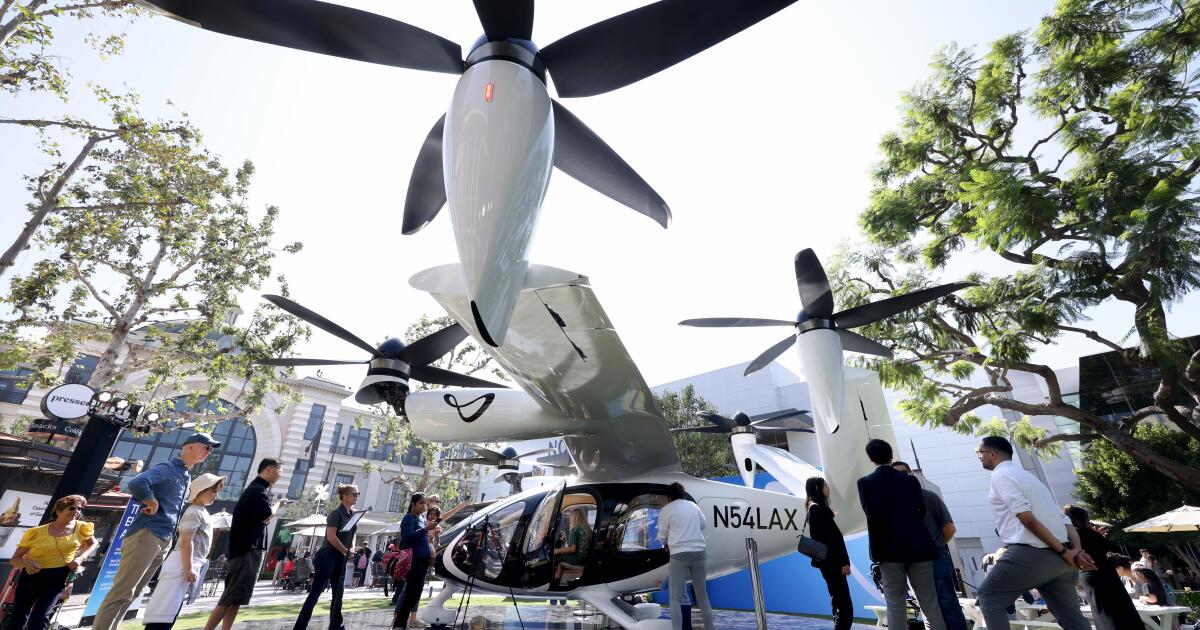
Joby Aviation creates a joint venture with Toyota to build air taxis
-
 Entertainment22 minutes ago
Inside Eddie Huang’s sadboi era and turning a new page with his novel
-
 Lifestyle25 minutes ago
Wait, it’s a candle? Her beeswax fruit and veggie ones look so real, you’ll want to take a bite
-
 Politics30 minutes ago
Commentary: The sad inevitability of Justice Alito’s birthright citizenship dissent
-
Sports40 minutes ago
2026 World Cup knockout round TV schedule, game previews and results
-

 World52 minutes ago
Russian gas imports rise despite EU phase-out
-

 News1 hour ago
Woman survives falling 1,500 feet down Mount Shasta


